Buying your first offset smoker is exciting — you’re one step closer to real, wood-fired barbecue in your own backyard. But finding the best offset smoker for beginners can feel overwhelming, because models differ so much in price, construction, cooking capacity, firebox size, and temperature control.
Here’s what we’d tell a friend: a beginner-friendly offset smoker should give you manageable cooking space, adjustable airflow, easy firebox access, simple cleaning, and reasonably steady temperatures. If you’d rather keep gear and controls to a minimum, see our best minimalist smoker guide. It should fit your patio and your budget — without complicated features you’ll never use.
In this guide, we compare four solid beginner offset smokers and walk you through the essential techniques behind flavorful brisket, ribs, pork shoulder, chicken, and more.
Quick Answer: The Royal Gourmet CC1830S is a solid low-cost way to learn the basics. The Oklahoma Joe’s Highland is our best overall pick for most beginners — it balances size, construction, capacity, and long-term usability.
Beginner Tip: Start with charcoal to build a stable heat base, then add one small piece of seasoned hardwood for smoke. It’s much easier to control than wrestling an all-wood fire on your first few cooks.
Best Offset Smokers for Beginners: Quick Comparison
| Smoker | Best for | Cooking capacity | Difficulty |
| Royal Gourmet CC1830S | Small budgets and patios | Approx. 823 sq. in. total | Easy to moderate |
| Char-Griller Smokin’ Pro | Grilling and smoking | Approx. 1,130 sq. in. total | Moderate |
| Oklahoma Joe’s Highland | Best overall beginner choice | Approx. 900 sq. in. total | Moderate |
| Old Country Pecos | Long-term skill development | 630 sq. in. main grate | Moderate |
Prices and availability can change, so check the manufacturer or authorized retailer before purchasing.
What Is an Offset Smoker?
An offset smoker is a horizontal cooking chamber with a smaller firebox attached to the side. You burn charcoal or hardwood splits in the firebox, and heat and smoke travel through the main chamber before exiting up the chimney.
Because your food sits away from the flame, everything cooks with gentle indirect heat — the classic low-and-slow method that slowly tenderizes meat while it soaks up natural wood smoke.
Fair warning: an offset asks more of you than an electric, gas, or pellet smoker. You’ll manage the fire, adjust airflow, add fuel, and watch the temperature. That’s the learning curve — but it’s also how you pick up the fundamental skills of traditional barbecue.
Never cooked on one before? Read our complete offset smoker guide first.
Is an Offset Smoker Suitable for a Beginner?
Yes — if you’re excited to learn real fire management and don’t mind checking on the pit regularly, an offset is a great first smoker.
It’s not a set-it-and-forget-it appliance. Temperatures shift with fuel load, airflow, weather, steel thickness, and fire size, so your first few cooks will ask for patience.
But you don’t need pro experience to start. A charcoal base fire, small wood splits added gradually, and a digital thermometer at grate level make the whole process far more forgiving.
What to Look for in a Beginner Offset Smoker
Strong Construction
Steel thickness is the quiet hero of temperature stability. Lightweight smokers are affordable and easy to move, but they bleed heat in cold or windy weather.
A heavier smoker usually holds its temperature more steadily once it’s up to heat — though it costs more and may want a permanent home.
Beyond thickness, check the doors, hinges, wheels, grates, handles, welds, and paint finish. Pro tip: close the lids and look for daylight leaking through the seams — the tighter the fit, the easier your fire management will be.
Manageable Cooking Capacity
Bigger isn’t always better for a first pit. Large chambers burn more fuel and take longer to preheat.
Match the smoker to what you actually cook. A small family might need room for one brisket or two rib racks; regular gatherings call for a bigger primary grate.
And don’t take the advertised total cooking area at face value — some brands fold the firebox grate, warming rack, and upper shelves into that number.
Adjustable Airflow
Your first offset needs an adjustable firebox intake and a working chimney. The intake meters oxygen to the fire; the chimney pulls heat and smoke through the chamber.
Steer clear of models with tiny vents or sloppy-fitting parts that make airflow a guessing game.
Accessible Firebox
You should be able to add charcoal or wood without opening the main cooking chamber — every lid lift dumps heat and drops your cooking temperature.
A side or top firebox door makes refueling easy, and a removable charcoal basket or grate improves combustion by letting air move under the fuel.
Simple Cleaning
Look for removable cooking grates, easy ash removal, a grease drain, or a slide-out ash pan. And don’t leave ash sitting in a cooled smoker — it absorbs moisture and invites rust. Our rust prevention guide shows the simple routine that keeps a budget smoker going for years.
Space for Thermometer Probes
Built-in lid thermometers often read very differently from the temperature around your food. Plan on running a digital probe at grate level plus a second probe in the meat — it’s the single best upgrade a beginner can make.
1. Royal Gourmet CC1830S: Best Budget Choice
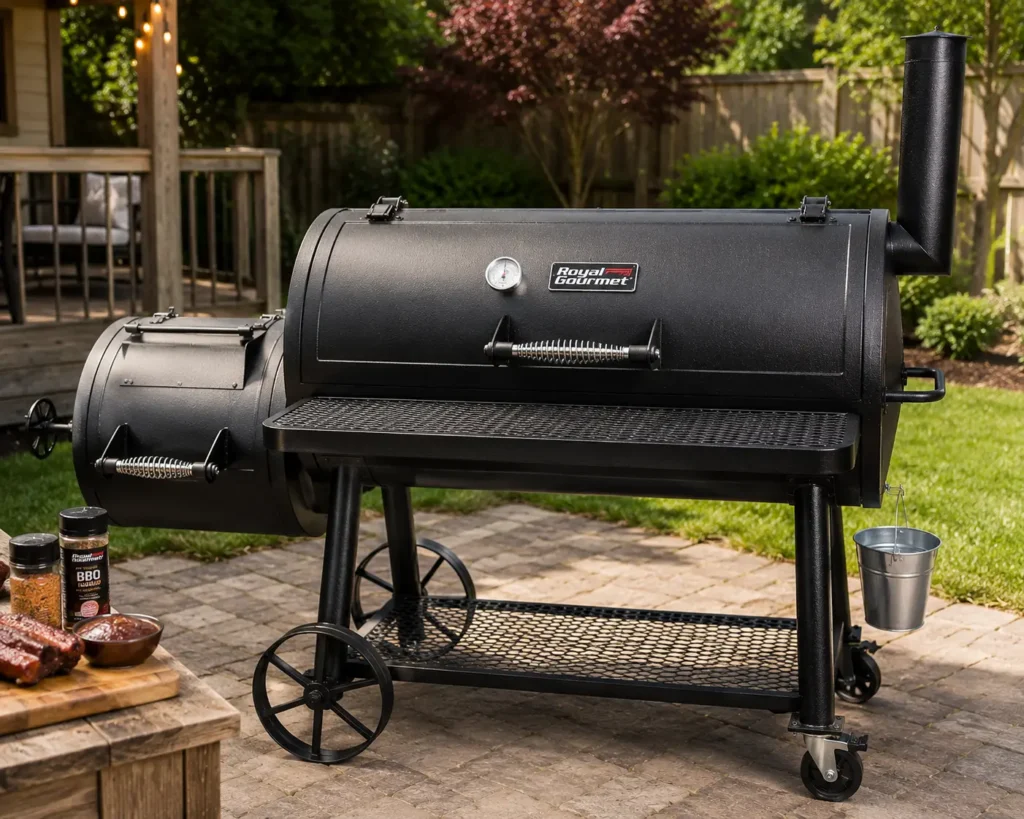
The Royal Gourmet CC1830S is an affordable charcoal grill and offset smoker combo — enough of both to learn direct grilling and indirect smoking without buying two appliances.
According to the official Royal Gourmet specifications, it offers about 475 square inches of primary cooking grate, a 151-square-inch warming rack, and a 197-square-inch offset firebox area.
Key Features
- Approximately 823 square inches of combined cooking space
- Attached side firebox
- Adjustable chimney
- Firebox air vent
- Adjustable charcoal pan
- Side table and bottom storage shelf
- Built-in lid thermometer
- Compact backyard footprint
Advantages for Beginners
The CC1830S keeps the entry price low and the footprint small — it won’t dominate a patio the way a big heavy-duty pit does. And the combo design means you can grill burgers and steaks directly or smoke meat with indirect heat.
Its smaller chamber also needs less charcoal to preheat, which makes short practice sessions cheaper. Pro tip: short practice cooks are the fastest way to learn your fire — don’t wait for a 12-hour brisket to start experimenting.
Limitations
Lightweight steel sheds heat faster than thick material, so expect more temperature swings in wind, rain, or cold weather.
The small firebox also demands careful fuel management — big wood splits may not fit, so charcoal plus small hardwood chunks is the easier, more controllable route.
Best For
This smoker is best for:
- First-time buyers with a limited budget
- Small families
- Patios with limited space
- Occasional smoking
- People who want one appliance for grilling and smoking
For a closer look at similar construction and performance, read our Royal Gourmet offset smoker review.
2. Char-Griller Smokin’ Pro: Best for Grilling and Smoking
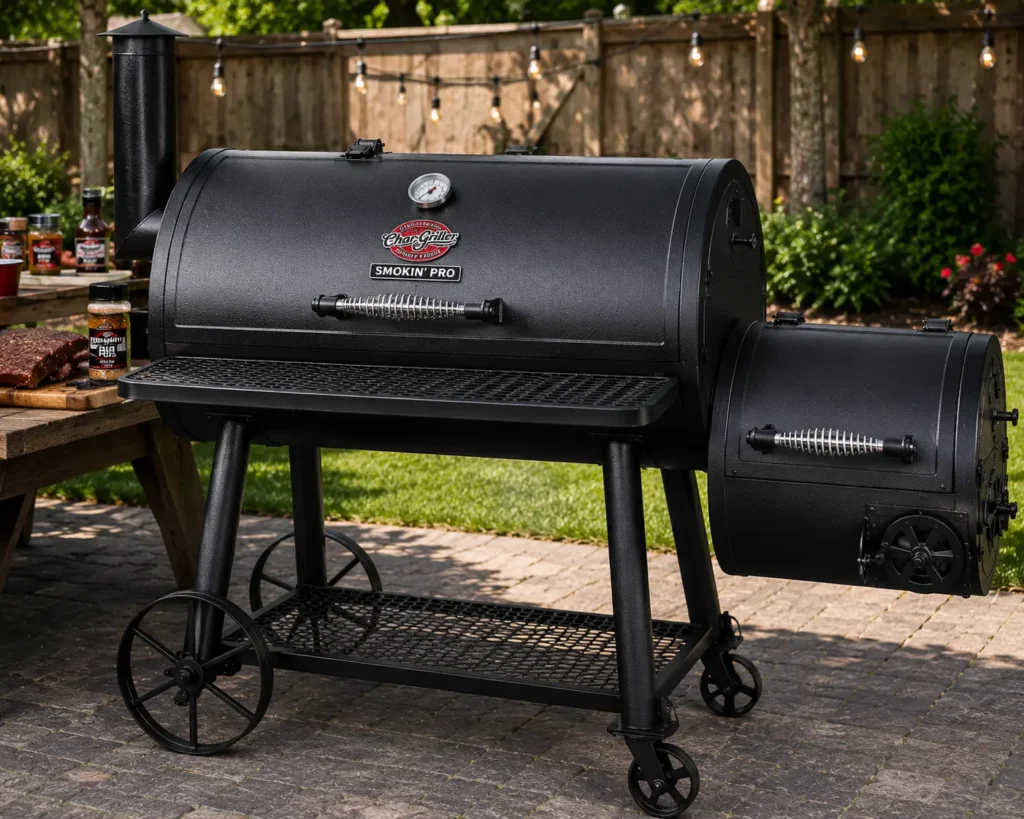
The Char-Griller Smokin’ Pro is another grill-and-smoker combo, pairing a big charcoal grill with a side firebox. The extra capacity suits beginners who regularly cook for groups.
The official Char-Griller specifications list roughly 580 square inches of primary cooking area and about 1,130 square inches of total cooking space.
Key Features
- Approximately 1,130 square inches of total cooking area
- Large barrel-style cooking chamber
- Side firebox for indirect smoking
- Cast-iron cooking grates
- Adjustable dampers
- Side shelf and storage rack
- Removable charcoal drawers
- Suitable for grilling and smoking
Advantages for Beginners
The roomy chamber fits several cuts at once, and the cast-iron grates are great for direct grilling — they hold heat well once properly preheated.
Removable charcoal drawers make fuel access and ash removal easy, which is genuinely helpful when you’re still learning how much fuel different temperatures demand.
Limitations
Like many affordable combos, the Smokin’ Pro can leak some heat and smoke around the doors. Take time to learn its hot spots and rotate food on long cooks.
Also note the advertised total capacity goes beyond the primary smoking grate — check the individual grate dimensions before you buy.
Best For
Choose this model if:
- You want a charcoal grill and offset smoker together.
- You regularly cook for family gatherings.
- You want more space than a compact smoker.
- You are willing to learn temperature management.
- You value cooking versatility.
3. Oklahoma Joe’s Highland: Best Overall for Beginners
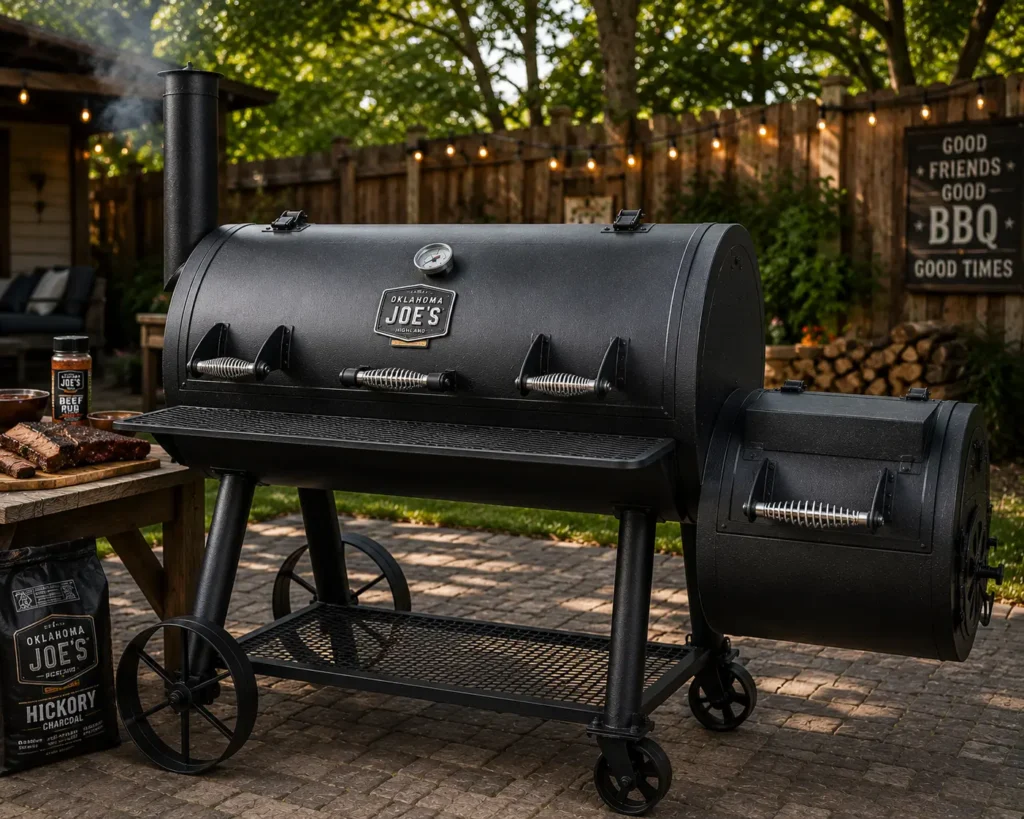
The Oklahoma Joe’s Highland is our overall pick for the best offset smoker for beginners. It brings a traditional layout, useful cooking capacity, easy firebox access, and sturdier construction than most budget grill-smoker combos.
It’s big enough for a brisket and multiple rib racks, without becoming as demanding as an oversized competition pit.
Key Features
- Approximately 900 square inches of total cooking capacity
- Traditional horizontal cooking chamber
- Side firebox with convenient access
- Heavy-gauge steel construction
- Multiple adjustable dampers
- Porcelain-coated cooking grates
- Front and lower storage shelves
- Large wheels for backyard movement
Advantages for Beginners
The Highland gives you room to develop real offset skills. Its firebox handles charcoal and properly sized wood splits, so you can start with charcoal-and-wood and work toward all-wood cooking as your confidence grows.
Because it’s such a popular design, replacement parts, covers, charcoal baskets, and gasket kits are easy to find — nice insurance for a first pit.
Limitations
It still needs active fire and temperature management — don’t buy it expecting automatic temperature control.
It’s heavier than compact budget models, so moving it over steps or uneven ground takes effort. Some owners also add high-temp gasket material where smoke escapes.
Best For
The Highland is best for:
- Beginners serious about learning traditional barbecue
- Families and medium-sized gatherings
- Brisket, ribs, pork shoulder, and chicken
- Buyers who want room to improve their skills
- People who expect to use the smoker regularly
Read our complete Oklahoma Joe’s Highland offset smoker review for a more detailed breakdown.
4. Old Country Pecos: Best Upgrade for a Serious Beginner
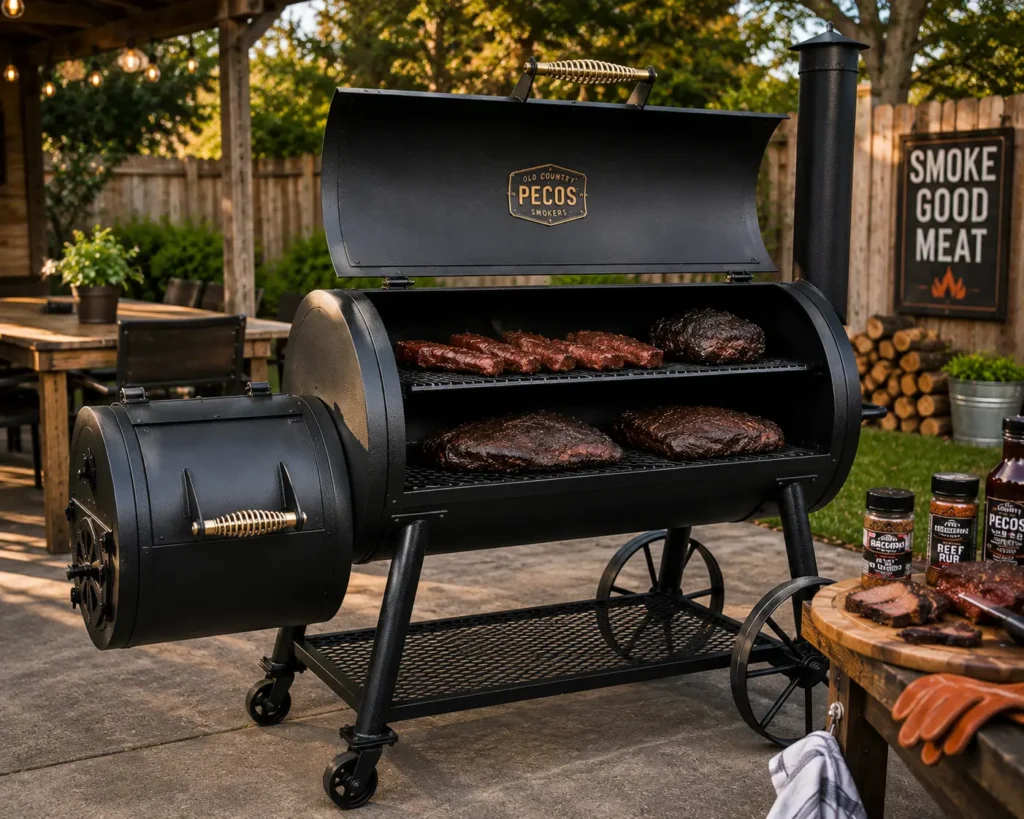
The Old Country Pecos suits a beginner who wants stronger welded construction and plans to keep smoking for years.
Academy Sports lists the Old Country Pecos with an all-welded body, about 630 square inches on the main grate, and an additional firebox cooking grate.
Key Features
- All-welded steel construction
- Approximately 630-square-inch main grate
- Large side firebox
- Slide-out main cooking grate
- Heavy-duty fuel grate
- Drop-in front table
- Bottom storage shelf
- Wagon-style wheels
- Suitable for charcoal, chunks, and wood splits
Advantages for Beginners
Welded construction means less assembly and a more rigid pit than most bolt-together entry-level smokers, and the bigger firebox handles clean-burning hardwood fires better.
It’s enough quality to grow with — you won’t need to replace it the moment you’ve mastered basic fire management.
Limitations
The Pecos costs more than most starter smokers and weighs about 222 pounds. There’s no built-in thermometer either, so budget for a reliable digital thermometer.
The stronger build makes temperature management easier, but it still takes practice and attention — there’s no shortcut around learning your fire.
Best For
Choose the Pecos if:
- You want stronger welded construction.
- Your budget is approximately $600.
- You plan to smoke food regularly.
- You want to learn wood-fire management.
- Long-term value matters more than portability.
Which Beginner Offset Smoker Should You Choose?
If affordability and a compact footprint top your list, go with the Royal Gourmet CC1830S.
Need a big grill-and-smoker combo for regular family gatherings? The Char-Griller Smokin’ Pro fits the bill.
For the best overall balance of capacity, construction, accessibility, and beginner-friendly performance, we recommend the Oklahoma Joe’s Highland.
And if you’re ready to spend more for welded construction and long-term skill building, the Old Country Pecos is the strongest choice.
How to Use Your First Offset Smoker
1. Season the Smoker
Always clean and season a new smoker before food goes in. Seasoning burns off manufacturing residue and lays down a protective coating on the interior steel.
The general process includes:
- Remove packaging, stickers, plastic, and loose debris.
- Wash the grates according to the manufacturer’s directions.
- Allow all surfaces to dry.
- Apply a thin coating of high-smoke-point cooking oil.
- Heat the empty smoker at the recommended temperature.
- Allow it to cool naturally.
Follow our detailed guide on how to season an offset smoker for complete instructions.
2. Begin With Charcoal and Wood
Charcoal gives you a predictable heat source; hardwood adds the smoke flavor. Together, they’re easier for most beginners than wood alone.
Light the charcoal in a chimney starter. Once it’s fully lit, spread it in the firebox and add one small piece of seasoned hardwood.
Never burn painted, chemically treated, moldy, or unidentified wood.
3. Preheat the Smoker
Let the cooking chamber stabilize before any food goes on. For most low-and-slow recipes, roughly 225°F to 275°F is the sweet spot.
Trust a digital thermometer at grate level — the built-in lid gauge often doesn’t reflect the temperature beside your food.
4. Control Heat With Fire Size and Airflow
Keep the exhaust chimney open so smoke flows freely through the chamber. Manage temperature with fire size and the intake damper.
Make small changes, then wait several minutes before adjusting again — the pit needs time to respond.
Our guide on how to control heat in an offset smoker walks through this in more detail.
5. Look for Clean Smoke
Thin, nearly transparent blue smoke means efficient combustion. Thick white or gray smoke can make food taste bitter.
Burn dry, seasoned hardwood, keep the airflow healthy, and don’t overload the firebox with wood.
6. Place Food Away From the Firebox
The grate usually runs hottest near the firebox. Put delicate or lean foods farther away; thicker cuts can handle the warmer side.
A digital probe on each side of the grate helps you map the difference.
7. Monitor Internal Meat Temperature
Cooking time is only an estimate — a food thermometer tells you when meat is actually done and safe.
The USDA’s guidance for smoking meat and poultry recommends thermometers for both smoker temperature and the food’s internal temperature.
8. Rest Meat Before Slicing
Big cuts like brisket and pork shoulder benefit from resting after the cook. Resting slows moisture loss and lets the internal temperature even out.
Resting time depends on the cut — a chicken or rib rack needs far less time than a full brisket.
Best First Foods to Smoke
Start with forgiving foods that don’t demand perfect timing.
Chicken Thighs
Chicken thighs are cheap, cook fairly quickly, and stay juicy thanks to their higher fat content — a perfect first smoke.
Pork Shoulder
Pork shoulder takes several hours, but it’s forgiving and teaches you fire management, bark development, and tenderness checks all in one cook.
Sausages
Sausages are simple and cook faster than brisket or pork shoulder. Just watch internal temperatures closely — different sausages have different targets.
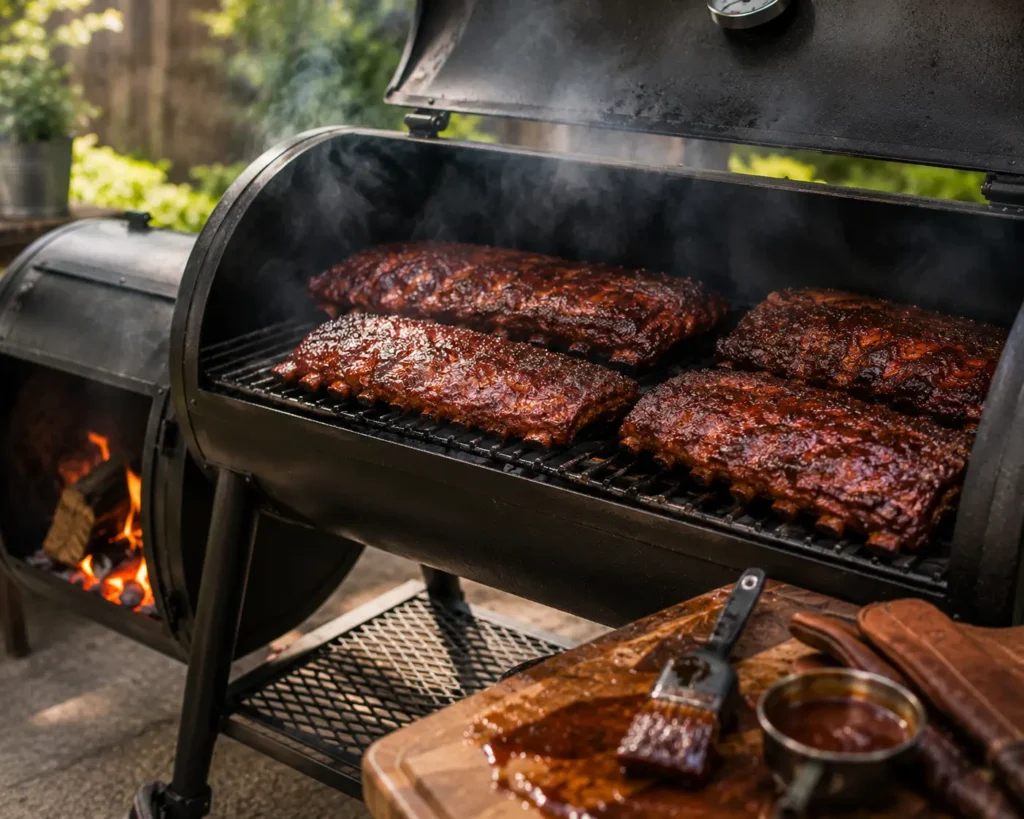
Ribs
Ribs are great practice for seasoning, temperature control, wrapping, tenderness, and sauce. When you’re ready, follow our guide on how to smoke ribs in an offset smoker.
A full brisket can wait until you can hold a reasonably steady fire for several hours.
Common Beginner Mistakes to Avoid
Using Too Much Wood
More smoke doesn’t mean better flavor. Too much wood hurts combustion and can coat food in bitter residue.
Closing the Chimney
Choking the exhaust traps stale smoke and starves the fire of airflow. Keep the chimney open and control heat with fire size and the intake.
Constantly Opening the Lid
Every peek dumps heat and adds cooking time. Use thermometer probes so you can monitor the cook without lifting the lid.
Chasing Every Temperature Change
Small fluctuations are normal. Constant damper fiddling creates bigger swings — aim for a steady range, not one magic number.
Trusting Only the Built-In Gauge
A lid thermometer can read very differently from grate level. Always back it up with a reliable digital probe beside the food.
Overcrowding the Cooking Chamber
Cramming meat in blocks airflow and cooks unevenly. Leave space between pieces so heat and smoke can circulate.
Leaving Ash in the Firebox
Ash absorbs moisture and speeds up corrosion. Dump it once the smoker has cooled completely. Pro tip: make the ash dump part of your post-cook routine and your pit will last years longer.
Starting With Brisket
Brisket is pricey and demands a long, stable cook. Build your skills on chicken, sausages, ribs, or pork shoulder before tackling a full packer.
Essential Accessories for a Beginner
- Dual-probe digital thermometer
- Charcoal chimney starter
- Heat-resistant barbecue gloves
- Long metal tongs
- Charcoal basket
- Small ash shovel
- Grill brush or scraper
- Food-safe spray bottle
- Butcher paper or aluminum foil
- Weather-resistant smoker cover
- Fire extinguisher suitable for your cooking area
Choose the Right Beginner Offset Smoker with Confidence
The best offset smoker for beginners is the one that lets you learn fire management without overspending.
The Royal Gourmet CC1830S fits buyers who want an inexpensive, compact first smoker. The Char-Griller Smokin’ Pro adds capacity and grilling versatility.
The Oklahoma Joe’s Highland remains our best overall recommendation — traditional offset design, useful cooking space, an accessible firebox, and plenty of room to grow your skills.
And the Old Country Pecos is the strongest pick for serious beginners who want welded construction and plan to smoke regularly for years.
Whichever you choose, remember: the pit is just equipment. Learning how fuel, airflow, fire size, weather, and steel work together — through steady practice — is what produces great barbecue.
Frequently Asked Questions
The Oklahoma Joe’s Highland is one of the best overall beginner options because it combines manageable size, useful cooking capacity, traditional firebox access, and widely available accessories.
Offset smokers have a steeper learning curve than electric, gas, or pellet smokers. However, beginners can simplify the process by using charcoal as a base fuel and adding small amounts of hardwood for flavor.
A combination of charcoal and seasoned hardwood is generally easiest. Charcoal supplies stable heat, while hardwood produces smoke flavor.
Many low-and-slow recipes use a cooking range between 225°F and 275°F. The correct temperature depends on the food, recipe, and desired cooking time.
Choose enough primary grate space for the amount of food you normally cook. A family does not need a competition-sized smoker, while frequent gatherings may justify a larger cooking chamber.
Yes. The chimney should generally remain open during cooking to maintain airflow and allow stale smoke to escape. Control heat through fire size and the firebox intake.
Yes, but an all-wood fire requires more practice. Beginners usually find charcoal with small hardwood additions easier to control.
Chicken thighs, sausages, ribs, and pork shoulder are suitable first cooks. They are generally more forgiving and less expensive than brisket.