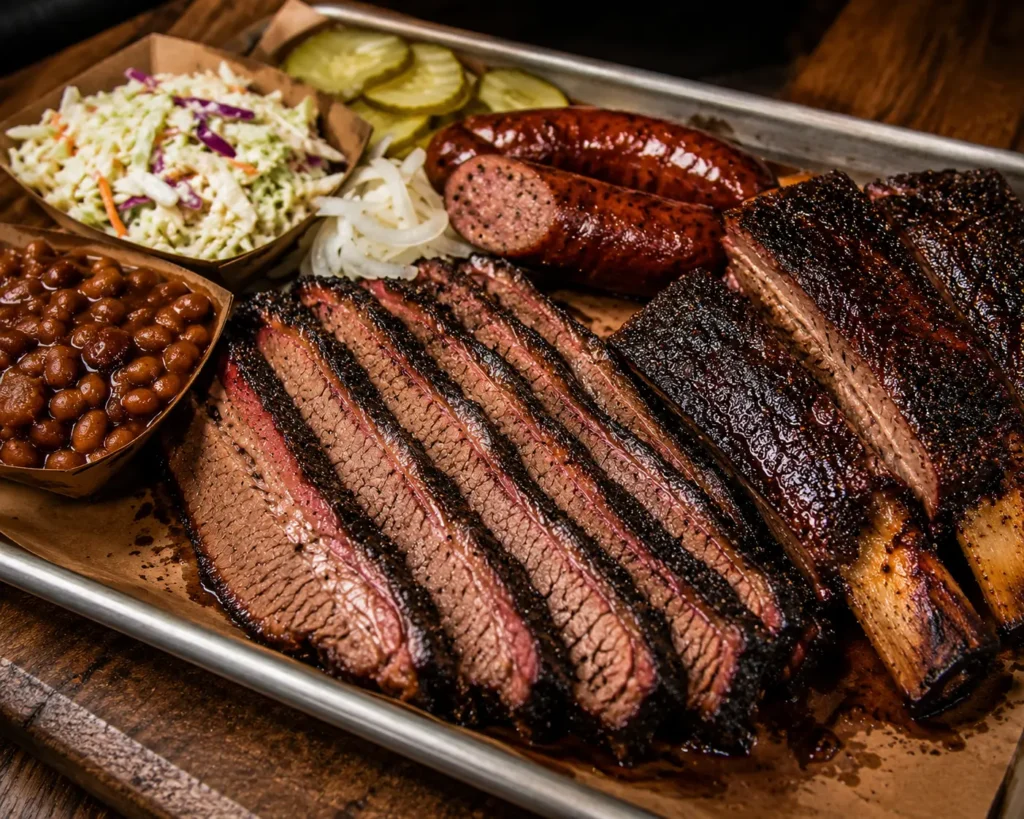
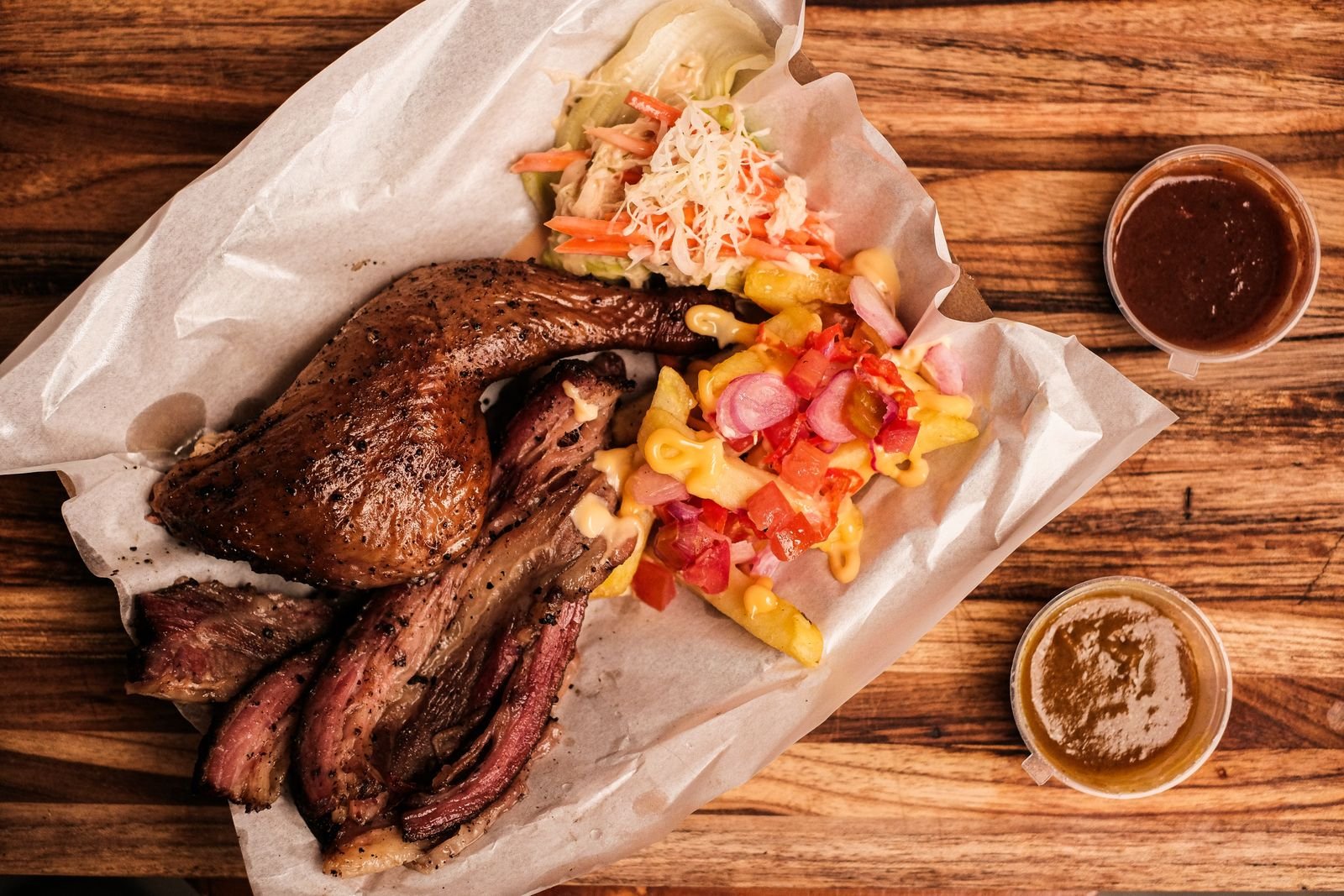
Texas BBQ means bold beef flavor, deep smoky bark, and tender brisket — all earned through hours of patience over a live wood fire. We believe the offset smoker sits at the heart of that tradition: its design separates the fire from the cooking chamber, so heat and smoke drift naturally across the meat.
If you are chasing real wood-fired flavor in your own backyard, Offset Smokers for Texas BBQ put the whole cook in your hands: fire, smoke, temperature, and timing are yours to command. Unlike pellet grills or electric smokers, a traditional offset asks you to work the fire yourself — and we think that hands-on craft is half the fun.
Whether you are smoking your first brisket or you have been tending wood fires for years, understanding how Offset Smokers for Texas BBQ work will make your cooks better. From picking the right post oak to keeping a clean-burning fire and a steady chamber temperature, every part of the process feeds the final flavor.
Quick Answer: Offset Smokers for Texas BBQ
Offset Smokers for Texas BBQ are ideal for authentic low-and-slow cooking because they use indirect heat and hardwood smoke. Use clean-burning post oak, maintain roughly 225–275°F, manage airflow carefully, and cook brisket until probe-tender rather than relying only on time or temperature.
What Are Offset Smokers for Texas BBQ?
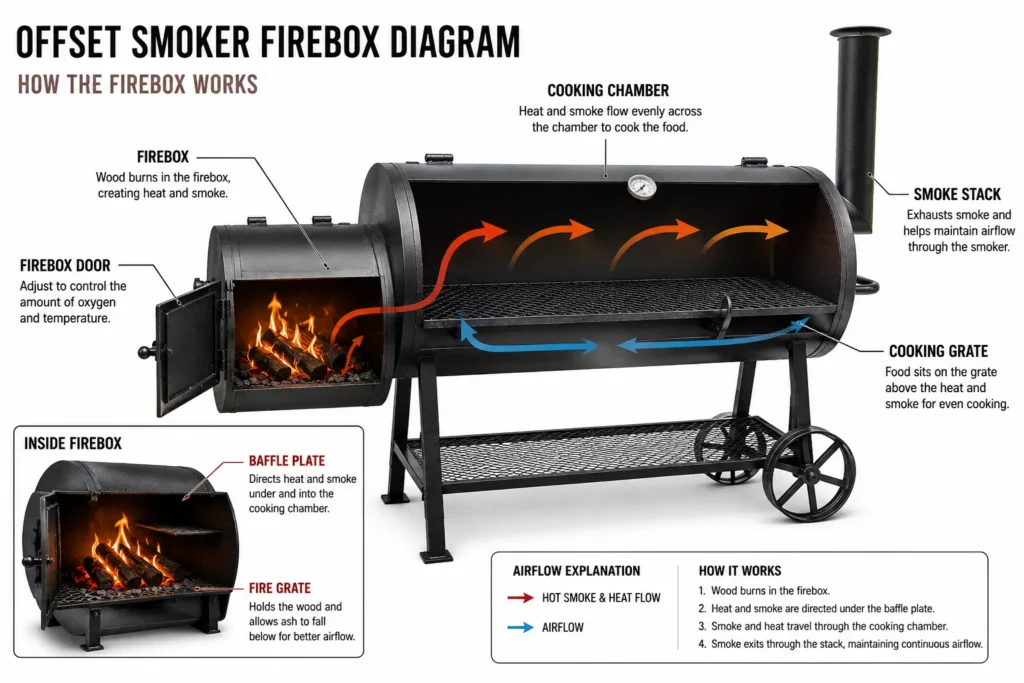
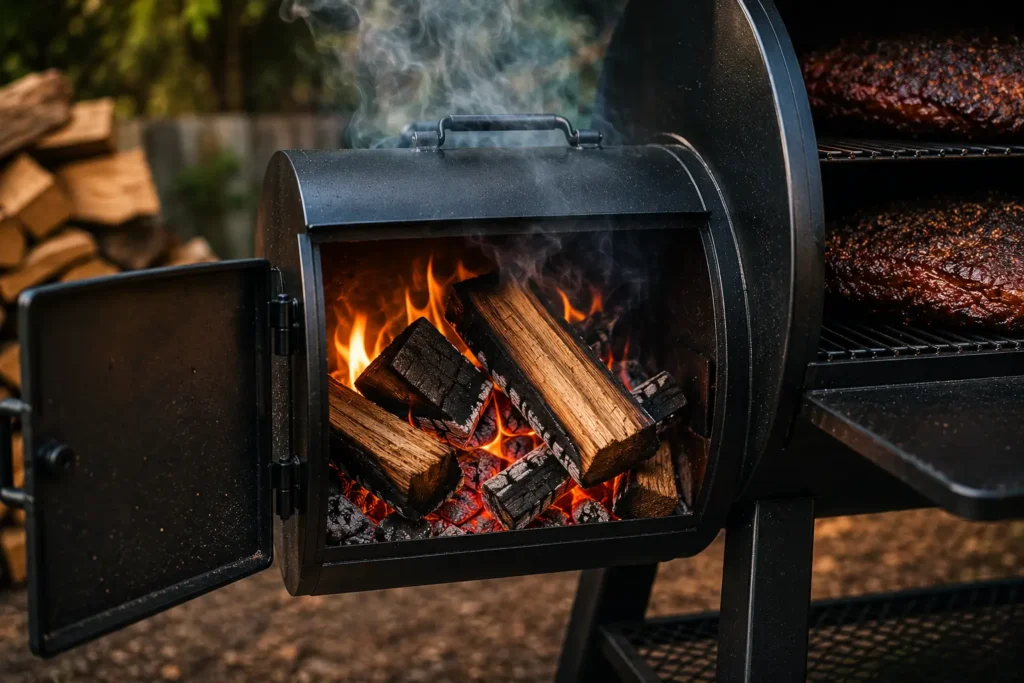
Think of an offset smoker as two partners working together: a firebox and a cooking chamber. Wood burns in the side-mounted firebox while heat and smoke drift into the cooking chamber, roll across the meat, and exit through the chimney.
That separation is why Offset Smokers for Texas BBQ feel made for live-fire cooking: you steer the environment with fuel, airflow, exhaust, and fire size instead of punching a temperature into a dial.
That gap between fire and meat is what creates indirect cooking. Instead of parking the brisket over burning wood, you let hot air and smoke drift around the cooking chamber and do their work gradually.
That pairing of indirect heat and hardwood smoke is exactly why the offset earned its place in Texas-style barbecue.
Why Offset Smokers Are Ideal for Texas BBQ
Rich Wood-Smoked Flavor
In Texas barbecue, beef and smoke are the headliners. Offset Smokers for Texas BBQ let you feed real hardwood splits into the fire all cook long, giving you direct control over the smoke profile.
Don’t chase a chamber packed with thick white smoke. A clean-burning fire produces a lighter stream of smoke and avoids the harsh flavor associated with incomplete combustion.
For long brisket cooks, milder hardwoods are generally easier to manage: they deliver steady smoke flavor without overpowering the beef. Pro tip: ease into stronger woods only after you know how your smoker burns the mild ones.
Perfect for Large Cuts
Brisket, beef ribs, and pork shoulder thrive in an offset smoker’s indirect heat. These are tough, connective-tissue-rich cuts that demand hours of gentle, controlled heat to break down — and the offset delivers exactly that.
Low-and-slow time does double duty here: the exterior develops that dark, flavorful bark while smoke gradually works its way into the meat.
That’s the beauty of a well-managed offset: the same smoker handles a quick rack of ribs or a full packer brisket with equal ease.
Low-and-Slow Cooking
Ask ten pitmasters what “low and slow” means and you’ll get ten answers — there is no single mandatory temperature in Texas barbecue.
For most brisket cooks, holding the cooking chamber around 225–275°F gives you a practical, forgiving range. Some pitmasters settle on approximately 250°F because it balances cooking speed with control. Current Texas-style brisket guides agree on the essentials: stay within that general range and focus on steady grate-level temperatures.
Pro tip: chase consistency, not a magic number — a steady, predictable fire matters far more than any single reading on the dial.
Hands-On BBQ Experience
For us, the hands-on process is one of the biggest attractions of Offset Smokers for Texas BBQ. You build the fire, feed it wood, watch the smoke, nudge the airflow, and learn how your own smoker responds.
Yes, it takes more effort than a pellet grill — but for many pitmasters, that hands-on craft is the whole point.
How Offset Smokers Work
Understanding the airflow inside your smoker is essential before attempting a long Texas-style cook.
The basic process is:
Firebox → Heat and Smoke → Cooking Chamber → Meat → Exhaust
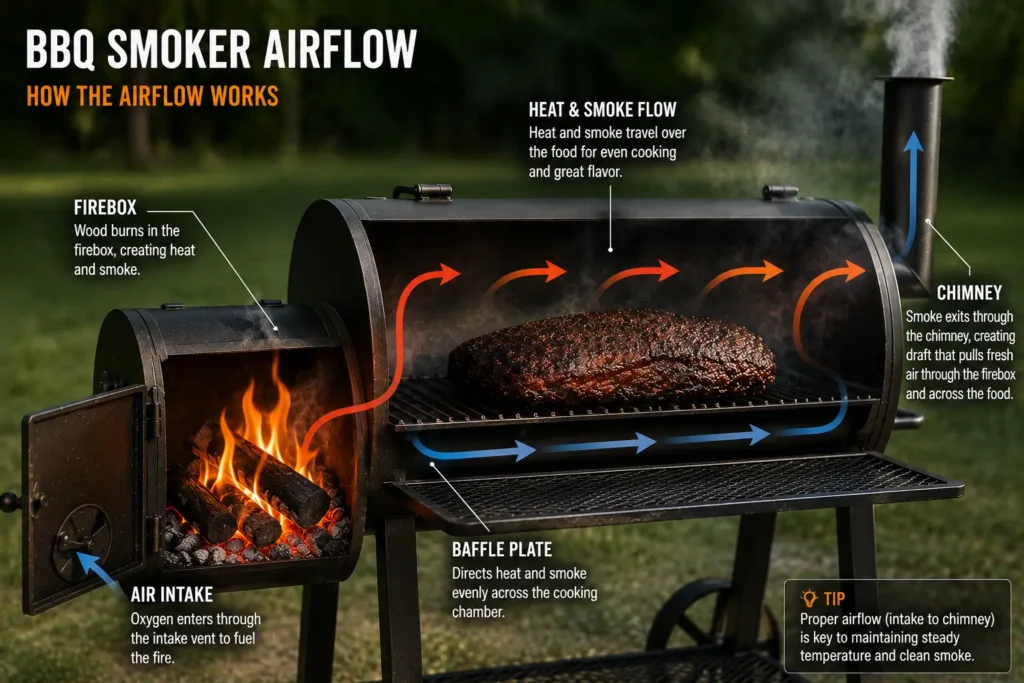
Wood burns in the firebox and creates heat and smoke. The heat enters the cooking chamber, where it surrounds the meat and gradually cooks it. The smoke travels across the food and eventually exits through the chimney.
Because the firebox is located beside the cooking chamber, the area closest to the firebox can be hotter than the chimney end.
This temperature difference is not necessarily a problem. Experienced pitmasters can use different cooking zones to position meat according to how quickly it is cooking.
However, inexpensive smokers with thin metal, poor seals, or inefficient airflow can have much larger temperature differences. That is why smoker construction and fire management matter just as much as the basic design.
Choosing the Best Wood for Offset Smokers for Texas BBQ
Wood choice might be the single most important decision you make with an Offset Smokers for Texas BBQ.
For traditional Central Texas-style brisket, post oak is the classic choice. Its mild, clean smoke flatters beef without overpowering it — and Texas-style brisket guides keep naming post oak as the traditional pick for Central Texas barbecue.
Post Oak
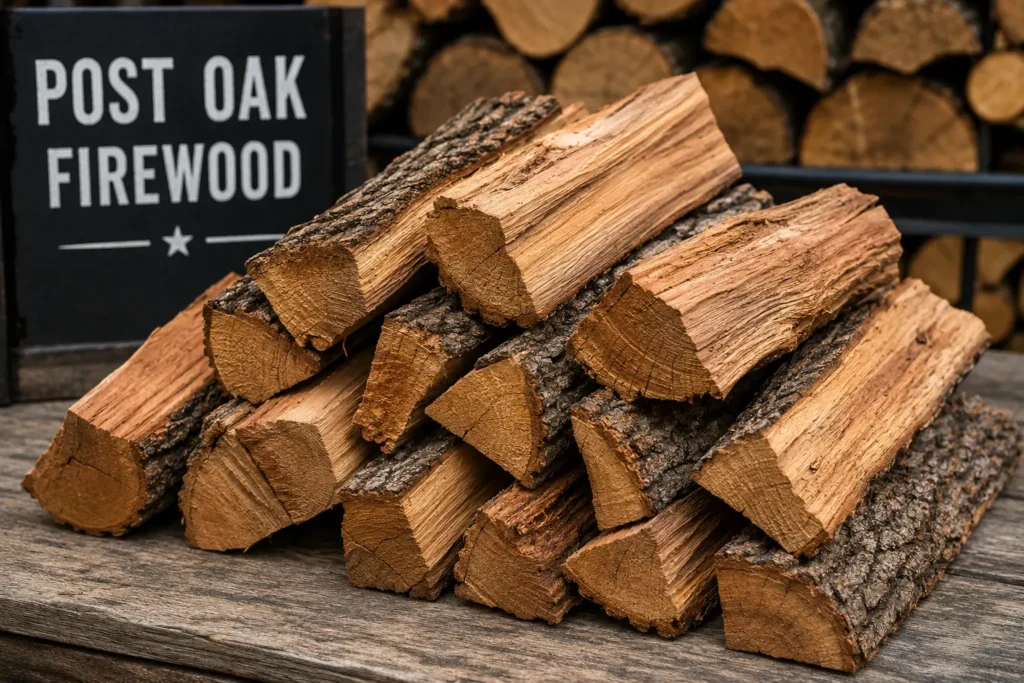
Post oak is often considered the standard for Central Texas brisket. Its smoke is moderate rather than harsh, which suits long cooks where the meat may be exposed to smoke for many hours.
If that classic Central Texas flavor profile is what you are after, post oak is the natural starting point.
Hickory
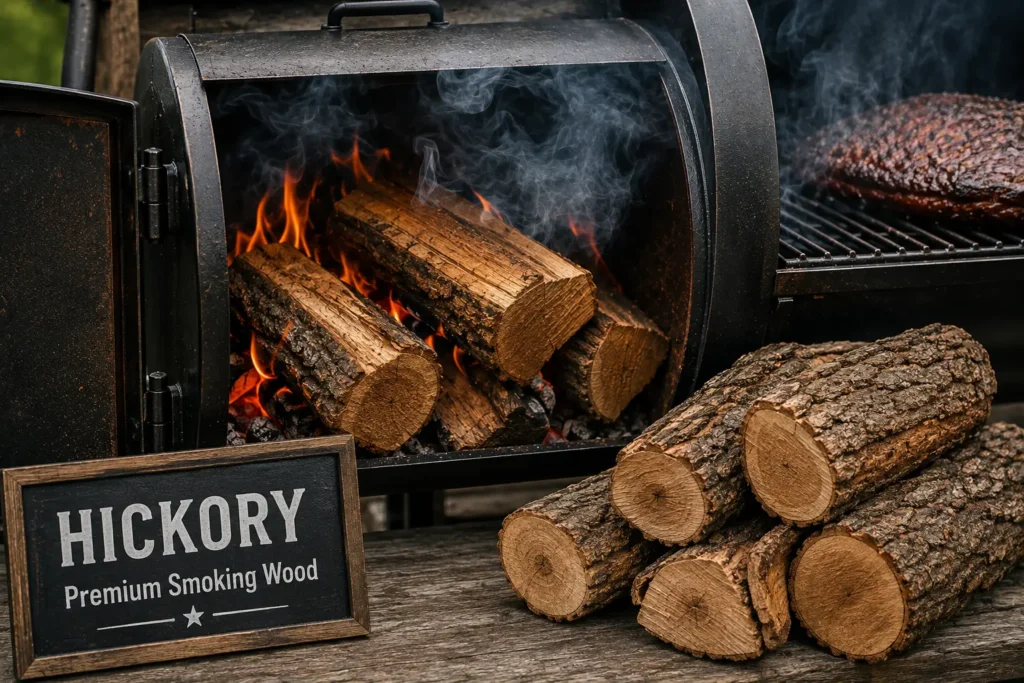
Hickory brings a stronger, more assertive smoke flavor. It pairs beautifully with beef, but on a long brisket cook that spends many hours in the smoker, a heavy hand with hickory can turn overpowering.
A little hickory goes a long way: use smaller amounts, or blend it with oak, for a stronger but more balanced smoke profile.
Mesquite
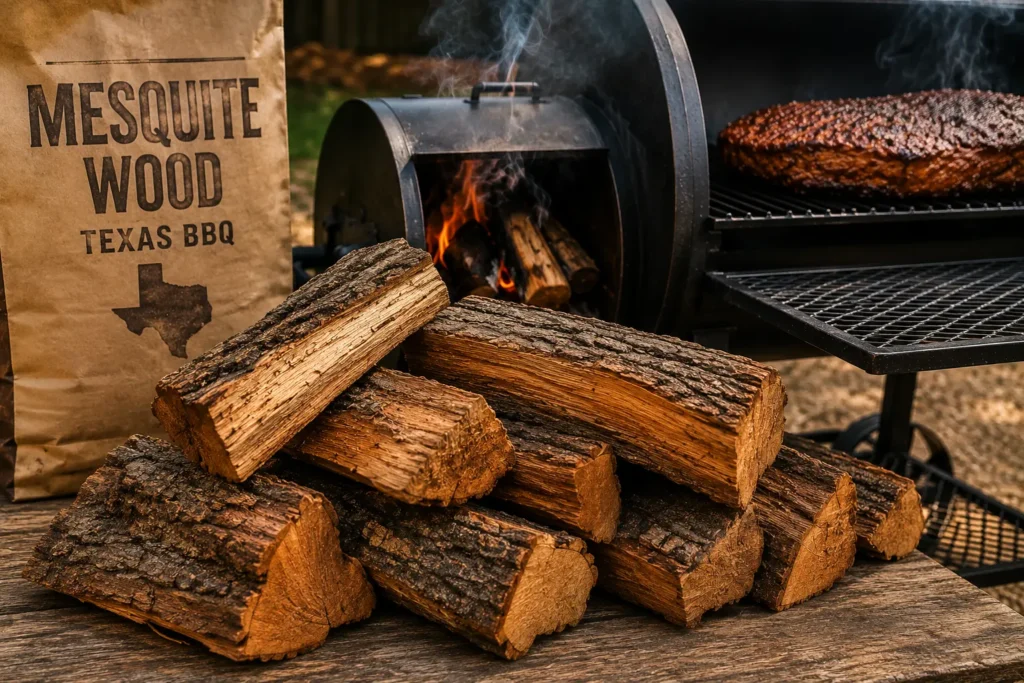
Mesquite is woven into Texas BBQ tradition, especially in the regions where it grows. But its smoke is far more intense than post oak, so too much mesquite can give a long cook a sharp or bitter edge.
If you love that mesquite bite, treat it like a seasoning: use it sparingly or blend it with a milder hardwood.
Other Woods
You can absolutely branch out — pecan and cherry lend their own character to the smoke. But when the goal is a classic Central Texas-style brisket, we still reach for post oak first.
Think of wood the way you think of seasoning: the goal is to complement the meat, never to bury its natural flavor.
How to Control Temperature in Offset Smokers for Texas BBQ
Few skills matter more than temperature management when you are running Offset Smokers for Texas BBQ.
Start with a clean-burning fire. Do not try to steer the smoker by choking the fire — an oxygen-starved fire smolders and turns out bitter, unpleasant smoke.
Instead, keep a small, lively fire burning with steady airflow — that is the real lever for temperature control.
Start With a Stable Fire
Give the smoker time to settle into a steady temperature before any meat goes in. For many Texas-style cooks, a solid starting point is 225–275°F at grate level.
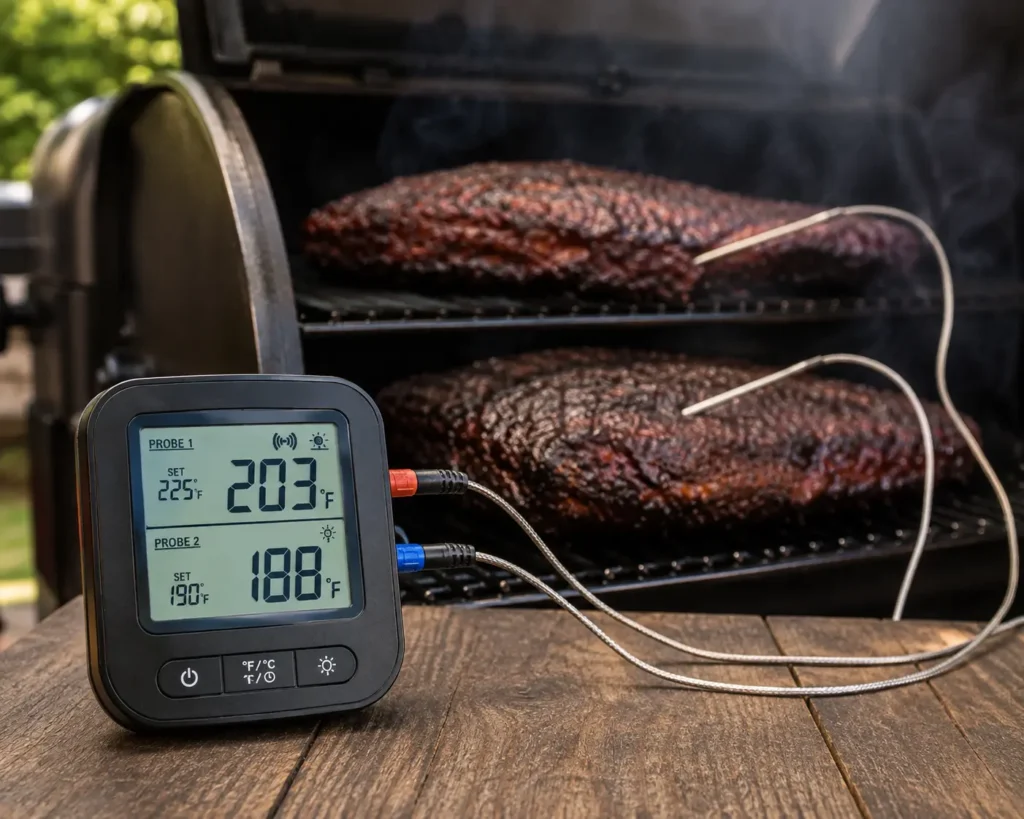
Take the lid thermometer with a grain of salt — it reads the air up in the lid, not down where your meat sits. The temperature at the cooking grate is the number that actually matters.
A dual-probe thermometer is worth its weight here: clip one probe at grate level to watch the cooking environment, and use the other to track the meat itself.
Use Small Wood Splits
Oversized splits are the usual suspect behind sudden temperature spikes. Smaller, evenly sized splits are easier to manage and produce a far more predictable fire.
Feed the fire based on what it needs, not on a rigid timer. You are chasing a clean, steady burn — so add a split when the temperature starts to sag, not when the clock says so.
Keep the Exhaust Open
The chimney is the smoker’s exhaust — it carries smoke and combustion gases out. Choke it down too far and you trap stale, dirty smoke; leave it breathing and the fire burns efficiently with cleaner smoke.
Avoid Constant Lid Opening
Every peek costs you heat and disturbs the airflow. Lean on remote probes whenever you can, so the lid stays closed while the cook carries on.
That discipline matters most on overnight brisket cooks — every unopened hour is heat working for you.
How to Smoke Brisket in Offset Smokers for Texas BBQ
Brisket is the ultimate proving ground for Offset Smokers for Texas BBQ. It demands patience, steady fire management, and a feel for how the meat transforms over a long cook.
Choose the Right Brisket
A whole packer brings both muscles to the party: the thick, fat-rich point and the leaner flat, which dries out more easily if you are not careful.
For a traditional Texas-style cook, the whole packer is the classic pick — just make sure your smoker has the cooking space to fit it.
Trim the Brisket
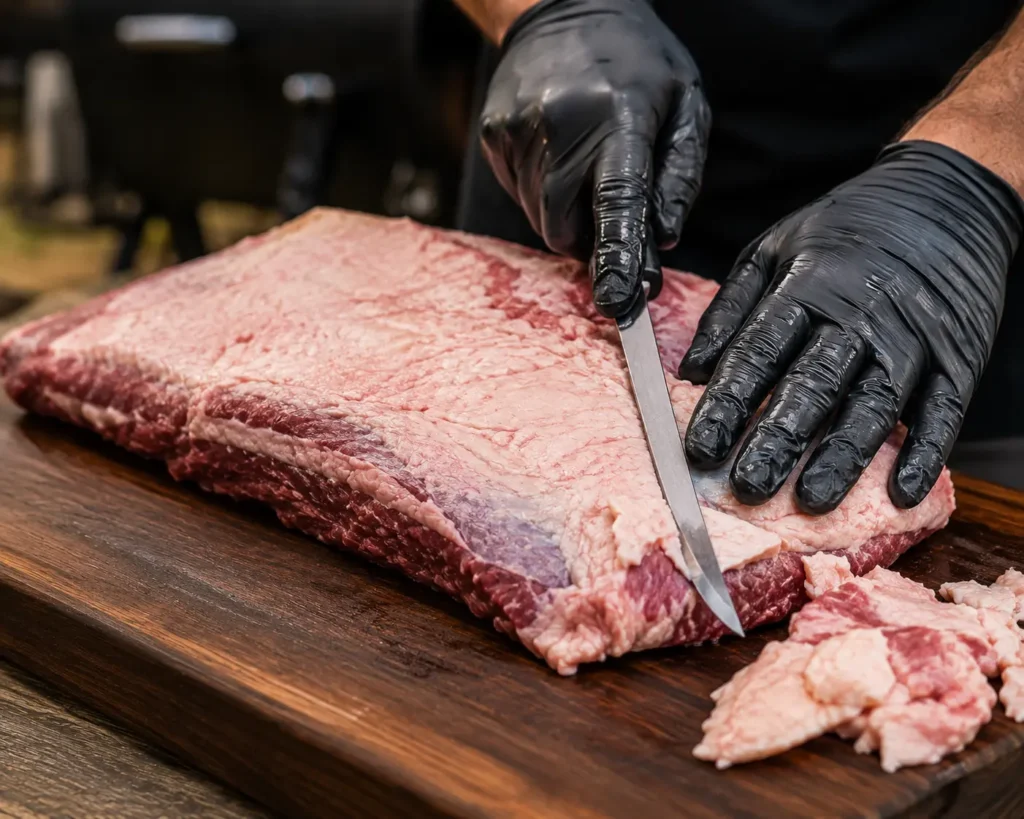
Cut away the hard, waxy fat and trim the surface fat down to an even layer, but leave enough to shield the meat through the long cook — an even fat cap cooks far more consistently.
Don’t chase a perfectly lean-looking brisket by stripping every bit of fat — the fat and connective tissue are exactly what make brisket a low-and-slow cut.
Season Simply
Forget complicated rubs — this is Texas. Coarse salt and black pepper are all the brisket needs: the seasoning builds bark while the beef and smoke stay front and center.
Some pitmasters like to add garlic or other seasonings — but when you are finding your feet, simplicity wins.
Stabilize the Smoker
Get the smoker settled at a steady cooking temperature before the brisket goes anywhere near it. For a typical Texas-style cook, around 250°F is a practical target, sitting comfortably inside the broader 225–275°F range.
Go by the grate-level temperature — not the lid thermometer, which reads the air up high instead of down where your meat sits.
Build the Bark
The early hours of the cook are all about building bark and letting smoke settle into the meat. Resist the urge to keep spritzing or opening the smoker just because the brisket looks dry.
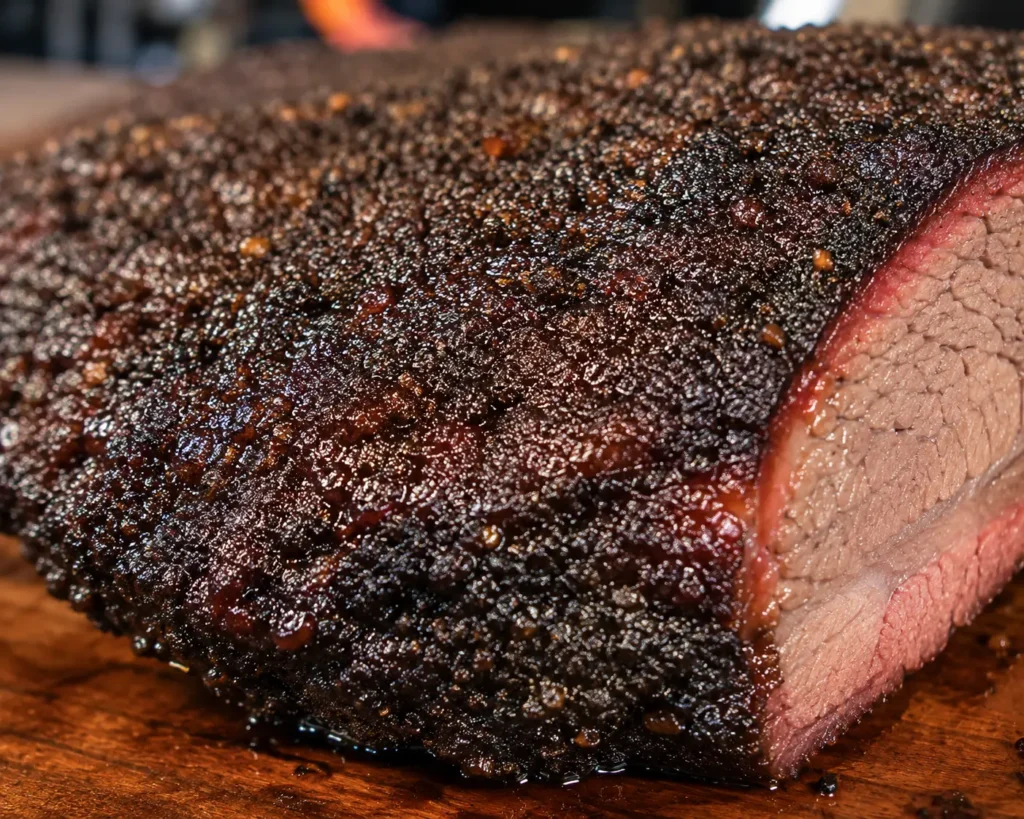
Bark can’t be rushed — give it time. If post oak is your wood, keep the fire burning clean and stay clear of heavy white smoke.
Managing the Brisket Stall
Partway through the cook, the brisket’s internal temperature can crawl — or park in place for hours. That is the stall, and it is perfectly normal.
Moisture evaporating off the meat’s surface cools it — the same way sweat cools your skin — so the internal temperature can stop climbing for a while. Stay calm when it happens.
Some pitmasters simply wait out the stall, while others wrap the brisket in butcher paper or foil to push through it faster. Wrapping is a stylistic choice — not a rule — so do what suits your cook.
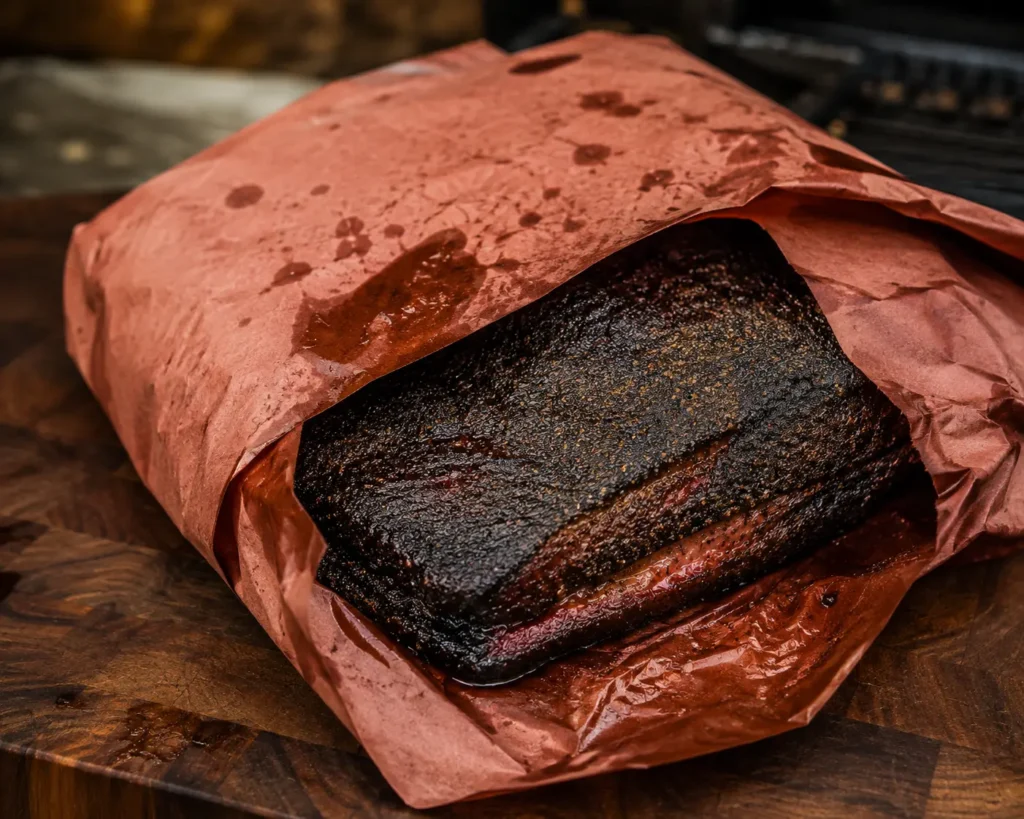
When Is Brisket Done?
Beginner recipes often oversimplify this part. You will see 203°F quoted as the target everywhere, but brisket does not finish perfectly at one magic number.
Many briskets turn tender in the low 200s, but the true finishing temperature varies. Rather than pulling the brisket the moment it hits 203°F, check tenderness with a probe.
When the probe slides into the thickest part of the flat with almost no resistance — think warm butter — the brisket is done. Most modern brisket guides agree: tenderness, not temperature alone, is the final test.
Resting Brisket After Cooking
Resting is part of the process — not an afterthought — when using Offset Smokers for Texas BBQ. Skip it, and even a great cook can fall flat.
A brisket fresh off the smoker is blazing hot, with rendered fat and juices moving through every part of the meat. Letting it rest gives the temperature time to settle and the juices time to redistribute — which makes slicing far cleaner.
For a big packer, plan on at least an hour of rest. Longer holds work too, as long as the meat stays safely hot while it waits.
Do not go straight from the smoker to the slicing board. That brisket took hours — give it a proper rest before the knife comes out.
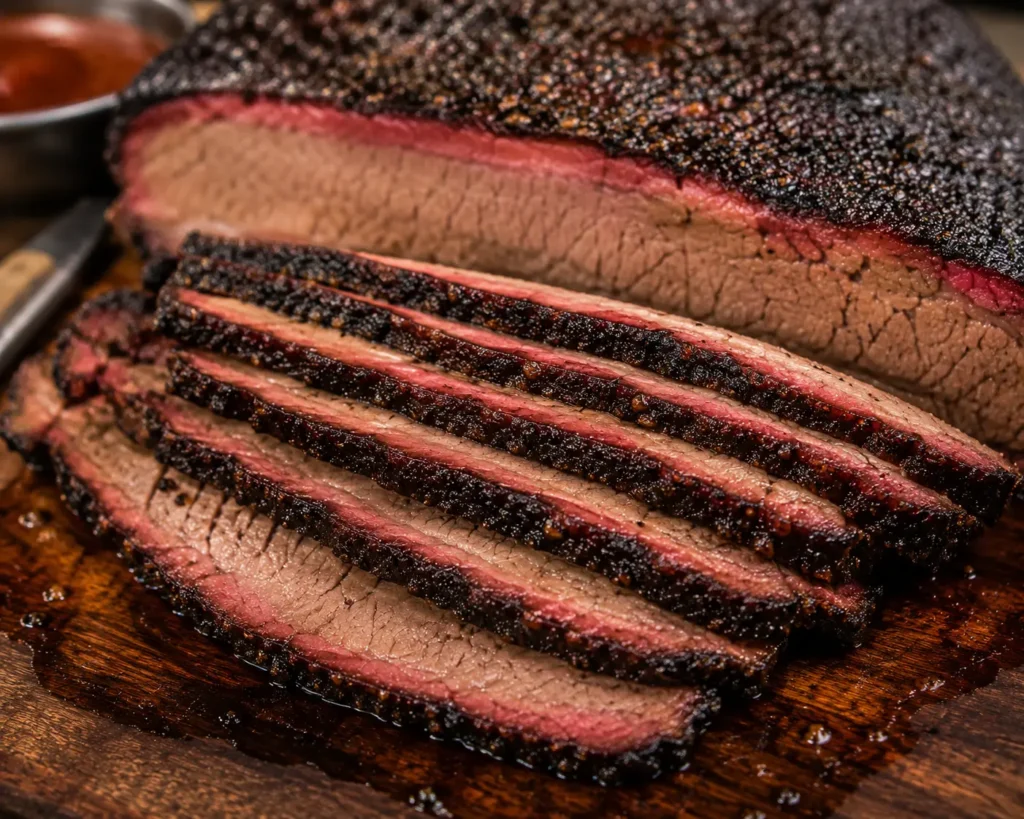
How to Smoke Beef Ribs in Offset Smokers for Texas BBQ
Beyond brisket, beef ribs are another cut that shines in Offset Smokers for Texas BBQ.
The big plate ribs Texas is famous for are rich and deeply marbled, so they welcome hours of smoke without drying out.
Light a clean fire and settle the smoker into a steady temperature. Keep the seasoning simple — beef ribs bring so much natural flavor that they hardly need help.
For that classic Central Texas character, post oak is our first pick — its mild smoke flatters beef ribs beautifully.
Cook them until the bark turns dark and a probe glides in with little resistance. Like brisket, beef ribs are done when they feel ready — not when the clock says so.
Rib thickness, cooking temperature, airflow, and how much connective tissue the ribs carry all shape the final cooking time — so expect each rack to behave a little differently.
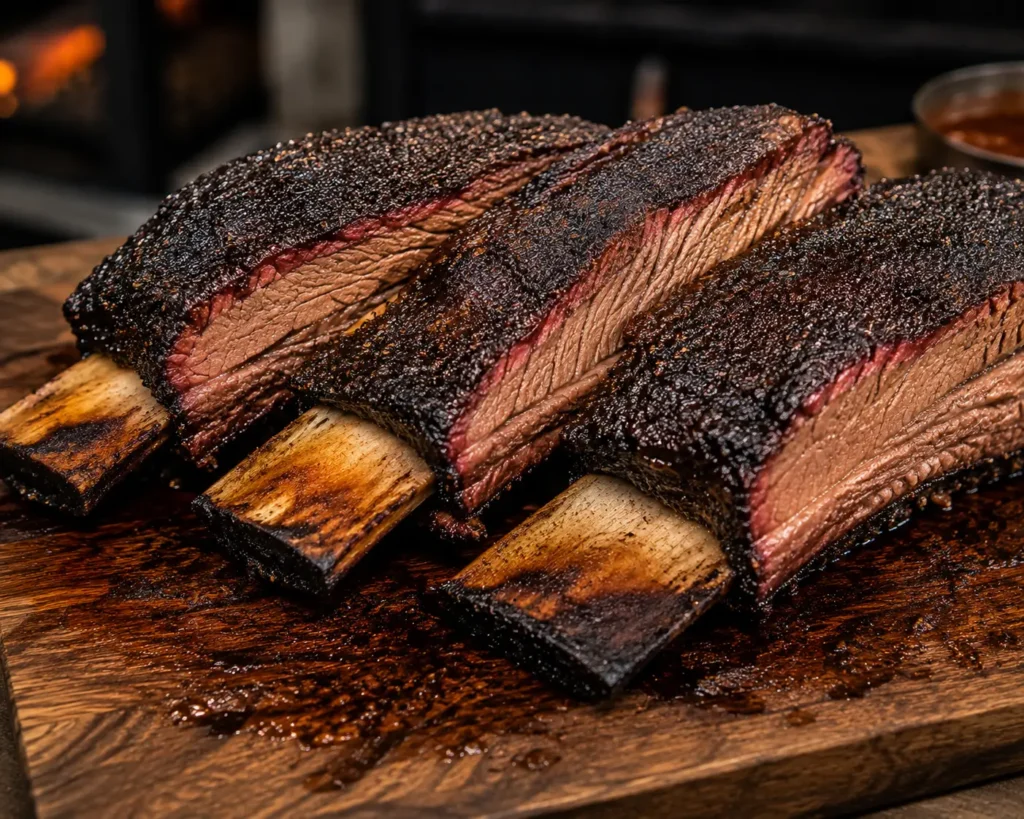
Smoking Sausage in Offset Smokers for Texas BBQ
Sausage is another Texas BBQ favorite — and it needs far less time in the smoker than brisket.
Sausage picks up smoke fast, so there is no need to bury it in heavy smoke for hours. A clean-burning fire with moderate smoke does the job.
Keep the links away from direct radiant heat and watch their internal temperature — the right target depends on the kind of sausage you are smoking.
Pro tip: add sausage toward the tail end of a long brisket cook — it turns the smoker’s heat into dinner instead of wasted fuel.
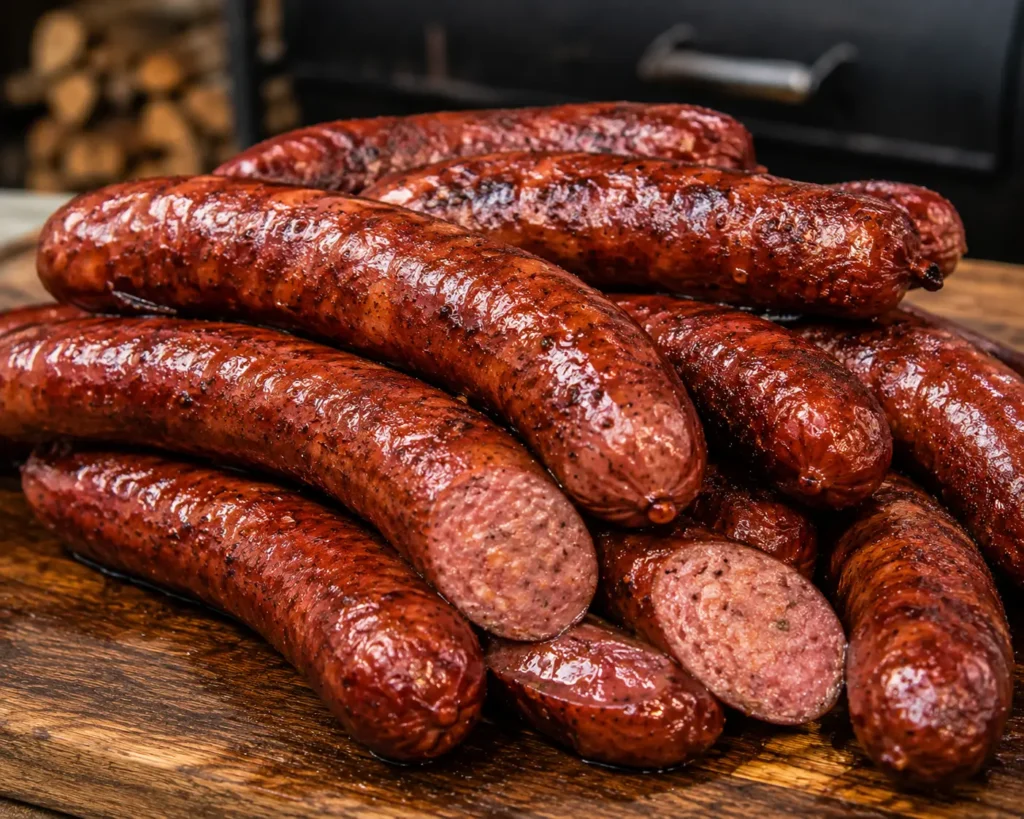
Can You Smoke Pork Ribs in Offset Smokers for Texas BBQ?
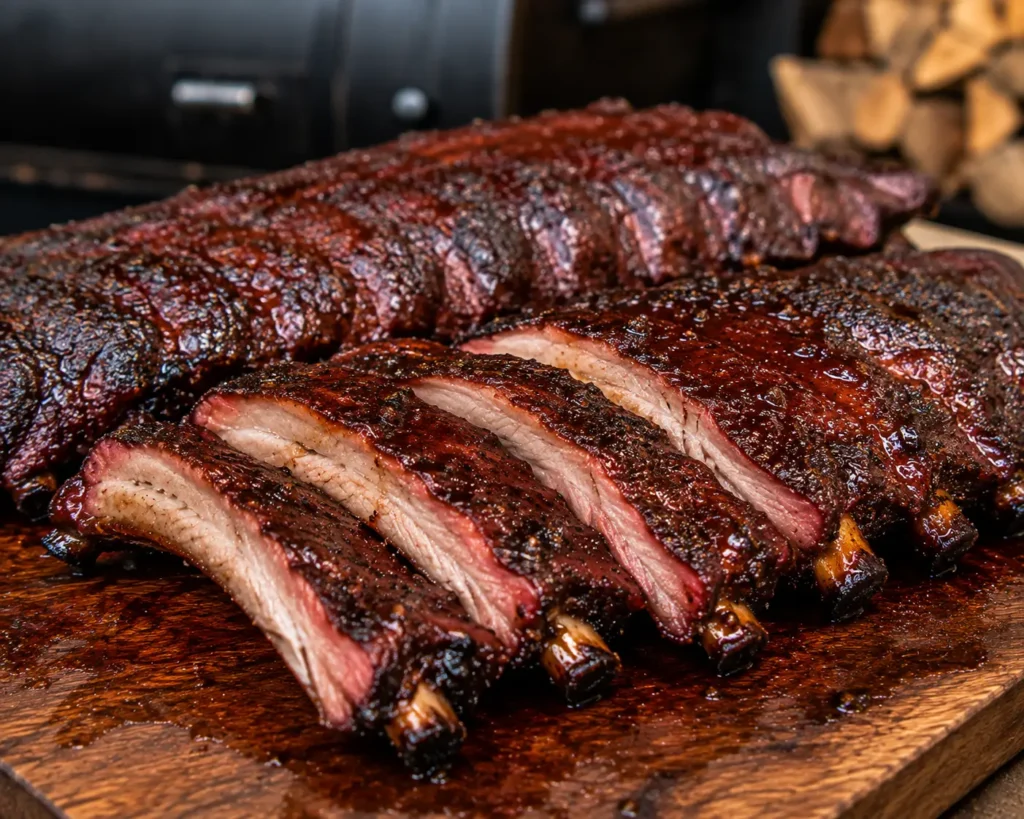
Absolutely. Beef may rule Texas BBQ, but pork ribs come out of an offset smoker tasting fantastic too.
Pork ribs take beautifully to indirect heat and hardwood smoke — and they run happily at the same low-and-slow temperatures you would use for brisket.
Unlike brisket, ribs are judged by texture and bend rather than one magic internal temperature — cook to feel, not to a number.
Should You Use a Water Pan?
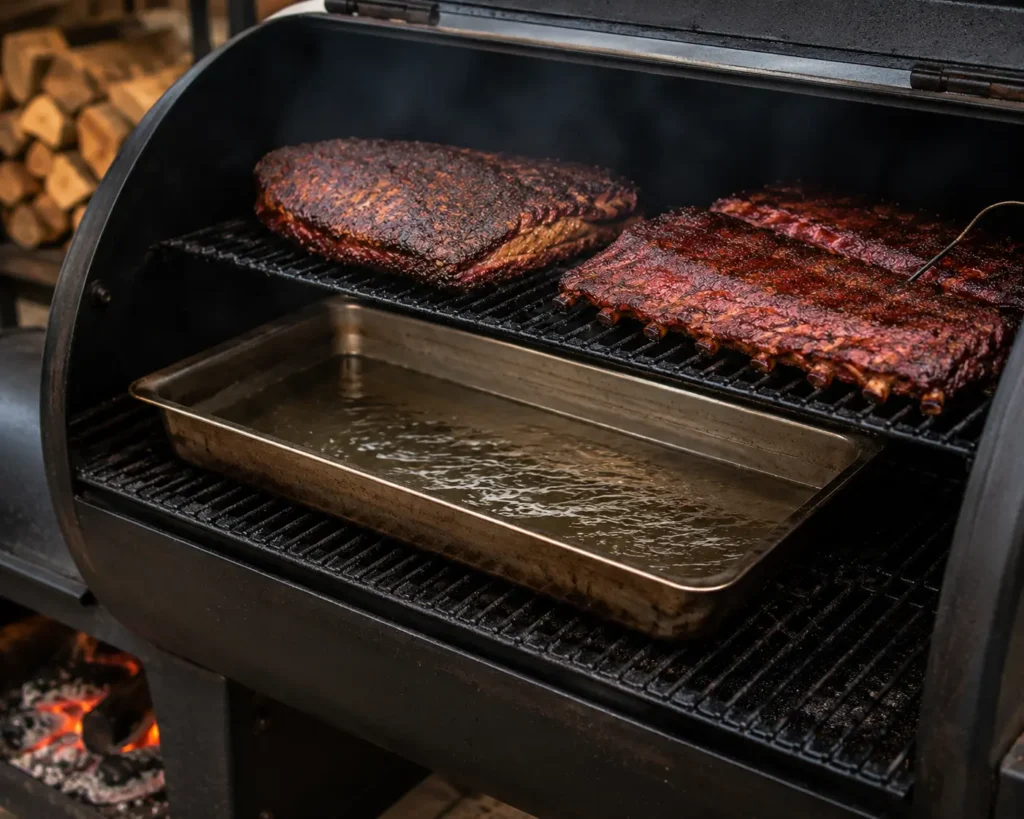
A water pan is optional with Offset Smokers for Texas BBQ. Some pitmasters swear by one for extra humidity and steadier temperatures; others cook happily without it.
No water pan can fix bad fire management. If your smoker holds steady temperatures on its own, skip the pan — water should never be a crutch for a lazy fire.
If temperatures still wander after your fire technique is solid, try a water pan and taste the difference for yourself.
Common Mistakes With Offset Smokers for Texas BBQ
Using Too Much Smoke
The classic beginner trap: thinking billowing white smoke means better barbecue. It usually means bitter, acrid meat instead.
Pro tip: aim for a clean-burning fire with a thin, light smoke stream — that is where the good flavor lives.
Chasing Temperature
A little temperature wobble is normal on an offset. Trying to pin the needle to one exact number usually backfires — constant vent fiddling makes the fire less stable, not more.
Hold a sensible cooking range and relax — the meat will not notice small swings, but it will notice you yanking the vents every five minutes.
Using Huge Wood Splits
Oversized splits are famous for temperature spikes — they catch slowly, then roar. Stick with manageable seasoned pieces and feed the fire steadily.
Opening the Lid Too Often
Peeking every few minutes will not cook the meat any faster — it just lets heat escape and knocks the airflow off balance.
Trust your probes instead — keep that lid shut and let the smoker do its job.
Cooking by Time Alone
A brisket is not done because a recipe promised 12 hours. Two briskets of identical weight can cross the finish line hours apart.
Let temperature point the way, but let the probe test make the final call.
Pulling Brisket Too Early
High internal temperature does not always mean done — a brisket can run hot and still feel tough. If the probe fights you in the flat, give it more time.
Texas BBQ Pitmaster Tips for Better Results
Learn Your Smoker
No two offsets cook exactly alike. Map your hot spots, learn how fast the temperature answers your vent moves, and note how each wood behaves in your firebox.
Use a Reliable Thermometer
A good dual-probe thermometer changes the game: one probe watches the cooking chamber while the other tracks the meat — no guessing, no lid-lifting.
Burn Clean Smoke
Give the fire the oxygen it needs to burn efficiently. When the smoke turns thick and dirty, run through the checklist: fire size, wood placement, airflow, and exhaust.
Keep the Fire Small and Active
A small, lively fire beats a roaring bonfire every time — you want controlled heat, not maximum flame.
Be Patient
Texas BBQ rewards patience — a brisket can take many hours, and rushing it costs you tenderness and bark. Settle in and let the fire do its work.
Best Wood for Offset Smokers for Texas BBQ
Want the short answer? Start with post oak. It is the signature wood of Central Texas BBQ and the natural partner for long beef cooks.
Hickory steps the smoke intensity up a notch. Mesquite brings a very bold Texas character, but it can overpower beef on long cooks — use it with a light hand.
Pecan is the change-of-pace option: a somewhat sweeter smoke for when you want to step outside the post-oak tradition.
Build your wood knowledge one step at a time: master one wood first, learn its flavor, then start experimenting with blends.
How to Get Authentic Texas BBQ Flavor
No single smoker, wood, or temperature creates authentic Texas BBQ. The flavor comes from the whole process working together — fire, smoke, seasoning, time, and touch.
That is exactly why Offset Smokers for Texas BBQ keep winning over BBQ enthusiasts. You get direct control over the fire and smoke — no algorithms hiding the process from you.
Quality meat, simple seasoning, clean-burning hardwood, steady heat, and enough time to turn tender. Nail those fundamentals and you will go further than any fancy rub or expensive accessory.
Offset Smoker Maintenance for Better Texas BBQ
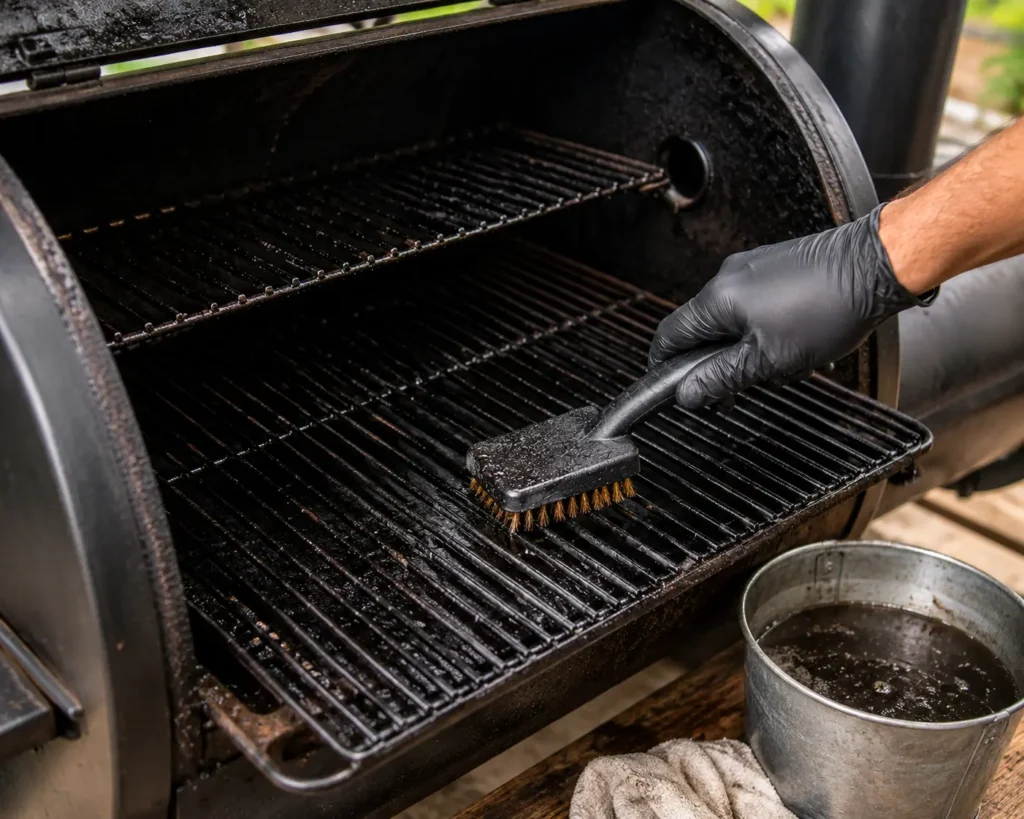
A clean smoker cooks better and asks less of you. Remove excessive grease buildup from the cooking chamber and firebox, clean the cooking grates regularly, and check that grease drains are not blocked.
Check the door seals for gaps that let uncontrolled air leak in, and keep the chimney and exhaust path clear of heavy buildup.
Never let old grease and carbon pile up indefinitely. Maintenance matters even more on an offset — predictable airflow is what keeps your wood fire burning clean.
Frequently Asked Questions
Post oak is the traditional choice for Central Texas-style barbecue, particularly brisket. It provides a relatively mild smoke profile that complements beef during long cooks. Hickory and mesquite can also be used when a stronger flavor is desired.
A cooking range of approximately 225–275°F works well for many low-and-slow BBQ cooks. Around 250°F is a practical target for brisket, but consistency and grate-level temperature are more important than maintaining one exact number.
A full packer brisket can take roughly 10–15 hours or more depending on its size, cooking temperature, smoker performance, and the individual piece of meat. Do not rely on time alone; cook until the brisket is tender.
Many briskets become tender around 200–205°F, but there is no universal finishing temperature. Probe tenderness is a better final test than simply removing the brisket at a predetermined number.
Wrapping is optional. Butcher paper or foil can help speed the cook and reduce moisture loss during the later stages. Some pitmasters prefer to leave brisket unwrapped to maximize bark development.
For long Central Texas-style brisket cooks, post oak is generally easier to manage because its smoke is milder. Mesquite has a much stronger flavor and can become overpowering if used heavily for many hours.
No. A water pan is optional. It can add humidity and help moderate temperature changes, but good fire management is more important.
Use a small, clean-burning fire, appropriately sized wood splits, good airflow, and reliable temperature probes. Avoid constantly adjusting vents in response to tiny fluctuations.
Thick white smoke usually indicates incomplete combustion. Check that the fire has enough oxygen, that the wood is properly seasoned, and that the exhaust has adequate airflow.
Yes, but they require more hands-on management than pellet or electric smokers. Learning fire control, airflow, wood selection, and temperature management is part of mastering an offset smoker.
Yes. Offset smokers are particularly well suited to brisket because they provide indirect heat and allow you to burn hardwood throughout a long cook.
The Key to Great Texas BBQ
The best Offset Smokers for Texas BBQ are not always the biggest or priciest. A well-built smoker — good airflow, solid construction, tight seals, and a manageable firebox — will turn out excellent barbecue in careful hands.
Start with a clean fire and quality hardwood. Choose post oak for that classic Central Texas profile, hold a steady low-and-slow environment, and keep reliable thermometers on both the grate and the meat.
Give brisket the time it needs to turn tender, and resist judging the whole cook by a single temperature reading or time estimate. The best results come from learning how your smoker responds to wood, airflow, weather, and food placement.
That is what makes Offset Smokers for Texas BBQ so rewarding: you are not just pressing a button and waiting on food. You are managing fire, smoke, heat, and time to create barbecue with a character that is hard to replicate any other way.