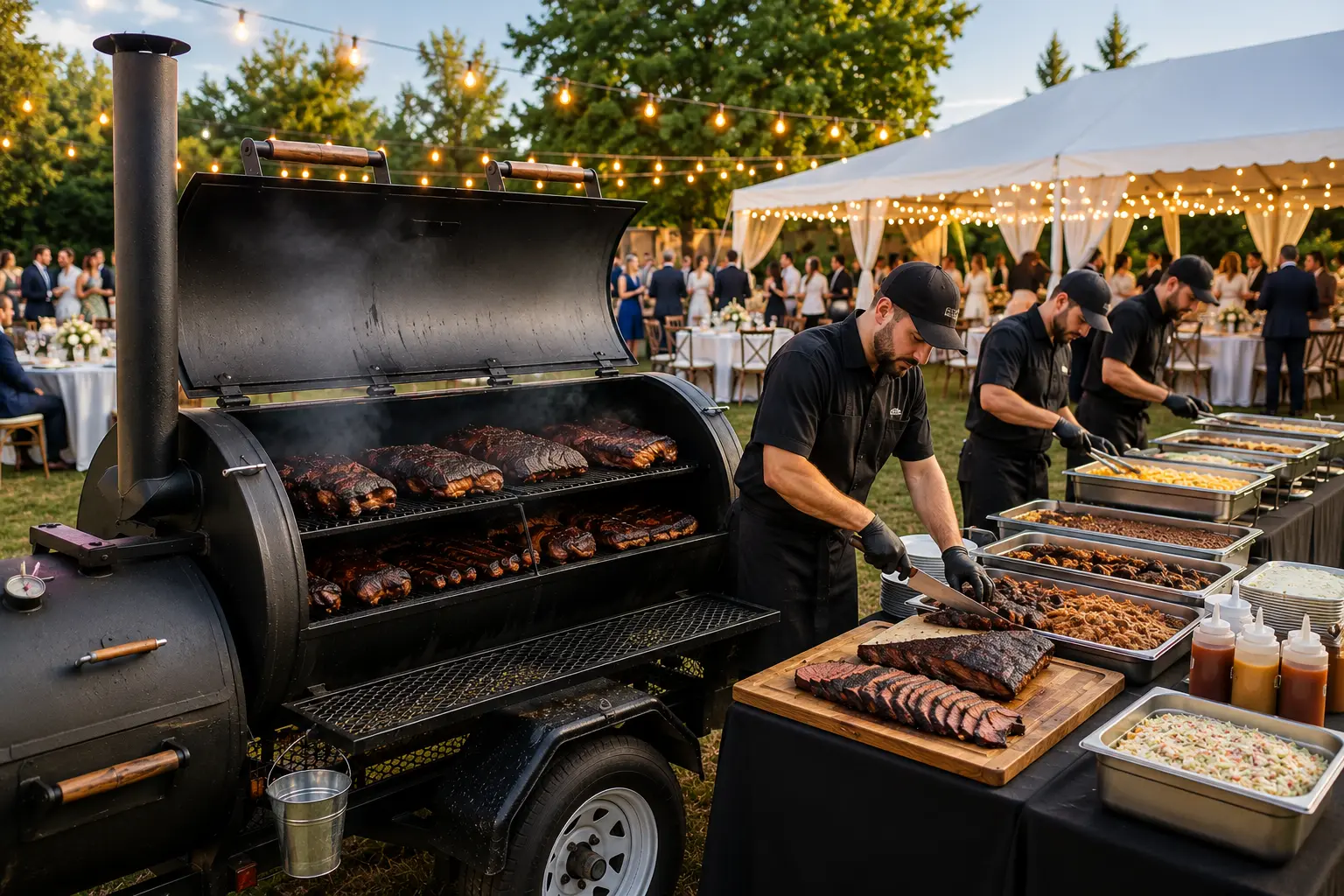
Feeding a crowd is nothing like cooking dinner for the family. When dozens or even hundreds of guests are waiting on food, you need equipment that can move serious volume — while still delivering the smoky flavor and tender texture people expect from quality BBQ. Offset Smokers for Catering fit that job well: large cooking chambers fired by traditional wood heat and smoke.
Whether you are running a dedicated BBQ catering company, adding smoked meats to an existing menu, or cooking for weddings, corporate events, festivals, and private parties, the right smoker shapes your whole workflow. Capacity, fuel use, cook times, transportation, temperature management, holding equipment, and food safety all belong on the checklist before you buy a commercial or trailer-mounted rig.
This guide walks you through selecting, running, and managing Offset Smokers for Catering so you can turn out consistent BBQ without the event schedule running you.
Offset Smokers for Catering are ideal for large BBQ events because they offer high cooking capacity, wood-fired flavor, and flexible temperature control. Choose the smoker size based on guest count, menu, transport needs, fuel supply, and required cooking volume.
What Is an Offset Smoker?
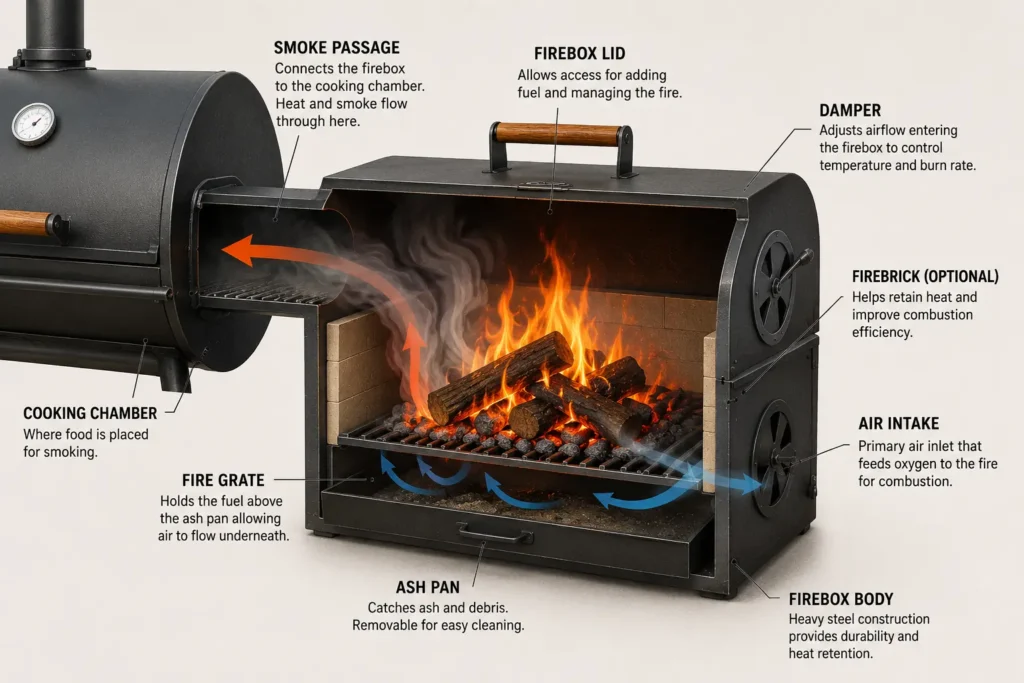
An offset smoker is a BBQ smoker with a separate firebox attached to the side of the main cooking chamber.Burn wood or charcoal in the firebox, and heat and smoke flow into the cooking chamber to cook the food indirectly — no flames touching the meat.
That separation is exactly what makes long cooks manageable: no meat sits directly over the fire. Heat drifts through the chamber while smoke bathes the food, then exits through the exhaust.
For catering, the payoff is volume: the cooking chamber holds large quantities of meat at once. Brisket, pork shoulder, beef ribs, chicken, sausage, and other menu items can all run through the same wood-fired system.
The pitmaster also runs the fire directly, so the cook can be tuned to the food, the weather, the cooking stage, and the event schedule as conditions change.
Why Choose Offset Smokers for Catering?
Large Cooking Capacity
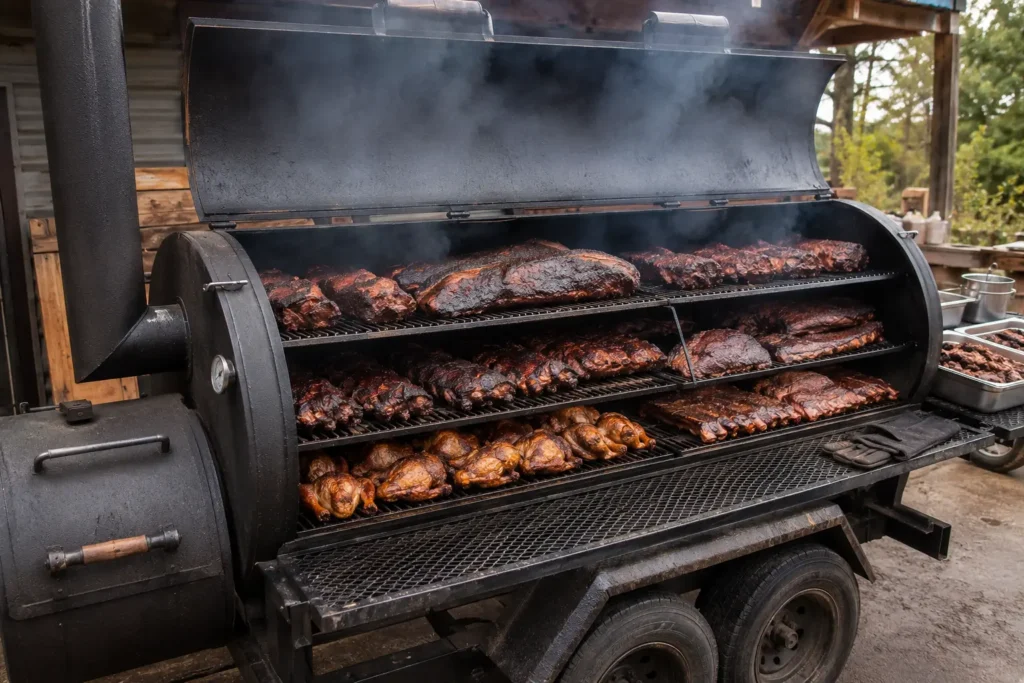
The biggest draw of Offset Smokers for Catering is sheer capacity: when guests are counted in the hundreds, you need volume without sacrificing the smoky quality people expect. A large cooking chamber can accommodate multiple briskets, pork shoulders, racks of ribs, chickens, or sausages during a single cooking cycle.
That is a real edge when your menu centers on smoked meat instead of small individual portions.
Do not judge capacity by advertised square inches alone. Chamber shape, grate spacing, access to different cooking zones, and the room each cut needs for airflow all eat into the space you can actually use.
A smoker that technically fits a dozen briskets can turn into a headache if the meat is packed in so tight that heat and smoke cannot circulate.
Authentic Wood-Fired Flavor
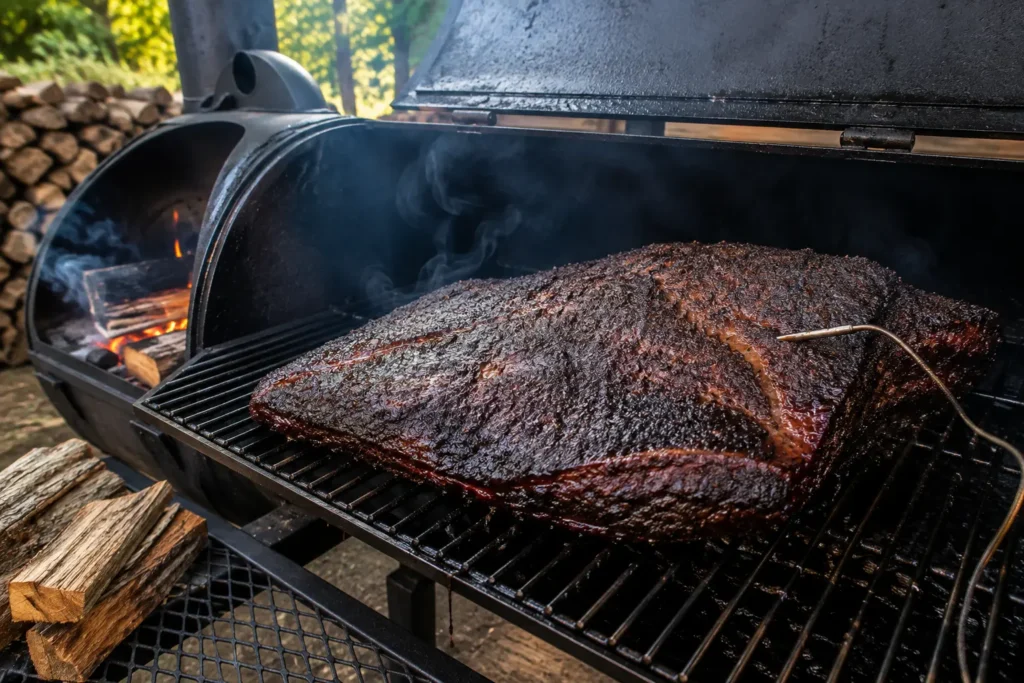
BBQ customers can spot real wood smoke from across the room, and an offset earns its keep here: you build that flavor directly through hardwood combustion.
Rather than leaning entirely on pellets, gas, or electricity, the pitmaster picks the hardwoods and decides how much smoke the cook gets.
For a catering business, that becomes part of the brand. A menu built around post oak brisket, oak-smoked ribs, or hickory-smoked pork gives people a clear reason to book your BBQ instead of a generic caterer.
Versatile Menu Options
A catering offset is no one-trick pony.
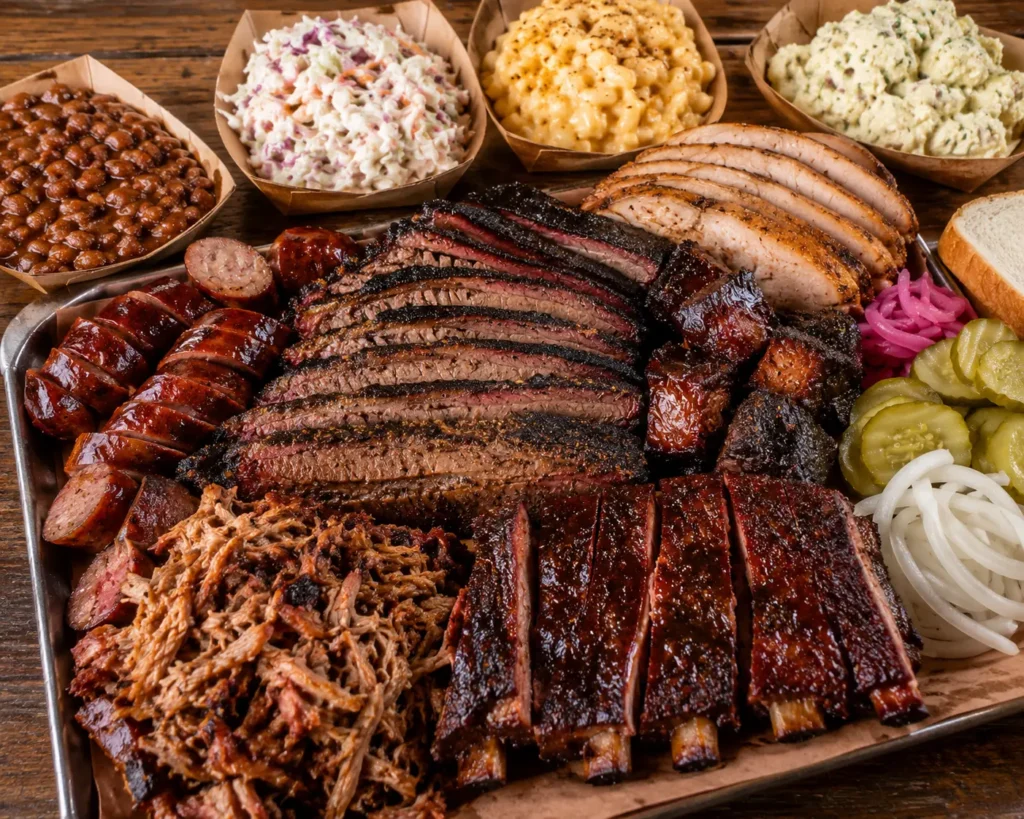
Depending on the rig and how you set it up, you can turn out brisket, pork shoulder, beef ribs, pork ribs, chicken, turkey, sausage, vegetables, and other smoked foods from the same chamber.
That flexibility lets you build different packages for different events.
A corporate lunch might call for sliced brisket and smoked chicken, while a wedding spreads out into brisket, ribs, sausage, and sides. A festival needs big batches of pulled pork and chicken that hold and serve all day long.
Hands-On Cooking Control
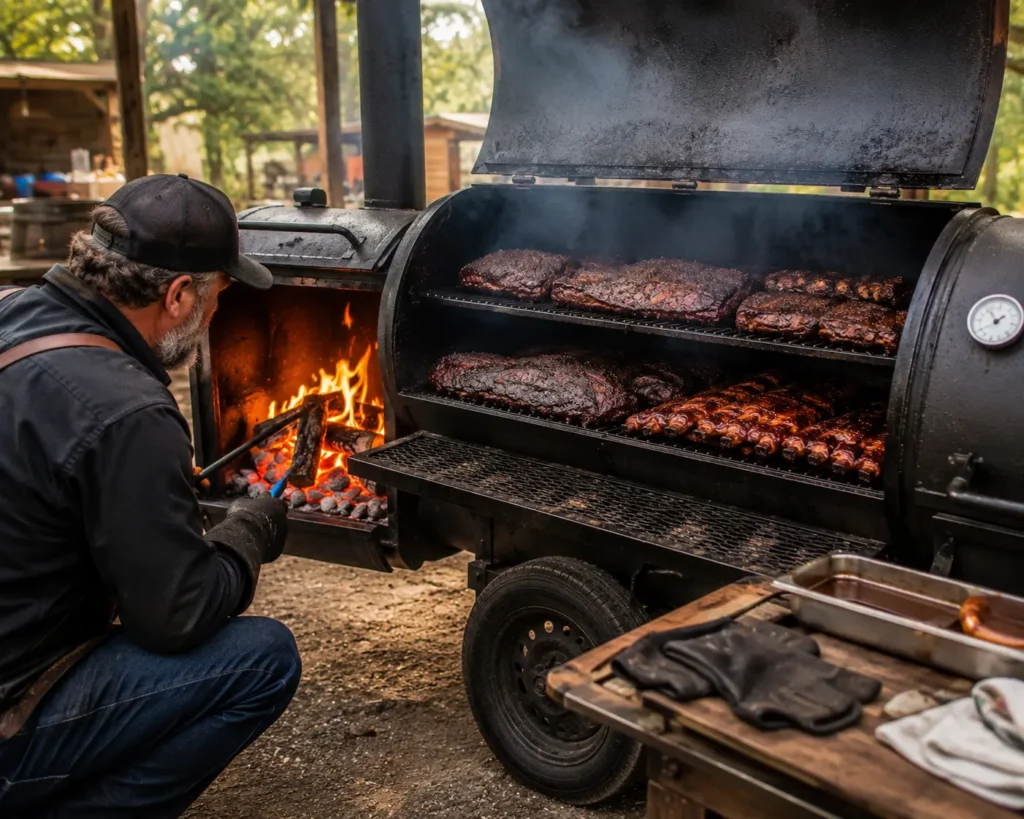
An offset hands you direct control over fire and airflow, which is a genuine advantage for a caterer who knows their rig’s quirks.
You can stoke or tame the fire by cooking stage, feed fuel when the temperature dips, reposition food, and hold your target temperature without waiting on automated controls to do it for you.
The trade-off is real: offset smoking demands more labor and attention than a pellet or electric unit. Price that fire-tending labor into your operating costs.
Choosing the Right Size for Catering
One of the biggest decisions you will make when buying Offset Smokers for Catering is capacity. Get it right and you save yourself a lot of headaches.
Too small, and you are running multiple cooks: more labor, trickier scheduling. Too big, and you are burning extra fuel, hauling extra steel, waiting longer on startup, and paying for capacity you rarely use.
Start with your real numbers: typical guest count and how much smoked meat your menu demands.
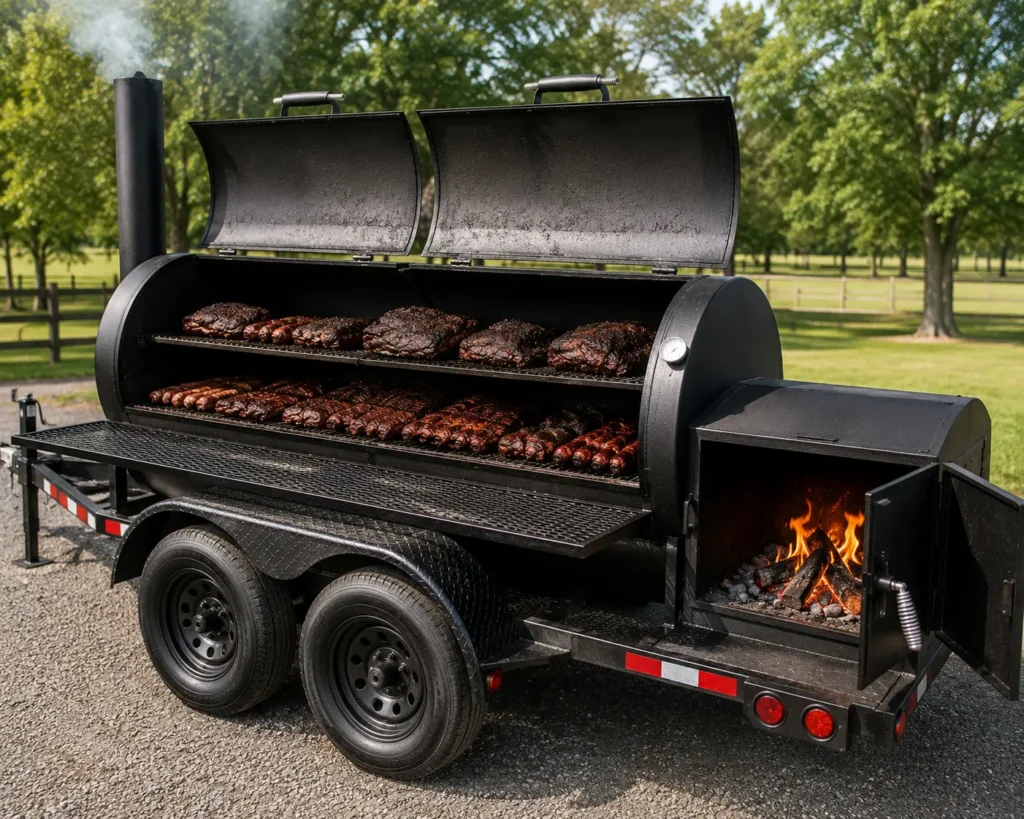
A medium-sized offset can cover smaller private events just fine. For big weddings, festivals, or commercial gigs, a trailer-mounted pit or large commercial smoker starts making more sense.
Guest count alone will not get you there. Different meats give different yields, cook for different times, and plate at different portions.
Brisket shrinks with trimming and cooking, boneless pulled pork yields differently than bone-in cuts, and chicken and sausage each need their own portion math.
Work out your menu requirements first, then pick the smoker that can handle that volume with room to breathe.
Should You Buy One Large Smoker or Multiple Smaller Smokers?
Both approaches can work for catering.
One big smoker keeps equipment management simple and gives you serious capacity. But if that one pit goes down, your whole operation feels it.
Multiple smaller units give you redundancy and let you split different meats or cooking temperatures across cookers. They can also be easier to haul, depending on the venue.
For a growing business, several smokers also mean flexibility: bring only what a small event needs instead of towing the big pit every time.
In the end, the call comes down to event size, transportation, labor, fuel supply, and your long-term business plan.
Best Fuel for Offset Smokers for Catering
Fuel planning gets serious when you move from backyard BBQ to commercial catering.
One long brisket cook can burn through a serious pile of hardwood, and running out mid-event is a nightmare scenario.
For Offset Smokers for Catering, seasoned hardwood is the go-to fuel when traditional wood-fired BBQ is the goal.
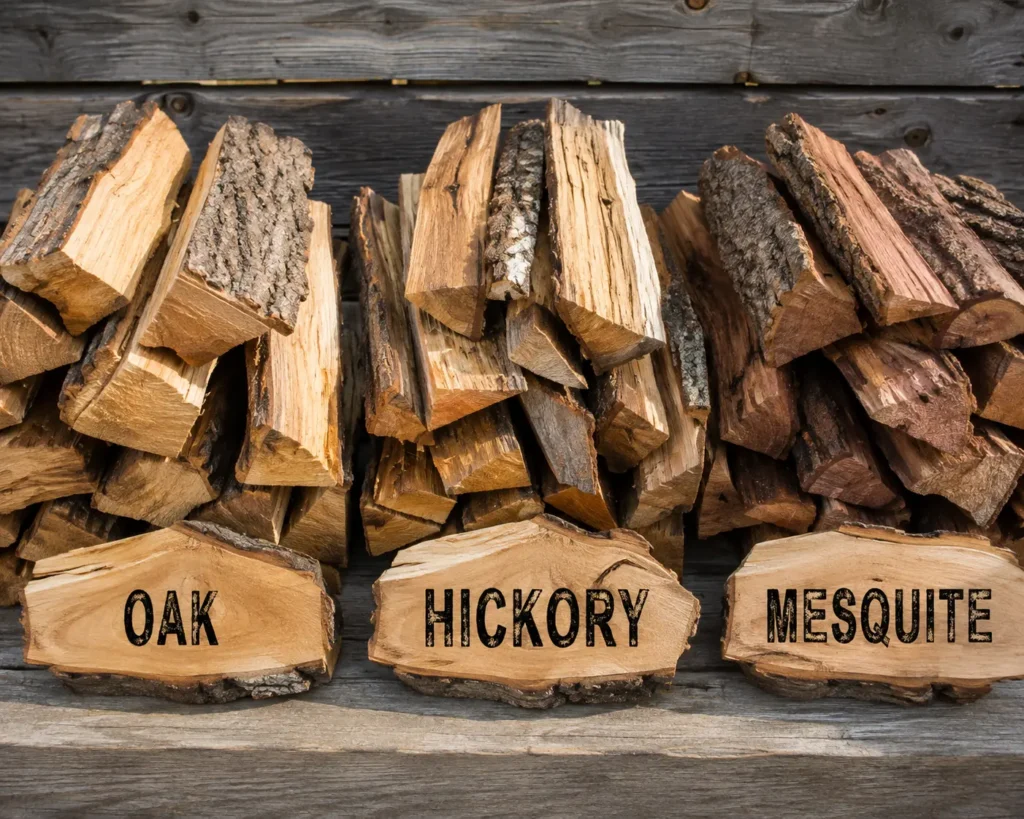
Oak
Oak is the workhorse of large-scale BBQ: a balanced smoke profile that plays well with beef, pork, poultry, and everything in between.
When cooks run many hours, a moderate smoke profile is far easier to manage than something overpowering.
Hickory
Hickory brings a stronger punch of smoke and shines with pork and beef.
Commercial cooking demands consistency, though. If you run hickory, keep the wood mix the same from cook to cook so every event tastes like the last.
Mesquite
Mesquite brings intense, distinctive smoke character when you want a bold signature flavor.
Its smoke can turn overpowering on long cooks, so use it with care. Many caterers blend it with milder hardwoods.
Fruit Woods
Apple and cherry offer milder, slightly sweeter smoke, a great fit for poultry, pork, and specialty menu items.
The best wood is the one that delivers your brand’s flavor profile consistently, cook after cook.
Planning Fuel for a Catering Event
Never roll into a big catering event with exactly the wood you expect to use.
Bring a healthy reserve.
Fuel burn depends on smoker build, steel thickness, wind, outside air temperature, cooking temperature, fire size, wood moisture, and how often the chamber gets opened.
Well-seasoned wood matters more than ever. Wet or green wood makes fire management harder and throws off dirty smoke.
Store fuel dry and off the ground, protected from rain.
Sort your wood by size before the event: small splits for holding a steady fire, larger pieces when you need more heat.
Offset Smoker Temperature Control for Catering
Reliable offset smoker temperature control is essential when you are cooking for paying customers.
In the backyard, a small temperature swing barely matters. Catering is a different game: it demands repeatability. If one batch of brisket cooks far faster than the next, your serving schedule falls apart fast.
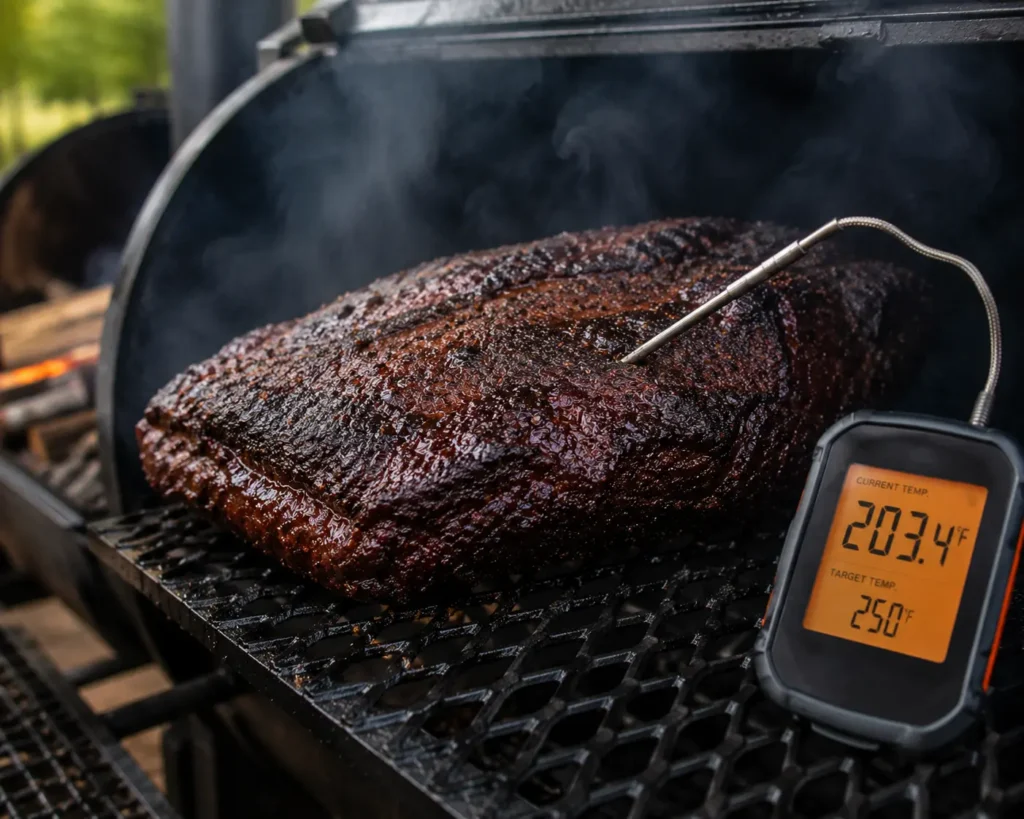
Step one is reliable thermometers.
Do not trust the lid thermometer alone. Grate-level temperature is what counts. That is where your food actually cooks.
Run multiple probes when you can, especially in big chambers where temperatures vary.
Build a Clean Fire
A clean-burning fire is one of the foundations of good offset smoking.
Never choke the fire down to thick, dirty smoke. Keep the airflow healthy and feed appropriately sized wood.
Stable heat and clean combustion: that is the goal.
When the temperature starts dropping, add a manageable bit of fuel rather than a huge armload of wood all at once.
Big fuel dumps spike the temperature and are hard to recover from.
Learn the Hot and Cool Zones
Big offsets naturally develop hot and cool zones across the chamber.
The firebox end usually runs hotter than the chimney side.
Rather than fighting those differences, learn your rig’s map and use the zones strategically.
Place cuts in zones that match their cooking speed, and move them around as needed.
For catering, map your zones during test cooks, before the smoker ever sees a major event.
Smoking Meat for Catering Events
Successful smoking meat for catering events starts long before the first fire is lit.
Build a prep schedule that covers trimming, seasoning, smoker startup, cooking time, resting, holding, transportation, and service.
Do not plan the cook backward from serving time without building in a buffer.
If food is served at 5:00 PM, do not plan on the brisket finishing at exactly 4:30 PM.
Pad the schedule with extra time.
Large cuts finishing early is a gift, not a problem: holding is far easier than rushing a late finish.
Brisket
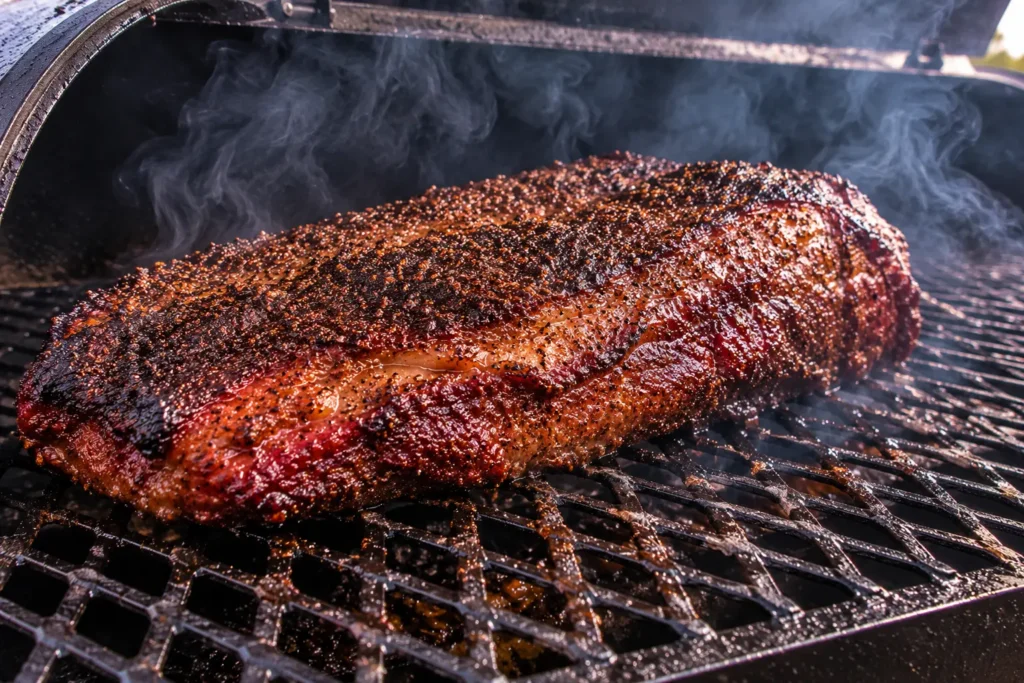
Brisket is the star of most catering menus, but also the least predictable on timing.
A large brisket can take many hours, and the exact window depends on its weight, smoker temperature, shape, fat content, and cooking method.
Never promise an exact finish time based on weight alone.
Schedule a generous cooking window instead, with room for resting and holding.
Pork Shoulder
Pork shoulder is a catering workhorse: it cooks in large batches and pulls beautifully before service.
It is more forgiving than brisket and holds well for service once properly cooked.
Ribs
Ribs cook faster than brisket, so they can join the schedule later. That makes them handy when several meats need to converge on the same service window.
Chicken
Chicken cooks significantly faster than large cuts such as brisket and pork shoulder.
So schedule chicken closer to the event instead of cooking it alongside briskets from the start.
Use a reliable thermometer to confirm poultry has reached its required safe internal temperature. USDA FSIS recommends 165°F for poultry.
Creating a Catering Smoking Schedule
A written schedule makes a real difference when you are running Offset Smokers for Catering.
Build a timeline for every major menu item.
For each meat, record the following:
- Weight and quantity
- Preparation time
- Target smoker temperature
- Estimated cooking window
- Expected finish window
- Resting time
- Holding method
- Service time
Never treat estimated cooking time as a guarantee.
The goal: enough flex that an early or late finish never derails the event.
Finish big cuts early and hold them properly, then slot faster-cooking meats in closer to service.
Food Safety for Catering BBQ
Food safety stakes are even higher when you are cooking for a crowd.
The smoker’s cooking temperature and the food’s holding temperature are two different things — do not confuse them.
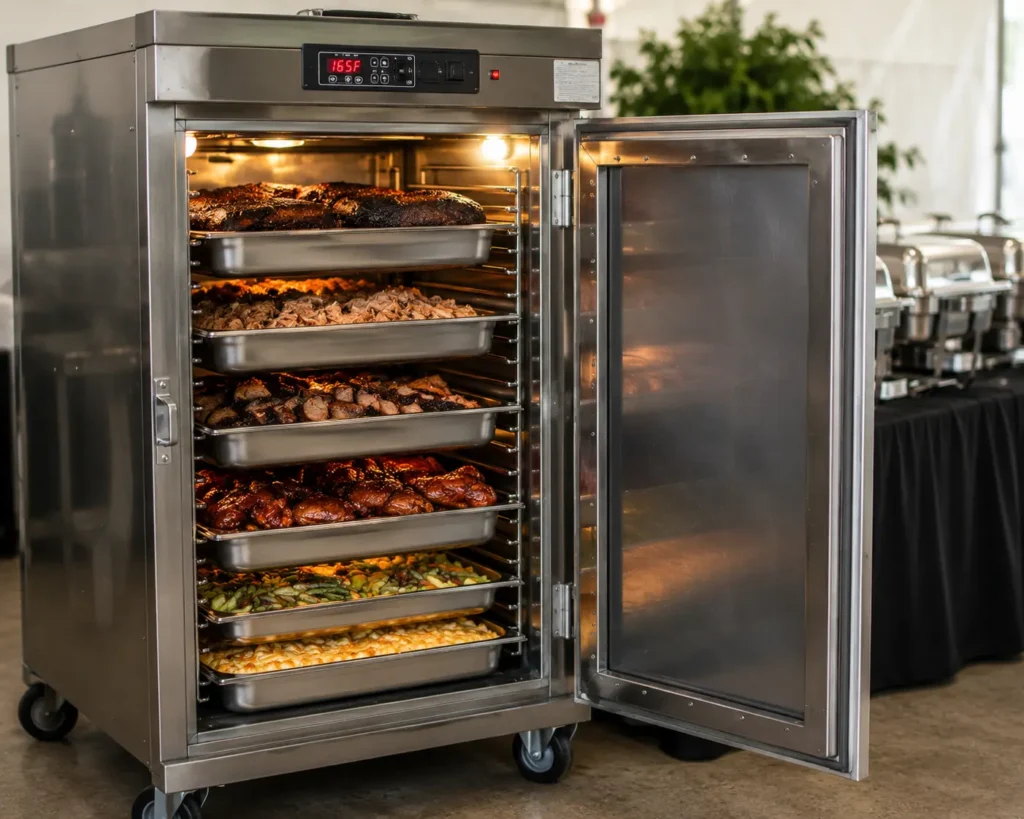
Your smoker may cruise around 225–300°F during the cook, but hot-held finished food has to stay at a proper holding temperature.
The FDA Food Code is the model many jurisdictions use for retail and food-service food safety, and its current standard calls for hot holding time/temperature-control-for-safety foods at 135°F or above.
Local and state rules can differ, though, so always follow the regulations for the jurisdiction where you are operating.
At outdoor events, weather and transportation can make temperature control a lot trickier.
Use proper hot-holding equipment instead of assuming the smoker can double as a holding cabinet.
FDA guidance also stresses keeping hot foods hot and cold foods cold during outdoor service, and avoiding long stretches in unsafe temperature ranges.
Prevent Cross-Contamination
Keep separate utensils and surfaces for raw and cooked food — no sharing.
Never rest cooked meat on a tray or cutting board that held raw meat unless it has been properly cleaned and sanitized.
That matters even more at catering events, where big volumes move through a relatively tight workspace.
Set up your prep area with clearly separated zones for raw ingredients, cooked meat, serving equipment, and ready-to-eat foods.
Transporting Offset Smokers for Catering
Transportation is where backyard and professional BBQ diverge most.
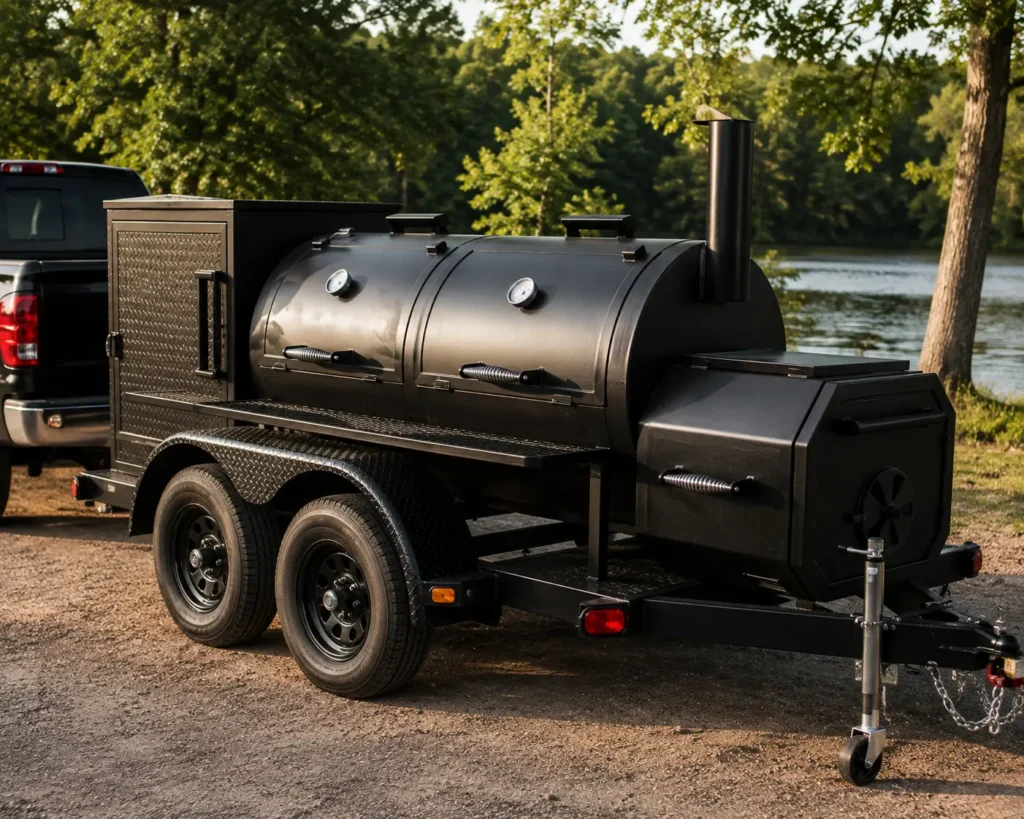
A large offset may need a trailer, a suitable tow vehicle, a parking spot, and a safe setup area at the venue.
Before buying a smoker, consider its total weight, dimensions, wheel configuration, hitch requirements, and transportation method.
A smoker that looks perfect on paper becomes a headache if it will not move easily between venues.
For mobile catering, trailer-mounted smokers are a practical solution — they are built to travel as part of your catering operation.
Before every event, inspect tires, wheels, hitch components, lights, and the rest of your transportation gear.
Also confirm the venue has room for the smoker and that live-fire cooking is allowed there.
Setting Up the Smoker at an Event
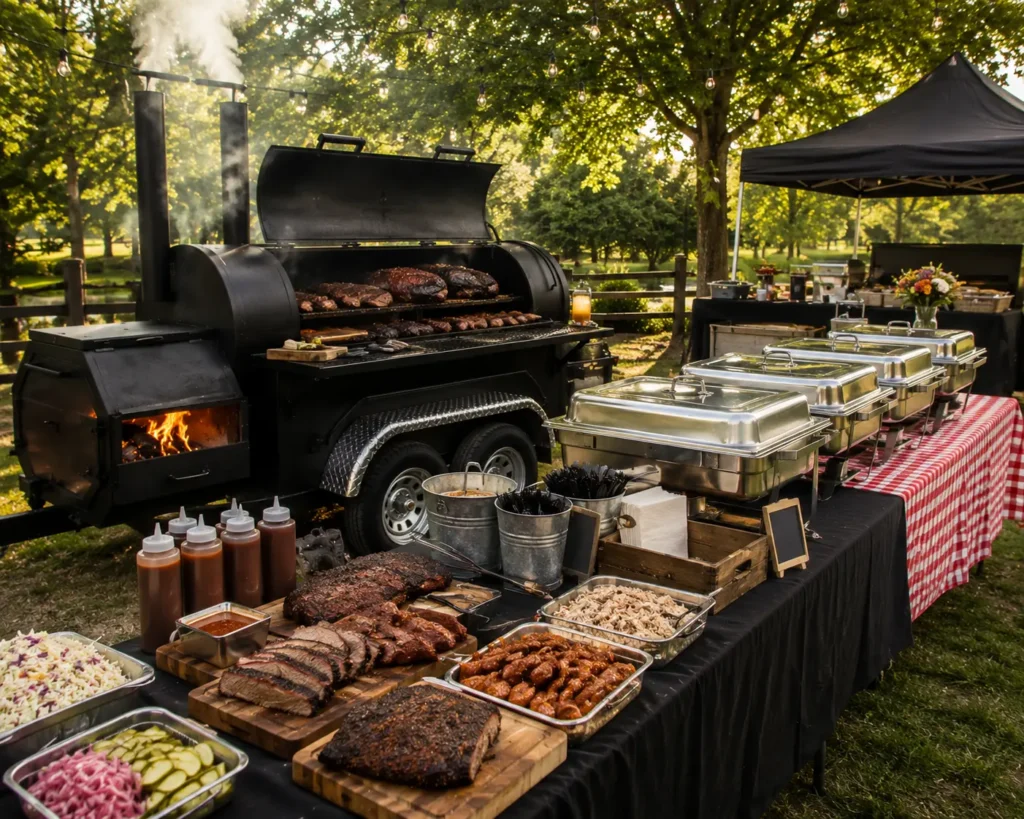
Arrive early so your safe cooking area is set before any food prep begins.
Set the smoker on a stable surface with plenty of clearance from combustible materials.
Follow the manufacturer’s instructions and local fire regulations.
Know where the fire extinguishing equipment lives, and make sure your staff understands the emergency procedure.
For outdoor events, check the weather before you arrive. Strong wind can mess with fire behavior, temperature control, and smoke direction.
Rain causes its own problems too, for both fuel storage and electrical equipment around the cooking area.
Best Practices for Using Offset Smokers for Catering
Prep as Much as Possible in Advance
Trimming, seasoning, labeling, and organizing meat ahead of time saves a serious amount of clock.
Put a written production plan in everyone’s hands so the cooking team knows what happens and when.
Maintain a Consistent Fire
Resist the urge to keep changing your fire size.
Find a repeatable method for your smoker and document it.
Over time, you will learn roughly how much wood your smoker burns under different conditions.
Use Quality Wood
Consistent wood makes more consistent BBQ.
Do not mix random wood species without writing down what you used.
If your brand has a signature smoke profile, treat your wood selection as part of the recipe.
Rest Large Cuts Properly
Brisket and pork shoulder both deserve adequate resting or holding time before service.
A proper rest also buys you scheduling flexibility.
Stagger Different Meats
Do not load every menu item into the smoker at once just because it fits.
Start the long-cooking meats first and add the faster-cooking foods later.
That way everything finishes in sync with the service schedule.
How to Manage Large BBQ Events
Large events require more than a big smoker.
You need an organized production system too.
Break the operation into preparation, cooking, holding, slicing, serving, and cleanup.
Assign staff responsibilities instead of expecting one person to run every stage.
For example, one person minds the fire while another preps food and a third manages cooked meat and holding.
That way nothing important slips while the pitmaster is tending the fire.
Keep a Cooking Log
A cooking log is extremely useful for a growing offset smoker catering business.
Log the weather, smoker temperature, wood consumption, meat weights, start times, wrap times, finish temperatures, resting periods, and final results.
After a few events, patterns start jumping out.
You might find your smoker eats more wood in cold weather, or that one cooking zone always runs hot.
Those records sharpen future event planning instead of relying on memory alone.
How to Calculate Catering Capacity
Do not size your equipment off the maximum brisket count the manufacturer claims the smoker holds.
Calculate what your actual menu requires.
Start with guest count, expected portion size, menu composition, and cooked yield.
If you serve several meats, you need less of each than if brisket were the only protein.
Also consider whether food goes out buffet-style, plated, or as individual portions.
A buffet usually calls for a different production strategy than plated service.
Once you know your expected production volume, compare it against the smoker’s usable grate area and your typical cooking cycle.
Common Mistakes When Using Offset Smokers for Catering
Buying Too Small
A smoker that barely covers your average event becomes a bottleneck the moment a bigger order lands.
Choose equipment that gives you some capacity for growth.
Buying Too Large
Oversizing causes problems too. A huge smoker eats more fuel, demands more labor and transportation capacity, and takes longer to heat.
Buy for your actual business model, not just the biggest smoker on the market.
Underestimating Fuel
Always carry more fuel than your estimate calls for.
A delayed cook can add hours of extra fire management.
Ignoring Holding Equipment
Cooking is only half of the job.
You also need a safe, practical way to hold finished food until service.
The FDA Food Code model sets 135°F or above for hot holding of time/temperature-control-for-safety food, but follow your applicable local regulations.
Cooking Everything at Once
Different meats cook at different speeds.
Build a staggered production schedule around the service time instead.
No Backup Plan
Equipment fails, weather turns, and events run late.
Professional operations need contingency plans for fuel shortages, equipment problems, delayed service, and surprise guest numbers.
Maintenance for Catering Smokers
Commercial use wears a smoker down far faster than occasional backyard cooking.
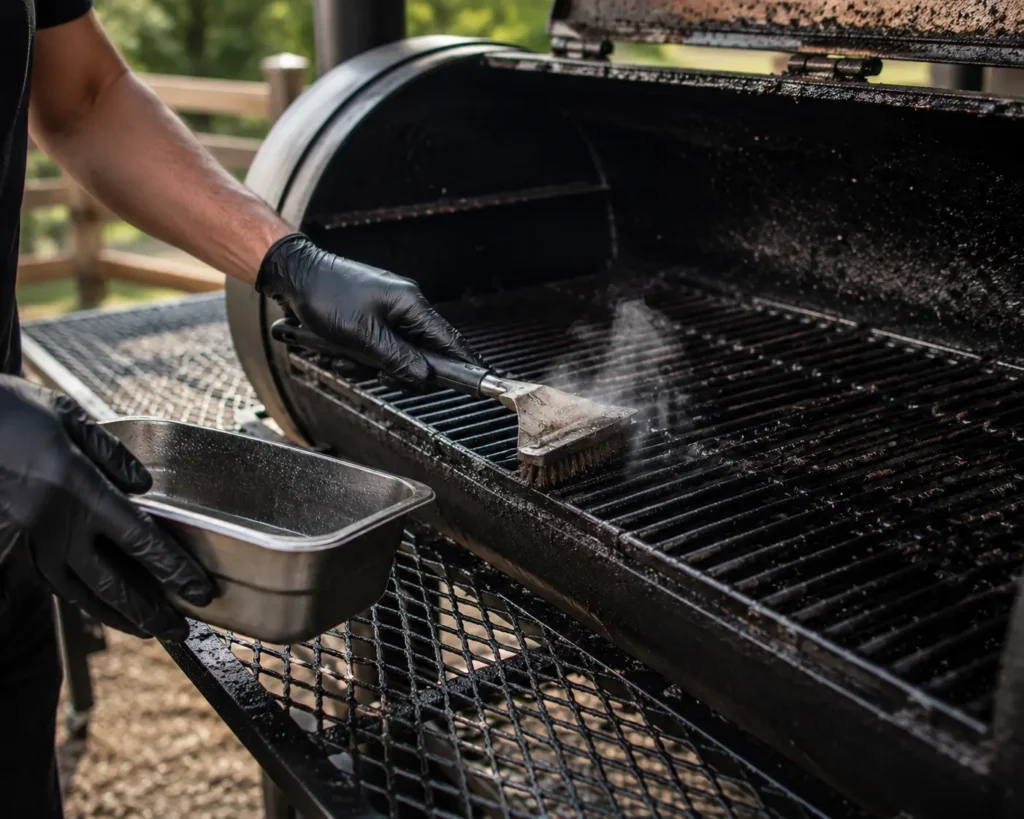
Clean the cooking grates regularly and remove excessive grease buildup.
Regularly inspect the firebox, cooking chamber, exhaust, hinges, wheels, seals, and drainage system.
Catch rust early and repair damaged areas before they become structural problems.
On a trailer-mounted smoker, check the trailer components as part of your normal maintenance routine.
A maintenance checklist keeps small issues from becoming major problems on event day.
Is an Offset Smoker Worth It for a Catering Business?
For a BBQ-focused catering business, an offset can be an excellent investment.
The draw is the combination of capacity, wood-fired flavor, and direct cooking control.
But it is not the easy option.
An offset demands labor: someone must manage the fire, monitor temperatures, add fuel, inspect the food, and react to changing conditions.
That labor belongs in your pricing model.
If your customers value traditional smoked BBQ and your menu runs on brisket, ribs, pulled pork, or smoked sausage, the flavor and production flexibility can justify the extra work.
If your catering business mainly serves quick-cooking foods, a large offset may not earn its keep.
Building a Better Catering BBQ Operation
The best Offset Smokers for Catering are not necessarily the largest or most expensive models. The right smoker matches your event volume, menu, transportation setup, fuel availability, staffing, and cooking schedule.
Capacity matters — but so do fire management, construction quality, airflow, temperature monitoring, and maintenance.
For large BBQ events, build your production schedule around the longest-cooking meats first. Start brisket and pork shoulder early, and schedule ribs, sausage, and chicken closer to service.
Use reliable thermometers and monitor both the smoker and the meat. USDA FSIS specifically recommends tracking smoker temperature and food temperature separately when smoking meat and poultry.
Keep food safety in the entire workflow, from prep and cooking through holding and service. The FDA Food Code provides a model for food-service safety, including hot-holding guidance — but always verify the requirements for your specific location.
Most importantly, treat catering BBQ as a repeatable production process, not a single cook. Test your smoker before major events, record your results, work out realistic fuel needs, build time buffers into the schedule, and train your team to follow the same procedures.
When equipment, fire, food, staff, and schedule all work together, Offset Smokers for Catering can become one of the most valuable tools in a BBQ-focused catering operation.
Frequently Asked Questions
The ideal size depends on your typical guest count, menu, cooking schedule, and number of meats being served. Smaller private events may only require a medium smoker, while festivals and large weddings may justify a large commercial or trailer-mounted pit. Calculate your actual production needs before choosing the smoker.
Yes. They can be especially effective for businesses focused on brisket, ribs, pulled pork, beef ribs, chicken, and other smoked foods. Their large cooking chambers and wood-fired flavor make them well suited to BBQ-focused menus, although they require more labor than automated smokers.
Oak is a versatile choice for large-scale BBQ because it provides a balanced smoke profile and works with several types of meat. Hickory, mesquite, cherry, and other hardwoods can also be used depending on your desired flavor profile.
There is no universal amount because fuel consumption depends on smoker size, construction, weather, cooking temperature, wood moisture, fire size, and cooking duration. Test your smoker before relying on it for a paid event and always carry a reasonable reserve.
Many low-and-slow BBQ cooks operate around 225–275°F, but the appropriate temperature depends on the meat and cooking method. USDA FSIS recommends monitoring smoker temperature with a thermometer and keeping the smoker within an appropriate smoking range.
The FDA Food Code model specifies 135°F or above for hot holding of time/temperature-control-for-safety foods. Local and state regulations may differ, so catering businesses should follow the requirements applicable to their operation.
Start earlier than you think you need to. Brisket cooking times vary considerably, so building a generous buffer allows you to handle a slow cook without delaying service. Properly holding finished brisket can also provide scheduling flexibility.
It depends on the smoker’s usable cooking capacity and the amount of food required. For very large events, multiple smokers may provide better flexibility and backup capacity than relying on one extremely large pit.
A trailer-mounted smoker can be useful for mobile catering because it combines cooking capacity with transportation. Before purchasing one, consider towing requirements, parking, venue access, local regulations, and the total weight of the equipment.
Use a clean-burning fire, appropriately sized wood, reliable grate-level thermometers, and consistent airflow. Avoid constantly opening the cooking chamber or making large adjustments based on small temperature fluctuations.
Yes. Large offset smokers can cook multiple meats simultaneously, but you need to understand the different cooking temperatures, times, and placement requirements. Staggering the cooking schedule can make it easier to have everything ready for service.
It requires more hands-on attention than pellet or electric smokers. Someone needs to manage the fire, monitor temperature, add fuel, and respond to changing conditions. For professional catering, this labor should be included in your staffing and pricing calculations.
One of the biggest mistakes is underestimating the time and fuel required. Catering cooks should include buffer time, carry reserve fuel, monitor temperatures carefully, and have a backup plan for unexpected delays.
For professional catering, dedicated hot- and cold-holding equipment is strongly advisable. The smoker is designed for cooking, while properly designed holding equipment helps maintain food at safe service temperatures after cooking. Follow the food-safety requirements that apply to your location.