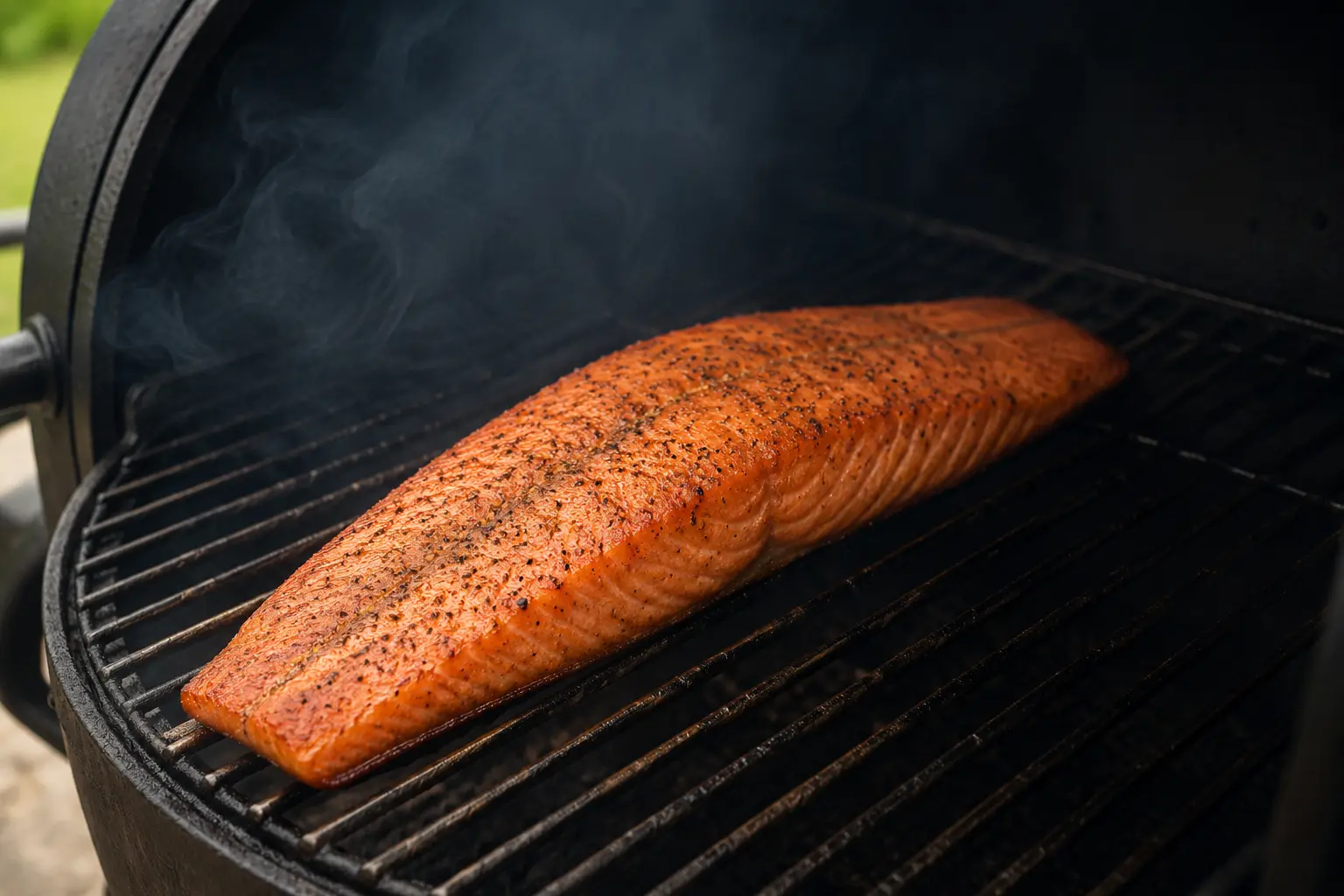
We love a good salmon recipe that pairs tender fish with rich, smoky flavor, and the offset smoker is our favorite way to make it happen. Salmon’s naturally rich, buttery texture soaks up clean wood smoke beautifully, especially with simple seasoning and steady, indirect heat.
Here’s what we love about salmon on the offset: unlike brisket or pork shoulder, it doesn’t demand an all-day cook. When you want something lighter without giving up real BBQ flavor, salmon is the answer.
This salmon recipe keeps things simple: an easy seasoning blend, mild smoking wood, and a steady cooking temperature deliver tender, flavorful fish with a lightly smoked exterior. Beginners can follow it step by step, and seasoned pitmasters can riff on it freely.
Smoke salmon at 225°F until it reaches 145°F internally. Use mild wood such as apple, cherry, or maple, season simply, and let the salmon rest for a few minutes before serving.
Why Make This Salmon Recipe in an Offset Smoker?
Salmon brings plenty of flavor on its own, so skip the complicated rubs and heavy sauces. An offset smoker shines here: gentle, indirect heat plus a kiss of natural wood smoke is all this fish needs.
It tastes nothing like pan-seared or oven-baked salmon. Instead of leaning on seasoning alone, you’re layering in flavor from clean-burning hardwood.
Moderation is the name of the game. Salmon’s flavor is delicate next to beef brisket, so hours of heavy smoke will bulldoze right over it.
That’s why mild wood, a steady temperature, and a clean fire matter far more than billowing clouds of smoke.
Still getting comfortable managing an offset smoker? Brushing up on how offset smokers work will help you nail airflow and temperature control before the cook starts.
Ingredients for This Salmon Recipe
The ingredient list is refreshingly short.
Here’s what you’ll need for about 4 servings:
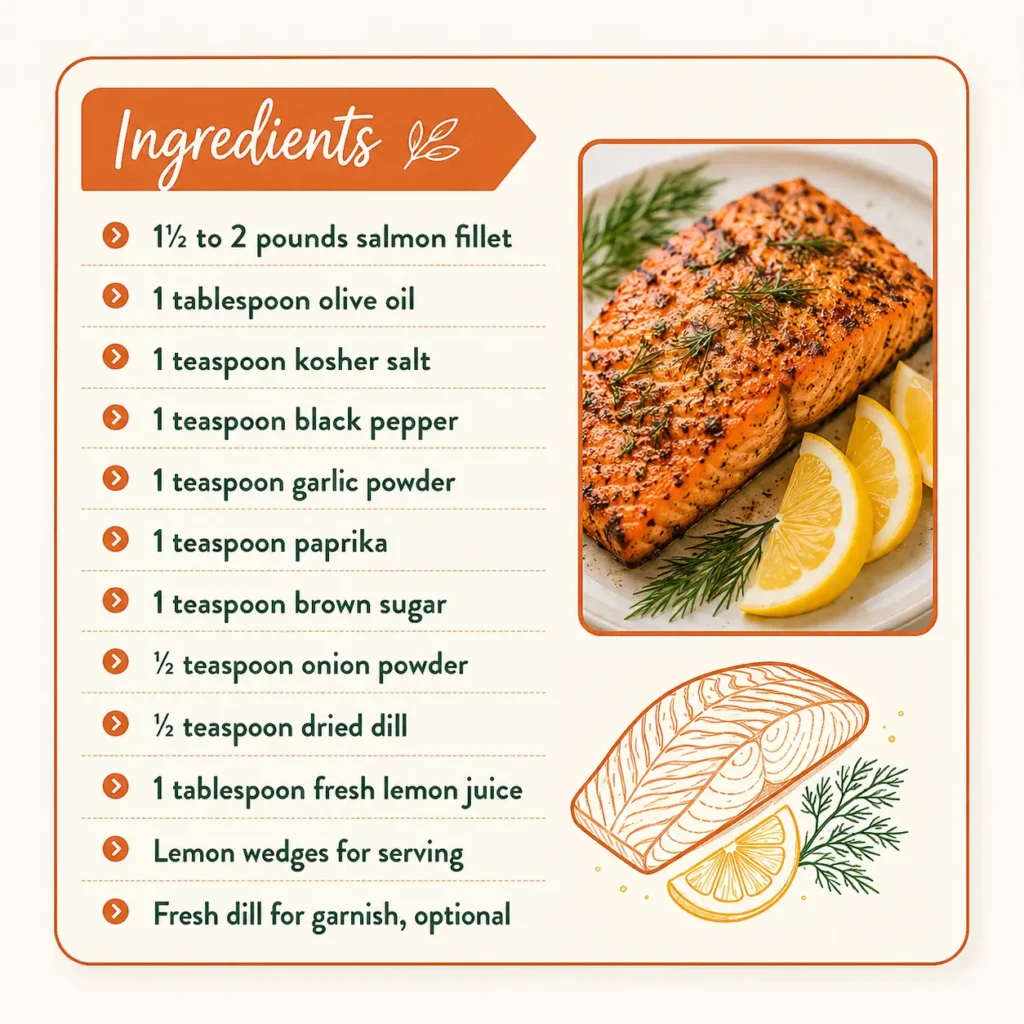
Feel free to tweak the seasoning to your taste: a little extra brown sugar for a sweeter finish, or more garlic and black pepper for a savory kick.
Either way, let the seasoning complement the fish rather than bury its natural flavor.
What Type of Salmon Should You Use?
Don’t underestimate the raw material — the quality of your salmon shows up in the finished dish.
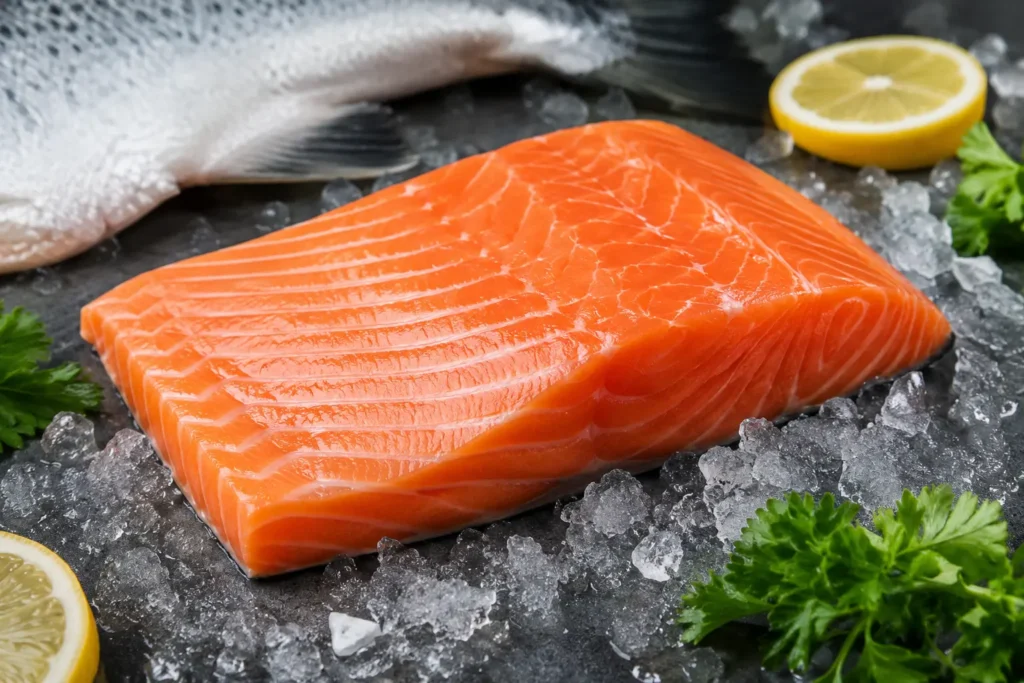
We reach for fresh fillets with even thickness whenever possible: they cook more consistently, and a thick center section helps the fish stay moist until the whole fillet is ready.
Atlantic salmon is easy to find, and its rich, relatively fatty texture loves smoke. Wild varieties run leaner with a stronger natural flavor — delicious too, just a different experience.
Whichever you choose, look for a fresh appearance and no unpleasant odor.
Using frozen salmon? Thaw it safely in the refrigerator before you start prepping.
Should You Leave the Skin On?
Yes — our vote is to keep the skin on. It makes smoking salmon noticeably easier.
The skin shields the fish from the cooking grate and gives you something sturdy to work with when the fillet is done.
Smoke it skin-side down, and the delicate flesh is far less likely to stick to the grate.
Prefer skinless? This recipe still works — just use a clean, lightly oiled grate or a smoker-safe tray so the fillet is easy to handle.
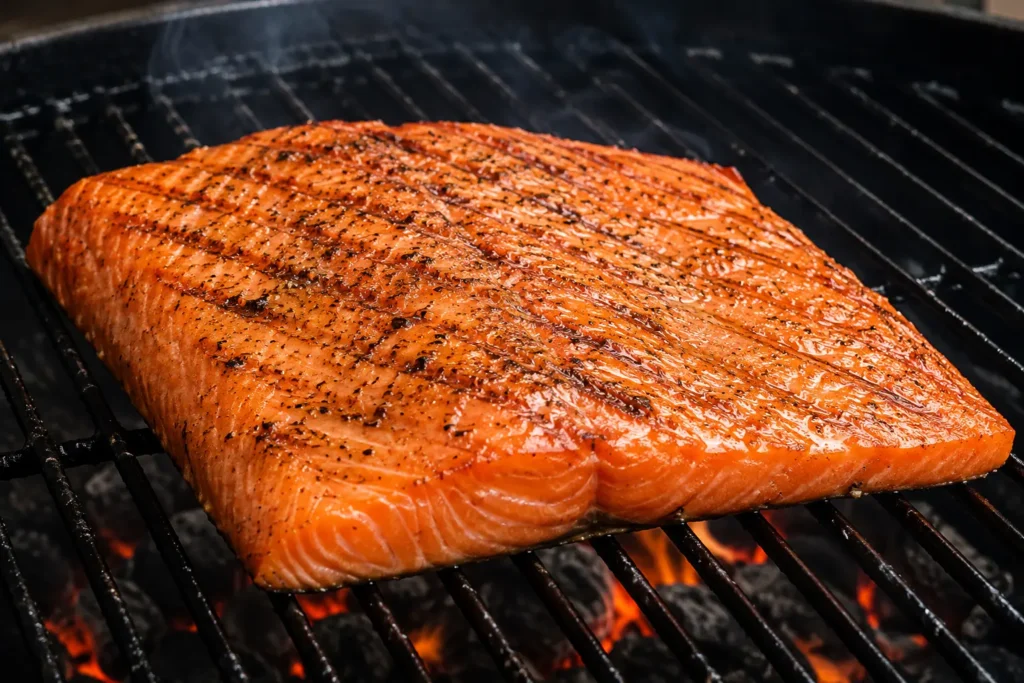
How to Prepare the Salmon
First, run your fingers over the fillet for any leftover pin bones — pull any you find with clean tweezers or fish pliers.
Pat the salmon dry with paper towels. Getting rid of surface moisture helps the seasoning stick and gives you a better exterior texture in the smoker.
Give the fillet a light brush of olive oil.
Stir the salt, black pepper, garlic powder, paprika, brown sugar, onion powder, and dried dill together in a small bowl, then sprinkle the mix evenly over the top of the salmon.
Finish with a small squeeze of fresh lemon juice.
Resist the urge to pile it on — salmon’s rich natural flavor means a light seasoning layer is plenty.
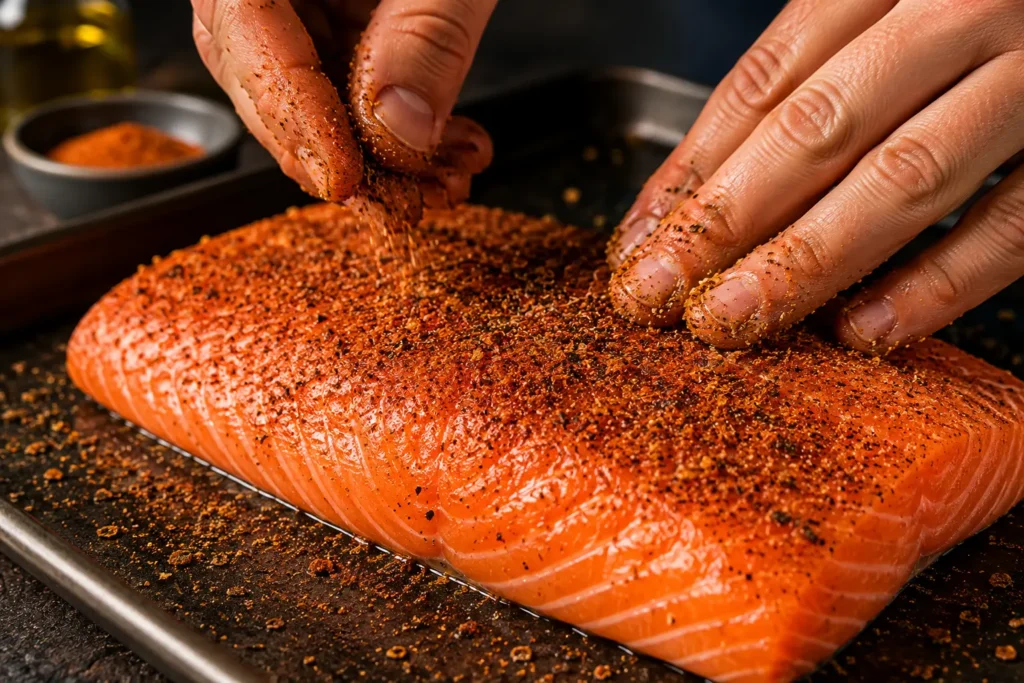
Should You Brine Salmon Before Smoking?
Short answer: brining is optional for this salmon recipe.
A brine can add seasoning and change the texture of the fish, but for a fresh fillet headed into a relatively short smoke, it’s not necessary.
Want to try a brine anyway? Keep it mild and don’t soak the fish too long — salmon is far more delicate than large cuts of meat.
For a simple weeknight-style smoked salmon, seasoning right before it goes on the smoker is faster and easier.
Best Wood for Smoked Salmon
Wood choice matters more with salmon than with most meats.
Strong woods like mesquite can overpower the delicate flavor of the fish, particularly over a long cooking session.
Milder woods are a better starting point.
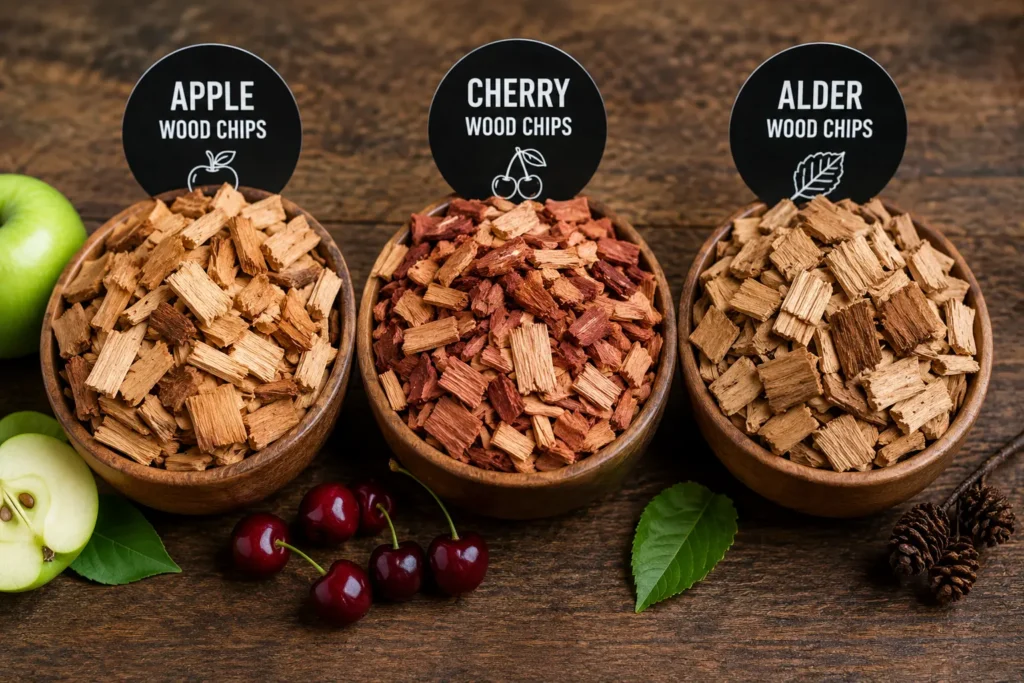
Apple Wood
Apple is a classic pick for salmon: its mild, slightly sweet smoke plays beautifully with the fish’s natural richness.
Cherry Wood
Cherry brings a mild smoke profile plus a bonus — it gives the surface of the salmon gorgeous color.
Maple Wood
Maple adds a subtle sweetness that pairs especially well with a brown-sugar or maple-leaning seasoning.
Alder Wood
Alder is the traditional fish-smoking wood, and for good reason — its gentle smoke lets the salmon’s natural flavor take center stage.
For this recipe, any of the four — apple, cherry, maple, or alder — will do the job well.
How to Prepare Your Offset Smoker
Before the salmon goes in, let the smoker come up to temperature and stabilize.
For this cook, aim for approximately 225°F in the cooking chamber.
Build a small, clean-burning fire in the firebox and let the cooking chamber settle at a steady temperature.
Don’t chase billowing white smoke — thick smoke turns salmon harsh fast, because fish absorbs smoke so quickly.
Instead, run a clean fire with good airflow and a light stream of smoke.
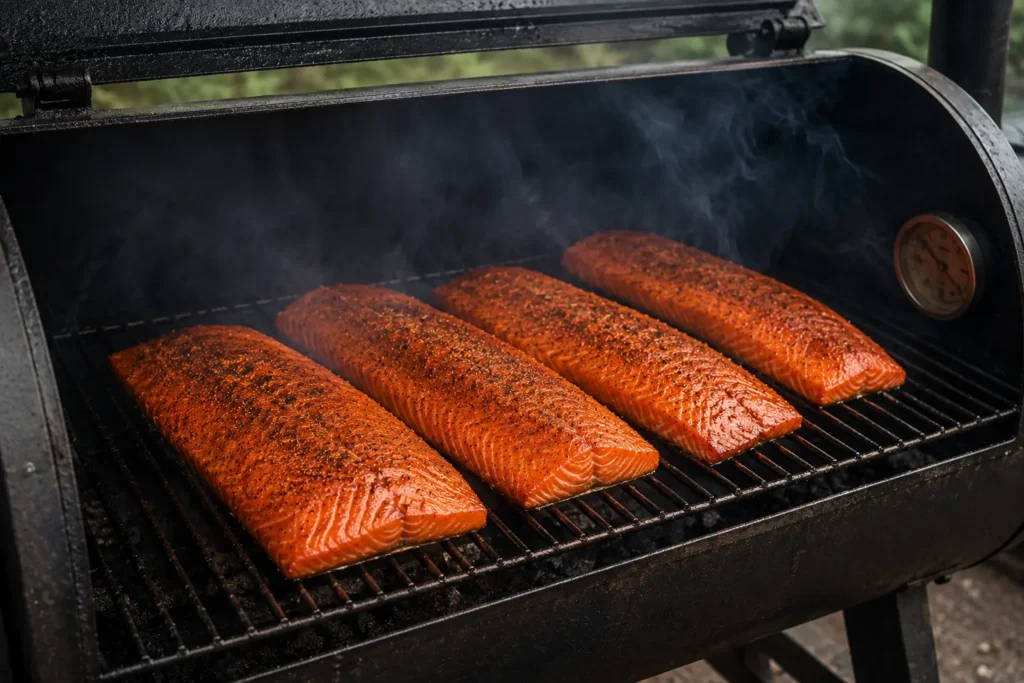
If your cooking grate has hot spots, place the salmon in a moderate-temperature zone rather than right next to the firebox.
For more offset-smoking techniques and smoker information, check out the Offset Smoker Pro guides.
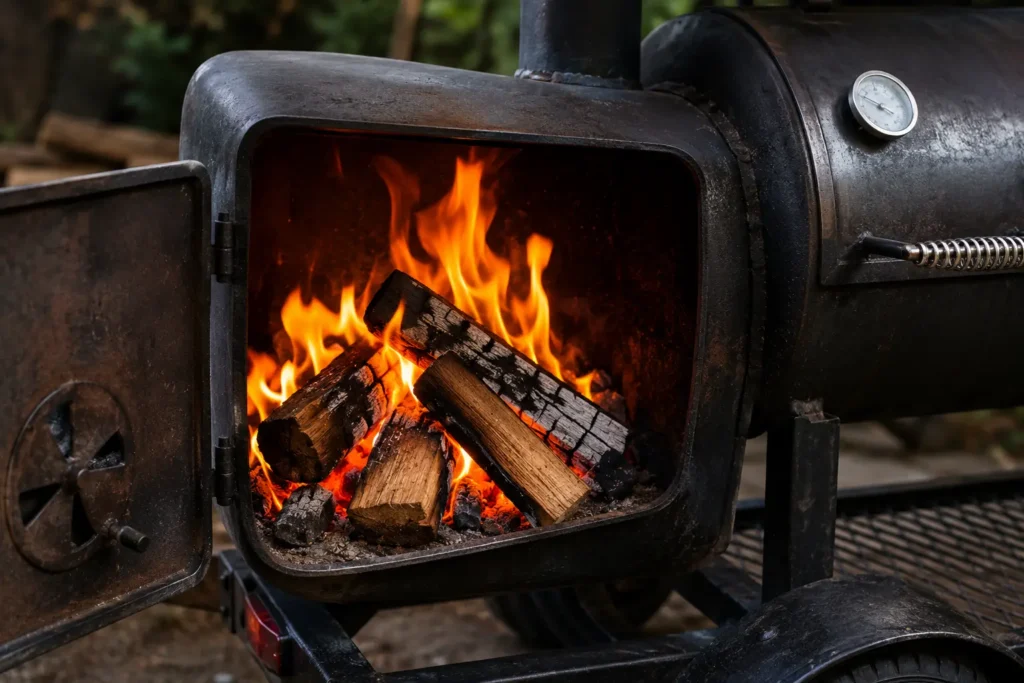
How to Smoke This Salmon Recipe
Once the smoker is holding steady at approximately 225°F, lay the salmon skin-side down on the cooking grate.
Close the cooking chamber and let the salmon cook undisturbed — resist the urge to keep peeking, since every lid opening costs you heat.
Salmon cooks far faster than brisket, so there’s no need to hover over it. Trust a reliable thermometer to track the internal temperature instead of eyeballing it.
Exact cooking time comes down to fillet thickness, smoker temperature, starting temperature, and the individual piece of fish.
A thin fillet can be done before you know it, while a thick center-cut section needs considerably more time.
So cook by internal temperature and texture, not by the clock.
What Temperature Should Salmon Reach?
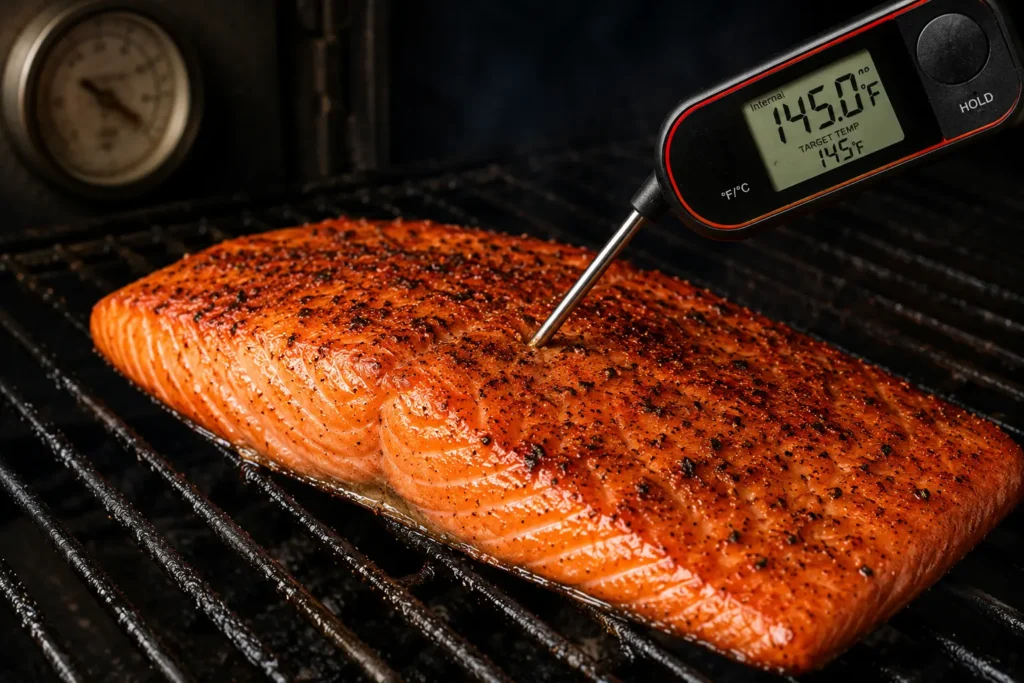
We take the conservative food-safety route here: cook salmon to 145°F internally. The FDA lists 145°F as the minimum internal temperature for fish and shellfish. FDA Safe Minimum Internal Temperatures
Insert the thermometer probe into the thickest part of the fillet.
Don’t judge doneness by the thin tail alone — it reaches the target temperature well before the center is fully cooked.
As soon as the thickest part hits the target temperature, take the salmon out of the smoker.
How Long Does Smoked Salmon Take?
Don’t look for one magic cooking time — fillets vary too much in thickness for that.
At approximately 225°F, a typical fillet takes somewhere around 45–90 minutes, but treat that as a rough estimate rather than a guarantee.
When it comes to timing, thickness matters more than weight.
A thick center-cut fillet can need substantially more time than a thin tail section.
The most reliable approach: monitor the internal temperature and pull the salmon when it hits its mark, not because a recipe named a particular number of minutes.
Should You Use BBQ Sauce on Salmon?
Sure — but it’s not required.
We find salmon shines brightest with lighter glazes rather than heavy BBQ sauces.
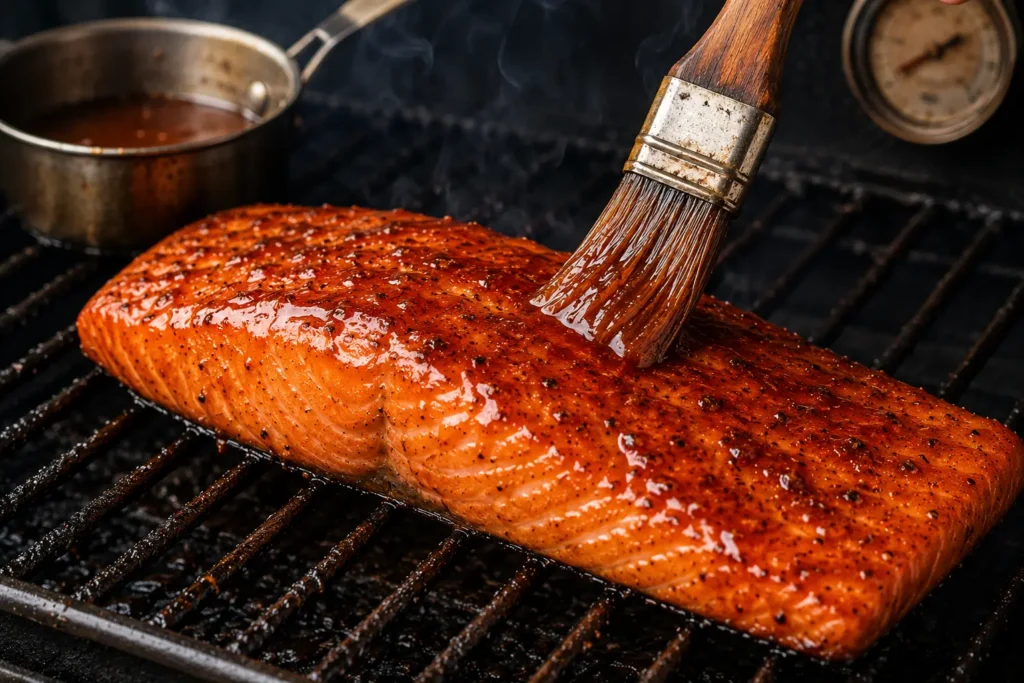
If you want a glaze, think maple syrup, honey, lemon juice, mustard, or just a small amount of BBQ sauce.
Pro tip: brush sugary glazes on toward the end of the cook so they don’t brown too much or burn.
Our favorite is a simple maple-lemon glaze — it complements the salmon’s natural richness without burying the wood-smoked flavor.
How to Make a Maple Glaze
For a quick glaze, combine:
- 2 tablespoons maple syrup
- 1 tablespoon Dijon mustard
- 1 teaspoon lemon juice
- ½ teaspoon garlic powder
- Small pinch of black pepper
Mix the ingredients until smooth.
Brush a thin layer over the salmon during the final 10–15 minutes of cooking.
Do not apply a thick coating too early because the sugars can darken quickly in the smoker.
How to Tell When Salmon Is Done
Trust your thermometer first — it’s the most reliable way to check the salmon.
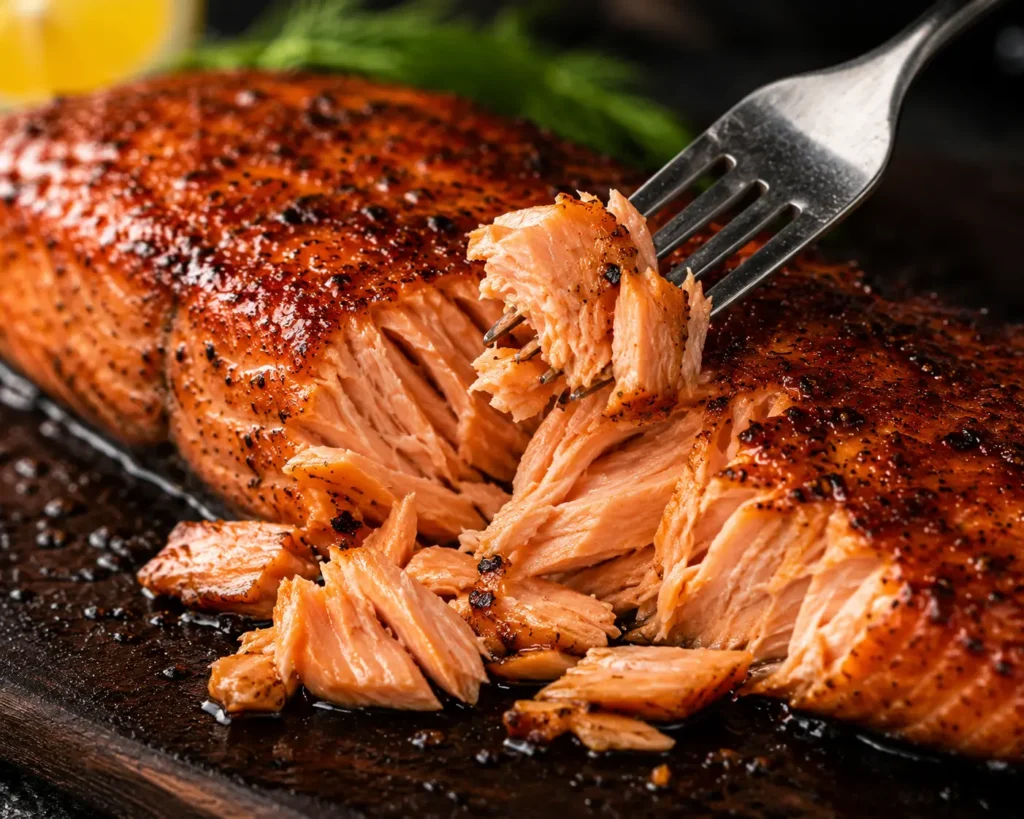
The fish should reach the recommended safe internal temperature, and the flesh should look opaque and separate easily into flakes.
Avoid repeatedly pressing or cutting the salmon while it cooks.
Every cut into the fillet lets juices escape and makes the final texture harder to judge.
Once the thickest section reaches its target temperature, pull the salmon and let it rest briefly.
Why Is My Smoked Salmon Dry?
Dry salmon almost always comes down to overcooking.
Salmon’s healthy fats keep it moist when cooked properly, but too much time in the heat makes the proteins tighten and squeeze moisture from the flesh.
Cooking temperature is the other culprit.
Running the smoker much hotter than planned can dry out the outside of the fish before the center reaches the texture you want.
The fix is simple: hold a controlled smoker temperature and monitor the fish with a thermometer.
How to Keep Smoked Salmon Moist
Start with a good-quality fillet of reasonably even thickness.
Don’t over-season it, and don’t overcook it.
A light coat of olive oil helps protect the surface, and a glaze brushed on near the end adds another layer of flavor and moisture.
Holding the smoker around 225°F for this method also gives you more control than cooking at an unnecessarily high temperature.
Most important of all: pull the fish when it hits the right internal temperature rather than leaving it in the smoker just to develop more smoke flavor.
Can You Smoke Salmon Without Skin?
Yes — skin-on or skinless, both work.
Skinless salmon smokes just fine, but it’s more delicate and likes to stick to the grate.
Use a lightly oiled grate, a fish basket, parchment suitable for the cooking method, or a smoker-safe tray.
Handle the fillet gently when moving it to and from the smoker.
For beginners, a skin-on fillet is the easier choice — the skin adds structural support during the cook.
Can You Use Frozen Salmon?
Yes — just thaw it properly first.
The safest approach is thawing frozen salmon in the refrigerator, which keeps the fish at a safe temperature while it defrosts gradually.
Once it’s thawed, pat the salmon dry before seasoning.
Don’t leave raw fish sitting at room temperature for extended periods.
Smoked Salmon Side Dishes
This salmon recipe pairs beautifully with a range of sides — its smoky flavor works with both fresh and hearty ingredients.
Here are some pairings we love:
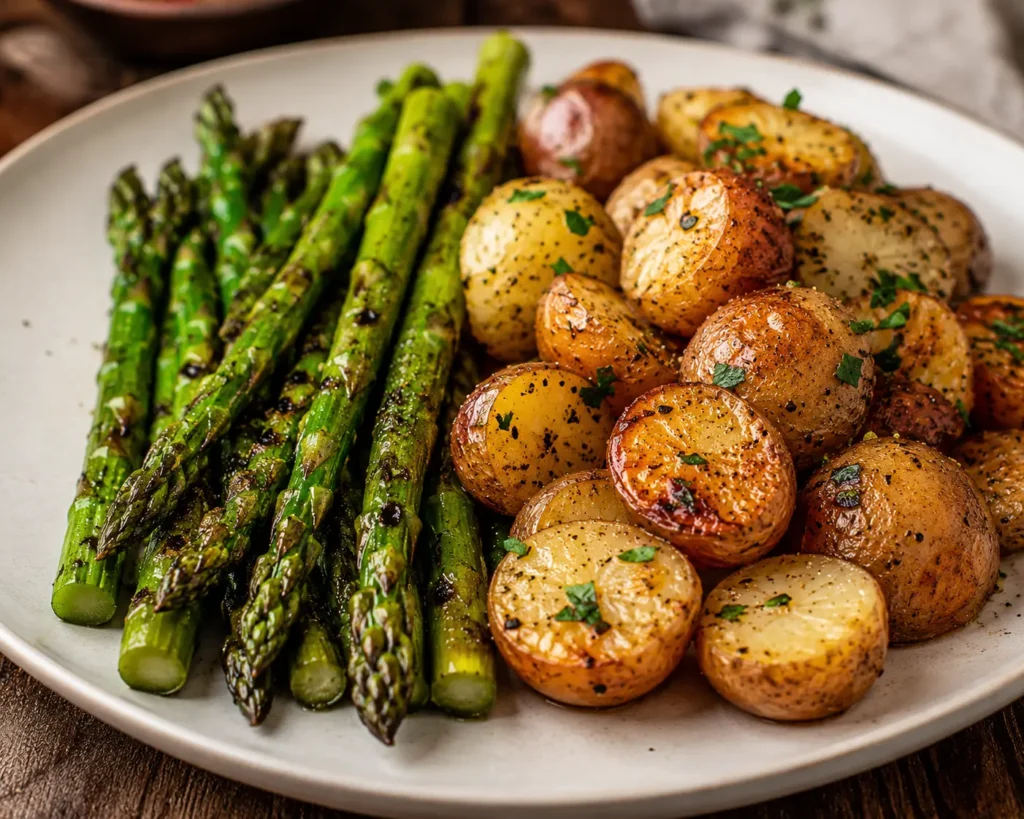
- Grilled asparagus
- Roasted potatoes
- Fresh green salad
- Coleslaw
- Grilled vegetables
- Corn on the cob
- Rice
- Roasted broccoli
- Lemon herb potatoes
For a lighter meal, combine smoked salmon with a fresh salad, lemon, herbs, and roasted vegetables.
For a BBQ-style meal, pair it with grilled vegetables, potatoes, or a light slaw.
How to Serve Smoked Salmon
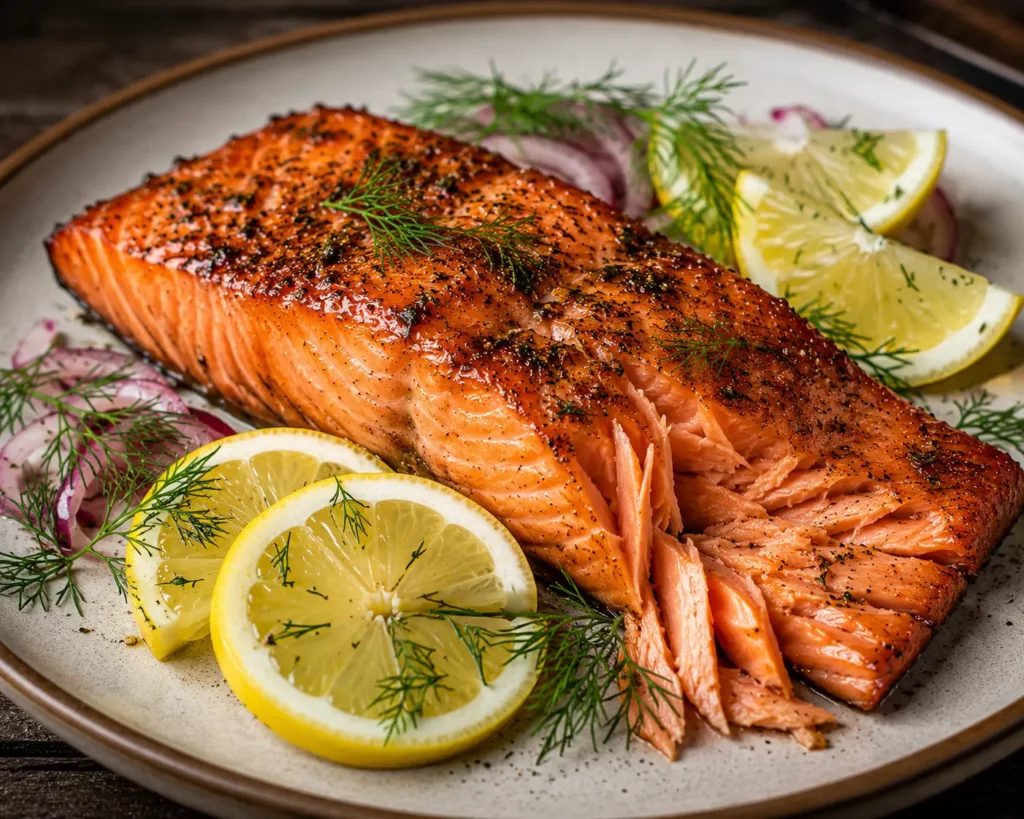
Let the salmon rest for a few minutes once it comes off the smoker.
Then separate the fillet gently into portions with a fork or a fish spatula.
Serve it with fresh lemon wedges and a sprinkle of herbs.
Leftover smoked salmon also flakes beautifully into salads, sandwiches, wraps, pasta, rice bowls, or breakfast dishes.
The smoky flavor goes a long way — even a small amount of leftover salmon can lift another meal.
How to Store Leftover Smoked Salmon
Get leftover salmon into a shallow, airtight container and refrigerate it promptly.
Keep it chilled and use it within the safe storage window recommended for cooked seafood.
For longer storage, freeze the smoked salmon in suitable airtight packaging.
When reheating, keep the heat gentle — high heat will dry the fish out.
A low, gentle warm-up beats putting it back into a screaming-hot smoker.
Common Mistakes When Making Smoked Salmon
Using Strong Smoke
Heavy smoke bulldozes salmon fast. Stick with mild wood and a clean-burning fire.
Cooking at Excessively High Heat
High heat dries the outside before the center is ready. A steady 225°F smoker cooks it far more gently.
Overusing Seasoning
Salmon already brings bold natural flavor — a simple rub beats a heavy coating here.
Opening the Smoker Too Often
Every lid opening dumps heat and wrecks your airflow. Trust a thermometer instead of eyeballing the fish.
Cooking by Time Alone
A recipe may say 60 minutes, but your fillet might be thicker or thinner. Internal temperature is the better guide.
Adding Glaze Too Early
Sweet glazes scorch fast in the heat. Brush them on near the end of the cook instead.
Tips for Perfect Smoked Salmon Every Time
Pro tip: start with a fresh, evenly thick fillet — and keep the skin on for extra protection and easier handling.
Burn mild hardwood — apple, cherry, maple, or alder — and keep the fire burning clean.
Hold your offset smoker around 225°F for this method, and watch the temperature at grate level.
Season lightly so the salmon’s natural flavor stays front and center.
Track the thickest part of the fillet with a reliable thermometer.
Pull the salmon when it reaches the safe internal temperature, then let it rest briefly before serving.
These simple habits will beat complicated seasoning or heavy smoke every time.
Can You Make This Salmon Recipe on a Standard Grill?
Yes — but the cooking method looks different.
On a charcoal grill, bank the charcoal on one side and set the salmon on the opposite side for indirect cooking.
A gas grill works too, using indirect heat depending on how it’s configured.
Still, the offset smoker has a real edge here: a dedicated firebox and cooking chamber make steady, continuous wood smoke almost effortless.
If you enjoy experimenting with different BBQ cooking systems, comparing an offset smoker with other smoker designs can help you figure out which setup fits your cooking style.
Smoked Salmon for Meal Prep
Smoked salmon doubles as a fantastic meal-prep ingredient.
Once the cooked fish is cooled and stored properly, flake it into portions to use through the week.
Toss it into salads, wraps, rice bowls, pasta, sandwiches, or breakfast dishes.
Since it’s already seasoned and smoked, there’s no need to build a whole new recipe around the leftovers.
What Makes This Salmon Recipe Different?
What makes this salmon recipe stand out is how simple it is.
No complicated marinade, no aggressive BBQ rub — none of that is needed here.
The salmon carries the main flavor while mild hardwood adds a gentle smoky layer.
A steady 225°F smoker cooks the fish gently and lets it pick up smoke without an all-day session.
That makes this a great excuse to fire up the offset smoker for something beyond brisket, ribs, and pork shoulder.
Frequently Asked Questions
For this method, approximately 225°F is a practical smoker temperature. It provides controlled indirect heat while allowing the salmon to absorb mild smoke flavor.
At around 225°F, many salmon fillets take approximately 45–90 minutes, but the exact time depends on thickness and smoker performance. Use internal temperature rather than time alone.
For a conservative food-safety target, salmon should reach 145°F internally. Measure the thickest part of the fillet with a food thermometer. FDA Food Safety Guidance
Mild woods such as apple, cherry, maple, and alder are excellent choices. They provide smoke flavor without overpowering the natural taste of salmon.
Yes. Leaving the skin on can help protect the fish and make it easier to handle during cooking. Place the salmon skin-side down on the grate.
No. Brining is optional. A simple seasoning blend works well for a short smoked salmon cook, although you can experiment with a mild brine if you prefer.
Yes, but use it lightly. A maple, honey, mustard, or lemon-based glaze usually complements salmon better than a heavy sauce.
The most common reason is overcooking. Salmon should be monitored carefully because it cooks much faster than large BBQ cuts such as brisket.
Thaw the salmon safely in the refrigerator before smoking. Pat it dry after thawing so the seasoning adheres properly.
Yes. A whole salmon side can be smoked using the same basic method, although the cooking time will vary depending on its thickness and weight.
Yes. Many fish varieties can be prepared using indirect heat and mild wood smoke. Adjust the cooking temperature, seasoning, and final internal temperature according to the specific fish.
Final Takeaway: Easy Smoked Salmon on an Offset Smoker
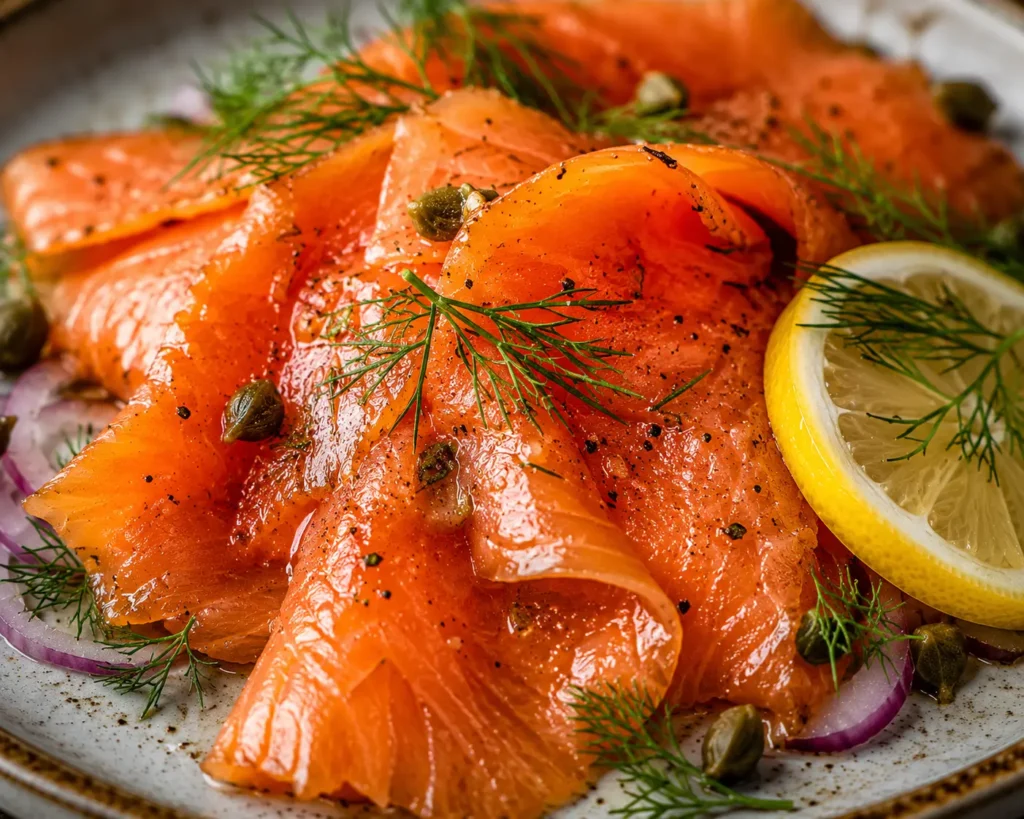
A great salmon recipe doesn’t need complicated ingredients or advanced technique. Fresh salmon, mild seasoning, clean wood smoke, and controlled indirect heat are enough to make a flavorful BBQ dish.
For this method, fire your offset smoker to around 225°F and pick a mild hardwood like apple, cherry, maple, or alder. Keep the fire clean, avoid heavy smoke, and watch the thickest part of the salmon with a reliable thermometer.
When the salmon reaches the safe internal temperature, pull it from the smoker and let it rest briefly before serving.
You get tender, smoky salmon that works as a main course or in salads, sandwiches, wraps, pasta, and meal-prep dishes.
Once you’re comfortable with this basic salmon recipe, play around with different rubs, glazes, wood combinations, and side dishes to create your own signature smoked salmon style.