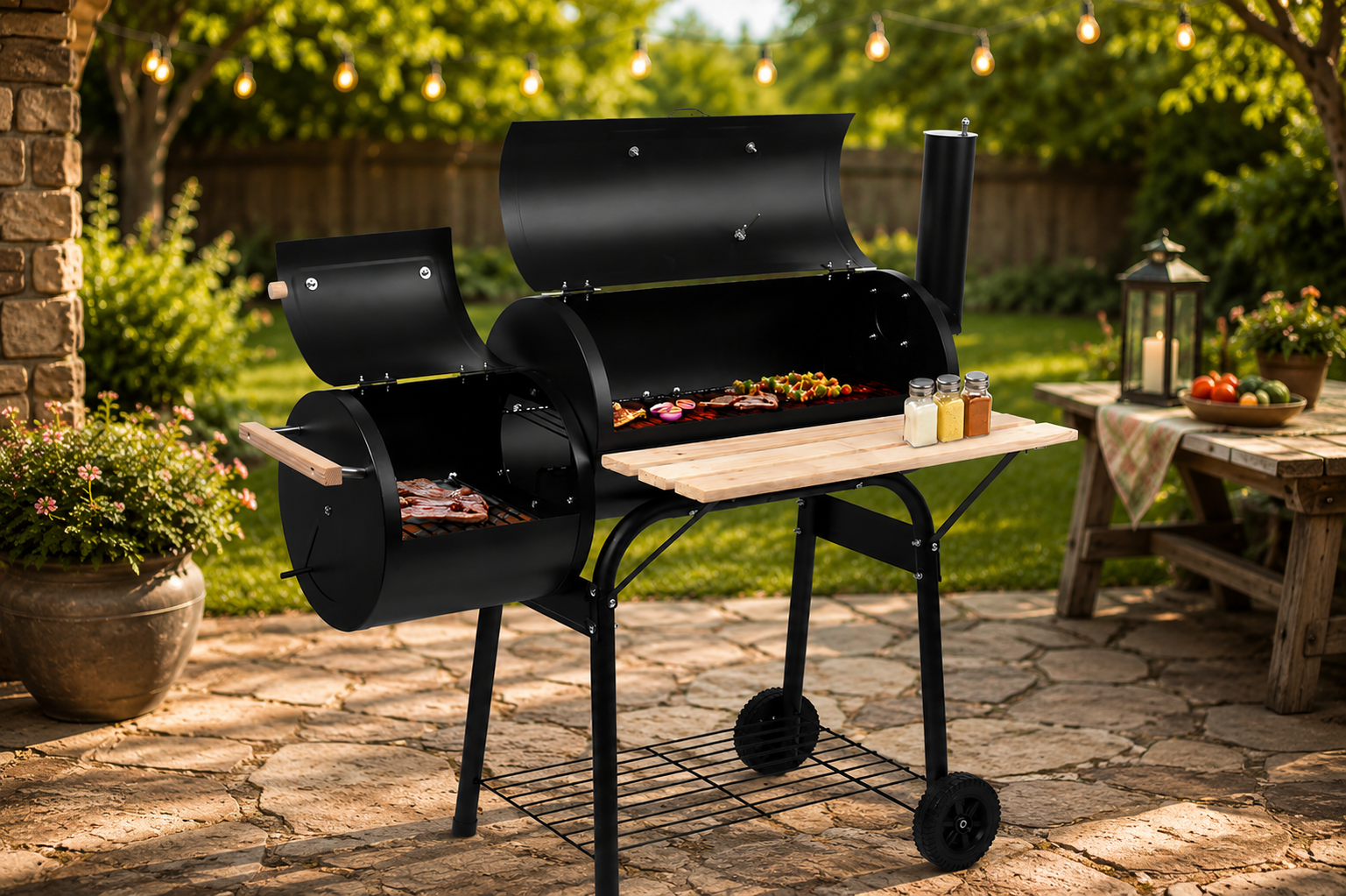
If you’re looking for authentic barbecue flavor, offset smokers with side firebox are among the best smokers available. Favored by backyard barbecue enthusiasts and professional pitmasters, these traditional smokers provide exceptional control over heat and smoke, making them perfect for low-and-slow cooking.
Unlike conventional grills, an offset smoker with a side firebox separates the heat source from the cooking chamber. This indirect cooking method allows smoke to circulate around the food, creating tender, juicy meats infused with deep smoky flavor.
Whether you’re smoking brisket, pork shoulder, ribs, or chicken, mastering a side firebox smoker can elevate your barbecue skills and help you create unforgettable meals.
What Is an Offset Smoker with a Side Firebox?
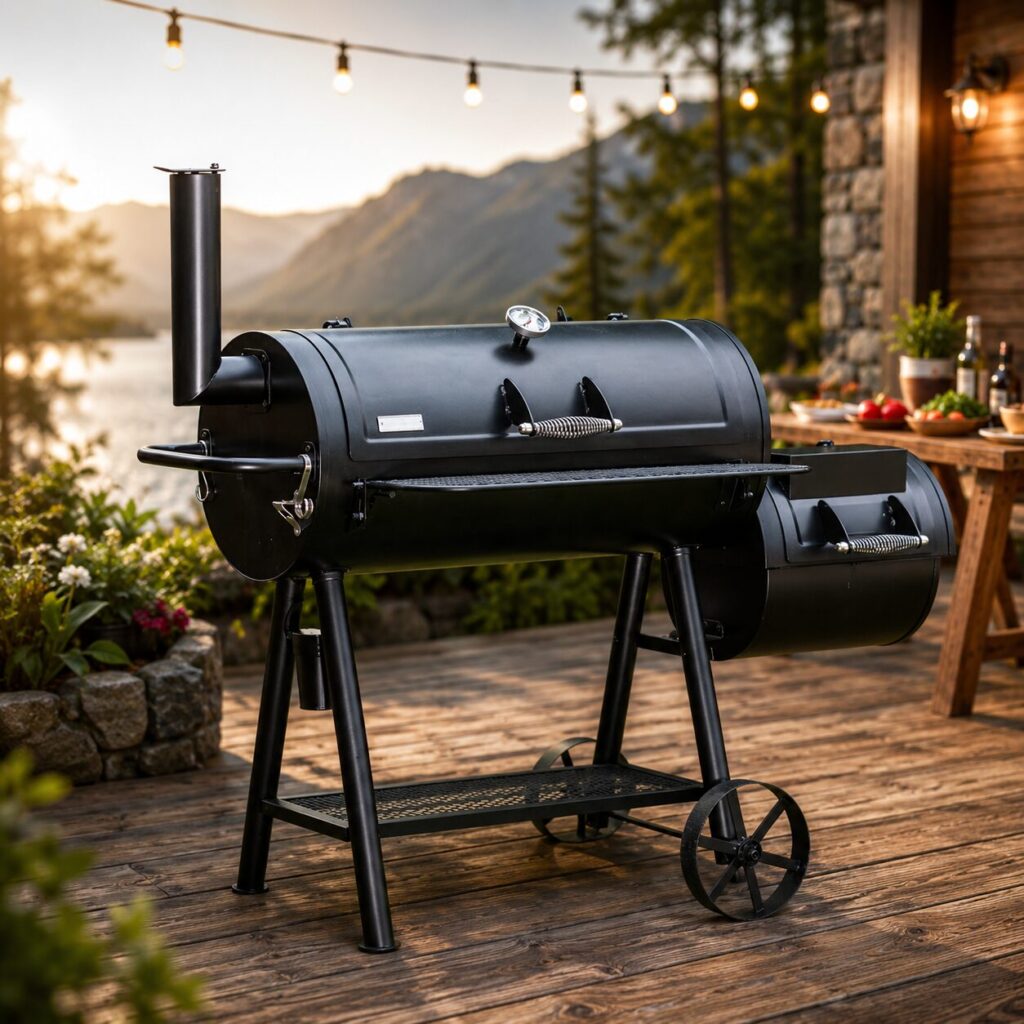
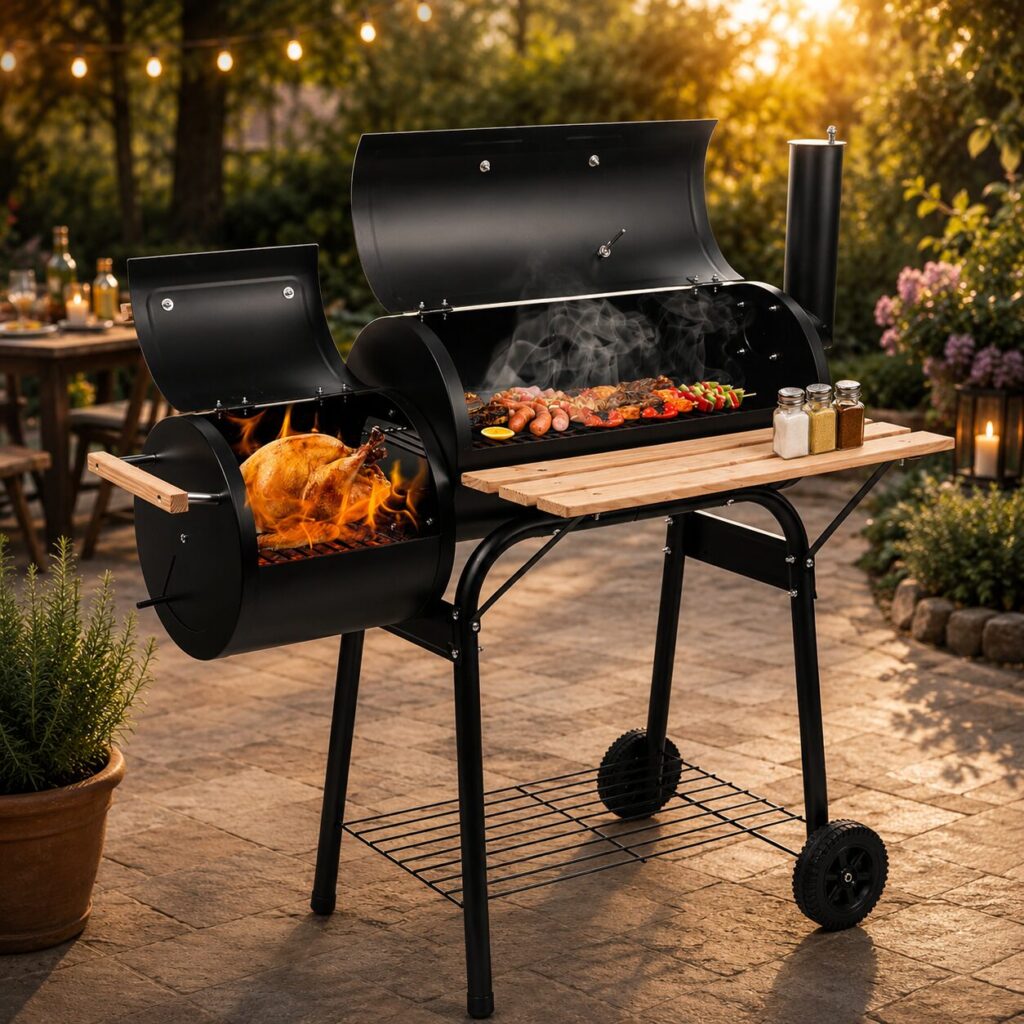
An offset smoker with a side firebox has a separate combustion chamber attached to one end of the main cooking chamber. Wood, charcoal, or both burn in the firebox instead of directly beneath the food.
Heat and smoke move from the firebox into the cooking chamber, allowing food to cook with indirect heat. The separate firebox also lets you add fuel and manage the fire without repeatedly opening the main cooking chamber.
Side-firebox smokers can vary greatly in steel thickness, firebox size, seals, airflow, and cooking capacity. A side firebox can provide excellent traditional barbecue results, but stable temperatures still depend on proper smoker design and fire management.
How Offset Smokers with Side Fireboxes Work
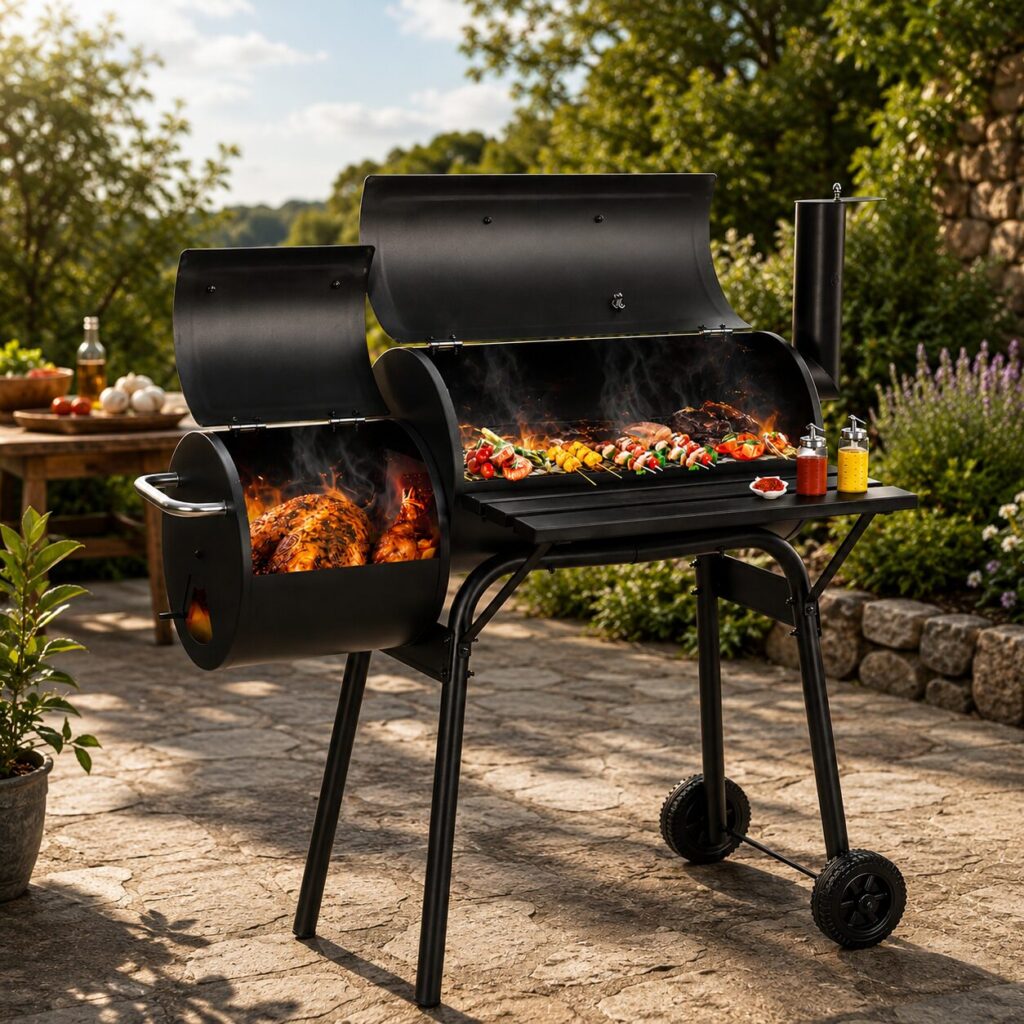
A side firebox creates an indirect-cooking setup. The fire burns in the separate firebox, while heat and smoke are drawn into the main cooking chamber and then exit through the chimney.
The firebox intake controls how much oxygen reaches the fire, while the chimney maintains draft through the smoker. This continuous airflow carries heat and smoke across the food without exposing it directly to the flames.
Because the fire is separated from the food, the cook can manage fuel and combustion from the side firebox while the meat cooks inside the main chamber.
Fuel Options for Side Firebox Smokers
Side-firebox smokers can run on charcoal, hardwood, or a combination of both, depending on the smoker design and the way you prefer to manage the fire.
Charcoal is useful for establishing a stable coal bed, while dry, seasoned hardwood splits provide the heat and smoke associated with traditional offset cooking. Common choices include oak, hickory, pecan, fruit woods, and mesquite, depending on the flavor you want.
Many cooks start with charcoal and then add hardwood as needed, while traditional stick-burning offsets can run primarily on wood once a strong coal bed is established. Whatever fuel you choose, use dry material and add it gradually rather than overloading the side firebox.
Choosing the Best Offset Smoker with Side Firebox
When choosing a side-firebox smoker, focus on construction quality and airflow control rather than cooking capacity alone. A well-built smoker is easier to manage and usually holds heat more predictably.
Heavy-Gauge Steel: Thicker steel retains heat better and is less affected by sudden outdoor temperature changes.
Tight Doors and Seals: Check that the cooking-chamber and firebox doors close securely. Large gaps can leak heat and smoke and make temperature control more difficult.
Adjustable Intake and Exhaust: The firebox intake should allow gradual airflow adjustments, while the chimney should provide a clear path for smoke and heat to exit.
Proper Firebox Size: The firebox should be large enough to maintain a clean fire without requiring oversized logs or constant refueling.
Usable Cooking Space: Choose a grate size that matches the amount of food you normally cook rather than simply buying the largest smoker available.
Easy Firebox Access: A practical firebox door, removable ash pan or grate, and enough room to add wood safely can make long cooks much easier.
Stable Frame and Wheels: If the smoker will be moved regularly, sturdy wheels, handles, and a solid frame are worth prioritizing.
Preparing Your Offset Smoker
Before the first cook, inspect the side firebox, cooking chamber, doors, vents, and grates to make sure everything is assembled correctly and opens freely.
Clean away any dust or manufacturing residue, then season the smoker according to the manufacturer’s instructions before cooking food. Seasoning helps protect the interior surfaces and prepares the cooker for regular use.
Before lighting your first cooking fire, also check that the firebox door closes properly and that both the intake and chimney can move freely. Good seals and unrestricted airflow make a side-firebox smoker much easier to control.
Building a Fire in the Side Firebox
In a side-firebox smoker, build a small, clean-burning fire with enough space around the fuel for air to circulate. Start with a lit charcoal bed or established coals, then add one dry, seasoned hardwood split at a time.
Allow each new split to ignite properly before adding more fuel. Overloading the side firebox can restrict airflow, create heavy smoke, and cause unnecessary temperature spikes.
Keep the firebox intake open enough to support clean combustion and add fuel gradually as the coal bed begins to weaken. For a complete approach to fuel additions, airflow, and maintaining a clean fire, see our offset smoker fire management guide.
Managing Airflow and Dampers
Airflow control is important because it affects both fire strength and smoke movement through the smoker.
Intake Damper
Controls how much oxygen enters the firebox. Opening the intake usually strengthens the fire, while reducing it can slow the burn. Make small adjustments and give the smoker time to respond.
Exhaust Damper
The exhaust allows heat and smoke to leave the cooking chamber and helps maintain draft through the smoker. During normal cooking, keep it fully or mostly open so smoke can flow freely.
Why Use a Water Pan?
A water pan can add thermal mass inside the cooking chamber, helping reduce short temperature swings during longer cooks.
It can also increase humidity around the food, which may help reduce surface drying while the meat cooks.
Place the pan where it can buffer heat without blocking airflow. If you refill it during a cook, warm water helps avoid suddenly cooling the smoker.
A water pan is optional, so use one only if it helps your particular side-firebox smoker maintain steadier cooking conditions.
Temperature Control Tips
Maintaining a steady cooking range makes a side-firebox smoker easier to manage.
For many low-and-slow barbecue cooks, a common smoker range is 225°F–275°F, although the best temperature depends on the food and cooking method.
To achieve stable heat:
- Monitor the fire regularly.
- Add fuel gradually.
- Adjust dampers slowly.
- Avoid opening the lid too often.
Focus on keeping the smoker within a steady range rather than trying to hold one exact temperature every minute.
Use a Digital Thermometer
Built-in lid thermometers may not show the exact temperature at grate level, where the food is actually cooking.
A digital thermometer with separate probes can help monitor:
- Cooking-chamber temperature at grate level
- Internal meat temperature
- Temperature changes during the cook
Reliable temperature readings make it easier to manage the fire and judge when the food is approaching doneness.
Best Meats for Side Firebox Smokers
Side-firebox smokers work especially well for foods that benefit from indirect heat and wood smoke over a longer cooking period.
- Brisket: Well suited to low-and-slow smoking, where steady heat helps break down tough connective tissue.
- Pork Shoulder: A forgiving cut that works well for long cooks and pulled pork.
- Ribs: Both pork and beef ribs can develop deep smoke flavor when cooked with steady indirect heat.
- Whole Chicken: Cooks well in an offset smoker, although poultry may benefit from a higher finishing temperature if crispier skin is desired.
- Beef Ribs: Their size and fat content make them a good match for slow smoking over a clean wood fire.
Cooking time and temperature should be based on the specific cut, its size, and the result you want rather than a fixed schedule.
Best Wood for Smoking
Different hardwoods produce different smoke intensities and flavor profiles, so the best choice depends on the food and the flavor you prefer.
- Oak: Balanced smoke and a versatile choice for long cooks.
- Hickory: Stronger traditional barbecue flavor that pairs well with pork and beef.
- Mesquite: Very bold smoke; use it carefully, especially during long cooks.
- Applewood: Mild, slightly sweet smoke that works well with pork and poultry.
- Cherry Wood: Mild, slightly sweet smoke that pairs well with many meats.
You can also combine compatible hardwoods to adjust smoke intensity and build the flavor profile you prefer.
Positioning and Rotating Meat
The area closest to the side firebox usually runs hotter than the chimney side, although the exact temperature difference depends on the smoker design and airflow.
Place larger or slower-cooking cuts away from the strongest heat when needed, and use the hotter area for foods that can handle more direct heat.
Rotate or reposition the meat only when one side is clearly cooking faster than the other. There is no need to move the food on a fixed schedule if the cooking temperature is already even.
Learning where your smoker develops hot and cool zones makes food placement easier and reduces unnecessary lid opening.
Common Problems and Solutions
- Temperature Fluctuations: Check the fire, fuel level, and airflow before making changes. Add fuel gradually and give the smoker time to respond.
- Excessive Smoke: Make sure the wood is dry, avoid overloading the firebox, and maintain enough airflow for clean combustion.
- Dry Meat: Avoid overcooking and monitor internal temperature carefully. A water pan or occasional spritz can be used when appropriate, but neither is essential.
- Heat Loss: Keep the cooking chamber closed as much as practical and check for large gaps or leaks around the doors.
Cleaning and Maintenance
Regular maintenance extends the life of your smoker.
- Remove Ash After Cooking: Once the smoker is completely cool, remove excess ash from the firebox so it does not restrict airflow or hold moisture against the metal.
- Clean Cooking Grates: Brush away food residue and excess grease after cooking to keep the grates ready for the next use.
- Protect Metal Surfaces: Touch up or re-season bare interior metal when needed, following the smoker manufacturer’s guidance.
- Inspect Doors and Seals: Check for damaged seals, loose hardware, or large gaps that may allow unnecessary heat and smoke leakage.
Regular cleaning and basic maintenance can help the smoker perform more consistently and reduce premature wear.
Experiment with Different Recipes
Once you are comfortable managing the fire and temperature, a side-firebox smoker can be used for much more than brisket and ribs.
Try different cuts of pork and poultry, sausages, salmon, and vegetables while adjusting the wood choice and cooking temperature to suit each food.
Start with familiar recipes and change one variable at a time—such as the wood, seasoning, or cooking temperature—so you can see what actually improves the result.
Frequently Asked Questions
Yes. Many side-firebox smokers can run primarily on dry, seasoned hardwood as long as a clean-burning fire and stable coal bed are maintained. Charcoal can help establish the initial coal bed, but it is not required for every smoker or cooking method.
Add fuel when the existing wood split has mostly burned down and the cooking temperature begins to trend lower. There is no fixed schedule because smoker size, airflow, weather, and wood size all affect fuel consumption.
Watch the overall temperature trend instead of reacting to every small fluctuation. If the temperature keeps rising or falling, check the fire and fuel first, then make one small airflow or fuel adjustment at a time and allow the smoker time to respond.
Avoid overcooking by monitoring the meat’s internal temperature and cooking it to the desired doneness. A water pan or occasional spritz can help reduce surface drying in some cooks, but neither is required for moist barbecue.
Yes, but they usually require more hands-on fire management than some other smoker types. Beginners can learn to control fuel, airflow, and temperature over time, and a well-designed side-firebox smoker can be a good way to develop traditional barbecue skills.
Why Choose Offset Smokers with Side Firebox?
Side-firebox offset smokers appeal to barbecue cooks who want to manage a live fire separately from the food. The separate firebox allows heat and smoke to move through the cooking chamber while the meat cooks with indirect heat.
When properly managed, this setup can provide traditional wood-smoke flavor and works well for long, low-and-slow cooks. Performance depends on smoker construction, airflow, fire management, and cooking technique.
Common advantages include:
- Traditional wood-fired cooking
- Separate access to the fire without opening the cooking chamber
- Flexible use of charcoal, hardwood, or both
- Good control over fuel and airflow once the smoker is understood
- Cooking space suitable for multiple cuts, depending on smoker size

Who Should Consider an Offset Smoker with a Side Firebox?
A side-firebox offset smoker is best suited to cooks who enjoy hands-on fire management and traditional wood-smoked barbecue. It requires more attention than some other smoker types, but it also gives the cook direct control over fuel and airflow.
This style of smoker can work for beginners who are willing to learn fire management as well as experienced barbecue cooks who prefer a more traditional cooking process.
Consider a side-firebox offset smoker if you:
- Enjoy managing a live charcoal or wood fire
- Regularly cook brisket, ribs, pork shoulder, or other foods suited to indirect heat
- Prefer wood-smoke flavor and traditional low-and-slow cooking
- Are comfortable making gradual fuel and airflow adjustments
- Have enough outdoor space for the smoker size you are considering
- Do not mind checking the fire periodically during longer cooks
Tips for Getting the Best Results with Offset Smokers with Side Firebox
Learning to cook with offset smokers with side firebox takes practice, but following a few simple techniques can significantly improve your barbecue results. Always allow the smoker to preheat before placing food inside, maintain a clean-burning fire, and make small airflow adjustments rather than large ones. These habits help maintain consistent temperatures and produce cleaner smoke.
For the best results:
- Monitor temperatures using a reliable digital thermometer.
- Use dry, seasoned hardwood rather than green or damp wood.
- Add fuel gradually and allow the smoker time to respond.
- Keep the chimney fully or mostly open during normal cooking to maintain draft.
- Rotate or reposition large cuts only if one side is clearly cooking faster than the other.
Common Mistakes When Using Offset Smokers with Side Firebox
Side-firebox smokers become easier to manage when you avoid a few common fire-management mistakes. Opening the cooking chamber too often can cause unnecessary heat loss, while adding too much fuel at once may restrict airflow and produce heavier smoke.
Avoid these common mistakes:
- Skipping initial cleaning or seasoning when recommended by the manufacturer
- Using wet, green, or poorly seasoned wood
- Closing the exhaust too far during normal cooking
- Overloading the firebox with fuel
- Making several airflow or fuel adjustments at the same time
- Reacting to every small temperature fluctuation instead of watching the overall trend
Why Side-Firebox Offset Smokers Still Appeal to Barbecue Cooks
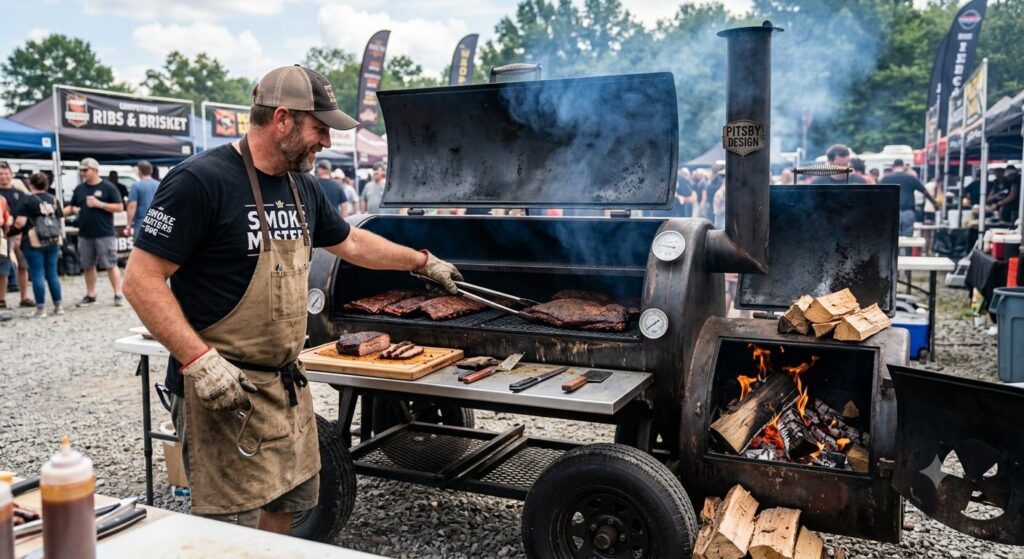
Side-firebox offset smokers continue to appeal to barbecue cooks who enjoy managing a live fire and cooking with wood smoke. Their traditional design separates the fire from the food, allowing heat and smoke to move through the cooking chamber during indirect cooking.
Compared with more automated smoker types, they usually require more hands-on attention to fuel, airflow, and temperature. In return, the cook can directly manage the fire and choose the type of hardwood or charcoal used during the cook.
They work well for foods such as brisket, pork shoulder, ribs, and whole chicken, especially when the cook prefers a traditional low-and-slow barbecue process.
Are Offset Smokers with Side Fireboxes a Good Choice?
Offset smokers with side fireboxes are a good option for cooks who want traditional wood-smoke flavor and more direct control over fire and airflow. They are commonly used for low-and-slow cooking, but they usually require more attention than automated smokers. They may suit users who prefer a hands-on barbecue process, while other smoker types may be easier for those who want simpler temperature management.