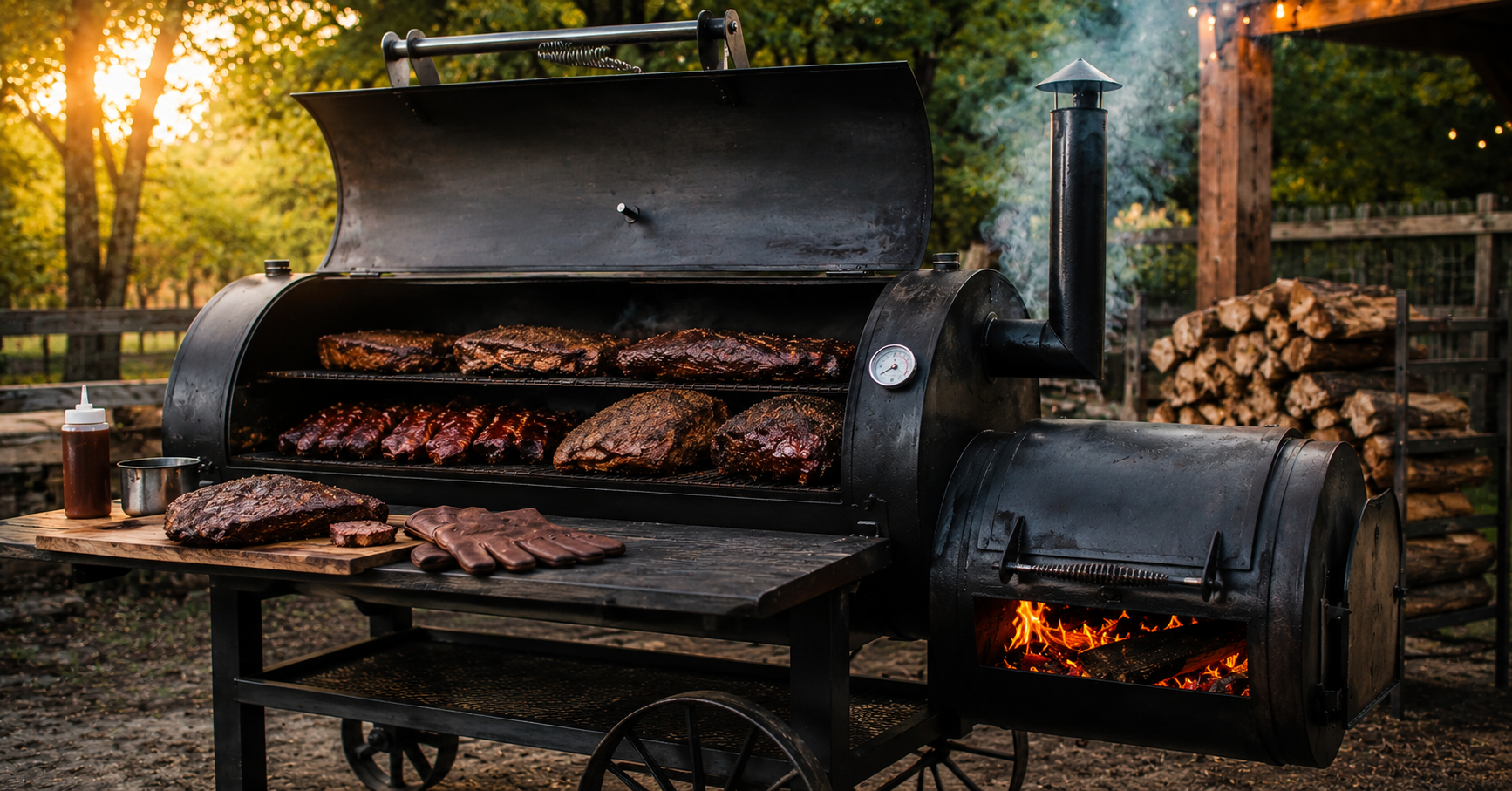
If you’re passionate about barbecue and want the best possible smoking experience, investing in premium offset smokers is one of the smartest decisions you can make. High-end offset smokers are built with superior craftsmanship, heavy-duty materials, and advanced features that deliver exceptional heat control and unmatched smoky flavor.
Whether you’re an experienced pitmaster looking to upgrade your setup or a serious backyard barbecue enthusiast, premium offset smokers offer the durability, efficiency, and performance needed to create competition-quality barbecue. From brisket and ribs to pork shoulder and whole chickens, these smokers are designed to produce consistently outstanding results.
In this guide, we’ll explore what makes premium offset smokers different, the features that matter most, and how to choose the best smoker for your needs.
What Is a Premium Offset Smoker?
A premium offset smoker is generally a higher-end smoker built with heavier materials, stronger construction, and more attention to fit, airflow, and heat management than many basic models.
Depending on the manufacturer and design, premium models may include features such as:
- Heavy-gauge steel construction
- Larger or more usable cooking chambers
- Better-fitting doors and seals
- Adjustable intake and exhaust controls
- Insulated or reinforced fireboxes on some models
- Reverse-flow layouts on selected designs
- Stronger frames, shelves, grates, and hardware
These features can improve heat retention, durability, and fire management, but performance still depends on the smoker’s design, fuel, weather conditions, and how the fire is managed.
A well-built smoker that is cleaned, protected from corrosion, and maintained properly can provide many years of use.
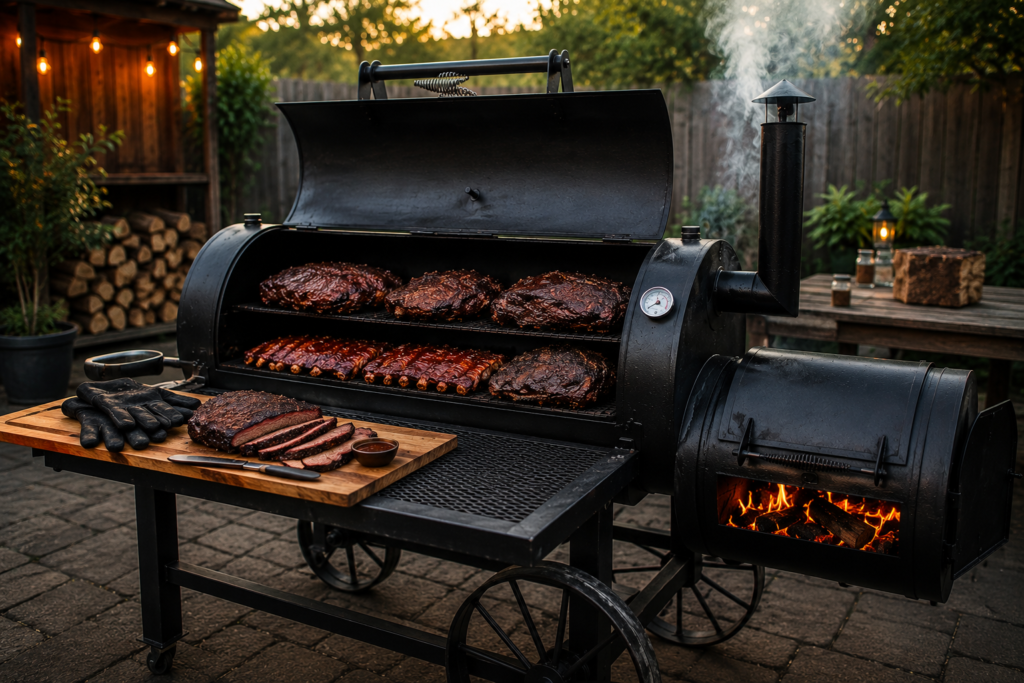
Why Choose a Premium Offset Smoker?
Premium offset smokers are generally chosen for their heavier construction, stronger hardware, and improved fit compared with many entry-level models. These differences can make fire management and temperature control more predictable, although results still depend on the smoker design and how it is operated.
Common reasons cooks consider a premium model include:
- Heavier Construction: Thicker steel can help reduce rapid temperature changes and retain heat more effectively.
- Better Fit and Sealing: Well-fitted doors and tighter seals can reduce unnecessary heat and smoke leakage.
- More Durable Components: Stronger grates, hinges, shelves, frames, and hardware may hold up better under frequent use.
- More Usable Cooking Space: Some premium models offer larger chambers or better grate layouts, but capacity varies by model.
- Improved Fire Management: Well-designed intakes, exhausts, and fireboxes can make airflow easier to control.
- Optional Insulation: Some higher-end smokers use insulated or reinforced fireboxes, which may help reduce heat loss in certain conditions.
A premium smoker is not automatically easier to use or more fuel-efficient. Construction quality, smoker size, weather, fuel type, and fire-management technique all affect performance.
Build Quality: The Foundation of Premium Smokers
Build quality is one of the main factors that separates many premium offset smokers from lighter entry-level models. Heavier materials, stronger welds, better-fitting doors, and sturdy hardware can improve durability and make heat and airflow easier to manage.
Depending on the manufacturer and model, higher-end offset smokers may use:
- Heavy-gauge steel in the cooking chamber and firebox
- Welded steel frames and reinforced supports
- Strong hinges, handles, and door hardware
- Better-fitting doors and seams to reduce unnecessary leakage
- Heat-resistant exterior coatings or paint
- Thicker firebox construction on some models
Thicker steel generally stores more heat and is less affected by short-term outdoor temperature changes, but even cooking still depends on airflow, firebox design, smoker layout, and fire management.
Good construction can also improve long-term durability, especially when the smoker is kept clean, protected from corrosion, and maintained properly.
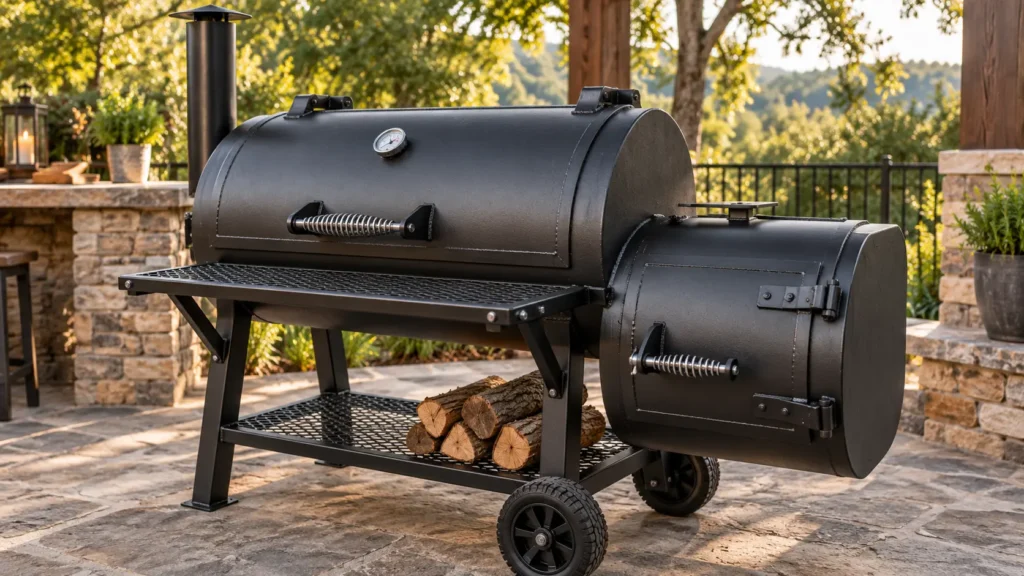
Choosing the Right Size
Choosing the right offset smoker size depends on how much food you normally cook, the size of the cuts, available outdoor space, and how often you expect to cook for groups.
Small Premium Offset Smokers
Smaller models can suit backyard cooks who usually prepare food for a household or a small group. Before buying, check whether the grate can comfortably hold the cuts you cook most often, such as a whole brisket, pork shoulder, or several racks of ribs.
Medium Offset Smokers
Medium-size smokers may be a better fit for cooks who entertain regularly or want enough room to prepare several cuts at the same time. Look at usable grate dimensions rather than overall smoker length, because chamber layout can affect how much food actually fits.
Large Offset Smokers
Larger smokers are more appropriate when you regularly cook for large gatherings, events, catering, or competition-style quantities. They provide more cooking space, but they also take up more room and may require a larger fire to heat the cooking chamber.
When comparing sizes, consider usable grate area, chamber dimensions, smoker weight, fuel requirements, storage space, and whether the smoker will need to be moved regularly. Buying the largest model is not always the best choice if most cooks involve only a small amount of food.
Heat Retention and Temperature Stability
Heat retention is influenced by steel thickness, smoker size, insulation, airflow, weather conditions, and how the fire is managed.
Heavier steel can store more heat than thinner metal, which may help reduce short-term temperature swings during a cook. This can be useful during longer smoking sessions or when outdoor temperatures change.
Well-fitted doors and seams can also reduce unnecessary heat and smoke leakage, while a properly sized firebox and unrestricted exhaust help maintain steady airflow through the cooking chamber.
However, heavier construction does not automatically guarantee perfectly even temperatures or lower fuel use. Hot spots can still develop, and stable cooking temperatures depend on smoker design, fuel quality, fire size, and airflow adjustments.
In colder or windy weather, thicker construction may make temperature changes less abrupt, but additional fuel or wind protection may still be needed depending on the smoker and conditions.
Reverse Flow Technology
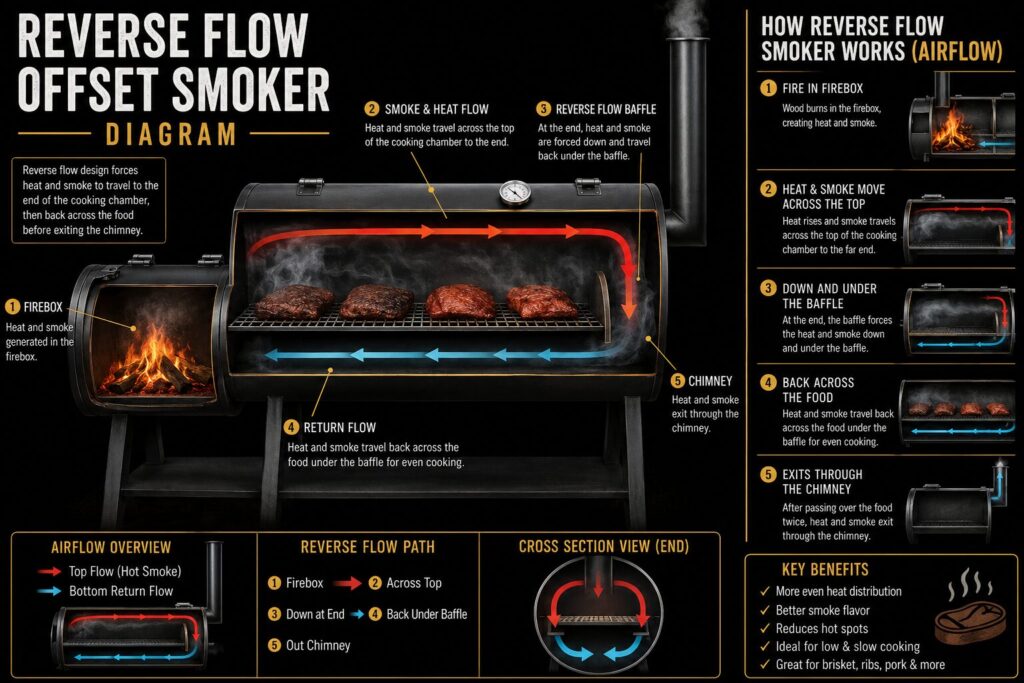
How Reverse Flow Smokers Work
Reverse-flow is one possible offset-smoker design, but it is not a standard feature of every premium model. In a reverse-flow smoker, heat and smoke travel beneath a metal baffle plate toward the far end of the cooking chamber before reversing direction and moving back across the food toward the exhaust.
The baffle also acts as a heat barrier between the firebox and the cooking grate, which can help spread heat across the chamber.
Depending on the smoker’s design, reverse flow may offer:
- More balanced heat distribution across parts of the cooking chamber
- Reduced direct radiant heat near the firebox
- Fewer severe hot spots in some designs
- A more predictable cooking environment once the fire is stable
Reverse flow does not automatically guarantee perfectly even temperatures or better barbecue. Fire size, airflow, baffle design, smoker dimensions, and cooking technique still affect performance.
Standard-flow and reverse-flow offsets can both produce excellent results, so the better layout depends on how you prefer to manage heat and airflow.
Precision Airflow Control
Airflow management is one of the most important parts of controlling an offset smoker. The firebox intake controls how much oxygen reaches the fire, while the exhaust allows heat and smoke to move through and leave the cooking chamber.
Higher-end offset smokers may offer:
- Adjustable firebox intake dampers
- Well-sized exhaust openings and smokestacks
- Better-fitting doors that reduce uncontrolled air leaks
- Dampers that allow gradual airflow adjustments
During normal cooking, the exhaust is generally kept fully or mostly open while temperature is managed mainly through fire size, fuel additions, and the intake damper.
225°F–275°F is a common range for many low-and-slow barbecue cooks, but the appropriate temperature depends on the food and cooking method.
Proper airflow supports cleaner combustion and helps reduce heavy, stale smoke, but stable temperatures still depend on fuel quality, fire size, smoker design, and weather conditions.
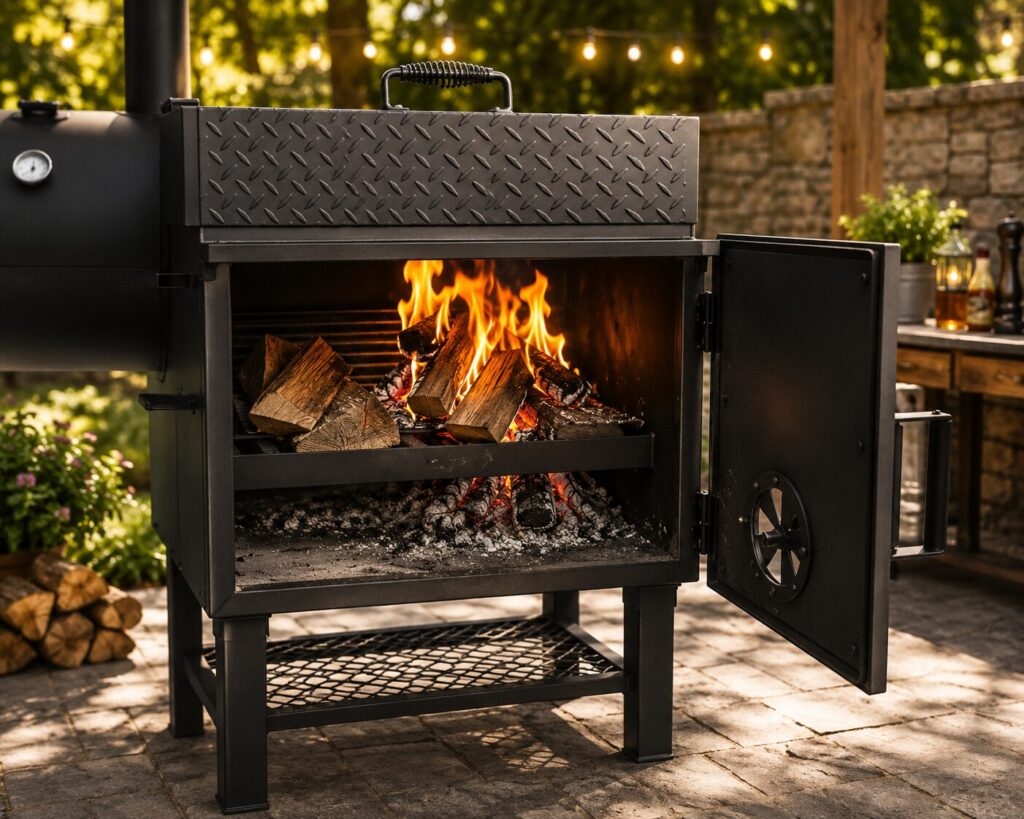
Insulated Fireboxes
Some premium offset smokers use insulated or double-wall fireboxes, while others rely on thick single-wall steel. Insulation is therefore a design feature rather than a requirement for a smoker to be considered premium.
An insulated firebox can reduce heat loss from the firebox, which may help the fire respond more gradually to cold or windy conditions.
Potential benefits can include:
- Reduced heat loss through the firebox walls
- Less sensitivity to sudden outdoor temperature changes
- Improved heat retention in colder conditions
- More stable firebox temperatures in some designs
Insulation does not automatically mean lower fuel consumption or perfectly stable temperatures. Smoker size, firebox design, fuel, airflow, weather, and fire-management technique still affect performance.
For long or overnight cooks, insulation can be useful, particularly in colder weather, but it is not essential for producing good barbecue.
Adjustable Grates and Shelves
Cooking grates, shelves, and work surfaces vary widely between premium offset smokers. Some models include removable or adjustable racks, while others use fixed cooking grates with external shelves for preparation space.
Depending on the model, useful features may include:
- Removable cooking grates for easier cleaning
- Multiple grate levels on larger smokers
- Adjustable rack positions on selected models
- Front or side shelves for food preparation
- Stronger grate supports for heavier cuts of meat
These features can make loading food, organizing larger cooks, and cleaning the smoker more convenient, but they should be compared model by model rather than assumed to be standard equipment.
Easy Cleaning and Maintenance
Cleaning and maintenance requirements vary by smoker design, but some premium models include features that can make routine upkeep easier.
Depending on the model, useful features may include:
- Removable cooking grates
- Ash cleanout areas or removable ash pans
- Grease drains, drip trays, or collection systems
- Accessible fireboxes for ash removal
- Durable exterior finishes that are easier to maintain
After each cook, allow the smoker to cool before removing excess ash and food residue. Keeping the cooking grates clean and checking for grease buildup, rust, damaged seals, or loose hardware can help maintain consistent performance.
Regular maintenance can extend the useful life of an offset smoker, but longevity depends on construction quality, weather exposure, storage, corrosion protection, and how often the smoker is used.
Best Woods for Premium Offset Smokers
The type of wood you use greatly influences flavor.
Oak:Balanced and versatile.
Hickory:Strong traditional barbecue flavor.
Mesquite:Bold and intense flavor for beef.
Applewood:Sweet and mild flavor.
Cherry Wood:Slightly fruity with beautiful color enhancement.
Many pitmasters combine woods to create custom flavor profiles.
Temperature Monitoring and Digital Probes
Accurate temperature monitoring makes an offset smoker easier to manage. A grate-level probe can show the temperature where the food is actually cooking, while a separate meat probe tracks internal doneness without repeatedly opening the cooking chamber.
Digital probes can help monitor:
- Cooking-chamber temperature at grate level
- Internal meat temperature
- Temperature changes during the cook
- Cooking progress
Built-in lid thermometers can still be useful, but their readings may differ from the temperature at grate level. Some premium smokers also provide probe ports or openings for thermometer cables, although this varies by model.
For best results, position the ambient probe close to the food without allowing it to touch the cooking grate or meat.
Fuel Efficiency
Fuel efficiency varies between offset smokers and depends on more than price or steel thickness alone. A well-designed smoker with heavier construction, good door fit, and controlled airflow may lose heat more slowly than a thin, poorly sealed model.
Factors that can affect fuel consumption include:
- Steel thickness and overall smoker mass
- Firebox size and insulation
- Door and seam leakage
- Outdoor temperature and wind
- Wood moisture content and split size
- Fire size and airflow management
- Cooking temperature and length of the cook
Heavier construction can help reduce short-term heat loss, but a larger smoker may also require more fuel to bring up to temperature and maintain a fire.
For better efficiency, use dry seasoned wood, maintain a clean-burning fire, avoid unnecessary lid opening, and add fuel gradually rather than building an oversized fire.
Fuel efficiency should therefore be compared model by model rather than assumed simply because a smoker is marketed as premium.
Weather Resistance
Weather can affect how an offset smoker holds temperature, especially during cold, windy, or wet conditions. Premium models with heavier construction, better-fitting doors, and durable exterior finishes may be less affected by short-term weather changes than lighter smokers.
Features that can help include:
- Heavier steel construction
- Heat-resistant exterior paint or coatings
- Better-fitting doors and seams
- Insulated or reinforced fireboxes on some models
- Stable frames and hardware designed for outdoor use
Even a well-built smoker should be protected from unnecessary exposure to rain and standing moisture. A fitted smoker cover can help protect the exterior when the smoker is completely cool and not in use.
In cold or windy weather, additional fuel or wind protection may still be needed. If using an insulation blanket, make sure it is specifically designed for high-temperature smoker use and does not block vents, the firebox, or the exhaust.
Proper storage, routine cleaning, and corrosion protection are more important for long-term durability than simply relying on a smoker being marketed as “weather resistant.”
Top Premium Offset Smoker Brands
Several manufacturers are recognized for producing exceptional smokers.
- Yoder Smokers: Known for heavy-gauge steel construction, fully welded offset pits, and durable components.
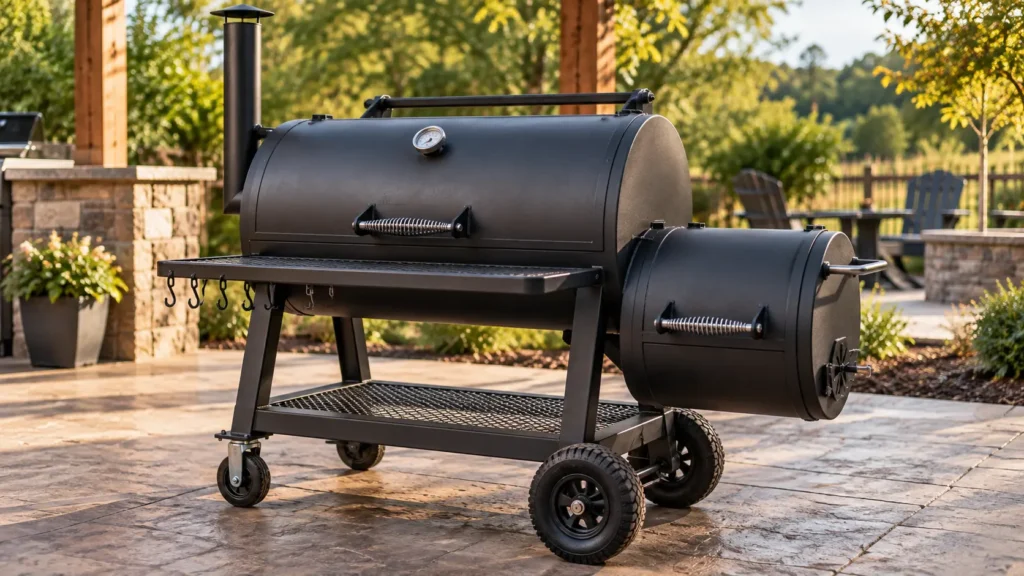
- Lang BBQ Smokers: Known for its reverse-flow offset design and heavy 1/4-inch welded steel construction.
- Horizon Smokers: Builds traditional wood-burning offset smokers with heavy-duty construction and a range of backyard and larger models.
- Workhorse Pits: Handcrafts heavy-duty offset smokers with an emphasis on airflow, fit, and fabrication quality.
- Franklin Barbecue Pits: Hand-built offset smokers made from 1/4-inch American steel and designed around traditional live-fire cooking.
Custom-Built Offset Smokers
Custom-built offset smokers can be tailored around the cook’s space, cooking capacity, preferred layout, and fire-management style. Unlike mass-produced models, a custom build may allow the buyer to choose specific dimensions, materials, grate layouts, firebox designs, and storage or prep features.
Depending on the builder, customization options may include:
- Cooking-chamber and firebox dimensions
- Steel thickness and construction details
- Traditional or reverse-flow layouts
- Custom grate levels and shelf positions
- Larger wheels, casters, or trailer-mounted configurations
- Additional work shelves or storage areas
- Door, chimney, handle, and hardware options
A custom smoker is not automatically better than a well-built production model. Performance still depends on airflow design, firebox sizing, fabrication quality, and how the smoker is operated.
Before ordering, compare usable cooking space, steel thickness, total weight, lead time, warranty or builder support, and whether replacement parts will be easy to source.
Frequently Asked Questions
They can be worth the higher price for cooks who value heavier construction, better heat retention, larger cooking capacity, and long-term durability. Value still depends on the smoker’s build quality, features, and how often it will be used.
A well-built offset smoker can last many years with proper cleaning, rust prevention, storage, and maintenance. Lifespan depends on steel thickness, construction quality, weather exposure, and how heavily the smoker is used.
Usually yes, especially if recommended by the manufacturer. Initial seasoning helps remove manufacturing residue and can add a protective layer to bare interior steel. Always follow the specific smoker manufacturer’s instructions.
Yes, many offset smokers can use charcoal as a heat source, often with wood added for smoke flavor. However, fuel recommendations vary by design, so check the manufacturer’s instructions before use.
There is no single best wood for every food. Oak is versatile, hickory provides stronger barbecue flavor, mesquite is very bold, while apple and cherry offer milder, slightly sweeter smoke. The best choice depends on the meat and preferred smoke intensity.
Common Mistakes to Avoid When Buying Premium Offset Smokers
Purchasing a premium offset smoker is a significant investment, so avoiding common mistakes can help you get the best value for your money. Many buyers focus only on cooking capacity while overlooking factors like steel thickness, airflow design, insulation, and overall build quality. It’s also important to choose a smoker that matches your cooking needs rather than buying the largest model available. Before making a purchase, compare features, warranty coverage, customer reviews, and replacement-part availability so you can choose a smoker that fits your cooking needs and budget.
Accessories That Improve Your Smoking Experience
The right accessories can make cooking with premium offset smokers easier, safer, and more convenient. Useful accessories depend on the smoker design, cooking style, and how often the smoker is used.
A charcoal basket can help organize fuel in smokers designed to use one, while a chimney starter can make it easier to light charcoal before adding it to the firebox. Heat-resistant gloves are useful when handling hot grates, firebox doors, tools, or fuel during a cook.
A reliable digital thermometer or probe system can help monitor cooking-chamber temperature and internal meat temperature without opening the smoker repeatedly. Grill brushes and grate-cleaning tools can also make routine maintenance easier after cooking.
Other useful accessories may include:
- Charcoal baskets for compatible fireboxes
- Chimney starters
- Heat-resistant gloves
- Digital meat thermometers and temperature probes
- Grill brushes and grate-cleaning tools
- Drip pans or grease trays where appropriate
- Fitted smoker covers for storage
- Firewood racks or dry fuel-storage areas
Choose accessories that are compatible with your smoker and follow the manufacturer’s guidance, especially for items used near the firebox or high-temperature surfaces.
The right accessories will not replace proper fire management, but they can make temperature monitoring, fuel handling, cleaning, and storage more convenient.
Tips for Getting the Best Results from Premium Offset Smokers
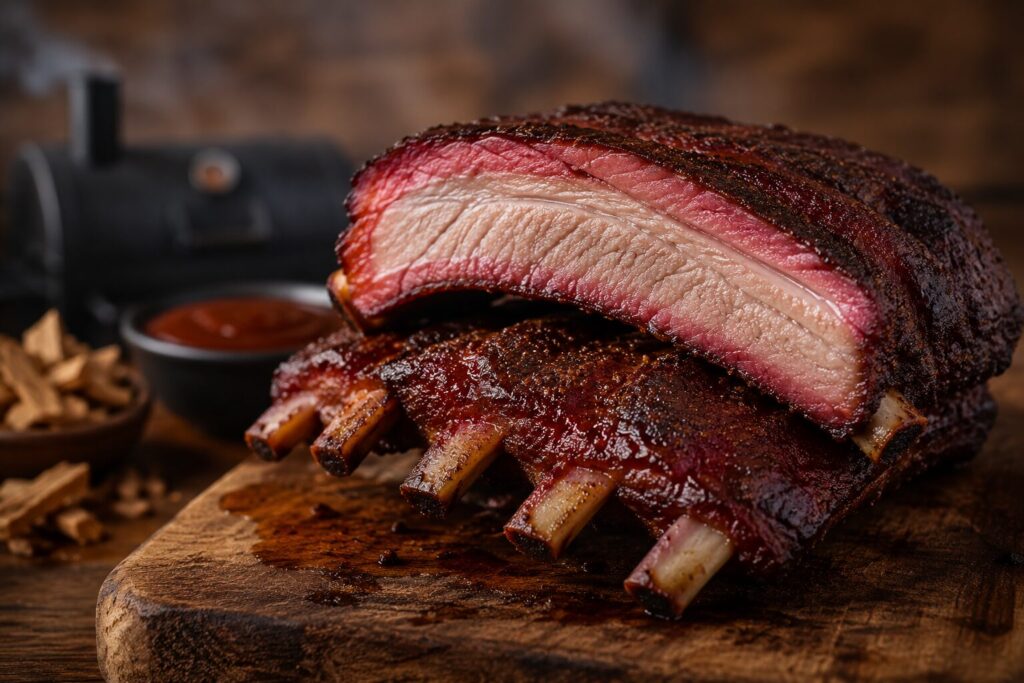
A well-built premium offset smoker still requires good fire management and cooking technique to produce consistent results. Preheat the smoker before adding food, use dry, seasoned hardwood, and avoid opening the cooking chamber more often than necessary.
For many low-and-slow cooks, a chamber temperature around 225°F to 275°F works well, although the ideal temperature can vary depending on the food and cooking method. Make small airflow and fuel adjustments rather than large changes, and allow the smoker time to respond.
Monitor both cooking-chamber temperature and internal meat temperature with a reliable thermometer. Learning your smoker’s hot spots, airflow behavior, and fuel needs will make it easier to manage longer cooks and achieve more consistent barbecue results.
Final Buying Advice for Premium Offset Smokers
Choosing the right premium offset smoker depends on your budget, cooking style, available space, and the amount of food you normally prepare. Before buying, compare usable cooking area, steel thickness, firebox design, airflow controls, door fit, total weight, warranty coverage, and replacement-part availability.
A smaller model may be more practical for regular backyard cooking, while larger smokers can provide additional capacity for frequent gatherings, catering, or competition-style cooking. Reverse-flow layouts and insulated fireboxes can be useful features on some models, but they are not necessary for every cook.
Focus on overall construction quality and choose a smoker that matches your actual cooking needs rather than simply selecting the largest or most expensive option.
Are Premium Offset Smokers Worth the Investment?
Premium offset smokers can be worth the investment for buyers who value thicker construction, better temperature stability, longer service life, and a more refined cooking experience. Compared with many lower-cost models, some premium smokers may offer heavier steel, improved door fit, better airflow control, and features that make fire management easier. However, the overall value still depends on the specific model, build quality, and how often the smoker will be used.
For frequent backyard cooks, competition teams, or catering users, a well-built smoker may provide more consistent long cooks and may reduce the need for early upgrades or replacement. For occasional users, the higher price may not always be necessary if a lower-cost smoker already meets their cooking needs. Fuel use, maintenance requirements, storage space, and replacement-part availability should also be considered before buying.
In the end, premium offset smokers are usually most worthwhile for people who cook regularly and want durable equipment with better fit, finish, and temperature control. Instead of assuming every premium model is worth the higher price, compare construction quality, cooking capacity, airflow design, warranty coverage, and real-world usability before making a decision.