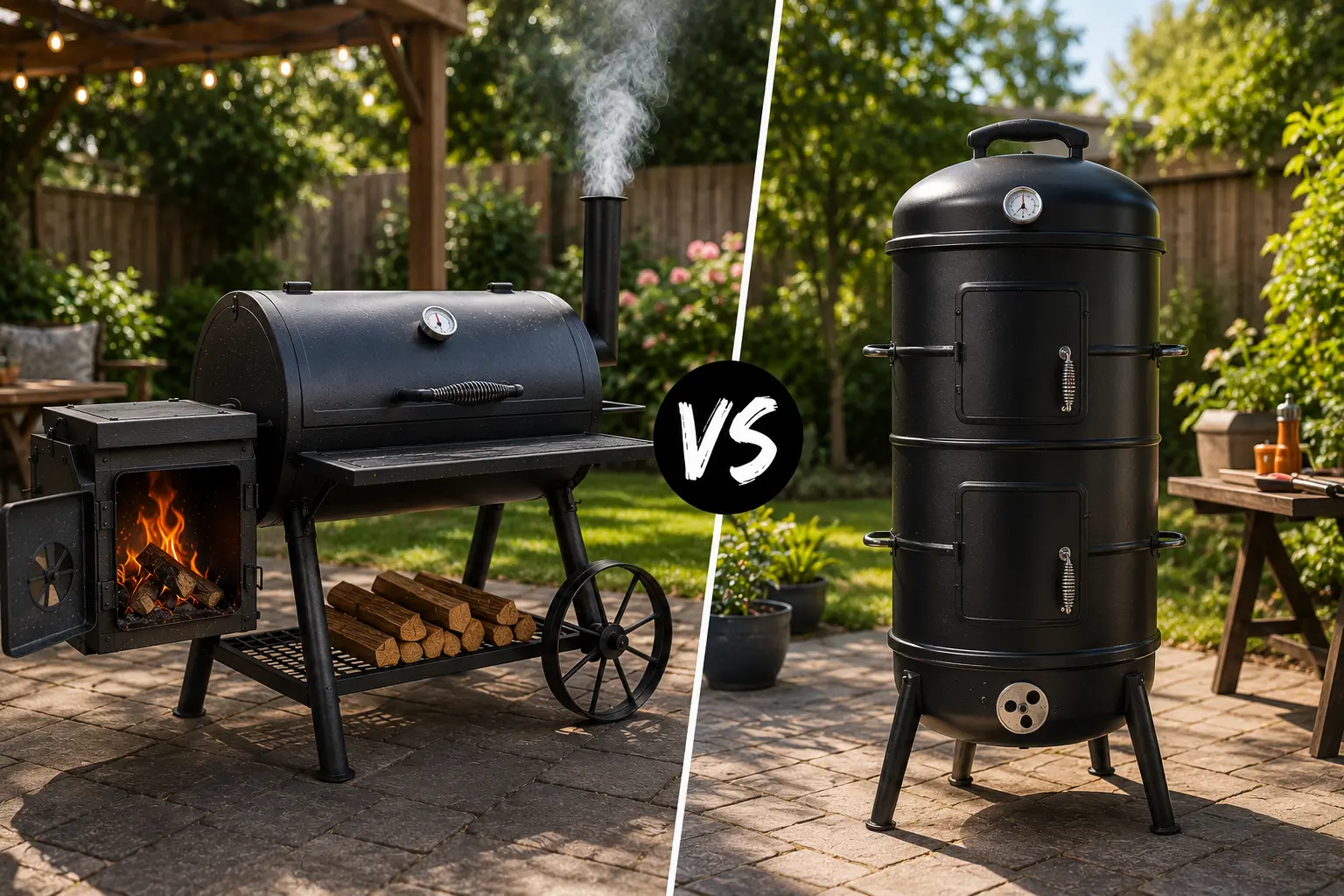
Choosing between an offset smoker vs vertical smoker is an important decision for anyone building a backyard barbecue setup. Both designs can produce tender brisket, ribs, pulled pork, poultry, and other smoked foods, but they differ significantly in footprint, airflow, cooking capacity, fuel efficiency, temperature control, and ease of operation.
An offset smoker places the fire in a separate box beside a horizontal cooking chamber. Heat and smoke travel sideways across the food before leaving through the chimney. A vertical smoker places its heat source below stacked cooking racks, allowing heat and smoke to rise through a tall chamber.
The best option depends on your available space, preferred fuel, cooking volume, experience level, and whether you value a traditional wood-fire process or a more compact cooking system. This offset smoker vs vertical smoker guide compares both designs in detail so you can choose with confidence.
In the offset smoker vs vertical smoker comparison, an offset smoker is generally better for large cuts, wide cooking surfaces, direct fire control, and traditional wood-burning barbecue. A vertical smoker is usually better for smaller patios, efficient fuel use, stacked cooking capacity, and easier temperature stability.
Choose an offset smoker if you enjoy managing a live fire and want space for whole briskets or multiple rib racks without cutting them. Choose a vertical smoker if floor space, fuel efficiency, and a compact footprint are more important.
Your offset smoker vs vertical smoker choice becomes easier once you decide whether horizontal grate space or stacked capacity matters more.
Offset Smoker vs Vertical Smoker Comparison Table
| Feature | Offset Smoker | Vertical Smoker |
| Main shape | Horizontal cooking chamber | Tall, upright chamber |
| Heat source | Separate side firebox | Below the cooking racks |
| Airflow | Side-to-side | Bottom-to-top |
| Floor space | Requires more room | Compact footprint |
| Food capacity | Better for long, wide cuts | Multiple stacked racks |
| Temperature zones | Hotter near the firebox | Temperatures vary by rack |
| Fuel efficiency | Moderate; varies by steel thickness | Usually more efficient |
| Learning curve | Higher for wood-burning models | Depends on fuel type |
| Grilling ability | Available on some models | Limited on most models |
| Best for | Traditional BBQ enthusiasts | Beginners and space-conscious cooks |
The offset smoker vs vertical smoker table highlights a key point: physical size and usable capacity are not the same thing. Offset smokers offer more horizontal room, while vertical smokers create capacity by stacking racks above one another.
What Is an Offset Smoker?
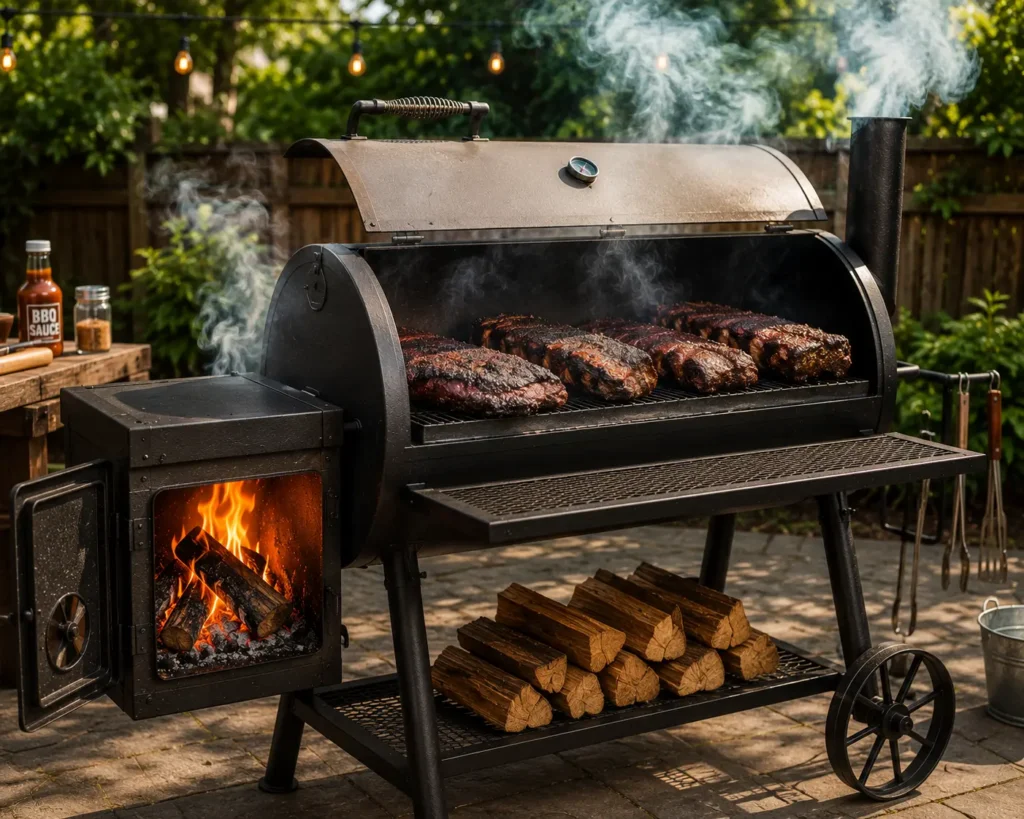
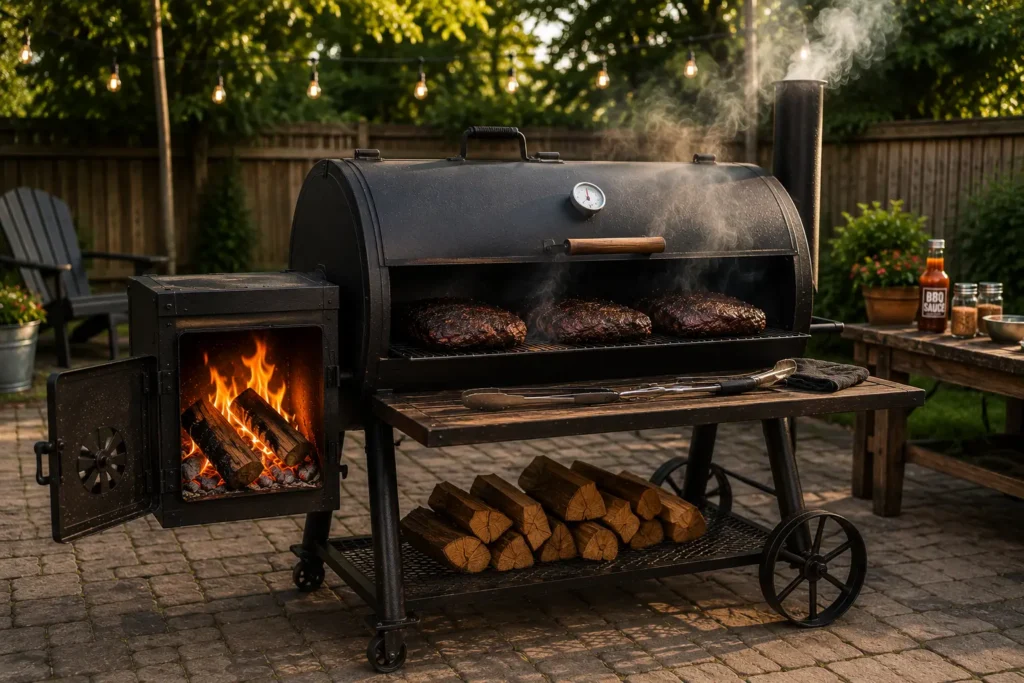
To understand the offset smoker vs vertical smoker debate, start with the classic offset design. An offset smoker usually consists of a cylindrical or rectangular horizontal cooking chamber attached to a smaller side firebox.
Charcoal or seasoned hardwood burns inside the firebox. The fire produces heat and smoke that enter the cooking chamber through a side opening, pass around the food, and leave through a chimney.
Because the fire is positioned beside rather than directly beneath the food, the smoker cooks indirectly. The area closest to the firebox is normally hotter, while the opposite end remains cooler. Experienced pitmasters can use these zones to cook different foods at the same time.
Our guide to offset smokers with a side firebox explains this traditional design in more detail.
Main Components of an Offset Smoker
The offset side of the offset smoker vs vertical smoker comparison is defined by the following main components:
- A side-mounted firebox
- A horizontal cooking chamber
- Adjustable intake and exhaust dampers
- One or more cooking grates
- A chimney or smokestack
- A grease drain or collection cup
- A lid-mounted temperature gauge
- Shelves or preparation surfaces on larger models
How an Offset Smoker Works
The firebox intake controls how much oxygen reaches the fire. More oxygen generally increases combustion and heat, while partially restricting the intake slows the fire.
The chimney creates draft and allows combustion gases to leave the smoker. During cooking, the exhaust should remain sufficiently open to support clean airflow. Trapping smoke inside the chamber can produce an unpleasant bitter flavor.
Good fire management depends on a stable coal bed, properly seasoned hardwood, suitable split sizes, and gradual airflow adjustments. A heavy-steel smoker retains heat better than a thin, lightweight model and generally responds more predictably in cold or windy weather.
These airflow requirements make the offset smoker vs vertical smoker operating experience noticeably more hands-on on a traditional offset.
Advantages of an Offset Smoker
In practical offset smoker vs vertical smoker use, an offset smoker provides several advantages:
- Wide grates accommodate whole briskets and long rib racks
- A separate firebox allows fuel to be added without opening the main chamber
- Wood and charcoal create traditional barbecue flavor
- Natural hot and cool zones provide cooking flexibility
- Some fireboxes include grates for direct grilling or searing
- Large models can handle parties, catering, and competition cooking
- Simple mechanical construction means fewer electronic parts can fail
Buyers seeking better heat retention and long-term durability can compare the features discussed in our premium offset smokers guide.
Disadvantages of an Offset Smoker
Offset smokers also have limitations:
- They require more patio or storage space
- Wood fires need regular attention
- Entry-level models may leak heat and smoke
- Thin steel can cause large temperature fluctuations
- Food may need to be rotated because of hot spots
- Larger cooking chambers consume more fuel
- Heavy models can be difficult to move
- Learning clean fire management takes time
Budget models can still perform well when chosen carefully. Our budget offset smokers guide explains which construction details matter most at lower prices.
What Is a Vertical Smoker?
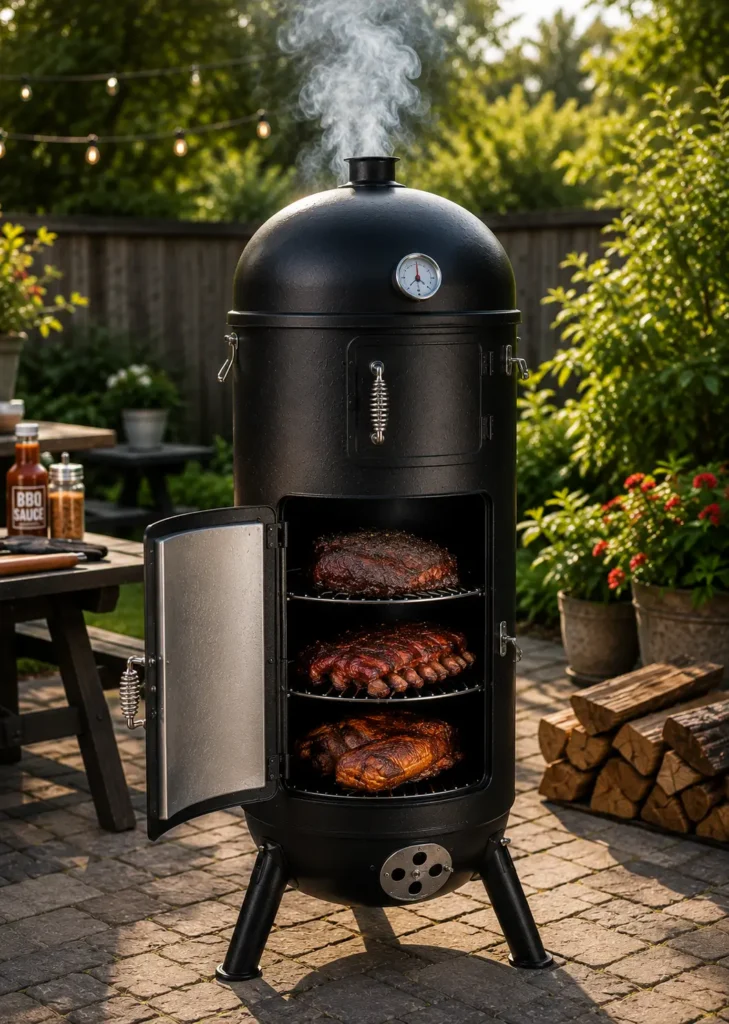
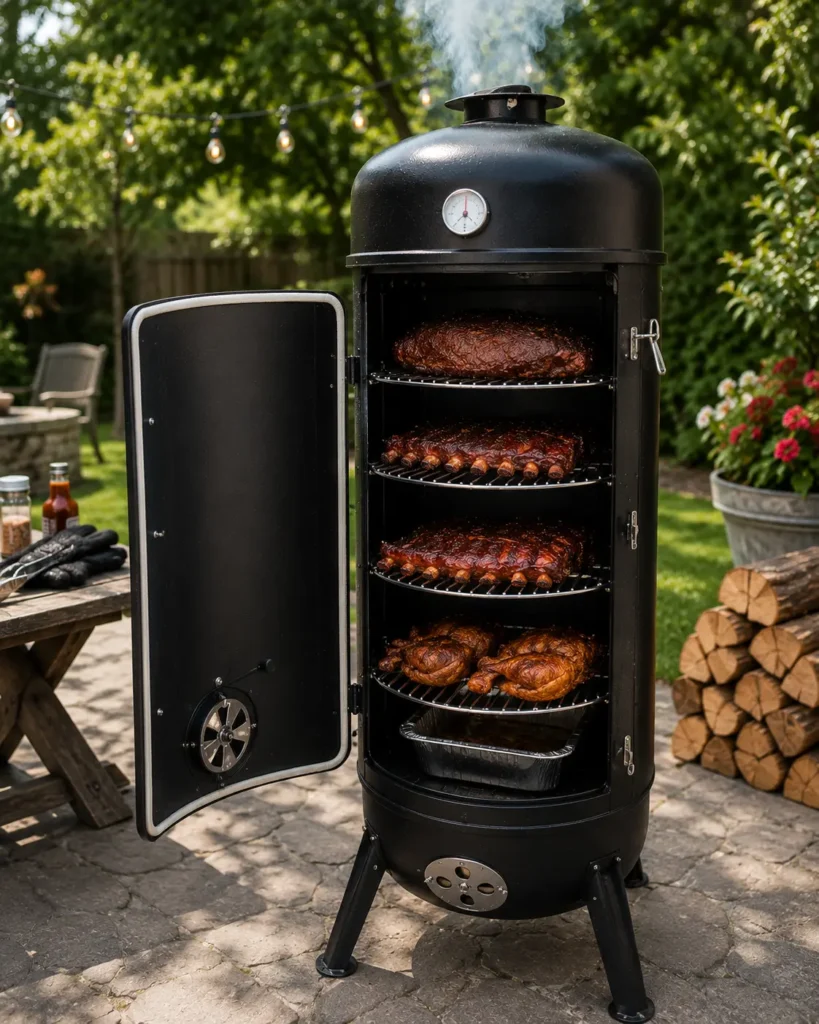
In an offset smoker vs vertical smoker comparison, “vertical” describes the smoker’s shape rather than its fuel source. A vertical smoker has a tall chamber with the heat source at or near the bottom and cooking racks arranged above it.
Heat and smoke naturally rise through the chamber, passing across each rack before leaving through a vent near the top. This upright configuration uses less floor space while still providing multiple cooking levels.
Vertical smokers are available in several forms:
- Charcoal water or bullet smokers
- Vertical charcoal cabinets
- Insulated cabinet smokers
- Electric vertical smokers
- Propane vertical smokers
- Drum smokers
This variety is important because the offset smoker vs vertical smoker comparison changes depending on whether the vertical model burns charcoal, propane, or electricity.
The fuel type strongly affects convenience and smoke flavor. An electric vertical smoker can regulate heat automatically, while a charcoal cabinet or bullet smoker still requires vent and fuel management.
Masterbuilt’s official guide explains the basic setup and operation of a vertical smoker with stacked cooking racks.
How a Vertical Smoker Works
In most vertical designs, the heat source sits at the bottom. A water pan, heat diffuser, or drip pan may be positioned above the fuel, followed by two or more cooking racks.
The water pan does not inject moisture into the center of the meat. Instead, it can help buffer temperature changes, catch drippings, reduce direct radiant heat, and increase humidity inside the chamber.
Heat and smoke rise from the bottom rack toward the top vent. Temperatures may still vary between levels, particularly when the smoker is heavily loaded. Rack position, vent settings, fuel placement, outdoor weather, and the presence of a water pan all affect performance.
Weber’s official Smokey Mountain vertical charcoal smoker provides a familiar example of a vertical water-smoker layout with stacked grates and adjustable dampers.
Advantages of a Vertical Smoker
On the vertical side of the offset smoker vs vertical smoker comparison, the main advantages are efficient use of space and stacked cooking capacity.
The vertical design offers several benefits:
- Uses less floor space than most offset smokers
- Stacked racks provide good capacity for the footprint
- The short heat path can improve fuel efficiency
- Heat rises naturally through the cooking chamber
- Water pans and diffusers can help stabilize temperatures
- Electric and propane models are accessible to beginners
- Many smaller units are easier to transport and store
- Cabinet doors on some models allow convenient food access
Disadvantages of a Vertical Smoker
The offset smoker vs vertical smoker choice also requires buyers to consider the following vertical-smoker limitations:
- Wide briskets or full rib racks may not fit smaller round models
- Accessing lower racks can require removing food above them
- Opening a large door or lid can release accumulated heat
- Drippings from upper racks may fall onto food below
- Most models are not designed for high-heat grilling
- Rack temperatures can differ from bottom to top
- Compact units may have limited fuel capacity
- Electric and propane models depend on their power or fuel supply
Offset Smoker vs Vertical Smoker: 10 Important Differences
The following offset smoker vs vertical smoker differences have the greatest effect on everyday cooking, fuel usage, food capacity, and long-term ownership.
1. Design and Required Floor Space
The most obvious offset smoker vs vertical smoker difference is physical orientation.
An offset smoker extends horizontally because the firebox and cooking chamber sit beside one another. It may also include front shelves, handles, wheels, and a chimney that increase the total space required.
A vertical smoker places its heat source and racks in a single upright body. It usually fits more easily on a compact patio, balcony, or deck, provided outdoor cooking is permitted and manufacturer clearances are followed.
Winner for compact spaces: Vertical smoker
2. Airflow and Heat Direction
Airflow is central to the offset smoker vs vertical smoker performance difference.
In an offset smoker, heat travels from the side firebox across the cooking chamber. In a vertical smoker, heat moves upward from below the food.
Side-to-side airflow creates natural temperature zones in an offset. Bottom-to-top airflow can distribute heat efficiently in a vertical smoker, but the lower rack may receive more radiant heat while the upper section collects rising heat.
Neither design is perfectly even. Use grate-level temperature probes to identify hot and cool areas instead of relying only on a lid thermometer.
3. Cooking Capacity and Food Shape
Cooking capacity is frequently misunderstood in the offset smoker vs vertical smoker comparison.
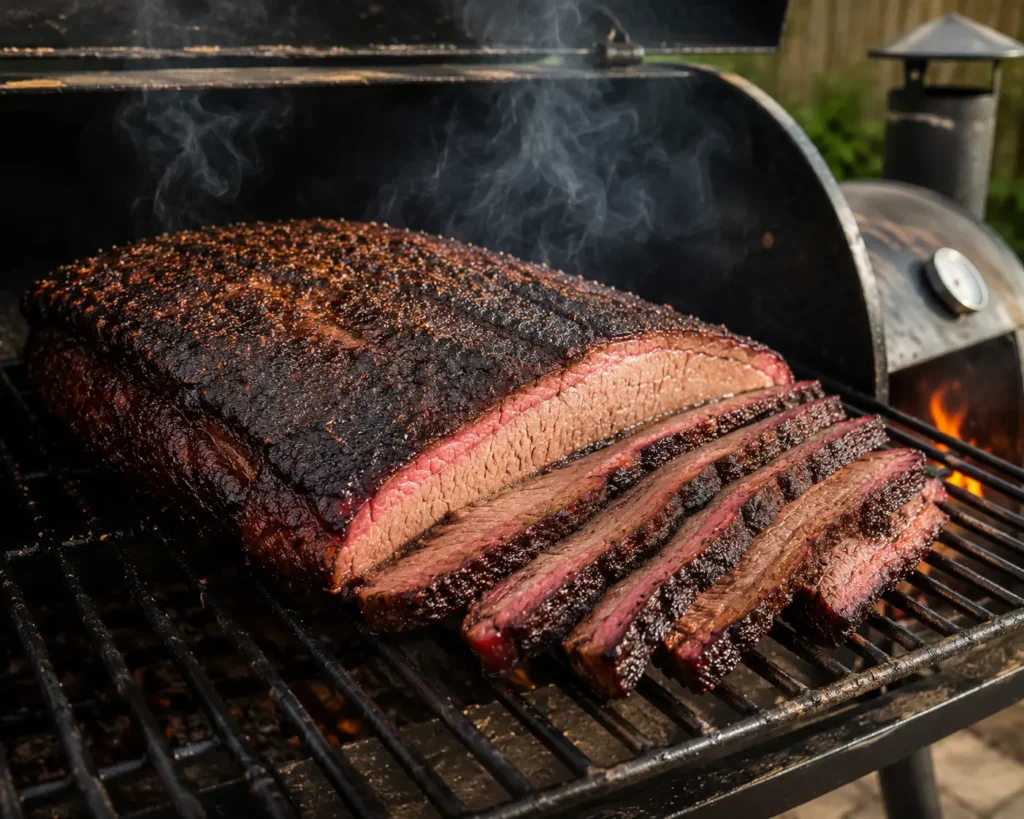
Offset smokers usually provide a wider uninterrupted cooking surface, making them suitable for full packer briskets, long rib racks, large fish, and multiple cuts arranged side by side.
Vertical smokers provide capacity through multiple levels. They can hold several pork shoulders, chickens, sausages, or smaller cuts without consuming much patio space.
However, circular bullet-smoker racks may be too narrow for long briskets or ribs unless the food is trimmed, rolled, or divided.
Winner for wide cuts: Offset smoker
Winner for capacity per square foot: Vertical smoker
4. Smoke Flavor
The offset smoker vs vertical smoker shape alone does not determine flavor. Fuel type, combustion quality, wood species, airflow, cooking duration, and the amount of smoke applied matter more.
A wood-burning offset can produce a pronounced traditional smoke profile because hardwood supplies both heat and smoke. A charcoal vertical smoker can also create strong barbecue flavor when hardwood chunks are added.
Electric and propane vertical smokers usually use smaller quantities of wood for smoke, so their flavor may be milder. This is a fuel-system difference rather than an unavoidable weakness of every vertical design.
Winner for traditional wood-fire flavor: Offset smoker
5. Temperature Control and Stability
The offset smoker vs vertical smoker temperature experience depends on construction and fuel.
Wood-burning offsets require the cook to manage fire size, oxygen, and fuel additions throughout long cooking sessions.
Charcoal vertical smokers also need damper control, but their compact chambers and efficient upward airflow can make stable low temperatures easier to maintain.
Electric vertical smokers are usually the simplest because a thermostat regulates the heating element.
Poorly sealed or thin metal smokers of either design can struggle in cold and windy conditions. Build quality matters as much as orientation.
Winner for automatic control: Electric vertical smoker
Winner for hands-on control: Offset smoker
6. Fuel Efficiency
Fuel usage is another major offset smoker vs vertical smoker difference.
A large offset has more steel and chamber volume to heat, and inexpensive models may lose energy through thin walls or poorly fitted doors.
A vertical smoker uses a shorter heat path and smaller footprint. Heat rises directly through the food chamber, so many vertical units can operate for long periods on a relatively modest charcoal load.
Insulated cabinet smokers can be especially efficient. Nevertheless, exact fuel consumption varies with smoker size, insulation, weather, cooking temperature, and how frequently the door or lid is opened.
Winner for typical fuel efficiency: Vertical smoker
7. Ease of Use and Learning Curve
For beginners, the offset smoker vs vertical smoker comparison requires more than looking at shape.
A digital electric vertical smoker is easier to operate than a traditional wood-burning offset, but a basic charcoal vertical smoker still requires practice.
An offset smoker teaches live-fire skills, including:
- Building a stable coal bed
- Adding wood before temperatures fall
- Reading smoke quality
- Managing oxygen
- Making small damper adjustments
- Responding to weather changes
Choose according to the experience you want. Convenience-focused cooks may prefer electric or propane vertical models, while barbecue enthusiasts who enjoy tending a fire may find an offset more rewarding.
Winner for beginners: Electric or propane vertical smoker
8. Grilling and Searing Versatility
Some offset smokers include cooking grates inside the firebox, allowing direct charcoal grilling or searing. Others can be configured for higher-temperature cooking in the main chamber.
Most vertical smokers are designed primarily for low-and-slow smoking. A few drum or convertible models can grill, but many water, cabinet, propane, and electric smokers cannot place food directly over a high-heat fire safely or effectively.
The Char-Broil American Gourmet offset smoker review provides an example of a budget offset design that combines smoking and grilling functions.
Winner for cooking versatility: Offset smoker
9. Food Access and Rack Management
Food access can affect the offset smoker vs vertical smoker cooking experience.
An offset’s large horizontal lid exposes most or all of the grate at once. This makes it easier to rotate briskets, rearrange ribs, or remove individual items, but opening the lid also releases considerable heat.
A vertical cabinet with a front door may provide convenient rack access. By contrast, some bullet smokers require the top lid or middle section to be removed, and reaching the lower grate may involve lifting food from the upper rack.
When examining an offset smoker vs vertical smoker in person, open every lid and door to confirm that you can reach the food, fuel, water pan, and grease tray comfortably.
When using stacked racks, place foods carefully to reduce cross-contamination and prevent unwanted drippings from falling onto lower items.
Winner: Depends on the specific door and rack design
10. Cleaning, Maintenance, and Price
The final offset smoker vs vertical smoker difference involves ownership.
Offset smokers produce ash in the firebox and grease in the horizontal chamber. Their large steel surfaces also need protection from moisture and rust.
Vertical charcoal smokers produce ash beneath the fuel and collect grease in a water or drip pan. Electric and propane models eliminate charcoal ash but still require rack, pan, wall, and sensor cleaning.
Small vertical smokers are often less expensive than heavy-duty offsets, although insulated cabinets and digital models can cost considerably more.
Compare the following features instead of choosing by price alone:
- Construction quality
- Usable cooking area
- Fuel requirements
- Warranty
- Replacement parts
- Rust protection
- Ash removal
- Grease management
- Long-term operating cost
Winner for low entry price: Basic vertical smoker
Winner for simple mechanical durability: Quality offset smoker
Which Smoker Is Better for Beginners?
For most first-time cooks comparing an offset smoker vs vertical smoker, a vertical model is easier if it uses electric power, propane, or a stable charcoal system.
The compact chamber reaches temperature quickly and generally requires less fuel management.
However, “vertical” does not automatically mean effortless. Charcoal bullet smokers and vertical cabinets still require vent adjustments, fuel monitoring, and experience with weather conditions.
An offset smoker is a suitable first smoker for someone who specifically wants to learn traditional wood-fired barbecue.
Starting with a dependable entry-level unit such as the model discussed in our Oklahoma Joe Highland offset smoker review can provide more cooking space and control than a small vertical smoker.
The best beginner offset smoker vs vertical smoker choice is therefore the design that matches the cook’s desired level of fire involvement.
Which Smoker Is Better for Brisket and Ribs?
The offset smoker vs vertical smoker decision for brisket depends mainly on grate dimensions.
A wide offset chamber usually fits a full packer brisket without trimming or folding. Small vertical smokers may require the brisket to be positioned diagonally, separated into the point and flat, or protected near the hotter edge.
Both designs work well for ribs. Offset smokers hold full racks horizontally, while vertical models may require:
- Rib racks
- Hanging hooks
- Rolling
- Trimming
- Dividing full racks
Larger cabinet smokers can accommodate full racks without modification.
Measure the actual grates before making an offset smoker vs vertical smoker purchase, especially if brisket and full rib racks are your main foods.
For a complete cooking process, see our guide on how to smoke ribs in an offset smoker.
How to Choose the Right Smoker
Before deciding between an offset smoker vs vertical smoker, answer the following questions:
- How much outdoor floor space is available?
- Do you prefer hardwood, charcoal, propane, or electricity?
- Do full briskets and rib racks fit without modification?
- How much food will you normally cook?
- Do you want to grill and sear as well as smoke?
- Are you willing to tend a wood fire for several hours?
- Can you easily reach every cooking rack?
- Is the smoker insulated or made from thick steel?
- How difficult are the ash and grease pans to remove?
- Can you obtain replacement parts and manufacturer support?
Choose an offset smoker for traditional wood-fire cooking, wider grates, larger events, and maximum control.
Choose a vertical smoker for a smaller footprint, efficient low-and-slow cooking, stacked capacity, and easier operation with certain fuel systems.
Your final offset smoker vs vertical smoker decision should be based on the complete cooker—not orientation alone.
A careful offset smoker vs vertical smoker evaluation should also include operating cost, storage, weather protection, and the time you can devote to each cook.
Safe Smoking and Temperature Monitoring
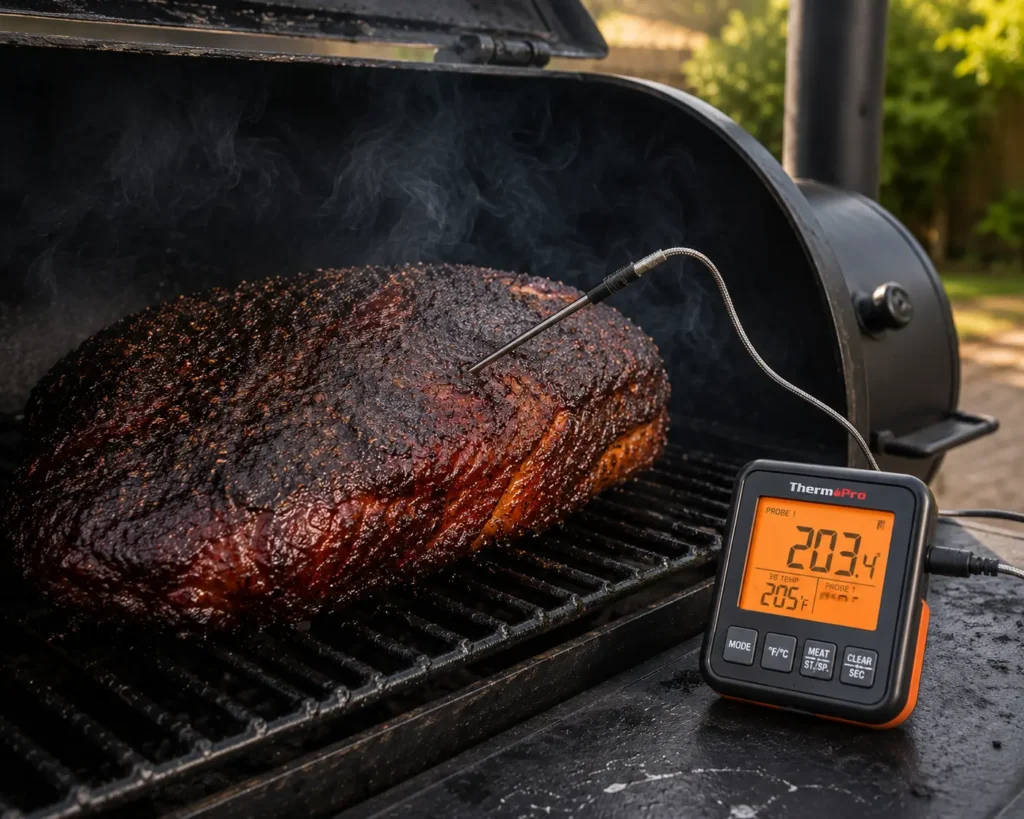
Regardless of the offset smoker vs vertical smoker choice, use a grate-level thermometer to monitor the cooking environment and a food thermometer to check doneness.
Built-in lid gauges can differ from the temperature beside the meat.
According to the official FoodSafety.gov safe internal temperature chart:
| Food | Safe Minimum Internal Temperature |
| Whole cuts of beef, pork, lamb and veal | 145°F with a three-minute rest |
| Ground meats | 160°F |
| Poultry | 165°F |
Brisket and pork shoulder are commonly cooked beyond their minimum safe temperatures to break down connective tissue. Judge these barbecue cuts using both internal temperature and probe tenderness.
Always use smokers outdoors in a well-ventilated location and follow the manufacturer’s clearance, electrical, fire, and fuel instructions.
Final Verdict
The offset smoker vs vertical smoker decision comes down to cooking style, available space, capacity needs, and preferred level of involvement.
An offset smoker is the stronger choice for pitmasters who want:
- Traditional wood-burning barbecue
- A wide cooking surface
- Useful temperature zones
- Direct fire control
- Possible grilling capability
- Capacity for wide cuts
It offers greater control but requires more space, fuel, and hands-on fire management.
A vertical smoker is better for cooks who want:
- A compact footprint
- Efficient fuel use
- Multiple stacked racks
- Easier temperature stability
- Portable or space-saving construction
- Convenient electric or propane options
Electric and propane versions can be particularly convenient, while charcoal vertical smokers still provide an authentic hands-on experience.
Neither design guarantees better food. A well-built smoker, clean-burning fuel, accurate temperature monitoring, proper food placement, and patient cooking technique matter more than whether the chamber is horizontal or vertical.
Whichever offset smoker vs vertical smoker option you select, learn its airflow pattern with a simple test cook before preparing food for a large gathering.
Frequently Asked Questions
Not universally. In the offset smoker vs vertical smoker comparison, a vertical smoker is generally better for compact spaces and fuel efficiency, while an offset smoker offers wider grates, stronger wood-fire control, and greater grilling versatility.
Not necessarily. A charcoal vertical smoker with hardwood chunks can produce a strong smoke profile. Electric and propane models may create a milder flavor because wood supplies smoke but not most of the cooking heat.
Electric and propane vertical smokers are usually easy to operate. Charcoal bullet and cabinet smokers still require fuel and vent control, although their compact chambers may be easier to stabilize than inexpensive offsets.
Yes, provided the cooking grate is wide enough. Smaller round units may require diagonal placement, trimming, separating the point and flat, or using a larger rack.
It depends on the model. Some drum and convertible smokers support direct grilling, but many vertical water, electric, propane, and cabinet smokers are designed only for indirect low-and-slow cooking.
Not every model does. Water smokers are designed around one, while drum, electric, propane, and insulated cabinet smokers may use a diffuser or drip pan instead. Follow the manufacturer’s instructions.
Vertical smokers are generally more fuel-efficient because they have a compact chamber and direct upward heat path. However, insulation, steel thickness, outdoor weather, and cooking temperature can change actual consumption.
A large offset is often better for full briskets, long rib racks, and wide food arrangements. A large vertical cabinet can also provide substantial capacity by using several stacked racks.
Electric and propane vertical smokers avoid charcoal ash, while charcoal vertical smokers use removable ash and water pans.
Offset smokers have larger chambers and fireboxes, but their grates and interior surfaces may be easier to access.