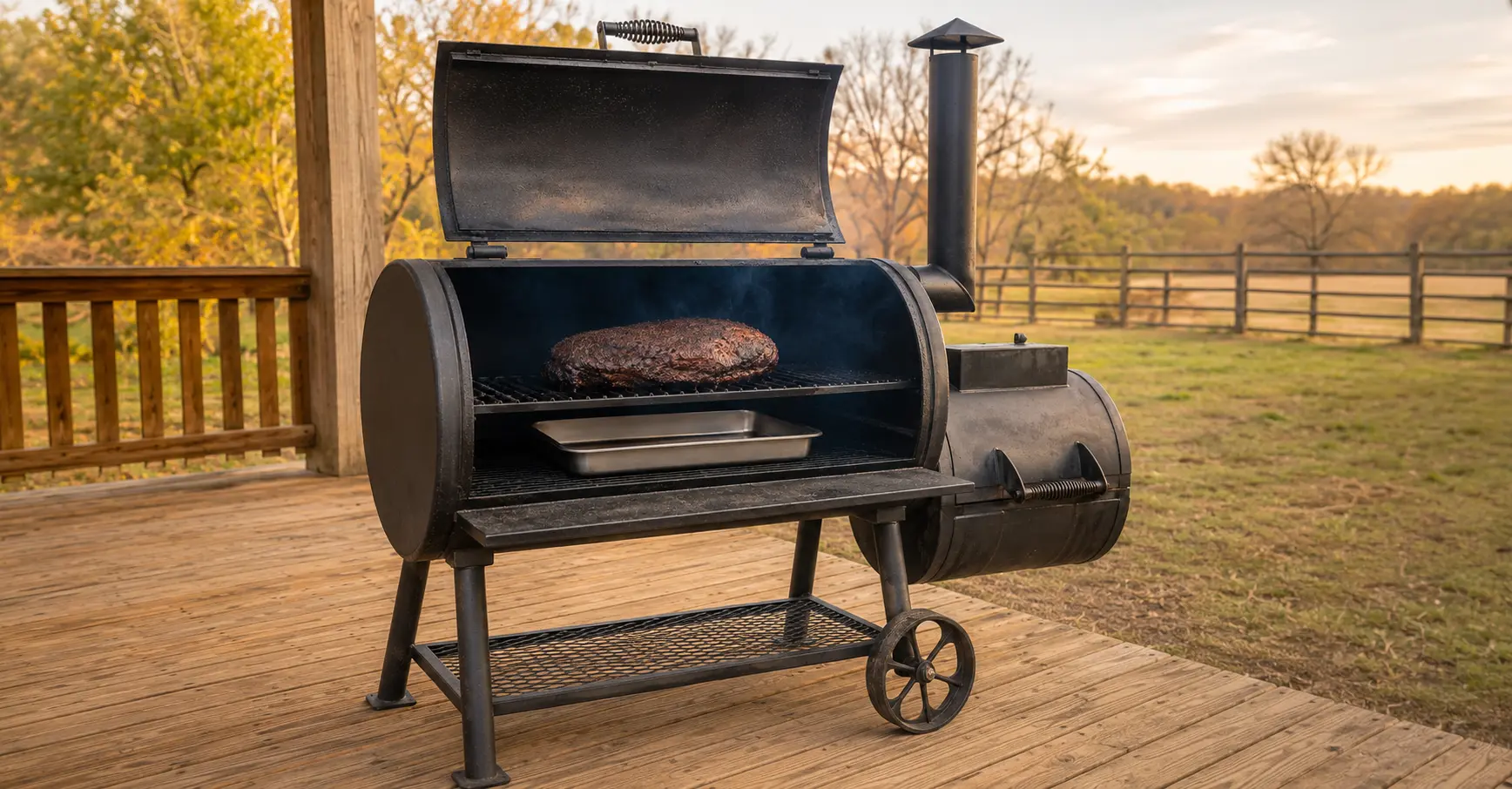
An offset smoker drip pan is a shallow heat-resistant container positioned beneath the food to collect rendered fat and meat juices. It keeps grease away from hot metal surfaces, simplifies cleanup, and can reduce the risk of burnt drippings affecting the flavor of your barbecue.
A drip pan is sometimes filled with a small amount of water to prevent the collected drippings from burning. However, a drip pan and water pan are not necessarily the same thing. A drip pan primarily collects grease, while a water pan is intended to hold enough water to increase humidity and buffer temperature changes.
Some cooks use one pan for both purposes, but understanding the difference helps you choose the correct size, position, and liquid level for your smoker.
Quick Answer
Place a heat-safe drip pan beneath the meat without blocking airflow or the smoker’s grease drain. Add a small amount of hot water if you want to keep the drippings from burning, but do not overfill the pan.
Best Setup
Use a shallow drip pan directly below the food and a separate water pan closer to the firebox when you need additional humidity or temperature buffering. This makes grease collection and water management easier.
Drip Pan vs Water Pan
| Feature | Drip pan | Water pan |
| Primary purpose | Collects grease and meat juices | Holds water for humidity and heat control |
| Normal position | Directly beneath the food | Often near the firebox or heat source |
| Liquid quantity | Empty or small amount | Partially filled with water |
| Main benefit | Easier cleanup and grease control | Buffers temperature fluctuations |
| Contents after cooking | Grease and drippings | Water mixed with smoke and grease |
| Suitable for gravy | Only under controlled, safe conditions | Usually no |
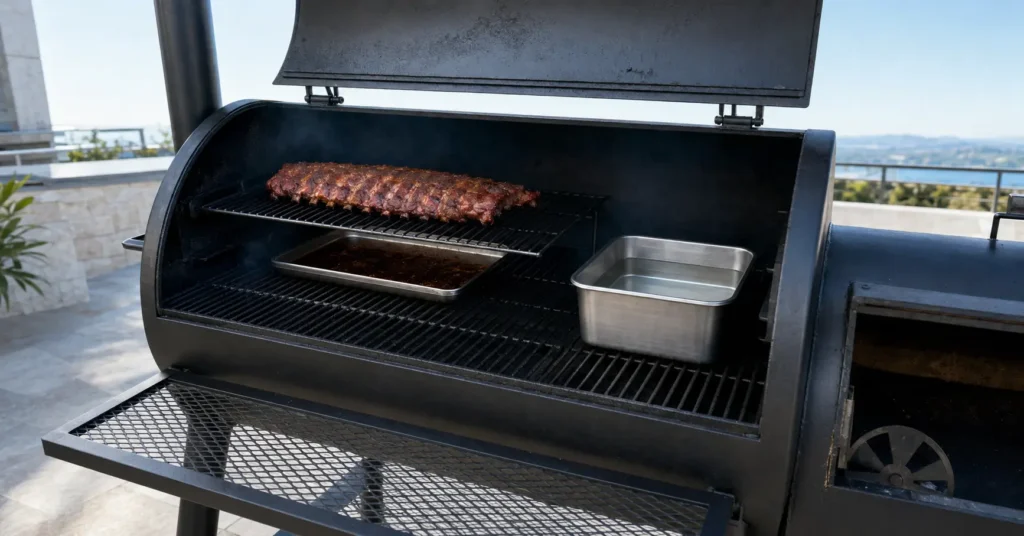
A drip pan is placed under meat to catch fat and juices before they reach the bottom of the cooking chamber, baffle plate, or another piece of food. It can be disposable or reusable.
A water pan contains enough water to influence the cooking environment. Water absorbs thermal energy as it heats and can reduce sudden temperature changes. As it evaporates, it also increases humidity inside the cooking chamber.
Weber distinguishes between the two by recommending water in the smoker’s water pan and a separate pan with a small amount of liquid when collecting drippings. See Weber’s explanation of drip and water pan use.
One pan can perform both functions if it is large enough, safely positioned, and regularly monitored. However, combining the functions produces greasy water that is more difficult to clean and generally unsuitable for sauces.
Benefits and Limitations of a Drip Pan
The most important benefit of an offset smoker drip pan is grease management. Brisket, pork shoulder, ribs, and poultry can release substantial amounts of fat during long cooking sessions. Catching this grease reduces buildup inside the cooking chamber.
A correctly positioned pan provides several benefits:
- Collects rendered fat and meat juices
- Simplifies smoker cleanup
- Protects baffle and tuning plates from heavy grease
- Reduces burnt grease odors
- Helps keep the grease drain clear
- Protects food on lower cooking racks
- Can reduce grease-related flare-ups
- Makes long cooking sessions less messy
A pan containing water may also absorb heat and increase humidity. This can make the cooking environment more forgiving, particularly in thin-steel smokers that experience rapid temperature changes.
However, a drip pan does not inject moisture into the center of the meat or automatically make tough cuts tender. Meat tenderness depends mainly on the cut, cooking temperature, internal temperature, time, fat and collagen breakdown, and resting.
Water vapor can reduce surface evaporation, but it does not replace correct cooking technique. A water pan can also slow bark development when excessive humidity keeps the meat’s surface wet.
Additional limitations include reduced airflow, lost cooking space, longer preheating time, grease disposal, and the need to refill water during long cooks. An oversized pan can interfere with heat distribution and make temperature control more difficult.
Choosing the Right Drip Pan
The ideal pan depends on the smoker’s dimensions, grate arrangement, grease-management system, and the size of the food.
The pan should be wide enough to catch drippings but should not cover the complete width of the cooking chamber. Leave space around its edges so heat and smoke can circulate.
A shallow pan is generally easier to position beneath the food. Deeper pans hold more grease and water but require more vertical clearance and may interfere with a lower cooking rack.
Common materials include:
- Disposable aluminum: Affordable and easy to discard, but thin pans can bend or spill when full. Place a flimsy pan on a rigid tray before moving it.
- Heavy-duty aluminum: Lightweight, reusable, and resistant to rust. Avoid using damaged or extremely thin pans for large amounts of hot grease.
- Stainless steel: Durable, reusable, easy to clean, and suitable for frequent smoking. It costs more initially but provides good long-term value.
- Porcelain-enamel steel: Durable and relatively easy to clean while the coating remains intact. Replace the pan if the enamel begins flaking badly.
- Cast iron: Extremely durable and good at storing heat, but heavy and more difficult to clean. It must be seasoned and protected against rust.
Use only cookware intended for high-temperature food preparation. Never use plastic, galvanized metal, painted containers, chemically coated trays, or unidentified scrap material inside the smoker.
Check the pan’s stated temperature limit before use. Remember that metal surfaces near the firebox may become considerably hotter than the smoker’s average chamber temperature.
Correct Drip Pan Placement
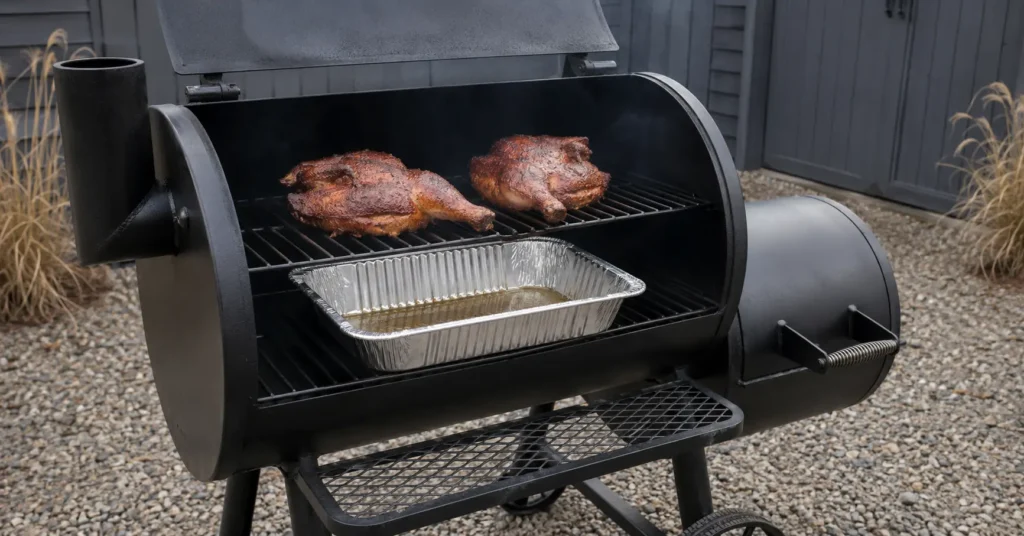
Place the drip pan directly beneath the food whenever the grate arrangement permits it. The pan should extend beyond the meat’s edges because rendered fat can travel across the surface before dripping.
On a smoker with two cooking levels, the pan can normally sit on the lower rack beneath the meat. If no lower rack is available, use a stable support designed for the smoker rather than balancing the pan on internal components.
Do not place the pan where it blocks the firebox opening, chimney airflow, grease drain, or gaps in the tuning plates. Heat and smoke must be able to move through the complete cooking chamber.
In a traditional offset smoker, placing a water-filled pan near the firebox can help absorb some of the strongest heat. However, a grease-filled drip pan should not sit so close to the fire that its contents burn, smoke excessively, or ignite.
For a reverse-flow smoker, do not cover the return opening where heat rises from beneath the reverse-flow plate. Blocking this area can disrupt the entire airflow system.
Use grate-level thermometer probes before and after installing the pan. A large pan can change the smoker’s temperature pattern, so food placement or tuning-plate gaps may need adjustment.
If your smoker already has a sloped grease-management system and external drip bucket, an interior pan remains optional. The external bucket collects grease leaving the smoker, while an interior pan catches drippings before they reach the chamber floor.
What Should You Put in the Pan?
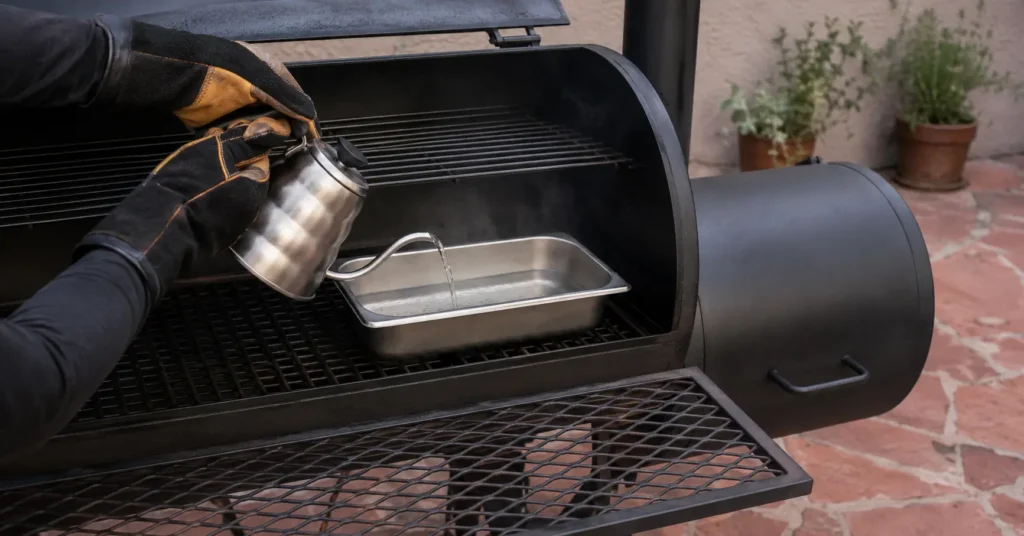
The safest and simplest option for a water or combination pan is plain hot water. Starting with hot water reduces the amount of energy required to heat the pan and helps the smoker return to its target temperature more quickly.
If the pan’s only purpose is catching grease, you may leave it empty or add a small amount of water to prevent the first drippings from immediately burning onto the metal.
Do not fill the pan to the top. Water, grease, and food juices will accumulate during cooking. An overfilled pan is difficult to move and can spill onto hot metal, the fire, or the cook.
Some people use beer, wine, apple juice, broth, herbs, citrus, or spices. These liquids can create pleasant aromas, but they generally provide far less flavor than seasoning the meat directly. Many flavor compounds remain in the pan rather than travelling with the water vapor.
Sugary liquids can reduce, scorch, and create sticky residue. Broth and other food-based liquids can also spoil if handled incorrectly. Plain water is normally more economical and considerably easier to clean.
Use marinades, rubs, injections, sauces, spritzes, and suitable smoking wood when you want a noticeable change in flavor. Do not rely on an expensive liquid inside the water pan to season the meat.
Monitoring the Pan During Cooking
Check the drip or water pan periodically during long smoking sessions. The required frequency depends on the pan size, liquid quantity, smoker temperature, airflow, weather, and cooking duration.
Use heat-resistant gloves and open the smoker carefully. Water and grease can be hot enough to cause serious burns.
If a water pan is nearly dry, add hot water slowly. Cold water can reduce the cooking temperature and may warp a very hot thin pan. Pour from a stable container without leaning directly over escaping steam.
Do not add water to a pan full of extremely hot grease. Water and hot fat can react violently, splatter, or overflow. If the pan has become primarily filled with grease, allow the smoker to cool before handling it.
Watch for these problems:
- Pan running dry
- Grease approaching the rim
- Liquid boiling aggressively
- Burnt or unpleasant odors
- Pan warping or sagging
- Blocked airflow
- Grease leaking beneath the pan
- Sudden temperature changes
- Grease moving toward the firebox
If the pan is nearly full during a long cook, replace it carefully with an empty heat-safe pan. Do not attempt to carry an unsupported disposable foil tray filled with hot grease.
Can You Use Smoker Drippings for Gravy?
Smoker drippings can sometimes be used for gravy or sauce, but they must be collected and handled carefully. Drippings from raw meat may contain harmful bacteria, while smoke, ash, grease, and burnt seasoning can make the liquid bitter or unsafe.
Use a clean pan positioned away from direct fire. Add a small amount of water or unsalted stock to prevent the early drippings from burning. Avoid collecting liquid that receives ash, dirty smoke, paint flakes, rust, or grease from previous cooking sessions.
Never taste untreated drippings. Separate excess fat and cook the remaining liquid thoroughly as part of a gravy or sauce recipe. Follow current food-safety practices for raw meat juices, cooking, serving, cooling, and storage.
The USDA emphasizes cleaning, separation, correct cooking, and prompt chilling in its food-safety basics.
Discard the drippings if they:
- Smell burnt, rancid, sour, or unusual
- Contain ash, soot, rust, or debris
- Have remained at unsafe temperatures
- Came from a dirty smoker or pan
- Include heavily charred sugars
- Cannot be cooked or handled safely
Do not assume that smoke automatically preserves or sanitizes the drippings.
Cleaning and Grease Disposal
Allow the smoker and drip pan to cool before cleaning. Warm grease is easier to remove than completely hardened fat, but it should never be handled while dangerously hot.
Pour cooled liquid fat into a disposable container and place it in the rubbish according to local waste rules. Do not pour grease into a sink, toilet, outdoor drain, or garden because it can block plumbing and attract pests.
Wipe reusable pans with paper towels before washing. Clean them with hot water and an appropriate degreasing detergent, then rinse and dry thoroughly.
Carbon steel and cast-iron pans should be dried immediately and coated lightly with cooking oil to prevent rust. Stainless-steel and enamel pans are easier to maintain but should still be inspected for damage.
Disposable foil liners can simplify cleanup, but they should fit securely and must not block the smoker’s grease drain or airflow. Replace torn or punctured liners before the next cook.
Clean spilled grease from the cooking chamber, baffle plate, tuning plates, and drain system. Oklahoma Joe’s recommends removing grease, treating rust, and cleaning smoker components as part of regular smoker maintenance.
Common Mistakes to Avoid
Confusing the drip pan with the water pan: A drip pan collects grease; a water pan manages water. They can be combined, but their primary purposes remain different.
Using a pan that is too large: Covering most of the chamber can block airflow and change heat distribution.
Overfilling with water: The pan needs space for grease and drippings. Overfilling creates a serious spill risk.
Using sugary liquids: Juice, soda, or sweetened sauces can burn and create difficult-to-clean residue.
Expecting flavored liquid to season the meat: Beer, wine, herbs, and juice in the pan generally produce less flavor than direct seasoning.
Allowing the pan to run dry: Burnt grease can produce harsh smoke and become difficult to remove.
Placing grease near the fire: A pan containing rendered fat should remain away from direct flames and extremely hot firebox surfaces.
Blocking the grease drain: The smoker’s original grease-management system should remain functional.
Using unsafe containers: Plastic, galvanized metal, painted trays, and unknown coatings do not belong inside a hot smoker.
Moving a full disposable pan: Thin foil can collapse. Allow the pan to cool or support it with a rigid metal tray.
Automatically saving drippings: Discard any liquid contaminated by ash, soot, old grease, or unsafe handling.
Is a Drip Pan Necessary?
An offset smoker can operate without an interior drip pan if it has an effective sloped floor, grease drain, and external collection bucket. However, a pan can still make cleanup easier and protect baffle or tuning plates from heavy grease.
A drip pan is particularly helpful when cooking fatty foods such as brisket, pork shoulder, pork belly, ribs, or poultry. It is also useful when several cuts are arranged on stacked cooking racks.
You may not need one for small, lean foods that release very little grease. However, the smoker’s drain should always remain clear and an external grease container should be installed when the manufacturer requires one.
A water pan is optional in most offset smokers. It can buffer temperature changes and increase humidity, but stable fire management remains more important. Our guide on how to control heat in an offset smoker explains the relationship between water, airflow, fuel, and cooking temperature.
Why Using an Offset Smoker Drip Pan Is Worth the Effort
An offset smoker drip pan is a simple accessory that can improve grease control, protect internal smoker components, and reduce cleanup after long cooking sessions.
Position the pan directly beneath the food without blocking the firebox opening, tuning plates, reverse-flow return, chimney draft, or grease drain. Choose a heat-safe pan large enough to catch drippings but small enough to preserve airflow around its edges.
Use plain hot water when you need moisture or want to prevent drippings from burning. Beer, wine, juice, and herbs are optional, but they usually provide less flavor than direct seasoning and make cleanup more difficult.
Monitor the pan during long cooks and never allow hot grease to overflow or reach the fire. Handle saved drippings as raw meat juices, cook them thoroughly, and discard anything contaminated by ash, soot, burnt residue, or unsafe temperatures.
Used correctly, a drip pan makes the smoking process cleaner and more manageable without interfering with the authentic wood-fired flavor of an offset smoker.
Frequently Asked Questions
It is not always required, but it simplifies cleanup, collects grease, protects internal components, and can reduce burnt drippings.
A drip pan primarily collects grease and meat juices. A water pan holds enough water to increase humidity and buffer temperature changes.
Place it beneath the meat while leaving space around the pan for airflow. Do not block the grease drain, firebox opening, baffle gaps, or reverse-flow return.
You can add a small amount of water to prevent the first drippings from burning. If you want significant humidity and temperature buffering, use a dedicated water pan.
It increases humidity and can reduce surface evaporation, but it does not inject moisture into the meat. Correct temperature, cooking time, fat content, wrapping, and resting remain more important.
Yes, but the flavor effect is usually subtle. Sugary liquids can scorch and create sticky residue, so plain water is generally the most practical option.
Only when collected in a clean pan, protected from ash and burnt grease, handled as raw meat juices, and cooked thoroughly. Discard contaminated or unpleasant-tasting drippings.
Follow your smoker or pan manufacturer’s instructions. Leave enough empty space for grease and drippings, and never fill the pan to the rim.
Check it periodically during long cooks. Frequency depends on the smoker temperature, pan size, airflow, weather, and amount of meat.
Yes. A large pan or water-filled pan can absorb heat, alter airflow, and increase preheating time. Monitor temperatures at grate level after changing the setup.