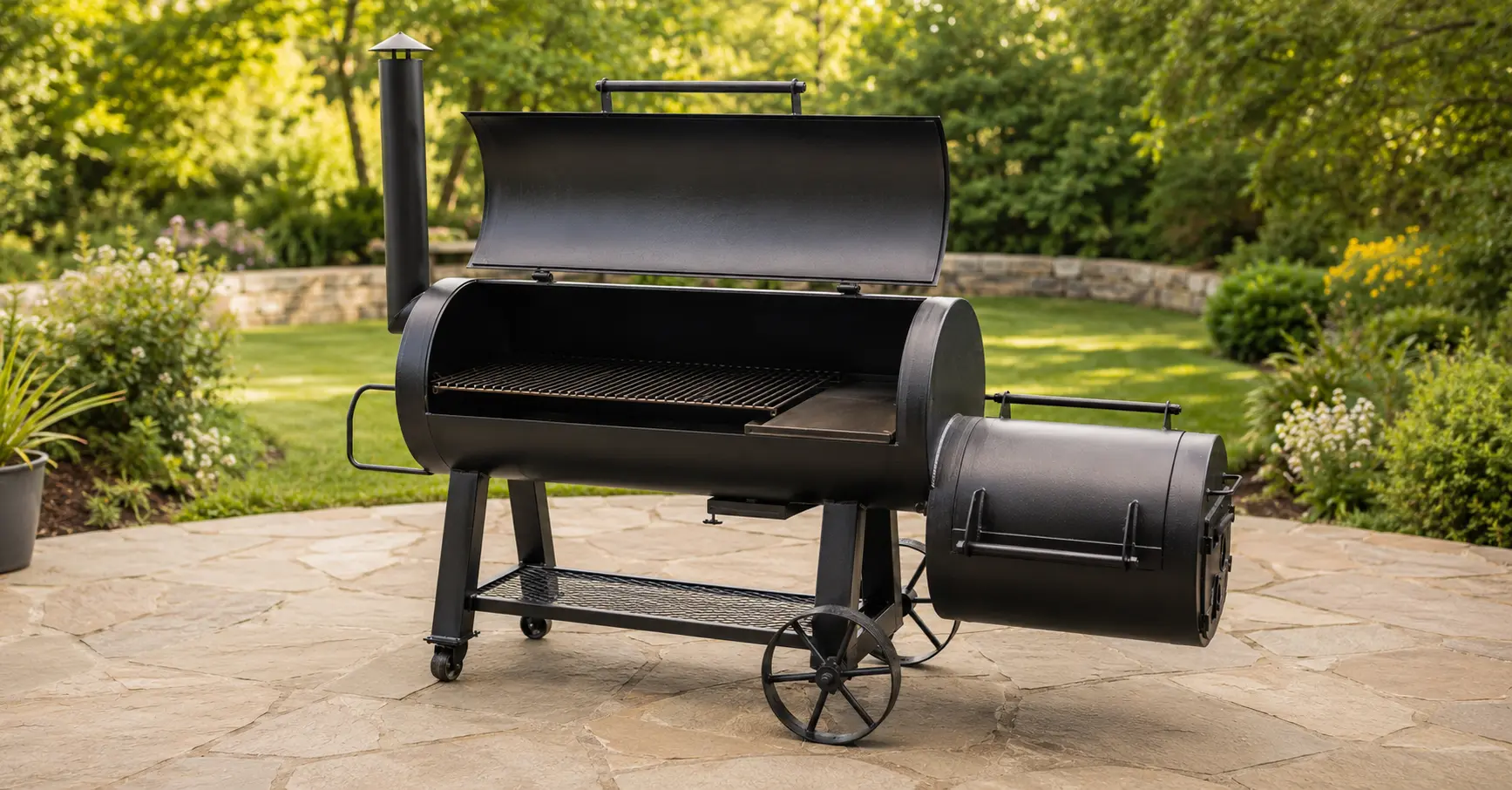
An offset smoker baffle plate is a metal barrier installed inside the cooking chamber near the firebox opening. Its purpose is to redirect the strongest heat before it reaches the food and distribute that heat more evenly across the cooking grate.
Traditional offset smokers naturally develop a hot zone beside the firebox. Without a heat deflector, direct radiant heat and fast-moving hot air can overcook food placed in this area while meat near the chimney cooks more slowly.
A properly designed baffle plate reduces this temperature difference, protects food from intense radiant heat, and creates a more manageable cooking environment. However, an incorrect plate can restrict airflow, trap grease, increase fuel consumption, or create new hot spots.
A baffle plate redirects intense heat entering from the firebox and spreads it through the cooking chamber. It can reduce hot spots and improve temperature consistency, but it cannot replace proper fire and airflow management.
Use a fixed deflector near the firebox with adjustable tuning plates across the remaining chamber. Leave progressively larger gaps toward the chimney so more heat can rise in the naturally cooler areas.
What Is an Offset Smoker Baffle Plate?
An offset smoker has a horizontal cooking chamber connected to a separate side firebox. Wood or charcoal burns inside the firebox, while heat and smoke enter the cooking chamber and move toward the chimney.
Because the firebox opening is close to one side of the cooking grate, this area receives the most intense heat. The temperature naturally decreases as hot air travels toward the opposite end.
A baffle plate is positioned between the firebox opening and the food. Instead of allowing heat to strike the cooking grate directly, the plate forces it to travel beneath, around, or through the metal before circulating across the food.
Baffle plates may be permanently welded, bolted into place, or removable. Some smokers use one solid plate, while others have several smaller adjustable plates known as tuning plates.
Our complete offset smoker guide explains the smoker’s basic firebox, cooking chamber, chimney, and airflow system.
How Does a Baffle Plate Work?
Heat from the firebox reaches the cooking chamber in three main ways: hot moving air, smoke, and radiant energy. A baffle plate changes how these elements reach the food.
The plate absorbs some of the intense heat entering from the firebox. It then radiates that energy more gradually into the cooking chamber. At the same time, hot air and smoke are redirected beneath or around the plate.
This process protects food close to the firebox from the most intense direct heat. Depending on the plate design, it can also encourage hot air to spread farther across the chamber before rising to cooking-grate level.
A baffle plate does not automatically create identical temperatures from one end of the smoker to the other. The result also depends on:
- Plate length, width, thickness and angle
- Size and position of the openings
- Distance between the plate and cooking grate
- Firebox opening and chimney placement
- Cooking-chamber diameter
- Fire size and fuel quality
- Intake and exhaust airflow
- Weather conditions
- Food quantity and placement
The baffle must distribute heat without restricting draft. If airflow becomes too limited, the fire may burn inefficiently and produce thick, dirty smoke.
Baffle Plates, Tuning Plates and Reverse-Flow Plates
These terms are sometimes used interchangeably, but they describe different heat-management systems.
| Heat-management system | Design | Primary purpose |
| Firebox baffle | Short fixed plate near firebox opening | Blocks intense direct heat |
| Tuning plates | Several movable plates across chamber | Adjusts heat distribution |
| Convection plate | Long plate with holes or slots | Distributes rising heat |
| Reverse-flow plate | Long solid plate with a return opening | Reverses heat and smoke direction |
A firebox baffle is normally a short angled or curved plate positioned immediately inside the cooking chamber. It blocks direct radiant heat and pushes hot air downward or farther into the smoker.
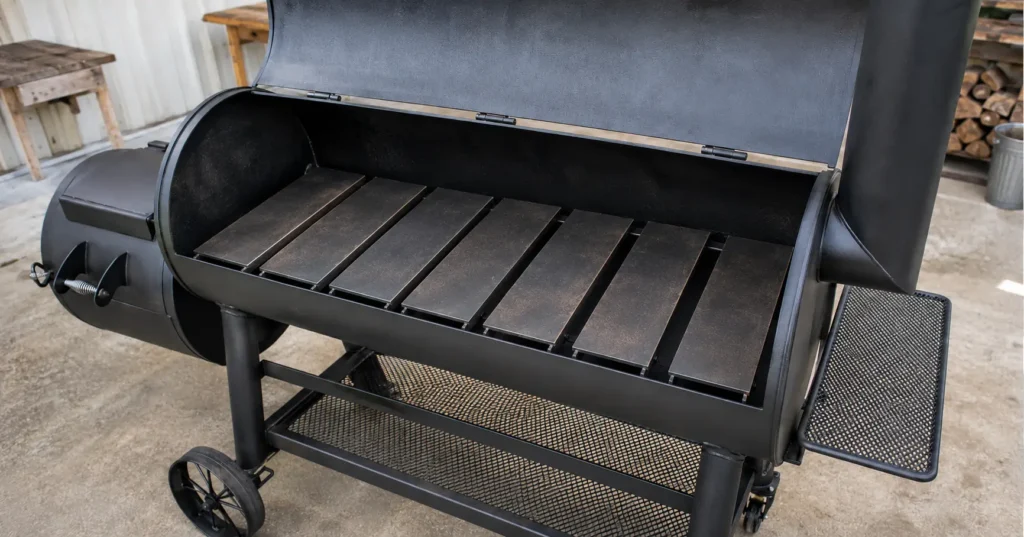
Tuning plates are several flat metal sections placed beside one another below the cooking grate. Their spacing can be adjusted to control where heat rises. Narrow gaps are generally used near the firebox, while wider gaps allow more heat into cooler areas toward the chimney.
A convection plate is a long panel with holes, slots, or progressively sized openings. Heat rises through these openings at different points across the chamber. It is easier to install than several separate tuning plates but provides less individual adjustment.
A reverse-flow plate is a long, mostly solid steel plate. Heat and smoke travel beneath it toward the far end of the chamber, rise through an opening, and then flow back across the food toward a chimney located near the firebox side.
Lang BBQ describes this reverse-flow path as heat travelling beneath the baffled flue before reversing direction and passing back over the plate.
Reverse flow is therefore a complete airflow configuration rather than simply another name for a short baffle plate. Our offset smoker vs reverse-flow smoker comparison explains the differences in more detail.
Benefits and Limitations of a Baffle Plate
The biggest benefit of an offset smoker baffle plate is reduced direct heat near the firebox. This makes the hottest section of the cooking grate more usable and reduces the likelihood of burning one side of a brisket, pork shoulder, or rib rack.
A well-configured system can also provide:
- More even grate-level temperatures
- Reduced need to rotate food
- Better control during long cooks
- Protection from direct radiant heat
- More predictable food placement
- Improved use of the full cooking grate
- A stable heated surface beneath the food
Thick steel plates absorb thermal energy and can reduce sudden temperature changes once fully heated. However, this additional metal also increases preheating time and may require more fuel.
A plate does not directly force smoke “deeper” into the meat. Its main benefit is controlling heat and airflow. Clean smoke, cooking time, surface moisture, seasoning, bark development, and fire quality still determine the final flavor.
Possible disadvantages include:
- Longer preheating time
- Higher initial fuel consumption
- Restricted airflow if the plate is oversized
- Grease and carbon buildup
- Reduced vertical clearance beneath the grates
- New hot spots caused by incorrect gaps
- Difficulty reaching high grilling temperatures
- Additional weight inside the smoker
- More components to remove and clean
A solid plate without suitable grease drainage can become a fire hazard. Rendered fat may collect on the hot surface, burn, or flow toward the firebox. The plate must be designed and positioned so grease moves toward a safe drain rather than the fire.
Choosing and Installing the Right Baffle Plate
Before purchasing or fabricating a baffle plate, check whether the smoker manufacturer offers a compatible system. A model-specific product is more likely to fit the chamber, firebox opening, grates, grease drain, and airflow design correctly.
For example, Oklahoma Joe’s uses removable baffles in its Highland Reverse Flow smoker, allowing the smoker to switch between reverse-flow and traditional offset configurations.
Measure the interior width and length of the cooking chamber, the firebox opening, the grate height, existing supports, chimney position, and grease drain location. Do not order a plate using only the smoker’s external dimensions.
Use uncoated steel intended for high-temperature cooking environments. Never place galvanized, painted, chemically coated, or unidentified scrap metal inside a hot cooking chamber. Heating inappropriate coatings can damage the smoker, contaminate food, or release hazardous fumes.
The plate should not block the firebox opening completely. Heat and smoke need sufficient space to move into and through the cooking chamber. It must also sit securely so it cannot shift when the smoker is moved or cleaned.
If permanent drilling, cutting, or welding is required, consider using a qualified fabricator. Poor modifications can damage protective finishes, create rust points, weaken the smoker, change airflow, or affect the manufacturer’s warranty.
After installing the baffle plate:
- Confirm that the cooking grates still sit correctly.
- Check that the grease drain remains unobstructed.
- Verify adequate clearance around the plate.
- Remove oil, metal filings, and fabrication residue.
- Season bare carbon steel before cooking.
- Run the smoker empty to check airflow and temperature.
- Monitor grate temperatures at several locations.
- Make small adjustments before cooking expensive meat.
Adjusting Tuning Plates for Even Temperatures
Begin with the plates close together near the firebox. This blocks more heat from rising immediately into the naturally hotter side of the chamber.
Increase the spacing gradually as the plates approach the chimney. Wider openings allow more heat to rise into the cooler end.
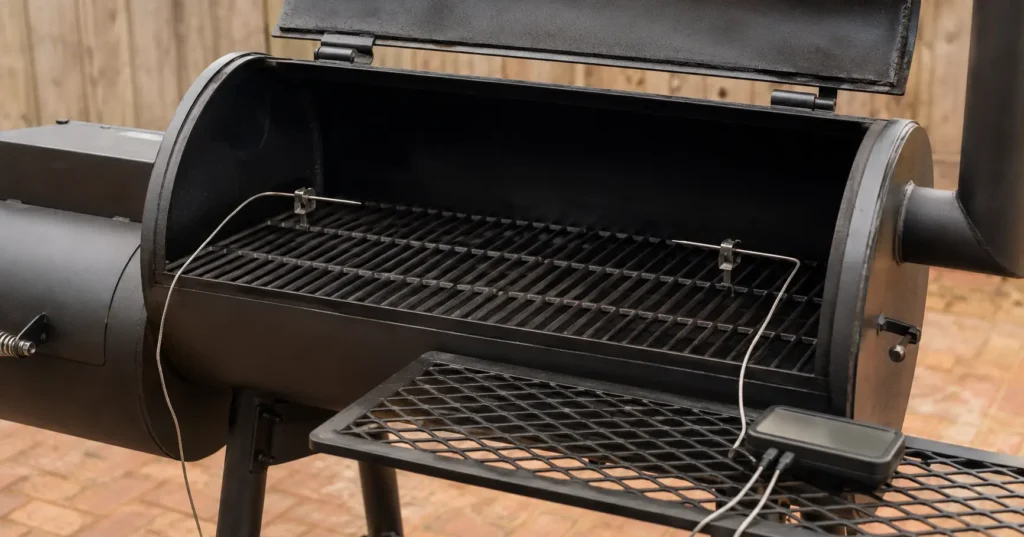
Do not make large changes based on a single thermometer reading. Use at least two grate-level probes—one near the firebox and one near the chimney. Three or four probes provide an even clearer temperature map.
Preheat the smoker completely before evaluating the setup. Thick steel requires time to absorb heat, and early readings may not represent normal cooking conditions.
Run the smoker at the temperature you use most often. A tuning-plate arrangement that works at 250°F may behave differently during a 325°F chicken cook.
If the firebox side remains too hot, slightly reduce the nearby gaps or extend the first deflector farther into the chamber. If the chimney side remains too cool, widen the gaps toward that end.
If the center becomes hotter than both ends, the middle gaps may be too wide. If temperatures become difficult to raise throughout the chamber, the plate system may be restricting airflow or absorbing more heat than the fire can supply.
Allow time after each adjustment. Moving several plates simultaneously makes it difficult to determine which change improved or worsened the temperature distribution.
Our offset smoker thermometer upgrade guide explains how to place grate probes and measure the smoker’s heat zones accurately.
Cleaning and Maintaining the Baffle Plate
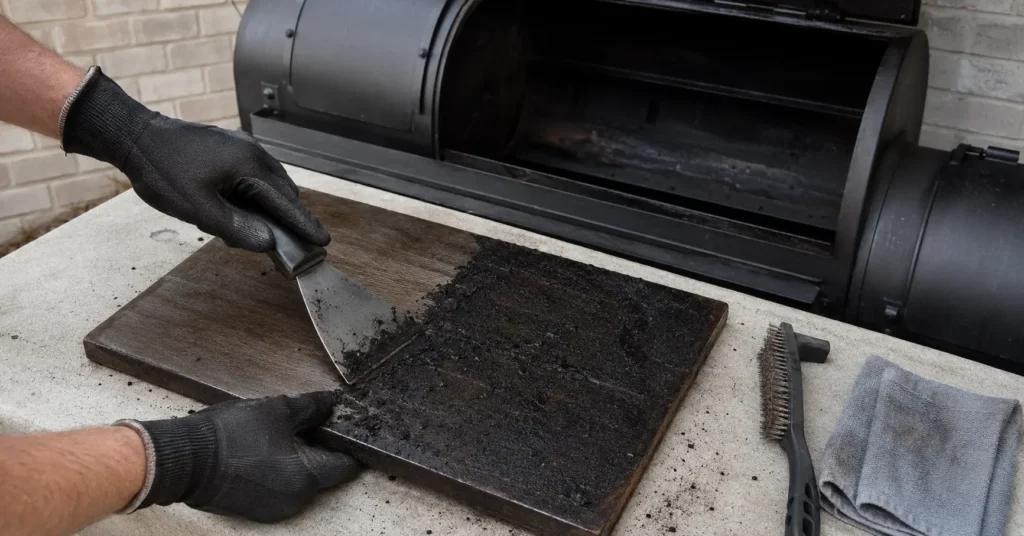
A baffle plate collects grease, seasoning residue, soot, ash, and carbon during regular use. Light buildup is normal, but thick deposits can affect airflow, create unpleasant smoke, or contribute to grease fires.
Once the smoker is completely cool, remove the cooking grates and inspect the plate. Scrape away loose carbon and heavy grease with a suitable grill scraper. Remove detachable tuning plates when deeper cleaning is required.
Avoid aggressive cleaning that strips every layer of seasoning from carbon steel. After cleaning bare areas, apply a light coating of suitable cooking oil and heat the smoker to restore protection against moisture.
Inspect the plate for:
- Heavy grease accumulation
- Blocked holes or slots
- Warping or sagging
- Loose mounting hardware
- Sharp edges
- Peeling coatings
- Rust
- Blocked grease drainage
Slight discoloration and surface seasoning are normal. Severe rust, flaking metal, cracked welds, or significant distortion may require repair or replacement.
Do not pour cold water onto a hot baffle plate. Rapid temperature change can warp metal and may damage the smoker.
Common Mistakes to Avoid
Blocking too much airflow: A plate that covers the firebox opening or leaves insufficient clearance can weaken the draft and create dirty smoke.
Using metal that is too thin: Thin sheet metal may heat quickly but can warp after repeated exposure to high temperatures.
Ignoring grease drainage: A solid plate must not direct liquid fat into the firebox or allow large pools to collect beneath the food.
Installing the plate too close to the grate: Insufficient clearance can expose food to intense radiant heat from the heated steel.
Expecting perfectly identical temperatures: Small temperature differences are normal and can be useful for cooking different foods.
Adjusting before the smoker is preheated: Readings taken during startup do not show how the smoker will behave once the steel stabilizes.
Using only a lid thermometer: A lid gauge cannot accurately map temperatures across the cooking grate.
Making several adjustments together: Change one gap or plate position at a time and record the effect.
Neglecting fire management: A baffle plate cannot correct an oversized, smoldering, or poorly ventilated fire. Follow our offset smoker fire management tips to maintain clean combustion.
Is a Baffle Plate Necessary?
A baffle plate is not essential in every offset smoker. Many traditional offsets are intentionally designed with distinct hot and cool zones. Experienced cooks use these zones to prepare different foods or position thicker sections of meat toward the firebox.
A baffle plate is most useful when the area near the firebox is excessively hot, food requires frequent rotation, or a large portion of the cooking grate is difficult to use.
Before installing one, test the smoker with digital probes or a simple biscuit test. Place evenly spaced refrigerated biscuits across the cooking grate and observe which areas brown first. This will reveal the general heat pattern.
First confirm that the problem is not caused by poor fire management, blocked airflow, inaccurate thermometers, air leakage, or an incorrectly positioned chimney. A baffle should solve a genuine heat-distribution problem rather than compensate for an unstable fire.
Some premium smokers are engineered to work without additional plates. Modifying a well-designed system may reduce its performance rather than improve it.
Why an Offset Smoker Baffle Plate Is Worth Installing
An offset smoker baffle plate can make the cooking chamber easier to manage by redirecting intense firebox heat and reducing extreme hot spots. It is particularly valuable in inexpensive or poorly balanced smokers where the firebox side cooks much faster than the chimney side.
A short firebox baffle protects the nearby cooking grate, while adjustable tuning plates provide greater control over heat distribution. A reverse-flow plate creates a different airflow path by sending heat beneath the plate and back across the food.
The correct solution depends on the smoker’s dimensions, chimney position, firebox opening, grease drain, steel thickness, and existing airflow. There is no universal plate size or gap arrangement that works perfectly in every smoker.
Install only materials suitable for high-temperature cooking, preserve adequate airflow, provide safe grease drainage, and test the system with multiple grate-level probes. Combined with a clean fire and thoughtful food placement, a properly configured baffle plate can make long barbecue sessions more consistent and predictable.
Frequently Asked Questions
It redirects intense heat entering from the firebox, reduces direct radiant heat, and helps distribute cooking temperatures more evenly.
A baffle is normally a fixed deflector near the firebox opening. Tuning plates are separate movable sections that allow you to adjust where heat rises across the chamber.
No. A reverse-flow plate extends through most of the cooking chamber and forces heat to travel underneath before returning across the food. A standard baffle may only redirect heat near the firebox.
No. Install one only when testing shows excessive hot spots or unusable cooking space. Some smokers are designed to operate correctly without additional plates.
The appropriate thickness depends on the smoker’s size and design. It should be thick enough to resist warping without adding unnecessary weight or preheating time. Follow the smoker or accessory manufacturer’s specifications.
It depends on the design. Convection plates use holes or slots, tuning plates use adjustable gaps, and reverse-flow systems typically use a solid plate with an opening at the far end.
It may improve smoke circulation and cooking consistency, but it does not automatically create better flavor. Clean combustion, seasoned wood, airflow, and cooking technique remain more important.
Place digital probes at several points across the cooking grate or perform a biscuit test. The area that heats or browns first is the hottest zone.
Yes. An incorrectly designed plate can restrict airflow, collect grease, increase fuel consumption, reduce grate clearance, or create new hot spots.
Inspect it after each cook and remove heavy grease, loose carbon, and blocked debris as necessary. Complete cleaning frequency depends on how often the smoker is used.