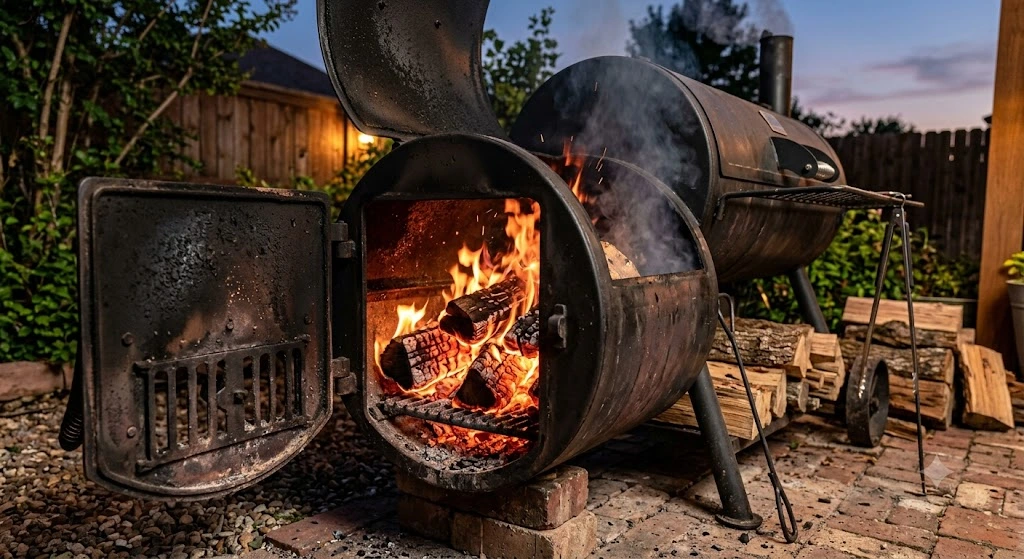
Mastering Offset Smoker Fire Management Tips is one of the most valuable skills any barbecue enthusiast can develop. While choosing quality meat and seasoning plays an important role in barbecue, your fire ultimately determines how well everything cooks. A properly managed fire creates stable cooking temperatures, clean smoke, and even heat distribution, allowing brisket, ribs, pork shoulder, chicken, and other barbecue favorites to develop incredible flavor and tenderness.
Unlike pellet grills or gas smokers that automate much of the cooking process, an offset smoker relies entirely on your ability to manage the fire. Every adjustment to the fuel, airflow, dampers, and firebox affects cooking performance. Beginners often struggle because they constantly chase temperature fluctuations or add too much fuel at once. With the right techniques, however, fire management becomes predictable and much easier to control.
This complete Offset Smoker Fire Management Tips guide explains everything you need to know about building the perfect fire, selecting the right fuel, controlling airflow, maintaining consistent temperatures, and avoiding common mistakes. Whether you have recently purchased your first offset smoker or want to improve your barbecue skills, these proven techniques will help you produce consistently excellent results.
Why Fire Management Is the Heart of Great Barbecue
Understanding Offset Smoker Fire Management Tips starts with recognizing that fire does much more than simply produce heat. A clean-burning fire creates the ideal cooking environment where heat and smoke work together to transform tough cuts of meat into tender, flavorful barbecue.
When the fire burns efficiently, it produces thin blue smoke that gently flavors the meat without overpowering it. Poor fire management creates thick white or gray smoke containing unburned particles that leave bitter flavors on the surface of the food. Maintaining clean combustion is just as important as maintaining the correct cooking temperature.
Consistent fire management also improves bark formation and cooking efficiency. Stable temperatures allow collagen and connective tissue to slowly break down without drying the meat. This is why experienced pitmasters often focus more on managing their fire than constantly checking the food itself.
Learning how your smoker responds to different fire sizes and airflow adjustments is the foundation of successful offset smoking.
Understanding How an Offset Smoker Works
An offset smoker uses a separate firebox to generate heat and smoke, which then travel through the cooking chamber and exit through the chimney. This airflow pattern is the foundation of effective fire management because the intake controls oxygen reaching the fire while the chimney maintains draft through the smoker.
For a complete beginner-level explanation of the smoker’s layout, cooking chamber, firebox, and basic operation, see our smoking with an offset smoker for beginners guide.
Choosing the Right Fuel
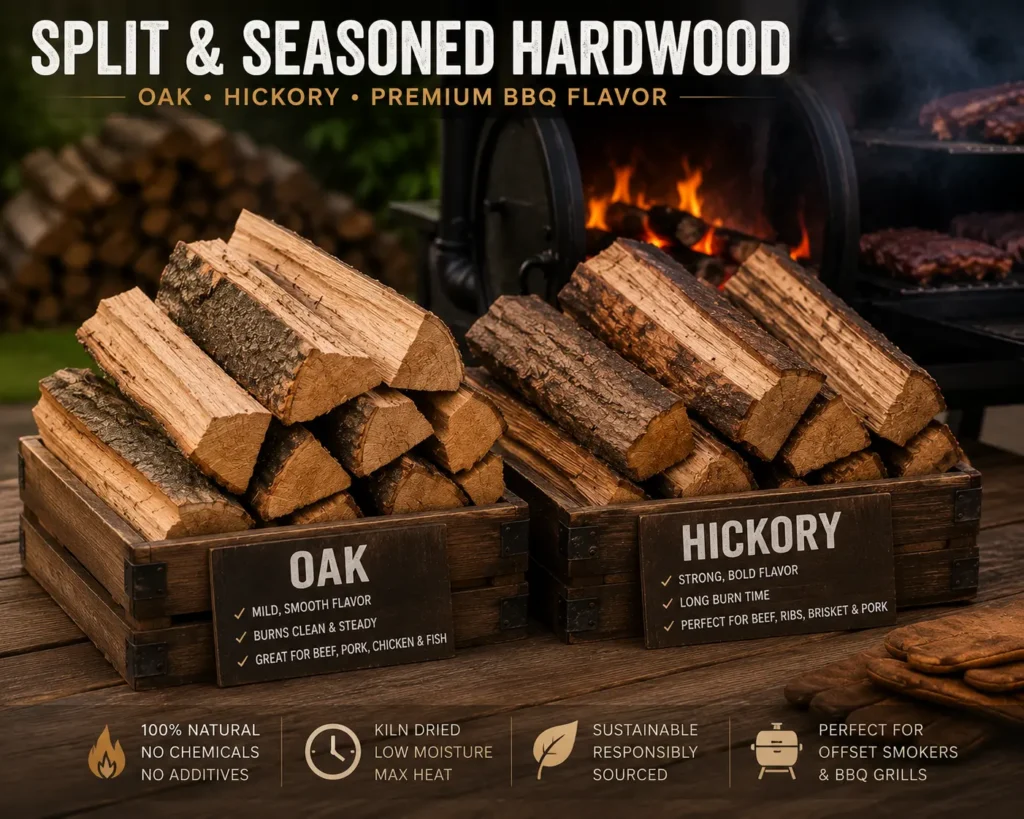
Good fire management starts with dry, predictable fuel. Charcoal is useful for establishing a stable coal bed, while seasoned hardwood splits provide the heat and smoke needed for a traditional offset-smoker fire.
Use wood that is dry and properly seasoned. Wet or freshly cut wood can smolder, produce heavy white smoke, and make temperature control more difficult.
Keep the wood splits appropriately sized for your firebox and add fuel gradually. A smaller clean-burning fire is usually easier to control than an oversized fire loaded with several logs at once.
Building a Strong Foundation Fire
One of the most important Offset Smoker Fire Management Tips is building a proper fire from the very beginning. A weak fire is difficult to control, while an oversized fire creates unnecessary temperature spikes.
Start by lighting lump charcoal inside a chimney starter rather than directly inside the firebox. Once the charcoal is fully ignited and covered with gray ash, transfer it into the firebox to create an even coal bed. This coal bed becomes the foundation that ignites every wood split added later.
Add one small seasoned wood split at a time instead of several large logs. Small additions ignite more quickly, burn cleaner, and produce steadier temperatures. Large logs often smolder before fully igniting, creating thick smoke and unstable heat.
Allow each piece of wood to ignite completely before adding another. This simple habit produces clean combustion while preventing excessive smoke from building inside the cooking chamber.
Managing Airflow for Better Fire Control
Airflow management is one of the most valuable Offset Smoker Fire Management Tips because oxygen controls how efficiently the fire burns. Every offset smoker includes intake and exhaust dampers that work together to regulate airflow.
The intake damper controls the amount of fresh oxygen entering the firebox. Opening it allows the fire to burn hotter, while partially closing it reduces combustion and lowers cooking temperatures. Small adjustments always produce smoother temperature changes than large corrections.
The exhaust damper controls how heat and smoke leave the cooking chamber. Most experienced pitmasters leave the chimney almost completely open during the entire cook. This promotes continuous airflow while allowing stale smoke to escape before affecting food flavor.
Clean airflow produces thin blue smoke, which is considered the ideal smoke for authentic barbecue. Proper damper management creates stable temperatures while improving both combustion efficiency and smoke quality.
Maintaining a Small, Clean Fire
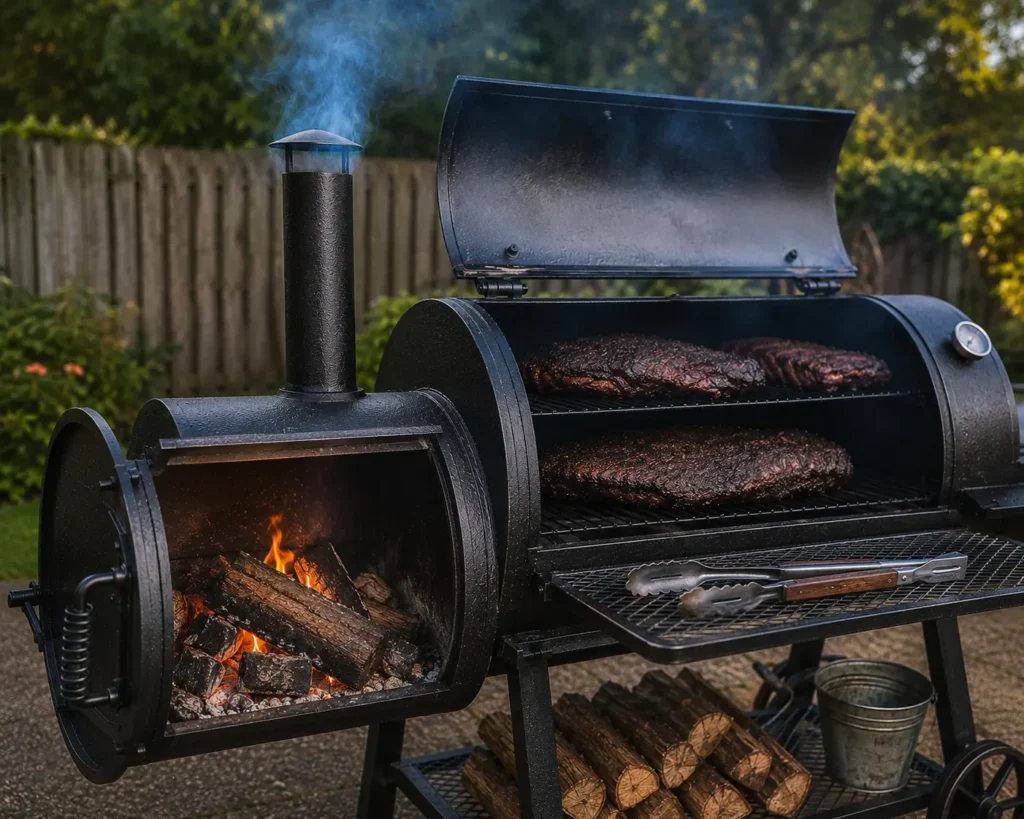
Many beginners believe a larger fire creates better barbecue, but experienced pitmasters know the opposite is often true. One of the best Offset Smoker Fire Management Tips is maintaining a relatively small fire that burns hot and clean rather than a large fire struggling for oxygen.
A modest fire produces consistent heat while allowing easier temperature adjustments throughout long cooking sessions. Instead of waiting until the fire nearly burns out, add one small wood split every thirty to forty-five minutes depending on temperature and weather conditions.
Bright flames combined with thin blue smoke indicate efficient combustion. Thick white smoke usually signals incomplete burning, often caused by damp wood, poor airflow, or excessive fuel.
Maintaining a clean-burning fire requires patience, but it dramatically improves barbecue quality.
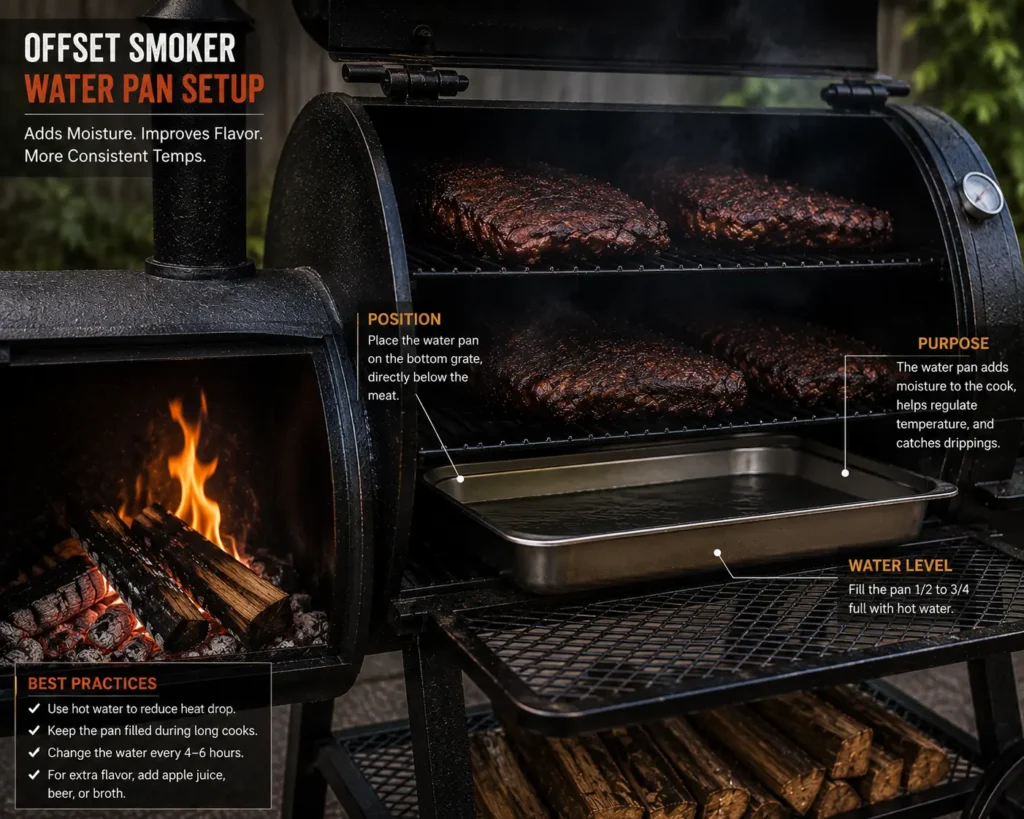
Using Water Pans to Improve Fire Stability
A water pan can help smooth out short temperature swings by adding thermal mass inside the cooking chamber. As the water heats, it absorbs energy and can make the smoker a little more forgiving during long cooks.
Place the pan where it can help buffer heat without blocking airflow. It should support fire stability, not replace proper fuel control, airflow, and vent management.
Water pans are optional, so use one only if it helps your smoker run more steadily. The main goal is still a small, clean-burning fire with consistent airflow.
Managing the Fire During Long Cooking Sessions
One of the most valuable Offset Smoker Fire Management Tips is learning how to maintain a stable fire during long barbecue cooks. Brisket, pork shoulder, beef ribs, and other large cuts often require eight to sixteen hours of cooking, making consistent fire management essential. The goal is not to keep adding large amounts of fuel but to maintain a steady fire that burns cleanly throughout the entire cook.
Instead of waiting until the fire almost dies, add one small split of seasoned hardwood whenever the cooking temperature begins to decline. Frequent, smaller additions create much smoother temperature control than adding several large logs at once. Every smoker behaves differently, so learning how often your smoker needs additional fuel comes with experience.
Avoid making large airflow adjustments every few minutes. Offset smokers naturally fluctuate slightly above and below the target temperature. Allow the smoker time to respond before making additional changes. Patience is one of the most important skills every pitmaster develops while mastering fire management.
Adjusting Fire Management for Different Weather Conditions
Weather conditions play a major role in every successful Offset Smoker Fire Management Tips strategy. Wind, rain, humidity, and cold temperatures all influence combustion, fuel consumption, and overall cooking performance.
Strong wind is one of the biggest challenges because it increases airflow through the firebox, causing the fire to burn hotter and consume fuel more quickly. Positioning the smoker behind a wall, fence, or portable windbreak helps reduce these sudden temperature spikes while making airflow much easier to control.
Cold weather has the opposite effect by drawing heat away from the smoker’s steel body. During winter cooks, additional fuel is often required to maintain stable cooking temperatures. Many experienced pitmasters use insulated welding blankets or smoker blankets to improve heat retention while reducing overall wood consumption.
Rain should also be avoided whenever possible because moisture entering the firebox interferes with combustion. Keeping both the smoker and fuel protected from water allows the fire to burn cleanly regardless of changing weather conditions.
Using Heat Deflectors and Baffle Plates
Heat deflectors and baffle plates can help reduce the strong hot spot near the firebox by spreading heat more evenly across the cooking chamber.
They can make temperature control easier, but they do not replace proper fire management. A clean-burning fire, steady airflow, and gradual fuel additions should still be the main way you control the smoker.
If your smoker has adjustable baffles, make small changes and observe how temperatures respond across the cooking grate before making further adjustments.
Keeping the Smoker Clean for Better Airflow
Ash buildup in the firebox can restrict airflow around the coal bed and make the fire harder to control. Once the smoker is completely cool, remove excess ash so fresh air can move freely through the fire.
Also check the chimney and exhaust path for heavy soot or buildup that could reduce draft. Good fire management depends on an unobstructed path from the firebox through the cooking chamber and out of the chimney.
For fire-control purposes, focus on keeping the firebox and airflow path clear. Broader grate cleaning, grease removal, and routine smoker maintenance can be handled separately from fire management.
Understanding Fire Size and Heat Output
Many beginners mistakenly believe that larger fires automatically produce better barbecue. In practice, a smaller, efficiently burning fire is usually easier to control than an oversized fire struggling for oxygen.
A clean-burning fire produces steady heat with minimal smoke. Excessively large fires often create dramatic temperature swings that become difficult to control. Smaller fires also consume less fuel while maintaining more stable cooking conditions throughout extended smoking sessions.
Instead of chasing high temperatures, focus on producing bright flames and thin blue smoke. This combination indicates efficient combustion and provides the ideal environment for authentic low-and-slow barbecue.
As your experience grows, you will naturally become more comfortable judging fire size simply by observing flame color, smoke quality, and cooking chamber temperature.
Common Fire Management Mistakes
Most beginners make similar mistakes while learning fire management, and recognizing them early can make temperature control and smoke quality much easier.
Adding too much wood at one time is one of the most common problems. Large fuel additions often produce excessive smoke followed by rapid temperature increases. Smaller wood splits added more frequently create smoother temperature control.
Using wet or unseasoned wood also creates problems because moisture prevents complete combustion. Thick white smoke usually indicates poor fuel quality or insufficient airflow rather than good smoke production.
Another common mistake is constantly adjusting dampers whenever temperatures change slightly. Offset smokers naturally fluctuate within a small range, and excessive adjustments usually create larger temperature swings than simply allowing the smoker to stabilize.
Finally, repeatedly opening the cooking chamber allows valuable heat and smoke to escape. Trust your digital thermometer instead of checking the food unnecessarily throughout the cook.
Expert Fire Management Tips
Experienced pitmasters focus on consistency rather than constantly chasing an exact temperature. Prepare your fuel before the cook, keep dry seasoned wood within reach, and make small adjustments instead of reacting to every minor temperature change.
Allow each new wood split to ignite cleanly before adding more fuel. A healthy fire should have good airflow, visible flame, and clean smoke rather than smoldering wood and thick white smoke.
Pay attention to how your smoker responds to weather, fuel size, airflow settings, and wood additions. Keeping simple notes from each cook can help you identify the settings and fire size that work best for your particular smoker.
Over time, these observations make fire management more predictable and help you maintain steadier heat throughout long barbecue sessions.
Frequently Asked Questions
Charcoal can be used to establish a stable coal bed, while dry seasoned hardwood provides the heat and smoke for traditional offset cooking. Many cooks use both, but the best approach depends on the smoker and preferred fire-management style.
Add a small wood split when the previous split has mostly burned down and the fire or cooking temperature begins to weaken. The timing varies with smoker size, weather, airflow, and the size of the wood splits.
Thick white smoke usually indicates wet wood, insufficient airflow, or incomplete combustion. Dry seasoned hardwood and proper oxygen flow produce the thin blue smoke that creates clean barbecue flavor.
Yes. During normal cooking, keep the chimney fully or mostly open so heat and smoke can flow freely through the smoker. Control the fire primarily with the firebox intake rather than restricting the exhaust.
A healthy fire has an active flame, steady heat, and clean smoke that is thin or nearly invisible. These signs usually indicate efficient combustion and adequate airflow.
Why Mastering Offset Smoker Fire Management Tips Is Worth the Effort
Mastering Offset Smoker Fire Management Tips is the foundation of producing authentic wood-fired barbecue. While seasoning, meat selection, and cooking techniques all contribute to the final result, every successful barbecue begins with a clean-burning, properly managed fire. Stable temperatures, consistent airflow, and quality seasoned hardwood work together to create the rich smoke flavor, tender texture, and beautiful bark that define exceptional barbecue.
Building a strong charcoal base, adding small amounts of seasoned hardwood, maintaining proper airflow, protecting the smoker from changing weather conditions, and keeping the smoker clean all contribute to more consistent fire management. Although every offset smoker responds slightly differently, the principles remain the same regardless of brand or size.
Whether you are preparing your first brisket or refining your competition barbecue skills, applying these Offset Smoker Fire Management Tips will help you maintain better temperature control, improve smoke quality, and produce consistently delicious barbecue every time you fire up your offset smoker.