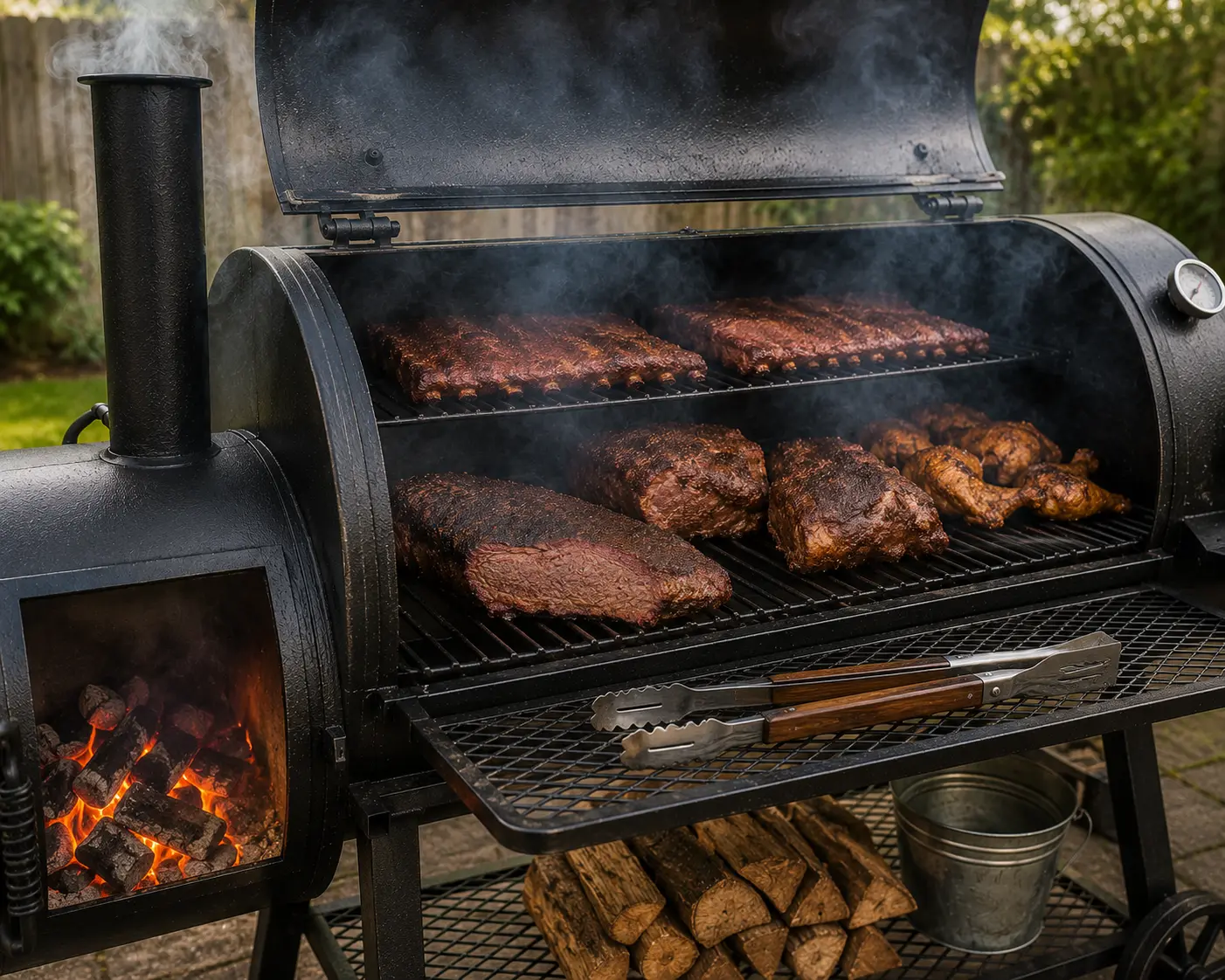
Understanding the Offset Smoker Cooking Temperature Guide is one of the most important skills every barbecue enthusiast should learn. Temperature affects every stage of the cooking process, from bark development and smoke absorption to tenderness and moisture retention. Whether you’re smoking brisket, pork shoulder, ribs, turkey, chicken, or seafood, maintaining the correct cooking temperature is the difference between average barbecue and restaurant-quality results.
Unlike pellet grills or gas smokers that regulate temperature automatically, offset smokers require active fire management. The firebox, airflow, fuel selection, weather conditions, and chimney all work together to determine the cooking temperature inside the smoker. While this may seem challenging for beginners, learning how your smoker behaves will give you greater control and allow you to produce authentic wood-fired barbecue with incredible flavor.
This complete Offset Smoker Cooking Temperature Guide explains the ideal smoking temperatures for different meats, how to maintain consistent heat, the importance of airflow, fuel management, weather adjustments, and expert techniques that experienced pitmasters use to achieve perfect barbecue every time.
Why Cooking Temperature Matters
One of the biggest mistakes beginners make is assuming that smoking is simply about adding wood and waiting several hours. In reality, proper temperature control is what determines the final quality of your barbecue. The Offset Smoker Cooking Temperature Guide helps you understand exactly why maintaining stable temperatures is essential throughout the cooking process.
Low-and-slow cooking allows collagen and connective tissue inside tougher cuts of meat to gradually break down into gelatin. This natural process transforms brisket, pork shoulder, beef ribs, and other tough cuts into tender, juicy barbecue. If temperatures become too high, moisture escapes before the connective tissue has fully broken down, resulting in dry and chewy meat.
Stable temperatures also improve bark formation and smoke penetration. Thin blue smoke circulating at the proper cooking temperature creates a flavorful exterior while allowing smoke to gently penetrate the meat without becoming bitter. Maintaining consistency from start to finish is one of the defining characteristics of professional barbecue.
Preheating Your Offset Smoker
Before following any Offset Smoker Cooking Temperature Guide, your smoker must be properly preheated. Starting with a cold smoker creates unstable temperatures during the first stage of cooking and slows down smoke production.
Begin by lighting lump charcoal in a chimney starter until the coals are fully ignited and covered with a light layer of gray ash. Transfer the charcoal into the firebox and gradually add seasoned hardwood such as oak, hickory, pecan, or cherry. Allow the smoker to heat for approximately thirty to forty-five minutes before placing food inside.
During this period, the heavy steel body absorbs heat and stabilizes the cooking chamber. Monitor the temperature using a reliable digital thermometer positioned at grate level rather than relying only on the factory-installed lid thermometer. Once the smoker maintains a consistent temperature within your target range, it is ready for cooking.
Proper preheating not only stabilizes the cooking environment but also produces clean-burning thin blue smoke, which is ideal for authentic barbecue flavor.
Ideal Smoking Temperatures for Different Meats
Every meat benefits from slightly different cooking temperatures, making the Offset Smoker Cooking Temperature Guide an essential reference throughout every barbecue session.
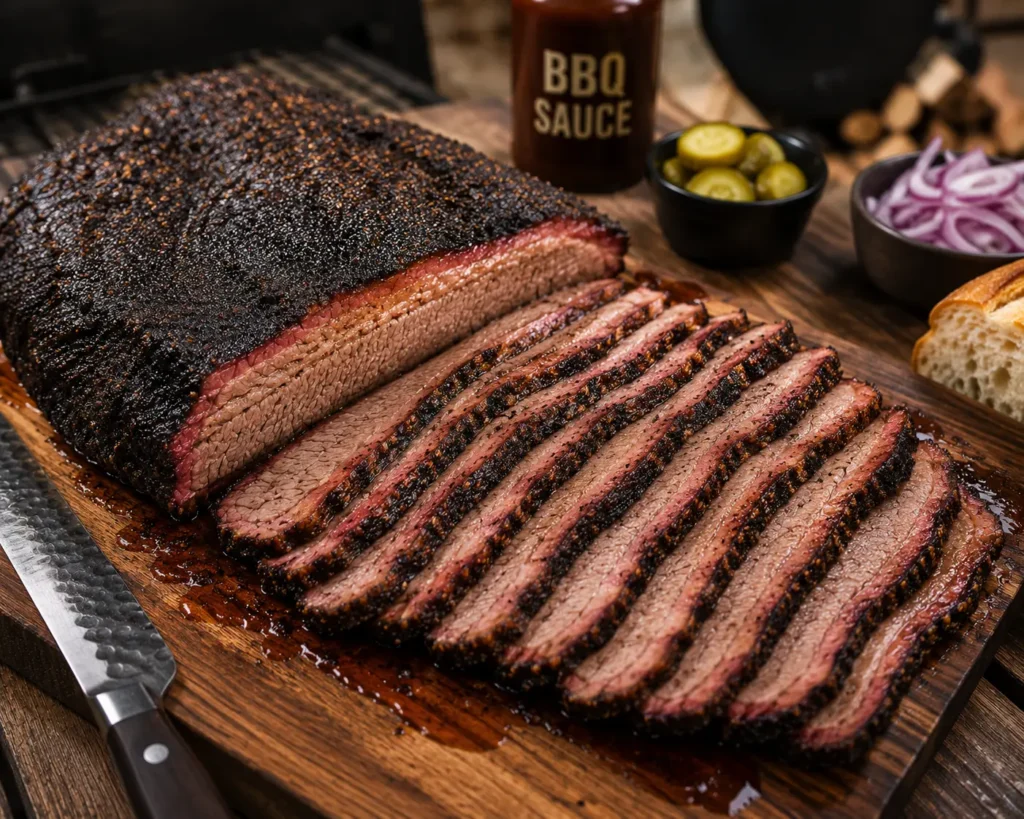
Brisket is traditionally smoked between 225°F and 250°F. This temperature range allows collagen to break down slowly while preserving moisture throughout the long cooking process. Many pitmasters maintain this temperature for twelve to sixteen hours depending on brisket size—you can estimate your exact timeline using this offset smoker brisket cook time guide.
Pork shoulder performs exceptionally well between 225°F and 250°F. Slow cooking allows the shoulder to become tender enough for pulled pork while preserving its natural juices.
Baby back ribs, spare ribs, and St. Louis-style ribs are generally smoked between 225°F and 250°F. This range creates tender meat while allowing the bark to develop gradually without drying the ribs.
Chicken and turkey benefit from slightly higher cooking temperatures between 300°F and 325°F. Higher heat helps render fat beneath the skin, creating crisp, golden skin while keeping the meat juicy.
Sausages usually cook well between 225°F and 250°F, allowing smoke flavor to develop without causing the casing to split. Fish is commonly smoked between 180°F and 225°F, depending on the species and desired texture.
Understanding these temperature ranges allows you to match the cooking process with each type of meat rather than using one temperature for everything.
Managing Fire for Stable Temperatures
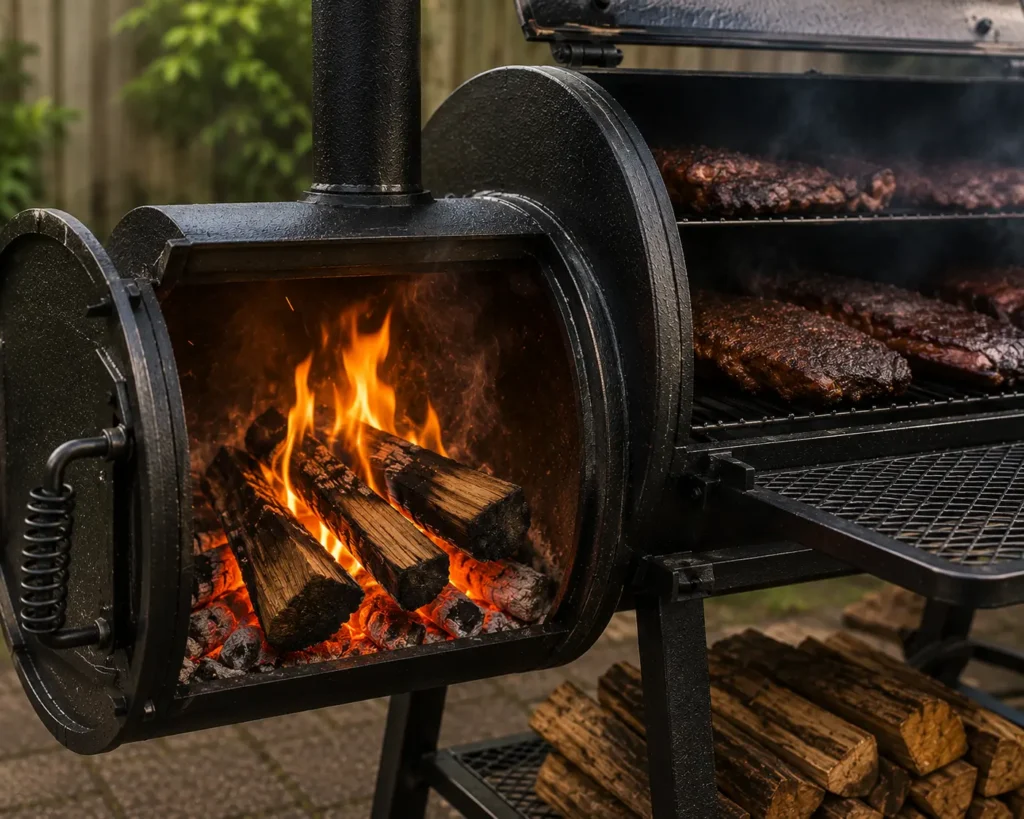
Fire management is the foundation of every successful Offset Smoker Cooking Temperature Guide. A clean-burning fire produces steady heat, efficient combustion, and consistent smoke throughout the cooking session.
Begin with a solid charcoal base before adding seasoned hardwood. Instead of adding several large logs at once, introduce one small wood split whenever temperatures begin to decline. Smaller fuel additions create smoother temperature curves while reducing sudden heat spikes.
Avoid overloading the firebox because excessive fuel creates unnecessary temperature fluctuations and thick white smoke. Maintaining a modest but active fire provides cleaner combustion and more predictable cooking conditions.
Experienced pitmasters focus on maintaining bright flames instead of smoldering wood. Clean combustion produces the thin blue smoke that creates balanced barbecue flavor while minimizing creosote buildup inside the cooking chamber.
Choosing the Best Fuel
Fuel selection directly influences every Offset Smoker Cooking Temperature Guide because different fuels burn at different rates and produce varying amounts of heat.
Lump charcoal is widely considered the best base fuel because it burns consistently, produces less ash than briquettes, and allows excellent airflow inside the firebox. Once a stable charcoal bed has formed, hardwood splits provide both heat and smoke flavor.
Oak remains one of the most versatile hardwoods because it burns evenly while producing balanced smoke suitable for nearly every type of meat. Hickory delivers stronger traditional barbecue flavor that pairs particularly well with beef and pork. Pecan provides rich but slightly sweeter smoke, while fruit woods such as apple and cherry produce mild smoke that complements poultry and pork exceptionally well.
Always use seasoned hardwood with low moisture content. Wet or green wood produces unstable fires, excessive smoke, and inconsistent temperatures that make maintaining proper cooking conditions much more difficult.
Using Water Pans to Improve Temperature Stability
Many experienced pitmasters include a water pan as part of their Offset Smoker Cooking Temperature Guide because it helps stabilize temperatures throughout long cooks.
Water absorbs heat gradually and releases it slowly as temperatures fluctuate inside the smoker. This buffering effect reduces sudden temperature spikes while creating a more forgiving cooking environment.
The additional humidity also helps reduce moisture loss from larger cuts such as brisket and pork shoulder during extended smoking sessions. While a water pan is not absolutely necessary, many beginners find it extremely useful for maintaining stable temperatures while learning fire management.
Position the water pan between the firebox and the cooking chamber whenever possible, and refill it with warm water as needed throughout the cook to maintain consistent performance.
Monitoring Temperature Accurately
No Offset Smoker Cooking Temperature Guide is complete without emphasizing the importance of accurate temperature monitoring. Factory-installed thermometers often measure temperatures near the lid, which can differ significantly from grate-level cooking temperatures.
A quality dual-probe digital thermometer provides much more accurate information by measuring both the cooking chamber and the internal temperature of the meat simultaneously. This allows you to identify temperature changes before they become major problems.
Monitoring temperatures continuously helps maintain stable cooking conditions while preventing overcooking or undercooking. Small airflow adjustments made early are much more effective than large corrections made after temperatures have already changed significantly.
Adjusting Airflow for Better Temperature Control
One of the most important parts of any Offset Smoker Cooking Temperature Guide is understanding how airflow affects heat inside the smoker. Every offset smoker relies on natural airflow to keep the fire burning efficiently while circulating heat and smoke through the cooking chamber. Once you understand how the intake and exhaust dampers work together, maintaining a consistent cooking temperature becomes much easier.
The intake damper controls how much oxygen enters the firebox. Opening it increases oxygen flow, causing the fire to burn hotter and raising the cooking temperature. Closing it slightly slows combustion and gradually lowers the heat. Instead of making large adjustments, experienced pitmasters recommend making small changes and waiting several minutes before making another adjustment.
The exhaust damper should remain mostly open during the entire cook. A fully open chimney allows clean smoke to flow continuously through the cooking chamber, preventing stale smoke from settling on the meat. Restricting the exhaust too much traps dirty smoke inside the smoker, creating bitter flavors while making temperature control more difficult.
Learning how your dampers respond under different weather conditions is one of the fastest ways to improve your barbecue results.
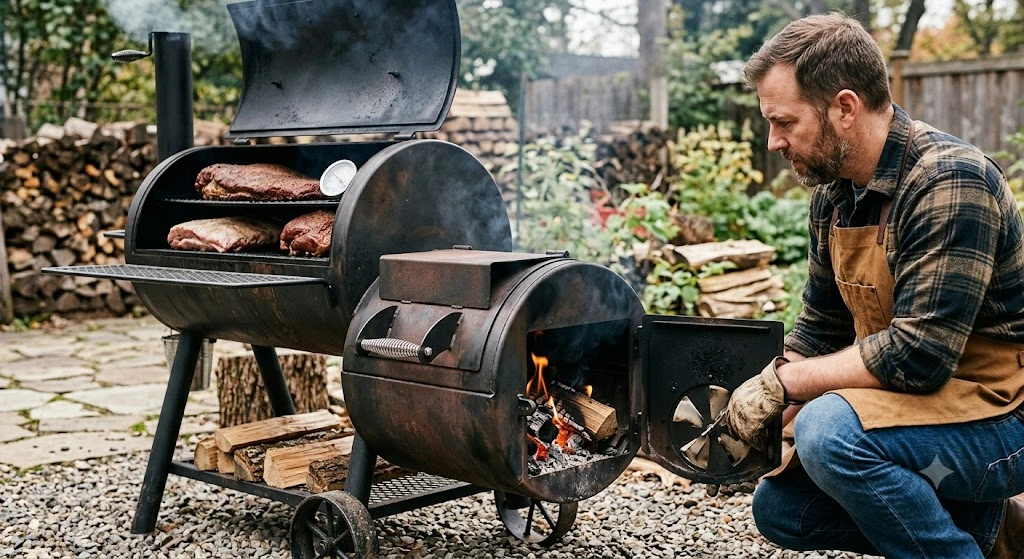
Understanding Heat Zones Inside an Offset Smoker
Every Offset Smoker Cooking Temperature Guide should include heat zones because no traditional offset smoker cooks at exactly the same temperature across the entire cooking chamber. Since heat enters from the firebox, the section nearest the fire naturally remains warmer than the opposite end.
This natural temperature difference allows pitmasters to cook different foods at the same time. Larger cuts such as brisket or pork shoulder can be placed farther from the firebox where temperatures are slightly lower and more stable, while chicken or foods that require slightly higher heat can be positioned closer to the fire.
During long cooking sessions, rotating large cuts once or twice helps ensure even cooking from end to end. Understanding these natural heat zones allows you to use your smoker more efficiently rather than constantly trying to eliminate every temperature difference.
After several cooks, you will become familiar with the behavior of your smoker and learn exactly where each type of meat performs best.
Managing Temperature in Different Weather Conditions
Weather has a significant impact on every Offset Smoker Cooking Temperature Guide because outdoor conditions directly affect how efficiently your smoker retains heat. Wind, cold temperatures, humidity, and rain all influence fire behavior and fuel consumption.
Strong wind introduces additional oxygen into the firebox, causing unexpected temperature spikes. Positioning the smoker behind a wall, fence, or portable windbreak reduces these sudden changes while making airflow easier to manage.
Cold weather creates the opposite challenge by pulling heat away from the steel body. During winter cooking, additional fuel is usually required to maintain stable cooking temperatures. Many experienced pitmasters use insulated welding blankets or smoker blankets to improve heat retention and reduce wood consumption.
Rain should also be avoided whenever possible because moisture entering the firebox affects combustion and creates unstable temperatures. Keeping both the smoker and fuel dry allows the fire to burn cleanly regardless of outdoor conditions.
Using a Cooking Temperature Chart
One of the easiest ways to improve consistency is by following a reliable Offset Smoker Cooking Temperature Guide for different meats. While every smoker behaves slightly differently, the following temperature ranges produce excellent results for most barbecue cooks.
Brisket performs best between 225°F and 250°F, allowing collagen to slowly break down while maintaining moisture.
Pork shoulder is also ideal between 225°F and 250°F, producing tender pulled pork with excellent bark development.
Baby back ribs, spare ribs, and St. Louis ribs cook beautifully between 225°F and 250°F, creating tender meat with balanced smoke flavor.
Chicken and turkey benefit from higher temperatures between 300°F and 325°F because the increased heat renders fat beneath the skin while keeping the meat juicy.
Sausages generally perform well between 225°F and 250°F, while fish is often smoked between 180°F and 225°F depending on the desired texture.
Keeping these temperature ranges in mind helps you select the proper cooking environment before each barbecue session.
Common Temperature Control Mistakes
Many beginners struggle with Offset Smoker Cooking Temperature Guide techniques because of several avoidable mistakes. Fortunately, correcting these habits quickly improves both temperature stability and barbecue quality.
Adding too much fuel at once is one of the most common problems. Large wood additions often produce rapid temperature increases followed by unstable combustion. Smaller, more frequent additions create smoother temperature control throughout the cook.
Opening the cooking chamber too often is another mistake. Every time the lid is lifted, heat and smoke escape, forcing the fire to work harder to recover. Trust your thermometer instead of checking the food unnecessarily.
Using wet or green wood also creates problems. Damp wood produces thick white smoke and inconsistent heat instead of the clean-burning fire required for quality barbecue.
Ignoring ash buildup inside the firebox is another common issue. Excess ash restricts airflow beneath the fire, reducing combustion efficiency and making temperature control more difficult. Cleaning ash regularly keeps the fire burning cleanly throughout long cooking sessions.
Expert Tips for Maintaining Stable Temperatures
Experienced pitmasters understand that successful barbecue depends on patience and consistency. Every Offset Smoker Cooking Temperature Guide ultimately comes down to learning how your individual smoker behaves during real cooking conditions.
Always establish a strong charcoal bed before adding hardwood. This provides a stable heat source while allowing wood to ignite quickly without producing excessive smoke.
Keep several seasoned wood splits warming near the firebox. Warm wood ignites much faster than cold wood, reducing temperature drops when adding fuel during the cook.
Record every barbecue session in a notebook, including outside weather, fuel type, airflow settings, cooking temperature, and final results. Over time these notes become extremely valuable for repeating successful cooks.
Finally, avoid chasing every small temperature fluctuation. Offset smokers naturally move slightly above and below the target temperature. Constantly adjusting dampers often creates larger swings than simply allowing the smoker to stabilize naturally.
Frequently Asked Questions
Most barbecue is cooked between 225°F and 250°F. This range produces excellent results for brisket, ribs, pork shoulder, beef ribs, and many other traditional barbecue meats.
No. Many experienced pitmasters regularly cook between 250°F and 275°F, especially when preparing larger cuts or when shorter cooking times are desired. The key is maintaining consistency rather than focusing on one exact number.
Temperature fluctuations are usually caused by inconsistent fuel management, changing weather conditions, poor airflow, excessive ash buildup, or opening the cooking chamber too frequently.
Most experienced pitmasters use lump charcoal to establish a stable fire before gradually adding seasoned hardwood throughout the cook. This combination provides reliable heat while producing authentic wood-fired barbecue flavor.
Monitor the cooking chamber continuously using a digital thermometer, but avoid opening the smoker unnecessarily. Small adjustments every thirty to sixty minutes are generally sufficient for maintaining stable temperatures.
Final Verdict
Following a reliable Offset Smoker Cooking Temperature Guide is one of the best ways to improve every barbecue session. Maintaining stable temperatures allows brisket, ribs, pork shoulder, chicken, turkey, and other meats to cook evenly while developing rich smoke flavor, beautiful bark, and outstanding tenderness. Although offset smokers require more attention than many modern cooking systems, they reward patience with authentic wood-fired barbecue that is difficult to match using other methods.
Mastering temperature control comes from understanding how fire management, airflow, fuel selection, weather conditions, and heat distribution work together. Small adjustments made consistently are far more effective than large corrections after temperatures have already changed. As you gain experience, you will learn exactly how your smoker responds under different conditions, making temperature management increasingly predictable.
Whether you are preparing your first rack of ribs or cooking multiple briskets for a large gathering, using this Offset Smoker Cooking Temperature Guide will help you build confidence, improve consistency, and produce competition-quality barbecue every time you light your offset smoker.