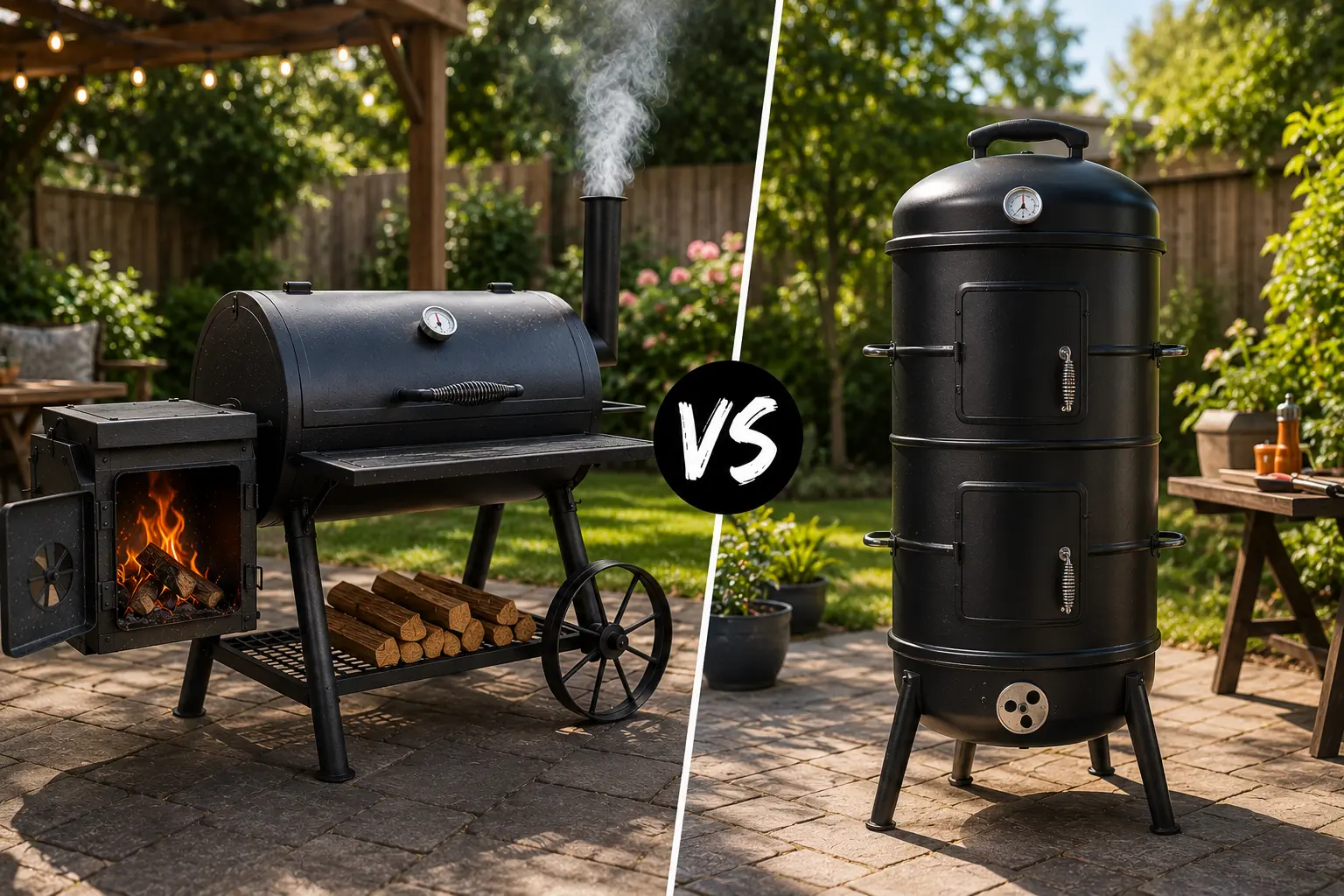
Choosing between an offset smoker and a vertical smoker is one of the bigger calls you’ll make when building a backyard barbecue setup. Both can turn out tender brisket, ribs, pulled pork, poultry, and other smoked foods — but they differ significantly in footprint, airflow, cooking capacity, fuel efficiency, temperature control, and ease of use.
The difference starts with the shape. An offset smoker puts the fire in a separate box beside a horizontal cooking chamber, so heat and smoke travel sideways across the food before leaving through the chimney. A vertical smoker stacks its cooking racks above the heat source, letting heat and smoke rise through a tall, compact chamber.
The best option comes down to your available space, preferred fuel, cooking volume, and experience level — and whether you want a traditional wood-fire process or a more compact cooking system. In this guide, we compare both designs in detail so you can choose with confidence.
In the offset smoker vs vertical smoker comparison, an offset smoker is generally better for large cuts, wide cooking surfaces, direct fire control, and traditional wood-burning barbecue. A vertical smoker is usually better for smaller patios, efficient fuel use, stacked cooking capacity, and easier temperature stability.
Choose an offset smoker if you enjoy managing a live fire and want space for whole briskets or multiple rib racks without cutting them. Choose a vertical smoker if floor space, fuel efficiency, and a compact footprint are more important.
Your offset smoker vs vertical smoker choice becomes easier once you decide whether horizontal grate space or stacked capacity matters more.
Offset Smoker vs Vertical Smoker Comparison Table
| Feature | Offset Smoker | Vertical Smoker |
| Main shape | Horizontal cooking chamber | Tall, upright chamber |
| Heat source | Separate side firebox | Below the cooking racks |
| Airflow | Side-to-side | Bottom-to-top |
| Floor space | Requires more room | Compact footprint |
| Food capacity | Better for long, wide cuts | Multiple stacked racks |
| Temperature zones | Hotter near the firebox | Temperatures vary by rack |
| Fuel efficiency | Moderate; varies by steel thickness | Usually more efficient |
| Learning curve | Higher for wood-burning models | Depends on fuel type |
| Grilling ability | Available on some models | Limited on most models |
| Best for | Traditional BBQ enthusiasts | Beginners and space-conscious cooks |
The table above drives home a key point: physical size and usable capacity aren’t the same thing. Offset smokers offer more horizontal room, while vertical smokers create capacity by stacking racks above one another.
What Is an Offset Smoker?
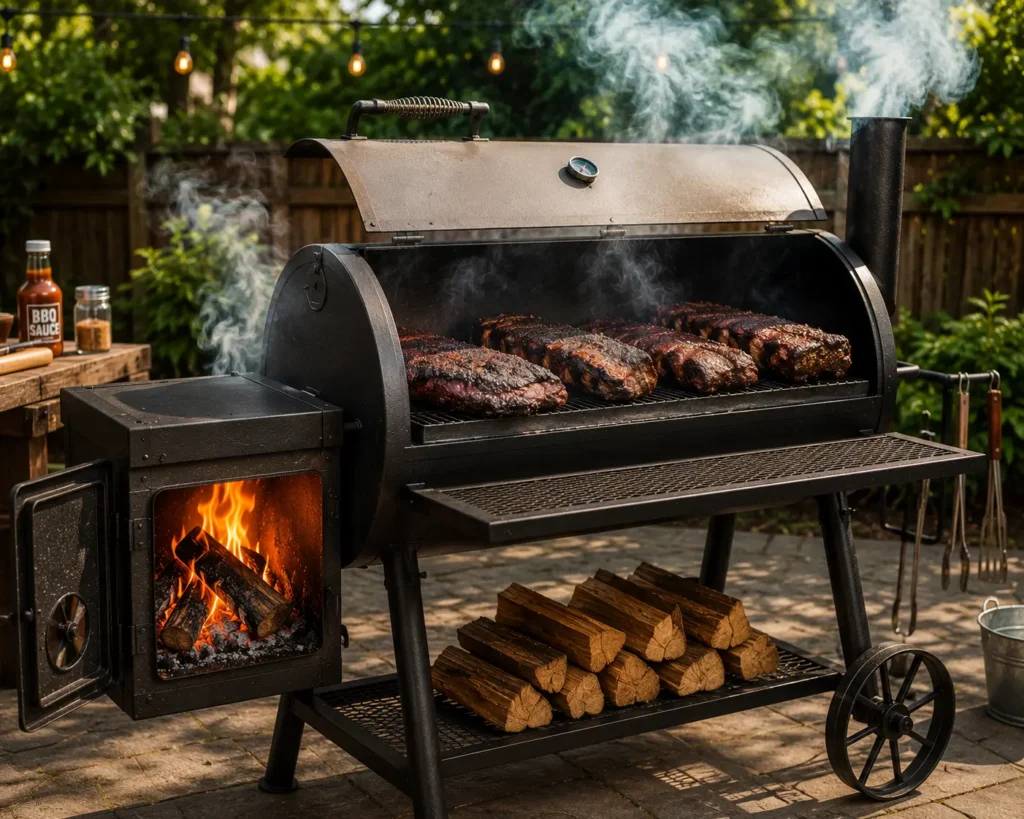
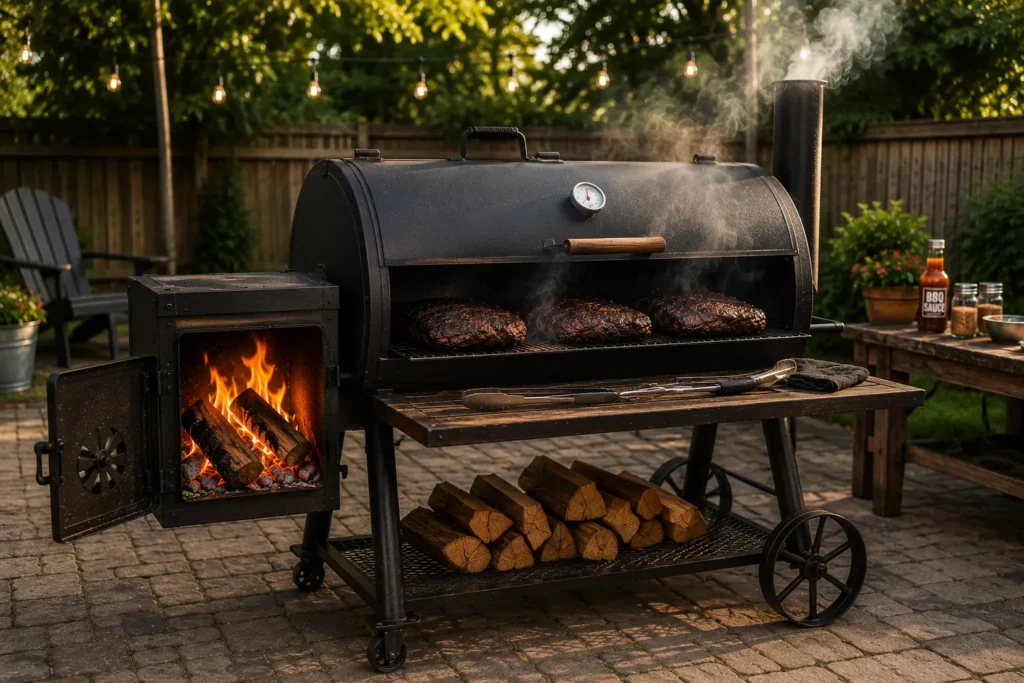
Let’s start with the classic offset design — the smoker that anchors this whole debate. A typical offset pairs a cylindrical or rectangular horizontal cooking chamber with a smaller firebox bolted to the side.
Charcoal or seasoned hardwood burns in the firebox. The fire produces heat and smoke that enter the cooking chamber through a side opening, swirl around the food, and exit through the chimney.
Because the fire sits beside the food rather than directly beneath it, everything cooks indirectly. The end nearest the firebox runs hotter while the far end stays cooler — and experienced pitmasters put those zones to work cooking different foods at the same time.
If you want the full breakdown of this classic layout, our guide to offset smokers with a side firebox explains it in detail.
Main Components of an Offset Smoker
Every traditional offset smoker comes down to a few core parts working together:
- A side-mounted firebox
- A horizontal cooking chamber
- Adjustable intake and exhaust dampers
- One or more cooking grates
- A chimney or smokestack
- A grease drain or collection cup
- A lid-mounted temperature gauge
- Shelves or preparation surfaces on larger models
How an Offset Smoker Works
Think of the firebox intake as the fire’s throttle: opening it feeds the fire more oxygen for hotter combustion, while narrowing it calms things down.
The chimney pulls smoke through the cooker and lets spent combustion gases escape. Keep the exhaust open enough during cooks to support clean airflow — trapping stale smoke in the chamber can leave a bitter taste on the food.
Building a good fire is really about three things: a stable coal bed, properly seasoned hardwood in the right split sizes, and small, patient airflow adjustments. Heavy steel holds heat and behaves better in cold or windy weather — thin metal reacts to everything.
All of this is why running a traditional offset feels more hands-on than running a vertical smoker — you’re the airflow manager, not a thermostat.
Advantages of an Offset Smoker
Where does an offset actually shine in this matchup? Here’s what you’re buying:
- Wide grates accommodate whole briskets and long rib racks
- A separate firebox allows fuel to be added without opening the main chamber
- Wood and charcoal create traditional barbecue flavor
- Natural hot and cool zones provide cooking flexibility
- Some fireboxes include grates for direct grilling or searing
- Large models can handle parties, catering, and competition cooking
- Simple mechanical construction means fewer electronic parts can fail
If heat retention and long-term durability matter to you, compare models with our premium offset smokers guide.
Disadvantages of an Offset Smoker
And now the honest tradeoffs — no smoker is perfect:
- They require more patio or storage space
- Wood fires need regular attention
- Entry-level models may leak heat and smoke
- Thin steel can cause large temperature fluctuations
- Food may need to be rotated because of hot spots
- Larger cooking chambers consume more fuel
- Heavy models can be difficult to move
- Learning clean fire management takes time
You don’t need to spend thousands, though — a well-chosen budget offset can cook beautifully. Our budget offset smokers guide explains which construction details matter most at lower prices.
What Is a Vertical Smoker?
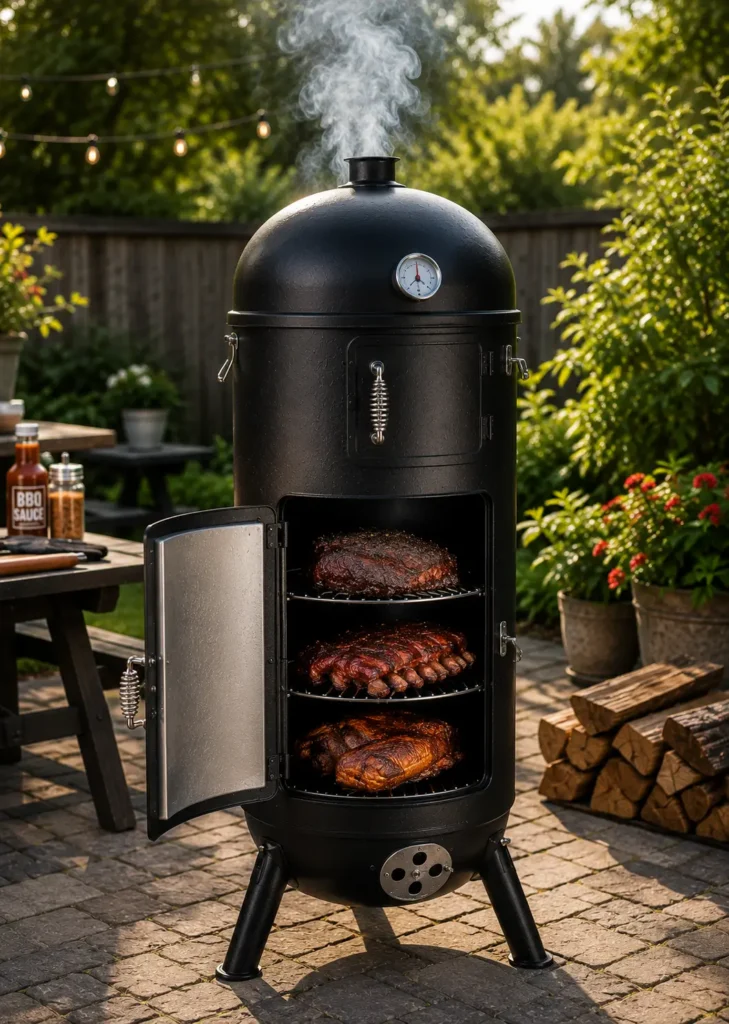
Here’s the key insight: “vertical” describes the smoker’s shape, not its fuel source. A vertical smoker is a tall chamber with the heat source at or near the bottom and cooking racks stacked above it.
Hot air has one direction it wants to go — up. It carries smoke across each rack on the way to the top vent, which is why the upright design packs so many cooking levels into such a small footprint.
You’ll find vertical smokers in several forms:
- Charcoal water or bullet smokers
- Vertical charcoal cabinets
- Insulated cabinet smokers
- Electric vertical smokers
- Propane vertical smokers
- Drum smokers
This matters because the comparison genuinely shifts depending on what the vertical model burns — an electric vertical smoker and a charcoal one are entirely different cooking experiences.
So fuel choice is really the convenience dial: electric models hold temperature automatically, while charcoal cabinets and bullet smokers still ask you to mind the vents and fuel.
Masterbuilt’s official guide shows the basic setup and operation of a vertical smoker with stacked cooking racks — a useful starting point if that stacked-rack layout is new to you.
How a Vertical Smoker Works
Most vertical designs flip the offset layout: the heat source sits at the bottom, with a water pan, heat diffuser, or drip pan above the fuel, and two or more cooking racks stacked on top.
The water pan doesn’t push moisture into the middle of the meat — that’s a common myth. What it actually does is buffer temperature swings, catch drippings, block harsh direct heat, and raise humidity inside the chamber.
Heat and smoke rise from the lowest rack toward the top vent. Expect some temperature variation between levels — especially when the cooker is fully loaded — since rack position, vent settings, fuel placement, the weather, and the water pan all influence the cook.
Weber’s official Smokey Mountain vertical charcoal smoker is the classic example of this layout — a vertical water-smoker with stacked grates and adjustable dampers.
Advantages of a Vertical Smoker
On the vertical side of this comparison, it really comes down to two things: efficient use of space and generous stacked cooking capacity.
Here’s what that upright design gets you:
- Uses less floor space than most offset smokers
- Stacked racks provide good capacity for the footprint
- The short heat path can improve fuel efficiency
- Heat rises naturally through the cooking chamber
- Water pans and diffusers can help stabilize temperatures
- Electric and propane models are accessible to beginners
- Many smaller units are easier to transport and store
- Cabinet doors on some models allow convenient food access
Disadvantages of a Vertical Smoker
The offset smoker vs vertical smoker decision also means accepting these vertical-smoker limitations:
- Wide briskets or full rib racks may not fit smaller round models
- Accessing lower racks can require removing food above them
- Opening a large door or lid can release accumulated heat
- Drippings from upper racks may fall onto food below
- Most models are not designed for high-heat grilling
- Rack temperatures can differ from bottom to top
- Compact units may have limited fuel capacity
- Electric and propane models depend on their power or fuel supply
Offset Smoker vs Vertical Smoker: 10 Important Differences
These are the offset smoker vs vertical smoker differences that matter most in everyday cooking: fuel use, food capacity, and long-term ownership.
1. Design and Required Floor Space
The most obvious difference between the two is orientation — one stretches sideways, the other stands tall.
The offset stretches horizontally — firebox and cook chamber sit side by side, and front shelves, handles, wheels, and the chimney all add to its footprint.
The vertical cooker packs its heat source and racks into one upright cabinet, so it fits comfortably on a compact patio, balcony, or deck — wherever outdoor cooking is permitted and the maker’s clearances are honored.
Winner for compact spaces: Vertical smoker
2. Airflow and Heat Direction
Airflow is where the performance gap really shows in the offset smoker vs vertical smoker comparison.
In an offset, heat sweeps sideways from the firebox across the cooking chamber. In a vertical cooker, it rises straight up from below the food.
That sideways flow gives the offset its natural hot and cool zones — handy once you learn where they sit. Rising airflow keeps a vertical chamber efficient, though the bottom rack takes more radiant heat while the top collects heat climbing past the food.
Neither design cooks perfectly evenly. Pro tip: map the hot and cool spots with grate-level probes rather than trusting the lid thermometer alone.
3. Cooking Capacity and Food Shape
Capacity is where shoppers get surprised in the offset smoker vs vertical smoker debate.
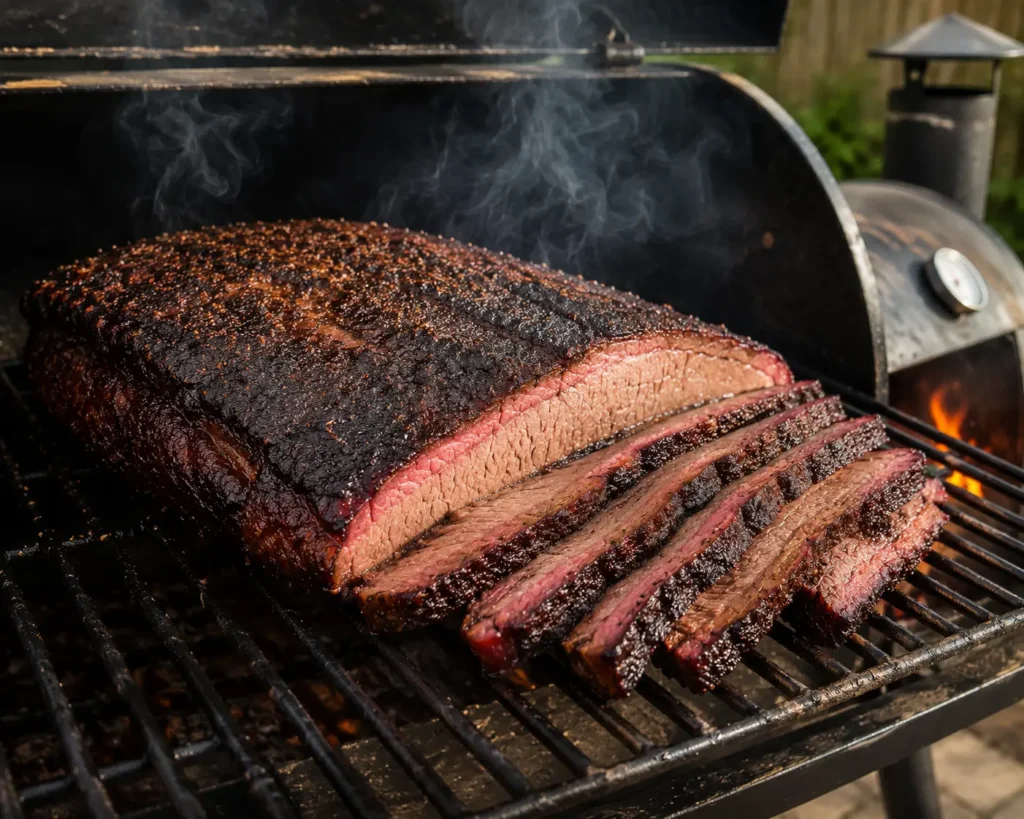
Offsets usually offer a wider uninterrupted grate — ideal for full packer briskets, long rib racks, large fish, and several cuts laid out side by side.
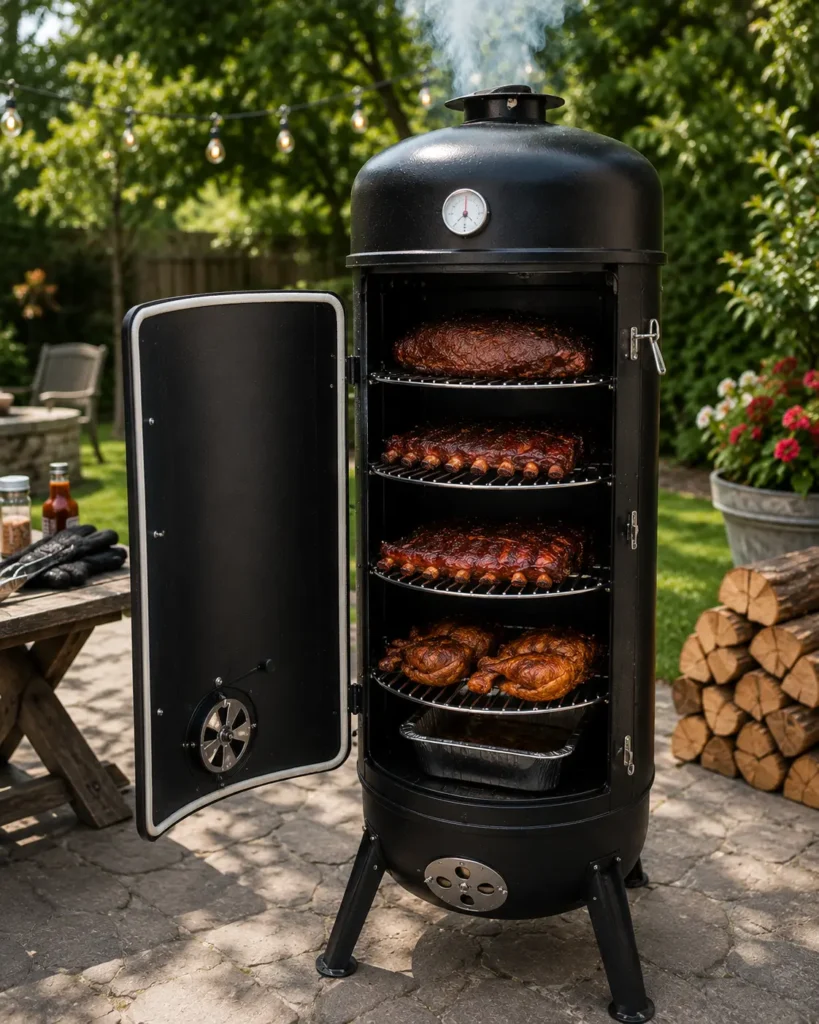
Vertical smokers build capacity upward instead — several pork shoulders, chickens, sausages, or smaller cuts across stacked racks, all without eating up much patio space.
The catch: round bullet-smoker racks can be too narrow for long briskets or ribs unless you trim, roll, or divide the meat.
Winner for wide cuts: Offset smoker
Winner for capacity per square foot: Vertical smoker
4. Smoke Flavor
Shape alone doesn’t decide flavor in the offset smoker vs vertical smoker debate. Fuel type, combustion quality, wood species, airflow, cook duration, and how much smoke actually reaches the food matter far more.
A wood-burning offset naturally delivers a deep, traditional smoke profile, since hardwood provides both the heat and the smoke. But don’t sell charcoal vertical smokers short — add a few hardwood chunks and they can lay down serious barbecue flavor too.
Electric and propane vertical models feed in much smaller amounts of wood for smoke, so their flavor usually lands milder. That’s a fuel-system trait, not a flaw baked into every vertical design — but smokers who want bold smoke should factor it in.
Winner for traditional wood-fire flavor: Offset smoker
5. Temperature Control and Stability
The offset smoker vs vertical smoker temperature experience really comes down to two things: build quality and fuel type.
A wood-burning offset puts you on the fire’s schedule: you’re managing fire size, oxygen, and fresh fuel for the whole cook.
Charcoal vertical smokers still need damper control, but their compact chambers and straight-up airflow usually make holding steady low temps easier.
Electric verticals are the set-and-forget end of the spectrum — the thermostat runs the show while you do something else.
Thin metal and leaky seals are the real enemy in cold, windy weather — and that applies to both designs. Build quality matters as much as orientation.
Winner for automatic control: Electric vertical smoker
Winner for hands-on control: Offset smoker
6. Fuel Efficiency
Fuel usage is another big offset smoker vs vertical smoker difference.
A big offset has more steel and chamber volume to heat, and budget models bleed energy through thin walls and leaky doors.
A vertical cooker works with a short heat path and a small footprint: heat rises straight through the food chamber, so many vertical units cruise through long cooks on a modest charcoal load.
Insulated cabinet smokers are especially frugal. That said, real-world fuel use depends on cooker size, insulation, weather, cooking temp, and how often you open the door.
Winner for typical fuel efficiency: Vertical smoker
7. Ease of Use and Learning Curve
For beginners, the offset smoker vs vertical smoker choice runs deeper than silhouette.
A digital electric vertical smoker is far easier to run than a traditional wood-burning offset, though a basic charcoal vertical still takes practice.
An offset smoker teaches live-fire skills, including:
- Building a stable coal bed
- Adding wood before temperatures fall
- Reading smoke quality
- Managing oxygen
- Making small damper adjustments
- Responding to weather changes
Pick based on the experience you want. Convenience-first cooks are happier with electric or propane verticals; fire-minded pitmasters get more joy from an offset.
Winner for beginners: Electric or propane vertical smoker
8. Grilling and Searing Versatility
Many offsets moonlight as grills — some have grates that sit right over the firebox coals for direct-heat searing, and others can be run hot in the main chamber.
Most vertical smokers are pure low-and-slow machines. A few drums and convertible models can grill, but most water, cabinet, propane, and electric smokers can’t put food directly over a high-heat fire.
The Char-Broil American Gourmet offset smoker review is a good example of a budget offset that doubles as a grill.
Winner for cooking versatility: Offset smoker
9. Food Access and Rack Management
Getting to your food looks different on each cooker.
An offset’s big horizontal lid exposes most of the grate at once — great for rotating a brisket or pulling ribs off. But every peek dumps a lot of heat out.
A vertical cabinet with a front door gives easy rack access. Bullet smokers are the awkward ones: reaching the bottom grate can mean lifting the whole middle section off the base.
Shopping in person? Open every lid and door, and check that you can actually reach the food, fuel, water pan, and grease tray without a fight.
With stacked racks, load carefully: keep raw poultry low and anything juicy on the bottom so drippings don’t rain onto the food beneath it.
Winner: Depends on the specific door and rack design
10. Cleaning, Maintenance, and Price
The last difference is about ownership — upkeep and price.
Offsets collect ash in the firebox and grease in the chamber, and their big steel surfaces need protection from moisture and rust.
Charcoal verticals leave ash under the fuel and grease in the water or drip pan. Electric and propane models skip the ash, but their racks, pans, walls, and sensors still need cleaning.
Small verticals usually cost less than heavy-duty offsets, though insulated cabinets and digital models can run considerably higher.
Shop features before price tags:
- Construction quality
- Usable cooking area
- Fuel requirements
- Warranty
- Replacement parts
- Rust protection
- Ash removal
- Grease management
- Long-term operating cost
Winner for low entry price: Basic vertical smoker
Winner for simple mechanical durability: Quality offset smoker
Which Smoker Is Better for Beginners?
Most first-timers have an easier time with a vertical — especially an electric or propane model, or a steady charcoal system.
The small chamber heats up fast and asks less of you on fuel management.
But “vertical” isn’t automatic. Charcoal bullets and cabinets still demand vent work, fuel checks, and weather judgment.
An offset still makes a fine first smoker — if you specifically want to learn traditional wood-fired barbecue.
Starting with a dependable entry-level unit such as the model discussed in our Oklahoma Joe Highland offset smoker review can give a newcomer more cooking space and control than a small vertical smoker.
For beginners, the right pick is simply the one that matches how much fire-tending you want in your life.
Which Smoker Is Better for Brisket and Ribs?
For brisket, the offset smoker vs vertical smoker call comes down to grate dimensions more than anything else.
A wide offset chamber usually swallows a full packer brisket with no trimming or folding. Smaller vertical smokers may force you to angle the brisket, separate the point from the flat, or shield one end from the hotter edge.
Ribs are a friendlier contest — both designs can do them well. Offsets lay full racks out flat, while vertical models may ask you to:
- Rib racks
- Hanging hooks
- Rolling
- Trimming
- Dividing full racks
Large vertical cabinets can often fit full racks with no modification at all.
Measure the actual grates before making an offset smoker vs vertical smoker purchase — especially if brisket and full rib racks are your main foods.
For the full cook from prep to finish, see our guide on how to smoke ribs in an offset smoker.
How to Choose the Right Smoker
Before choosing between an offset and a vertical smoker, run through these questions:
- How much outdoor floor space is available?
- Do you prefer hardwood, charcoal, propane, or electricity?
- Do full briskets and rib racks fit without modification?
- How much food will you normally cook?
- Do you want to grill and sear as well as smoke?
- Are you willing to tend a wood fire for several hours?
- Can you easily reach every cooking rack?
- Is the smoker insulated or made from thick steel?
- How difficult are the ash and grease pans to remove?
- Can you obtain replacement parts and manufacturer support?
Go offset if you want traditional wood-fire cooking, the widest grates, room for big events, and maximum hands-on control.
Go vertical if you’d rather have a smaller footprint, efficient low-and-slow cooking, stacked capacity, and easier operation with certain fuel systems.
Base your final offset smoker vs vertical smoker decision on the complete cooker — not its orientation alone.
A careful offset smoker vs vertical smoker evaluation should also factor in operating cost, storage, weather protection, and the time you can devote to each cook.
Safe Smoking and Temperature Monitoring
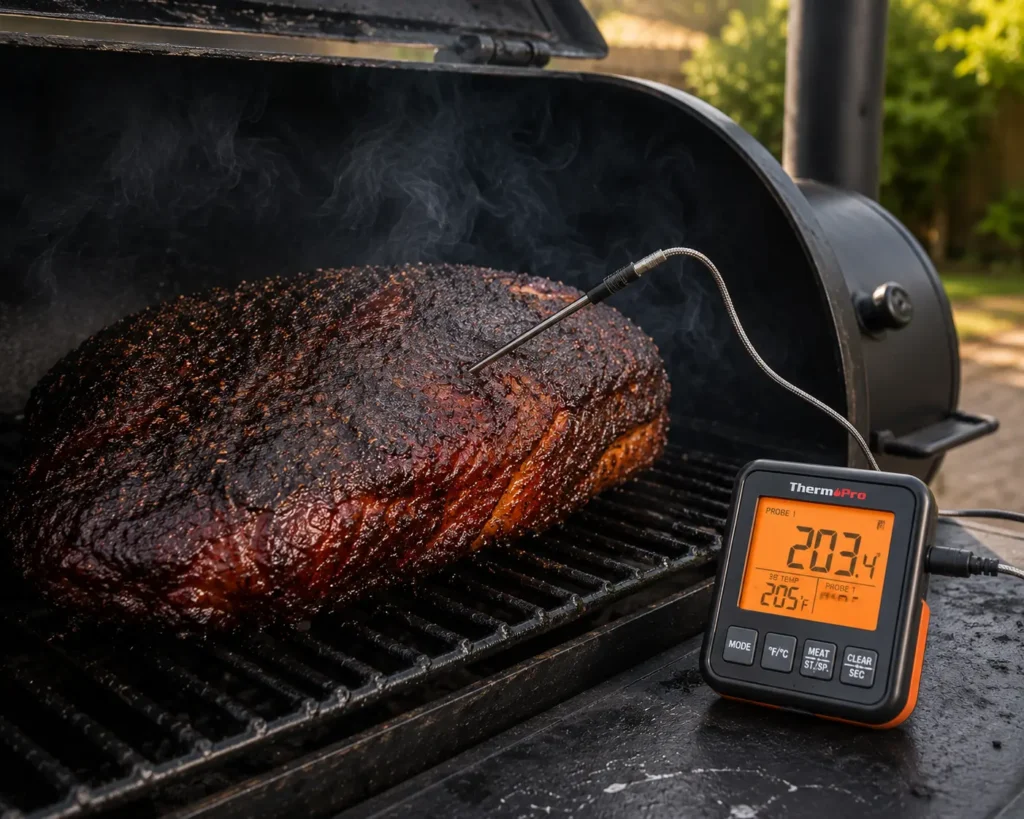
Regardless of the offset smoker vs vertical smoker choice, monitor the cooking environment with a grate-level thermometer and check doneness with a food thermometer.
Built-in lid gauges can read quite differently from the temperature right beside the meat.
Here are the official minimums from the FoodSafety.gov safe internal temperature chart:
| Food | Safe Minimum Internal Temperature |
| Whole cuts of beef, pork, lamb and veal | 145°F with a three-minute rest |
| Ground meats | 160°F |
| Poultry | 165°F |
Brisket and pork shoulder are commonly cooked beyond their minimum safe temperatures to break down connective tissue. Judge these barbecue cuts using both internal temperature and probe tenderness.
Safety first: always run your smoker outdoors in a well-ventilated spot and follow the manufacturer’s clearance, electrical, fire, and fuel instructions.
Final Verdict
The offset smoker vs vertical smoker verdict comes down to cooking style, available space, capacity needs, and how hands-on you want to be.
An offset smoker is the stronger choice for pitmasters who want:
- Traditional wood-burning barbecue
- A wide cooking surface
- Useful temperature zones
- Direct fire control
- Possible grilling capability
- Capacity for wide cuts
That extra control has a price, though — you’ll need more space, more fuel, and more of your attention during the cook.
A vertical smoker is the better pick if you’re after:
- A compact footprint
- Efficient fuel use
- Multiple stacked racks
- Easier temperature stability
- Portable or space-saving construction
- Convenient electric or propane options
Electric and propane versions are especially convenient, while charcoal verticals still give you an authentic hands-on cook.
Neither design guarantees better food by itself. A well-built smoker, clean-burning fuel, accurate temperature monitoring, smart food placement, and patient technique matter more than whether the chamber is horizontal or vertical.
Whichever offset smoker vs vertical smoker option you select, run a simple test cook first — learning its airflow pattern before a big event saves a lot of stress.
Frequently Asked Questions
Not universally. In the offset smoker vs vertical smoker comparison, a vertical smoker is generally better for compact spaces and fuel efficiency, while an offset smoker offers wider grates, stronger wood-fire control, and greater grilling versatility.
Not necessarily. A charcoal vertical smoker with hardwood chunks can produce a strong smoke profile. Electric and propane models may create a milder flavor because wood supplies smoke but not most of the cooking heat.
Electric and propane vertical smokers are usually easy to operate. Charcoal bullet and cabinet smokers still require fuel and vent control, although their compact chambers may be easier to stabilize than inexpensive offsets.
Yes, provided the cooking grate is wide enough. Smaller round units may require diagonal placement, trimming, separating the point and flat, or using a larger rack.
It depends on the model. Some drum and convertible smokers support direct grilling, but many vertical water, electric, propane, and cabinet smokers are designed only for indirect low-and-slow cooking.
Not every model does. Water smokers are designed around one, while drum, electric, propane, and insulated cabinet smokers may use a diffuser or drip pan instead. Follow the manufacturer’s instructions.
Vertical smokers are generally more fuel-efficient because they have a compact chamber and direct upward heat path. However, insulation, steel thickness, outdoor weather, and cooking temperature can change actual consumption.
A large offset is often better for full briskets, long rib racks, and wide food arrangements. A large vertical cabinet can also provide substantial capacity by using several stacked racks.
Electric and propane vertical smokers avoid charcoal ash, while charcoal vertical smokers use removable ash and water pans.
Offset smokers have larger chambers and fireboxes, but their grates and interior surfaces may be easier to access.