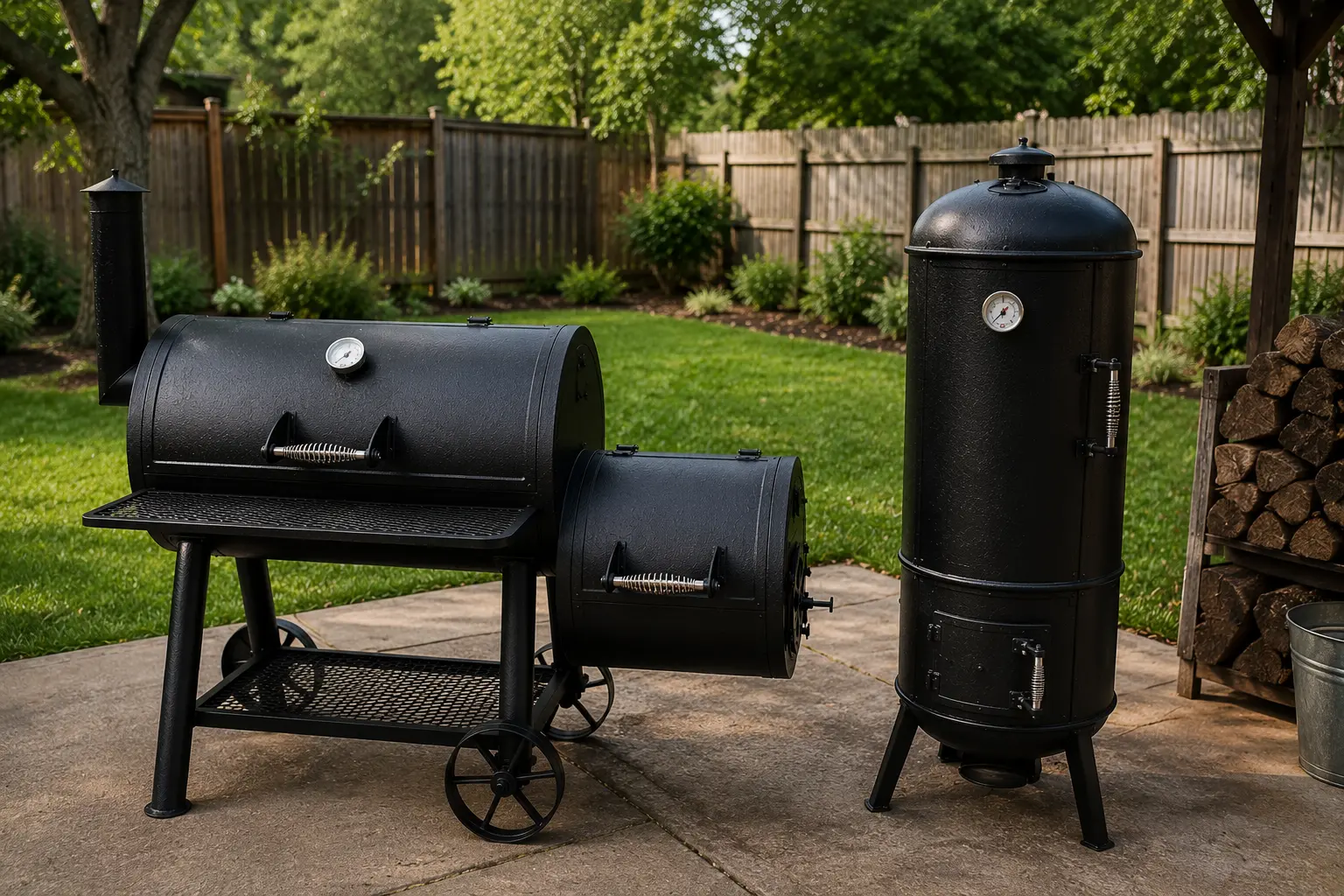
When comparing an offset smoker vs traditional smoker, it is important to understand that an offset smoker is technically one type of traditional smoker. Traditional smokers include wood- and charcoal-burning offset, vertical, cabinet, bullet, and drum smokers.
In this guide, the term “traditional smoker” refers mainly to non-offset designs where the fuel is positioned below the food. Offset smokers use a separate firebox attached to the side of a horizontal cooking chamber. This difference affects airflow, temperature control, cooking capacity, fuel efficiency, and the overall smoking experience.
Offset smokers are generally better for large briskets, multiple rib racks, deep wood-fired flavor, and cooks who enjoy managing a live fire. Vertical, cabinet, and drum-style traditional smokers are usually more compact, fuel-efficient, and easier for beginners to manage.
Choose an offset smoker for maximum cooking space, strong hardwood-smoke flavor, and hands-on fire control. Choose a vertical, drum, or cabinet smoker if you prefer a compact design, efficient fuel consumption, and easier temperature stability.
An offset smoker moves heat and smoke horizontally from a separate side firebox. Most other traditional smokers position the fuel below the food and move heat vertically through the cooking chamber.
What Is an Offset Smoker?
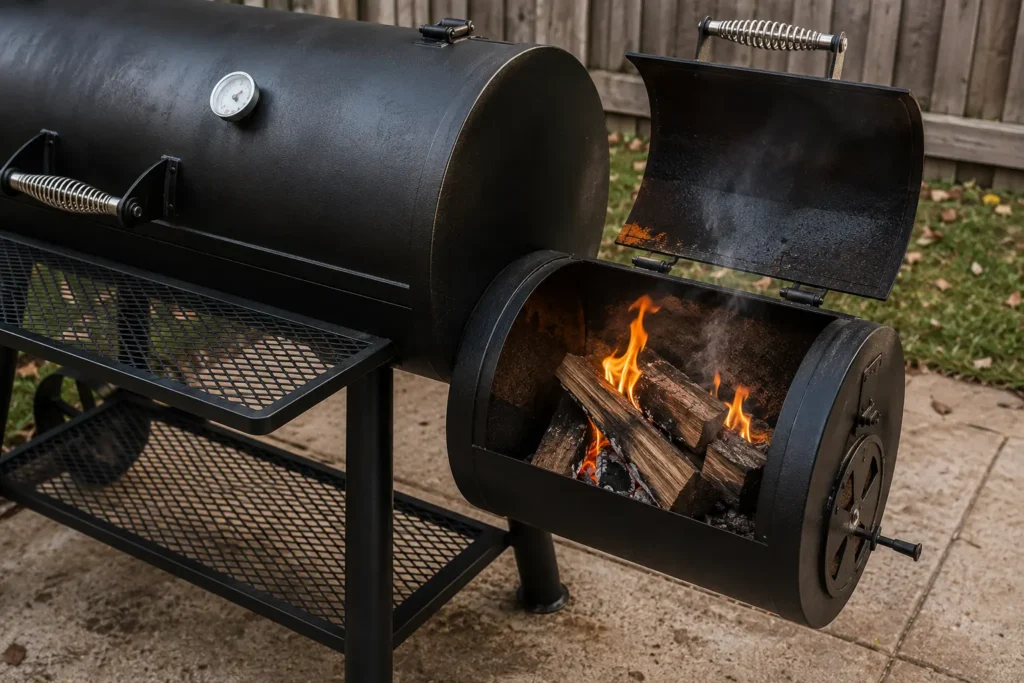
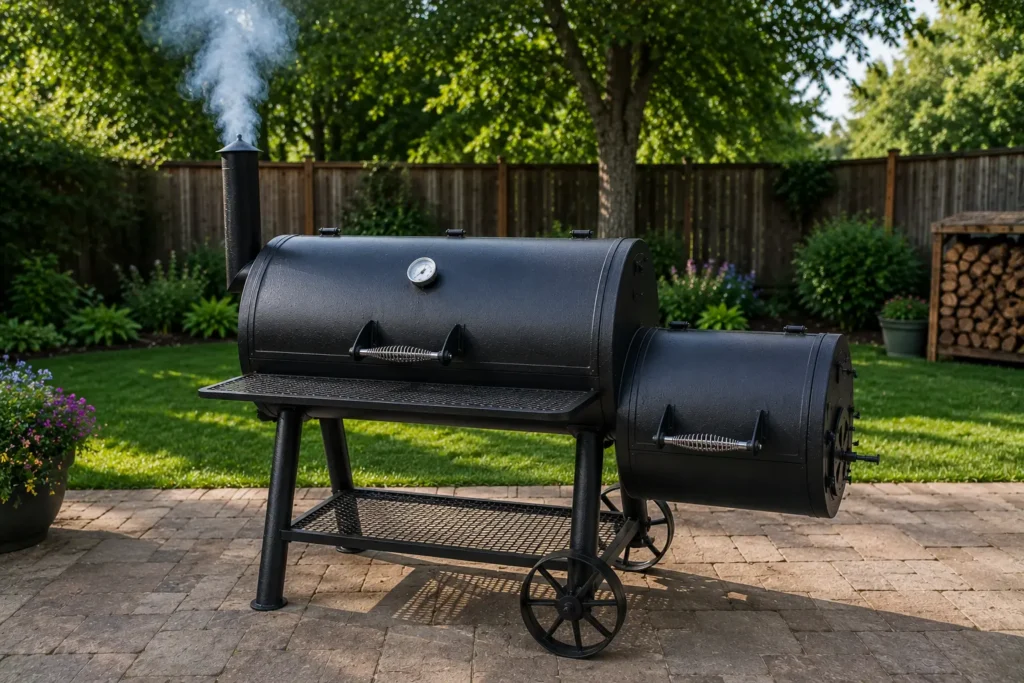
An offset smoker consists of a large horizontal cooking chamber connected to a smaller firebox. Wood or charcoal burns inside the firebox, producing heat and smoke that enter the cooking chamber, travel across the food, and exit through the chimney.
Because the fire is separated from the food, the meat cooks with indirect heat. This makes an offset smoker particularly suitable for low-and-slow barbecue, including brisket, pork shoulder, ribs, turkey, and whole chicken.
A typical offset smoker includes adjustable intake and exhaust dampers, cooking grates, a chimney, a firebox door, and one or more temperature gauges. Heavy-duty models are normally made from thick steel that absorbs and retains heat more effectively than the thin steel used in inexpensive smokers.
Offset smokers can operate with charcoal, hardwood, or a combination of both. Beginners often start with charcoal to create a stable coal bed before adding small pieces of hardwood for smoke flavor. Experienced cooks may prefer to maintain an all-wood fire throughout the cooking session.
Our complete guide to offset smokers explains how the firebox, cooking chamber, dampers, and chimney work together.
What Is Considered a Traditional Smoker?
A traditional smoker is any cooking device that uses wood or charcoal to cook food slowly with heat and smoke. Therefore, an offset smoker is technically part of this broad category rather than a completely separate type of smoker.
However, traditional non-offset smokers generally place the fuel beneath the food. Heat and smoke naturally rise through the chamber before leaving through an upper vent or chimney.
Common traditional smoker designs include:
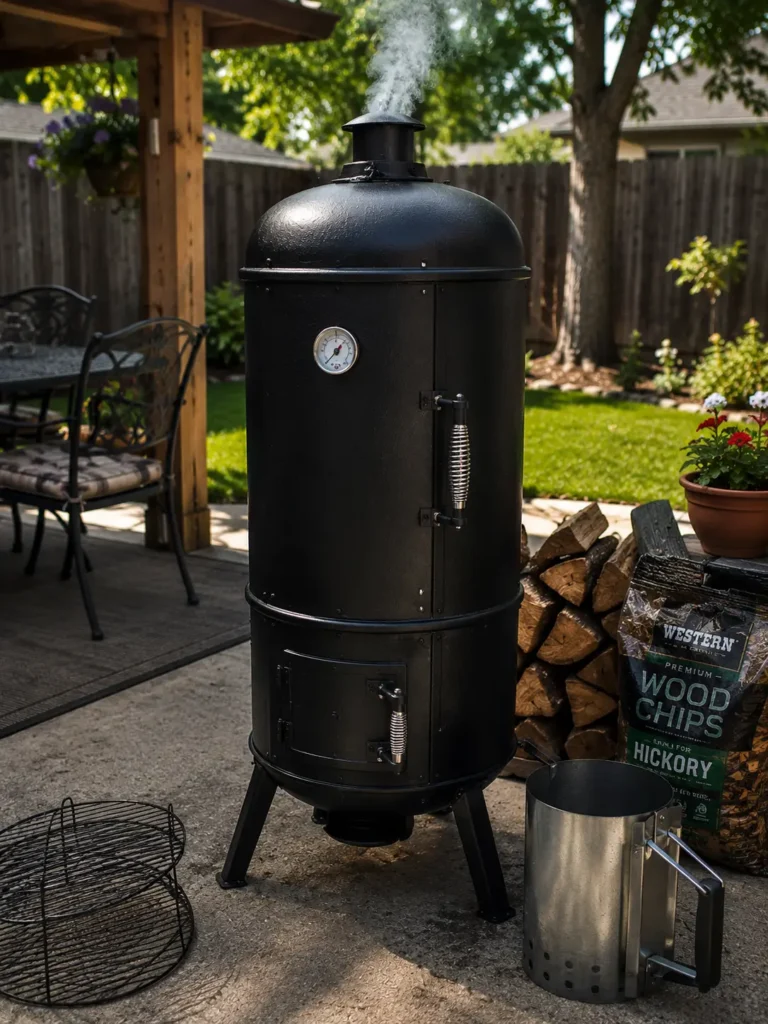
- Vertical smokers: These have a tall cooking chamber with the fuel at the bottom and several cooking racks positioned above it. Their upright shape saves patio space and provides stacked cooking capacity.
- Cabinet smokers: These resemble metal cupboards with a front door and adjustable cooking shelves. Insulated cabinet smokers can provide excellent temperature stability and fuel efficiency.
- Drum smokers: These are made with a cylindrical steel body, a charcoal basket near the bottom, and a cooking grate above the fire. They are relatively simple, compact, and efficient.
- Bullet smokers: These use a rounded vertical body, a charcoal section, a water pan, and stacked cooking grates. They are often suitable for beginners because they can maintain stable temperatures with fewer adjustments.
If you are mainly deciding between horizontal and vertical designs, our detailed offset smoker vs vertical smoker comparison provides a more direct analysis.
Offset Smoker vs Traditional Smoker: Main Differences
| Feature | Offset smoker | Other traditional smokers |
| Fire position | Separate side firebox | Usually beneath the food |
| Airflow | Primarily horizontal | Primarily vertical |
| Cooking space | Wide primary cooking grate | Multiple stacked racks |
| Fuel consumption | Moderate to high | Usually more efficient |
| Temperature control | Requires active management | Often easier to stabilize |
| Smoke flavor | Strong hardwood-smoke profile | Mild to strong |
| Portability | Usually wide and heavy | Often more compact |
| Learning curve | Moderate to difficult | Easy to moderate |
| Best use | Brisket, ribs and large gatherings | Families and smaller patios |
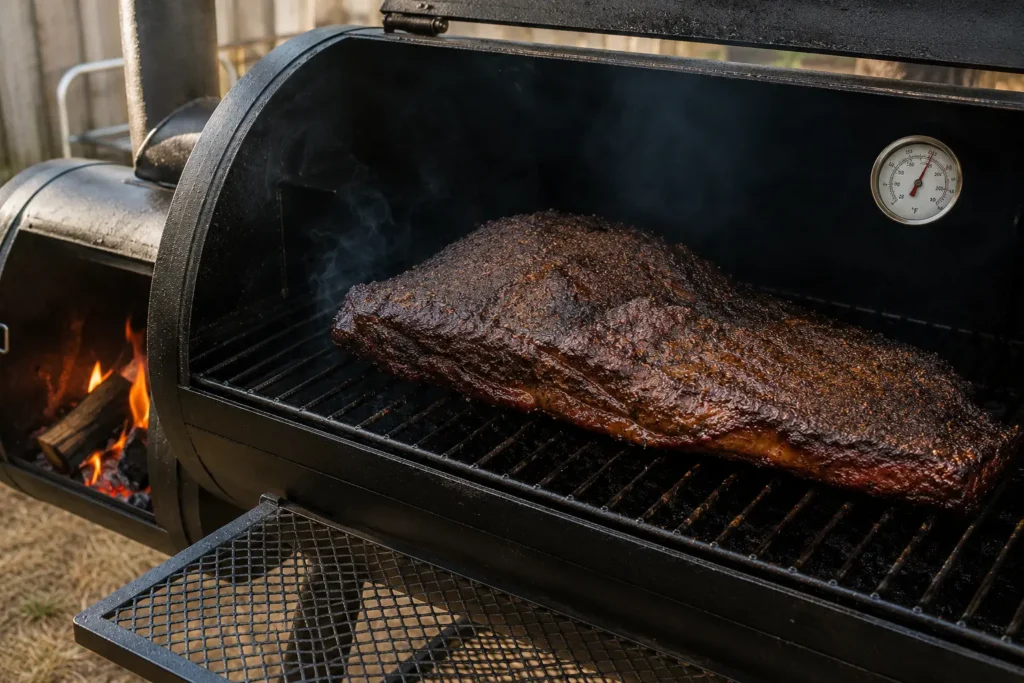
Design and airflow: An offset smoker moves heat horizontally from the firebox, across the cooking grate, and toward the chimney. Vertical and cabinet smokers position the fuel below the food, allowing heat to rise through a shorter and more direct path.
Cooking capacity: Offset smokers normally provide more horizontal space, making them suitable for whole briskets and long rib racks. Vertical smokers may offer substantial total capacity, but that space is divided across several smaller racks.
Temperature control: Vertical, cabinet, and drum smokers are often easier to stabilize because their chambers are compact. Offset smokers provide greater control over the fire but require more frequent fuel and airflow adjustments.
Fuel efficiency: A compact traditional smoker generally consumes less charcoal because it has a smaller chamber and shorter airflow path. Large or thin-steel offset smokers may require considerably more fuel during long cooking sessions.
Flavor: Both designs can produce authentic barbecue flavor. Offset smokers are particularly effective when operated with a continuous clean-burning hardwood fire. Traditional vertical smokers commonly use charcoal with wood chunks to produce heat and smoke.
Portability: Offset smokers are usually heavier and require more floor space because of their horizontal barrels and side fireboxes. Drum and bullet smokers are more compact and can be easier to move or store.
Ease of use: Traditional vertical and drum smokers are generally easier for beginners. Offset smokers have a steeper learning curve but provide a more hands-on barbecue experience.
Benefits and Drawbacks of an Offset Smoker
The main benefit of an offset smoker is its ability to produce deep wood-fired flavor. Burning seasoned hardwood throughout the cook can create a pronounced smoke aroma, dark bark, and traditional barbecue character.
Its wide cooking grate is another major advantage. A medium or large offset smoker can accommodate full briskets, multiple pork shoulders, whole chickens, and several rib racks. This capacity makes it suitable for parties, large families, catering, and serious backyard cooking.
The separate firebox also allows you to add fuel without opening the main cooking chamber. Some models include an additional grate inside the firebox for direct grilling or searing.
However, offset smokers require patience and regular attention. The area closest to the firebox is usually hotter than the chimney side, so food may need to be positioned carefully or rotated during long cooks.
Large offset smokers also consume more fuel and take longer to preheat. Lightweight models may leak smoke around the doors and struggle to retain heat during cold or windy weather. Proper fire management is essential for producing consistent results.
Our guide on how to control heat in an offset smoker explains how to manage the dampers, fire size, fuel, and weather conditions.
Benefits and Drawbacks of Other Traditional Smokers
Vertical, drum, bullet, and cabinet smokers are generally more fuel-efficient than horizontal offset smokers. Because heat naturally rises through a compact chamber, they can maintain cooking temperatures with less charcoal.
Their upright design also requires less patio space. Several stacked racks may provide enough capacity for chicken, pork shoulder, sausages, vegetables, and smaller cuts of meat without requiring a wide cooking area.
Temperature control is usually easier once the charcoal basket and vents have been adjusted correctly. Some traditional smokers can maintain a stable temperature for several hours with relatively little attention, making them suitable for beginners.
However, the width of the individual racks can be restrictive. A full brisket or long rack of ribs may need to be trimmed, separated, folded, or positioned vertically.
Accessing the charcoal can also be inconvenient in certain models. Some smokers have small fuel doors, while others require the cooking sections to be partially removed before additional charcoal can be added.
Stacked cooking racks create another consideration. Grease from food on the upper rack can drip onto items below, so the food must be arranged carefully.
Which Smoker Should You Choose?
Choose an offset smoker if you enjoy managing a live fire and want a traditional wood-burning barbecue experience. It is particularly suitable for cooks who regularly prepare brisket, ribs, pork shoulder, and large quantities of food.
An offset smoker is also the stronger choice when horizontal cooking space matters. Full packer briskets and long rib racks fit more naturally on a wide grate than on a compact round or square rack.
Choose a vertical, drum, bullet, or cabinet smoker if you have limited outdoor space or want to use less fuel. These designs generally provide easier temperature stability and a shorter learning curve.
Beginners who specifically want an offset smoker should not be discouraged by the additional work. Starting with charcoal and small hardwood additions can make fire management considerably easier. Our offset smokers for beginners guide covers the most important starting techniques.
Ultimately, neither design is automatically better for everyone. Your available space, cooking capacity, preferred flavor, budget, and willingness to manage a fire should determine your choice.
Tips for Getting Better Results
Season the smoker first: Clean and season a new smoker before cooking food. Seasoning helps remove manufacturing residue and creates a protective coating on the interior metal. Follow our instructions on how to season an offset smoker.
Use suitable fuel: Charcoal creates a stable heat source, while properly seasoned hardwood adds smoke flavor. Oak is balanced and beginner-friendly, hickory is stronger, and apple or cherry creates a milder profile.
Do not soak hardwood splits: Full wood splits should be dry and properly seasoned. Wet wood burns inefficiently and can produce heavy smoke. If a particular smoker manufacturer recommends soaking small wood chips, follow its instructions.
Maintain clean smoke: Thin, nearly transparent blue smoke indicates efficient combustion. Thick white or gray smoke can create a bitter flavor. Maintain sufficient airflow and avoid overloading the firebox.
Keep the chimney open: The exhaust should normally remain open so heat and stale smoke can escape. Control the cooking temperature through fire size and the intake damper.
Monitor temperature at grate level: A lid-mounted thermometer may not show the temperature surrounding the food. Use a digital probe beside the meat and another probe to monitor its internal temperature.
Avoid opening the lid frequently: Every lid opening releases heat and extends the cooking time. Check the food only when necessary.
Learn the heat zones: Offset smokers are hotter near the firebox. Vertical smokers are normally hotter near the bottom. Position food according to the heat pattern of your specific smoker.
Use a water pan when appropriate: A water pan can help moderate temperature fluctuations in some smokers, but it does not automatically make meat juicy. Follow the smoker manufacturer’s recommended setup.
Allow the meat to rest: After cooking, rest large cuts before slicing. Resting reduces immediate moisture loss and can improve texture.
Food Safety When Smoking Meat
Smoker type does not determine whether meat is safe to eat. Always use accurate thermometers to monitor both the cooking chamber and the internal temperature of the food.
Do not rely only on cooking time, meat color, smoke rings, or tenderness. Different meats require different minimum internal temperatures.
The USDA’s smoking meat and poultry guidance recommends monitoring the smoker temperature and checking food with a reliable thermometer.
Finding the Best Smoker for Your Cooking Needs
The offset smoker vs traditional smoker comparison is slightly misleading because an offset smoker is one type of traditional wood- or charcoal-burning smoker. The more useful comparison is between an offset smoker and other traditional designs such as vertical, cabinet, drum, and bullet smokers.
An offset smoker is the better option for cooks who want wide cooking space, pronounced hardwood-smoke flavor, large food capacity, and complete control over a live fire. It requires more attention, fuel, outdoor space, and fire-management practice.
Other traditional smokers are generally better for compact patios, efficient charcoal use, stacked cooking capacity, and easier temperature management. They can produce excellent barbecue but may have limited grate width and less room for large cuts.
Both designs can create tender, flavorful meat. Choose the smoker that fits your cooking habits and available space rather than selecting one based only on appearance or advertised capacity.
Frequently Asked Questions
Yes. An offset smoker is one type of traditional charcoal- or wood-burning smoker. Vertical, drum, bullet, and cabinet smokers are other traditional designs.
Its main advantages are wide cooking capacity, strong hardwood-smoke flavor, easy firebox access, and direct control over the fire and airflow.
Vertical, drum, and bullet smokers are usually easier to stabilize and more fuel-efficient. Offset smokers require more frequent fire management.
Yes. Meat can be smoked in vertical, cabinet, drum, bullet, pellet, gas, and electric smokers. A covered charcoal grill can also be configured for indirect smoking.
An offset smoker is well suited to brisket because of its wide cooking grate and continuous hardwood-smoke capability. However, any properly sized smoker can produce good brisket with stable heat and correct technique.
They generally consume more fuel than compact vertical or drum smokers because their cooking chambers are larger and have a longer airflow path.
Many low-and-slow recipes use a chamber temperature between 225°F and 275°F. The correct temperature depends on the meat, recipe, and desired cooking time.
Not necessarily. Some offset and drum smokers support direct grilling. Check the manufacturer’s instructions before placing food directly over the fire.