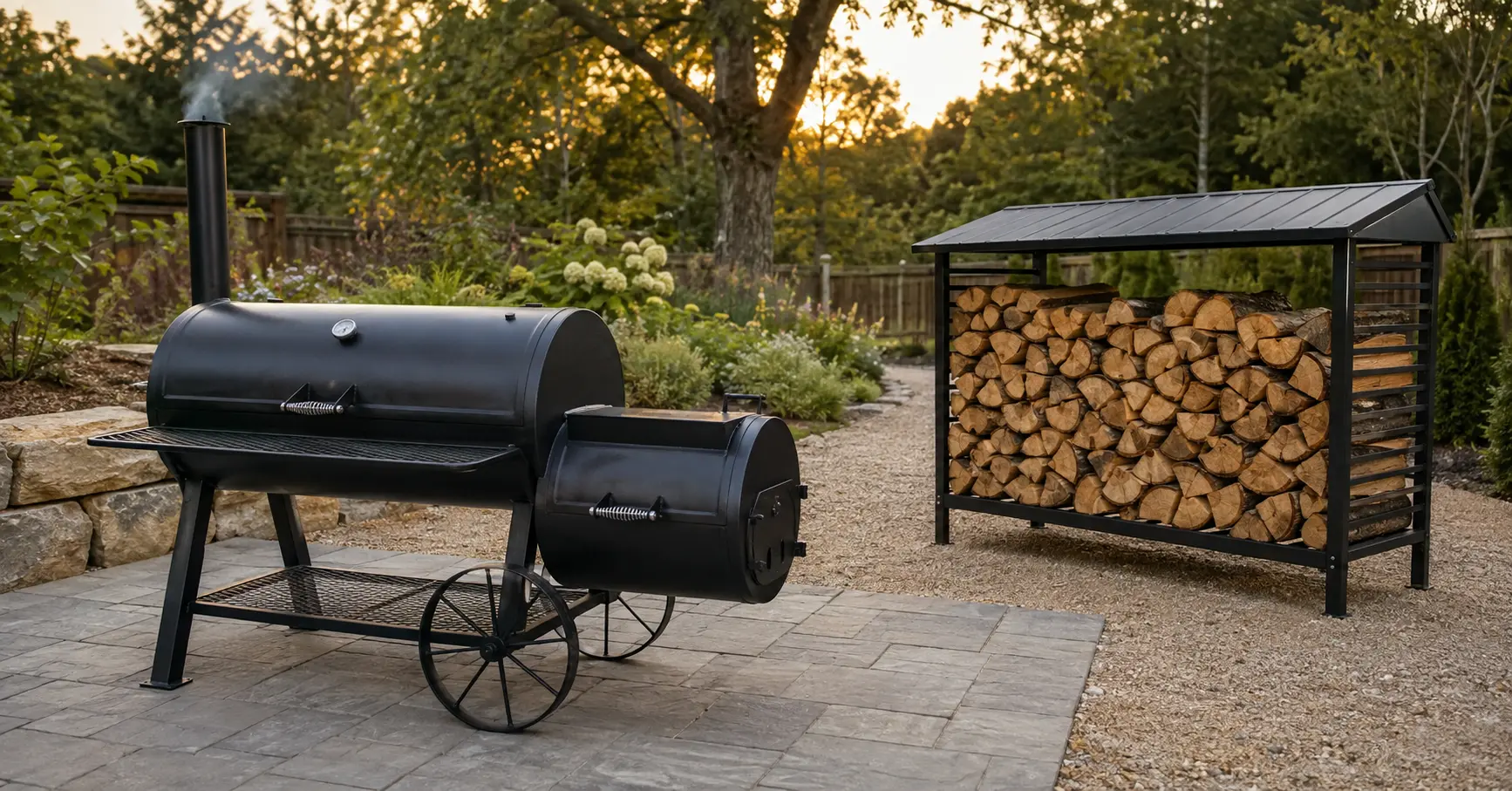
An offset smoker wood rack keeps your hardwood splits dry, organized, ventilated, and conveniently positioned for long barbecue sessions. Instead of leaving smoking wood directly on wet ground or scattered around the patio, a properly designed rack protects your fuel while allowing air to circulate between the splits.
Wood condition has a direct effect on fire quality. Properly seasoned hardwood ignites faster and burns more cleanly than damp or poorly stored wood. This helps an offset smoker produce a stable fire and the thin blue smoke associated with clean barbecue flavor.
However, a good wood rack involves more than stacking logs beside the firebox. It must provide ground clearance, ventilation, weather protection, adequate capacity, and a safe distance from heat and flames.
This complete guide explains the different types of offset smoker wood racks, suitable construction materials, ideal dimensions, placement requirements, DIY building steps, wood organization methods, maintenance practices, and common storage mistakes.
Quick Answer
An offset smoker wood rack should keep seasoned hardwood at least 4–6 inches above the ground while leaving the sides open for ventilation. Place it close enough for convenient access but several feet away from the smoker’s firebox, sparks, and direct heat. A covered, powder-coated steel rack is generally the most durable option for year-round outdoor use.
What Is an Offset Smoker Wood Rack?
An offset smoker consists of a main cooking chamber connected to a separate firebox. Heat and smoke move from the firebox through the cooking chamber before exiting through the chimney. Because the smoker relies on a live fire, it requires a readily available supply of dry hardwood.
An offset smoker wood rack is a raised structure designed to store wood splits, chunks, or logs near the cooking area. Depending on its design, it may be freestanding, wall-mounted, mobile, covered, or permanently incorporated into an outdoor barbecue station.
The rack is different from a firebox basket. A wood rack stores unused fuel outside the smoker, while an offset smoker firebox basket holds charcoal or wood inside the firebox during combustion.
Why an Offset Smoker Wood Rack Is Important
Leaving hardwood on bare soil, grass, or concrete can expose it to ground moisture, insects, mold, and poor ventilation. A dedicated rack creates better storage conditions and makes fire management more convenient.
Keeps Smoking Wood Organized
An offset smoker wood rack provides one location for all your cooking fuel. You can arrange hardwood by species, moisture level, or split size instead of searching through a mixed pile during a cook.
Organized storage is particularly helpful during brisket or pork shoulder sessions that may continue for many hours. Having correctly sized splits within reach makes it easier to add fuel without allowing the fire to weaken.
Protects Wood From Ground Moisture
Even properly seasoned hardwood can reabsorb moisture when it remains in contact with wet soil or concrete. Raising the wood above the ground reduces this exposure and lets air move underneath the stack.
Ground clearance is especially important during rain, winter, and periods of high humidity.
Improves Air Circulation
Air needs to move between and around the wood splits. A tightly enclosed box can trap moisture and create conditions that encourage mildew or decay.
A ventilated offset smoker wood rack allows residual moisture to escape. However, it should not be treated as a substitute for correctly seasoning freshly cut wood.
Makes Fire Management Easier
A steady offset-smoker fire usually requires small, regular fuel additions. Keeping suitable wood splits organized nearby prevents unnecessary delays.
For more information about controlling combustion and producing clean smoke, read these offset smoker fire management tips.
Improves the Appearance of the Cooking Area
A neatly stacked rack looks far better than a loose pile of wood beside the smoker. Metal racks complement industrial-style smokers, while wooden racks can create a more traditional outdoor-kitchen appearance.
Types of Offset Smoker Wood Racks
The best style depends on the available space, local weather, quantity of fuel, and whether the rack needs to be moved.
1. Freestanding Wood Rack
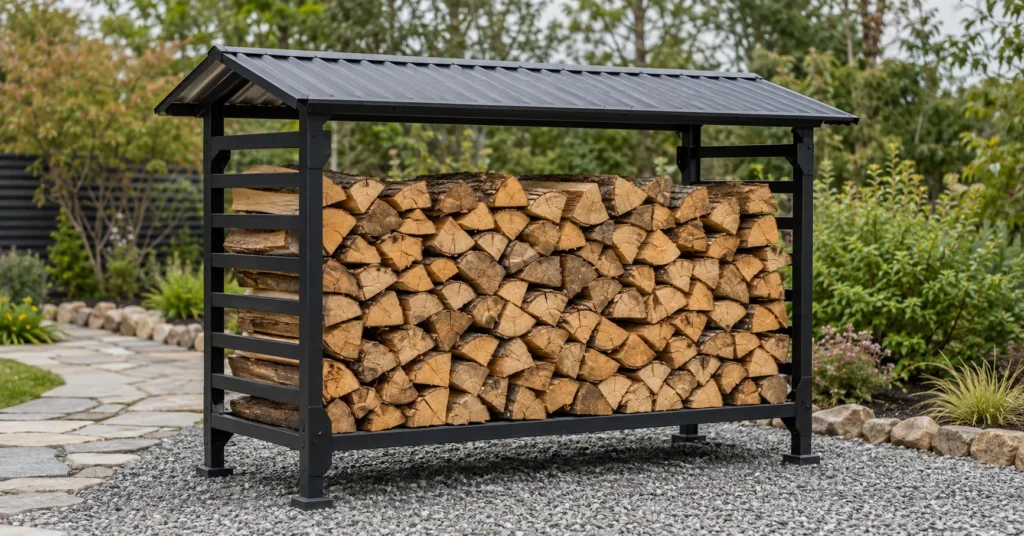
A freestanding offset smoker wood rack is a standalone frame that can be positioned on a patio, concrete pad, or gravel base. It is one of the most versatile options because it does not require attachment to a wall or fence.
Freestanding racks are available in compact and full-cord sizes. For a backyard smoker, a rack approximately 4 feet wide and 3–4 feet high usually provides enough space without dominating the cooking area.
Look for:
- A strong raised base
- Open or widely spaced sides
- Rust-resistant construction
- Stable feet
- An optional waterproof top cover
2. Wall-Mounted Wood Rack
A wall-mounted rack is useful where floor space is limited. It can hold a smaller quantity of wood beside an outdoor kitchen, shed, or covered cooking station.
The wall and mounting hardware must be capable of supporting the combined weight of the rack and hardwood. A fully loaded rack can become extremely heavy, so it should be secured to structural framing rather than thin siding alone.
Avoid installing it against a combustible wall close to the firebox.
3. Mobile Wood Rack
A mobile rack is fitted with casters or wheels, allowing the wood supply to be moved around the patio. It is convenient when the smoker is not always used in the same location.
Choose a model with:
- Heavy-duty wheels
- Locking casters
- A low center of gravity
- Strong welded joints
- A handle that remains cool and easy to grip
Large pneumatic wheels are preferable if the rack must travel over grass, gravel, or uneven ground.
4. Covered Wood Rack
A covered offset smoker wood rack has an integrated metal roof or fitted top cover. This helps protect the upper layers from rain and snow while keeping the sides open for ventilation.
The roof should extend slightly beyond the wood stack to direct water away from the fuel. Avoid wrapping the entire rack tightly in plastic because trapped condensation can keep the wood damp.
5. Wood Storage Bin
A wood bin provides a more enclosed appearance and can hold irregularly shaped splits or chunks. However, the base and sides need sufficient openings for airflow.
A completely sealed outdoor bin is rarely ideal for smoking wood unless it incorporates purpose-built vents.
6. Custom-Built Wood Rack
A custom offset smoker wood rack can be designed to match a particular smoker, patio, or outdoor kitchen. Building your own also lets you select the exact width, height, shelf spacing, finish, and capacity.
A divided design is especially useful because different compartments can separate oak, hickory, pecan, apple, and cherry.
Best Materials for an Offset Smoker Wood Rack
The rack must support significant weight while tolerating outdoor moisture, sunlight, and temperature changes.
Powder-Coated Steel
Powder-coated steel offers an excellent balance of strength, appearance, and weather resistance. It can hold heavy hardwood splits without bending and requires relatively little maintenance.
Inspect the coating periodically. Scratches that expose bare steel should be cleaned and sealed with suitable outdoor metal paint before rust spreads.
Stainless Steel
Stainless steel is durable, corrosion-resistant, and easy to clean. It works particularly well in humid or rainy climates but usually costs more than powder-coated mild steel.
Stainless steel is a good choice for a permanent premium outdoor kitchen.
Treated Lumber
A wooden rack is relatively easy to build using basic tools. Ground-contact-rated lumber is appropriate for the legs and lower supports, while exterior screws resist corrosion better than standard indoor fasteners.
Do not burn painted, stained, pressure-treated, glued, or chemically preserved rack material in the smoker. Only clean, suitable hardwood should be used as cooking fuel.
Cedar or Redwood
Cedar and redwood naturally resist decay and provide an attractive finish. They are lighter than many treated-lumber alternatives but may cost more.
Even decay-resistant wood benefits from ground clearance and an outdoor-safe protective finish.
Composite Material
Composite boards resist rot, insects, and warping. However, they may not have the same structural strength as steel or solid lumber.
Follow the manufacturer’s spacing recommendations and use a strong frame beneath composite shelves.
Vinyl
Vinyl is lightweight and easy to clean, but it is usually better for small wood loads. It can soften or deform if positioned too close to the firebox, so it must remain well away from heat and sparks.
How Big Should an Offset Smoker Wood Rack Be?
Rack capacity should match your cooking frequency and fuel consumption. A compact weekend setup does not need the same storage capacity as a commercial pit or large reverse-flow smoker.
| User type | Suggested rack size | Approximate use |
| Occasional backyard cook | 2 ft wide × 2 ft high | Short cooks and wood chunks |
| Regular weekend smoker | 4 ft wide × 3–4 ft high | Ribs, chicken and pork shoulder |
| Frequent long cooks | 6 ft wide × 4 ft high | Brisket and multiple long sessions |
| Catering or competition use | Custom multi-section rack | High-volume fuel storage |
These measurements are general starting points. Actual fuel consumption changes according to smoker size, steel thickness, air leakage, weather, cooking temperature, and wood-split dimensions.
Cold and windy conditions usually increase fuel use. Our guide to using an offset smoker in cold weather explains how weather affects heat retention and wood consumption.
Where Should You Place the Wood Rack?
Placement affects safety, convenience, and wood condition.
Choose a location that is:
- On a level and stable surface
- Protected from direct rainfall
- Open enough for ventilation
- Away from sprinklers and roof runoff
- Conveniently accessible during cooking
- Clear of the firebox, chimney, sparks, and hot surfaces
- Away from children’s play areas and busy walkways
Do not attach an offset smoker wood rack directly to the smoker unless the manufacturer designed the structure for that purpose. The smoker becomes extremely hot, and additional weight can affect stability.
A separate rack positioned several feet away is usually safer. Because fire behavior and clearances vary among smokers, follow the smoker manufacturer’s safety instructions and applicable local fire regulations.
How to Build a Simple Offset Smoker Wood Rack
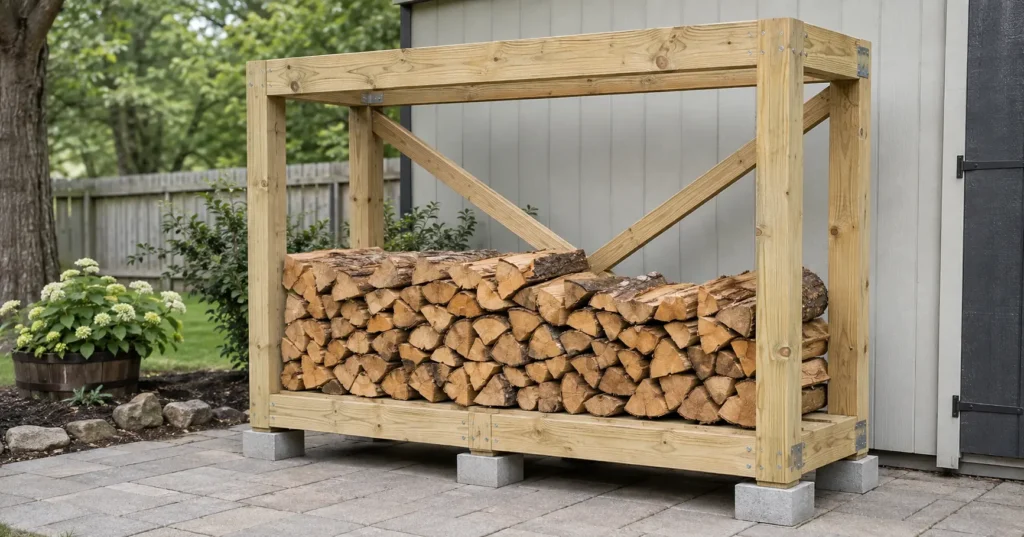
A basic wooden rack can be completed with commonly available materials. The dimensions below create a compact rack suitable for many backyard setups.
Materials Required
- Four exterior-grade 2×4 boards for the frame
- Exterior-grade slats for the raised base
- Exterior structural screws
- Two diagonal braces
- Measuring tape
- Pencil
- Circular saw or hand saw
- Drill and suitable bits
- Carpenter’s square
- Spirit level
- Sandpaper
- Exterior wood finish
- Safety glasses and work gloves
Step 1: Select the Dimensions
A practical starting size is approximately 48 inches wide, 18 inches deep, and 36 inches high. Adjust the measurements according to your available space and typical wood supply.
Avoid making a narrow rack unnecessarily tall. A low, wide design has better stability when loaded with heavy hardwood.
Step 2: Cut the Base Pieces
Cut two long side rails and two shorter end rails. Arrange them into a rectangle and use a carpenter’s square to confirm that every corner is aligned.
Fasten the corners with exterior structural screws. Predrilling the holes can help prevent the lumber from splitting.
Step 3: Install the Raised Floor
Attach spaced slats across the base frame. Leave small gaps between them so air can circulate and water can drain.
The rack floor should sit at least 4–6 inches above the ground. Short legs or concrete pavers can provide the necessary clearance.
Step 4: Add the Upright Supports
Secure an upright post at each corner. Check every post with a level before tightening the screws.
If the rack is installed beneath a shelter, confirm that its height leaves enough space to load and remove wood easily.
Step 5: Install Side Rails
Add horizontal rails between the upright supports. The rails prevent wood from falling while leaving the sides sufficiently open for airflow.
Do not space them so widely that short splits can slide through.
Step 6: Add Diagonal Bracing
Install diagonal braces at the rear corners. Bracing prevents the rack from leaning or twisting under a heavy load.
This is particularly important for racks longer than 4 feet.
Step 7: Sand and Finish the Rack
Smooth rough edges and remove sharp splinters. Apply an exterior finish appropriate for the chosen lumber and allow it to cure completely before stacking wood.
Keep all coatings and treated building materials separate from the fuel that will be burned for cooking.
Step 8: Add Weather Protection
Install a small sloped roof or use a purpose-built rack cover. Protect the top from precipitation while leaving the front, back, and sides open.
The cover should not extend down to the ground or seal wet wood inside.
Step 9: Test the Rack
Place the finished rack on a stable surface and check that it does not rock or lean. Add wood gradually and watch for bending, loose joints, or instability.
Never exceed the weight capacity of the lumber, hardware, mounting surface, or casters.
Best Wood for an Offset Smoker
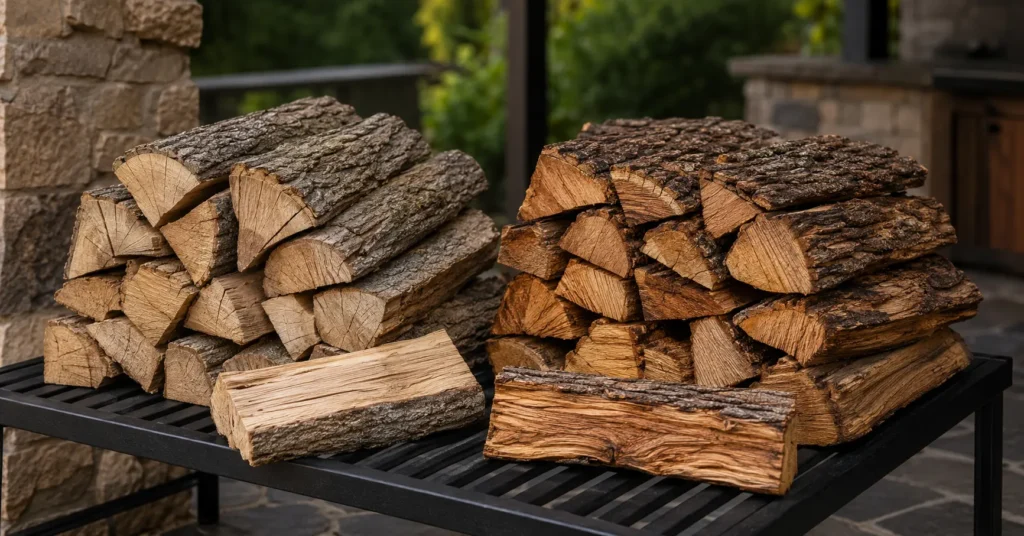
The wood rack only solves the storage problem; successful barbecue still requires the right fuel. Use clean, properly seasoned hardwood rather than softwood, construction scraps, or chemically treated lumber.
Oak
Oak produces a balanced smoke flavor and a steady coal bed. It pairs well with beef, pork, lamb, and many poultry recipes.
Because it is versatile and predictable, oak is an excellent base wood for beginners.
Hickory
Hickory produces a stronger, richer smoke flavor. It works particularly well with pork shoulder, ribs, bacon, and beef.
Use it carefully because excessive hickory smoke can overpower poultry or delicate foods.
Pecan
Pecan offers a rich but slightly sweeter flavor than hickory. It pairs well with pork, poultry, beef, and vegetables.
Apple
Applewood produces mild, subtly sweet smoke. It is commonly used for chicken, turkey, pork, and fish.
Cherry
Cherry provides a mild fruity character and can help create an attractive dark exterior on smoked meat. It blends well with oak or hickory.
Maple
Maple has a mild sweetness that suits pork, poultry, cheese, and vegetables. Make sure you use appropriate hardwood maple rather than unsuitable or unidentified wood.
Wood Flavor Pairing Table
| Hardwood | Smoke intensity | Recommended foods |
| Oak | Medium | Beef, pork, lamb and poultry |
| Hickory | Strong | Ribs, pork shoulder and beef |
| Pecan | Medium | Pork, chicken and turkey |
| Apple | Mild and sweet | Poultry, pork and fish |
| Cherry | Mild and fruity | Poultry, pork and beef |
| Maple | Mild and sweet | Pork, poultry and vegetables |
Wood You Should Never Use for Smoking
Avoid burning:
- Pressure-treated lumber
- Painted or stained wood
- Plywood, MDF or particleboard
- Pallets of unknown origin
- Moldy or rotten wood
- Wood contaminated with oil or chemicals
- Construction offcuts containing glue
- Unidentified wood species
- Resinous softwoods such as pine, fir or spruce
- Poisonous or irritating species such as oleander
Only use clean hardwood from a trustworthy supplier. If the species or treatment history is unknown, do not use it for cooking.
How Dry Should Smoking Wood Be?
Wood that is excessively wet may smolder, cool the fire, and generate dense white smoke. Conversely, extremely dry, lightweight wood can ignite and burn more rapidly than expected.
Many offset-smoker users prefer seasoned hardwood splits with a moisture reading around 15%–20%, though ideal performance varies according to species, split size, smoker design, and climate. A pin-type moisture meter provides a more dependable assessment than appearance alone.
To check the center rather than only the dry exterior, split a sample piece and take the reading from the freshly exposed internal face.
Signs of seasoned wood commonly include:
- Cracks at the ends
- Reduced weight
- A clearer sound when two pieces are struck together
- Loose or separating bark
- No visible mold
- A dry internal surface when freshly split
An offset smoker wood rack helps preserve seasoned wood, but stacking fresh green wood on it for a few days will not make that wood ready for smoking. Proper seasoning can take several months or longer.
How to Stack Wood Correctly
Correct stacking improves ventilation and rack stability.
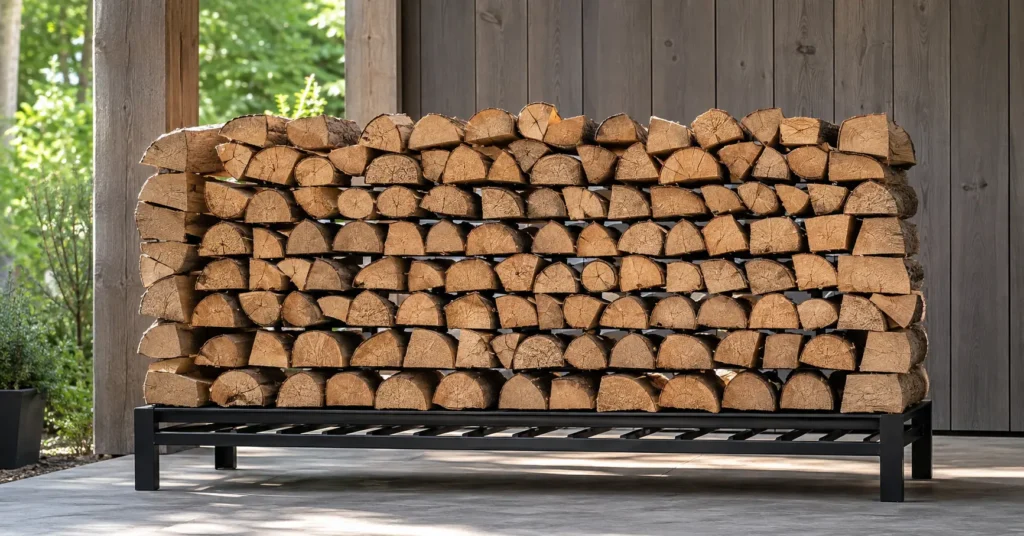
Place the largest and straightest splits on the bottom. Arrange the remaining pieces in relatively even rows without packing them tightly together. Keep the stack below the side rails so pieces cannot roll off.
If the rack contains different wood species, separate them with dividers or labeled sections. You can also create different areas for:
- Fully seasoned cooking wood
- Wood still being seasoned
- Small splits for temperature adjustments
- Kindling and fire-starting material
- Fruitwood used for blending
Do not mix damp wood with your ready-to-burn supply. Moisture can transfer within a tightly packed pile and make fuel selection more difficult.
Preparing Wood Before Adding It to the Firebox
Select a wood split appropriate for the size of your firebox. Smaller splits generally ignite faster and allow more precise temperature control than oversized logs.
Some pitmasters place the next split on a dedicated warming shelf so it ignites more quickly when added. Never place wood where it can fall onto flames, block a vent, damage a painted surface, or create a fire hazard.
Do not balance wood directly on top of the firebox unless the smoker manufacturer permits it. Fireboxes can become dangerously hot.
For stable cooking temperatures, learn how to control heat in an offset smoker before experimenting with large fuel changes.
Using Wood From the Rack During a Cook
Start with a fully established coal bed and then add one appropriately sized hardwood split. Keep the chimney mostly or fully open so the smoker can exhaust stale smoke.
Watch the fire rather than following a rigid schedule. Add another split before the previous one burns down completely, but avoid loading multiple large pieces at once. Exact timing depends on smoker size, airflow, weather, and fuel condition.
A healthy fire generally produces:
- Visible flame
- Consistent cooking temperature
- Minimal heavy smoke
- Clean-burning exhaust
- Thin, almost transparent blue smoke
- A stable bed of glowing coals
Thick white smoke often indicates incomplete combustion caused by damp fuel, insufficient airflow, or an overloaded firebox.
A reliable grate-level thermometer makes these changes easier to monitor. If the factory gauge is inaccurate or poorly positioned, consider an offset smoker thermometer upgrade.
Offset Smoker Wood Rack Maintenance
Regular maintenance extends the life of the rack and protects the stored fuel.
Clean Away Debris
Remove bark, leaves, sawdust, insects, and dirt from the bottom of the rack. This debris can retain moisture and restrict airflow.
Inspect the Frame
Check wooden racks for rot, cracks, loose screws, and insect damage. Inspect metal racks for bent supports, failed welds, chipped coatings, and corrosion.
Treat Rust Early
Clean small rust spots with an appropriate wire brush or abrasive pad before applying rust-resistant outdoor metal paint. Follow the coating manufacturer’s safety and preparation directions.
Check the Cover
Look for tears, standing water, and condensation. The cover should block rainfall without sealing the entire woodpile.
Rotate the Supply
Use older, fully seasoned splits first and place newer wood in a separate section. This simple rotation prevents forgotten pieces from remaining at the bottom for years.
Inspect After Severe Weather
Strong wind, snow loads, and saturated ground can destabilize the rack. Check its footing and structural condition before restacking or using the wood.
Common Wood Rack Mistakes
Placing Wood Directly on the Ground
Ground contact encourages moisture absorption, decay, and insect activity. Always use a raised base.
Covering the Entire Rack With Plastic
A tightly wrapped pile traps condensation and reduces ventilation. Protect the top while leaving airflow around the sides.
Installing It Too Close to the Firebox
Dry wood is combustible. Sparks, flames, and radiant heat can ignite or damage a nearby stack.
Overloading the Rack
Hardwood is heavy. Excessive weight can bend steel, split lumber, break casters, or pull a wall-mounted rack from its supports.
Mixing Green and Seasoned Wood
When all wood is combined, it becomes difficult to identify fuel that is ready to burn. Use separate sections and labels.
Storing Unsuitable Wood
A good rack does not make painted, treated, moldy, or unidentified wood safe for cooking.
Ignoring Local Pests
Woodpiles can attract insects and small animals. Avoid positioning a large stack directly against the house, and inspect individual splits before bringing them into a covered cooking area.
Safety Tips for Wood Storage and Smoking
Keep a suitable fire extinguisher accessible and learn how to use it before starting a fire. Maintain the smoker on a stable, noncombustible surface away from buildings, fences, dry vegetation, and overhanging structures.
Never leave an operating offset smoker unattended for extended periods. Wear heat-resistant gloves when handling firebox doors, vents, grates, or burning fuel.
Smoking also requires accurate food-temperature monitoring. The USDA’s smoking meat and poultry guidance recommends using thermometers to monitor both smoker temperature and the internal temperature of the food.
Is an Offset Smoker Wood Rack Worth It?
An offset smoker wood rack is a worthwhile accessory for anyone who cooks with hardwood regularly. It protects fuel from ground moisture, improves organization, simplifies fire management, and makes the barbecue area look cleaner.
A compact rack is sufficient for occasional backyard cooking, while frequent brisket cooks may benefit from a larger covered design with separate compartments. Powder-coated steel provides excellent durability, but a properly built wooden rack can also perform well when raised and protected from weather.
The most important features are not decorative. Prioritize ventilation, stability, ground clearance, weather protection, safe placement, and sufficient load capacity.
Frequently Asked Questions
A covered powder-coated steel rack is one of the best all-around options. It supports heavy loads, resists outdoor weather, and requires little maintenance. A well-constructed wooden rack is a good DIY alternative.
Keep it close enough for convenient access but safely separated from the firebox, chimney, hot metal, and flying sparks. There is no universal distance for every setup, so follow the smoker manufacturer’s clearances and local fire requirements.
A top cover or roof is recommended for outdoor storage. It should block direct rain while leaving the sides open for ventilation.
Only use an integrated lower shelf if the smoker manufacturer has designed and approved it for fuel storage. Wood should not be exposed to excessive heat, sparks, grease, or falling embers.
A small quantity may be stored in a dry shed or ventilated outbuilding, but large firewood stacks can carry insects and create a combustible fuel load. Avoid storing large quantities inside living areas.
Occasional surface moisture does not necessarily ruin seasoned hardwood, but the wood should be allowed to dry before use. Persistent exposure can increase moisture content, encourage mold, and lead to dirty combustion.
Do not soak full hardwood splits. Wet splits ignite poorly, cool the fire, and may produce heavy smoke. Use properly seasoned wood and control the fire through fuel size and airflow.
Properly stored hardwood can remain usable for years if it stays dry, ventilated, clean, and free from rot or mold. Inspect every split before adding it to the firebox.
Pressure-treated lumber may be used structurally when suitable for outdoor construction, but it must never be burned as smoking fuel. Keep all treated offcuts, sawdust, and scraps completely separate from cooking wood.
Oak is one of the most beginner-friendly options because it burns steadily and produces a balanced smoke flavor. It can also be blended with cherry or apple for additional sweetness.
Why an Offset Smoker Wood Rack Is Worth the Investment
A properly designed offset smoker wood rack keeps hardwood dry, ventilated, organized, and ready when the fire needs another split. Choose a rack with strong construction, at least 4–6 inches of ground clearance, open sides, a weather-resistant top, and adequate capacity for your typical cooking schedule.
Position it safely away from the firebox, separate seasoned wood from green wood, and inspect both the rack and fuel regularly. When combined with correct airflow and fire management, well-stored hardwood makes it much easier to maintain stable heat and produce clean, flavorful smoke.