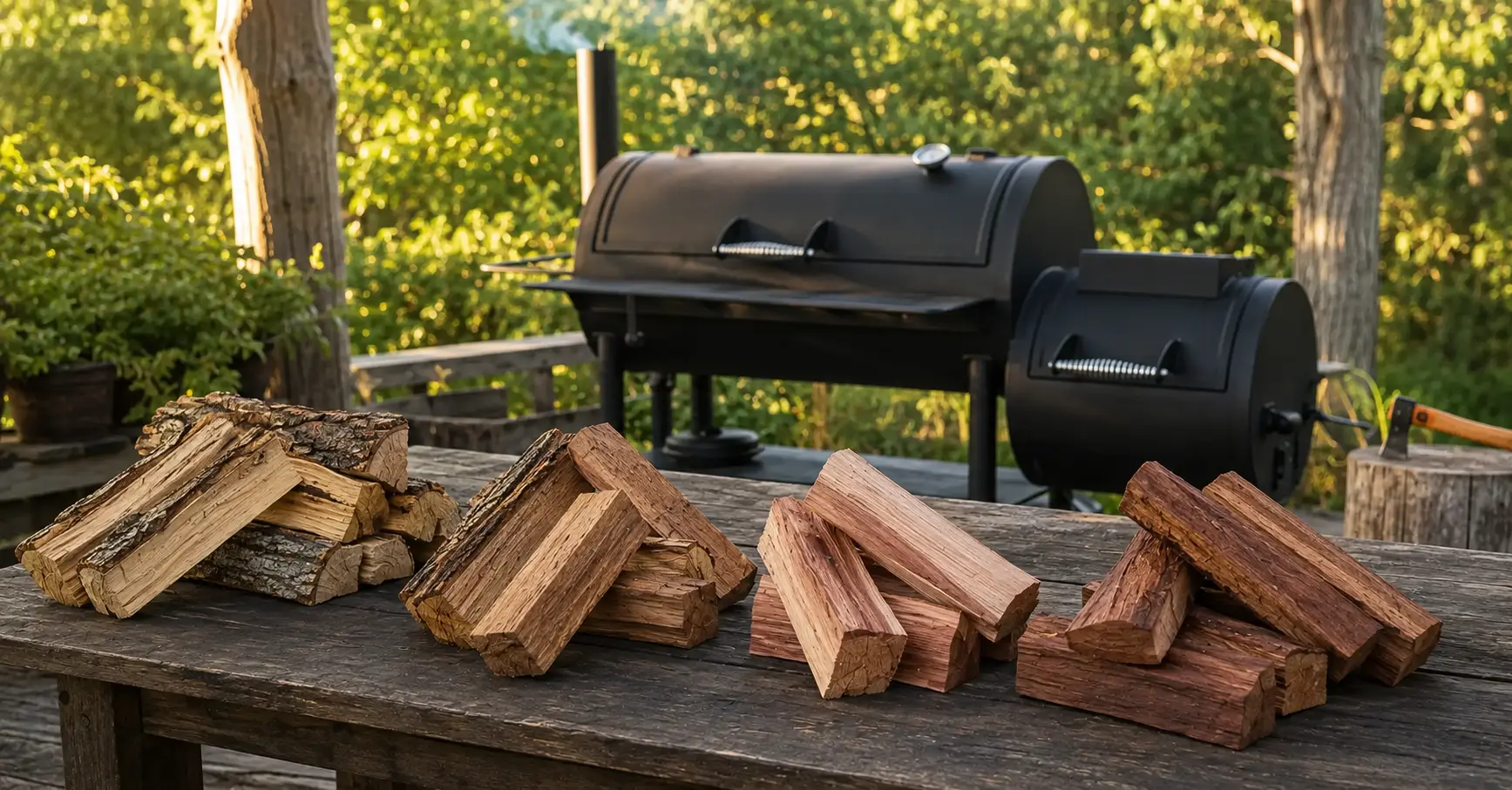
Choosing the best wood for offset smoker cooking can make the difference between clean, flavorful barbecue and meat with a harsh or bitter taste. Each hardwood produces a distinct smoke profile, ranging from the balanced flavor of oak to the bold intensity of hickory and the mild sweetness of applewood.
For most cooks, oak is the best all-around wood for an offset smoker because it burns steadily, creates moderate smoke and complements almost every type of meat. Hickory is an excellent option for a stronger traditional barbecue flavor, while apple, cherry and peach are better suited to pork, chicken, fish and other foods that benefit from lighter smoke.
Wood species is only part of the decision. The wood must also be properly seasoned, appropriately sized and burned with sufficient airflow. Even premium hardwood can produce unpleasant smoke when it is wet, moldy or allowed to smolder.
This guide compares the ten best smoking woods, explains their ideal meat pairings and shows you how to create a clean-burning fire in your offset smoker.
Quick Answer: What Is the Best Wood for an Offset Smoker?
Oak is the best wood for an offset smoker for most beginners and experienced pitmasters. It produces steady heat, burns for a reasonable length of time and delivers a balanced smoke flavor that works with beef, pork, poultry and lamb.
For more specific flavor combinations:
- Use oak for an all-purpose smoking wood.
- Choose hickory for ribs and pork shoulder.
- Use mesquite sparingly for beef and game.
- Choose apple or cherry for pork and poultry.
- Use alder for salmon and delicate fish.
- Combine oak with a fruitwood for a balanced smoke profile.
If you are still learning how to operate your smoker, review these offset smoker fire management tips before experimenting with different wood combinations.
Best Smoking Wood Comparison Chart
| Wood type | Smoke intensity | Flavor profile | Best meat pairings | Burning characteristics |
| Oak | Medium | Balanced and traditional | Beef, pork, lamb and poultry | Steady, clean and long-lasting |
| Hickory | Medium–strong | Rich, savory and bacon-like | Pork, ribs and beef | Hot and relatively long-lasting |
| Mesquite | Very strong | Earthy and intense | Beef and game | Very hot and fast |
| Apple | Mild | Sweet and fruity | Pork, chicken, turkey and fish | Slow and steady |
| Cherry | Mild–medium | Sweet and slightly fruity | Pork, poultry, beef and lamb | Even and moderate |
| Pecan | Medium | Sweet, rich and nutty | Beef, pork and poultry | Slow and consistent |
| Alder | Mild | Light and delicately sweet | Salmon, fish and poultry | Clean and moderately fast |
| Maple | Mild | Sweet and subtle | Poultry, pork and vegetables | Even and moderate |
| Peach | Mild | Floral and gently sweet | Pork, chicken and turkey | Moderately fast |
| Walnut | Strong | Deep, earthy and slightly bitter | Beef and game | Hot and intense |
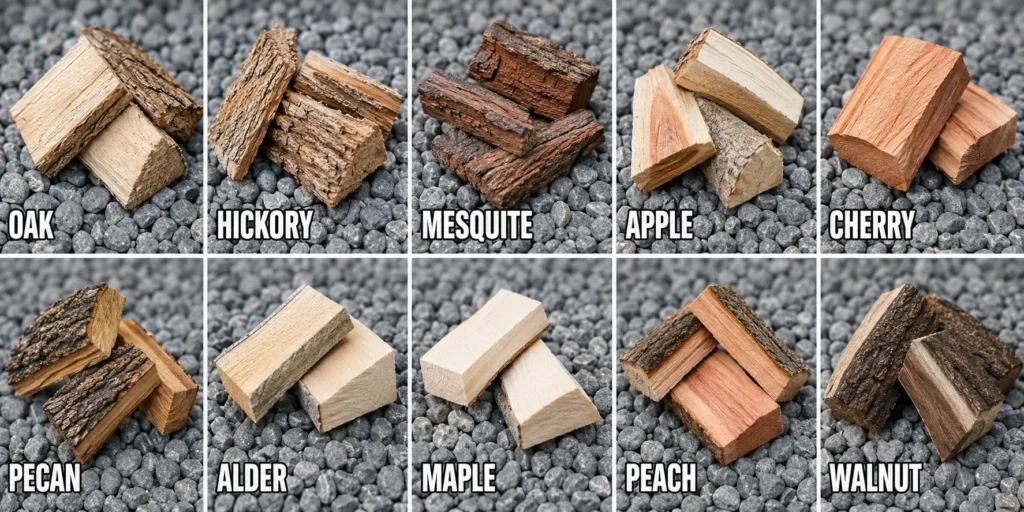
1. Oak: Best Overall Wood for Offset Smoker Cooking
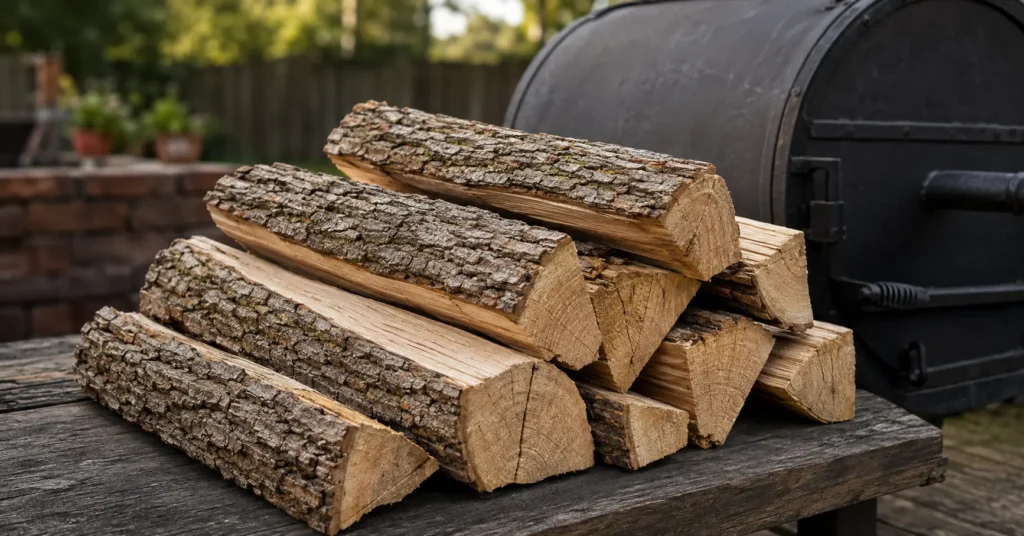
Oak is widely considered the best wood for offset smoker cooking because it offers an excellent balance of heat, burn time and smoke intensity. It is forgiving enough for beginners but versatile enough for experienced pitmasters.
Oak produces a clean, medium-strength smoke that enhances meat without easily overpowering it. It is particularly effective for brisket, beef ribs, pork shoulder, sausage and lamb. You can also use it as the base of a wood blend and add cherry, apple or pecan for extra sweetness.
White oak generally produces a slightly milder flavor, while red oak can be more pronounced. The exact result also depends on where the tree was grown, how long the wood was seasoned and how efficiently it burns.
Oak is an excellent choice when following an offset smoker brisket recipe because it provides consistent heat throughout a long cooking session without covering the natural flavor of the beef.
Best for: Brisket, beef ribs, pork shoulder, lamb and sausage
Smoke strength: Medium
Best blend: Oak with cherry or apple
2. Hickory: Best for Traditional Barbecue Flavor
Hickory creates the rich, savory smoke commonly associated with traditional Southern barbecue. Its bold profile works particularly well with fatty meats because the richness of the meat balances its stronger smoke flavor.
It is one of the best woods for smoking pork shoulder, spare ribs, bacon and beef. However, using too much hickory or burning it inefficiently can create an overly strong or bitter taste.
Beginners can mix hickory with oak, apple or cherry. This creates a more balanced flavor while retaining the recognizable hickory character. When learning how to smoke ribs in an offset smoker, try using two parts oak and one part hickory as a manageable starting blend.
Best for: Pork ribs, pork shoulder, bacon and beef
Smoke strength: Medium to strong
Best blend: Hickory with oak, apple or cherry
3. Mesquite: Best for Strong Beef Flavor
Mesquite produces one of the strongest smoke profiles of any commonly used barbecue wood. It creates an intense, earthy flavor that is closely associated with Texas-style cooking.
Because mesquite burns hot and relatively fast, it requires careful fire management. It works best with robust meats such as brisket, beef ribs, steaks and game. Its intensity can quickly overwhelm poultry, fish and mild pork cuts.
Mesquite is generally better for shorter cooking sessions or as a smaller part of a wood blend. Mixing it with oak helps control its strength while maintaining its distinctive Southwestern character.
Best for: Beef, game and short smoking sessions
Smoke strength: Very strong
Best blend: A small amount of mesquite with oak
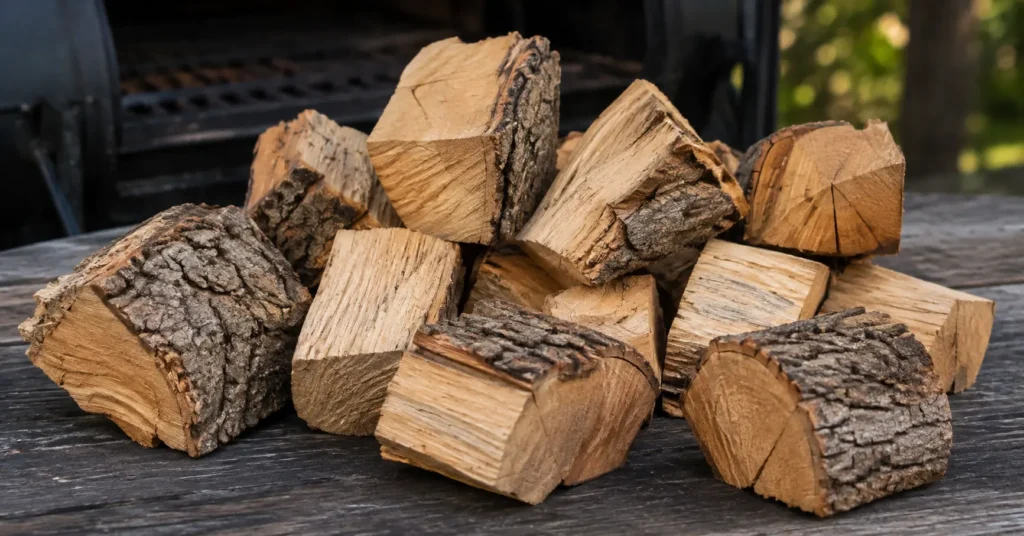
4. Apple: Best Mild Wood for Pork and Poultry
Applewood produces a gentle, sweet and slightly fruity smoke. It is an excellent option when you want smoke to complement the food without dominating its natural flavor.
Apple works especially well with pork ribs, pork loin, chicken, turkey and fish. Its mild character also makes it useful for longer cooking sessions because it is less likely to oversmoke the meat than hickory or mesquite.
The flavor can be too subtle for some large beef cuts when apple is used alone. Combining it with oak or hickory provides more depth while preserving its pleasant sweetness.
Best for: Pork, chicken, turkey and fish
Smoke strength: Mild
Best blend: Apple with oak or hickory
5. Cherry: Best for Flavor and Bark Color
Cherry is another fruitwood with a mild, sweet flavor, but its smoke is generally a little richer than apple. It pairs with pork, poultry, lamb and beef, making it one of the most versatile fruitwoods.
Cherry is especially valued for the deep mahogany color it can help develop on the surface of smoked meat. This makes it a popular addition when cooking ribs, pork shoulder and brisket.
Although cherry can be used alone, it performs particularly well when blended with oak or hickory. Oak provides consistent heat, while cherry contributes sweetness, aroma and attractive color.
Best for: Pork, poultry, lamb and beef
Smoke strength: Mild to medium
Best blend: Cherry with oak or hickory
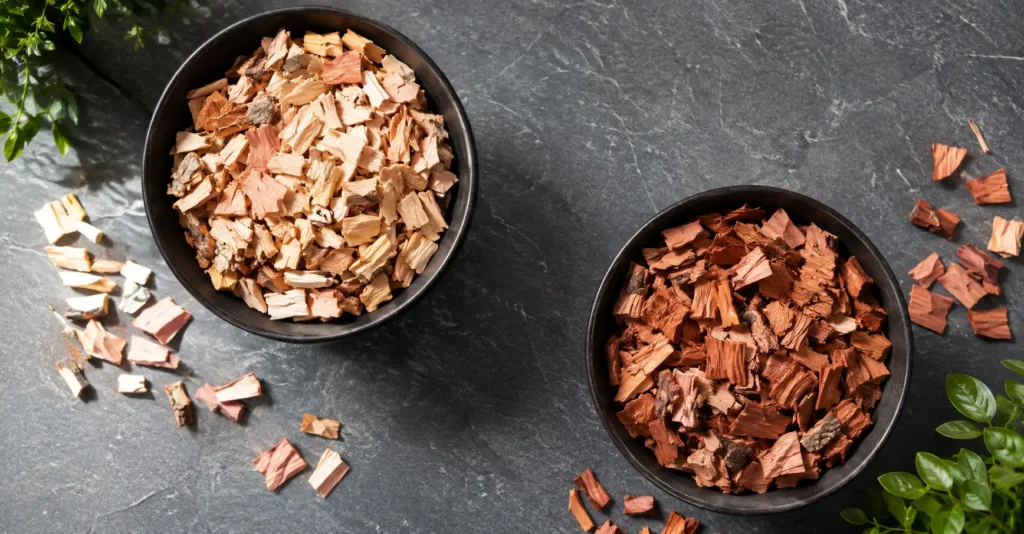
6. Pecan: Best Sweet and Nutty Smoking Wood
Pecan belongs to the hickory family but creates a sweeter, milder and nuttier smoke profile. It offers more depth than most fruitwoods without reaching the intensity of standard hickory.
This balanced character makes pecan suitable for beef, pork, turkey and chicken. It is particularly useful for long cooks where strong smoke could become overwhelming.
Pecan can be burned by itself or mixed with oak for more predictable temperature control. Adding a small amount of apple or cherry can make the finished smoke profile even sweeter.
Best for: Beef, pork, turkey and chicken
Smoke strength: Medium
Best blend: Pecan with oak or cherry
7. Alder: Best Wood for Smoking Fish
Alder produces a delicate, slightly sweet smoke traditionally associated with salmon and other seafood. It enhances fish without masking its natural flavor.
It can also be used for chicken, turkey and vegetables. However, its mild flavor may not be noticeable enough on brisket, beef ribs or heavily seasoned pork.
Alder is a useful choice for relatively short cooking sessions. If more smoke depth is required, combine it with apple or maple instead of a powerful wood such as mesquite.
Best for: Salmon, seafood, poultry and vegetables
Smoke strength: Mild
Best blend: Alder with apple or maple
8. Maple: Best for Subtle Sweetness
Maple produces a clean, mild smoke with a subtle sweetness. It is particularly effective with poultry, pork, ham, cheese and vegetables.
Because maple does not create an aggressive smoke flavor, it is a forgiving option for cooks who prefer lighter barbecue. It can also balance a small amount of hickory without eliminating its traditional smoky character.
Use hard maple when possible and ensure the wood is untreated and properly seasoned. Never assume that leftover maple furniture or flooring is safe to burn.
Best for: Poultry, ham, pork and vegetables
Smoke strength: Mild
Best blend: Maple with hickory or oak
9. Peach: Best for Chicken and Pork
Peach wood produces a light, floral sweetness similar to apple but with its own distinctive aroma. It works exceptionally well with pork, chicken and turkey.
Its gentle smoke makes it suitable for people who find hickory too strong. Peach can also contribute an attractive golden-brown finish to poultry and pork.
Peach wood may be difficult to find in some regions. When it is unavailable, apple, cherry or pear wood can provide a comparable mild fruitwood profile.
Best for: Chicken, turkey, pork loin and ribs
Smoke strength: Mild
Best blend: Peach with oak or pecan
10. Walnut: Best Used in Small Amounts
Walnut produces a powerful, earthy smoke that can become bitter when used excessively. It is best reserved for robust cuts such as beef and game.
Rather than using walnut as the only fuel source, combine a small quantity with oak, apple or cherry. This reduces its intensity and creates a more balanced result.
Walnut is not the best wood for offset smoker beginners because the margin between pleasantly smoky and overpowering is relatively small. Start with a very limited amount if you want to experiment with it.
Best for: Beef and game
Smoke strength: Strong
Best blend: A small amount of walnut with oak or fruitwood
Best Wood and Meat Pairings
Selecting wood according to the meat helps create a balanced flavor instead of applying the same smoke profile to every cook.
Best Wood for Smoking Brisket
Oak is the safest and most versatile choice for brisket. It can provide smoke throughout the long cooking process without becoming excessively strong.
Hickory adds a more pronounced traditional barbecue taste, while a small amount of mesquite creates a bolder Texas-style profile. Oak and cherry are an excellent combination when you want balanced flavor and darker bark.
Maintain a stable cooking environment with the recommendations in this offset smoker temperature guide.
Best Wood for Smoking Ribs
Hickory, apple, cherry and pecan are all suitable for ribs. Hickory creates bold flavor, while apple and cherry provide a sweeter finish.
For pork ribs, combine oak or hickory with a fruitwood. This prevents the smoke from becoming too heavy during a multi-hour cook.
Best Wood for Pork Shoulder
Hickory is a classic option for pork shoulder because the meat’s fat and long cooking time work well with stronger smoke. Oak, pecan, apple and cherry are also excellent choices.
A blend of oak and apple offers consistent heat with mild sweetness, while hickory and cherry create deeper traditional barbecue flavor.
Best Wood for Chicken and Turkey
Apple, cherry, maple and peach are the best choices for poultry. Their lighter smoke profiles complement chicken and turkey without making the skin or meat taste bitter.
Oak can be added when a steadier fire is needed. Avoid using large amounts of mesquite or walnut with poultry.
Best Wood for Fish
Alder is the traditional choice for salmon and delicate fish. Apple and maple are also suitable because they produce mild smoke.
Fish absorbs smoke relatively quickly, so avoid using overly strong wood or exposing it to dense smoke for an extended period.
How Seasoned Should Smoking Wood Be?
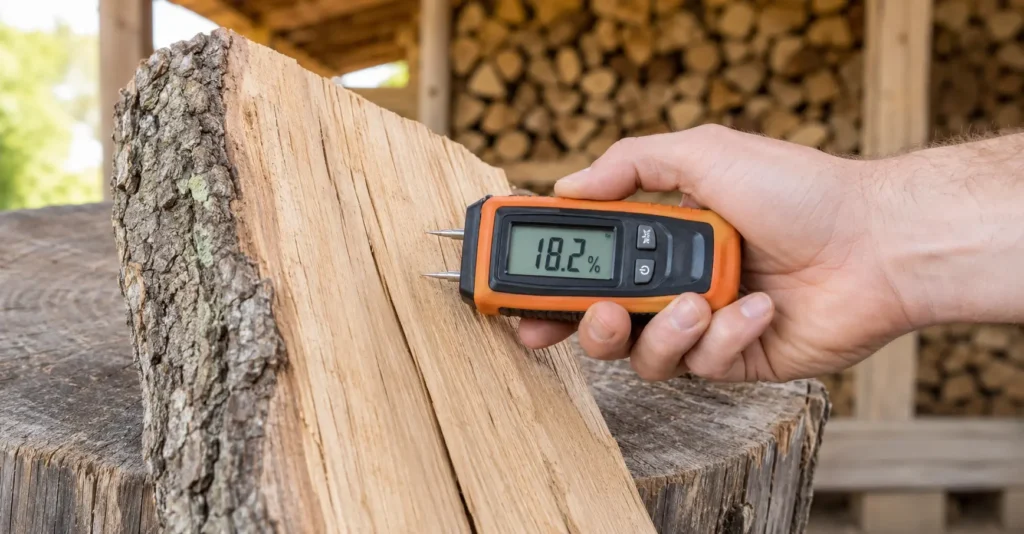
The best wood for offset smoker use should be dry and properly seasoned rather than freshly cut. Wet wood struggles to burn efficiently and commonly produces dense white or gray smoke.
A moisture meter provides a more dependable reading than appearance alone. Test the freshly exposed center of a split rather than only measuring its dry outer surface. Wood with a moisture content of approximately 15% to 20% is generally suitable for a clean-burning fire. The EPA’s wood-burning guidance recommends using firewood with less than 20% moisture.
Other signs of seasoned wood include:
- Cracks at the ends
- Faded or darkened exterior
- Reduced weight
- A sharper sound when two splits are struck together
- Bark that has loosened on some species
These signs are useful, but they are less accurate than testing the center of a freshly split piece with a moisture meter.
What Size Wood Splits Should You Use?
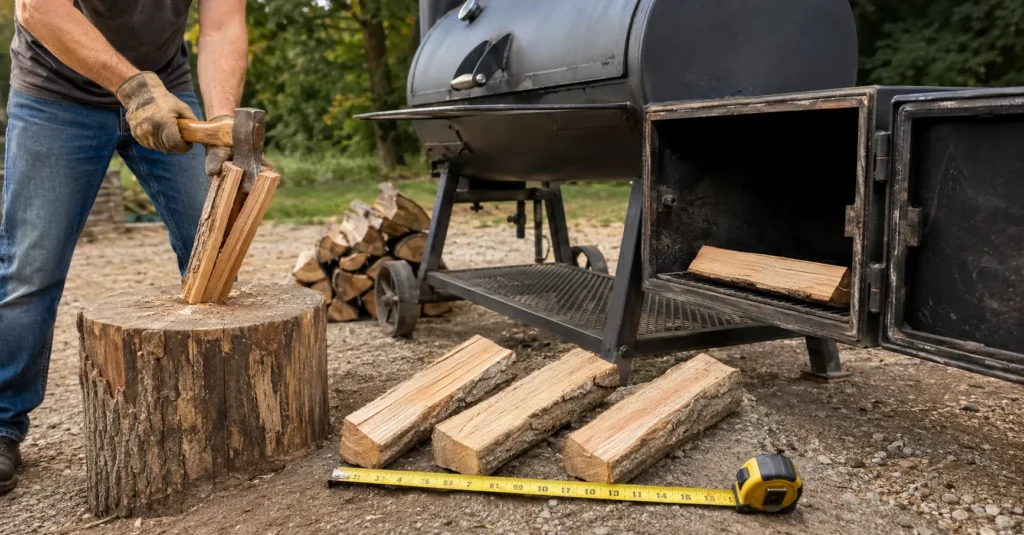
Wood split size should match the firebox and the amount of heat your smoker requires. Large commercial offset smokers can burn full logs, but most backyard smokers operate more efficiently with smaller splits.
A practical starting point for a typical backyard smoker is a split approximately:
- 8 to 12 inches long
- 2 to 4 inches thick
- Small enough to ignite quickly after being added
Oversized splits can smolder before they fully ignite, producing dirty smoke and sudden temperature changes. Smaller, uniformly sized pieces are easier to manage.
Preheating the next split on top of or near the firebox can help it ignite faster, but keep it in a secure position where it cannot roll, fall or catch fire unexpectedly.
How Much Wood Should You Use?
There is no universal number of logs or splits for every offset smoker. Fuel requirements change according to:
- Smoker size and steel thickness
- Firebox design
- Weather and wind
- Target cooking temperature
- Wood density and moisture
- Size of each split
Build a small, hot fire and add one appropriately sized split when the existing fire begins losing strength. Many backyard offset smokers may need another small split approximately every 30 to 45 minutes, but your smoker’s temperature and the condition of the fire should determine the timing.
If temperature control remains difficult, use this complete guide on how to control heat in an offset smoker.
How to Produce Clean Smoke
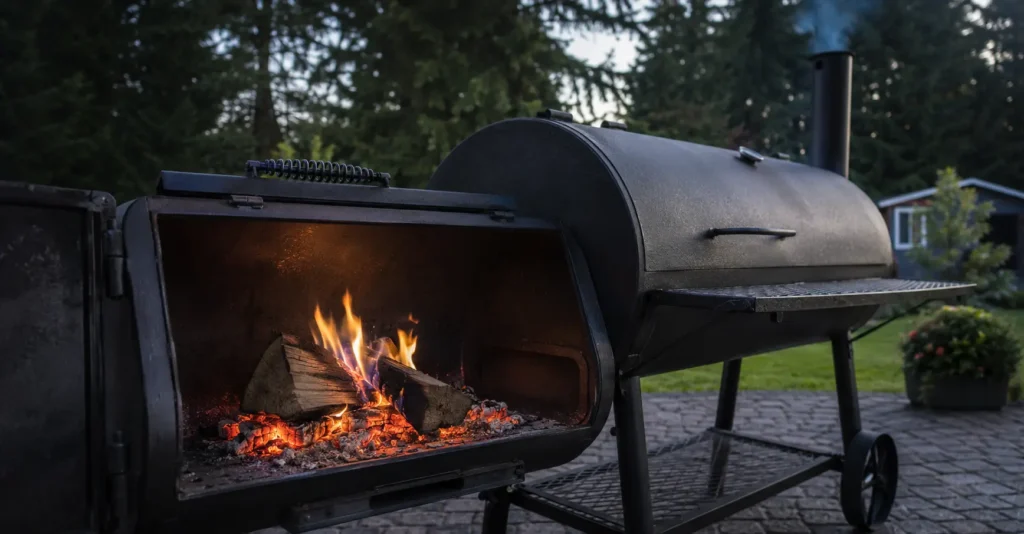
Selecting the best wood for offset smoker cooking will not help if the fire is starved of oxygen. Good smoke comes from efficient combustion rather than loading the firebox with as much wood as possible.
Follow these practices:
- Start with a stable bed of hot coals.
- Use dry, seasoned hardwood splits.
- Keep the chimney or exhaust fully open.
- Control temperature primarily through fire size and intake airflow.
- Add one small split before the coal bed becomes too weak.
- Allow new wood to ignite instead of smoldering.
- Avoid repeatedly opening the cooking chamber.
Thin, nearly invisible blue smoke generally indicates efficient combustion. Thick white smoke usually points to wet wood, insufficient airflow, an oversized split or a fire that is not hot enough.
Beginners can create the initial coal bed with charcoal and then add hardwood splits for flavor. The offset smokers for beginners guide explains this process in more detail.
Woods and Materials You Should Never Use
Not every piece of wood is safe for cooking. Only use natural, identifiable wood that is suitable for smoking food.
Avoid burning:
- Pressure-treated lumber
- Painted, stained or varnished wood
- Plywood, MDF and particleboard
- Furniture scraps
- Construction waste
- Moldy or rotten wood
- Chemically treated pallets
- Ocean driftwood
- Wood contaminated with glue or oil
- Unknown tree species
Pine, fir, spruce, cedar and other resinous softwoods are also poor choices for smoking meat. They can produce harsh smoke and unpleasant flavors. Cedar planks specifically sold for cooking are used as a cooking surface under controlled conditions, not as firewood in an offset smoker.
Should You Remove the Bark?
Clean bark from a healthy, seasoned hardwood split is generally acceptable in moderate amounts. However, bark often holds dirt and moisture and may smolder differently from the wood beneath it.
Remove bark when it is:
- Moldy or rotten
- Covered with dirt
- Holding insects
- Damp while the inner wood is dry
- Separating heavily from the split
There is no need to remove every piece of clean bark, but the majority of your fuel should consist of sound, seasoned hardwood.
Should You Soak Wood Before Smoking?
Do not soak wood splits before placing them in an offset smoker. Water delays ignition, lowers combustion temperature and encourages thick steam and smoke.
An offset smoker needs dry hardwood and sufficient oxygen to maintain a small, clean-burning fire. Soaking wood does not make it burn significantly longer in a useful way; it primarily makes efficient combustion more difficult.
Common Wood-Smoking Mistakes
Using Green or Wet Wood
Wet wood wastes heat while its moisture evaporates. It also increases the likelihood of heavy smoke, unstable temperatures and bitter flavor.
Adding Too Much Wood
More smoke does not automatically create better barbecue. Excess wood can overwhelm the meat and make temperature management difficult.
Closing the Chimney
Restricting the exhaust traps stale smoke and reduces airflow through the firebox. Keep the chimney open and manage heat through fire size and intake airflow.
Using Oversized Splits
Large pieces may take too long to ignite in a small firebox. Use smaller splits that catch fire quickly and maintain a consistent coal bed.
Chasing Constant Visible Smoke
Clean smoke can be extremely thin or almost invisible. Judge the fire by its combustion, aroma and smoker performance rather than trying to produce thick clouds.
Ignoring Food Safety
Wood selection affects flavor, but it does not determine whether meat is safe to eat. Monitor both cooking-chamber and internal meat temperatures with reliable thermometers. Review the USDA smoking and food-safety guidelines when preparing meat and poultry.
Frequently Asked Questions
Oak is the best wood for an offset smoker for most cooks because it burns steadily and produces a balanced smoke flavor. It works with beef, pork, lamb and poultry and can be combined with stronger or sweeter woods.
Oak is the best all-purpose wood for brisket. Hickory creates a stronger traditional flavor, while mesquite can be used sparingly for a more intense Texas-style result. Oak and cherry make an excellent balanced blend.
Yes. Blending woods allows you to balance heat and flavor. Oak can serve as the primary fuel, with hickory added for strength or apple and cherry added for sweetness.
Wood splits or chunks are generally better than chips in a traditional offset smoker. Chips burn quickly and can produce short bursts of smoke. They are more suitable for grills, smoker boxes and some smaller cooking devices.
Freshly cut or green wood should not be used. It contains excessive moisture, burns inefficiently and can create dense smoke and bitter flavors. Season and test the wood before cooking with it.
Many backyard offset smokers require one small split approximately every 30 to 45 minutes. However, smoker size, weather, split size and cooking temperature all affect timing. Add fuel according to the condition of the fire rather than following a rigid schedule.
No. Thick white smoke commonly indicates incomplete combustion, wet wood or insufficient airflow. Aim for a clean fire that produces thin, light blue or nearly invisible smoke.
Clean bark is generally acceptable, but damp, dirty, moldy or rotten bark should be removed. Use sound, properly seasoned hardwood for the majority of the fire.
The Best Choice for Most Pitmasters
Oak is the best wood for offset smoker cooking when you need a dependable, versatile option. It provides consistent heat and balanced smoke for nearly every type of barbecue. Hickory is ideal for stronger traditional flavor, while apple, cherry, peach and maple offer a sweeter profile for pork and poultry. Alder is best for fish, and mesquite or walnut should be used carefully with robust meats.
Regardless of species, properly seasoned wood and clean combustion are more important than producing large amounts of visible smoke. Use dry hardwood, maintain airflow and build a small, hot fire. Once you master those fundamentals, experimenting with wood combinations can help you create a signature barbecue flavor.