Using mesquite wood for offset smoker cooking creates one of the strongest and most distinctive flavors in barbecue. Mesquite produces an earthy, bold and slightly sweet smoke that pairs particularly well with beef, lamb and game. However, its intensity means it must be handled more carefully than milder smoking woods.
Mesquite burns hot and produces a large amount of smoke. Adding oversized splits or restricting airflow can quickly result in temperature spikes, thick white smoke and bitter-tasting meat. The goal is to maintain a small, clean-burning fire that produces thin blue smoke rather than clouds of heavy smoke.
An offset smoker gives you direct control over airflow, fuel and smoke exposure, making it an effective cooker for mesquite. With properly seasoned wood, smaller splits and careful fire management, you can enjoy mesquite’s signature flavor without overpowering your food.
This guide explains how to select, prepare and burn mesquite wood for offset smoker cooking, along with the best meat pairings, wood-blending ratios and mistakes to avoid.
1. What Is Mesquite Wood?
Mesquite is a dense wood sourced from trees and shrubs in the Prosopis genus. It is common across the southwestern United States and Mexico, where it has long been used for fuel, cooking and woodworking.
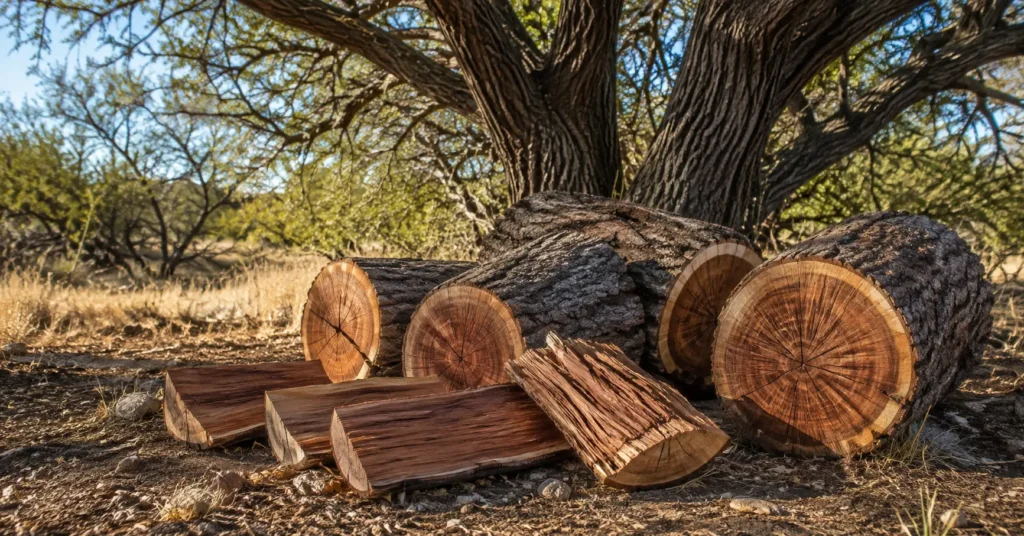
The wood is hard, heavy and capable of producing intense heat. Its availability across Texas and the Southwest also helped it become closely associated with regional barbecue traditions.
Texas A&M Forest Service lists mesquite among the popular Texas smoking woods and notes that it produces a strong, earthy flavor that complements beef.
When using mesquite wood for offset smoker cooking, its density is only part of the story. Mesquite can release a high volume of strongly flavored smoke, so the amount of wood and the quality of combustion matter greatly.
2. Mesquite Wood Flavor Profile
Mesquite smoke has a bold, earthy and campfire-like character. Some people also detect sweet, spicy or peppery notes. When used correctly, it creates a dark exterior and a powerful smoke profile that stands up well against strongly flavored meat.
When combustion is poor or the meat receives too much smoke, those pleasant characteristics can become sharp, acrid or bitter. This is why smoking with mesquite is less forgiving than cooking with oak, apple or pecan.
Think of mesquite as a strong seasoning. You do not need to use large quantities to notice it. A small amount layered over a clean oak fire can provide plenty of mesquite character.
3. Is Mesquite Wood Good for Smoking?
Yes, mesquite is good for smoking when you want a strong flavor and can maintain clean combustion. It is particularly effective for:
- Beef brisket
- Beef ribs
- Steaks
- Lamb
- Goat
- Venison and other game
- Burgers and sausages
- Short, hot barbecue cooks
Using mesquite wood for offset smoker cooking is more challenging with fish, chicken and turkey because these foods absorb smoke quickly. Mesquite can still be used, but a smaller quantity or a blend with mild wood is generally a better choice.
The aim should be to complement the natural flavor of the meat. Texas A&M’s barbecue guidance similarly advises that smoke should complement meat because excessive smoke can overpower it.
4. Mesquite vs Other Smoking Woods
Mesquite differs noticeably from other popular smoking woods:
| Smoking wood | Smoke strength | Flavor | Best pairings | Burn behaviour |
| Mesquite | Very strong | Earthy, bold and slightly sweet | Beef, lamb and game | Hot, intense fire |
| Hickory | Strong | Rich, savory and slightly sweet | Pork, ribs and beef | Steady heat |
| Oak | Medium | Clean, balanced and traditional | Nearly all meats | Stable and predictable |
| Pecan | Medium | Nutty and mildly sweet | Pork, poultry and beef | Moderate burn |
| Apple | Mild | Sweet and fruity | Pork and poultry | Gentle smoke |
| Cherry | Mild–medium | Sweet and fruity | Pork, poultry and beef | Moderate burn |
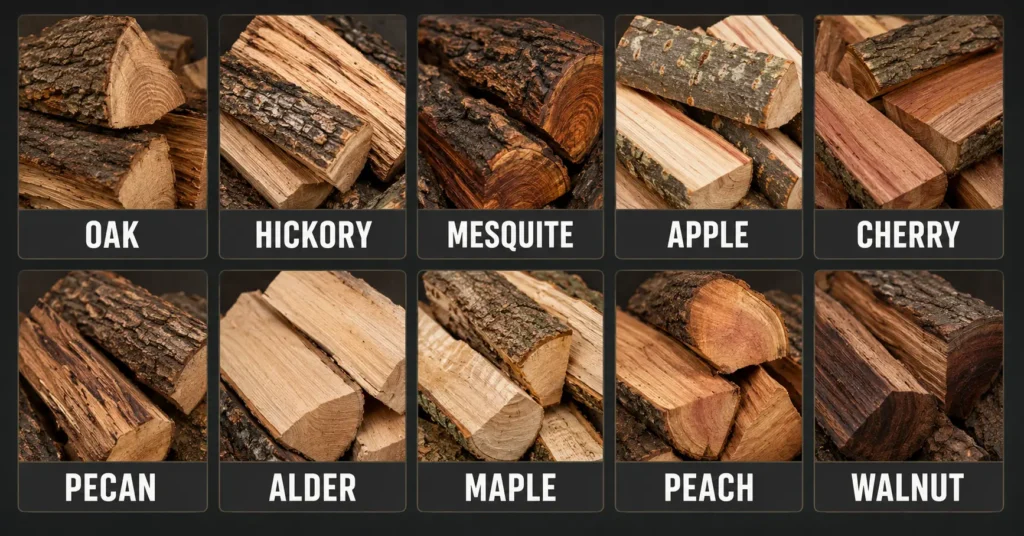
Mesquite supplies a much stronger smoke profile than apple or cherry. It is also more aggressive than oak. If you are deciding between strong woods, read this guide to hickory wood for an offset smoker to compare their flavor and burning characteristics.
5. Benefits of Mesquite Wood in an Offset Smoker
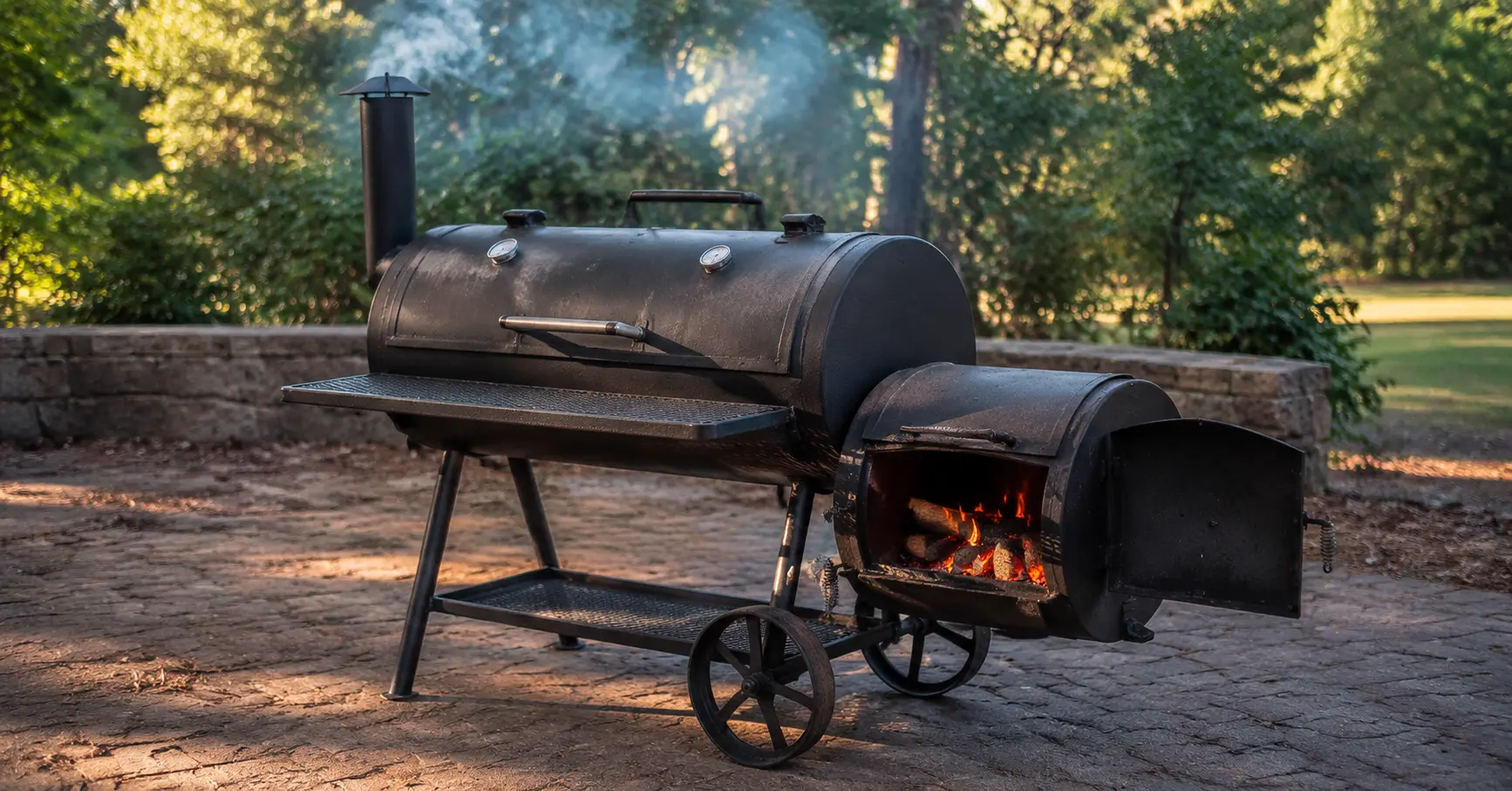
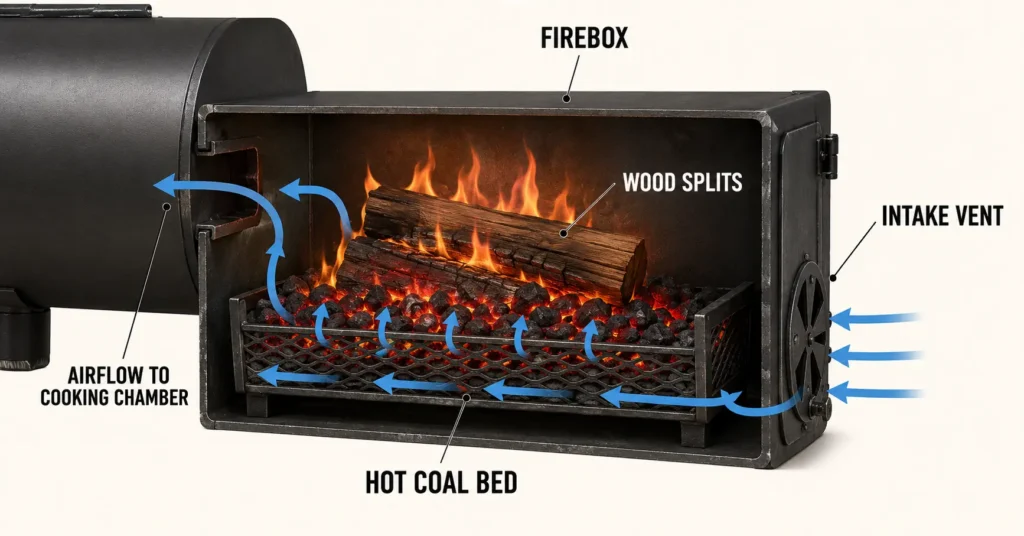
An offset smoker separates the firebox from the cooking chamber. Heat and smoke travel from the firebox, move around the food and exit through the chimney. This indirect arrangement provides several advantages when burning mesquite wood for offset smoker cooking:
- You can control the amount of wood entering the fire.
- Adjustable vents help regulate oxygen and combustion.
- Small splits can be added gradually.
- The chimney draws smoke across the meat.
- The meat is protected from direct flames.
- Mesquite can be blended with a milder base wood.
The smoker does not automatically prevent bitter smoke. You must still maintain airflow and avoid overloading the firebox. Learn the fundamentals in this offset smoker fire management guide.
6. Challenges of Cooking With Mesquite Wood
The principal challenge is intensity. Using too much mesquite wood for offset smoker cooking can deposit more smoke flavor than the meat can handle. Other challenges include:
- Rapid temperature increases
- Heavy smoke after adding large splits
- Bitter flavor from incomplete combustion
- Greater risk of overpowering delicate foods
- More frequent fire adjustments
- Creosote accumulation from a dirty fire
Mesquite should burn with a clean flame over an established coal bed. Thick white or grey smoke usually indicates that the wood is smouldering instead of burning efficiently. Open the intake vent, avoid choking the chimney and allow each new split to ignite properly.
7. Best Meats to Smoke With Mesquite
Beef brisket
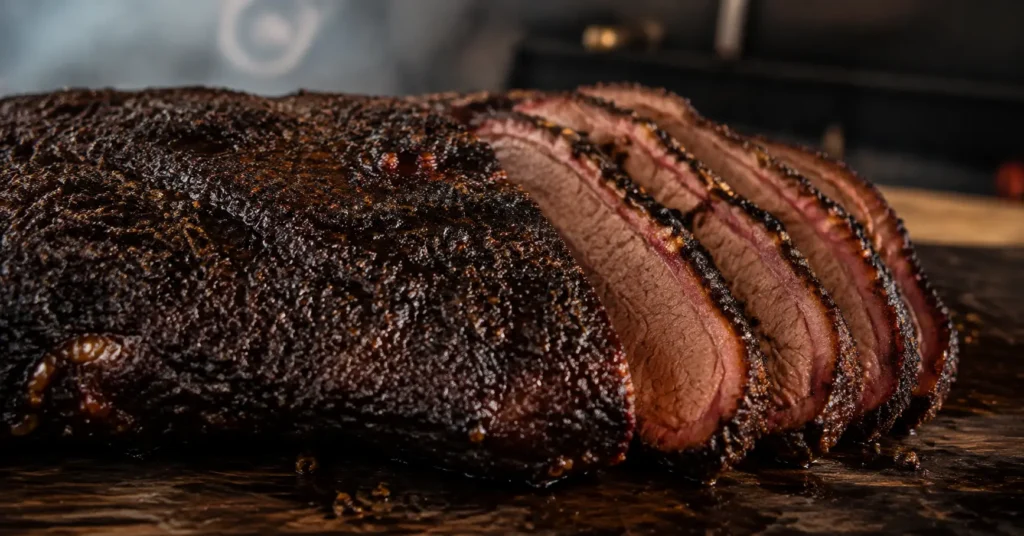
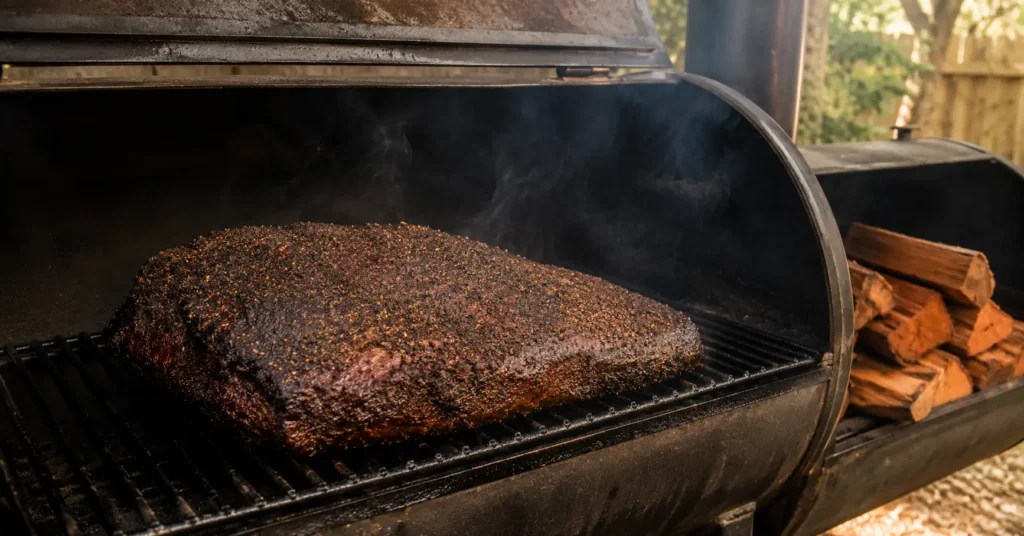
Brisket is one of the best matches for mesquite wood for offset smoker cooking. Its size, fat and rich beef flavor can withstand stronger smoke. However, an entire long brisket cook over pure mesquite may become harsh.
For a more balanced result, establish the fire with oak and add mesquite during the first few hours. Follow this offset smoker brisket recipe for detailed preparation and cooking guidance.
Beef ribs
Beef ribs have enough fat and flavor to complement mesquite. Use clean-burning splits and stop adding mesquite once the bark has developed the desired smoke character.
Lamb and game
Lamb, venison and other game meats pair naturally with mesquite’s earthy notes. Lean game can dry out, so monitor its internal temperature closely and avoid unnecessarily long cooking times.
Pork
Pork shoulder and ribs can be smoked with mesquite, but the wood should normally be blended with oak, pecan, cherry or apple. A lighter blend preserves the sweetness of pork.
Poultry
Use mesquite sparingly with poultry. One small split or chunk mixed with a mild wood is usually sufficient. Pure mesquite smoke can overwhelm chicken before the skin and meat finish cooking.
8. How to Prepare Mesquite Wood for Smoking
Only use clean, untreated mesquite. Never burn painted, stained, pressure-treated, mouldy or chemically contaminated lumber in a cooking fire.
Fresh wood contains too much moisture to burn efficiently. Split the logs to expose more surface area and season them in a dry, ventilated location. Utah State University Extension describes seasoning as drying firewood to approximately 20% moisture and notes that wet wood produces excessive smoke.
Preparation guidelines for mesquite wood for offset smoker cooking include:
- Split the wood into pieces appropriate for your firebox.
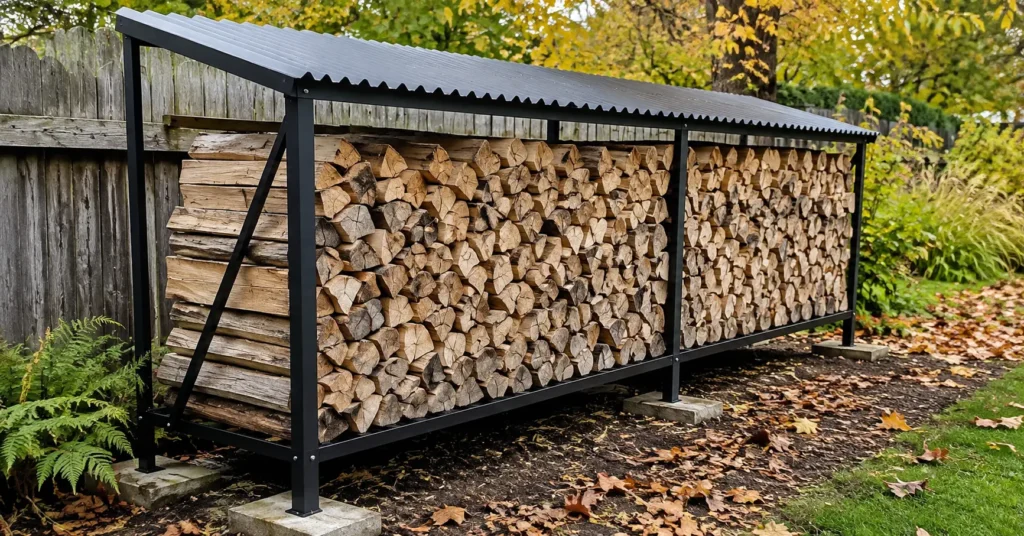
- Stack it above the ground with gaps for ventilation.
- Protect the top of the stack from rain.
- Leave the sides open to encourage airflow.
- Check the centre of a freshly split face with a moisture meter.
- Aim for approximately 15–20% moisture.
- Preheat the next split on top of the firebox before adding it.
Seasoning time depends on log size, climate, storage and initial moisture. Do not rely exclusively on a fixed six- or twelve-month schedule; verify the wood with a moisture meter.
9. Best Mesquite Wood Split Size
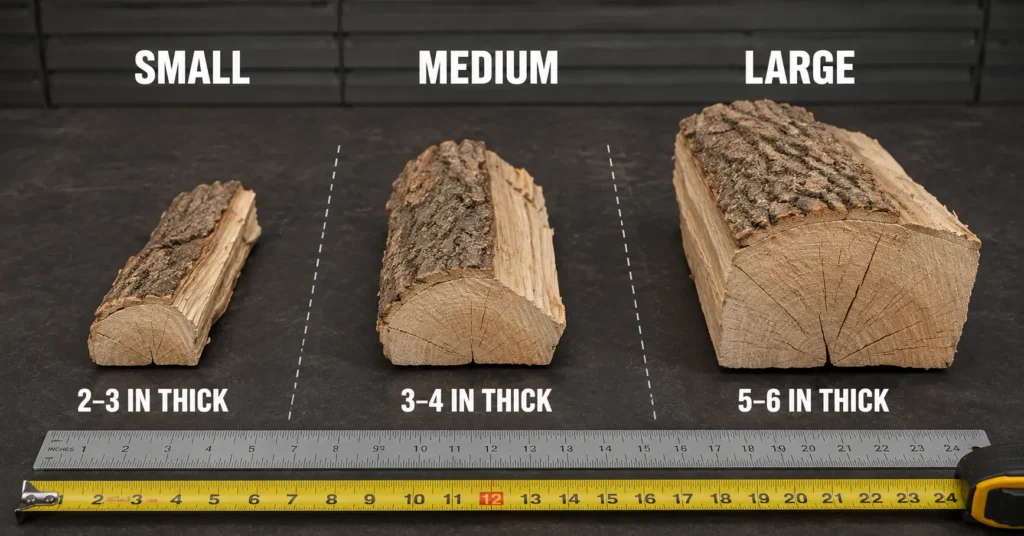
Small, consistent splits make mesquite wood for offset smoker cooking easier to control. Oversized logs may smoulder before igniting and can cause a large temperature spike once fully burning.
For a typical backyard offset smoker, begin with splits approximately:
- 10–12 inches long
- 2–3 inches thick
- Similar in size to a beverage can
This is a starting point rather than a universal rule. A large, heavy steel offset may require bigger splits, while a compact smoker may need thinner pieces. Adjust the size according to the firebox and the amount of heat required.
10. How to Mix Mesquite With Other Woods
Blending is the easiest way to control mesquite’s flavor. Oak works particularly well as the main fuel because it creates a stable coal bed and relatively balanced smoke.
Useful starting ratios include:
| Meat | Mesquite | Milder wood |
| Beef brisket | 25% | 75% oak |
| Beef ribs | 30% | 70% oak or hickory |
| Pork shoulder | 15% | 85% oak, apple or pecan |
| Lamb | 25% | 75% oak |
| Chicken | 10% | 90% apple or cherry |
| Game meat | 25% | 75% oak or pecan |
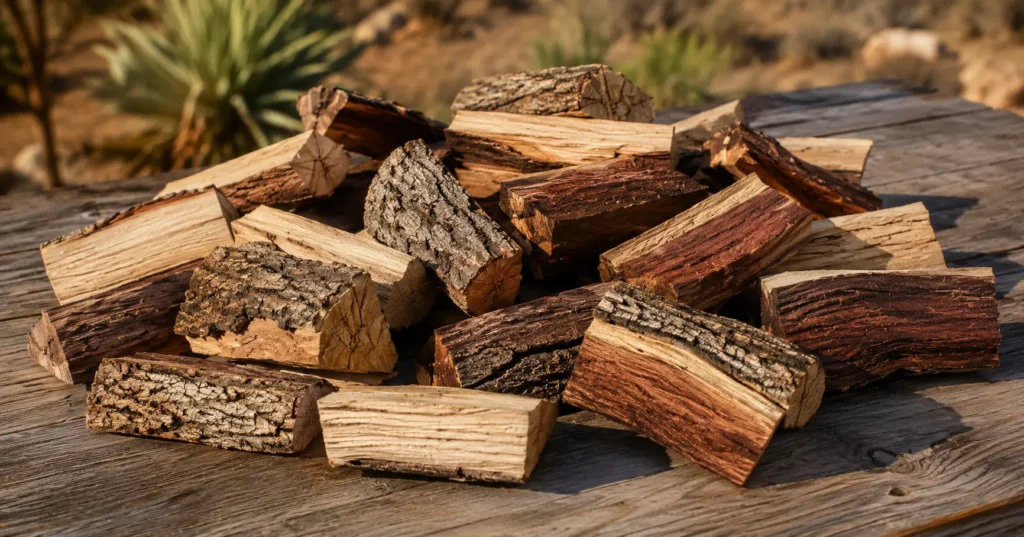
These ratios refer to the approximate amount of wood added, not a laboratory formula. Begin conservatively and adjust future cooks according to taste.
For a long brisket cook, you can add mesquite wood for offset smoker flavor during the early stage and then switch entirely to oak. This produces a recognizable mesquite note without building excessive bitterness over many hours.
11. Setting Up an Offset Smoker for Mesquite
Follow these steps before adding the meat:
- Remove old ash from the firebox.
- Open the chimney damper fully.
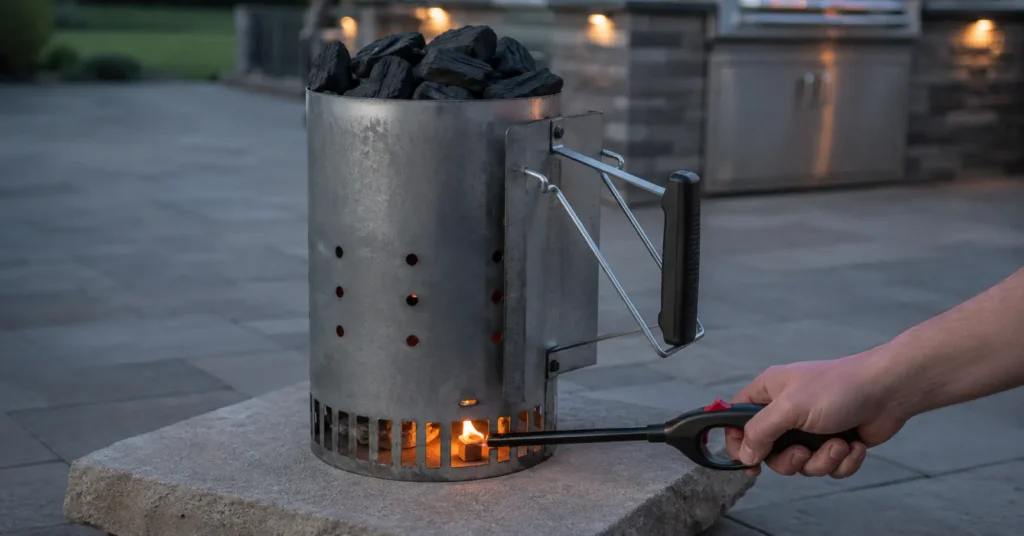
- Light a chimney of charcoal or create a small hardwood fire.
- Wait until a stable coal bed develops.
- Add one small, preheated mesquite split.
- Allow the split to ignite and the smoke to become thin.
- Preheat the cooking chamber.
- Place a grate-level probe near the food.
- Add the meat only after the smoker stabilises.
Never use the exhaust damper as the primary temperature control. Keeping the chimney open encourages proper draft and allows stale smoke to escape. Make smaller adjustments through the fire size and intake vent.
If you are learning the different parts of the cooker, this guide to offset smokers with a side firebox explains the basic airflow and firebox arrangement.
12. Temperature Control With Mesquite Wood
A cooking chamber temperature of approximately 225–275°F (107–135°C) works well for most traditional low-and-slow barbecue. Texas A&M explains that large cuts such as brisket and pork butt are commonly cooked at lower temperatures using indirect heat.
For stable results with mesquite wood for offset smoker cooking:
- Build a small fire rather than filling the firebox.
- Add one split at a time.
- Preheat each new split.
- Keep the exhaust open.
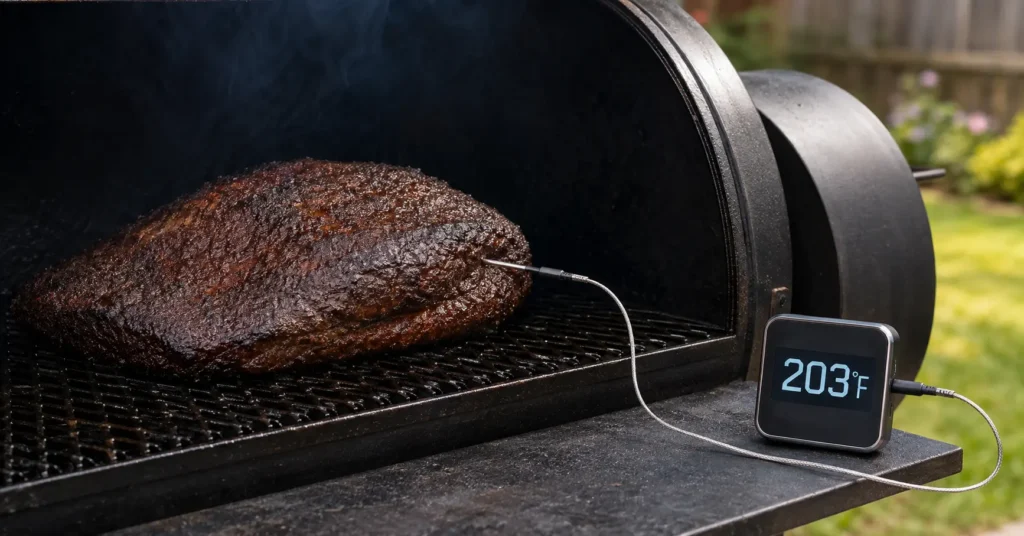
- Use a digital probe at grate level.
- Make small intake-vent adjustments.
- Wait several minutes before making another adjustment.
- Avoid repeatedly opening the cooking chamber.
If the temperature rises rapidly, do not close every vent and suffocate the fire. Stop adding fuel and reduce the intake gradually while maintaining enough airflow for clean combustion.
Cold outdoor conditions create additional fire-control challenges. Use these cold-weather offset smoker tips when wind or low temperatures increase fuel consumption.
13. Low and Slow vs Hot and Fast
Low and slow
Low-and-slow cooking is suitable for brisket, pork shoulder and beef ribs. Maintain approximately 225–275°F and use mesquite in limited amounts. Oak can supply most of the heat while occasional mesquite splits add flavor.
When using mesquite wood for offset smoker low-and-slow cooking, monitor cumulative smoke exposure. Once the bark has developed sufficient flavor, continue the cook with oak or charcoal.
Hot and fast
Hot-and-fast cooking generally operates around 275–325°F and can work well with mesquite because the fire burns actively and the cooking time is shorter. It is suitable for chicken, beef ribs, tri-tip and smaller cuts.
A hotter fire is not an excuse to use excess wood. Clean combustion and controlled smoke remain essential.
14. How to Produce Clean Mesquite Smoke
The best smoke is often thin, light blue or nearly invisible. The aroma should smell clean and pleasant rather than sharp enough to irritate your eyes.
To produce clean smoke:
- Start with dry, seasoned wood.
- Maintain a hot coal bed.
- Use smaller splits.
- Preheat incoming wood.
- Provide adequate oxygen.
- Keep the chimney open.
- Avoid overcrowding the firebox.
- Remove excessive ash that restricts airflow.
- Do not soak wood splits or chunks.
If smoke becomes thick after adding a split, briefly open the firebox door to help it ignite. Once the split burns with a clean flame, return to normal vent control.
15. Common Mesquite Smoking Mistakes
Using too much mesquite
More wood does not automatically produce better barbecue. Too much mesquite wood for offset smoker cooking can cover the natural taste of the meat and leave a bitter finish.
Burning green or wet wood
Wet mesquite struggles to ignite and produces dirty smoke. Test the inside of a newly split piece rather than only checking the dry outer surface.
Restricting airflow
Closing the vents too far causes the fire to smoulder. Control temperature through the amount of burning fuel while preserving a clean draft.
Adding cold, oversized logs
Large, cold logs cool the fire before producing a sudden surge of heat. Use appropriately sized, preheated splits.
Smoking delicate meat for too long
Chicken, fish and vegetables absorb mesquite quickly. Use a small amount or combine it with fruitwood.
Trusting the lid thermometer
The built-in thermometer may not reflect the actual temperature beside the meat. A grate-level digital probe provides more useful information.
Confusing smoke with moisture
A large water pan can help stabilise temperatures, but it cannot correct dirty combustion. Clean smoke depends on dry fuel, adequate heat and oxygen.
Mesquite Smoking Safety Tips
Place the smoker on a stable, non-combustible surface away from buildings, dry vegetation and flammable materials. Wear heat-resistant gloves and use long-handled tools when working around the firebox.
Keep a suitable fire extinguisher nearby. Do not leave an operating smoker unattended, and never use it in an enclosed area because burning charcoal and wood produce carbon monoxide.
Use a calibrated food thermometer to confirm doneness. The USDA safe temperature chart specifies minimum temperatures including:
- Whole cuts of beef, pork, veal and lamb: 145°F with a three-minute rest
- Ground meat: 160°F
- Poultry: 165°F
- Fish: 145°F
Tender barbecue cuts such as brisket and pork shoulder are frequently cooked beyond their minimum safe temperature to break down connective tissue, but safety should always be verified with a thermometer.
Useful Accessories for Smoking With Mesquite
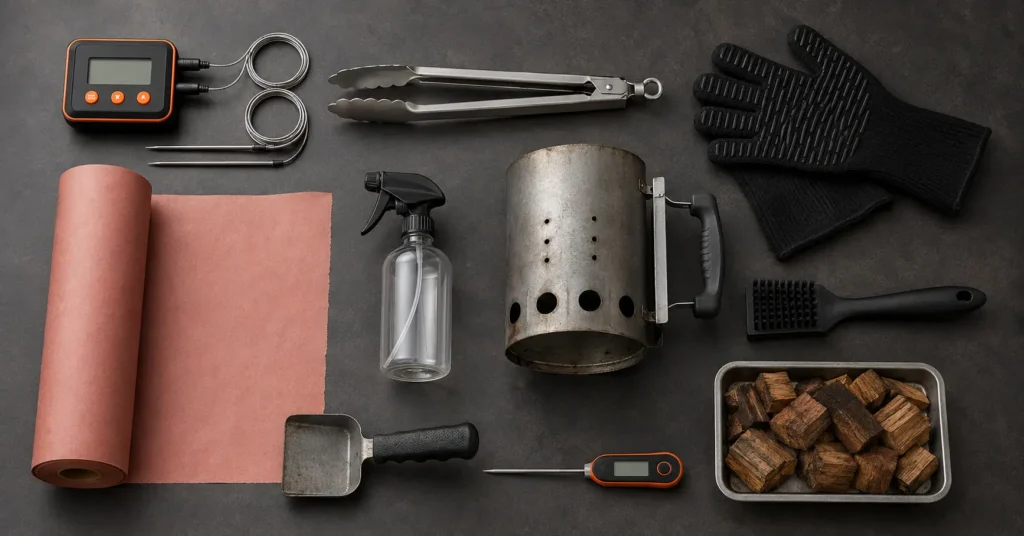
The following tools make mesquite wood for offset smoker cooking safer and more consistent:
- Dual-probe digital thermometer
- Instant-read meat thermometer
- Fire-resistant gloves
- Charcoal chimney starter
- Wood moisture meter
- Fireplace tongs
- Ash shovel
- Small splitting axe
- Heat-resistant firebox seal
- Suitable fire extinguisher
A dual-probe thermometer lets you monitor the cooking chamber and meat simultaneously. A moisture meter helps identify wood that may produce dirty smoke before it enters the firebox.
Frequently Asked Questions
Yes, but pure mesquite wood for offset smoker cooking requires excellent fire control and careful smoke management. For long cooks, blending approximately 20–30% mesquite with 70–80% oak is a safer starting point. Use less for poultry and pork.
Beef brisket, beef ribs, steak, lamb, goat and game are the best matches. These strongly flavored meats can handle mesquite’s bold, earthy smoke better than fish or poultry.
Seasoning time varies according to climate, split size and storage. Six to twelve months may be sufficient in many conditions, but the reliable method is to test a freshly exposed inner face. A moisture level near 15–20% is a useful target.
For low-and-slow smoking, maintain approximately 225–275°F. Hot-and-fast cooking can be performed around 275–325°F. Consistency and clean combustion are more important than maintaining one exact number.
No. Do not soak mesquite splits or chunks. Wet wood takes longer to ignite and can smoulder, producing thick smoke and undesirable flavors.
Yes, but both woods have strong flavors. Use oak as the main fuel and add small quantities of mesquite or hickory. Combining large amounts of both may overpower the food.
Bitterness usually comes from excessive smoke exposure, unseasoned wood, poor airflow or a smouldering fire. Use dry wood, smaller splits and adequate airflow to produce thin, clean smoke.
There is no universal schedule. Add a small split when the temperature begins declining and the previous split has mostly converted to coals. Firebox size, steel thickness, weather and split dimensions all affect timing.
Master the Art of Smoking with Mesquite Wood
Using mesquite wood for offset smoker cooking is an excellent way to create bold, earthy and memorable barbecue. It works especially well with brisket, beef ribs, lamb and game, but its intensity requires restraint.
Start with properly seasoned wood, maintain an active coal bed and add small splits individually. Keep the chimney open and look for thin blue or nearly invisible smoke. For long cooks, use oak as the main fuel and add mesquite selectively during the early smoking stage.
Once you learn to control the heat and smoke, mesquite wood for offset smoker cooking becomes far more predictable. The result is a deep Southwestern-style flavor that enhances the meat without leaving an acrid or bitter finish.