Learning how to control heat in an offset smoker is one of the most important skills every barbecue enthusiast should master. Whether you are smoking brisket, ribs, pork shoulder, turkey, or whole chickens, maintaining a steady cooking temperature directly affects the tenderness, flavor, smoke penetration, and overall quality of your barbecue. Unlike gas grills or pellet smokers, an offset smoker requires active fire management, making temperature control both a science and an art.
Many beginners believe that simply lighting a fire and adding wood is enough to produce great barbecue. In reality, every adjustment you make to the fire, airflow, dampers, and fuel influences the cooking environment. Small mistakes can cause large temperature swings that lead to dry meat, uneven cooking, or excessive smoke flavor. Once you understand how heat moves through an offset smoker, maintaining consistent temperatures becomes much easier.
This complete guide explains how to control heat in an offset smoker using proven techniques trusted by experienced pitmasters. You’ll learn how to build a stable fire, manageairflow, choose the right fuel, reduce temperature fluctuations, and create the ideal cooking environment for authentic low-and-slow barbecue.
Why Heat Control Is So Important
Understanding how to control heat in an offset smoker begins with recognizing why temperature consistency matters. Barbecue is different from grilling because it relies on low temperatures over long periods to slowly break down collagen and connective tissue. This gradual cooking process transforms tough cuts of meat into tender, juicy barbecue while allowing smoke flavor to develop naturally.
When temperatures rise too high, moisture escapes from the meat before connective tissue has enough time to break down. The result is dry brisket, tough ribs, or overcooked pork shoulder. On the other hand, temperatures that remain too low for extended periods can significantly increase cooking time and reduce cooking efficiency.
Consistent heat also produces a more attractive bark and a deeper smoke ring. Stable temperatures allow smoke particles to adhere evenly to the surface of the meat while encouraging proper caramelization throughout the cook. This balance is one of the defining characteristics of professional-quality barbecue.
Understanding How Heat Moves Through an Offset Smoker
Heat enters the cooking chamber from the firebox side, so the grate closest to the firebox usually runs hotter than the area near the chimney. Understanding this temperature difference is more useful than trying to make every part of the smoker exactly the same temperature.
Use a grate-level thermometer to identify the hotter and cooler areas of your smoker. Once you know where those zones are, you can position larger cuts away from the strongest heat, rotate food when necessary, and make smaller fire or airflow adjustments instead of constantly changing the entire setup.
For a broader explanation of the firebox, cooking chamber, chimney, and basic smoker operation, see our smoking with an offset smoker for beginners guide.
Building a Stable Fire for Temperature Control
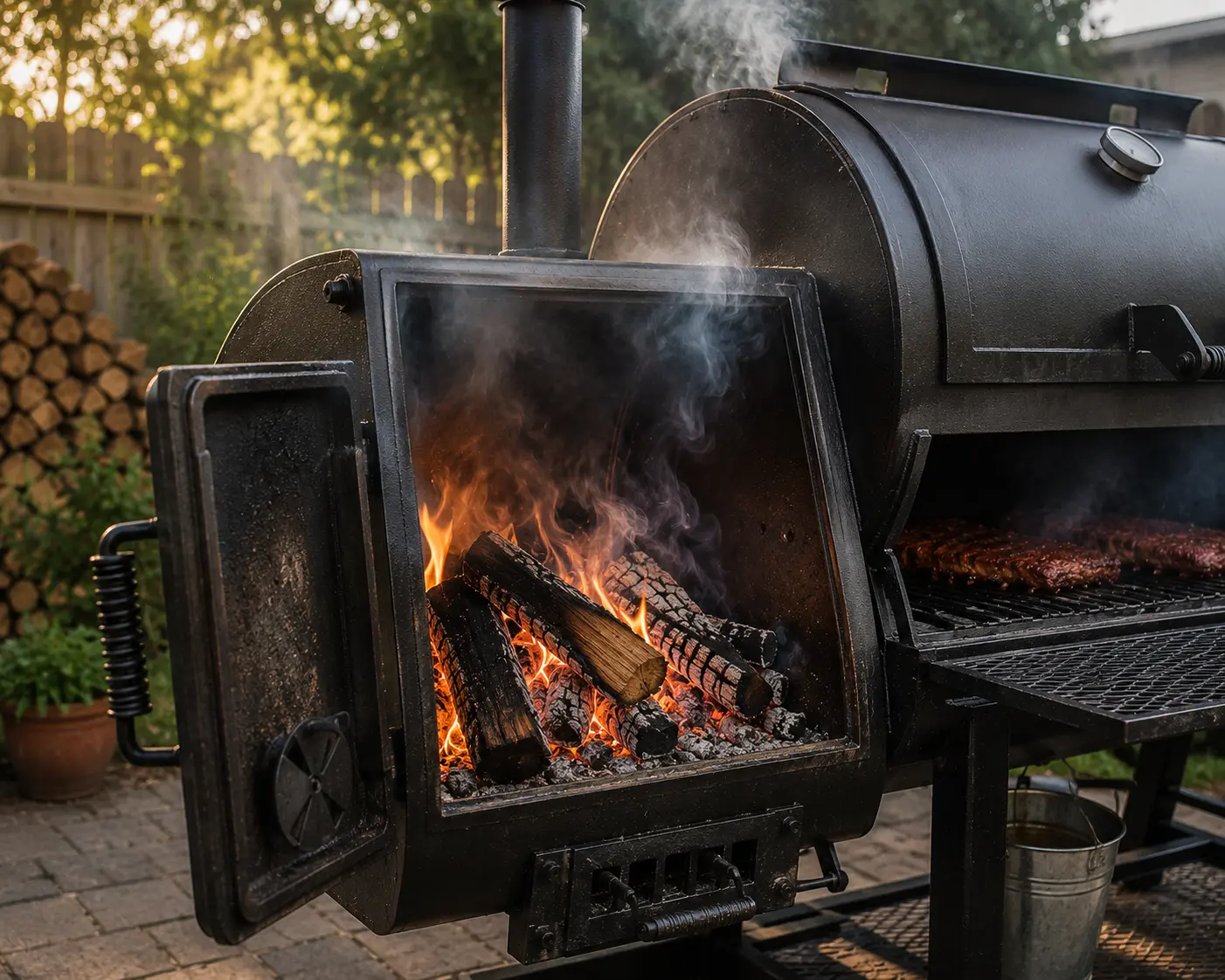
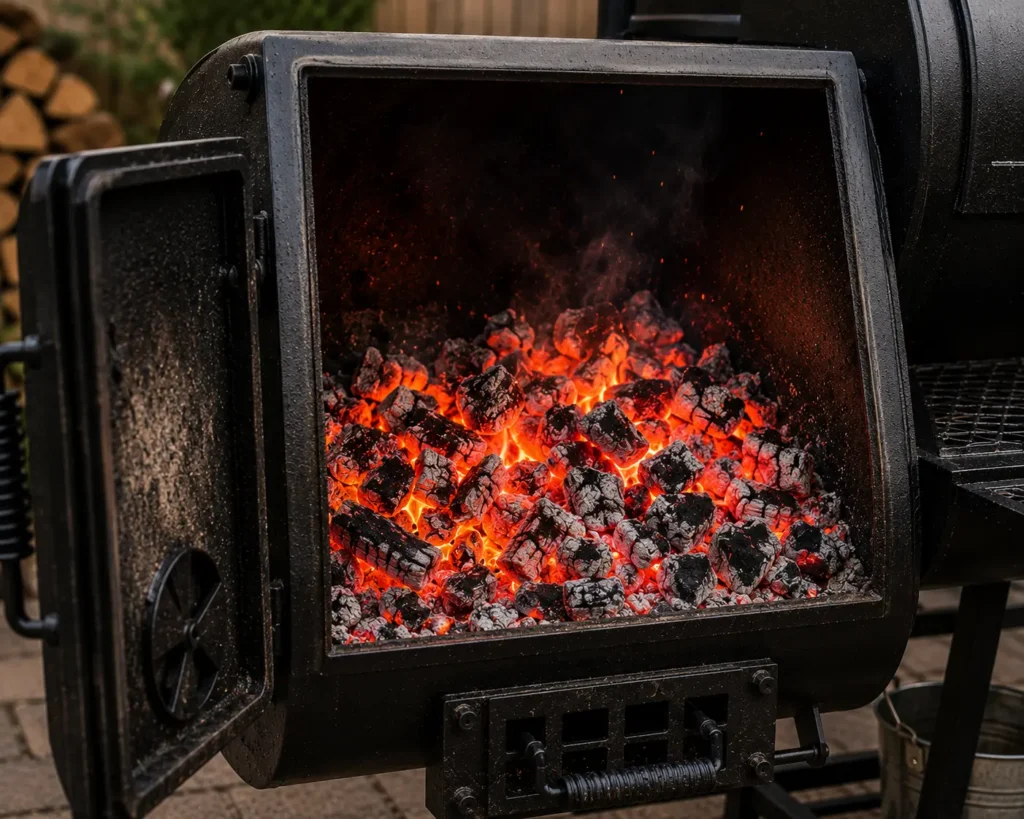
Start with a modest coal bed and add dry, seasoned hardwood in small amounts. The goal is to maintain enough fire to hold the cooking temperature without overloading the firebox.
Add one appropriately sized wood split at a time and allow it to ignite before adding more fuel. If the cooking temperature begins falling steadily, add a small amount of fuel and give the smoker time to respond. Loading several logs at once can create unnecessary temperature spikes and unstable heat.
For temperature control, consistent fuel matters more than using a large quantity at once. Dry wood of similar split size makes each fuel addition more predictable, while wet or oversized pieces can ignite slowly and cause wider temperature swings.
For detailed guidance on building the fire, choosing fuel, and maintaining clean combustion, see our offset smoker fire management guide.
Using Airflow to Fine-Tune Temperature
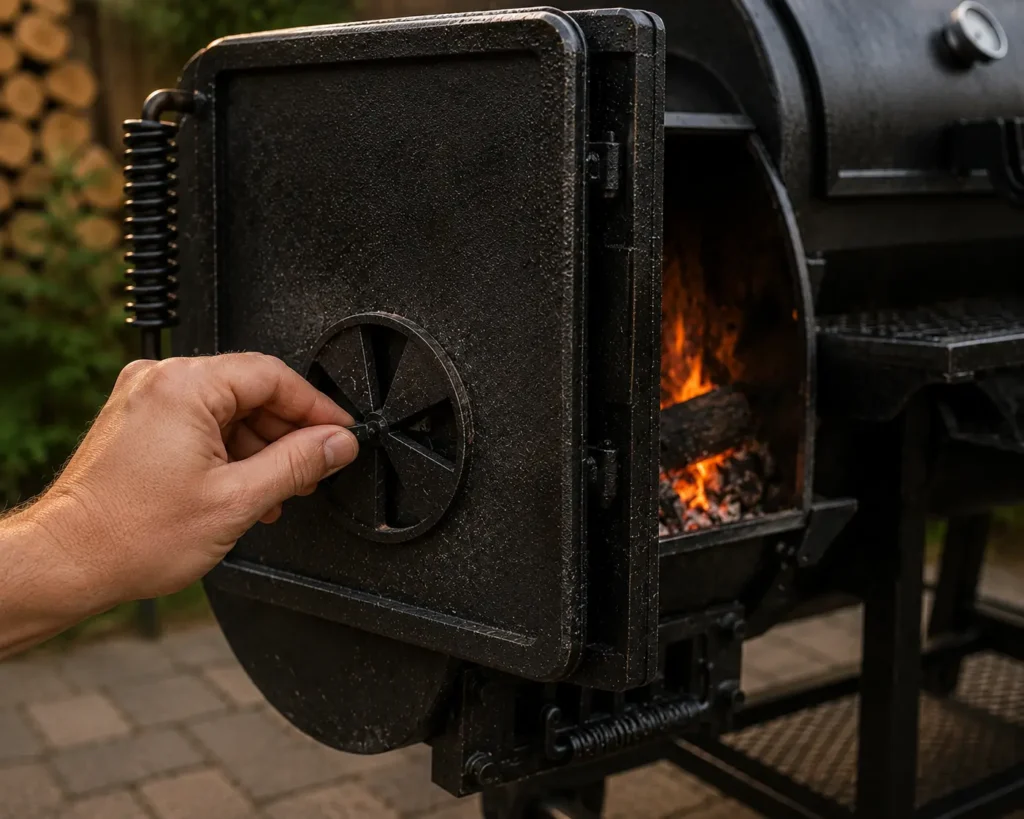
Keep the chimney fully or mostly open during normal cooking so heat and smoke can move freely through the smoker. Use the firebox intake as the main airflow control when you need to make small temperature adjustments.
If the cooking temperature is running low, open the intake slightly and give the fire time to respond. If the smoker is running too hot, reduce the intake gradually rather than closing it completely. Large or rapid damper changes can create wider temperature swings.
Before adjusting airflow, check whether the fire simply needs fuel. Temperature control is more predictable when fuel additions and airflow changes are made separately rather than both at the same time.
How Weather Affects Heat Control
Outdoor conditions can noticeably change how an offset smoker holds temperature. Cold weather, strong wind, and rain can increase heat loss, while hot weather may make the cooker run warmer than expected.
In windy conditions, position the smoker so strong gusts do not blow directly into the firebox intake. Sudden increases in airflow can make the fire burn hotter and cause unexpected temperature spikes.
During cold weather, expect the smoker to use slightly more fuel. Make small adjustments and allow the cooker time to stabilize rather than adding a large amount of wood at once.
The goal is not to eliminate every temperature fluctuation, but to keep the smoker within a steady cooking range despite changing outdoor conditions.
Using a Water Pan to Stabilize Temperature
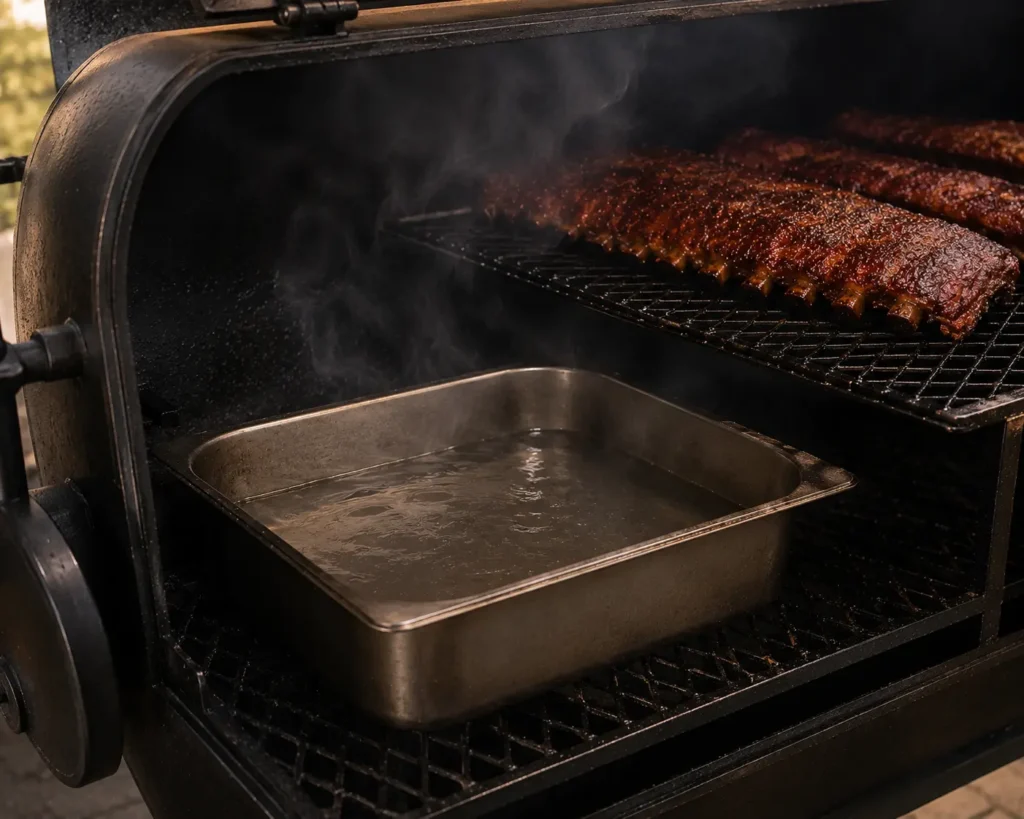
A water pan can help reduce short temperature swings by adding thermal mass inside the cooking chamber. As the water heats, it absorbs energy and can make temperature changes more gradual during a long cook.
Place the water pan where it can help buffer heat without blocking airflow through the smoker. Check the water level during extended cooks and refill it with warm water when necessary to avoid suddenly cooling the cooking chamber.
A water pan is optional rather than essential. Use one if it helps your particular smoker maintain steadier temperatures, while continuing to control the fire primarily through fuel and airflow.
Monitoring Temperature Accurately
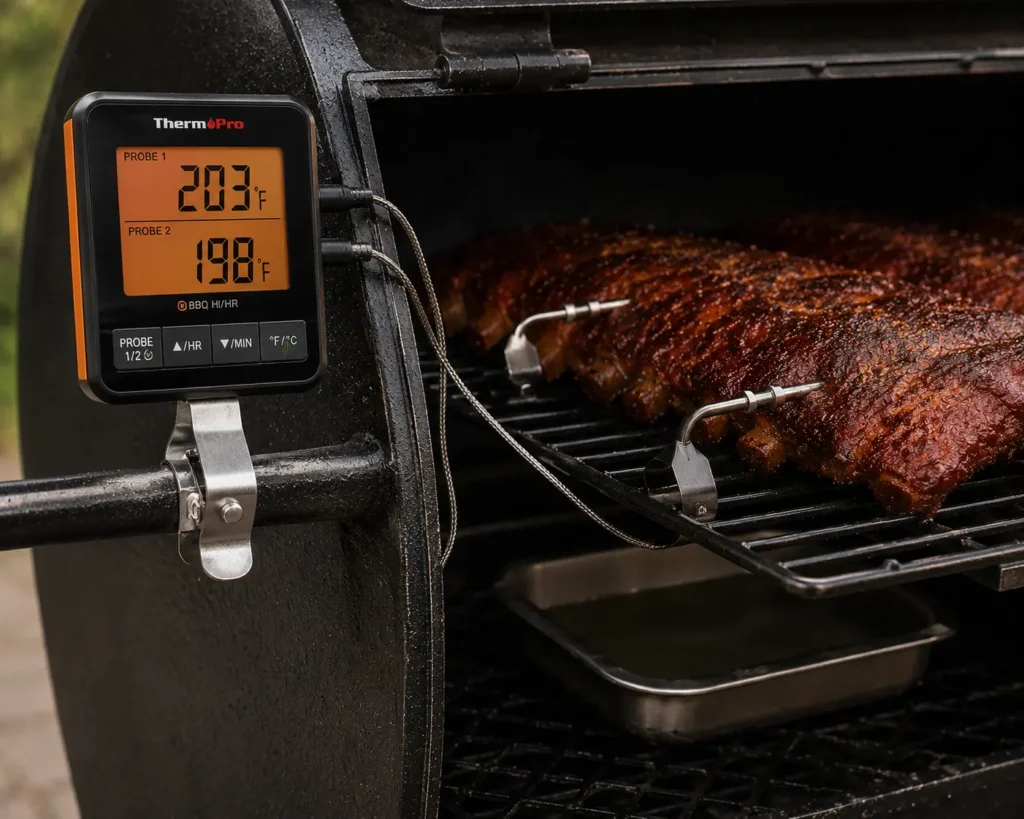
Accurate temperature readings help you make better fire and airflow adjustments. Place a grate-level probe close to the food so you can monitor the actual cooking temperature rather than relying only on a lid-mounted thermometer.
Watch the overall temperature trend instead of reacting to every small fluctuation. If the temperature continues moving steadily up or down, check the fire, fuel, and airflow before making a correction.
For thermometer types, probe placement, and accuracy tips, see our offset smoker thermometer upgrade guide.
Creating a Two-Zone Cooking Setup
The natural temperature difference inside an offset smoker can be used to create hotter and cooler cooking zones. The area nearest the firebox usually receives stronger heat, while the chimney side tends to cook more gently.
Place foods that can handle stronger heat closer to the firebox and move larger or slower-cooking cuts toward the cooler side when necessary. During long cooks, rotate the meat only when one side is clearly cooking faster than the other.
Use these zones to manage food placement rather than constantly changing the fire. Once you understand where your smoker runs hotter and cooler, temperature control becomes much more predictable.
Why Preheating Is Essential
Preheating gives the smoker time to reach a stable cooking temperature before food is added. It also heats the steel cooking chamber so short changes in the fire have less immediate effect on the cooking environment.
Light the fire early and wait until the smoker temperature has stabilized and the fire is burning cleanly. Avoid adding food while the smoker is still producing heavy startup smoke or while the temperature is rapidly climbing.
Use the preheating period to check your grate-level temperature, airflow, and hot spots. Once these are stable, maintaining heat during the cook becomes much easier.
Managing Fuel During Longer Cooks
Long cooks are easier to manage when fuel is added gradually instead of loading the firebox with a large amount at once. Maintain a healthy coal bed and add one appropriately sized split of dry hardwood as the previous piece burns down.
Watch the overall temperature trend and the condition of the fire rather than following a fixed fuel schedule. Smoker size, weather, airflow, and wood size all affect how often additional fuel is needed.
Some offset smokers equipped with a charcoal basket can use a Minion-style charcoal setup for extended burns, but traditional stick-burning offsets are normally controlled with a clean coal bed, seasoned hardwood, and regular fuel additions.
Opening the Lid at the Right Time
Opening the cooking chamber causes a temporary loss of heat, so keep the lid closed whenever possible during a long cook. Frequent checking can create unnecessary temperature fluctuations and extend cooking time.
Open the smoker only when there is a clear reason, such as rotating or wrapping meat, checking doneness, or making an adjustment inside the cooking chamber. Prepare everything you need before opening the lid so it can be closed again quickly.
Use a probe thermometer to monitor temperatures without repeatedly opening the smoker. This helps maintain a more stable cooking environment while giving you the information needed to manage the cook.
Managing Wood Smoke Properly
Smoke quality is a useful indicator of how efficiently the fire is burning. Clean combustion usually produces thin, light smoke or nearly invisible exhaust, while dense white smoke often means the fuel is smoldering, the wood is damp, or the fire needs more oxygen.
If smoke becomes heavy after adding wood, keep adequate airflow and allow the new split to ignite properly rather than immediately restricting the intake. Add dry, seasoned wood in small amounts and avoid overloading the firebox.
When smoke quality and cooking temperature change at the same time, correct the fire first. A small, clean-burning fire with steady airflow is easier to control and produces more predictable heat throughout the cook.
Using Heat Deflectors and Baffle Plates
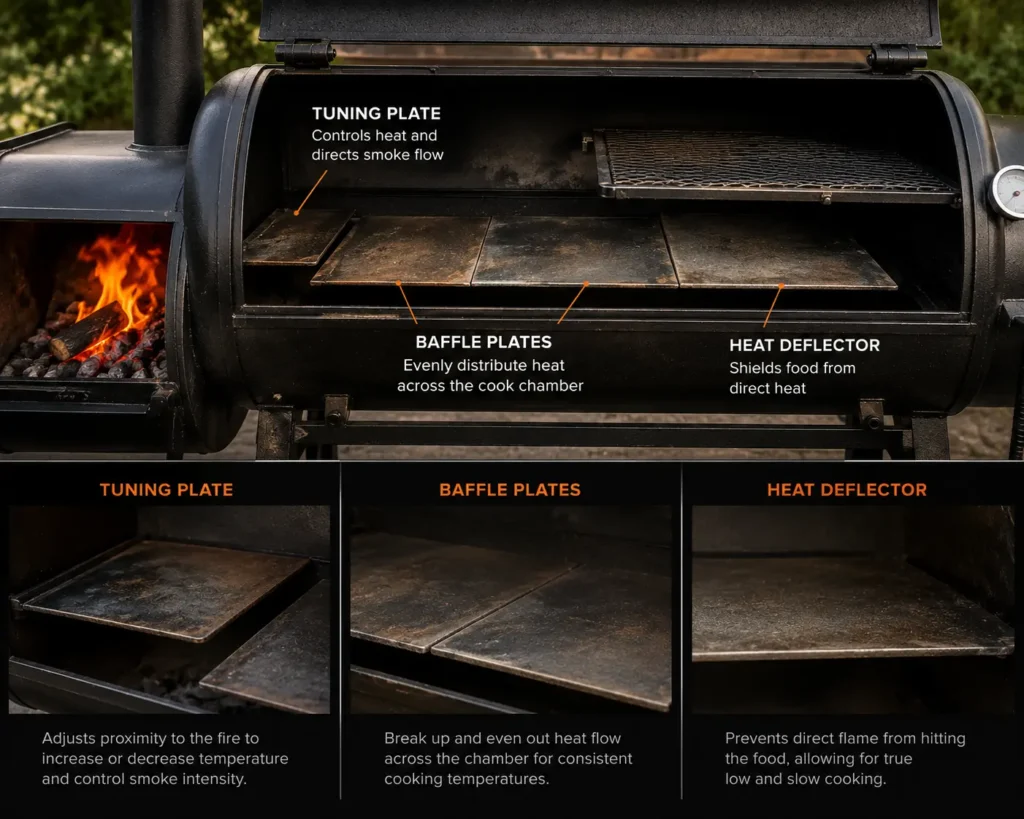
Heat deflectors and baffle plates can reduce the strong hot spot near the firebox by redirecting heat more evenly across the cooking chamber.
They can make temperature control more predictable during long cooks, especially when one side of the smoker consistently runs hotter than the other.
These accessories help balance heat distribution, but they should support—not replace—proper fire size, airflow, and fuel management.
Common Heat Control Mistakes
Most heat-control problems come from making changes too quickly. Adding too much fuel, closing the intake too far, or adjusting several things at once can create larger temperature swings instead of fixing them.
Avoid reacting to every small fluctuation. Give the smoker time to respond after adding fuel or changing airflow, and make only one adjustment at a time so you can see what actually affects the temperature.
Another common mistake is allowing the fire to smolder. Use dry seasoned wood, maintain adequate airflow, and keep a healthy coal bed so the fire burns cleanly and produces steady heat.
Expert Tips from Experienced Pitmasters
Good heat control comes from learning how your own smoker responds rather than trying to hold one exact temperature every minute. Pay attention to how much fuel it uses, how quickly it reacts to airflow changes, and where the hotter areas of the cooking chamber develop.
Keep simple notes after longer cooks, especially when weather, wood size, or airflow settings are different. This makes it easier to repeat successful setups and understand what caused larger temperature swings.
Most importantly, make small corrections and give the smoker time to respond. Consistent fire management and patience usually produce better results than constantly adjusting dampers or adding fuel.
Frequently Asked Questions
For most low-and-slow barbecue, an offset smoker is commonly operated around 225°F to 275°F. The best target depends on the meat, smoker setup, and cooking method, so focus on maintaining a steady range rather than one exact temperature.
An offset smoker may lose heat when the fire is too small, fuel is burning down, airflow is restricted, or cold and windy weather increases heat loss. Check the coal bed, use dry seasoned wood, keep airflow steady, and make small adjustments rather than adding a large amount of fuel at once.
Charcoal is useful for creating a stable coal bed, while dry seasoned hardwood provides the traditional smoke and heat associated with offset cooking. Many cooks use both, but a stick-burning offset can also run mainly on hardwood once a strong coal bed is established.
Add fuel when the existing wood split has mostly burned down and the cooking temperature begins to trend lower. There is no fixed schedule because smoker size, weather, airflow, and wood size all affect fuel consumption. Add one small split at a time and allow the fire to respond before adding more.
Yes. Cold weather, strong wind, and rain can increase heat loss, while hot weather may make the smoker run warmer than expected. In windy conditions, protect the firebox intake from direct gusts and make small fuel or airflow adjustments instead of large corrections.
Master the Art of Heat Control in an Offset Smoker
Reliable temperature control comes from combining a steady coal bed, dry seasoned wood, consistent airflow, and accurate grate-level temperature monitoring. Instead of chasing one exact number, watch the overall temperature trend and give the smoker time to respond before making another adjustment.
As you learn how your particular smoker reacts to fuel, airflow, and weather, maintaining steady heat becomes much more predictable. Preheat the smoker properly, use its hotter and cooler zones, and make one small correction at a time.
Put these heat-control skills into practice on a long cook such as a rack of ribs, where stable temperatures can make a noticeable difference in consistency and tenderness.