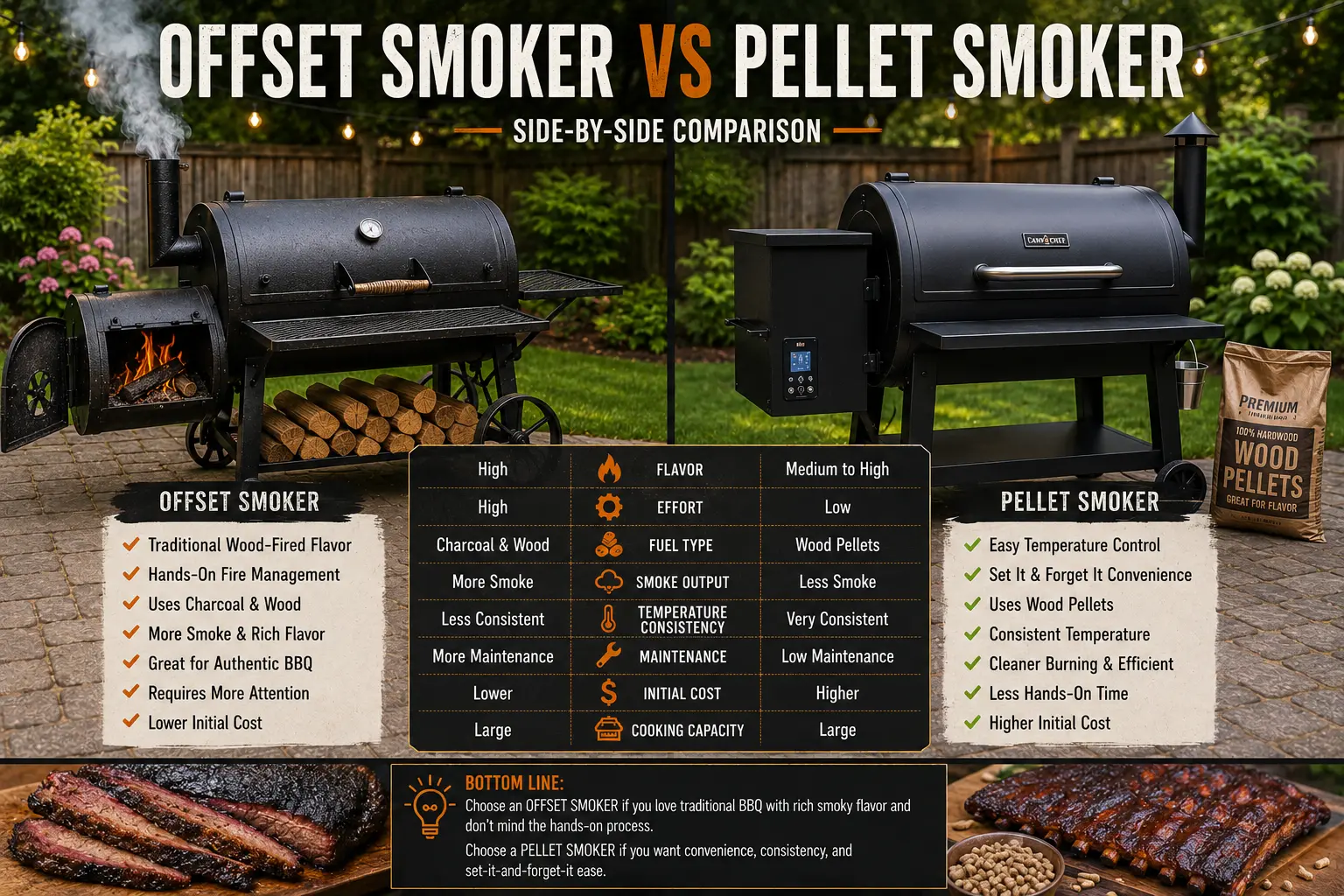
Choosing between an offset smoker vs pellet smoker is one of the biggest decisions every barbecue enthusiast eventually faces. Both smokers can produce delicious low-and-slow barbecue, but they achieve those results in very different ways. One emphasizes traditional fire management and authentic wood-fired flavor, while the other focuses on convenience, automation, and consistent cooking temperatures.
For many beginners, the decision can feel overwhelming. Offset smokers require hands-on attention, regular fire management, and a willingness to learn — the fundamentals covered in our offset smoker guide for beginners — but they reward that effort with deep smoke flavor and complete control over every cook. Pellet smokers simplify the process by automatically feeding wood pellets into the fire, making them an excellent option for people who value convenience and consistency.
Neither smoker is objectively better for everyone. The right choice depends on your experience, cooking style, available time, budget, and the kind of barbecue experience you want. Someone who enjoys tending a live fire may love an offset smoker, while someone looking for dependable weekend cooking with minimal effort may prefer a pellet smoker.
This guide compares offset smoker vs pellet smoker in detail, covering flavor, temperature control, fuel, maintenance, cooking capacity, cost, durability, and overall performance so you can confidently choose the smoker that best fits your needs.
An offset smoker delivers the richest traditional wood-fired barbecue flavor but requires manual fire management and more experience. A pellet smoker automatically controls temperature using wood pellets and digital electronics, making it easier to operate while still producing excellent barbecue. Choose an offset smoker for authentic pitmaster cooking and a pellet smoker for convenience and consistency.
Understanding Offset Smokers
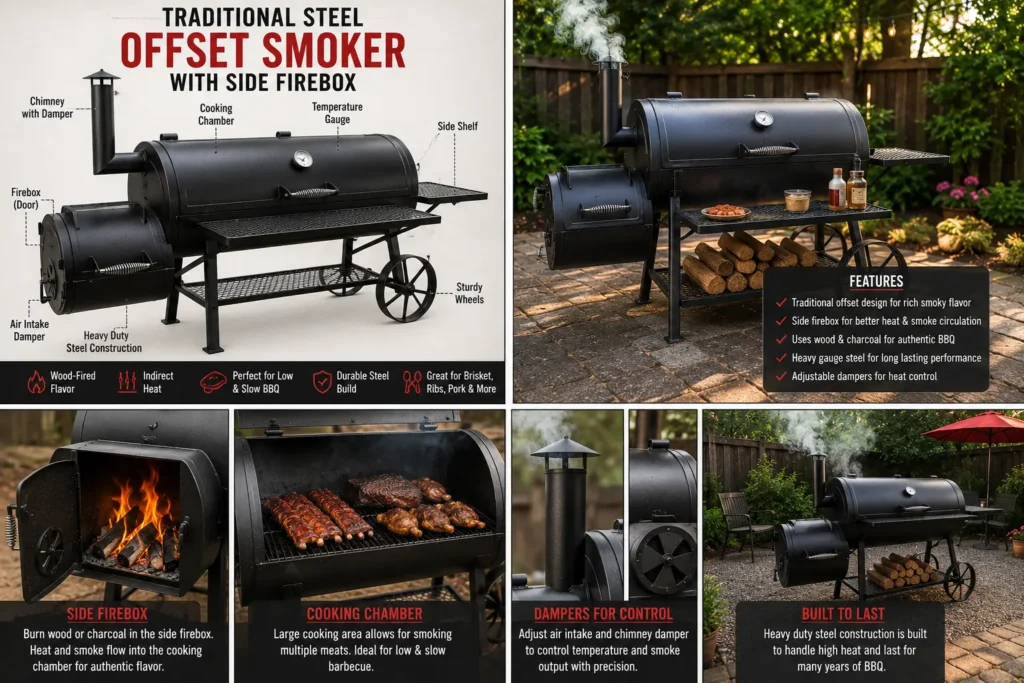
An offset smoker is the traditional style of barbecue smoker that many pitmasters use to create authentic low-and-slow barbecue. It consists of two separate chambers: a side-mounted firebox where wood or charcoal burns and a larger cooking chamber where meat cooks using indirect heat.
As the fire burns, heat and smoke travel naturally from the firebox through the cooking chamber before exiting through the chimney. This continuous flow surrounds the meat with clean smoke, gradually building bark while keeping the food tender and juicy.
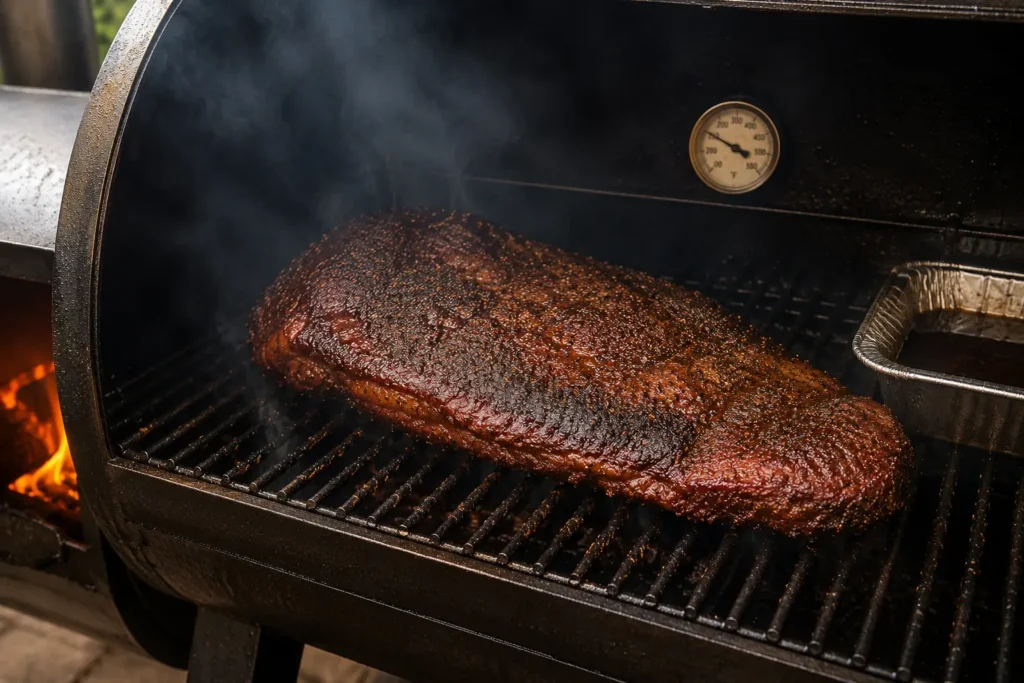
Because the fire is completely separate from the food, offset smokers excel at cooking brisket, ribs, pork shoulder, turkey, and other large cuts that benefit from long cooking times.
One of the biggest attractions of an offset smoker is the amount of control it provides. The cook manages airflow, fuel, and temperature throughout the entire process, allowing experienced pitmasters to fine-tune every aspect of the barbecue.
How an Offset Smoker Works
Operating an offset smoker revolves around maintaining a clean-burning fire. Our full offset smoker fire management guide covers this process in depth, but here is the general idea.
Wood or charcoal burns inside the firebox, producing heat and smoke. Fresh air enters through adjustable intake dampers, feeding oxygen to the fire. The heated smoke then moves horizontally through the cooking chamber before leaving through the chimney.
Temperature is controlled primarily by adjusting airflow rather than constantly opening the smoker. More oxygen increases combustion and raises cooking temperatures, while reducing airflow slows the fire and lowers heat.
During long cooks, additional wood splits are added regularly to maintain a stable fire. This hands-on process requires practice, but many barbecue enthusiasts consider it one of the most enjoyable parts of traditional smoking.
Pitmaster Insight: Experienced pitmasters usually keep the chimney fully open throughout the cook. They regulate temperature using the intake vent instead of restricting smoke from leaving the cooking chamber.
Advantages of an Offset Smoker
Authentic Wood-Fired Flavor: Nothing matches the deep smoke profile produced by burning natural hardwood. Different wood species such as oak, hickory, pecan, apple, and cherry each contribute unique flavor characteristics that allow you to customize every cook.
For barbecue purists, this authentic smoke flavor remains the biggest reason to choose an offset smoker.
Complete Fire Control: Unlike automated smokers, offset smokers allow you to control every aspect of combustion. You decide how much fuel to add, when to add it, how much airflow the fire receives, and how aggressively the smoker burns.
This flexibility makes it possible to adapt to changing weather conditions and different cuts of meat.
Large Cooking Capacity: Most offset smokers feature spacious cooking chambers capable of handling multiple briskets, several pork shoulders, numerous racks of ribs, or large quantities of chicken simultaneously.
This makes them ideal for backyard parties, family gatherings, competitions, and catering.
Long-Term Durability: High-quality offset smokers are often constructed from heavy-gauge steel that retains heat exceptionally well. With proper maintenance and regular seasoning, many premium offset smokers remain in service for decades.
Did You Know? Many championship barbecue teams still compete using traditional offset smokers because of the unmatched smoke flavor they can produce during long cooks.
Challenges of Using an Offset Smoker
While offset smokers produce outstanding barbecue, they also require more attention than any other smoker style.
Managing a wood fire for 10 to 14 hours demands patience, practice, and continuous monitoring. Small mistakes in airflow or fuel management can cause temperature fluctuations that affect cooking performance.
Weather also plays a larger role. Wind, cold temperatures, and rain can increase fuel consumption and make maintaining stable temperatures more difficult.
New owners should expect a learning curve before consistently producing competition-quality barbecue.
Understanding Pellet Smokers
Pellet smokers combine traditional wood smoke with modern technology.
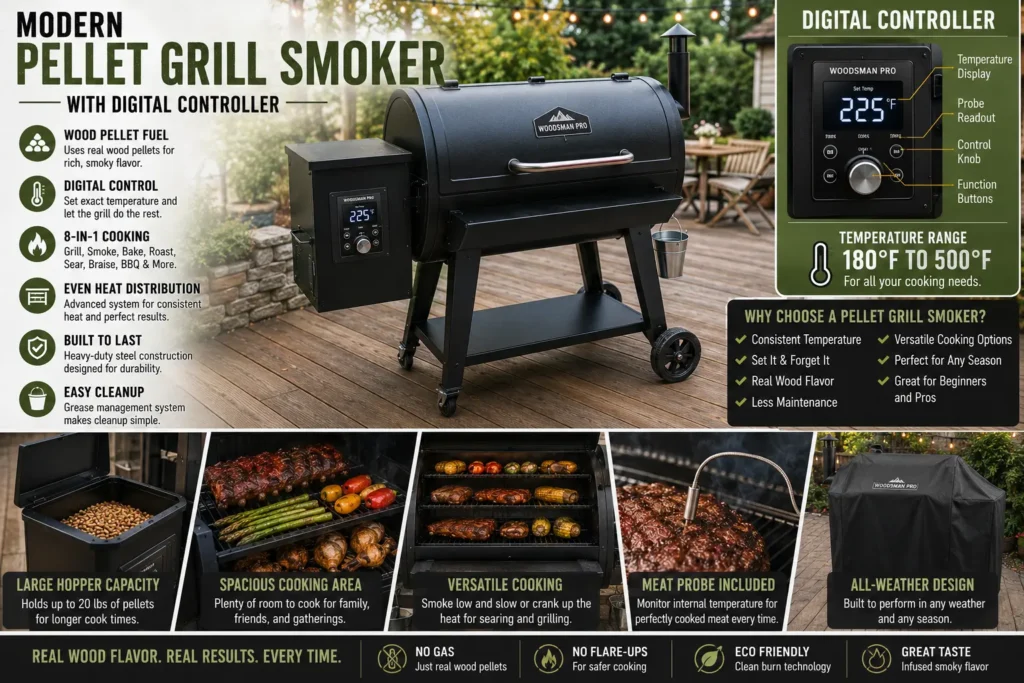
Instead of manually feeding logs into a firebox, these smokers burn compressed hardwood pellets stored inside a hopper. An electric auger automatically delivers pellets into a small burn pot, while an electronic controller adjusts fuel delivery to maintain the selected cooking temperature.
This automation eliminates much of the work associated with traditional smoking.
Most pellet smokers allow users to simply fill the hopper, select a cooking temperature, and let the smoker manage the fire for hours with minimal supervision.
Because of their convenience, pellet smokers have become increasingly popular among beginners, busy families, and backyard cooks who want dependable results without constantly tending a fire.
How a Pellet Smoker Works
Every pellet smoker contains several key components working together.
Hardwood pellets are stored inside a hopper located on the side of the smoker. An electric auger transports pellets into the burn pot where an igniter starts combustion.
A variable-speed fan supplies oxygen to the fire while simultaneously circulating heat and smoke throughout the cooking chamber.
Digital temperature sensors continuously monitor internal heat levels. Whenever the temperature drops below the selected setting, the controller automatically feeds additional pellets into the fire to restore the desired cooking temperature.
This automated process allows pellet smokers to maintain remarkably consistent heat without requiring constant manual adjustments.
Benefits of a Pellet Smoker
Extremely Easy to Use: The biggest advantage of pellet smokers is convenience.
After filling the hopper and selecting a cooking temperature, the smoker handles nearly everything automatically. This “set it and forget it” operation allows beginners to achieve impressive results with very little experience.
Excellent Temperature Stability: Digital controllers maintain highly consistent cooking temperatures throughout long smoking sessions.
Stable temperatures make pellet smokers especially useful for brisket, pork shoulder, turkey, and other meats that require many hours of uninterrupted cooking.
Versatile Cooking Options: Many pellet smokers function as more than just smokers.
Depending on the model, they can smoke, roast, bake, braise, and even grill, making them one of the most versatile outdoor cooking appliances available today.
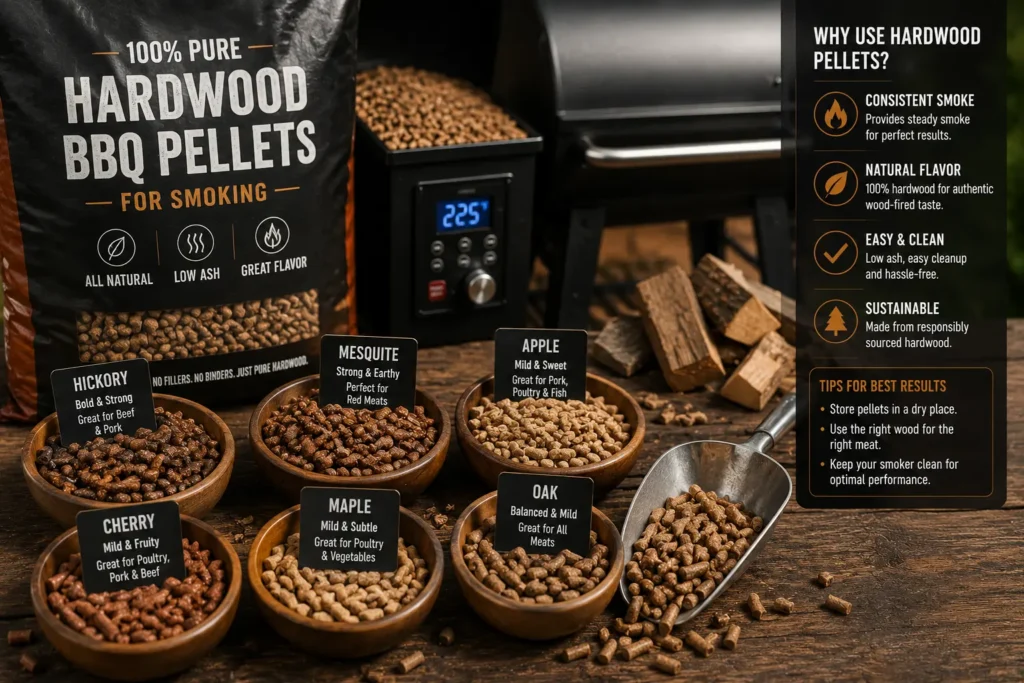
Premium food-grade hardwood pellets burn cleaner, produce less ash, and generate better flavor than inexpensive pellets made with fillers. The Pellet Fuels Institute publishes quality standards for premium hardwood pellets, which is a useful reference when comparing bagged pellet brands. Choosing quality pellets improves both smoke flavor and overall cooking performance.
Offset Smoker vs Pellet Smoker: Head-to-Head Comparison
| Feature | Offset Smoker | Pellet Smoker |
| Smoke Flavor | Rich, authentic wood flavor | Mild, consistent smoke |
| Ease of Use | Requires experience | Beginner-friendly |
| Temperature Control | Manual | Digital automatic |
| Fuel | Wood logs & charcoal | Hardwood pellets |
| Cooking Capacity | Usually larger | Varies by model |
| Maintenance | Moderate to high | Low to moderate |
| Fuel Efficiency | Depends on fire management | Very efficient |
| Initial Cost | Entry models are affordable | Usually more expensive |
| Learning Curve | Steep | Very easy |
Smoke Flavor Comparison
If smoke flavor is your highest priority, the offset smoker remains the clear winner.
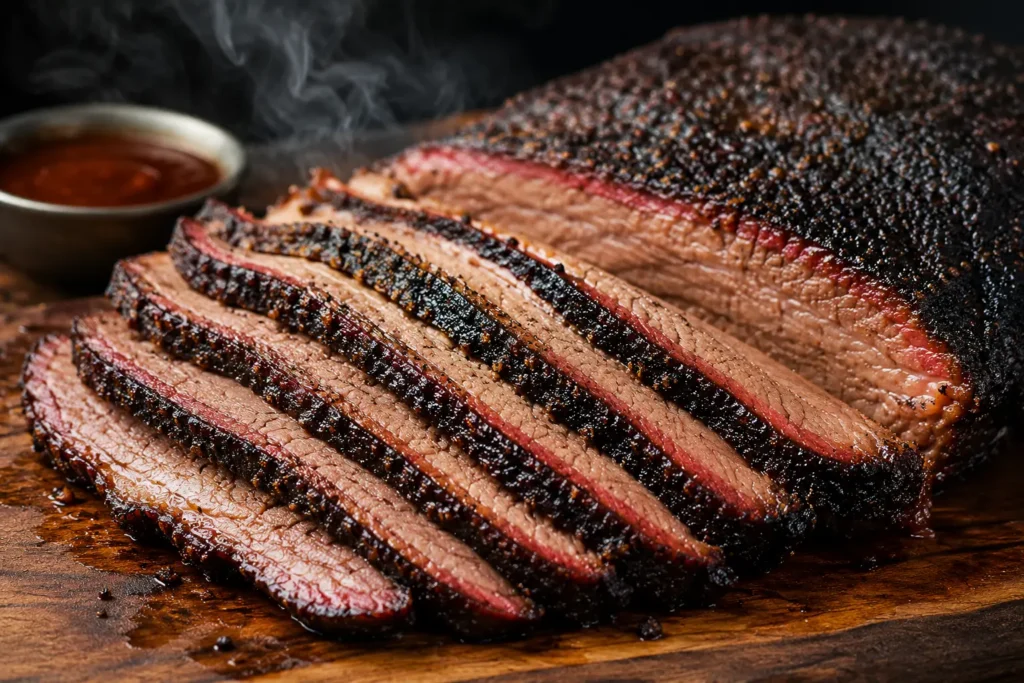
Because hardwood burns naturally inside a live fire, an offset smoker produces the deep, layered smoke profile that traditional Texas-style barbecue is known for. Every wood species contributes unique flavors, allowing pitmasters to customize the final taste.
Pellet smokers also burn real hardwood, but the combustion process is much more controlled. The smoke they generate is generally lighter and cleaner, producing excellent barbecue without the intense smoky flavor associated with traditional offsets.
For many backyard cooks, the difference is perfectly acceptable. However, serious barbecue enthusiasts often prefer the stronger smoke character produced by an offset smoker.
Flavor Tip: If authentic smoke flavor is your main goal, choose an offset smoker. If you prefer a milder smoke profile that’s easy to reproduce consistently, a pellet smoker is an excellent choice.
Temperature Control
One of the biggest differences between these smokers is how they manage heat.
Offset smokers require constant monitoring throughout the cook. The fire gradually burns down, requiring fresh wood splits and occasional airflow adjustments to maintain steady temperatures.
Pellet smokers automate this entire process. Digital controllers monitor cooking temperatures continuously and feed additional pellets whenever more heat is needed.
This automation keeps cooking temperatures remarkably stable with almost no manual effort.
For overnight cooks or busy weekends, many people appreciate the convenience of automatic temperature control.
Ease of Learning
New barbecue enthusiasts usually become comfortable with pellet smokers much faster than offset smokers.
Operating an offset smoker involves learning how different wood species burn, understanding airflow, reading smoke color, managing coal beds, and responding to changing weather conditions.
Pellet smokers remove nearly all of those challenges. Simply select the desired temperature, allow the smoker to preheat, and begin cooking.
While learning traditional fire management can be rewarding, many beginners prefer the confidence that automated cooking provides.
Your first successful brisket is generally easier to achieve on a pellet smoker. An offset smoker rewards patience and practice but requires considerably more attention.
Fuel Consumption
Fuel costs vary depending on cooking style and local prices.
Offset smokers burn charcoal during startup before relying primarily on hardwood splits throughout the cook. Larger smokers naturally consume more wood than smaller backyard models.
Pellet smokers use compressed hardwood pellets, feeding only the amount required to maintain the selected temperature. This precise fuel management often results in excellent fuel efficiency.
Regardless of the smoker you choose, using high-quality fuel produces cleaner combustion and better flavor — and burning only clean, dry hardwood matters for emissions as well as taste, as outlined in the EPA’s Burn Wise program guidance on residential wood burning appliances.
Maintenance Requirements
Every smoker requires routine maintenance, but the amount of work differs considerably.
Offset smokers produce more ash because they burn logs and charcoal directly. Fireboxes require cleaning after every cook, and regular inspections help prevent rust from developing — see our full offset smoker cleaning guide for the complete maintenance routine.
Pellet smokers generate less ash overall, but owners must occasionally vacuum the burn pot, clean grease trays, and inspect electronic components to ensure reliable operation. Because pellet smokers rely on an auger, igniter, and controller, it’s also worth checking the manufacturer’s electrical safety guidance; the CPSC’s outdoor cooking appliance safety tips are a useful general reference for any electrically powered grill or smoker.
Neither smoker is difficult to maintain, but offset smokers generally require more frequent cleaning.
Cooking Capacity
If you regularly cook for large gatherings, capacity becomes an important consideration.
Traditional offset smokers often feature long cooking chambers capable of smoking multiple briskets, pork shoulders, or several racks of ribs simultaneously.
Pellet smokers are available in many sizes, but compact backyard models typically offer less cooking space than similarly priced offset smokers.
For catering, competitions, or frequent family gatherings, a large offset smoker often provides more usable cooking area.
💡 Did You Know?
Many commercial barbecue restaurants continue using large offset smokers because they can cook substantial quantities of meat while producing authentic wood-fired flavor.
Versatility
Pellet smokers are among the most versatile outdoor cooking appliances available.
In addition to smoking, many models can roast vegetables, bake bread, cook pizza, prepare casseroles, and even grill steaks depending on their maximum temperature.
Offset smokers specialize in traditional low-and-slow barbecue. While direct grilling is possible on some models using the firebox or charcoal basket, they aren’t designed to replace a dedicated gas or charcoal grill.
If versatility is your priority, pellet smokers generally offer more cooking options.
Which Smoker Is Better for Beginners?
For most first-time buyers, a pellet smoker provides the easiest introduction to outdoor smoking.
The automatic temperature controller eliminates many of the frustrations beginners experience while learning fire management. This allows new cooks to focus on seasoning, timing, and meat preparation rather than constantly tending a fire.
However, beginners who genuinely enjoy learning traditional barbecue techniques may find an offset smoker far more rewarding over the long term our beginner’s guide to offset smokers is a good place to start if that sounds like you.
The best choice depends less on experience and more on the type of cooking experience you want.
Which Smoker Offers Better Long-Term Value?
Both smokers can provide excellent long-term value when properly maintained.
A high-quality offset smoker built from heavy steel can easily last decades with routine cleaning and occasional re-seasoning. Its simple mechanical design also means fewer components can fail over time. Our complete offset smoker buying guide breaks down pricing tiers if you want to compare specific models.
Pellet smokers include digital controllers, augers, fans, igniters, and electrical components that require occasional maintenance or replacement. However, they reward owners with exceptional convenience and consistent cooking performance.
If durability is your primary concern, heavy-duty offset smokers often have the advantage. If convenience and reliability matter more, many cooks find pellet smokers worth the additional investment.
Frequently Asked Questions
Offset smokers generally produce deeper, richer smoke flavor because they burn natural hardwood logs directly. Pellet smokers create a milder smoke profile that many backyard cooks still find excellent.
Yes. Pellet smokers automatically regulate fuel delivery and temperature, making them much easier for beginners than traditional offset smokers.
Absolutely. Food-grade hardwood pellets are made from compressed hardwood sawdust without artificial flavorings, allowing pellet smokers to produce genuine wood-fired flavor.
Offset smokers typically require more frequent cleaning because they generate larger amounts of ash and soot. Pellet smokers require less routine maintenance but still need regular cleaning of the burn pot and grease management system.
Both can cook outstanding brisket. Offset smokers often develop a thicker bark and stronger smoke flavor, while pellet smokers provide more consistent temperatures and simpler operation throughout long cooks.
Why Understanding the Difference Between an Offset Smoker vs Pellet Smoker Is Worth the Effort
Choosing between an offset smoker vs pellet smoker ultimately depends on the kind of barbecue experience you want. Offset smokers reward patience, skill, and hands-on fire management with unmatched wood-fired flavor, making them the preferred choice for traditional pitmasters and barbecue enthusiasts who enjoy mastering the craft. Pellet smokers, on the other hand, simplify the entire process with automatic temperature control, dependable performance, and exceptional ease of use, making them ideal for beginners and busy backyard cooks.
Neither smoker is universally better—they simply serve different types of barbecue lovers. If you enjoy tending a live fire, experimenting with hardwoods, and producing authentic competition-style barbecue, an offset smoker is likely the right investment. If convenience, consistency, and versatility are more important, a pellet smoker offers an excellent balance of flavor and modern technology.
Whichever smoker you choose, success ultimately comes from using quality fuel, maintaining clean equipment, monitoring temperatures carefully, and practicing your cooking techniques. With the right approach, both offset and pellet smokers are capable of producing tender, juicy, and flavorful barbecue that family and friends will enjoy for years to come.