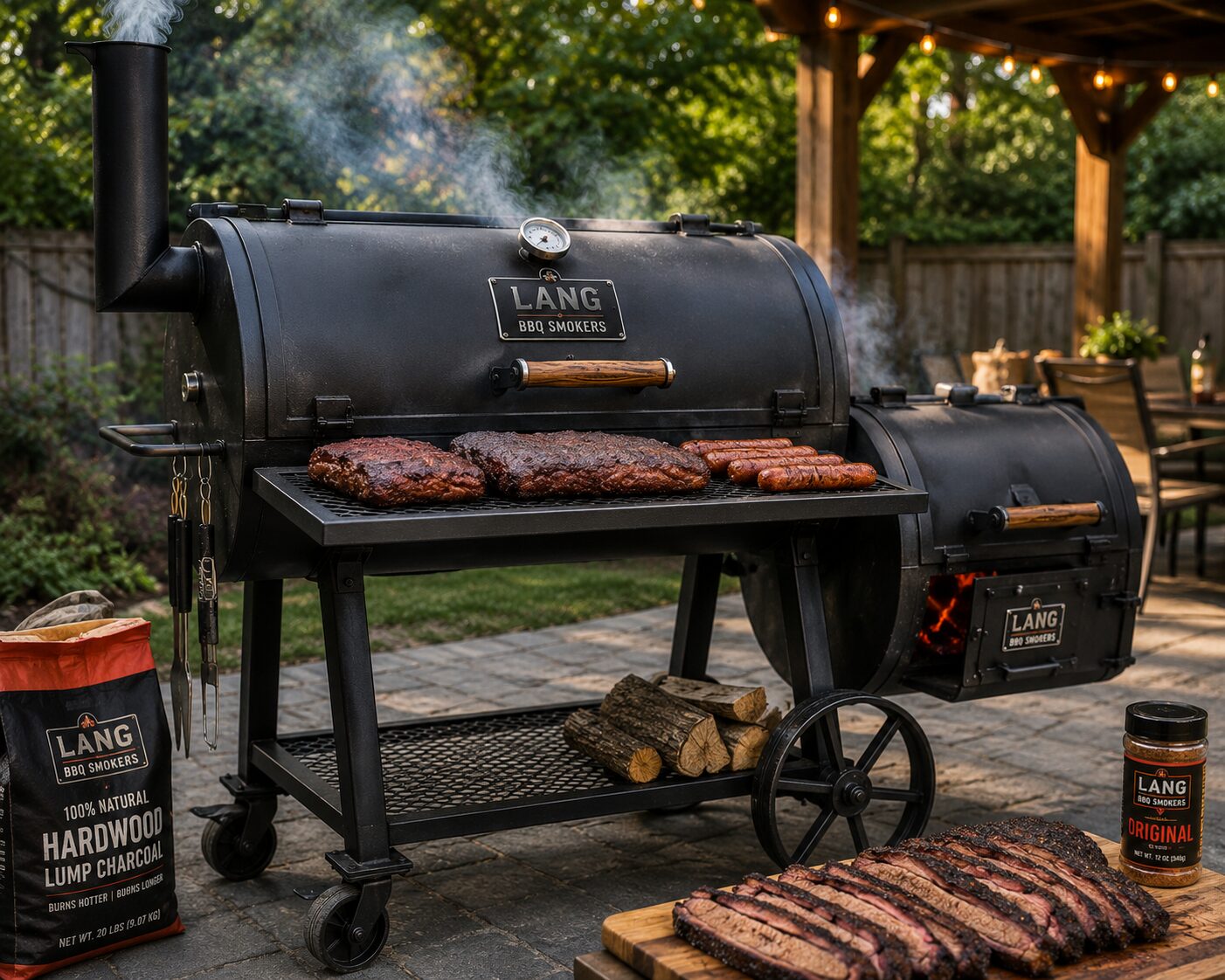
Let’s cut to the chase: the Lang BBQ Offset Smoker is a reverse-flow line built for cooks who want heavy-gauge welded steel and real wood fire — no pellets, no electronics doing the thinking for you. Its signature move is the reverse-flow design, which routes heat and smoke beneath a steel baffle plate before sweeping it back across the cooking chamber.
That roundabout airflow takes the edge off the blast of heat near the firebox and evens out temperatures across the grates — though as with any stick burner, your results still come down to fire size, airflow, weather, and which model you’re running. Lang builds these in sizes ranging from backyard-friendly to full catering rigs.
In this review, we’ll walk through the construction, reverse-flow design, cooking capacity, fire management, fuel use, and the full model lineup — plus the honest pros and cons. By the end, you’ll know whether a Lang fits your cooking style, your space, and your budget.
What Makes a Lang BBQ Offset Smoker Different
The headline difference between a Lang and most standard offsets is the reverse-flow layout. Instead of heat blasting straight from the firebox to the chimney, it travels under a steel baffle to the far end of the cook chamber, then doubles back across the food toward the exhaust. That detour softens the hot spot by the firebox and gives you a far more even cooking environment.
Langs are also all about welded steel and honest live-fire cooking. That heavy steel soaks up heat and smooths out short-term temperature swings — though real-world performance still hinges on smoker size, fire management, airflow, weather, and the wood you’re burning.
There’s nothing electronic here, and that’s the point. You run the temperature with fire size, fuel additions, and the intake and exhaust dampers. Experienced pitmasters love that direct control — but be honest with yourself: this cooker asks for your attention, especially on long cooks, and there’s a learning curve.
If you’re cross-shopping Langs against other offsets, weigh these: usable cooking space, steel thickness and build, firebox size, the reverse-flow layout, overall weight (these are heavy), maintenance, and how much hands-on fire tending you’re actually up for.
Built Like a Tank: Construction and Design
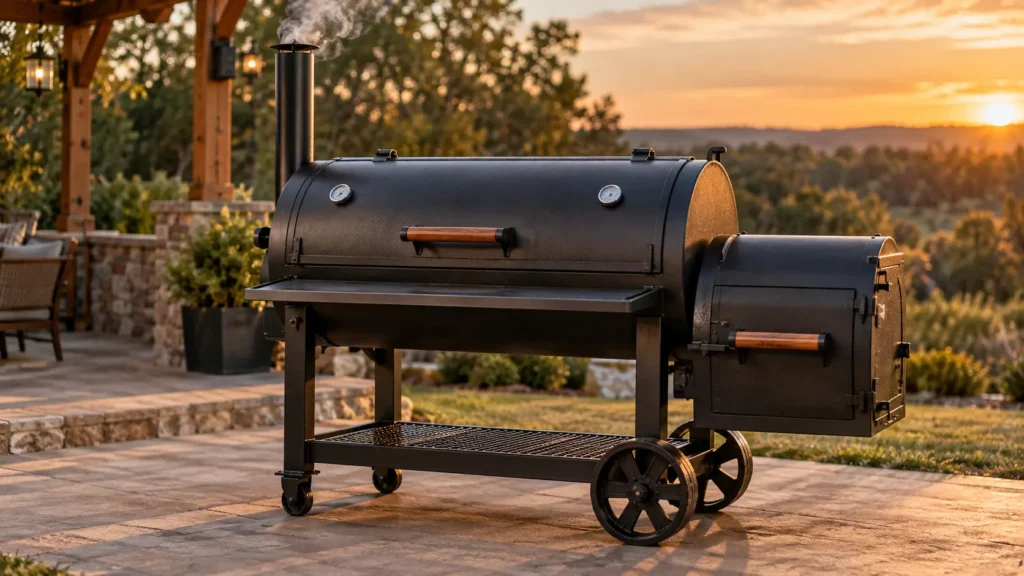
The first thing that hits you about a Lang is the build. Every unit is welded from thick steel made to take screaming-hot, hours-long fires without breaking a sweat. That thermal mass holds heat beautifully, which means fewer of the temperature swings that plague thin-walled offsets.
The welds are the real deal — clean, strong, and they keep smoke where it belongs instead of leaking out of every seam. The cook chamber doors shut tight, so smoke circulates properly before heading out the stack. That sealed-up airflow is a big reason Langs deliver deep smoke flavor without devouring cords of wood.
It’s a working cooker, not a showpiece. Big work shelves give you room to prep and stage trays, the handles stay comfortable through long cooks, and heavy-duty wheels mean you can actually move the thing despite its serious weight — handy whether it lives on your patio or rides to competitions.
Here’s what we appreciate most: nothing about it screams ‘upgrade me.’ Unlike budget smokers that need new grates, gaskets, and thermometers on day one, a Lang shows up with pro-grade components ready for serious cooking. Every detail is built for durability and the long haul.
How Reverse Flow Technology Works
The reverse-flow system is the heart of every Lang — and the reason these cookers have such a loyal following among competition pitmasters and caterers. It’s a patented design, and once you understand what it does for your cooks, you’ll get the hype.
Traditional offset smokers send heat on a one-way trip from the firebox straight to the chimney. The result? A scorching hot zone near the firebox and a lukewarm far end — which is why pitmasters end up shuffling meat around all day to keep everything cooking evenly.
Here’s how it works in practice: a heavy steel baffle plate sits beneath the cooking grates, and heat and smoke travel underneath it to the far end of the chamber before reversing course and flowing evenly back across the food on their way to the chimney. That round trip is what kills the hot spot near the firebox.
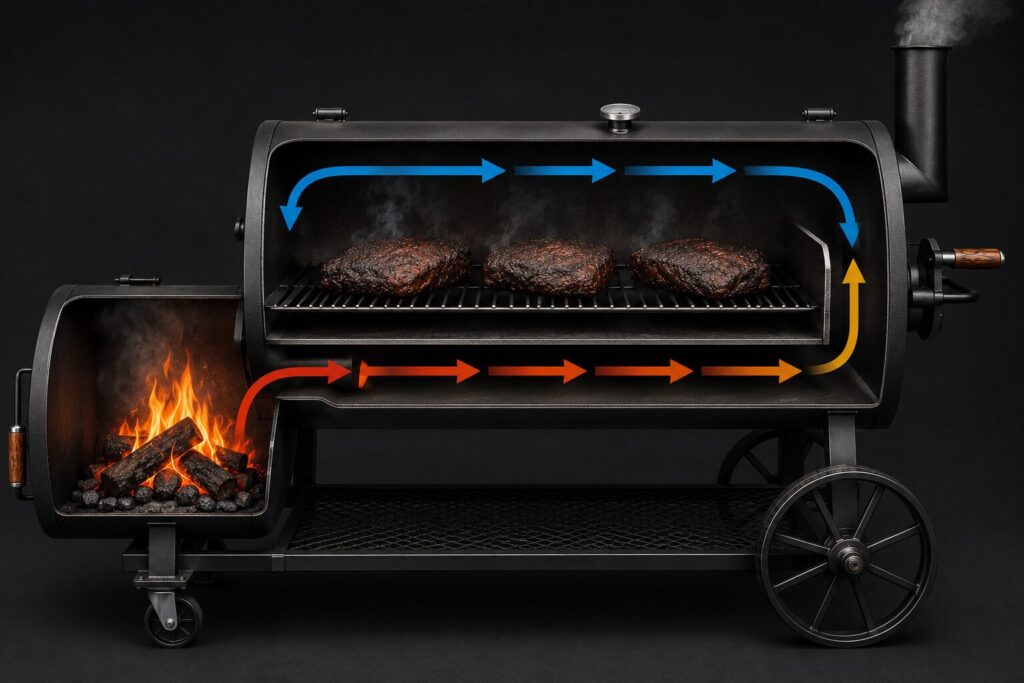
That longer journey pays off in three ways we keep coming back to: heat spreads evenly with far fewer hot and cold spots, moisture lingers in the chamber so meats stay juicy through long sessions, and smoke spends more time circulating around the food, which builds a deeper, more consistent wood-fired flavor.
For big cuts — brisket, beef ribs, pork shoulders, whole turkeys — that even heat means more consistent results and less babysitting. Pro tip: with reverse flow evening out the chamber, you can load the grates edge to edge on long cooks instead of hunting for the ‘good’ spot.
Cooking Capacity: From Backyard to Commercial
Capacity is the other big reason these smokers keep showing up everywhere from patios to competition circuits. The lineup stretches from weekend-backyard size all the way to full catering rigs, so there’s genuinely a Lang for however much barbecue you’re cooking.
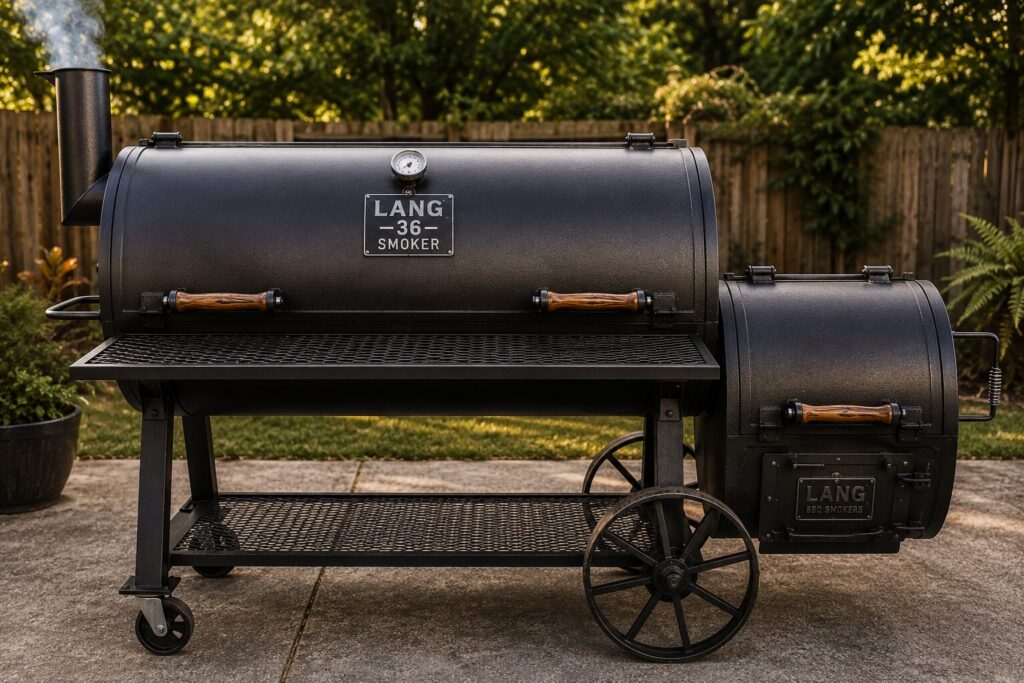
The smaller end of the lineup, like the Lang 36, is the sweet spot for families and weekend entertaining. There’s still room for multiple racks of ribs, whole chickens, pork butts, or a couple of briskets without cramming the chamber.
The Lang 48 and Lang 60 hit the sweet spot for a lot of cooks — substantially more grate space than the patio models, which is why competition teams and small catering operations gravitate to them. You can run multiple large cuts at once and still hold consistent temps across every grate.
Then there’s the Lang 84, the commercial workhorse. It’s built for high-volume production, which is why restaurants, catering companies, and competition teams run it: professional-level output with the same rugged durability as the rest of the line.
One thing we like about the lineup: every model runs the same reverse-flow system. Whether you’re cooking dinner for the family or feeding a few hundred people, the cooking performance stays consistent.
Temperature Control and Airflow
Here’s where the design really earns its keep. The reverse-flow layout naturally steadies cooking temperatures, and the adjustable dampers let you fine-tune airflow through the cook. It’s the difference between managing a fire and constantly chasing it.
It all starts at the firebox intake damper, which meters oxygen to the fire. Open it up for a hotter fire; choke it down and it lowers cooking temperatures. Since oxygen drives combustion directly, even small damper tweaks move the needle — so make changes gradually and give the cooker a few minutes to respond.
The chimney and intake damper work as a team. Most experienced Lang owners run the chimney mostly open so clean smoke keeps moving across the food. What you’re after is that thin blue smoke — it’s the sign of a clean-burning fire and the key to balanced flavor without bitterness.
Put it all together — heavy steel, reverse-flow plate, tuned airflow — and the Lang holds stable temperatures for the long haul. That’s exactly what you want when there’s an overnight brisket on the grates.
Fuel Efficiency and Choosing Your Wood
Make no mistake: this is a wood-burner’s smoker. It’s built for seasoned hardwood, which is what gives you that authentic barbecue flavor no gas or electric heat source can fake.
The good news is that the heavy steel and reverse-flow design make it efficient with that wood. Thick steel soaks up and holds heat, and the circulating airflow squeezes more cooking out of every split.
For wood choice, you can’t go wrong starting with oak — it’s the workhorse for long brisket cooks, with steady heat and a balanced smoke profile. Hickory brings a stronger, more traditional punch that loves pork and beef, while fruit woods like apple and cherry give poultry and pork a milder, sweeter kiss of smoke.
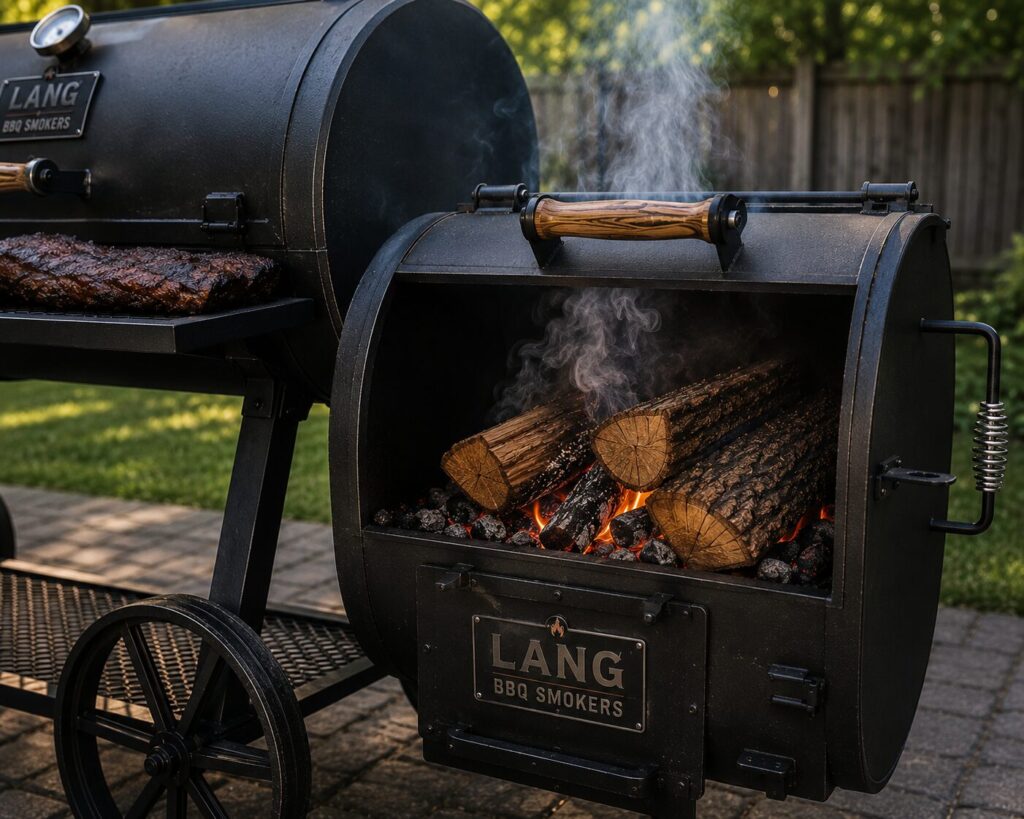
Whatever you burn, make sure it’s properly seasoned hardwood. Dry wood gives you that thin blue smoke; wet or green wood smolders into thick white smoke that turns food bitter and builds up creosote. Pro tip: clean-burning wood is also the easiest way to keep temperatures steady on long cooks — dirty smoke and temperature swings usually come from the same damp splits.
Cleaning and Maintaining Your Lang Smoker
A Lang can cook for decades, but only if you look after it. Because it’s heavy steel built for marathon sessions, regular cleaning protects heat retention, keeps airflow paths clear, and holds rust at bay. And honestly? A clean cooker just makes better barbecue — cleaner smoke, truer flavor.
Here’s the maintenance routine we’d follow: once the cook is done, let the smoker cool completely, then clear the ash out of the firebox. Ash pulls in moisture and will corrode steel if it sits, and a clean firebox breathes better — which makes your next fire easier to manage.
Brush the cooking grates while they’re still slightly warm — grease and food residue come off far easier that way. Every few weeks, give them a deeper wash with warm water and mild soap, dry them thoroughly, and wipe on a light coat of cooking oil to keep moisture off the steel.
Inside the cook chamber, don’t go crazy with the scrub brush. Over time it builds a protective seasoning layer that actually improves flavor — think of it like a cast-iron skillet. Just knock off loose grease and heavy carbon, and let that seasoning keep working for you.
Lang BBQ Offset Smoker Models: Which One Fits You?
Part of the Lang’s appeal is that the lineup covers real range. Whether you’re feeding the family on Saturdays or running a catering operation, there’s a model sized for the job — here’s how they break down.
| Lang Model | Cooking Space and Capacity | Best For | Listed Price* |
|---|---|---|---|
| Lang 36 Original Patio | Over 6 sq. ft.; approximately 60–72 lb of food | Families, backyard cooking, and small competitions | $2,495 |
| Lang 48 Original Patio | 10 sq. ft.; approximately 70–80 lb of food | Serious backyard cooks, entertaining, and competitions | $3,495 |
| Lang 60 Original | Approximately 15 sq. ft. | Large gatherings, catering, and competition teams | $6,495 |
| Lang 84 Original | Approximately 22 sq. ft. | Commercial barbecue and high-volume competitions | $7,895 |
Price note: Prices were checked on July 31, 2026, and are shown in USD. These are factory-pickup prices for the specified models. Freight, delivery, accessories, and customization are not included. Prices may change, so buyers should confirm the latest total directly with Lang BBQ Smokers before ordering.
The Lang 36 Original Patio is the backyard pick. With over 6 square feet of cooking space — room for roughly 60–72 pounds of food — it handles brisket, ribs, pork shoulders, and whole chickens without crowding, and it still fits comfortably on most patios. Listed at $2,495, it’s the most approachable way into the Lang lineup.
Step up to the Lang 48 Original Patio and you get 10 square feet of space (about 70–80 pounds of food) for $3,495. It’s become one of Lang’s most popular models for a reason: competition teams and serious backyard cooks call it the sweet spot between cooking space and fuel efficiency.
For big events and commercial work, the Lang 60 Original (around 15 square feet, $6,495) and Lang 84 Original (around 22 square feet, $7,895) are the heavy hitters. Restaurants, food trucks, competition teams, and caterers run them when they need serious volume without giving up temperature consistency.
No matter which size you choose, the cooking system is identical — the same reverse-flow design across the whole lineup, so performance doesn’t change with the footprint.
Real-World Cooking Performance
This is where a Lang earns its reputation. Once it comes up to temperature, the chamber holds remarkably steady heat from end to end — and that stability means far fewer adjustments than a traditional offset demands.
What does that mean on the plate? Brisket with a deep, beautiful bark that stays juicy deep into the cook. Pork shoulder that renders evenly into pull-apart tenderness. Ribs with great color and smoke ring that never dry out. Even whole chickens and turkeys come out evenly cooked, thanks to that balanced reverse-flow heat.
There’s a learning curve, and we’d be lying if we said otherwise — but once you understand fire management, the Lang is a forgiving cooker. It responds predictably to small airflow tweaks instead of swinging wildly, which takes a lot of stress out of overnight cooks.
The reverse-flow design also holds moisture in the chamber better, so leaner cuts are less likely to dry out — while you still get the deep smoky flavor you’d expect from a real wood-burning offset.
How Much Wood Does It Burn?
Fair question, because these are big cookers. The surprise is that the heavy steel actually works in your favor: thick steel stores heat so well that you need less wood to hold steady temps than you’d expect from a smoker this size.
As for what to burn, oak is our default recommendation — steady burn, moderate smoke, works on just about everything. Hickory steps it up with a stronger traditional flavor, pecan lands rich and a touch sweet, and apple or cherry are the go-to pairings for poultry and pork when you want lighter, subtler smoke.
The non-negotiable: burn seasoned hardwood. Wet or green wood makes thick white smoke that leaves food bitter, while a clean-burning fire with thin blue smoke gives you the best flavor. Keep that fire clean and the whole cook gets easier.
The Pros and Cons
Let’s tally it up. On the plus side: heavy-duty welded steel that lasts, a reverse-flow system that evens out temperatures across the whole chamber, generous cooking space, and the kind of craftsmanship that gives you decades of service when you maintain it.
On the other hand, the price puts it out of reach for casual grillers, it’s genuinely heavy to move, and learning wood-fire management takes patience if you’ve never run a traditional offset. We’d call those the realities of a professional-grade cooker rather than deal-breakers — but go in with eyes open.
Who Should Buy a Lang (and Who Shouldn’t)
If you’re serious about authentic barbecue, this is your cooker. Regular backyard smokers will love the consistency, and competition pitmasters get the precise temperature control and even heat that reverse flow delivers.
Restaurants and caterers are the other natural fit. Being able to run multiple briskets, pork shoulders, racks of ribs, and whole chickens at the same time — with the durability to do it daily — is exactly what high-volume barbecue production demands.
But if you grill a few times a year or you’re tight on outdoor space, be honest with yourself: a smaller charcoal smoker or a pellet grill will serve you better. The Lang is built for people who genuinely enjoy the craft of wood-fired barbecue and will put in the time to master it.
Frequently Asked Questions
Yes. Although it is considered a professional-grade smoker, beginners can learn to use the Lang BBQ Offset Smoker successfully with practice. The reverse flow system actually makes temperature management easier than many traditional offset smokers.
Reverse flow technology forces heat and smoke to travel beneath a steel plate before circulating back across the food. This creates more even temperatures throughout the cooking chamber while reducing hot spots.
The smoker is primarily designed for hardwood logs, but many pitmasters use charcoal to establish the initial fire before adding seasoned hardwood for smoke flavor.
With proper maintenance, routine cleaning, and protection from excessive moisture, a Lang BBQ Offset Smoker can last for several decades. Many owners continue using the same smoker for twenty years or more.
For serious barbecue enthusiasts, the answer is yes. Its heavy-duty construction, reverse flow design, outstanding temperature consistency, and professional cooking performance make it one of the best long-term investments available in the premium offset smoker market.
Our Verdict: Is the Lang Worth It in 2026?
After walking through the build, the design, the models, and the ownership realities, our take is this: the Lang has earned its reputation. Heavy-duty steel, genuine reverse-flow engineering, generous capacity, and rock-steady temperature control make it a favorite everywhere from backyards to competition circuits to professional kitchens.
Yes, it costs more than an entry-level smoker. But the long-term math is hard to argue with — durable construction, efficient fuel use, and consistently excellent barbecue from a cooker owners rely on for decades. Brisket, ribs, pork shoulder, turkey, whole chickens: it handles the full spread, every time.
So is it worth it in 2026? If you want professional craftsmanship, real reverse-flow cooking, and the consistency to nail low-and-slow barbecue cook after cook, the Lang BBQ Offset Smoker remains one of the best choices you can buy.