
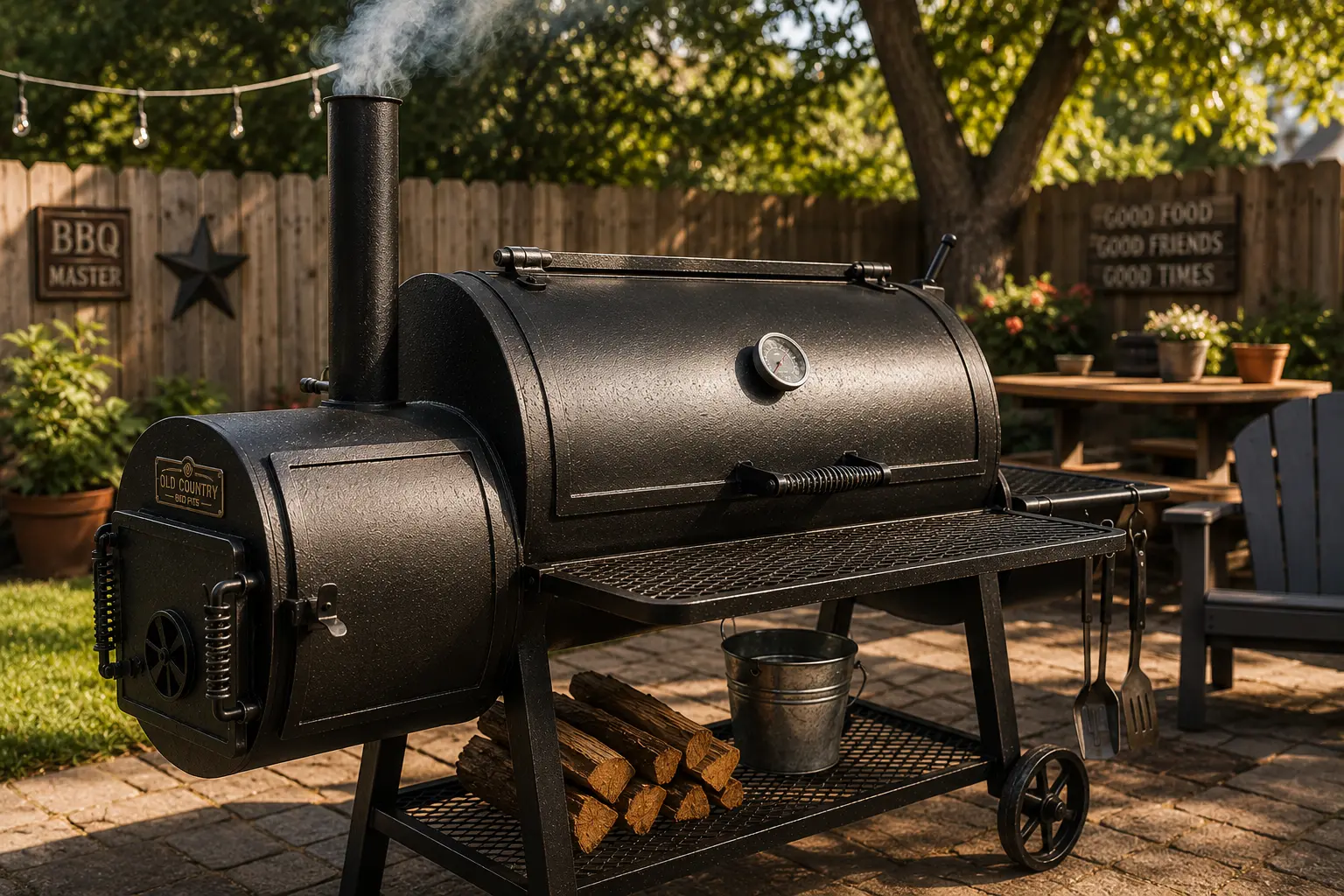
Learning how to season an offset smoker is one of the first and most important steps before cooking your first barbecue. Whether you have just purchased a brand-new smoker or restored an older model, proper seasoning prepares the steel for years of reliable use. It removes manufacturing oils, burns away unwanted residues, creates a protective layer against rust, and improves the overall cooking performance of your smoker. Skipping this process can reduce the lifespan of your equipment and negatively affect the flavor of your food.
Many first-time owners assume they can assemble their smoker and begin cooking immediately. However, newly manufactured smokers often contain machining oils, dust, paint residues, and protective coatings that should never come into contact with food. The seasoning process safely burns away these contaminants while creating a thin polymerized oil coating that protects the steel from moisture and corrosion.
Understanding how to season an offset smoker also helps improve temperature stability during future cooks. A properly seasoned smoker develops a natural protective layer similar to a cast-iron skillet, allowing heat to distribute more evenly while reducing the risk of rust inside the cooking chamber. This guide explains every step required to season your smoker correctly so you can enjoy years of authentic wood-fired barbecue.
Why Seasoning an Offset Smoker Is Important
The main reason for learning how to season an offset smoker is to protect your investment. Offset smokers are built from steel, and steel naturally reacts with moisture and oxygen. Without a protective coating, rust can begin forming surprisingly quickly, especially if the smoker is stored outdoors or exposed to changing weather conditions.
Seasoning creates a thin layer of baked-on oil that seals the metal surface from moisture. As this protective coating develops over time, it becomes more durable with every cook. The result is a smoker that resists corrosion while maintaining excellent heat retention throughout long smoking sessions.
Another important benefit is food safety. During manufacturing, steel components are exposed to cutting oils, lubricants, dust, and handling residues. Heating the smoker during seasoning burns away these unwanted contaminants before food is introduced into the cooking chamber. This simple process ensures your first barbecue tastes exactly as it should without unpleasant metallic flavors or manufacturing residues.
A properly seasoned smoker also becomes easier to maintain. Grease and food particles are less likely to stick to seasoned surfaces, making routine cleaning much simpler after each cooking session.
Supplies You Need Before Seasoning
Before beginning how to season an offset smoker, gather all the necessary supplies to ensure the process runs smoothly. Fortunately, seasoning requires only a few inexpensive items that are readily available.
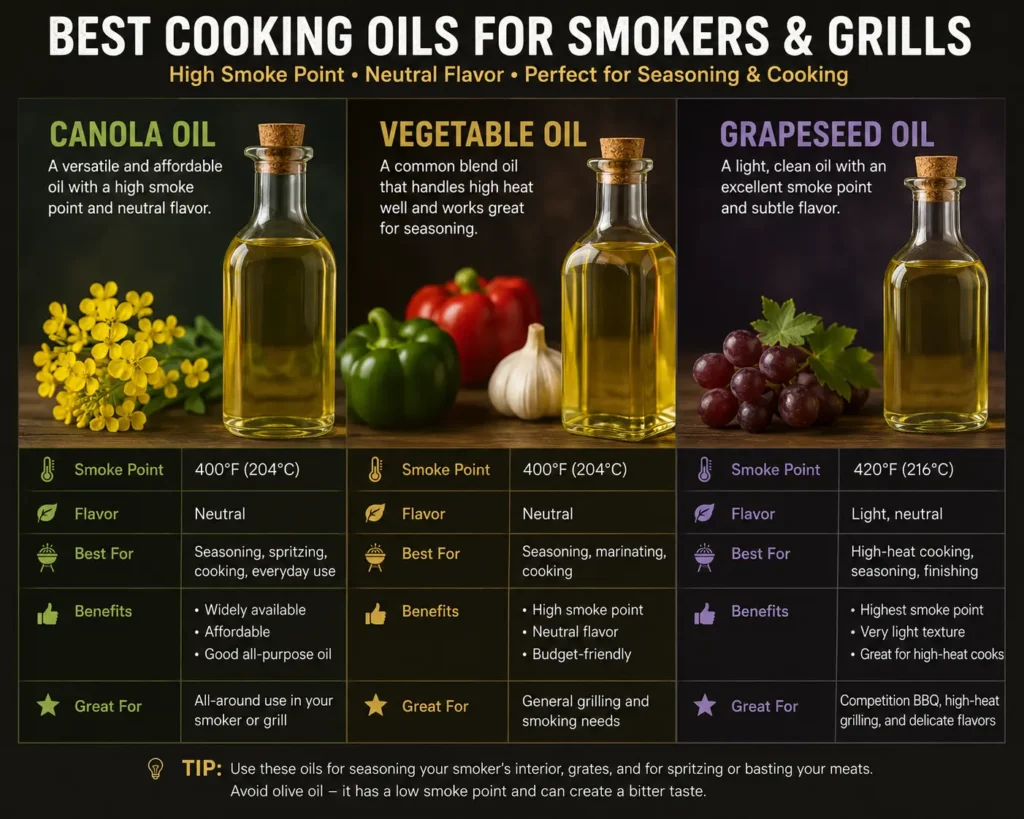
The most important ingredient is a cooking oil with a high smoke point. Vegetable oil, canola oil, grapeseed oil, avocado oil, and flaxseed oil are all excellent choices because they can withstand high temperatures without burning too quickly. These oils bond effectively with the steel during the heating process and create the protective coating your smoker needs.
You’ll also need quality lump charcoal or charcoal briquettes to establish a stable fire. Once the charcoal has fully ignited, seasoned hardwood such as oak, hickory, pecan, or maple can be added to maintain heat and begin building the smoker’s natural seasoning layer. Using properly seasoned wood also produces clean smoke while avoiding excessive soot buildup.
Other helpful supplies include paper towels or lint-free cloths for applying oil, disposable gloves to keep your hands clean, a chimney starter for lighting charcoal efficiently, and a reliable thermometer to monitor cooking temperatures throughout the seasoning process.
Cleaning the Smoker Before Seasoning
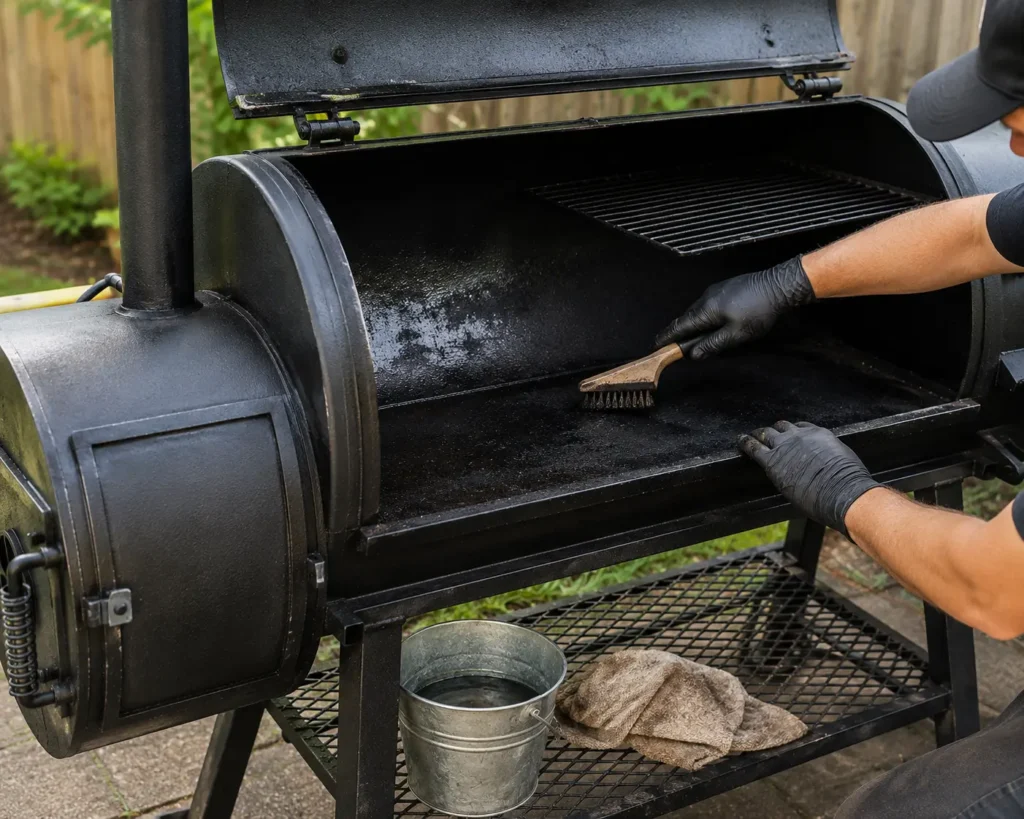
Cleaning is an essential step when learning how to season an offset smoker because oil bonds much more effectively to clean steel surfaces. Before lighting the fire, inspect the smoker carefully and remove every piece of packaging material, plastic wrapping, cardboard, stickers, and protective inserts left from shipping.
Wash the cooking grates, cooking chamber, firebox, and interior surfaces using warm water with a small amount of mild dish soap. This removes factory oils, dirt, metal shavings, and any remaining manufacturing residue. Avoid using harsh chemicals because they can leave unwanted residue behind.
After cleaning, rinse every surface thoroughly with clean water and dry the smoker completely using towels or allow it to air dry naturally. Any remaining moisture trapped inside the smoker can interfere with seasoning and increase the possibility of rust forming beneath the protective oil coating.
Taking extra time during this cleaning stage creates the ideal foundation for successful seasoning and ensures the oil bonds evenly across every metal surface.
Applying Oil Correctly
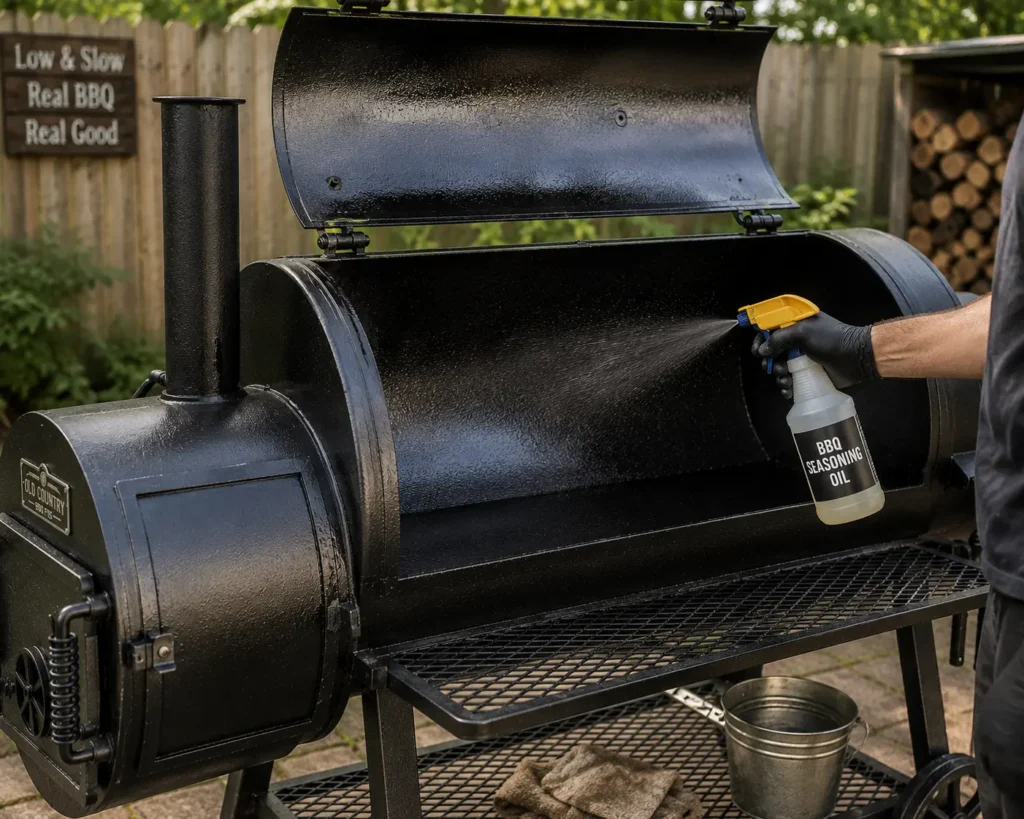
Applying oil evenly is one of the most important parts of how to season an offset smoker. The goal is to create a very thin protective coating rather than soaking the steel with excessive oil. Too much oil can drip during heating, creating unnecessary smoke and uneven seasoning.
Using a spray bottle or clean cloth, apply a light layer of oil across every interior surface of the cooking chamber. This includes the cooking grates, chamber walls, lid, firebox interior, warming racks, and any exposed steel that will experience heat during cooking. Every metal surface inside the smoker should receive an even coating.
Avoid applying oil to painted exterior surfaces because high temperatures can discolor the finish. Only the interior steel requires seasoning.
Once the oil has been applied, inspect the smoker carefully for any areas where oil has collected or pooled. Wipe away excess oil using a clean cloth until only a thin, uniform coating remains. This thin layer will polymerize much more effectively during heating and produce a smoother protective finish.
Starting the Fire
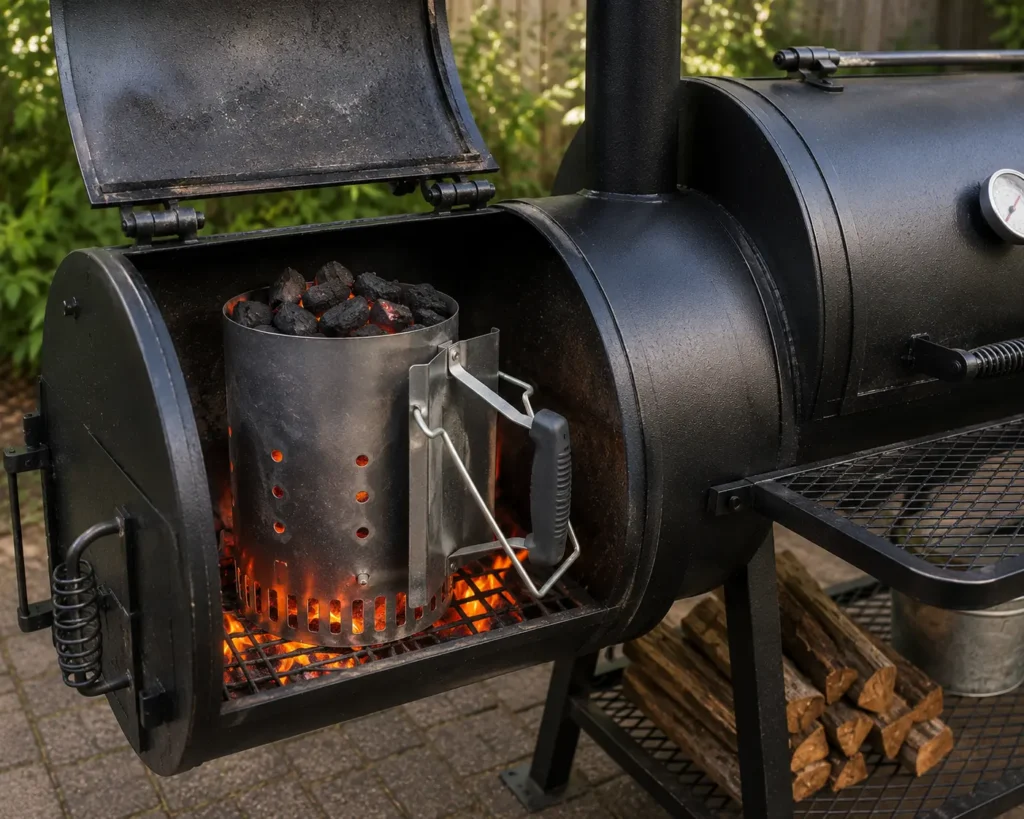
After applying the oil, the next step in how to season an offset smoker is building a clean, stable fire. Begin by lighting lump charcoal or briquettes inside a chimney starter rather than directly inside the firebox. A chimney starter produces evenly lit charcoal without introducing lighter fluid odors into the smoker.
Once the charcoal develops a consistent layer of gray ash, carefully transfer it into the firebox. Add one or two pieces of seasoned hardwood to establish a clean-burning fire that produces thin blue smoke rather than thick white smoke.
Gradually allow the smoker to reach a temperature between 250°F and 300°F. This range is ideal because it burns away remaining manufacturing residue while allowing the oil to bond permanently with the steel surfaces. Avoid rushing the process by building an excessively large fire. Slow, steady heat creates a much stronger seasoning layer than rapid temperature spikes.
Maintaining clean airflow throughout the seasoning process also improves combustion and reduces unnecessary soot buildup inside the smoker.
Maintaining Heat During the Seasoning Process
Once your smoker reaches the desired temperature, maintaining steady heat becomes the final critical step in how to season an offset smoker. The smoker should remain between 250°F and 300°F for approximately two to four hours, depending on the manufacturer’s recommendations and the thickness of the steel.
Monitor the fire periodically and add small pieces of hardwood whenever temperatures begin to decline. Avoid adding large amounts of wood at one time because excessive smoke does not improve seasoning and may actually leave unnecessary residue inside the cooking chamber.
During this period, the oil gradually transforms into a durable protective coating through polymerization. As the process continues, the interior steel develops a darker appearance, indicating that the seasoning layer is forming successfully. This protective finish will continue improving with every future barbecue session, making your offset smoker more resistant to rust while enhancing long-term cooking performance.
Cooling the Smoker After Seasoning
After maintaining the proper temperature for several hours, the final step in how to season an offset smoker is allowing the smoker to cool naturally. Many beginners make the mistake of opening the cooking chamber immediately after the seasoning process, but sudden temperature changes can stress the steel and interrupt the formation of the protective oil coating.
Instead, close the firebox and allow the remaining fuel to burn out naturally. Keep the cooking chamber closed while the smoker gradually cools. This slow cooling process allows the polymerized oil layer to fully bond with the metal surfaces, creating a stronger protective coating that will continue improving during future cooks.
Once the smoker has completely cooled, inspect the interior carefully. The cooking chamber should appear darker than before, often developing a rich brown or black finish. This discoloration is completely normal and indicates that the seasoning process has been successful.
Inspecting the Seasoning Layer
After the smoker has cooled, inspect every interior surface as part of learning how to season an offset smoker correctly. The cooking chamber, firebox, lid, and cooking grates should all have a consistent protective coating. Slight color variations are normal because different areas experience different heat levels during seasoning.
If certain sections appear dry or still resemble bare steel, apply another very thin coat of high smoke-point oil and repeat the heating process for one to two additional hours. Building several light layers produces a stronger finish than attempting to create one thick coating.
Do not worry if the seasoning layer is not perfectly black after the first burn. Every barbecue session adds another layer of seasoning, gradually strengthening the protective coating and improving both corrosion resistance and cooking performance.
How Often Should You Season an Offset Smoker?
Many new owners believe how to season an offset smoker is only necessary before the first cook, but regular seasoning helps extend the smoker’s lifespan. Although the initial seasoning is the most important, repeating the process periodically keeps the protective coating in excellent condition.
For most backyard barbecue enthusiasts, performing a complete seasoning once each year is usually sufficient. However, smokers that are used frequently, exposed to harsh weather, or cleaned aggressively may benefit from more regular maintenance. Competition pitmasters and commercial users often refresh the seasoning layer several times each year because of their heavy cooking schedules.
You should also re-season your smoker whenever you notice exposed steel, surface rust, excessive scrubbing has removed the protective coating, or the smoker has remained unused for an extended period. Addressing these issues early prevents corrosion from becoming a more serious problem.
Best Oils for Seasoning an Offset Smoker
Choosing the correct oil is an important part of how to season an offset smoker because different oils react differently under high temperatures. Oils with high smoke points produce stronger polymerized coatings while minimizing excessive smoke during the seasoning process.
Vegetable oil remains one of the most popular choices because it is inexpensive, readily available, and performs consistently during seasoning. Canola oil provides similar results while producing a durable protective finish. Grapeseed oil is another excellent option because of its high smoke point and ability to create a smooth coating across steel surfaces.
Avocado oil has one of the highest smoke points available, making it suitable for smokers that reach higher seasoning temperatures. Flaxseed oil is also commonly recommended because it produces an extremely durable coating, although it generally requires thinner applications to prevent flaking.
Avoid oils with low smoke points such as butter, margarine, or extra virgin olive oil. These products burn too quickly during seasoning and often leave sticky residue rather than forming an effective protective coating.
Maintaining Your Smoker After Every Cook
Learning how to season an offset smoker also includes understanding routine maintenance after each barbecue session. Regular care preserves the seasoning layer while preventing moisture from damaging the steel.
Once the smoker has cooled completely, remove ash from the firebox because ash absorbs moisture from the surrounding air. Leaving ash inside the smoker for extended periods increases the likelihood of corrosion developing beneath the seasoning layer.
Brush the cooking grates after every cook to remove grease and food residue. Rather than washing the interior with soap after each use, simply remove loose debris while allowing the natural seasoning layer to continue developing. This protective coating improves with every successful barbecue session.
Applying a light coating of cooking oil to the grates before storing the smoker provides additional protection against moisture and helps preserve the seasoning between cooking sessions.
Common Mistakes to Avoid
Many beginners make simple mistakes while learning how to season an offset smoker, but avoiding these problems makes the process much more successful.
One of the most common mistakes is applying excessive oil. Thick layers do not produce better seasoning. Instead, they often drip, smoke excessively, and create uneven sticky surfaces. Thin, even coats always produce stronger results.
Another mistake is using wet or green hardwood during the seasoning burn. Damp wood creates excessive white smoke and incomplete combustion, reducing the quality of the seasoning layer. Always use properly seasoned hardwood for clean-burning fires.
Some people also rush the process by increasing temperatures too quickly. Gradually heating the smoker allows the oil to polymerize evenly while reducing unnecessary stress on the steel. Likewise, opening the cooking chamber repeatedly during seasoning allows valuable heat to escape and extends the overall process.
Finally, many owners neglect ongoing maintenance after the initial seasoning. Keeping the smoker clean, dry, and lightly oiled ensures the protective coating remains effective for many years.
Expert Tips for Long-Term Performance
Experienced pitmasters understand that mastering how to season an offset smoker goes beyond the first seasoning session. Every barbecue cook contributes to the smoker’s protective coating, meaning proper cooking habits naturally improve the smoker over time.
Always store your smoker beneath a high-quality weatherproof cover when it is not being used. Keeping rain, snow, and humidity away from the steel dramatically reduces the possibility of rust forming. If possible, store the smoker inside a garage or covered patio during extended periods of inactivity.
Avoid aggressive wire brushing inside the cooking chamber because it removes valuable seasoning that has taken multiple cooking sessions to develop. Instead, gently scrape away loose carbon deposits while preserving the dark protective layer covering the steel.
Maintaining clean fires using seasoned hardwood also improves seasoning over time. Clean-burning fires produce less soot while continuously reinforcing the protective coating throughout the cooking chamber.
Frequently Asked Questions
Most smokers require approximately two to four hours at temperatures between 250°F and 300°F. Larger smokers with thicker steel may benefit from slightly longer seasoning times.
Yes. Once the smoker has cooled completely after the seasoning process, it is ready for cooking. Many pitmasters choose pork shoulder or ribs for the first cook because the natural fat continues improving the seasoning layer.
No. The initial seasoning provides the primary protective coating. Routine cooking naturally strengthens this layer over time, although applying a light coat of oil to the cooking grates after cleaning is recommended.
Skipping how to season an offset smoker increases the risk of rust, allows manufacturing residues to remain inside the cooking chamber, and prevents the steel from developing the protective coating that improves cooking performance and longevity.
Yes. Older smokers that have been restored or stripped back to bare steel should always be seasoned before returning to regular use. The process is identical to seasoning a brand-new smoker and helps restore corrosion protection.
Why Learning How to Season an Offset Smoker Is Worth the Effort
Understanding how to season an offset smoker is one of the most valuable investments you can make in the long-term performance of your barbecue equipment. Proper seasoning removes manufacturing residue, protects the steel from corrosion, improves heat retention, and creates the foundation for years of successful smoking. Although the process requires only a few hours, the benefits continue throughout the life of the smoker.
By cleaning the smoker thoroughly, applying a thin layer of high smoke-point oil, maintaining steady temperatures between 250°F and 300°F, and allowing the seasoning layer to develop naturally over time, you create a durable protective finish that improves with every barbecue session. Regular maintenance, proper storage, and occasional re-seasoning further extend the life of the smoker while preserving its cooking performance.
Whether you have purchased your first smoker or restored a well-used offset smoker, learning how to season an offset smoker ensures your equipment remains protected, efficient, and ready to produce authentic wood-fired barbecue for many years to come.