
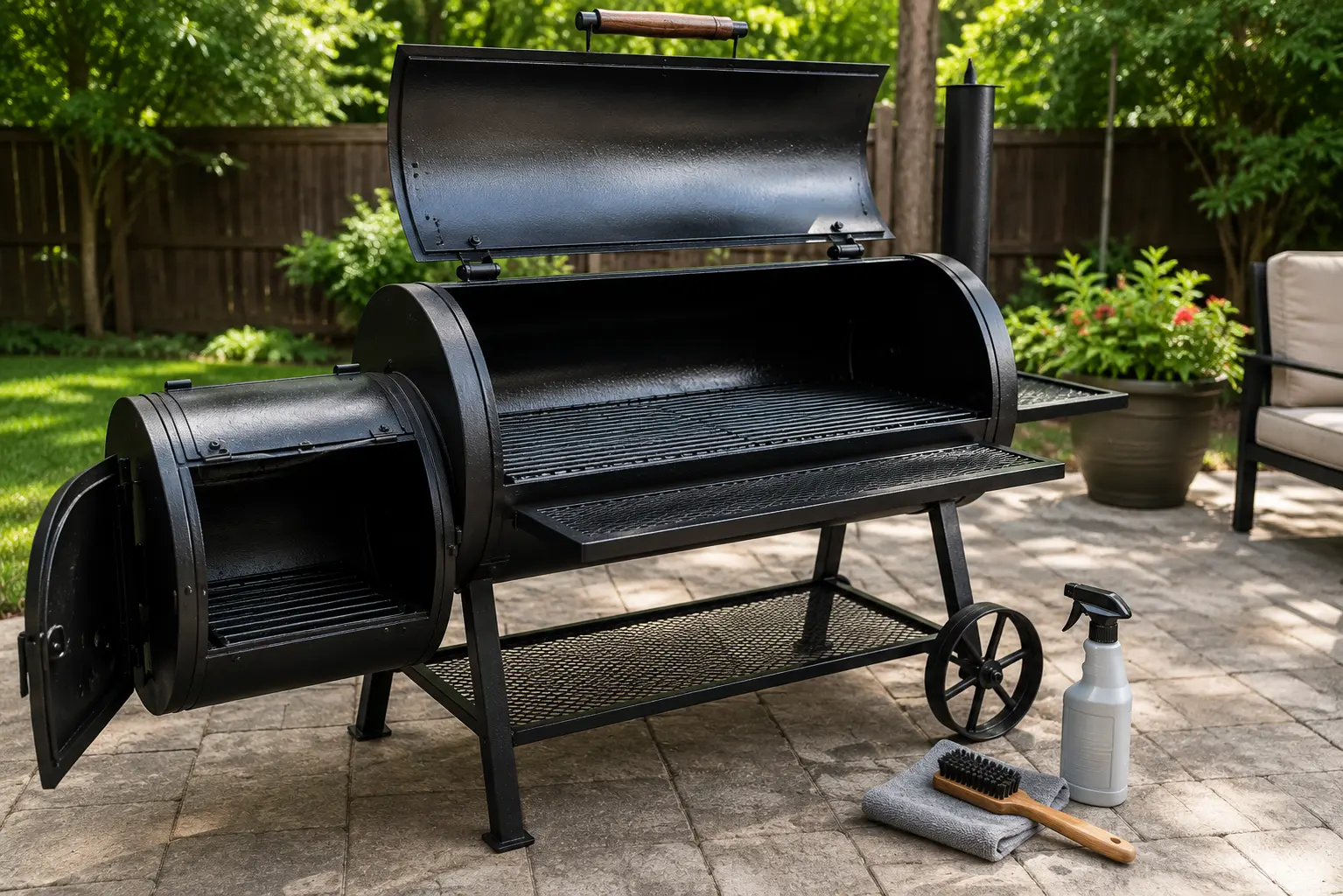
An offset smoker is built to last for years, but only if it’s cleaned and maintained properly. Every barbecue session leaves behind ash, grease, smoke residue, and small amounts of creosote inside the smoker. While a light layer of seasoning protects the metal, excessive buildup can restrict airflow, produce bitter smoke, increase the risk of grease fires, and even shorten the lifespan of your smoker.
Cleaning an offset smoker isn’t about making it look brand new after every cook. In fact, experienced pitmasters rarely strip the cooking chamber down to bare metal. Instead, they focus on removing ash, grease, and loose residue while preserving the protective seasoning that develops over time. This balanced approach keeps the smoker performing efficiently without sacrificing flavor.
Regular maintenance also makes temperature control easier. Clean air vents, an ash-free firebox, and unrestricted airflow allow hardwood to burn more efficiently, creating the thin blue smoke that produces authentic barbecue. Neglecting routine cleaning often leads to unstable temperatures, poor combustion, and unnecessary fuel consumption — one of several fundamentals covered in our offset smoker guide for beginners.
Whether you’ve just finished your first cook or you’ve been smoking meat for years, this guide explains how to clean an offset smoker safely and effectively. You’ll learn which areas require cleaning after every cook, how to perform deep maintenance, how to prevent rust, and how to keep your smoker in excellent condition for many years.
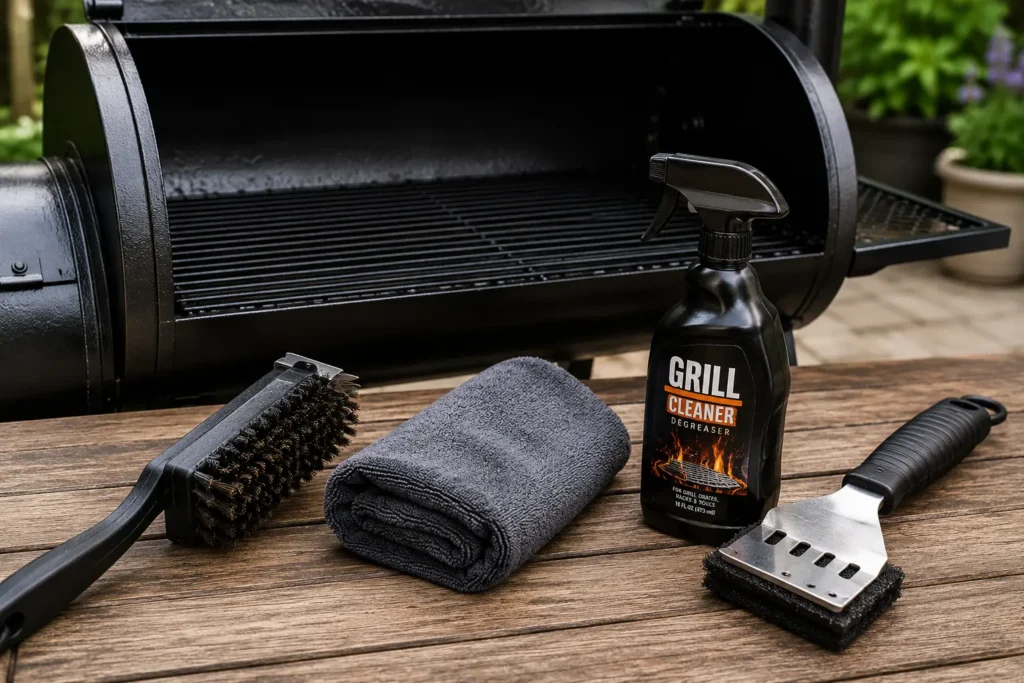
After every cook, remove ash from the firebox, scrape excess grease from the cooking chamber, brush the cooking grates, empty the grease tray, and wipe away loose debris. Every few cooks, perform a deeper cleaning by inspecting the chimney, dampers, water pan, and rust-prone areas before lightly re-seasoning the smoker with cooking oil.
Why Cleaning an Offset Smoker Matters
Many beginners assume smoke naturally sanitizes the smoker, but grease, ash, and creosote continue building after every cook. If ignored, these residues eventually affect both flavor and performance.
Ash is particularly harmful because it absorbs moisture from the air. When left inside the firebox, damp ash accelerates corrosion and causes rust to form much faster than many owners realize. Grease buildup can also become rancid over time and may ignite during future cooks, creating dangerous flare-ups inside the cooking chamber. The U.S. Fire Administration’s guidance on grease fire prevention applies just as much to outdoor smokers as it does to kitchen cooking — built-up grease is one of the most common fuel sources for accidental fires.
Regular cleaning also improves airflow. Clean vents, chimneys, and fireboxes allow your fire to burn efficiently, making temperature management easier and reducing fuel consumption during long smoking sessions.
Cleaning Supplies You’ll Need
Fortunately, cleaning an offset smoker doesn’t require expensive equipment. Most maintenance can be completed using a few basic tools that many barbecue owners already have at home.
A quality grill brush, plastic or metal scraper, microfiber cloths, paper towels, bucket of warm water, mild dish soap, disposable gloves, shop vacuum or ash shovel, and food-grade cooking oil will handle nearly every cleaning task.
Avoid oven cleaners, bleach, harsh degreasers, or strong chemical products inside the cooking chamber. These chemicals may leave harmful residues that could affect future cooks.
Let the Smoker Cool Safely
Never begin cleaning immediately after cooking. Allow the smoker to cool until it’s safe to touch while still remaining slightly warm.
A warm smoker actually makes grease removal easier because residue remains softer than when completely cold. However, attempting to clean while surfaces are still extremely hot increases the risk of burns and can damage brushes or cleaning tools.
Always confirm that charcoal has completely extinguished before disposing of ash.
Remove Ash After Every Cook
Cleaning the firebox is one of the most important maintenance tasks.
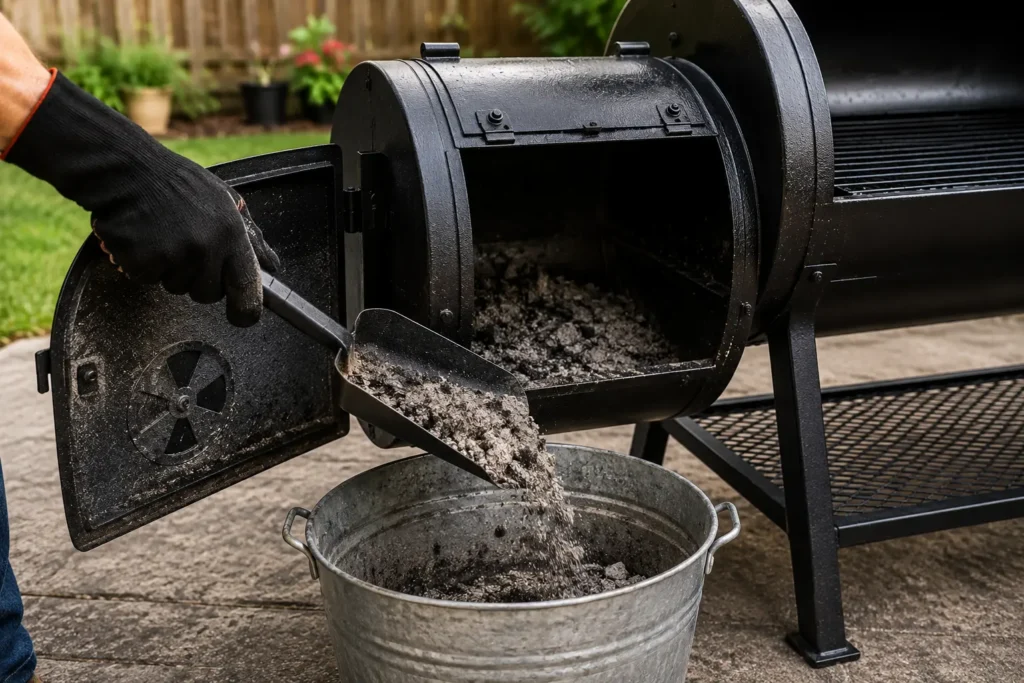
Once the smoker has cooled completely, remove all leftover charcoal and ash from the firebox. Even small amounts of ash absorb moisture from the surrounding air, accelerating corrosion inside the steel firebox.
Use a small ash shovel or shop vacuum designed for cold ash to clean every corner of the firebox. Pay particular attention to air intake openings, since ash buildup can restrict airflow during future cooks — the same intake openings that determine how well you can manage your fire on your next cook.
Removing ash after every barbecue session significantly extends the life of your smoker and makes temperature control much easier during the next cook.
Pro Tip: Never leave ash inside the firebox overnight if rain or humidity is expected. Moist ash is one of the leading causes of premature rust in offset smokers.
Clean the Cooking Grates
Cooking grates should be cleaned after every use while residue is still relatively fresh.
Begin by brushing both sides of each grate using a quality grill brush. Remove loose food particles, grease, and carbon buildup without aggressively scraping away the seasoned surface.
If grease has hardened after several cooks, remove the grates and soak them in warm water mixed with mild dish soap for 15 to 20 minutes. After soaking, scrub gently before rinsing and drying completely.
Before reinstalling the grates, apply a very light coating of cooking oil to help protect them against moisture and surface rust.
Scrape the Cooking Chamber
The inside of the cooking chamber naturally develops a dark protective seasoning layer. This layer should remain intact.
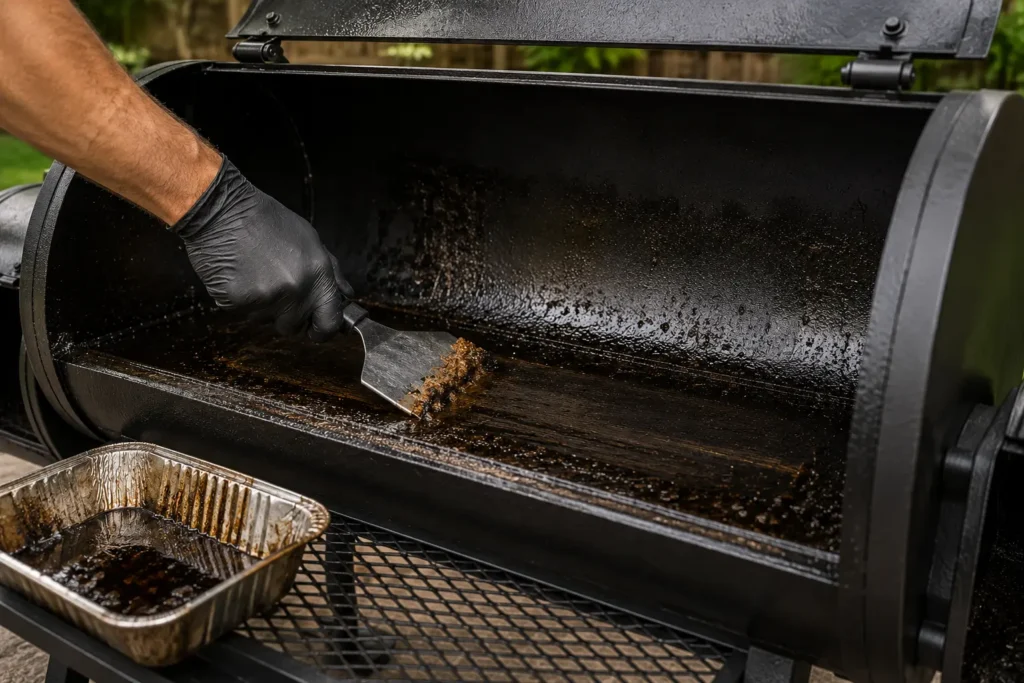
Instead of attempting to remove every stain, focus on scraping away loose grease deposits, peeling carbon flakes, and excessive residue that may fall onto future cooks.
Use a plastic scraper or putty knife to remove heavy buildup from the bottom of the cooking chamber. Wipe away loosened debris using paper towels or a damp microfiber cloth.
Avoid washing the entire interior with soap after every cook, as repeated deep cleaning removes the protective seasoning that helps prevent rust.
Clean the Firebox Interior
Because the firebox experiences direct flames, it accumulates soot, charcoal dust, and burned wood residue much faster than the cooking chamber.
After removing ash, inspect the walls of the firebox. Remove loose soot and scrape away heavy deposits only when necessary.
Unlike the cooking chamber, the firebox doesn’t require a perfectly clean appearance. Its primary maintenance goal is preventing ash buildup and minimizing rust rather than restoring shiny metal.
If bare steel becomes visible after scraping, apply a thin layer of cooking oil before the next seasoning burn.
Inspect and Clean the Chimney
The chimney plays an essential role in maintaining proper airflow throughout the smoker. Over time, smoke deposits gradually form inside the stack, especially after many long cooks.
Light creosote buildup is normal, but excessive accumulation restricts airflow and can produce bitter smoke flavors. The EPA’s overview of creosote and wood smoke residue explains why this buildup forms whenever wood combustion is incomplete, which is also why maintaining clean, hot-burning fires matters as much for flavor as it does for chimney safety.
Use a chimney brush or bottle brush to remove loose soot from inside the smokestack every few deep cleaning sessions. A clean chimney allows smoke to flow freely and improves combustion inside the firebox.
Clean the Dampers and Air Vents
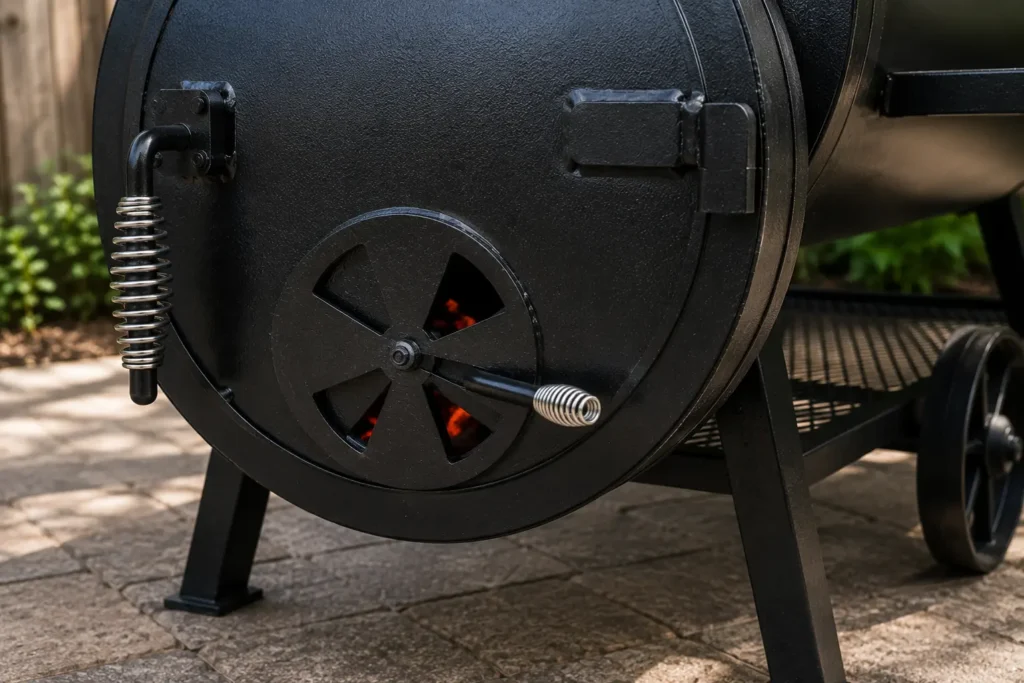
Air intake dampers are responsible for supplying oxygen to the fire. If grease, soot, or ash prevents them from moving smoothly, temperature control becomes much more difficult.
Open each vent fully and brush away accumulated debris. Wipe around the hinges and sliding mechanisms using a damp cloth before checking that every vent opens and closes freely.
Clean dampers allow precise airflow adjustments and contribute to more consistent cooking temperatures.
Remove Rust Before It Spreads
Rust is one of the biggest threats to any offset smoker, especially if it’s stored outdoors or exposed to humid conditions. During every deep cleaning session, inspect the firebox, cooking chamber, chimney, legs, and welded joints for orange or flaky rust spots.
If you notice surface rust, scrub it gently with steel wool or a wire brush until the loose corrosion is removed. Wipe away the dust with a clean cloth, then apply a thin coat of cooking oil to the exposed metal. For painted exterior surfaces, sand the damaged area lightly and touch it up with high-temperature barbecue paint if necessary.
Catching rust early is much easier than repairing severe corrosion later, so make inspections part of your regular maintenance routine.
Maintenance Tip: Store your smoker under a weatherproof cover and avoid leaving it on wet concrete or grass for long periods. Keeping moisture away is the easiest way to prevent rust.
Clean the Exterior
While the inside of your smoker develops a protective seasoning, the exterior should be cleaned regularly to remove grease, fingerprints, dust, pollen, and smoke stains.
Use a microfiber cloth with warm water and mild dish soap to wipe the outside of the smoker. For painted steel, avoid abrasive pads that may scratch the finish. Stainless steel shelves or handles can be polished using a soft cloth to restore their appearance.
If grease has hardened on the outside, let the warm soapy water soften it for a few minutes before wiping it away instead of scraping aggressively.
Keeping the exterior clean not only improves appearance but also helps you spot paint damage or rust before it becomes a bigger problem.
Empty and Clean the Grease Drain
Grease management is often overlooked, but it plays an important role in both safety and smoker performance.
If your offset smoker has a grease drain, bucket, or grease cup, empty it after every cook. Old grease can become rancid, attract insects, produce unpleasant odors, and increase the risk of grease fires during future cooks.
Wash the grease container with warm soapy water, rinse thoroughly, and allow it to dry before reinstalling it.
If your smoker doesn’t include a grease bucket, simply scrape excess grease from the bottom of the cooking chamber during deep cleaning sessions.
Safety Reminder: Never allow grease to overflow inside the cooking chamber. Excess grease can ignite unexpectedly during high-temperature cooks.
Clean the Water Pan
If you use a water pan during smoking, it should always be emptied after cooking.
Standing water quickly develops unpleasant odors and mineral deposits. Wash the pan using warm water and mild dish soap before drying it completely.
Many pitmasters line the water pan with heavy-duty aluminum foil before each cook. After smoking, simply remove the foil, discard it, and give the pan a quick rinse. This simple habit reduces cleanup time dramatically.
Re-Season the Smoker After Deep Cleaning
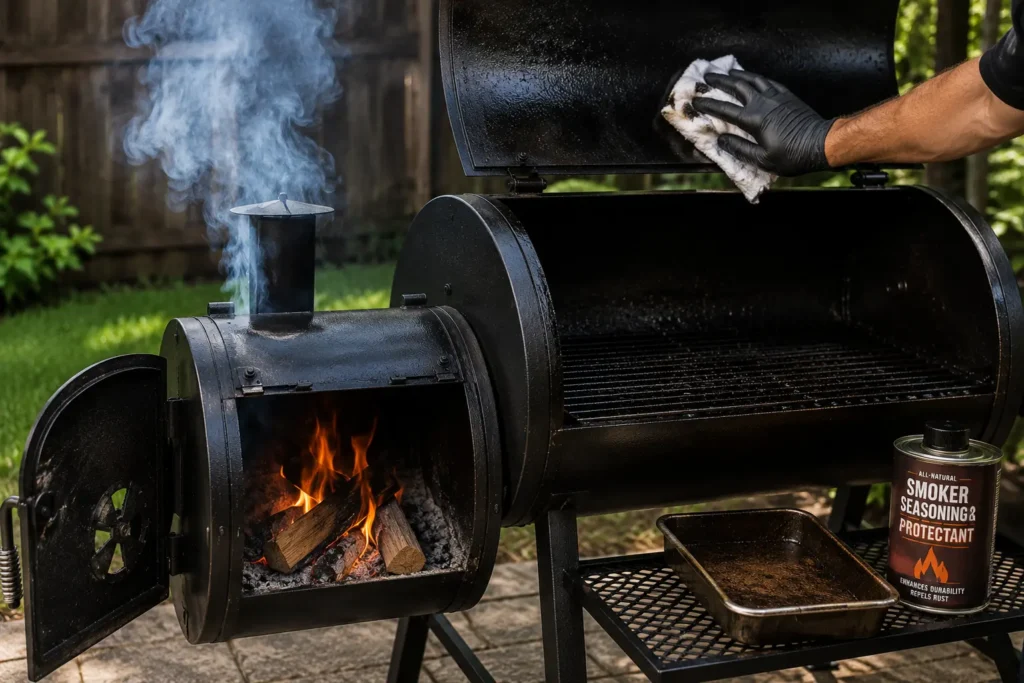
A deep cleaning removes much of the protective oil that shields the steel from moisture. Re-seasoning restores that protection and prepares the smoker for future cooks. If you’ve never gone through this process before, our full guide on how to season an offset smoker covers it step by step.
Lightly coat the inside of the cooking chamber, firebox, cooking grates, and other bare steel surfaces with a thin layer of high-smoke-point cooking oil such as canola, grapeseed, or vegetable oil.
Build a clean fire and allow the smoker to reach approximately 275°F–300°F for one to two hours. The heat bonds the oil to the metal, creating a durable protective coating that helps resist rust and improves future performance.
You don’t need to perform this full seasoning process after every cook. It’s mainly recommended after deep cleaning, rust removal, or long-term storage.
Pitmaster Secret: A well-seasoned smoker performs better than a perfectly shiny one. Don’t try to remove the dark protective coating inside the cooking chamber—it naturally protects the steel and contributes to better barbecue.
Store Your Offset Smoker Properly
Proper storage is just as important as proper cleaning.
After washing the smoker, allow every surface to dry completely before installing the cover. Covering a damp smoker traps moisture inside, which can encourage rust.
Whenever possible, store the smoker in a garage, shed, or covered patio. If it must remain outdoors, invest in a high-quality waterproof smoker cover that still allows some airflow.
In humid climates, opening the cooking chamber occasionally helps reduce trapped moisture and keeps the interior dry.
Frequently Asked Questions
Remove ash, clean the cooking grates, and empty the grease bucket after every cook. Perform a thorough deep cleaning every 3 to 5 cooking sessions, depending on how frequently you use the smoker.
No. Strong chemical cleaners can leave harmful residues that may affect the flavor of your food. Warm water, mild dish soap, scrapers, brushes, and food-safe cooking oil are all you need for proper maintenance.
Rust usually develops because ash, grease, or moisture remains inside the smoker after cooking. Regular cleaning, proper storage, and occasional re-seasoning help prevent corrosion.
Burn only properly seasoned hardwood, maintain good airflow, keep the chimney fully open, and clean the smokestack during routine maintenance. Clean-burning fires produce far less creosote than smoldering fires.
Yes. Even a quick cleanup after each cook removes ash and grease before they become harder to clean later. Routine maintenance is much easier than restoring a neglected smoker.
Why Proper Offset Smoker Cleaning Matters
Knowing how to clean an offset smoker is just as important as learning how to cook with one. Regular maintenance improves airflow, prevents grease buildup, reduces the risk of rust, and helps your smoker produce cleaner, more consistent smoke. Instead of trying to make the smoker look brand new after every cook, focus on removing ash, excess grease, and loose debris while preserving the natural seasoning that protects the steel.
Developing a simple cleaning routine after every barbecue session will save time, extend the life of your smoker, and improve the flavor of every meal you prepare. Whether you’re smoking brisket, ribs, pork shoulder, or chicken, a clean offset smoker burns fuel more efficiently, maintains stable temperatures, and delivers the authentic wood-fired barbecue experience every pitmaster strives for.
With proper care, occasional deep cleaning, and correct storage, a quality offset smoker can continue producing exceptional barbecue for many years, making every cook more enjoyable and every meal more flavorful.