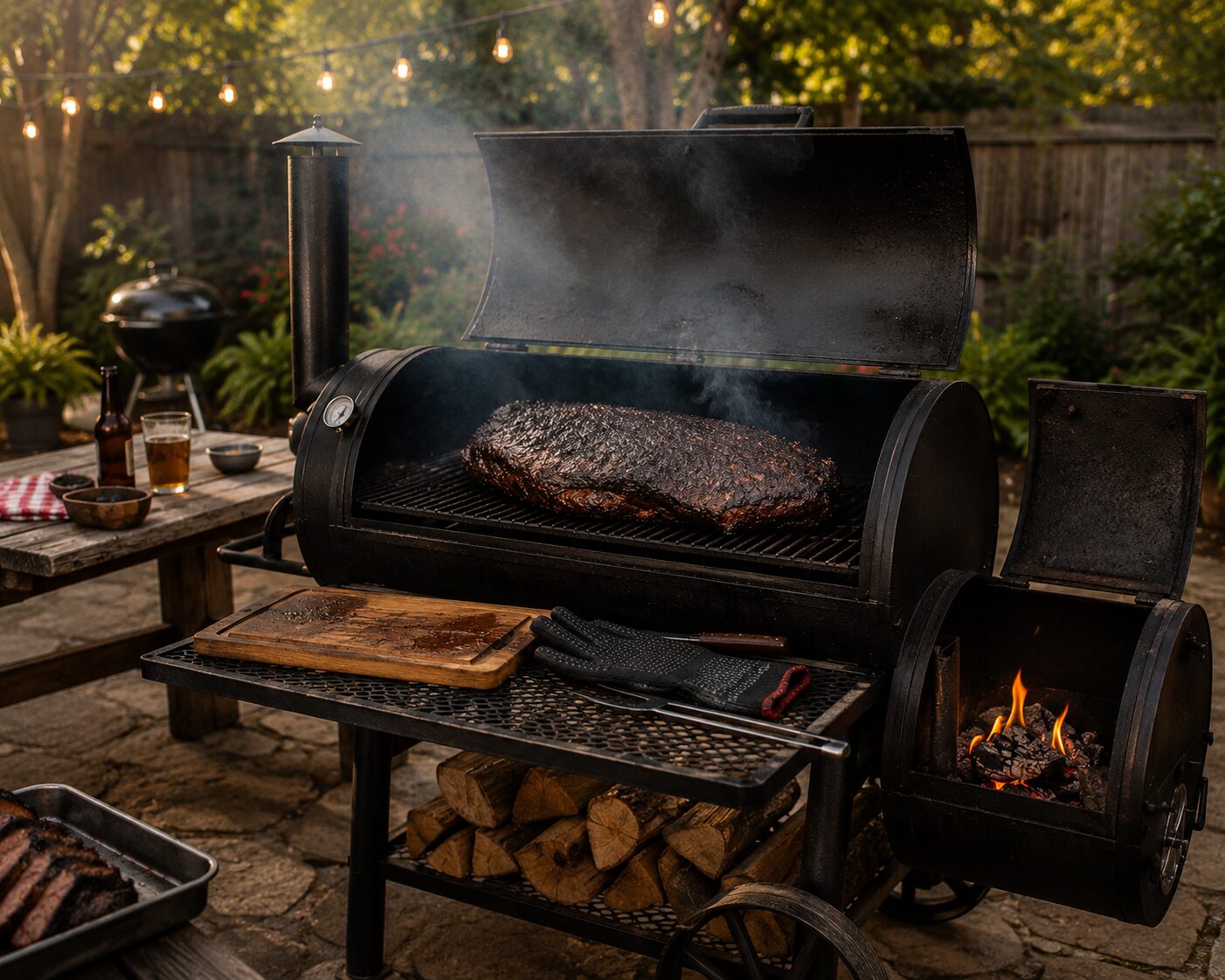
If you want real wood-fired flavor without spending a fortune, the Pit Boss Offset Smoker deserves a serious look. We’ve spent a lot of time comparing offset smokers in this price range, and Pit Boss keeps standing out for one simple reason: it gives beginners and seasoned pitmasters alike an affordable way into authentic low-and-slow barbecue, with the generous cooking space and steady temperature control that good smoking demands.
Whether you’re smoking brisket, ribs, pork shoulder, chicken, or even vegetables, this smoker handles it all. The traditional offset firebox design is built for low-and-slow cooking — the kind that turns tough cuts tender and layers on that rich, smoky flavor we all chase.
In this guide, we’ll walk you through everything we’ve learned about the Pit Boss Offset Smoker — the features that matter, how to use it, and who it’s really best for — so you can decide if it’s the right pit for your backyard.
What Is a Pit Boss Offset Smoker?
A Pit Boss Offset Smoker is a classic stick-burner style pit with a separate side-mounted firebox. You build your fire in the side box, and heat and smoke flow into the main cooking chamber — so your food cooks indirectly, soaking up smoke without ever sitting over direct flame. That’s the secret to tender, smoky results.
Here’s what that offset design gives you:
- Authentic smoky flavor
- Better heat distribution
- Precise temperature control
- Low-and-slow cooking capability
There’s a reason offset smokers have such a loyal following — no other style quite matches that clean, authentic smoke flavor. If that old-school barbecue taste is what you’re after, an offset is hard to beat.
Key Features of the Pit Boss Offset Smoker
We’ve compared the specs on a lot of smokers in this class. Here’s where the Pit Boss stands out:
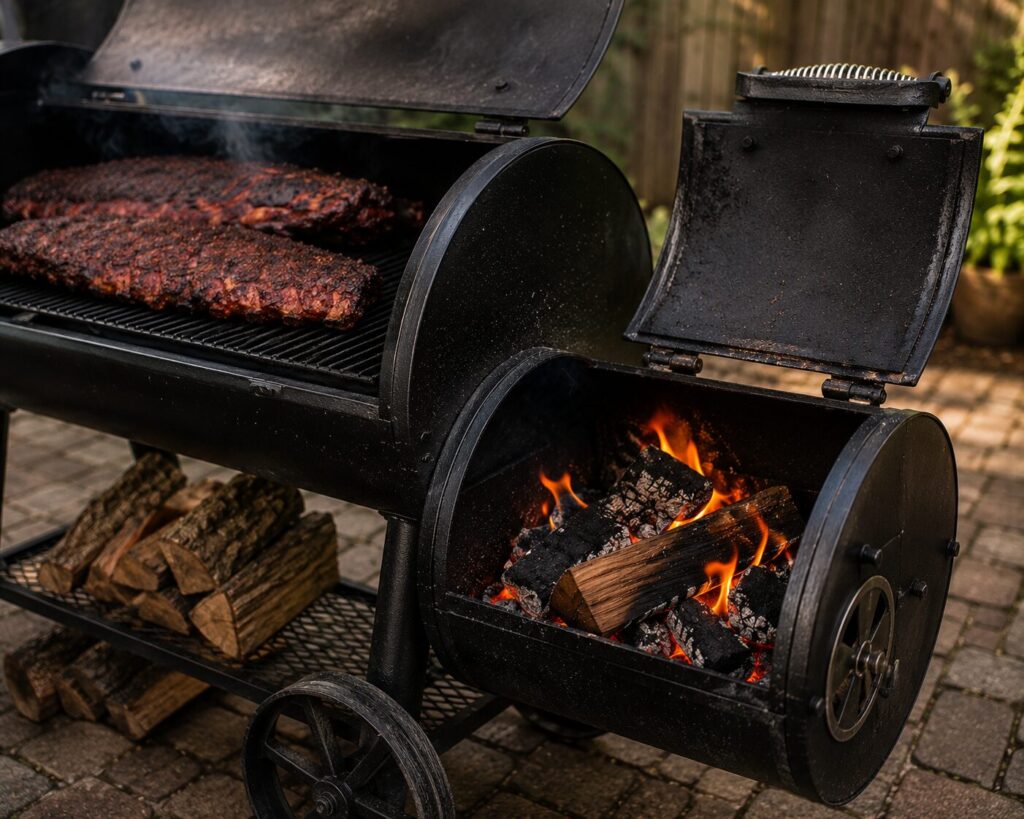
Offset Firebox Design
The side firebox is the heart of this smoker. It creates true indirect heat — smoke circulates around your food instead of blasting it with direct flame.
That means:
- Even cooking
- Better smoke penetration
- Reduced flare-ups
- Improved flavor
Heavy-Duty Steel Construction
Pit Boss builds these with heavy-gauge steel — not the thin, tinny metal you’ll find on cheaper pits.
Why that matters:
- Better heat retention
- Increased durability
- Long lifespan
- Improved cooking consistency
Pro tip: that heavier steel really earns its keep on cold or windy days, when thin-walled smokers struggle to hold temperature.
Large Cooking Capacity
One thing owners consistently praise is the roomy cooking chamber — there’s genuinely space to spread out.
Plenty of room for:
- Family gatherings
- Backyard parties
- Meal prep
- Large cuts of meat
Bonus: the firebox doubles as a direct-grilling spot, so you can sear steaks or burgers while something else smokes next door.

Porcelain-Coated Cooking Grates
The porcelain-enameled cooking grates aren’t just for looks — they’re built for:
- Rust resistance
- Easy cleanup
- Improved durability
- Reduced sticking
Anyone who’s scrubbed rusty grates at midnight after a long cook will appreciate this. Less sticking also means your bark stays on the meat, where it belongs.
Adjustable Dampers
The adjustable dampers are your steering wheel — they give you real control over airflow, which is everything in offset smoking.
With them, you can:
- Raise temperatures
- Reduce heat
- Control smoke levels
- Improve fuel efficiency
If you’re new to fire management, our guide to airflow management walks through the basics — it’s the single most important skill in offset smoking.
How Does a Pit Boss Offset Smoker Work?
The concept is beautifully simple — pure indirect heat:
- Wood or charcoal burns inside the side firebox.
- Heat and smoke travel into the cooking chamber.
- Food absorbs smoky flavor while cooking slowly.
- Smoke exits through the chimney, maintaining airflow.
That steady, low-and-slow cycle is what produces juicy meat with a deep smoke ring.
How to Use a Pit Boss Offset Smoker
Learning to use a Pit Boss smoker is straightforward — here’s the basic routine we recommend for beginners:
Preheat the Smoker
- Light charcoal or hardwood in the firebox.
- Wait until the fuel develops a coating of white ash before you start cooking — that means it’s burning clean.
Adjust the Temperature
Use the dampers to regulate airflow — small adjustments make a big difference.
More oxygen means:
- Hotter fire
- Higher temperatures
Less airflow results in:
- Lower temperatures
- Longer cooking times
Add Wood for Smoke Flavor
When it comes to smoke, wood choice is personal — but popular wood choices among pitmasters include:
- Hickory: Strong and traditional flavor.
- Oak: Balanced and versatile.
- Applewood: Sweet and mild.
- Mesquite: Bold and intense.
- Cherry Wood: Slightly fruity with excellent color enhancement.
Monitor the Food
- Place food in the cooking chamber and monitor temperatures regularly.
- Steady temperatures are the secret to great barbecue — resist the urge to keep opening the lid.
Temperature Control and Airflow Management
Mastering airflow separates okay barbecue from great barbecue. It’s the skill worth practicing first.

Intake Damper
You’ll find it on the firebox itself.
It controls:
- Oxygen supply
- Heat intensity
- Fuel burn rate
Pro tip: open the intake damper to raise temperatures — think of it as the gas pedal for your fire.
Chimney Damper
This one controls how much smoke and heat exits the smoker.
Proper adjustment helps:
- Maintain stable temperatures
- Produce cleaner smoke
- Improve fuel efficiency
Built-In Thermometer
The built-in lid thermometer lets you check temps at a glance without opening the lid and dumping all your heat.
This helps:
- Preserve heat
- Retain smoke
- Improve cooking consistency
That said, most experienced pitmasters we know also use digital thermometers — the built-in gauge tells you the general chamber temp, but a probe tells you what’s actually happening at the grate.
Fuel Options for Pit Boss Offset Smokers
Charcoal
Charcoal gives you:
- Consistent heat
- Long burn times
- Easy temperature management
Many owners start with a charcoal bed, then add wood for flavor — it’s the most forgiving way to learn fire management.
Hardwood Logs
For the real deal, nothing beats hardwood logs for authentic smoke flavor.
Popular choices include:
- Oak
- Hickory
- Mesquite
- Cherry
- Applewood
Wood Chips
- Wood chips provide quick bursts of smoke flavor.
- The trade-off: they burn fast, so you’ll be refilling often on long cooks.

Pros of the Pit Boss Offset Smoker
Affordable Price
Compared to premium brands, Pit Boss delivers a lot of smoker for the money — that’s its headline strength.
Versatile Cooking
You can smoke, grill, and roast — all in one unit:
- Smoke
- Grill
- Roast
Large Cooking Area
Feeding a crowd? There’s room for the brisket, the ribs, and then some.
Durable Construction
The heavy-duty steel build means this isn’t a one-season smoker — owners report years of reliable service.
Cons of the Pit Boss Offset Smoker
- Learning Curve: There’s a learning curve — beginners should expect a few practice cooks before nailing temperature control.
- Frequent Refueling: Long cooks need attention — you’ll be adding fuel periodically, so this isn’t a set-it-and-forget-it cooker.
- Heavy Weight: It’s heavy. That sturdy steel is great for cooking but not for moving around the patio solo.
Cleaning and Maintenance Tips
Regular maintenance is what separates a smoker that lasts three years from one that lasts ten.
Remove Ash After Every Cook
Ash traps moisture, and moisture means rust. Make this a habit, not a chore.
Clean Cooking Grates
Hit the grates with a grill brush while they’re still warm after each cook.
For deep cleaning:
- Remove grates
- Wash with warm soapy water
- Dry thoroughly
Wipe the Interior
Wiping out grease buildup keeps airflow clean and performance consistent.
Oil the Grates
Pro tip: a light wipe of cooking oil on the grates after cleaning is the cheapest rust insurance there is.
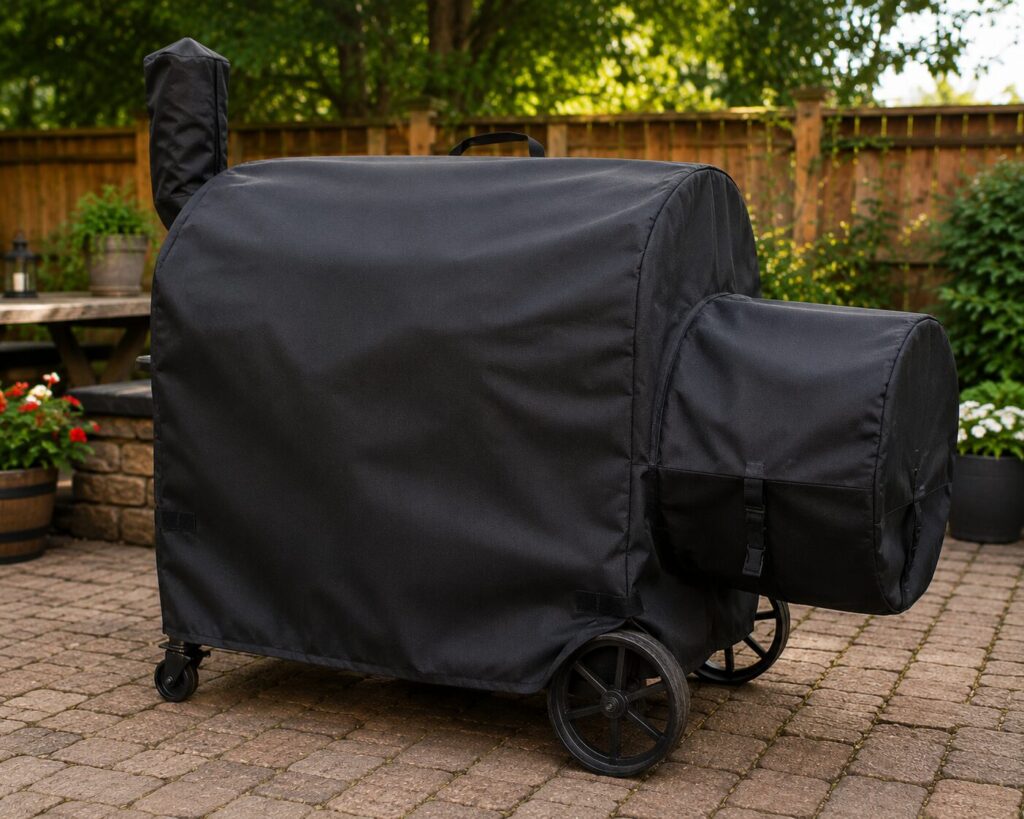
Use a Smoker Cover
A cover is a small investment that pays off — keeping rain and sun off the steel adds years to its life.
Pit Boss Offset Smoker Price
So what will it set you back? The Pit Boss Offset Smoker price generally lands between:
$300–$600
depending on:
- Size
- Cooking capacity
- Features
- Accessories
Bigger cooking surfaces and extra features push the price up, as you’d expect.
Even at the top of that range, owners consistently tell us it’s money well spent for what you get.
Is the Pit Boss Offset Smoker Worth Buying?
Here’s who we think it’s best for — barbecue lovers who want:
- Durability
- Large cooking space
- Excellent value
- Traditional barbecue flavor
If that sounds like you, the answer is yes.
It delivers genuine offset-smoker performance at a price that doesn’t hurt, which is why we rank it among the best offset smokers for beginners — and why experienced pitmasters keep recommending it too.
Frequently Asked Questions
Adjust the intake and chimney dampers to regulate airflow and maintain steady temperatures.
You can use:
- Charcoal
- Hardwood logs
- Wood chunks
- Wood chips
Many pitmasters combine charcoal and wood for optimal flavor.
Basic cleaning should be performed after every cook.
Deep cleaning should be done periodically.
Yes.
Its simple design and affordable price make it one of the best beginner offset smokers.
Most models range between $300 and $600, depending on size and features.
Why the Pit Boss Offset Smoker Is Worth the Investment
The Pit Boss Offset Smoker hits a sweet spot: durability, versatility, and value in one package. Its traditional offset design, roomy cooking area, adjustable dampers, and heavy-duty steel construction are exactly what backyard barbecue enthusiasts ask us about.
Yes, there’s a learning curve to mastering the fire — but that’s true of every great offset smoker. Put in the practice, use quality fuel, and this pit will turn out mouthwatering brisket, ribs, pork shoulder, and more for years to come.
Whether you’re just starting your barbecue journey or upgrading from a smaller setup, we think the Pit Boss Offset Smoker remains one of the smartest buys in its class.