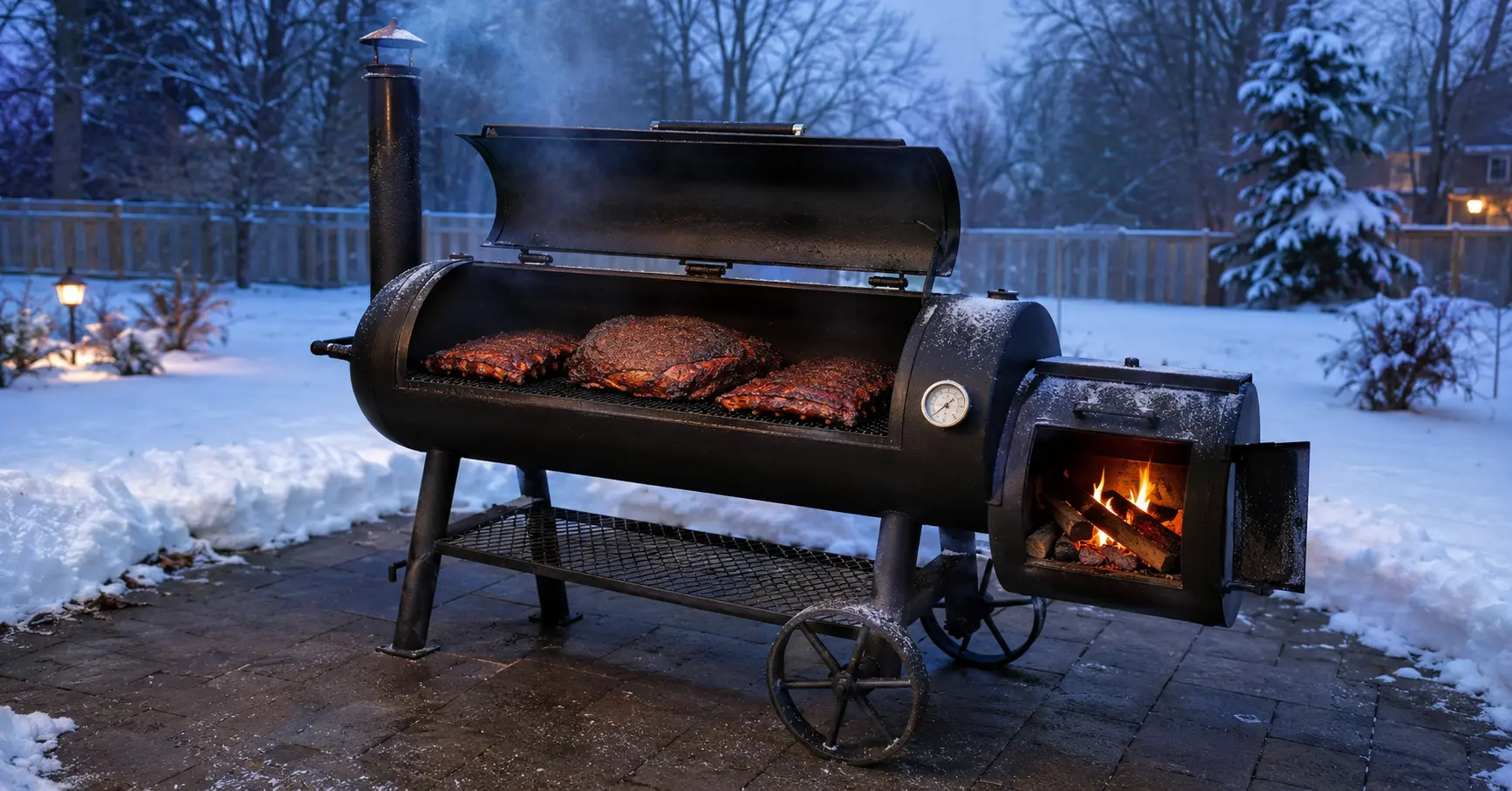
Learning how to use an offset smoker in cold weather allows you to enjoy authentic wood-fired barbecue throughout the year. Freezing air, cold steel, wind, rain, and snow make temperature control more demanding, but they do not make winter smoking impossible.
Successful cold weather offset smoking depends on retaining heat, protecting the smoker from wind, maintaining a clean fire, monitoring grate-level temperature, and keeping enough dry fuel available. You should also expect the smoker to take longer to preheat and require more attention than it would on a warm summer day.
Whether you plan to smoke brisket in freezing temperatures or prepare ribs during a cold weekend, this guide explains how to manage your smoker safely and consistently.
Can You Use an Offset Smoker in Cold Weather?
Yes, you can use an offset smoker in cold weather, including temperatures below freezing. However, the smoker loses heat to the surrounding air faster, so it may need more fuel and a longer preheating period.
A heavy, well-sealed smoker generally performs better in winter than a thin-walled model. However, even an entry-level offset smoker can produce excellent results when it is protected from wind and operated with a small, clean-burning fire.
The goal is not to eliminate every temperature fluctuation. Instead, focus on keeping the cooking chamber within a suitable smoking range and making small, controlled adjustments when necessary.
Why Cold Weather Affects Offset Smoker Performance
Understanding how winter conditions affect your smoker is the first step in learning how to use an offset smoker in cold weather.
1. Faster Heat Loss
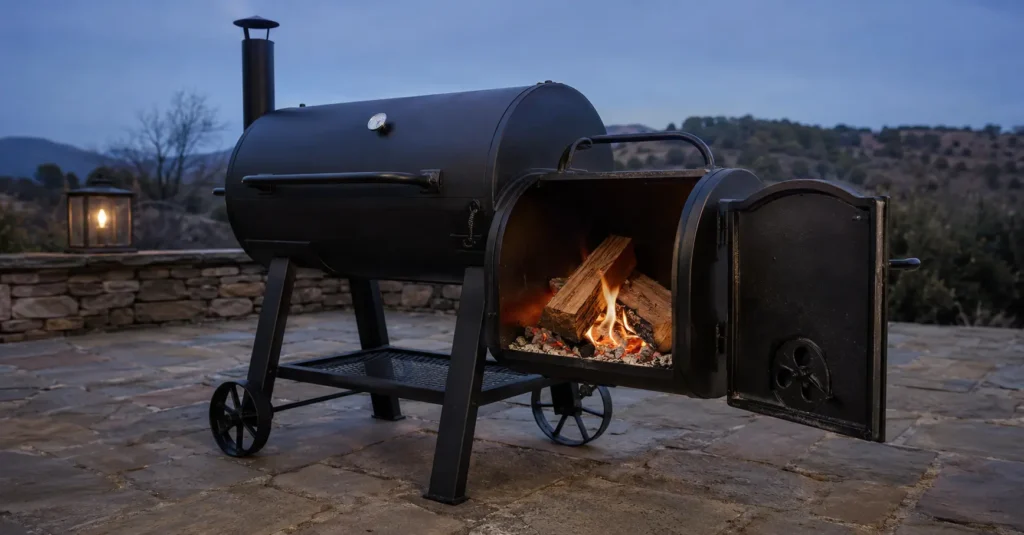
Cold air continuously pulls heat from the smoker’s metal body. Thin steel loses heat particularly quickly, making it harder to maintain a stable cooking temperature.
The area near the firebox may remain hot while the chimney side becomes noticeably cooler. A properly installed offset smoker heat diffuser can help spread incoming heat more evenly across the cooking chamber.
2. Increased Fuel Consumption
Your smoker must generate enough heat to warm the steel body, heat the cooking chamber, cook the meat, and replace heat lost to the surrounding environment. Consequently, winter cooks usually require more charcoal or hardwood than similar summer cooks.
The exact increase depends on:
- Outdoor temperature
- Wind speed
- Smoker wall thickness
- Air leaks
- Fuel quality
- Insulation
- Frequency of lid openings
Keep more dry fuel available than you expect to use rather than relying on a fixed percentage.
3. Greater Temperature Fluctuations
Cold wind can cool the smoker’s exterior and disturb the airflow entering the firebox. If wind blows directly into the intake vent, it may also cause the fire to burn hotter unexpectedly.
Small airflow and fuel adjustments work better than repeatedly making large changes. Our guide on how to control heat in an offset smoker explains how intake vents, exhaust flow, fire size, and fuel affect cooking temperature.
4. Condensation Inside the Smoker
When warm, moist air contacts cold steel, condensation can form inside the cooking chamber. Proper preheating warms the metal and reduces excessive moisture buildup before food is added.
A clean, fully heated cooking chamber also supports better smoke quality and more predictable cooking.
How to Prepare an Offset Smoker for Winter
Proper preparation makes cold weather smoking more efficient and reduces the risk of losing temperature during a long cook.
Clean the Firebox and Cooking Chamber
Remove accumulated ash before lighting the smoker. Excess ash can restrict airflow beneath the coal bed and make clean combustion more difficult.
Inspect the chimney, intake vent, grease drain, cooking grates, and the opening between the firebox and cooking chamber. None of these airflow pathways should be blocked.
Check for Air Leaks
Large gaps around the firebox door and cooking chamber lid allow valuable heat to escape. Food-safe, high-temperature gasket material can help seal excessive gaps when it is compatible with your smoker.
Do not seal the chimney, intake vent, grease drain, or any other opening required for safe airflow.
Keep Fuel Dry and Ready
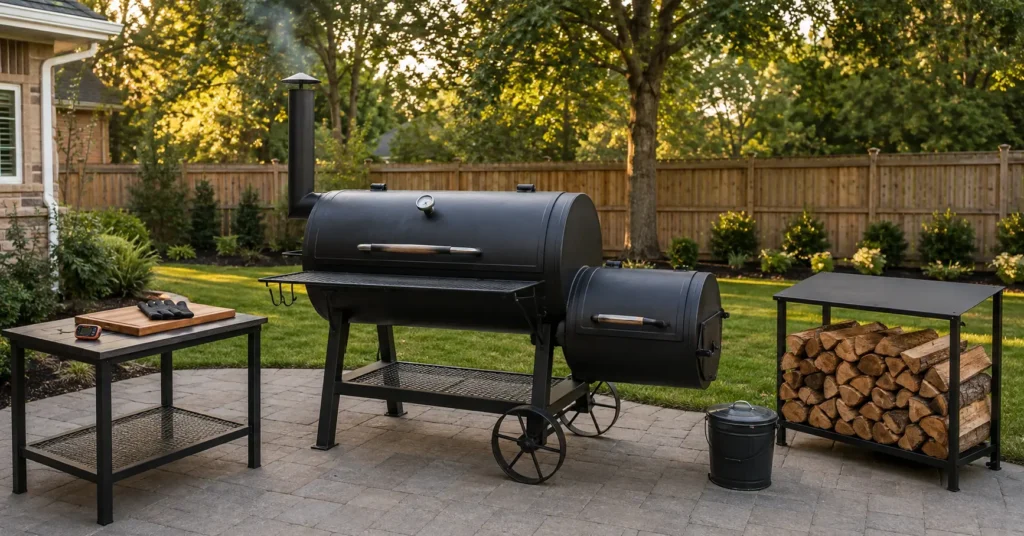
Wet or poorly seasoned wood is difficult to ignite and can produce thick, dirty smoke. Store charcoal and seasoned hardwood in a dry, covered location.
Keep the fuel close enough for convenient access, but maintain a safe distance between combustible material and the firebox.
Insulate Your Offset Smoker Safely
Proper insulation is one of the most effective ways to improve winter smoker temperature control.
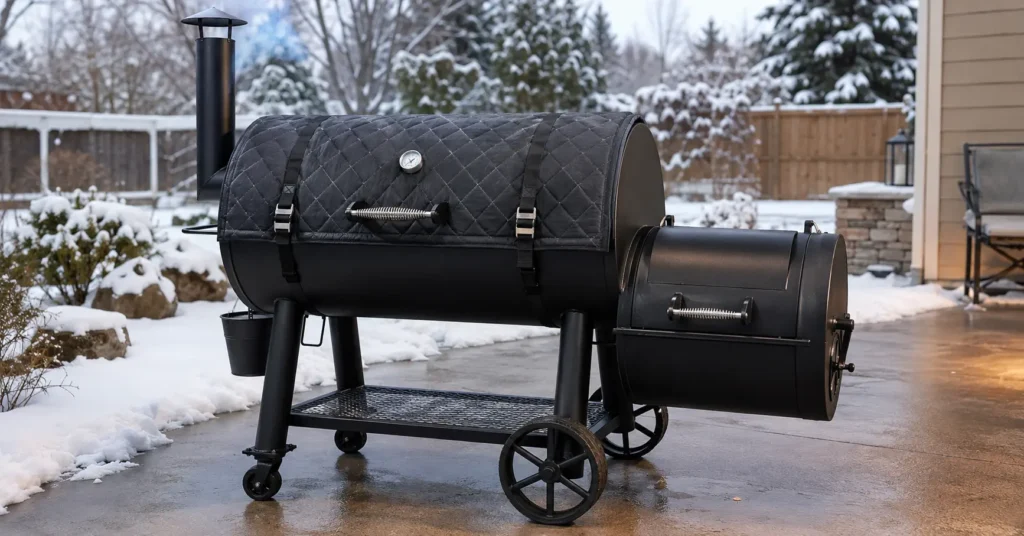
Use an insulation blanket specifically designed for barbecue smokers and follow its manufacturer’s instructions. If using a welding blanket, confirm that it is fire-resistant, free from unsuitable coatings or loose fibers, and appropriate for the temperatures involved.
Never cover:
- The firebox
- Chimney or exhaust opening
- Intake vents
- Handles that must remain accessible
- Grease drain
- Manufacturer-required ventilation areas
Keep all insulation away from open flames and extremely hot surfaces. Do not use household blankets, plastic tarps, foam, or other combustible materials as smoker insulation.
Protect Your Offset Smoker from Wind
Wind can make cold weather offset smoking more difficult than low temperature alone. Position the smoker on a stable, non-combustible surface where a wall or solid fence can reduce direct wind exposure.
A freestanding windbreak can also help, provided it cannot fall onto the smoker and remains a safe distance from hot surfaces.
Never operate an offset smoker inside a garage, shed, tent, vehicle, enclosed porch, or another poorly ventilated area. Charcoal and wood fires produce carbon monoxide, even when smoke is not obvious.
The chimney and firebox must remain outdoors with unrestricted ventilation throughout the cook.
Master Cold Weather Fire Management
Fire management is the most important practical skill when learning how to use an offset smoker in cold weather.
Build a Strong Coal Bed
Start with a fully lit chimney of charcoal. Once the charcoal is glowing and beginning to ash over, transfer it to the firebox and arrange it into a compact coal bed.
The coal bed provides reliable heat and helps newly added wood ignite quickly instead of smoldering.
Use Properly Sized Wood Splits
Use seasoned hardwood splits that fit your firebox and ignite without smothering the existing fire. Very large splits may take too long to ignite, while extremely small pieces may burn too quickly.
Oak is a versatile choice for long winter cooks. Hickory produces a stronger flavor, while apple and cherry provide a milder smoke profile.
Pre-Warm Wood Carefully
You can place the next wood split on a safe warming shelf or near—but never directly against—the firebox. Pre-warmed wood ignites faster and causes a smaller temperature drop when added.
Never leave wood unattended on a surface where it could ignite.
Add Fuel Gradually
Add one split when the fire begins to weaken rather than waiting for the temperature to collapse. Avoid filling the firebox with several cold splits at once because this may temporarily smother the fire and create heavy white smoke.
For more detailed guidance, follow these offset smoker fire management tips.
Keep the Chimney Open
Keep the chimney or exhaust vent fully or mostly open unless your smoker’s manufacturer specifically recommends otherwise. Control heat primarily through fire size and the firebox intake vent.
Restricting the exhaust can trap stale smoke and reduce the airflow required for clean combustion.
Preheat the Offset Smoker Thoroughly
Cold steel takes longer to absorb heat, so allow more preheating time than you would during warm weather. Depending on the smoker’s size, steel thickness, outdoor temperature, and wind, winter preheating may take 45–60 minutes or longer.
Do not judge readiness by the lid thermometer alone. Wait until:
- The cooking chamber has reached the intended temperature
- The grate-level reading has stabilized
- The steel body is thoroughly warm
- The fire is burning cleanly
- The chimney is producing light, nearly invisible smoke
Adding meat too early can prolong the cook and make the first stage of temperature control unnecessarily difficult.
Monitor Temperature at Grate Level
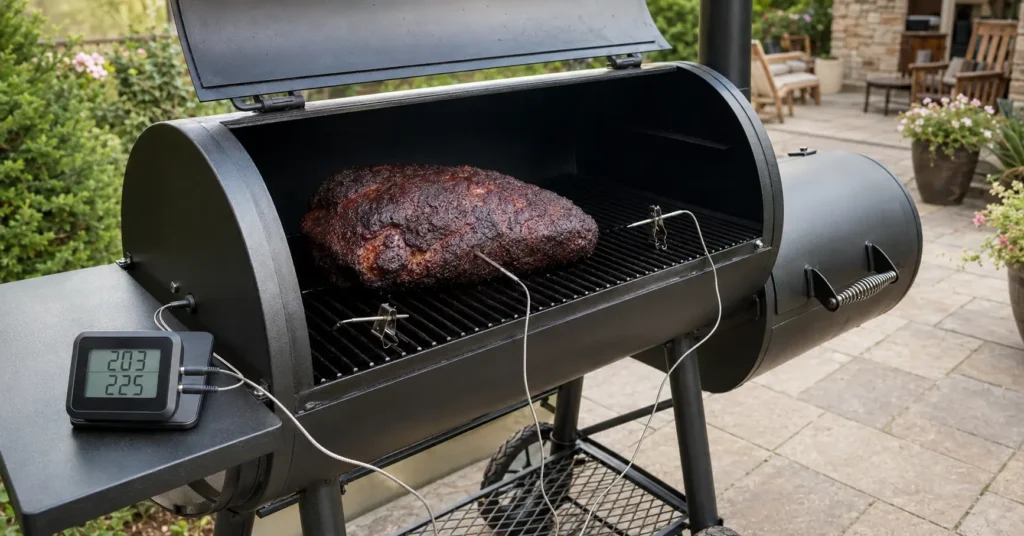
A factory-installed lid thermometer may not represent the temperature surrounding the food. Attach a digital ambient-temperature probe to the cooking grate near the meat without allowing it to touch metal.
A second probe can monitor the meat’s internal temperature. A quality offset smoker thermometer upgrade makes it easier to identify temperature changes without repeatedly opening the lid.
For food safety, the USDA recommends monitoring both smoker temperature and meat temperature. Its smoking meat and poultry safety guidance recommends keeping the smoker between 225°F and 300°F during cooking.
Use a Water Pan Correctly
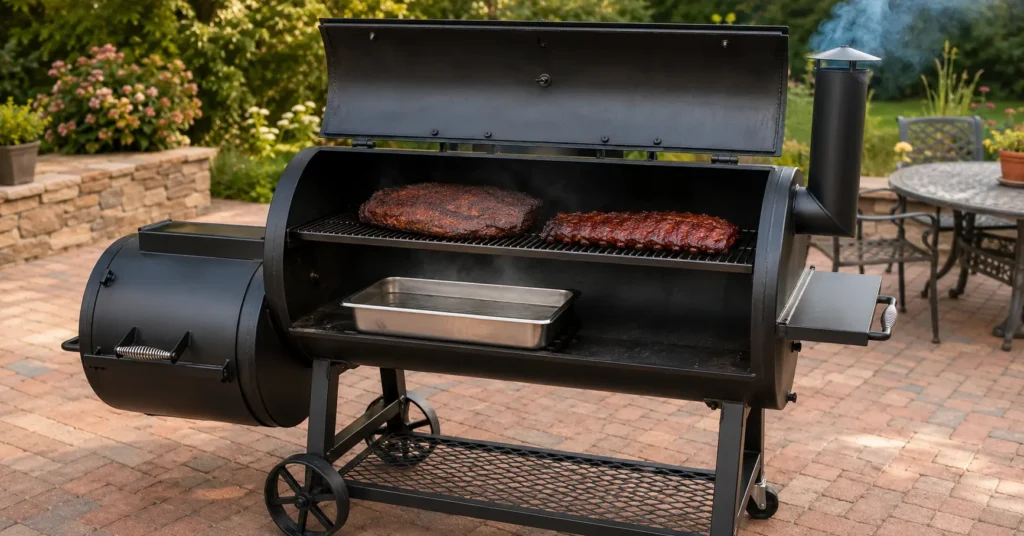
A water pan can act as a thermal buffer by absorbing and gradually releasing heat. It may help moderate rapid temperature changes, although it will not replace proper fire management.
Fill the pan with hot water so that cold water does not reduce the cooking chamber temperature. Position it securely without blocking:
- Heat entering from the firebox
- Chimney draft
- Reverse-flow openings
- Grease drain
- Airflow around the food
A properly positioned offset smoker drip pan can also collect grease and simplify cleanup. A water pan and a drip pan may perform different jobs, depending on your setup.
Keep the Cooking Chamber Closed
Every time you open the cooking chamber, accumulated heat escapes and cold outdoor air enters. This loss is more noticeable during winter.
Use remote thermometer probes to monitor conditions without lifting the lid. Before opening the smoker to rotate, wrap, spritz, or inspect the meat, prepare everything you need so the lid remains open for the shortest possible time.
Avoid checking the food according to curiosity alone. Internal temperature, bark development, and the requirements of your recipe should determine when the chamber needs to be opened.
Understand Winter Cooking Times
Cold weather does not automatically add a fixed percentage to every cook. Cooking duration is influenced by:
- Actual grate temperature
- Meat thickness and weight
- Smoker recovery time
- Wind and precipitation
- Lid openings
- Wrapping method
- Individual meat characteristics
Plan extra time and cook according to internal temperature and tenderness rather than the clock. If the meat finishes early, many large cuts can be held safely in an insulated cooler or controlled warming environment.
Never raise the fire aggressively simply because the cook is taking longer than expected. Large corrections can burn the exterior before the interior becomes tender.
Best Meats for Cold Weather Smoking
Several hearty cuts are well suited to winter BBQ because they benefit from controlled low-and-slow cooking.
Beef Brisket
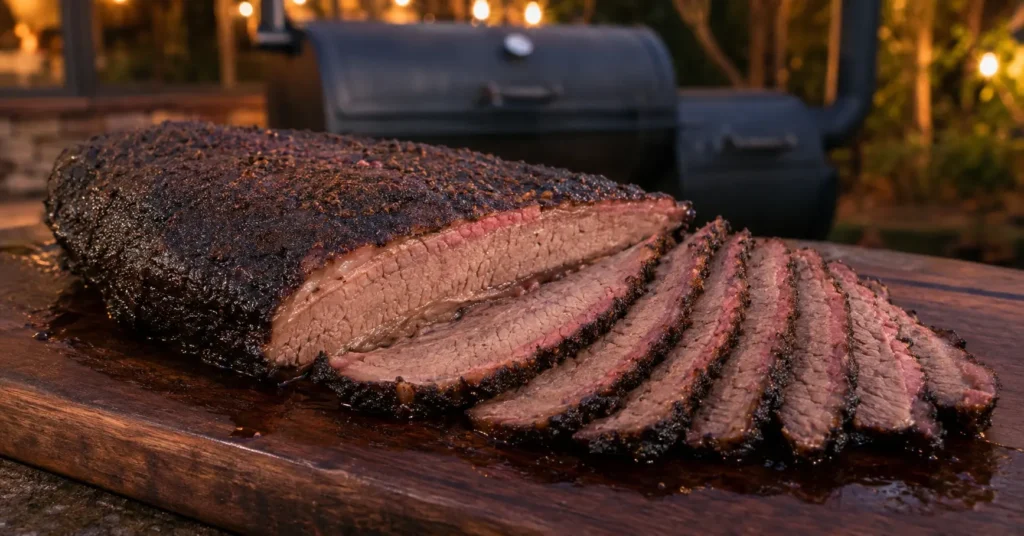
Brisket develops a flavorful bark and tender texture during an extended smoking session. It requires consistent temperature management, so make sure you have enough fuel before beginning.
Pork Shoulder
Pork shoulder is relatively forgiving and retains moisture well during a long cook. It is an excellent choice for someone learning how to use an offset smoker in winter.
Pork Ribs
Baby back and St. Louis-style ribs require less time than brisket or pork shoulder, making them practical for shorter winter days.
Beef Short Ribs
Beef short ribs contain connective tissue and marbling that respond well to slow cooking. Their rich flavor also makes them an excellent cold-weather meal.
Regardless of the cut, determine safety with a reliable food thermometer. The USDA’s safe internal temperature guidance recommends at least 145°F with a three-minute rest for whole cuts of beef and pork, 160°F for ground meat, and 165°F for poultry. Tender barbecue cuts may require higher final temperatures for the desired texture.
12 Tips for Successful Winter BBQ
When practicing how to use an offset smoker in cold weather, follow these essential tips:
- Check the weather forecast before starting a long cook.
- Position the smoker away from direct wind.
- Use only safe, heat-resistant smoker insulation.
- Keep the chimney and intake vents unobstructed.
- Allow extra time for thorough preheating.
- Begin with a strong, fully lit coal bed.
- Use dry, seasoned hardwood.
- Keep more fuel available than you expect to need.
- Add wood gradually to maintain clean smoke.
- Monitor cooking temperature at grate level.
- Keep the cooking chamber closed whenever possible.
- Cook meat according to internal temperature and tenderness, not time alone.
Cold Weather Offset Smoker Safety
Safe placement is more important than heat retention. Operate the smoker only outdoors in a well-ventilated area and maintain suitable clearance from walls, fences, roofs, dry vegetation, and combustible materials.
Do not use a propane heater to warm the smoker or surround the smoker with an enclosed shelter. Fuel-burning heaters and charcoal equipment can create dangerous carbon monoxide levels in enclosed or poorly ventilated spaces. The U.S. Consumer Product Safety Commission warns against using portable fuel-burning equipment in tents, campers, vehicles, and similar enclosed areas.
Also remember to:
- Keep a suitable fire extinguisher nearby
- Wear insulated, heat-resistant gloves
- Keep children and pets away from the smoker
- Remove snow and ice from the working area
- Use waterproof footwear with adequate grip
- Never leave the fire unattended for extended periods
- Allow ash and grease to cool completely before disposal
Common Cold Weather Smoking Mistakes
Adding Too Much Fuel
Large fuel additions can create extreme temperature spikes or smother the coal bed. Add smaller amounts and observe how the smoker responds.
Using Damp Wood
Damp wood burns inefficiently and produces heavy smoke that can make food taste bitter. Use properly seasoned, dry hardwood.
Closing the Exhaust Vent
Restricting the chimney traps stale smoke and reduces clean airflow. Keep the exhaust open and manage heat with fire size and intake airflow.
Opening the Lid Frequently
Repeated lid openings release heat and extend cooking time. Use digital probes to reduce unnecessary inspections.
Trusting Only the Lid Thermometer
Temperatures at the lid and cooking grate may differ considerably. Measure temperature near the food for more useful readings.
Using Unsafe Insulation
Household blankets, synthetic tarps, and flammable materials can melt or catch fire. Use only insulation appropriate for high-temperature smoker operation.
Enjoy Offset Smoking Throughout Winter
Learning how to use an offset smoker in cold weather requires preparation, patience, and closer fire management, but the basic smoking process remains the same. Protect the smoker from wind, preheat the steel thoroughly, maintain a strong coal bed, add dry wood gradually, and monitor temperature at grate level.
Use safe insulation when needed, keep all vents unobstructed, and never operate the smoker or fuel-burning heating equipment in an enclosed area. With a stable fire and enough fuel available, you can produce flavorful brisket, pork shoulder, ribs, and other smoked foods throughout the winter.
Cold weather may make offset smoking more demanding, but it does not have to stop the barbecue season.
Frequently Asked Questions
Yes. You can operate an offset smoker below freezing when it is protected from direct wind, thoroughly preheated, supplied with enough dry fuel, and monitored with an accurate grate-level thermometer.
Use an appropriate smoker insulation blanket, position the smoker behind a safe windbreak, build a strong coal bed, add seasoned wood gradually, and minimize lid openings. Sealing excessive air leaks can also improve heat retention.
Winter preheating may take approximately 45–60 minutes or longer. Instead of relying only on time, wait for the grate-level temperature to stabilize and for the fire to produce clean smoke before adding food.
Usually, yes. The smoker loses heat faster in cold air and wind, so it often requires more charcoal or wood. The actual amount depends on weather, smoker construction, air leaks, insulation, and cooking temperature.
Use splits sized appropriately for your firebox. They should burn long enough to maintain heat but ignite quickly without smoldering. A strong coal bed and pre-warmed, seasoned splits generally work better than oversized logs.
A water pan is optional, but it can help buffer temperature fluctuations. Start with hot water and position the pan so it does not restrict airflow, the grease drain, or heat entering from the firebox.
Brisket, pork shoulder, pork ribs, and beef short ribs are excellent winter choices. For a shorter cook, ribs are usually more convenient than a full brisket or pork shoulder.