
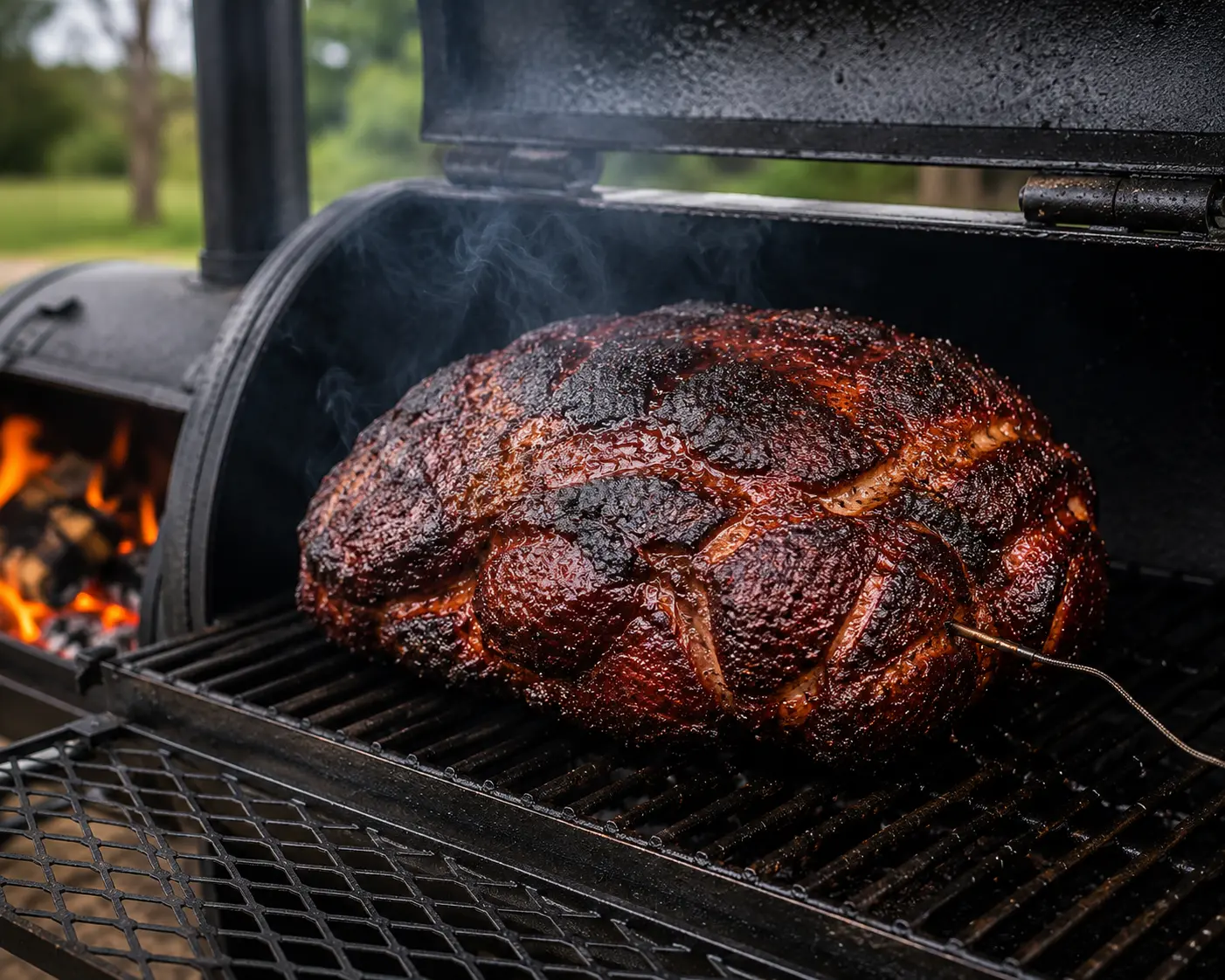
Smoking pork shoulder is one of the most rewarding ways to use an offset smoker. A cut that starts out firm and full of connective tissue slowly transforms into juicy, tender pulled pork with a smoky crust and rich barbecue flavor.
The process takes time, but pork shoulder is more forgiving than many other large cuts. As long as you maintain a clean fire, keep the temperature reasonably steady, and cook the meat until it becomes tender, you can achieve excellent results even if you are still learning how to use an offset smoker.
An offset smoker is particularly well suited to pork shoulder because the fire burns in a separate firebox. Heat and smoke move through the cooking chamber without exposing the meat to direct flames. This indirect cooking method allows the fat and connective tissue to break down gradually while the outside develops a flavorful bark.
This guide explains how to smoke pork shoulder on an offset smoker from start to finish. It covers choosing the right cut, trimming, seasoning, wood selection, fire control, spritzing, wrapping, testing for doneness, resting, and serving.
🔥 Quick Answer
Smoke pork shoulder at 225°F to 250°F until it reaches approximately 195°F to 205°F internally and feels tender when probed. A 6- to 10-pound shoulder usually takes 10 to 16 hours, followed by at least 30 to 60 minutes of resting. According to USDA food safety guidance, pork only needs to reach 145°F to be safe to eat, but pulled pork requires the higher 195–205°F range so the connective tissue can fully break down.
Choosing the Right Pork Shoulder
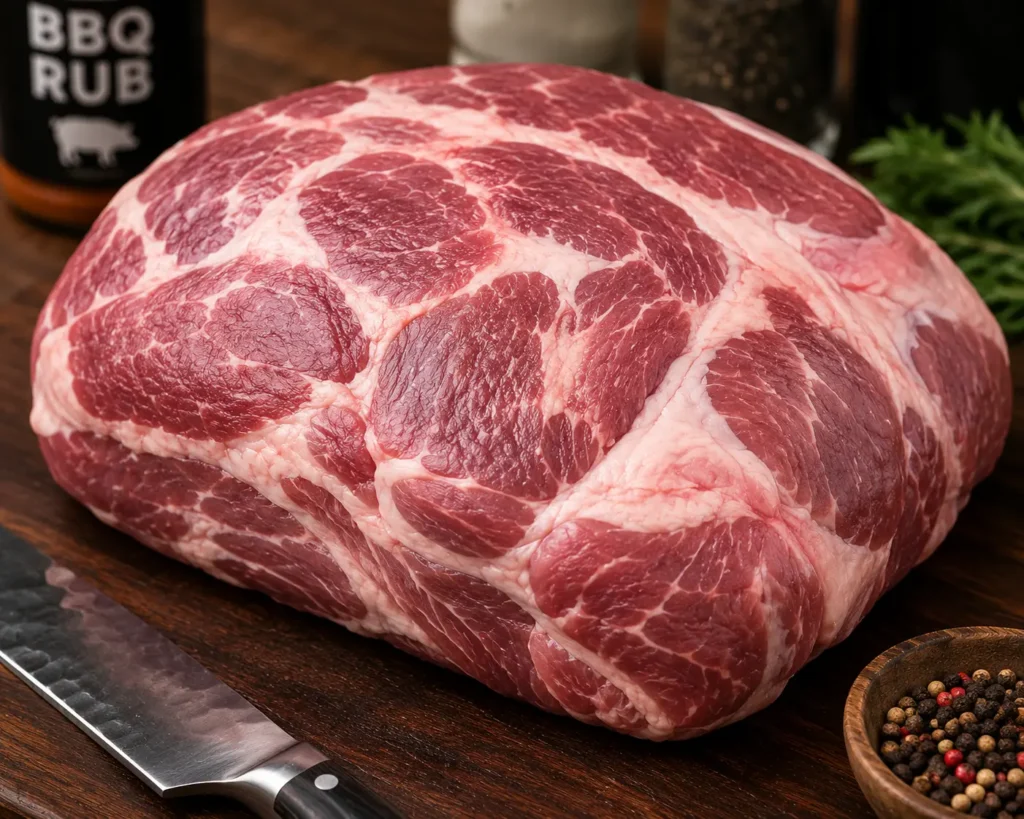
The first step is selecting a pork shoulder with enough fat and connective tissue to remain moist during a long cook. Pork shoulder is commonly sold as Boston butt or picnic shoulder, and both can be smoked successfully.
Boston butt comes from the upper section of the shoulder. It usually has better marbling, a more uniform shape, and a good balance of meat and fat. For these reasons, it is often the preferred choice for pulled pork.
Picnic shoulder comes from the lower section. It may contain more skin, bone, and uneven muscle groups. It can still produce excellent barbecue, although it generally requires more trimming and may take slightly longer to prepare. The National Pork Board has a useful breakdown of how the shoulder primal is divided if you want to understand exactly where each cut comes from.
A bone-in Boston butt weighing between 6 and 10 pounds is a practical choice for most backyard smokers. The bone helps the meat maintain its shape and also provides a useful way to check doneness. When the pork is fully tender, the shoulder blade should move freely and slide out with little resistance.
Look for visible marbling throughout the meat rather than choosing the leanest cut available. Intramuscular fat renders slowly during the cook and helps create moist, flavorful pulled pork.
Preparing the Pork Shoulder
Pork shoulder does not need aggressive trimming, but a few minutes of preparation can improve both bark formation and cooking consistency.
Remove any loose flaps of meat that may dry out before the rest of the shoulder is ready. Trim away hard exterior fat deposits, silver skin, and any thin edges that could burn during the long cooking process.
Leave approximately a quarter-inch of soft fat on the surface. This layer provides some protection from heat while still allowing smoke and seasoning to reach the meat.
If the fat cap is particularly thick, you can score it lightly with shallow cuts. Avoid cutting deeply into the meat. The goal is to help the fat render more evenly, not to create openings that allow moisture to escape.
Pat the pork shoulder dry with paper towels after trimming. A dry surface helps the binder and seasoning stick more evenly.
Seasoning the Pork Shoulder
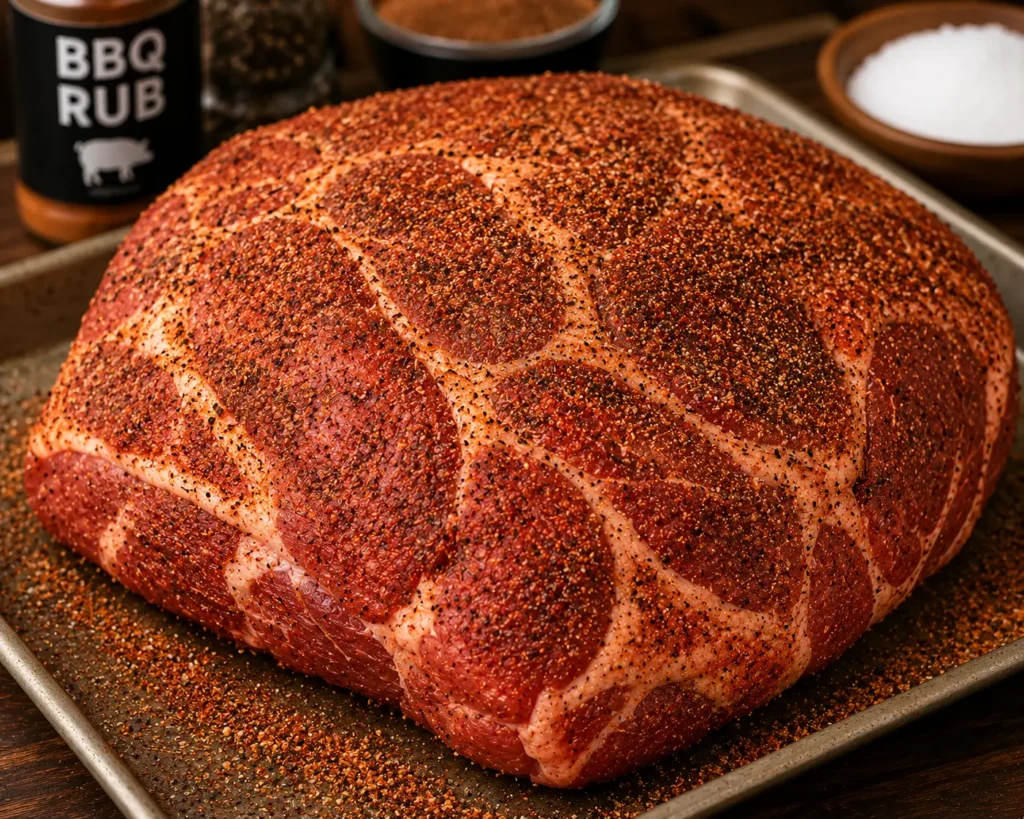
A well-balanced dry rub adds flavor and helps create the dark exterior bark that makes smoked pork shoulder so appealing.
A simple pork rub can be made with kosher salt, coarse black pepper, paprika, garlic powder, onion powder, and brown sugar. Chili powder or cayenne can be added for heat, while mustard powder or cumin can create a deeper savory flavor.
Apply a thin layer of yellow mustard, neutral cooking oil, or hot sauce as a binder. The binder helps the seasoning adhere but usually does not leave a strong flavor after several hours of smoking.
Cover every side of the pork shoulder evenly. Press the seasoning into the surface instead of rubbing it aggressively, which can create bare patches.
For a basic pork shoulder rub, use: Kosher salt and coarse black pepper Paprika, garlic powder, and onion powder Brown sugar for sweetness Chili powder or cayenne for optional heat
Allow the seasoned pork to rest for at least 30 minutes before smoking. For deeper seasoning, prepare it the night before and keep it refrigerated. Remove it while the smoker is preheating so the exterior is not ice cold when it enters the cooking chamber.
Setting Up the Offset Smoker
A clean and stable fire is one of the most important parts of learning how to smoke pork shoulder on an offset smoker. If your smoker is new, make sure you have already seasoned your offset smoker before running a long cook like this one.
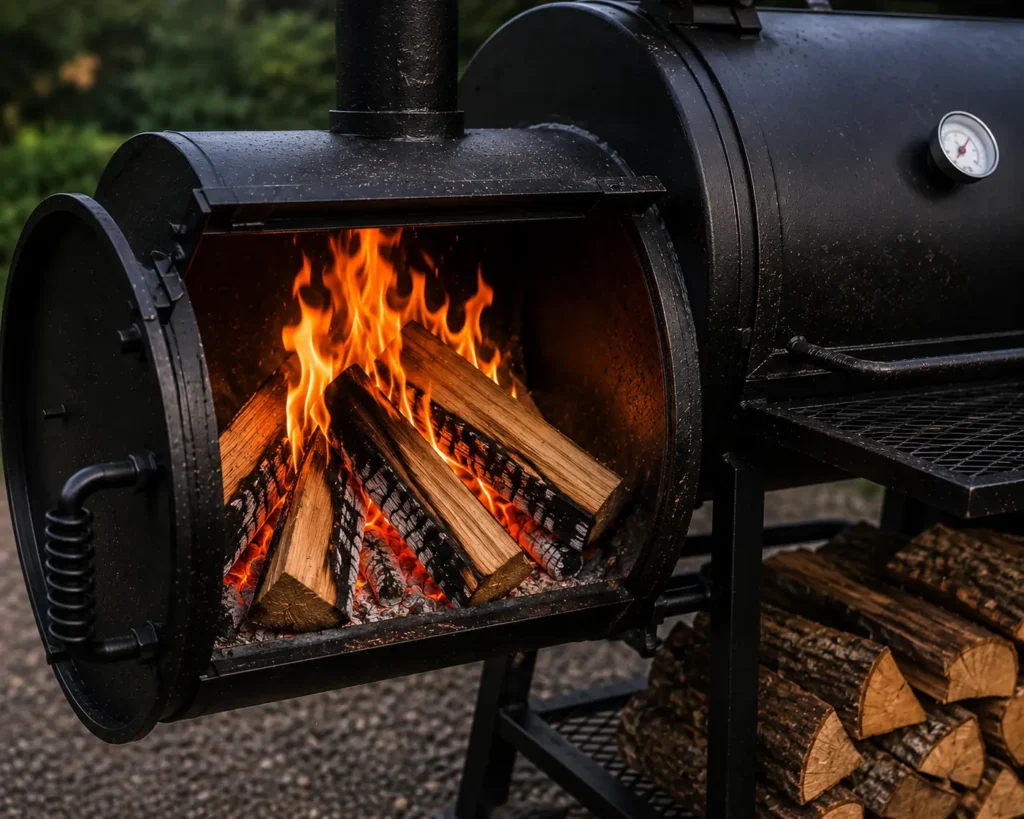
Begin by removing old ash from the firebox. Excess ash can restrict airflow and make the fire difficult to control. Open the chimney and intake vent before lighting the smoker.
Light a chimney starter filled with charcoal. Once the coals are fully ignited, transfer them to the firebox and arrange them into a compact coal bed. Add one small split of seasoned hardwood and allow it to burn cleanly. This process is covered in more depth in our offset smoker fire management guide.
Let the smoker preheat until the cooking chamber stabilizes between 225°F and 250°F. Depending on the size and thickness of the smoker, this may take 30 to 45 minutes.
Use a digital thermometer placed near the cooking grate. The thermometer mounted in the smoker lid may read differently from the temperature where the pork is actually cooking.
Keep the chimney fully or mostly open during the cook. Use the fire size and intake damper to manage temperature rather than restricting the exhaust and trapping stale smoke inside the chamber.
Choosing the Best Wood for Pork Shoulder
Wood choice has a noticeable effect on the final flavor. Pork works well with both strong hardwoods and milder fruit woods.
| Wood | Smoke Strength | Flavor |
| Oak | Medium | Clean, balanced, and easy to manage |
| Hickory | Strong | Traditional, rich barbecue flavor |
| Pecan | Medium | Nutty and slightly sweet |
| Apple | Mild | Sweet and fruity |
| Cherry | Mild | Sweet flavor with darker color |
Oak is an excellent all-purpose choice because it burns steadily and produces a balanced smoke flavor. Hickory creates a stronger, more traditional barbecue taste, while pecan offers richness without becoming overly intense.
Apple and cherry are milder and slightly sweeter. They work especially well when blended with oak or hickory. Oak and apple create a clean, balanced flavor, while hickory and cherry produce a deeper smoke profile and attractive bark color.
Always use properly seasoned hardwood. Wet or green wood burns poorly and can create thick white smoke, unstable temperatures, and bitter flavors.
Avoid pine, cedar, fir, painted wood, pressure-treated lumber, and any wood that may have been exposed to chemicals.
Placing the Pork Shoulder in the Smoker
Once the smoker is stable and producing clean smoke, place the pork shoulder on the cooking grate in the indirect heat zone.
Position the thicker side of the shoulder toward the firebox because it can tolerate more heat. Keep the meat away from direct flames and from the hottest section of the cooking chamber.
The fat cap should face the strongest source of heat. In some offset smokers, this means placing it downward. In others, it may need to face toward the firebox. The heat pattern of your smoker matters more than following a universal fat-side-up rule.
Insert a digital probe into the thickest part of the meat without touching the bone. Close the lid and avoid opening the cooking chamber during the first few hours unless the fire requires attention.
Maintaining Temperature and Clean Smoke
Try to keep the cooking chamber between 225°F and 250°F — see our full offset smoker cooking temperature guide for reference ranges across different cuts of meat. Small fluctuations are normal, especially in a traditional offset smoker. A steady range is more important than holding one exact number.
Add small wood splits or a limited amount of charcoal whenever the temperature begins to decline. Avoid waiting until the coal bed is nearly dead, because rebuilding a weak fire often produces dirty smoke and large temperature swings. For more detail on managing airflow and vents, see how to control heat in an offset smoker.
The ideal smoke should be thin and light blue, although it may appear almost invisible. Thick white or gray smoke usually indicates incomplete combustion, wet wood, or insufficient airflow.
Make small adjustments to the intake damper and allow the smoker time to respond. Constantly opening and closing vents can make temperature control more difficult.
Common Mistake: Do not add several large logs at once. Oversized fuel additions can cause sudden temperature spikes and heavy smoke. One small, preheated wood split at a time is usually easier to manage.
Spritzing the Pork Shoulder
Spritzing is optional, but it can help keep the surface from becoming excessively dry during a long smoking session.
Wait until the rub has set and the bark has started to form, usually after two or three hours. Spritzing too early can wash seasoning off the surface before it has bonded with the meat.
A simple mixture of apple juice and apple cider vinegar works well. Water, diluted vinegar, or pork broth can also be used.
Lightly mist the pork every 60 to 90 minutes only when the surface looks dry. Avoid soaking the meat. Too much liquid cools the surface, extends the cooking time, and can prevent the bark from becoming firm.
Understanding the Stall
At an internal temperature of approximately 150°F to 170°F, the pork shoulder may enter a stage known as the stall.
During the stall, moisture evaporating from the surface cools the meat and slows the rise in internal temperature. The thermometer may appear stuck for one or several hours, even though the smoker is working properly.
This is completely normal. You can leave the pork unwrapped and allow it to move through the stall naturally, or wrap it once the bark has reached the desired color and texture.
Cooking unwrapped usually creates a firmer bark but increases the total cooking time. Wrapping speeds up the process and helps retain moisture, although it can soften the exterior.
Wrapping the Pork Shoulder
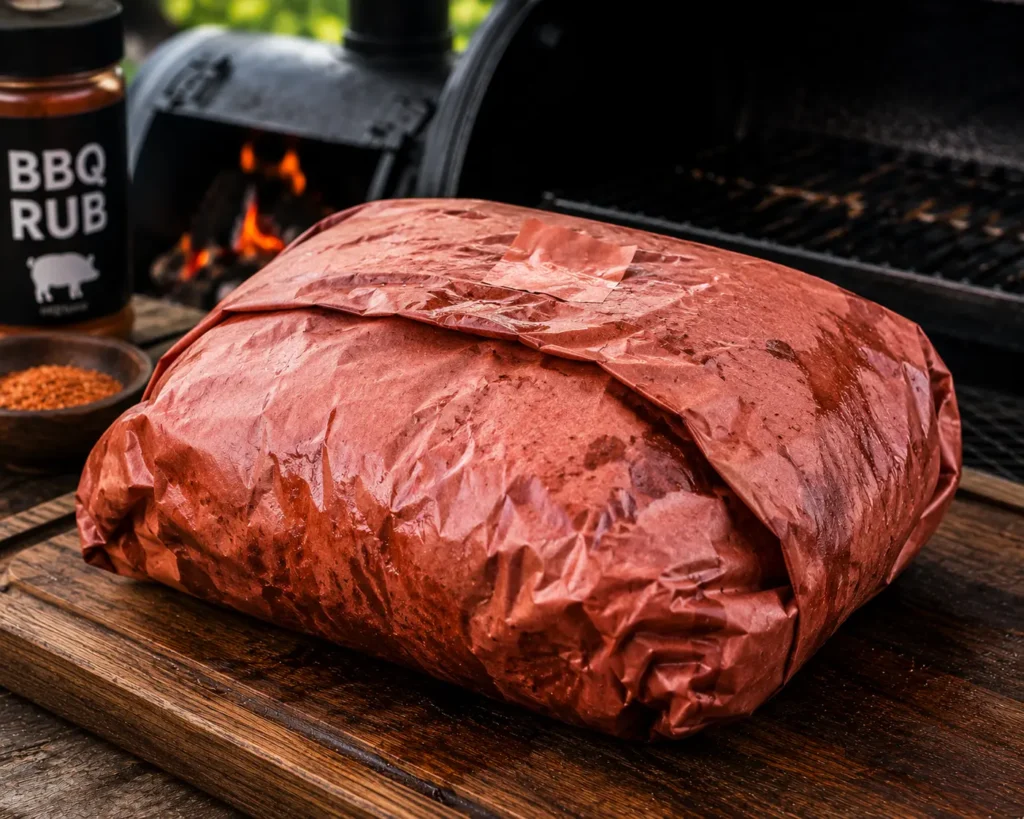
Wrapping is optional, but it can be useful when you want to reduce the cooking time or protect the meat from becoming too dark.
Wrap the pork when it reaches approximately 160°F to 170°F and the bark looks dark, dry, and firmly attached. Do not wrap simply because the thermometer reaches a particular number. The bark should be properly developed first.
Aluminum foil traps more steam and usually produces softer, very moist pulled pork. Butcher paper allows more moisture to escape and generally preserves a firmer bark.
Wrap the pork tightly and return it to the smoker. If desired, add a small amount of apple juice, pork broth, or rendered fat before sealing the wrap.
Achieving a Better Bark
Bark forms through the interaction of seasoning, smoke, heat, fat, and surface moisture.
A good bark begins with an even layer of seasoning and a clean-burning fire. Avoid opening the smoker too frequently, and do not spritz until the rub has set.
Wait until the exterior is dark and firm before wrapping. If the bark becomes too soft inside foil, unwrap the pork during the final 20 to 30 minutes and return it to the smoker.
Do not mistake heavy smoke for better bark. Thick smoke often creates bitterness instead of the clean, smoky flavor associated with properly cooked barbecue.
Testing the Pork Shoulder for Doneness
Most pork shoulders become tender between 195°F and 205°F, but temperature alone does not determine when the meat is finished.
Begin checking for tenderness at around 195°F. Insert a thermometer probe or thin skewer into several areas of the shoulder. It should slide in with very little resistance, similar to entering softened butter. A reliable instant-read or leave-in probe thermometer, such as the models compared by ThermoWorks, makes this step much easier to judge accurately.
For a bone-in shoulder, gently test the shoulder blade. The bone should move freely and slide out cleanly when the connective tissue has fully broken down.
If the probe still meets resistance, continue cooking and check again after 20 to 30 minutes. A pork shoulder can be safe to eat while still being too firm to shred properly.
Resting the Pork Shoulder
Resting is essential because it allows the juices inside the meat to settle before shredding.
Remove the pork shoulder from the smoker and keep it wrapped. Let it rest for at least 30 to 60 minutes. A larger shoulder can rest for one to two hours without any problem.
For a longer hold, place the wrapped pork inside an insulated cooler and cover it with clean towels. You can also hold it in a warm oven at approximately 150°F to 170°F. If resting for an extended period, keep in mind USDA guidance on holding cooked meat safely above 140°F to avoid the temperature danger zone.
Do not shred the meat immediately after removing it from the smoker. Opening it too early can cause valuable moisture to escape.
Shredding and Serving
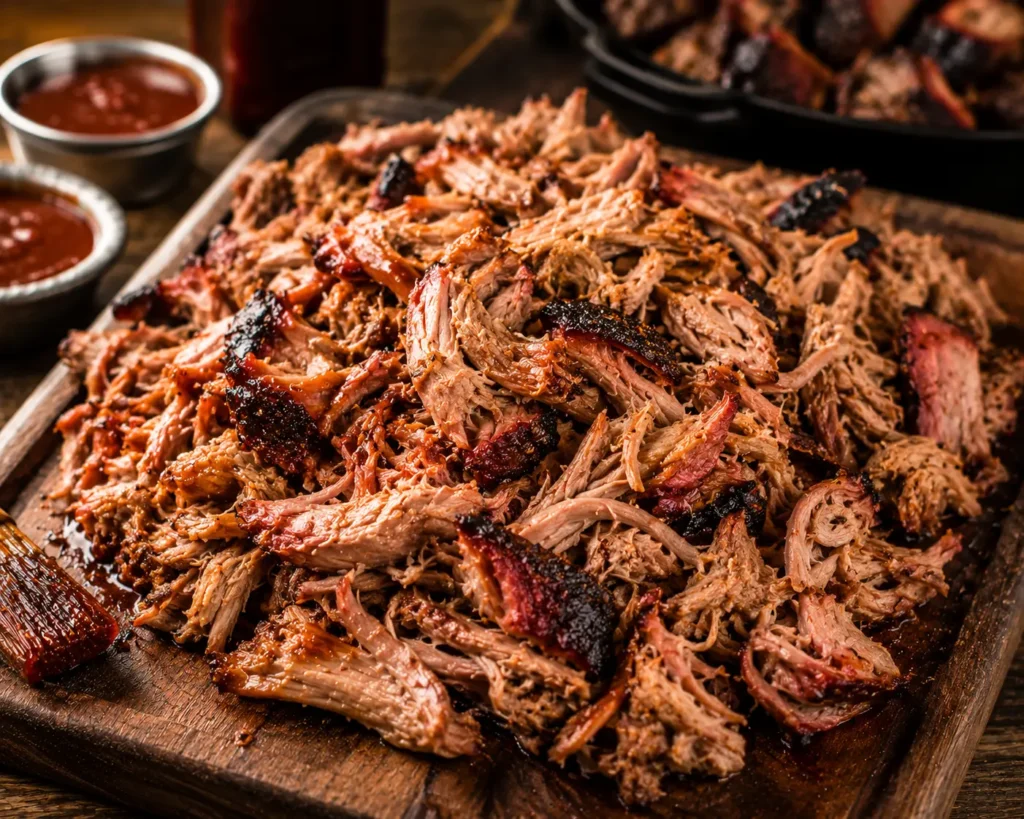
After resting, carefully open the wrapping and save the cooking juices. Remove the shoulder blade and discard any large pieces of hard fat or cartilage.
Use gloved hands, two forks, or meat claws to pull the pork into tender strands. Break the bark into smaller pieces and mix it throughout the meat so every serving contains both smoky exterior and juicy interior pork.
Add some of the reserved juices back into the meat to improve moisture and flavor. Taste before adding extra salt, rub, vinegar, or barbecue sauce.
Smoked pork shoulder can be served on buns with coleslaw, alongside baked beans and cornbread, or used in tacos, nachos, quesadillas, baked potatoes, and sandwiches. If you want another low and slow project for your next cook, try our offset smoker brisket recipe or our guide to smoking ribs on an offset smoker.
Frequently Asked Questions
At 225°F to 250°F, pork shoulder usually takes approximately 1½ to 2 hours per pound. A 6- to 8-pound shoulder may require around 10 to 16 hours, depending on the smoker, weather, meat size, and length of the stall.
Wrapping is optional. Foil helps the meat cook faster and retain more moisture, while butcher paper preserves a firmer bark. Leave it unwrapped if you prefer a stronger crust and have enough time to wait through the stall.
Oak, hickory, and pecan are excellent choices for rich barbecue flavor. Apple and cherry provide a milder, sweeter smoke. A combination such as oak and apple creates a balanced flavor that works well for beginners.
The meat is done when it reaches approximately 195°F to 205°F and feels tender when probed. The shoulder blade should move freely, and the pork should pull apart without resistance.
Yes. Pork shoulder can be smoked successfully at 275°F. It will cook faster and can still remain juicy and tender, provided the fire burns cleanly and the meat is cooked until probe tender.
Final Thoughts on Smoking Pork Shoulder on an Offset Smoker
Learning how to smoke pork shoulder on an offset smoker is mostly about patience, fire control, and knowing how to judge tenderness. Start with a well-marbled Boston butt, season it evenly, and allow the offset smoker to stabilize before adding the meat.
Maintain a clean fire between 225°F and 250°F, use seasoned hardwood, and avoid unnecessary lid openings. Spritz only when the surface needs moisture, and decide whether to wrap based on the condition of the bark rather than the thermometer alone.
The pork shoulder is ready when a probe slides in easily and the bone loosens with almost no effort. After a proper rest, the meat should shred into moist, flavorful strands with a balance of smoky bark and tender interior pork.
With these techniques, an offset smoker can consistently produce pulled pork that is rich, juicy, and suitable for sandwiches, barbecue plates, tacos, and many other meals.