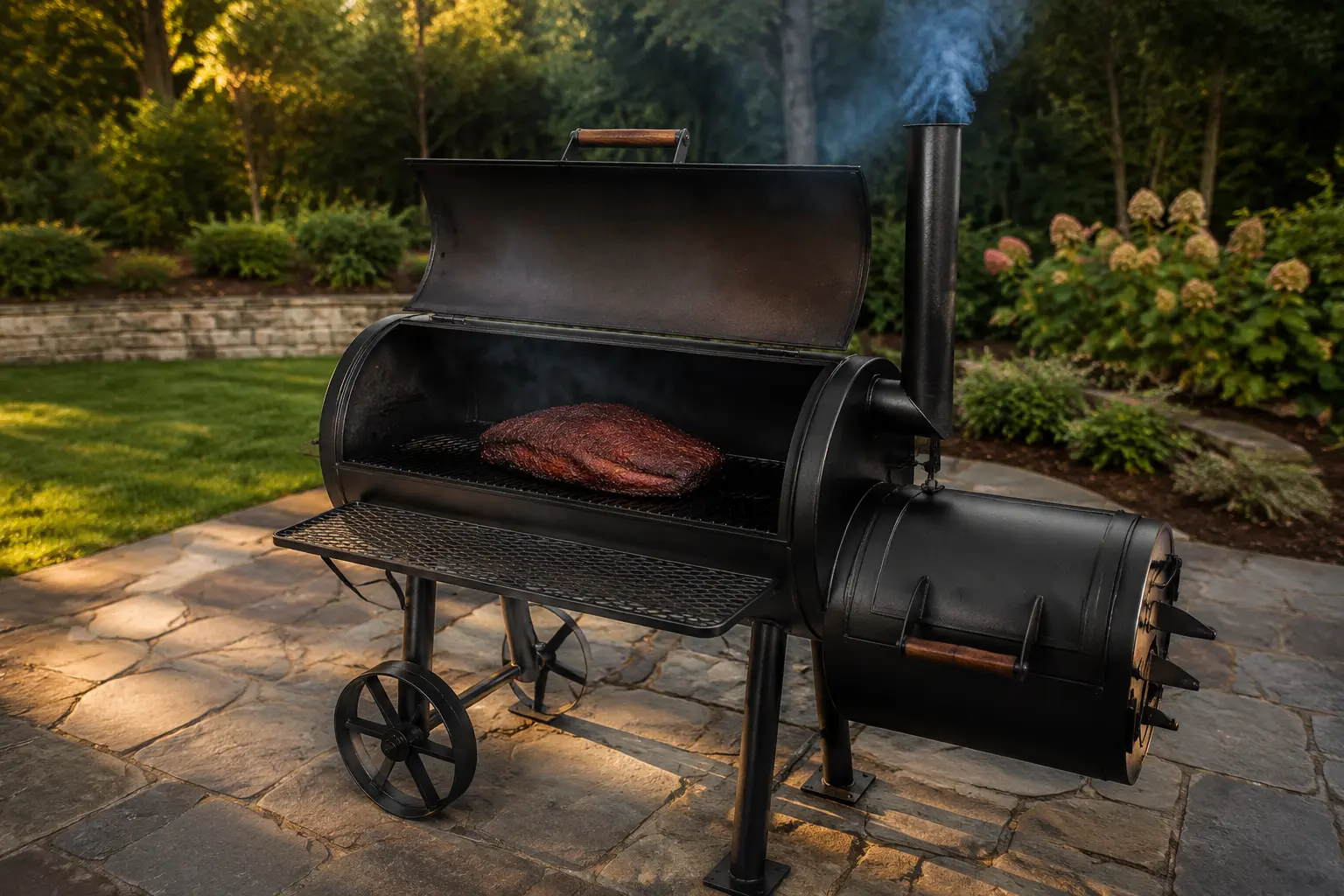
Choosing the best reverse flow offset smoker can make long barbecue sessions more predictable by reducing hot spots and distributing heat more evenly across the cooking chamber. Unlike a traditional offset smoker, a reverse-flow model directs heat and smoke beneath a solid baffle plate before sending them back across the food toward a chimney near the firebox.
This longer airflow path helps stabilize cooking temperatures while shielding meat from the intense heat entering the chamber. The design is especially useful when smoking brisket, pork shoulder, ribs, turkey, and other foods that require steady low-and-slow heat.
However, not every product advertised as an offset smoker uses a genuine reverse-flow system. Pellet grills, bullet smokers, vertical charcoal smokers, and standard offset grills work differently. This guide compares seven genuine reverse-flow models from Oklahoma Joe’s, Lang BBQ Smokers, and Meadow Creek.
Best Reverse Flow Offset Smokers at a Glance
| Reverse-Flow Smoker | Best For | Cooking Capacity | Main Advantage |
| Oklahoma Joe’s Highland Reverse Flow | Best budget option | Over 800 sq. in. | Affordable and configurable |
| Oklahoma Joe’s Longhorn Reverse Flow | Best large budget model | 1,060 sq. in. | More room for large cooks |
| Lang 36 Original Patio | Best overall backyard smoker | Over 6 sq. ft. | Heavy 1/4-inch steel |
| Lang 36 Deluxe Patio | Best with warming cabinet | Over 6 sq. ft. | Additional warmer space |
| Lang 48 Original Patio | Best for serious enthusiasts | Around 10 sq. ft. | Higher cooking capacity |
| Meadow Creek TS70P | Best premium compact model | Family and small-event capacity | Sealed drip-pan airflow |
| Meadow Creek TS120P | Best for catering and events | High-volume capacity | Commercial-grade construction |
What Is a Reverse Flow Offset Smoker?
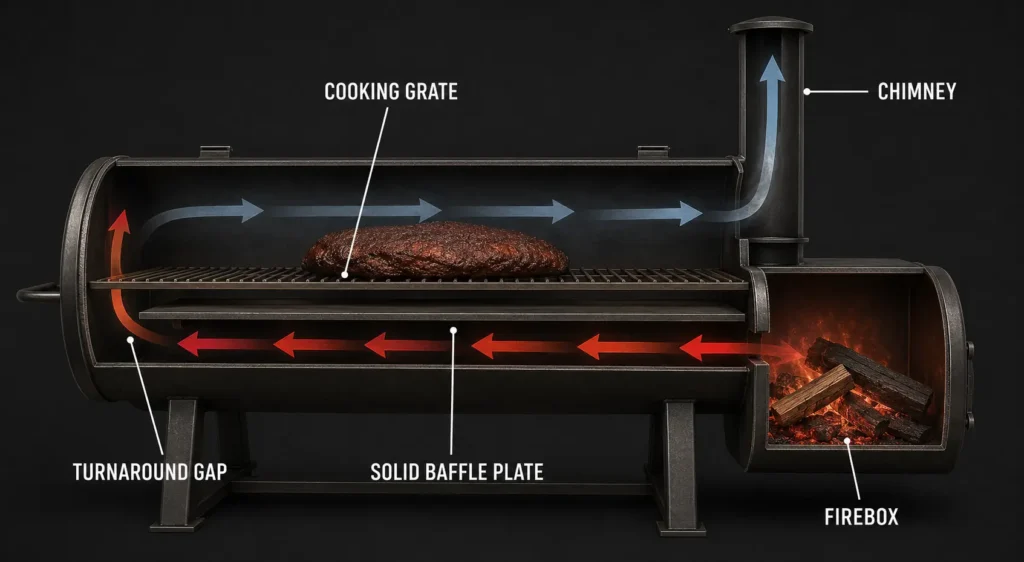
A reverse flow offset smoker has a separate firebox attached to one side of its horizontal cooking chamber. Heat and smoke enter the chamber beneath a steel baffle or sealed drip pan and travel toward the opposite end. They then reverse direction, pass across the food, and exit through a smokestack positioned near the firebox.
This design creates a longer and more controlled airflow path than a traditional offset smoker. You can learn more about the mechanism in this complete reverse flow offset smoker setup and cooking guide.
The solid plate also absorbs heat and acts as a thermal mass. Once heated, it can reduce sudden temperature changes when the fire briefly rises or falls. It may also protect meat placed near the firebox from excessive radiant heat.
A reverse-flow design does not make fire management completely automatic. You must still use seasoned wood, maintain adequate airflow, monitor grate-level temperatures, and add appropriately sized fuel. However, the best reverse flow offset smoker can make heat distribution more consistent and reduce how frequently food needs to be rotated.
1. Oklahoma Joe’s Highland Reverse Flow Offset Smoker
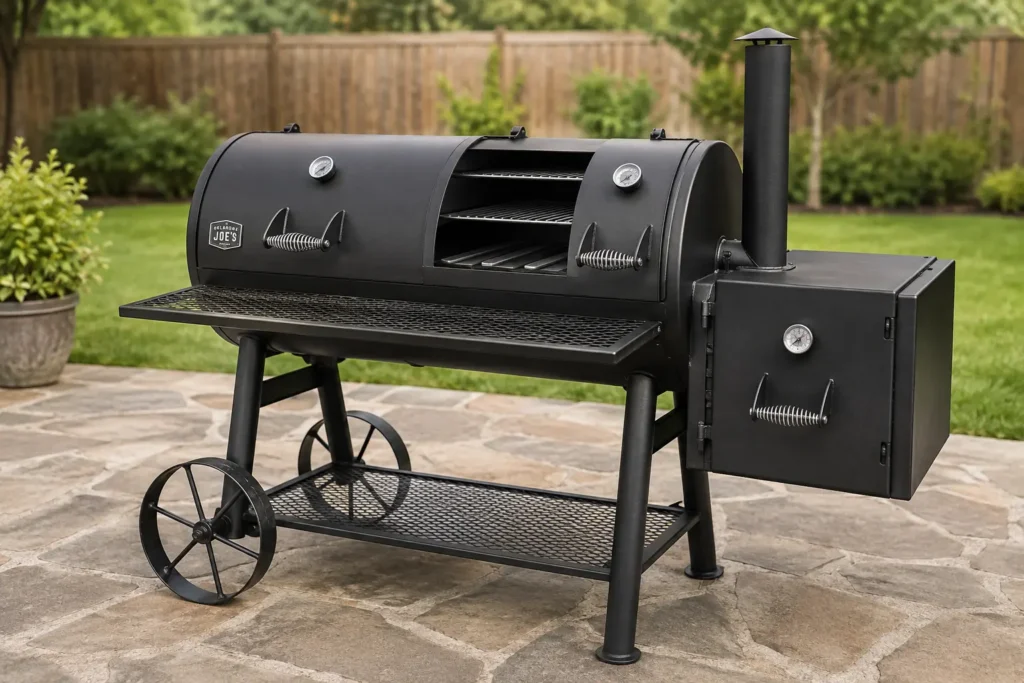
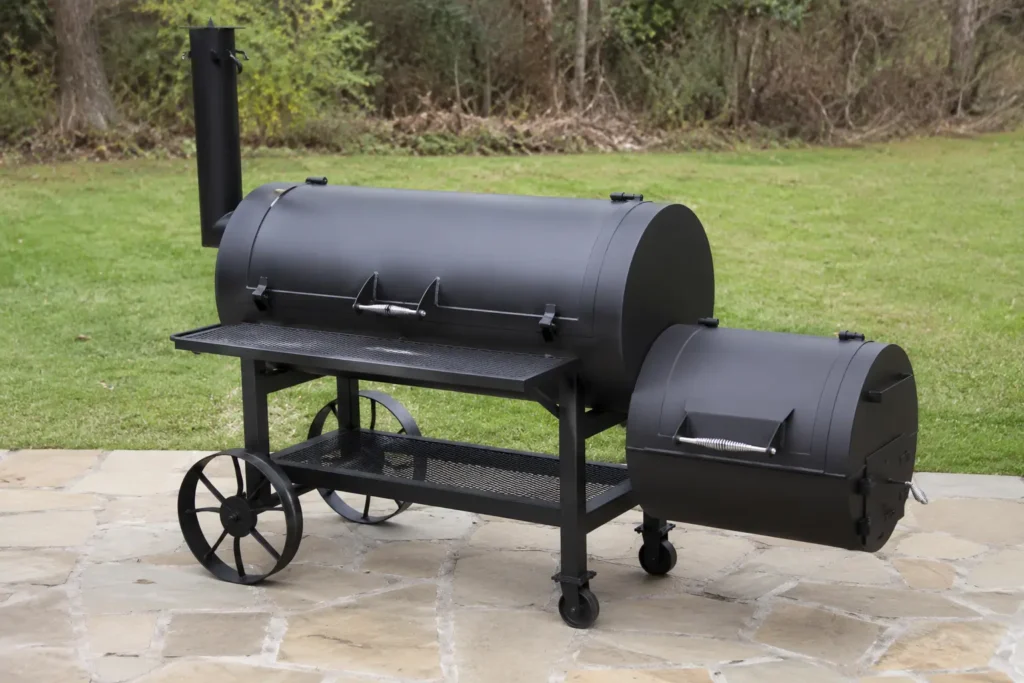
The Oklahoma Joe’s Highland Reverse Flow is one of the most accessible choices for backyard cooks entering the reverse-flow category. Its price, manageable footprint, removable baffles, charcoal basket, and heavy-gauge steel construction make it a practical alternative to significantly more expensive welded smokers.
The Highland uses multiple baffle plates to guide heat beneath the cooking surface. It also provides optional smokestack positions, allowing owners to configure it for reverse-flow or more traditional offset cooking. This flexibility is useful for anyone who wants even temperatures during brisket cooks but also wants separate temperature zones for cooking different foods.
Although the Highland is one of the strongest budget candidates for the best reverse flow offset smoker, its metal is lighter than the 1/4-inch steel used on premium pits. Door gaps may also allow some smoke to escape. High-temperature gasket material can help reduce leakage, while careful fire management can control temperature fluctuations.
Pros
- More affordable than most premium reverse-flow smokers
- Removable baffle plates
- Optional chimney configurations
- Charcoal basket and ash cleanout system
- Suitable capacity for typical family cookouts
Cons
- Lighter construction than premium welded smokers
- May require sealing or minor modifications
- Needs more attention in cold or windy weather
Best For
Beginners and backyard cooks who want the best reverse flow offset smoker at an approachable price.
2. Oklahoma Joe’s Longhorn Reverse Flow Offset Smoker
The Oklahoma Joe’s Longhorn Reverse Flow offers approximately 1,060 square inches of total cooking space. It follows the same configurable concept as the Highland but provides more room for briskets, ribs, pork shoulders, and whole chickens.
Its removable baffles direct heat and smoke beneath the cooking grates before returning them across the food. The baffles can also be removed when you want to create the distinct temperature zones associated with a standard offset configuration.
The additional capacity makes the Longhorn a better choice for large families, neighborhood gatherings, or cooks who regularly prepare several cuts at once. However, the larger cooking chamber requires a stronger fire and more fuel than the Highland.
The Longhorn is a convincing best reverse flow offset smoker candidate for buyers who need additional cooking space without moving into the price range of a handcrafted commercial pit.
Pros
- Approximately 1,060 square inches of cooking space
- Can operate in reverse-flow or traditional configuration
- Multiple cooking grates
- Heavy-gauge steel body
- Separate firebox access for adding fuel
Cons
- Requires more patio space
- Uses more fuel than the Highland
- Temperature gauges should be checked against grate-level probes
Best For
Backyard pitmasters who need a spacious reverse-flow smoker at a mid-range price.
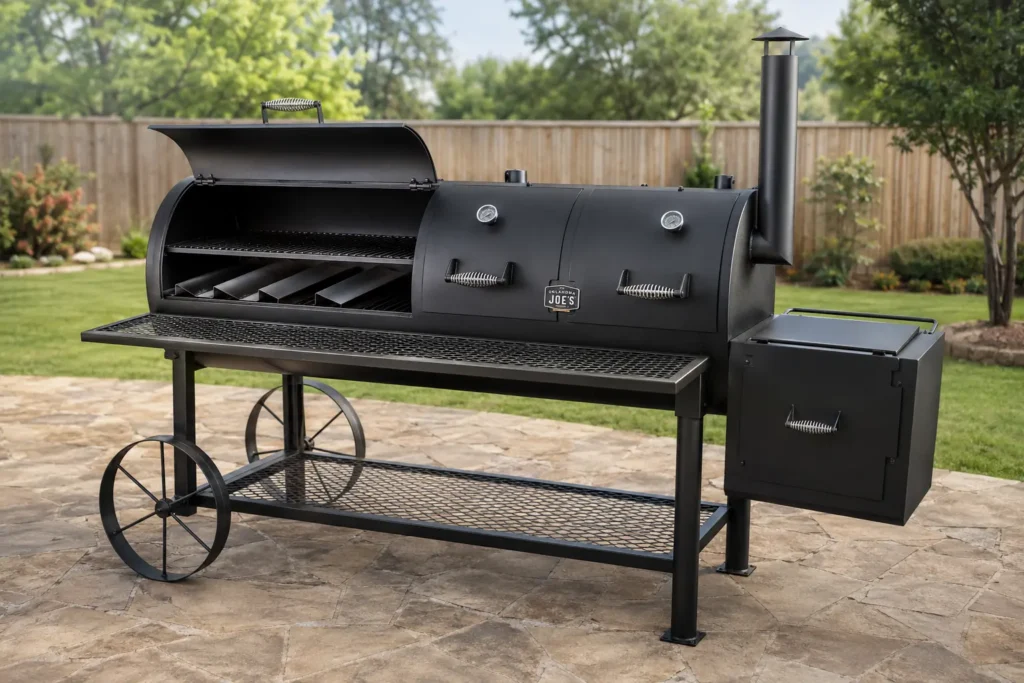
3. Lang 36 Original Patio Reverse Flow Smoker
The Lang 36 Original Patio is our overall best reverse flow offset smoker for serious backyard barbecue. It combines commercial-style construction with a size that remains practical for home use.
Lang constructs the smoker from 1/4-inch rolled steel using an all-welded body. The thick steel absorbs and retains more heat than lighter entry-level smokers, helping the cooking chamber recover after the door is opened. Its welded construction also reduces the gaps commonly found in bolt-together products.
According to Lang, the 36-inch model provides over six square feet of cooking space and can hold approximately 60–72 pounds of food. That is enough room for several racks of ribs, multiple pork butts, briskets, or a small whole hog.
At approximately 665 pounds, this is not a portable smoker that you will casually move around the patio. Shipping can also add considerably to the purchase cost. Nevertheless, its durable construction and consistent reverse-flow system make it a long-term investment.
Pros
- Heavy 1/4-inch steel construction
- Strong all-welded body
- Over six square feet of cooking space
- Excellent heat retention
- Suitable for backyard cooking and competitions
Cons
- Substantially more expensive than Oklahoma Joe’s models
- Heavy and difficult to reposition
- Freight costs are additional
Best For
Dedicated pitmasters looking for the best reverse flow offset smoker for long-term backyard use.
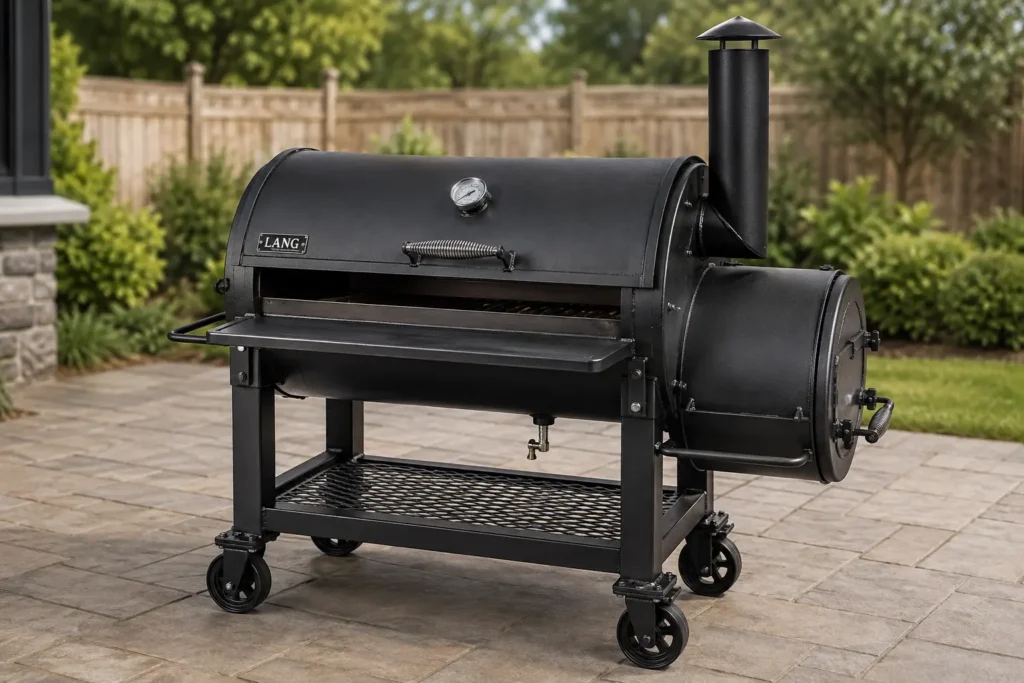
4. Lang 36 Deluxe Patio Reverse Flow Smoker
The Lang 36 Deluxe Patio builds on the Original Patio design by adding a vertical warmer box above the firebox. This compartment provides additional racks for warming food, cooking side dishes, or holding finished meat while the main chamber remains in use.
Like the Original, the Deluxe uses an offset firebox, reverse-flow baffle system, and thick welded construction. The main chamber offers ample room for family gatherings and small competition cooks, while the warmer adds flexibility without requiring a much longer smoker.
The warmer temperature will vary according to the fire size and damper settings. It may not always match the temperature inside the main chamber, so use a separate thermometer when cooking food rather than simply keeping it warm.
For cooks who regularly prepare meat and side dishes together, the Lang 36 Deluxe may be the best reverse flow offset smoker because it makes better use of vertical space.
Pros
- Integrated vertical warmer cabinet
- Heavy-duty welded construction
- Strong heat retention
- Suitable for meat, sides, and warming
- Large preparation and storage areas
Cons
- More expensive than the Original Patio
- Very heavy
- Requires separate temperature monitoring in the warmer
Best For
Pitmasters who want a premium backyard smoker with additional warming and cooking capacity.
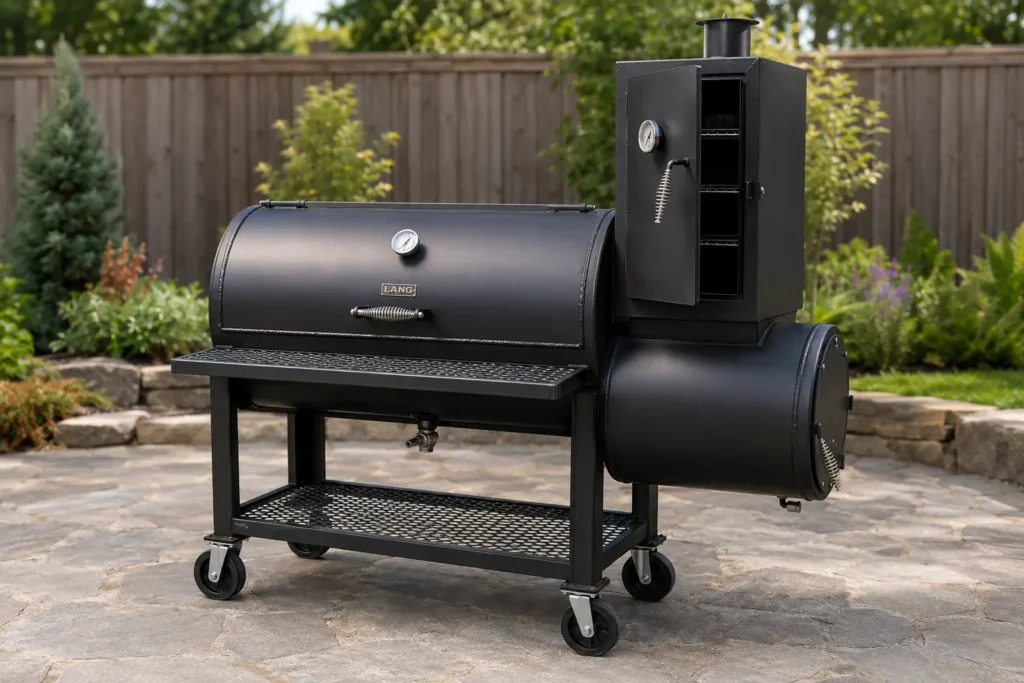
5. Lang 48 Original Patio Reverse Flow Smoker
The Lang 48 Original Patio is designed for cooks who need more capacity than the 36-inch series provides. Lang describes its 48-inch models as suitable for backyard entertaining, competitions, and some commercial applications.
With around 10 square feet of cooking space, the Lang 48 can accommodate large batches of brisket, ribs, chicken, or pork shoulder. Its 1/4-inch steel construction helps maintain a stable cooking environment once the smoker reaches operating temperature.
The larger chamber requires more time and fuel to preheat than a smaller smoker. That additional capacity may be unnecessary if you normally cook for only a few people. Buyers should choose their smoker based on normal cooking volume rather than the largest event they might host once a year.
For competitions and frequent large gatherings, the Lang 48 is one of the best reverse flow offset smoker options available.
Pros
- Approximately 10 square feet of cooking capacity
- Premium 1/4-inch steel construction
- Appropriate for competitions and large gatherings
- Strong temperature recovery
- Durable welded design
Cons
- High purchase and shipping costs
- More fuel-intensive than smaller models
- Requires considerable outdoor space
Best For
Experienced cooks, competition teams, and families that regularly prepare large quantities of barbecue.
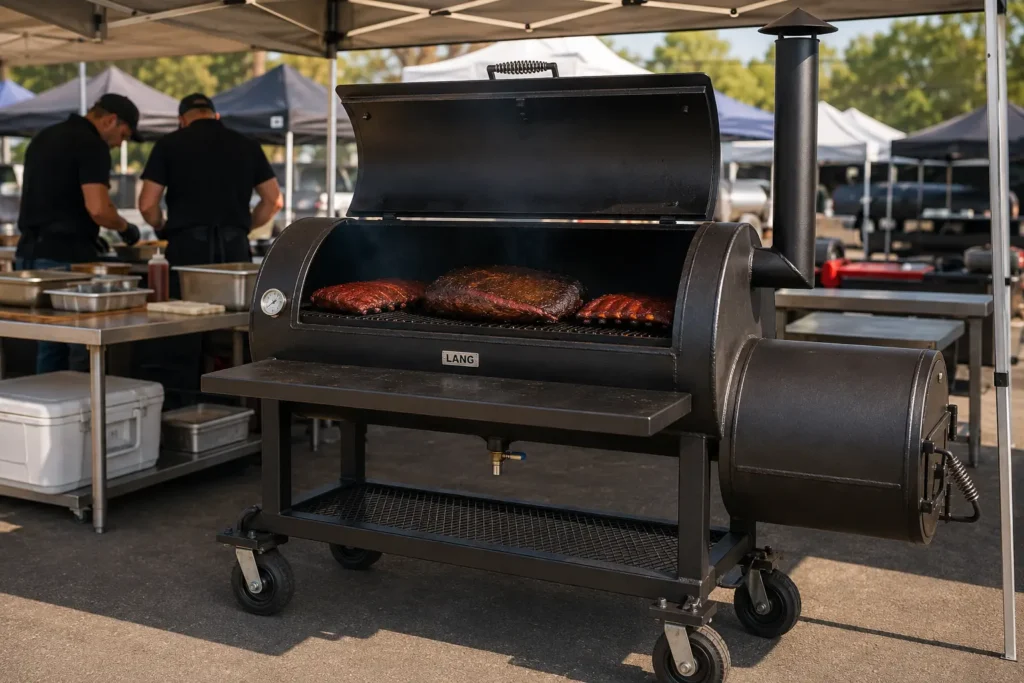
6. Meadow Creek TS70P Reverse Flow Smoker
The Meadow Creek TS70P is a handcrafted reverse-flow tank smoker designed for serious backyard users and smaller events. Its airflow system sends heat beneath a sealed drip pan before directing it back across the cooking grates.
The sealed pan serves several purposes. It separates the food from direct firebox heat, catches rendered grease, and acts as a heated surface that helps distribute energy throughout the chamber. The pan can also be cleaned through the smoker’s drain system.
Meadow Creek smokers are premium products, and the TS70P costs considerably more than a mass-produced backyard offset. Buyers are paying for handcrafted construction, durable materials, and a design intended to provide years of regular service.
The TS70P deserves consideration as the best reverse flow offset smoker for someone who wants a premium compact tank smoker but does not need a large catering rig.
Pros
- Handcrafted heavy-duty construction
- Sealed drip pan supports reverse-flow circulation
- Consistent cooking environment
- Convenient grease-management system
- Appropriate size for families and smaller events
Cons
- Premium purchase price
- Heavy compared with entry-level smokers
- Limited availability through specialized dealers
Best For
Buyers seeking a premium, manageable reverse-flow tank smoker for home and event use.
7. Meadow Creek TS120P Reverse Flow Smoker
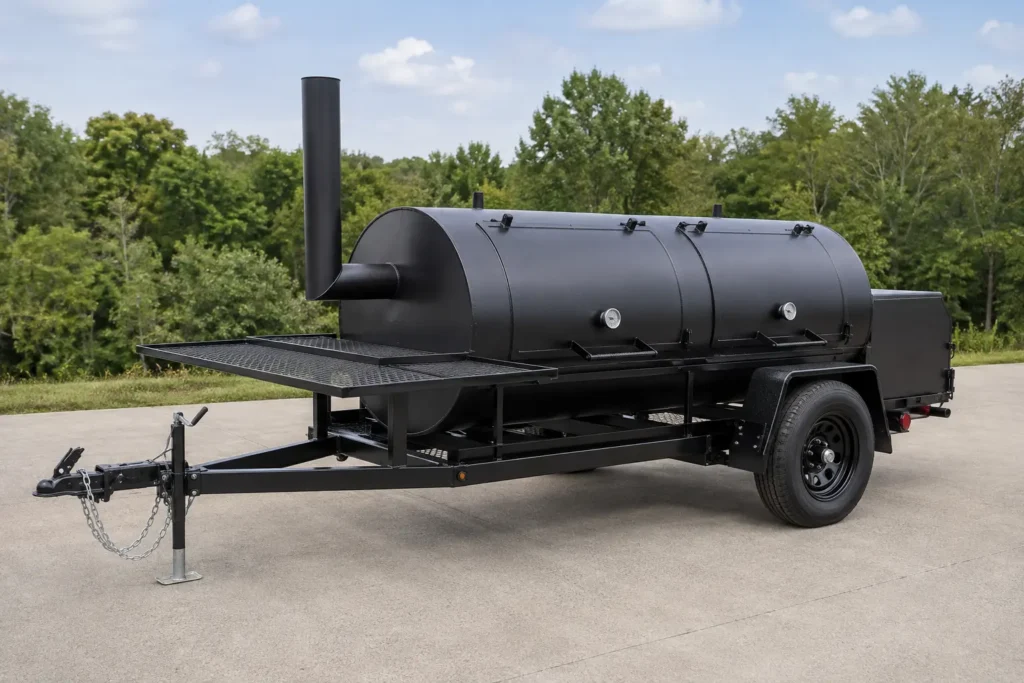
The Meadow Creek TS120P is a larger reverse-flow tank smoker intended for high-volume cooking, events, catering, and serious barbecue enthusiasts. It uses the same basic airflow principle as the TS70P but provides considerably more cooking room.
Heat travels from the side firebox beneath the sealed drip pan, rises at the opposite end, and flows back across the food. This layout helps reduce the strong firebox-side hot spot commonly found in traditional offsets.
Because this smoker is designed for higher-volume cooking, buyers must consider its weight, storage space, fuel needs, transport requirements, and cleaning routine. It is excessive for occasional family meals but valuable for cooks who consistently fill a smaller pit.
For catering and community events, the TS120P may be the best reverse flow offset smoker because it combines large capacity with a proven tank-style cooking chamber.
Pros
- High cooking capacity
- Commercial-grade construction
- Sealed drip pan and reverse-flow draft
- Suitable for catering and large events
- Excellent durability
Cons
- Expensive for casual backyard cooking
- Requires significant storage space
- Higher fuel and transportation requirements
Best For
Caterers, event cooks, barbecue teams, and anyone who regularly needs commercial-level capacity.
How We Researched and Selected These Reverse Flow Smokers
We did not physically test every smoker included in this guide. Instead, each model was evaluated through detailed research using manufacturer specifications, product documentation, construction details, cooking capacity, airflow design, firebox configuration, and available support information.
To keep the comparison consistent, we reviewed every smoker against the same practical criteria:
- A genuine reverse-flow airflow path
- A separate and accessible firebox
- Steel baffles or a sealed reverse-flow plate
- Cooking capacity suited to the intended user
- Material thickness and overall construction quality
- Firebox accessibility and fuel-management design
- Airflow and temperature-control features
- Grease and ash management
- Manufacturer support and replacement-part availability
- Overall value within the smoker’s price category
Our recommendations are based on these documented features and practical buying considerations rather than unsupported claims of hands-on testing. Where specifications can vary by model or production year, readers should confirm the latest details with the manufacturer before purchasing.
The best reverse flow offset smoker is not necessarily the largest or most expensive model. It should match your normal cooking volume, available outdoor space, experience level, and willingness to manage a live wood fire.
Reverse Flow vs Traditional Offset Smoker
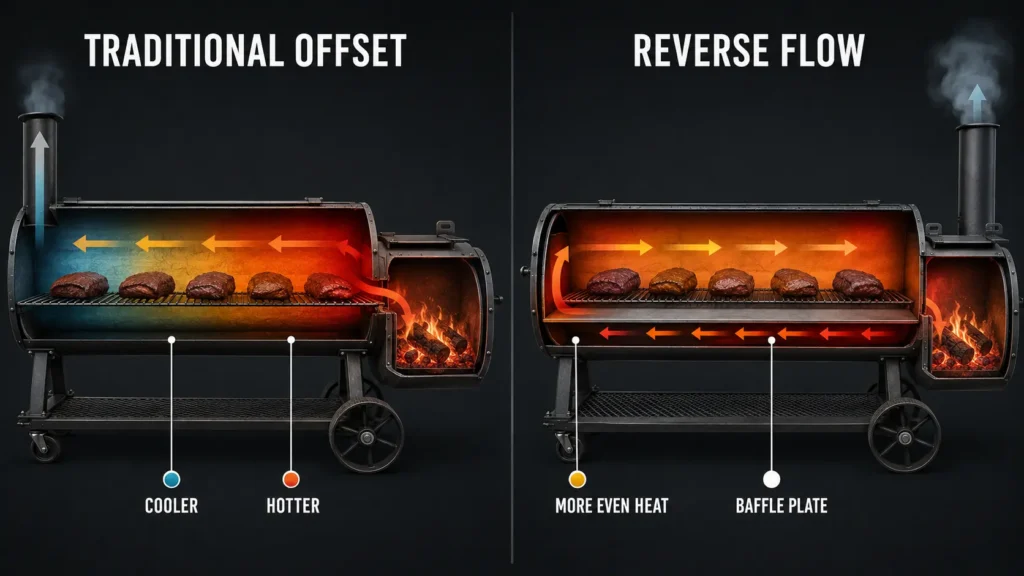
Both designs use a side firebox, but they move heat differently. A traditional offset sends heat directly through the cooking chamber toward a chimney on the opposite end. This produces a strong hot zone near the firebox and cooler temperatures farther away.
A reverse-flow smoker sends heat beneath a baffle to the far end and then back across the meat. This generally creates more uniform temperatures but reduces the distinct heat zones some pitmasters use to cook different foods simultaneously.
For a detailed breakdown, read our comparison of reverse flow offset smokers vs traditional offset smokers.
| Feature | Reverse Flow | Traditional Offset |
| Heat distribution | More uniform | Stronger temperature zones |
| Hot spots | Usually reduced | Common near the firebox |
| Meat rotation | Required less frequently | Often required |
| Preheating | May take longer | Usually faster |
| Cleaning beneath grates | Baffle can restrict access | Generally easier |
| Cooking flexibility | Consistent heat across grate | Better for multiple heat zones |
How to Choose the Best Reverse Flow Offset Smoker
Consider Steel Thickness
Thick steel retains heat and resists rapid changes caused by wind, cold weather, and opening the cooking chamber. Premium pits commonly use 1/4-inch steel, while affordable models use thinner heavy-gauge material.
Thicker steel does not eliminate temperature changes, but it makes the smoker less reactive. If you cook during winter, follow these cold-weather offset smoker techniques.
Match Capacity to Your Normal Cooks
A large smoker gives you more space but requires more fuel and takes longer to preheat. A compact model is usually more efficient for one brisket or a few racks of ribs. Choose the best reverse flow offset smoker for the amount of food you prepare regularly.
Inspect the Firebox
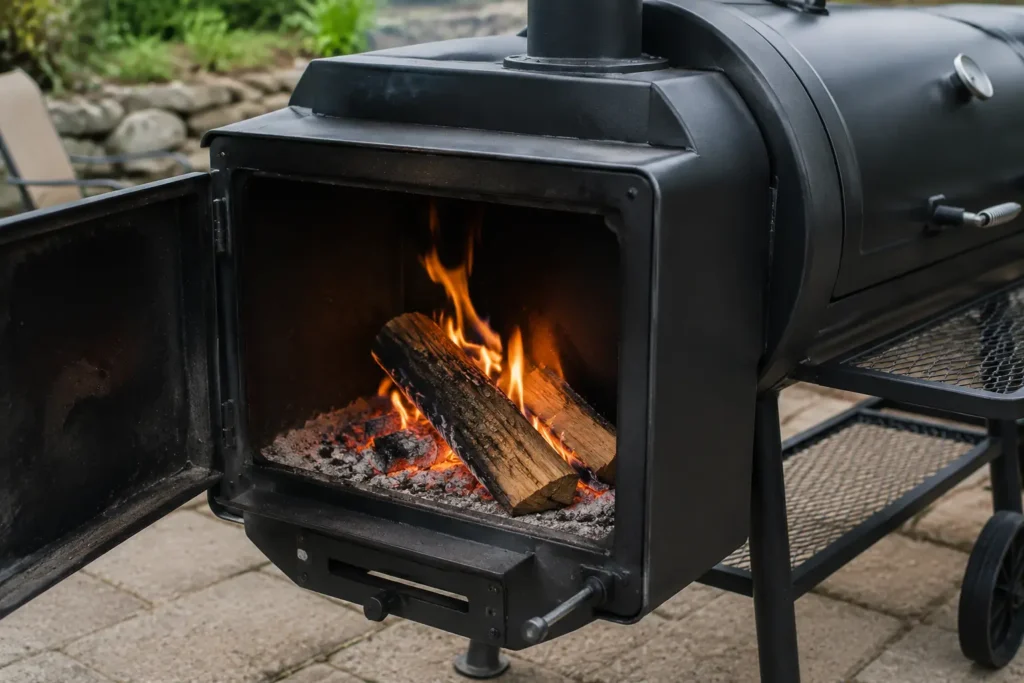
Look for durable grates, adjustable intake vents, accessible doors, and enough room to maintain a clean fire. A removable ash pan or cleanout door can make long cooks considerably easier.
Check the Baffle Design
Some smokers use removable baffle plates, while others use a single welded plate or sealed drip pan. Removable plates simplify deep cleaning and may allow traditional offset operation. Welded plates can provide a more controlled airflow path but require a dedicated drainage system.
Learn how these components work in our offset smoker baffle plate guide.
Evaluate Mobility
Premium reverse-flow smokers can weigh several hundred pounds. Large wheels are helpful on firm surfaces, but small steel casters may struggle on gravel or soft ground. Decide where the smoker will remain before delivery.
Budget for Shipping and Accessories
Handcrafted smokers may require freight delivery. Include the cost of shipping, a weather-resistant cover, digital grate probes, fireplace tools, wood storage, and high-temperature gloves in your total budget.
Tips for Using a Reverse Flow Offset Smoker
Even the best reverse flow offset smoker requires proper fire management. Use these practices to achieve cleaner smoke and steadier heat:
- Open the chimney fully before lighting the fire.
- Build a hot charcoal base before adding hardwood.
- Use dry, seasoned wood splits of a consistent size.
- Preheat the baffle plate before adding food.
- Maintain a small, clean-burning fire.
- Adjust the intake vent gradually instead of making large changes.
- Measure temperature at grate level rather than relying only on the lid gauge.
- Avoid producing thick white or gray smoke.
- Drain grease and clean the baffle after cooking.
- Protect the smoker from rain and standing moisture.
Our complete guide to offset smoker fire management explains how to build and maintain a clean fire throughout a long cook.
Frequently Asked Questions
The Oklahoma Joe’s Highland is the best reverse flow offset smoker for many beginners because it is more affordable, has removable baffles, and can operate in both reverse-flow and traditional configurations. It may require minor sealing and more frequent fire adjustments than a premium 1/4-inch steel smoker.
The Lang 36 Original Patio is an excellent premium backyard option. Its welded 1/4-inch steel construction, six-plus square feet of cooking space, and manageable chamber size make it suitable for serious home cooks.
Reverse flow does not automatically produce better food. It provides more uniform heat and reduces hot spots, but meat quality still depends on clean smoke, fire management, seasoning, temperature, timing, and resting.
The baffle plate requires energy to heat, so a reverse-flow smoker may take longer to preheat. Once the steel is hot, its thermal mass can help stabilize the cooking chamber. Fuel consumption depends heavily on smoker size, steel thickness, air leaks, weather, and fire-management technique.
Many models allow grilling inside the firebox or over charcoal in the main chamber. Check the manufacturer’s instructions before building a direct fire inside a chamber designed primarily for indirect smoking.
Yes. Keep the chimney open to maintain airflow and allow stale smoke to escape. Control the fire mainly through fuel quantity and the firebox intake rather than choking the exhaust.
Yes. Even heat and reduced firebox-side exposure make reverse flow well suited to brisket. However, you should still monitor both meat temperature and tenderness rather than cooking only according to time.
Which Reverse Flow Offset Smoker Should You Buy?
The Oklahoma Joe’s Highland provides the strongest entry point for budget-conscious beginners, while the Longhorn is better for buyers who need additional cooking space. The Lang 36 Original Patio is our overall best reverse flow offset smoker for dedicated backyard pitmasters because of its thick steel, welded construction, practical capacity, and proven airflow design.
Choose the Lang 36 Deluxe if a warmer cabinet would improve your cooking setup. The Lang 48 is better for competitions and frequent large gatherings, while the Meadow Creek TS70P and TS120P are premium choices for cooks who prefer a handcrafted tank-style smoker.
Before purchasing, consider the smoker’s delivered price, weight, normal cooking capacity, fuel consumption, and storage requirements. The right model should make your normal barbecue sessions easier without forcing you to heat a chamber much larger than you need.