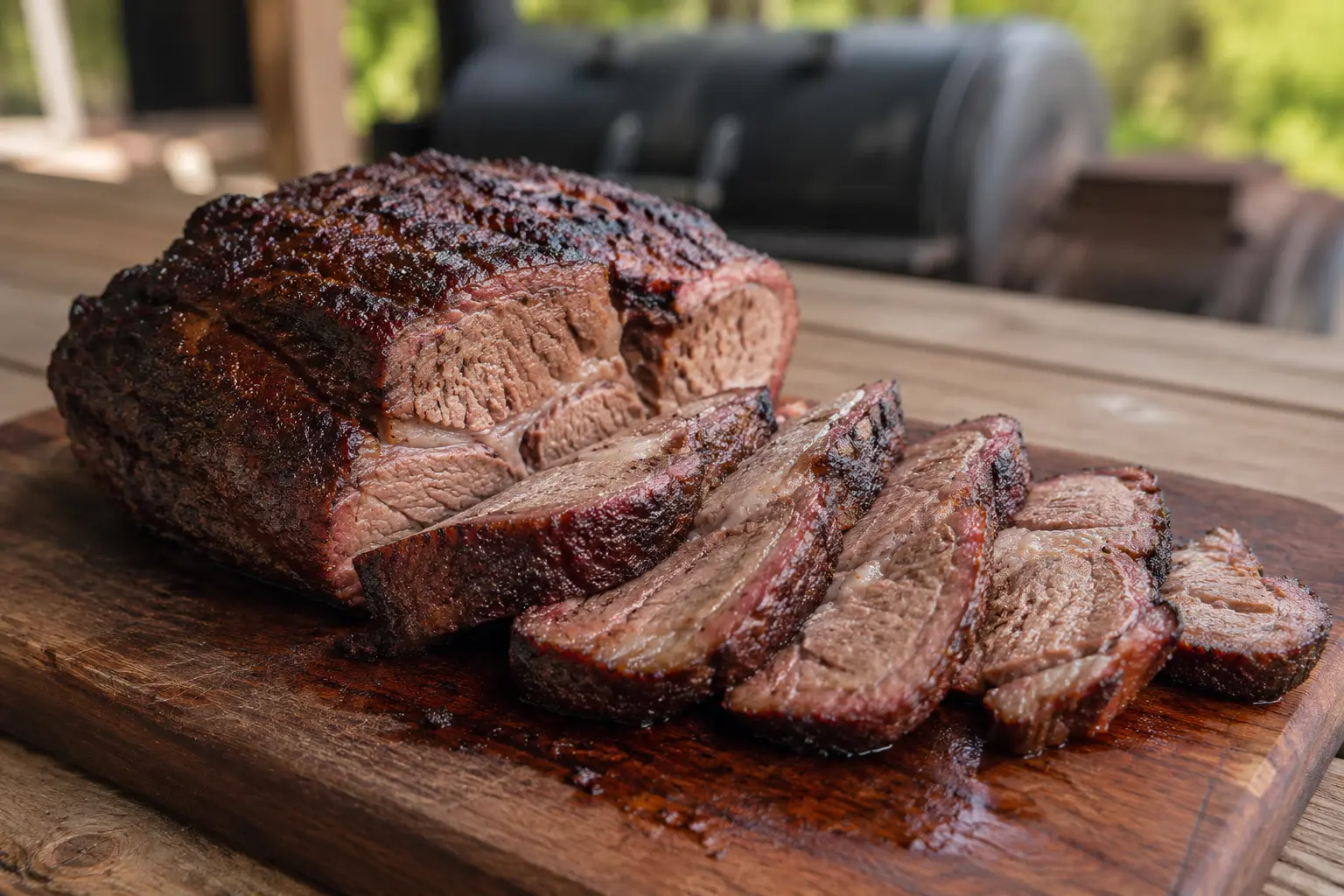
A perfectly cooked smoked chuck roast delivers a dark, flavorful bark, a rich beefy taste, and tender meat without the cost or long cooking time of a full brisket. Chuck roast contains plenty of marbling and connective tissue, so low-and-slow heat transforms this affordable cut into juicy barbecue that can be sliced, pulled, or served in sandwiches.
This smoked chuck roast recipe uses a simple beef rub, clean hardwood smoke, and a wrapped finishing stage to keep the meat moist. The method works especially well in an offset smoker, although you can follow the same temperature targets in a pellet smoker, charcoal smoker, or kettle grill set up for indirect heat.
The key to great smoked chuck roast is to cook by temperature and tenderness rather than by time alone. Smoke the roast at 250°F until the bark is set, wrap it with a small amount of beef broth, and continue cooking until a probe slides into the meat with very little resistance.
Quick Answer
For tender smoked chuck roast, season a 3- to 4-pound chuck roast, smoke it at 250°F for about 3 to 4 hours, and wrap it when the internal temperature reaches 160–170°F. Continue cooking until it reaches approximately 195–205°F and feels probe-tender. Rest it, still wrapped, for 45 to 60 minutes before slicing or pulling.
Recipe at a Glance
| Detail | Recommendation |
| Prep time | 15 minutes |
| Cook time | About 6–8 hours |
| Resting time | 45–60 minutes |
| Smoker temperature | 250°F |
| Wrap temperature | 160–170°F |
| Finish range | 195–205°F, plus probe tenderness |
| Best wood | Oak, hickory, pecan, or cherry |
| Servings | 6–8 |
Cooking time is only an estimate. Roast thickness, marbling, weather, smoker design, and how often the lid is opened can all affect the schedule.
Why Chuck Roast Is Excellent for Smoking
Chuck roast comes from the shoulder area of the animal. It works well for slow cooking because it has a deep beef flavor, internal fat, and connective tissue that softens during a long cook. The Beef Checkoff guide to slow-cooking cuts also identifies chuck cuts as economical, flavorful choices that become tender when cooked slowly.
Compared with brisket, a smoked chuck roast is smaller, usually less expensive, and easier to manage. It develops a brisket-like bark and rich smoke flavor but can often be completed in one afternoon. It is a practical option for a family dinner, weekend barbecue, or first attempt at smoking a large cut of beef.
Ingredients for Smoked Chuck Roast
- 1 boneless chuck roast, 3–4 pounds
- 1 tablespoon yellow mustard or olive oil
- 1 tablespoon kosher salt
- 1 tablespoon coarse-ground black pepper
- 2 teaspoons garlic powder
- 2 teaspoons onion powder
- 1 teaspoon smoked paprika
- 1 cup low-sodium beef broth
- 1 tablespoon Worcestershire sauce
- 2 tablespoons beef tallow or unsalted butter, optional
The mustard or oil acts as a binder and will not overpower the finished smoked chuck roast. For a classic Texas-style flavor, keep the rub simple with salt, black pepper, and garlic. Paprika and onion powder add color and a more rounded savory taste.
Equipment You Will Need
- Offset smoker or another smoker set up for indirect heat
- Seasoned hardwood or charcoal and wood splits
- Digital instant-read thermometer
- Leave-in meat probe and grate-level temperature probe
- Butcher paper or heavy-duty aluminum foil
- Small spray bottle, optional
- Cutting board and sharp slicing knife
- Insulated cooler or warm oven for resting
A reliable thermometer is more useful than the factory gauge mounted high on the lid. Accurate readings make smoked chuck roast results much easier to repeat. If your readings are inconsistent, this offset smoker thermometer upgrade guide explains how to monitor both grate temperature and meat temperature accurately.
How to Make Smoked Chuck Roast
1. Choose a Well-Marbled Roast
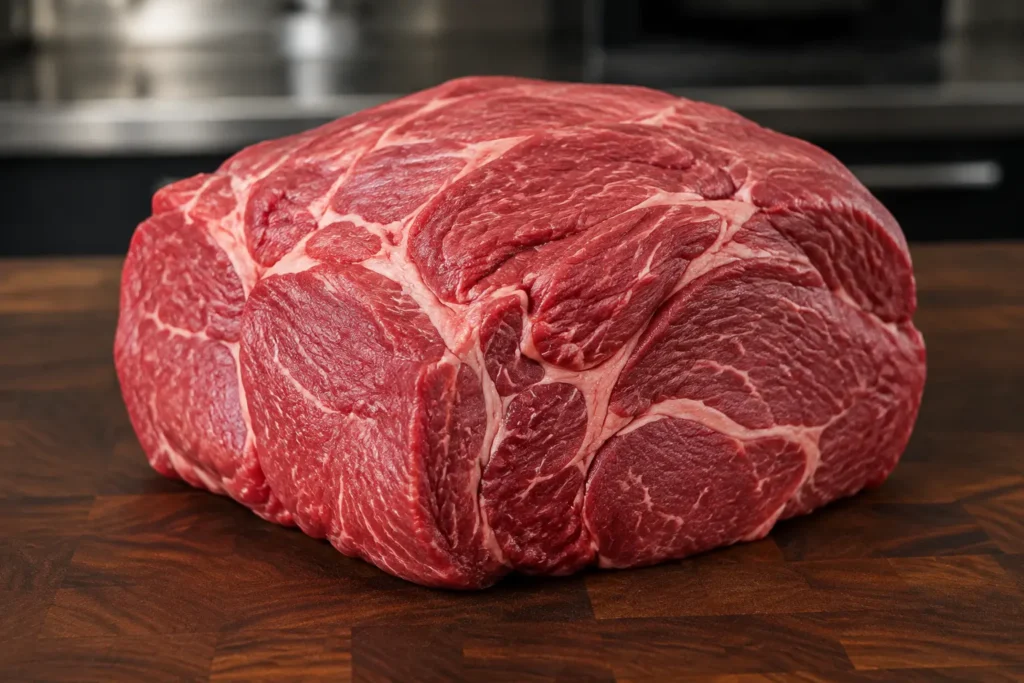
Look for a thick chuck roast with visible streaks of fat running through the meat. A roast of even thickness will cook more predictably than one with a thin tapered end. For this smoked chuck roast recipe, a 3- to 4-pound boneless roast offers a good balance between cooking time, bark, and juicy interior meat.
Avoid choosing the leanest roast in the case. Internal marbling helps the meat remain moist while its connective tissue softens during the long cooking process.
2. Trim the Chuck Roast
Remove loose pieces of meat and any hard, waxy fat that will not render well. Leave soft surface fat in place, but trim very thick areas to about ¼ inch. Excessive fat can prevent smoke and seasoning from reaching the meat.
Pat the roast dry with paper towels. A dry surface helps the binder and rub adhere evenly, creating a more consistent bark on the smoked chuck roast. This preparation also helps the smoked chuck roast cook more evenly.
3. Apply the Binder and Dry Rub
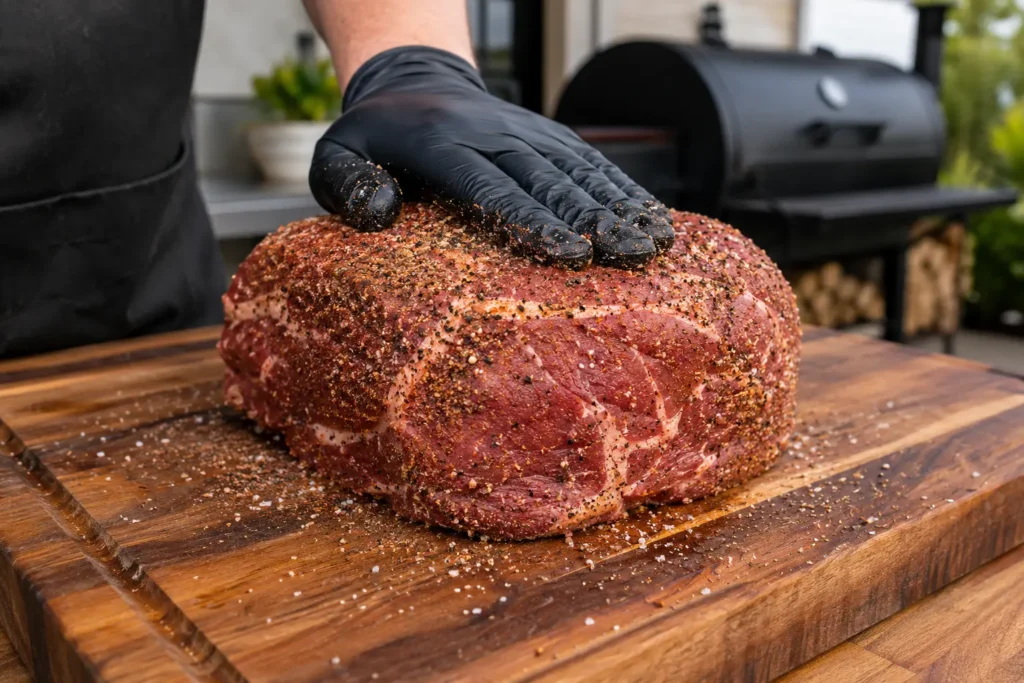
Coat every side of the roast with a thin layer of mustard or olive oil. Combine the salt, pepper, garlic powder, onion powder, and smoked paprika, then apply the mixture evenly. Press the seasoning onto the surface instead of rubbing it back and forth.
Let the seasoned roast stand while the smoker preheats. You can also season it the night before and refrigerate it uncovered. This gives the salt more time to penetrate and dries the surface slightly, which can improve bark formation.
4. Preheat the Smoker to 250°F
Build a clean, stable fire and bring the cooking chamber to 250°F. Keep the chimney open so stale smoke can escape, then regulate heat mainly with fire size and the intake vent. If live-fire cooking is new to you, follow these offset smoker fire management tips before beginning the cook.
Place a grate-level probe near the roast location. The temperature beside the meat matters more than the reading at the top of the lid. Our offset smoker cooking temperature guide provides additional temperature ranges for beef, pork, poultry, and other barbecue favorites.
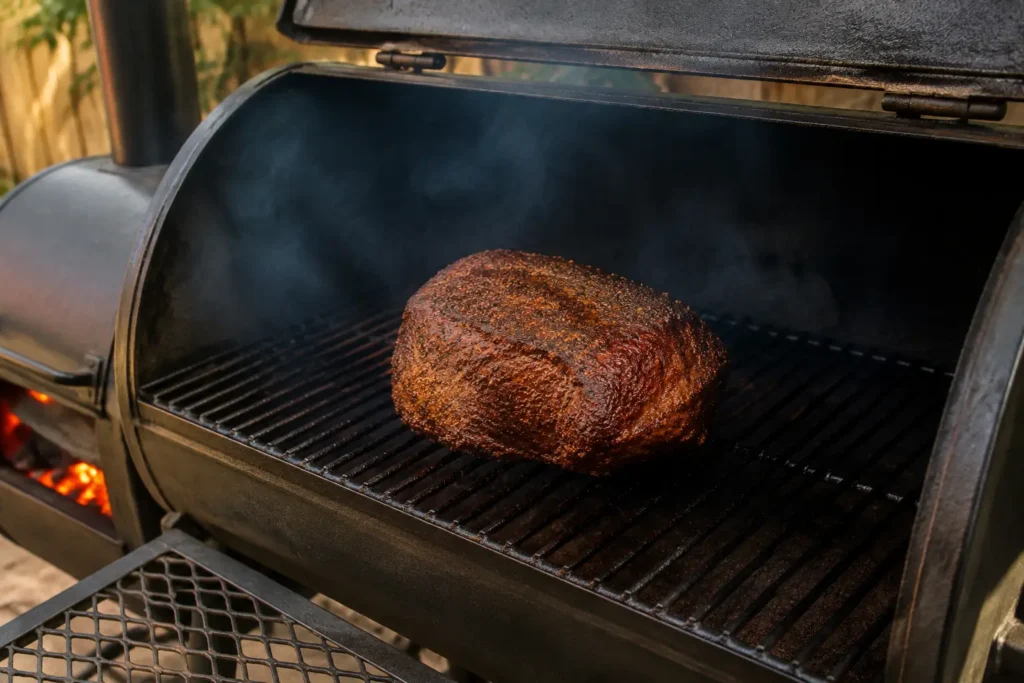
5. Smoke the Chuck Roast Unwrapped
Place the roast on the cooking grate with the fattier side facing the hotter part of the smoker. Insert the meat probe into the thickest section without pushing it into a large seam of fat. Close the lid and let the smoked chuck roast cook undisturbed for the first two hours.
Maintain the chamber between 240°F and 265°F. Small fluctuations are normal, so avoid making aggressive vent changes every time the temperature moves a few degrees. Add a small, preheated wood split before the coal bed becomes weak.
6. Check the Bark and Spritz Lightly
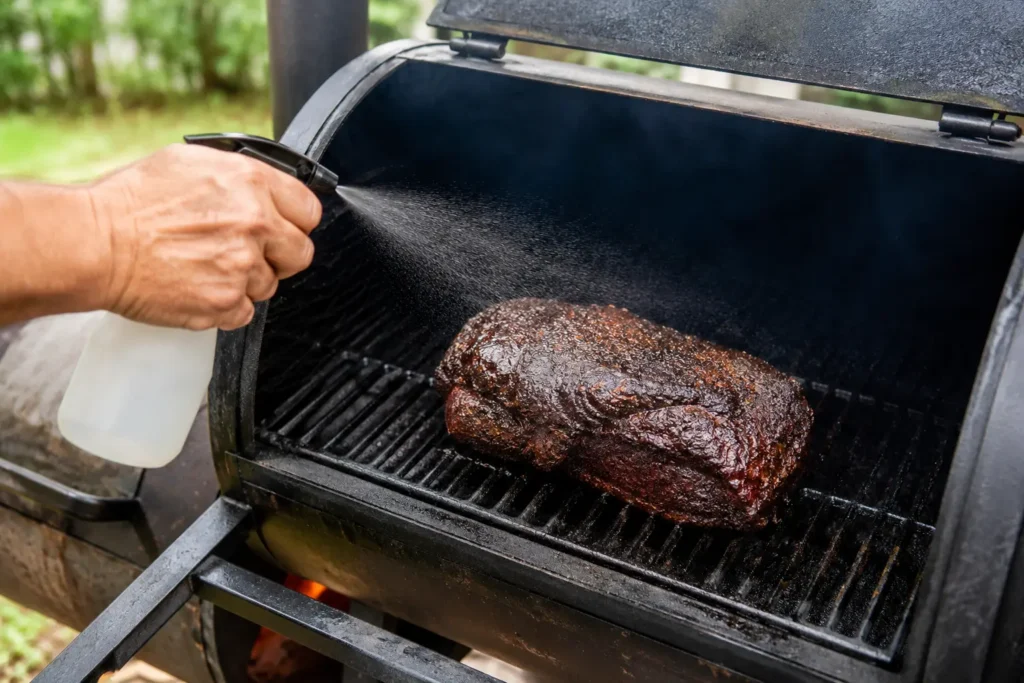
After about two hours, inspect the surface. If it looks dry in isolated spots, lightly spritz it with water, diluted beef broth, or a 50/50 mixture of water and apple cider vinegar. Do not soak the roast or spray it on a fixed schedule.
Continue cooking until the bark is dark, dry to the touch, and does not wipe away when gently pressed. The internal temperature of the smoked chuck roast will usually be somewhere between 160°F and 170°F at this stage.
7. Wrap With Beef Broth
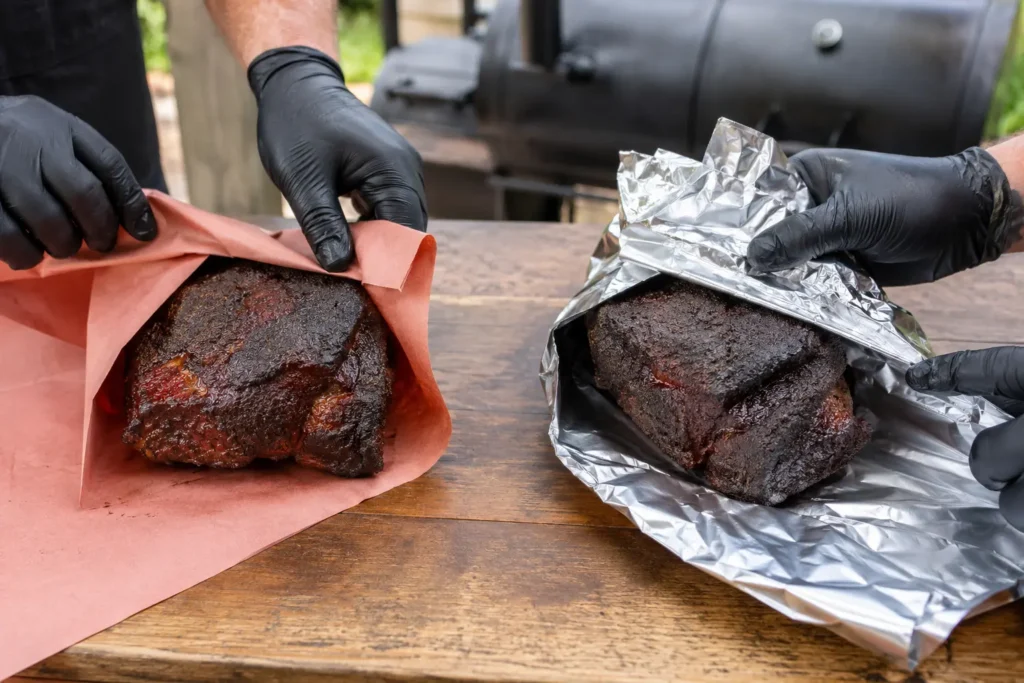
Place the roast in two layers of heavy-duty foil or on a large sheet of butcher paper. Mix the beef broth with Worcestershire sauce and pour about ½ to ¾ cup around the meat. Add beef tallow or butter if desired, then wrap tightly enough to prevent steam and liquid from escaping.
Foil produces the softest, juiciest result and speeds up the cook. Butcher paper preserves a firmer bark but does not hold liquid as securely. Either option can produce excellent smoked chuck roast when the package is sealed properly.
8. Cook Until Probe-Tender
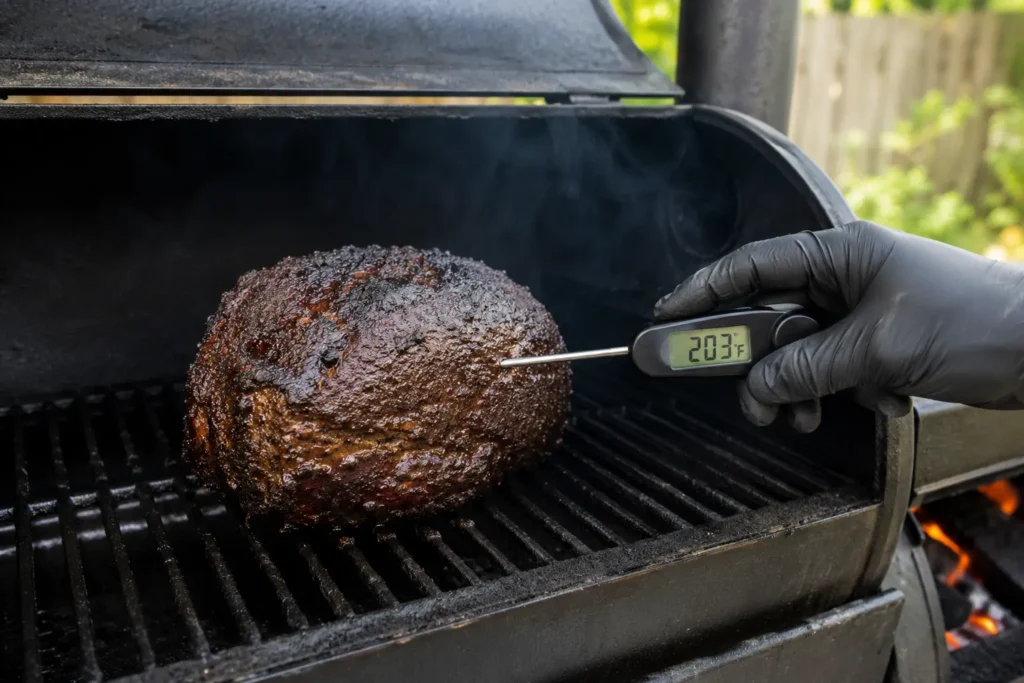
Return the wrapped roast to the smoker and maintain 250°F. Begin checking tenderness when the internal temperature reaches about 195°F. Push an instant-read thermometer or thin probe into several areas, especially near the center.
The smoked chuck roast is finished when the probe enters with very little resistance, similar to sliding into softened butter. This usually occurs between 195°F and 205°F, but the feel of the meat is more important than one exact number. If the probe still meets resistance, rewrap the roast and cook it for another 20 to 30 minutes before checking again.
9. Rest the Roast
Remove the roast from the smoker but keep it wrapped. If the package contains excessive hot liquid, carefully vent it for about five minutes, seal it again, and rest it in a dry cooler or warm oven.
Resting the smoked chuck roast for 45 to 60 minutes allows its juices to settle and gives the texture time to finish relaxing. A larger roast can rest for up to two hours if it is held safely above 140°F. Do not slice immediately, because the hot juices will escape onto the cutting board.
10. Slice or Pull and Serve
Open the package and reserve the cooking juices. For sliced beef, identify the direction of the muscle fibers and cut across the grain into slices about ¼ inch thick. Because a chuck roast contains multiple muscles, the grain direction may change; rotate individual sections when necessary.
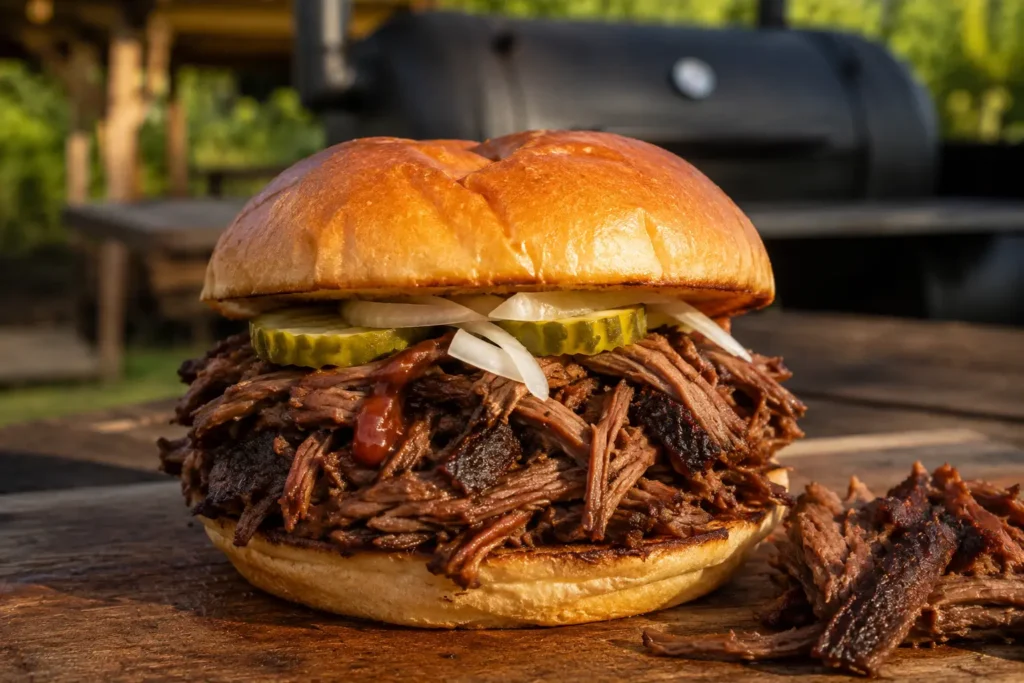
For pulled smoked chuck roast, separate the meat with gloved hands or forks and remove any large pieces of unrendered fat. Mix some reserved juices back into the meat for extra moisture and flavor.
Smoked Chuck Roast Temperature Guide
| Stage | Internal Temperature | What to Look For |
| Begin checking bark | 150–160°F | Color is deepening and seasoning is attached |
| Wrap | 160–170°F | Bark is dark, dry, and set |
| Start checking tenderness | About 195°F | Probe begins entering more easily |
| Typical finish | 195–205°F | Probe slides in with minimal resistance |
| Rest | 45–60 minutes | Meat remains wrapped and hot |
The USDA states that whole beef roasts are safe at 145°F with at least a three-minute rest, as shown in its safe minimum internal temperature chart. However, food safety and barbecue tenderness are different targets. A chuck roast cooked only to 145°F will generally remain firm because its connective tissue has not had enough time to soften. This recipe continues cooking to the higher probe-tender range for a pull-apart texture.
Best Wood for Smoked Chuck Roast
The best wood for smoked chuck roast should complement the beef without covering its natural flavor. Oak is one of the best choices because it burns steadily and gives beef a balanced smoke flavor. Hickory creates a stronger, traditional barbecue profile, while pecan is slightly milder and nuttier. Cherry can be mixed with oak to add a subtle sweetness and darker exterior color.
For a detailed flavor comparison, see the guide to the best wood for an offset smoker. You can also use the individual guides for oak wood and hickory wood to choose and burn properly seasoned splits.
Avoid using green wood, moldy wood, painted lumber, construction scraps, or softwoods such as pine. A small clean-burning fire should produce nearly invisible or thin blue smoke. Heavy white smoke can make smoked chuck roast taste bitter and leave a harsh coating on the bark.
How to Build Better Bark
Good bark comes from seasoning, smoke, surface drying, and time. Apply the rub evenly, maintain clean airflow, and leave the lid closed during the early part of the cook. Spritz only when the surface genuinely looks dry.
Do not wrap the smoked chuck roast based only on internal temperature. Wait until the bark has reached the color and firmness you want, because it will soften slightly inside the wrap. If the finished bark is too soft, unwrap the roast and return it to the smoker for 10 to 15 minutes before resting.
Common Mistakes to Avoid
Most smoked chuck roast problems come from rushing the cook, using dirty smoke, or relying on one temperature number. Avoid the following mistakes for a juicier and more consistent result.
Cooking by Time Alone
Two roasts of the same weight can finish at different times. Use the clock for planning, but rely on internal temperature and probe tenderness to decide when the meat is done.
Using Too Much Smoke
More smoke does not automatically mean more flavor. Thick, dirty smoke produces a bitter surface. Maintain airflow, use seasoned wood, and add smaller splits to keep the fire burning cleanly.
Wrapping Before the Bark Sets
An early wrap traps moisture before the exterior is ready. The result may be pale, soft smoked chuck roast without a strong crust. Wait until the rub is firmly attached and the bark looks dark.
Adding Too Much Liquid
Chuck roast should not swim in broth. A small amount creates a moist braising environment inside the wrap, but too much can wash away seasoning and make the texture pot-roast-like.
Removing the Roast at a Fixed Temperature
A roast can reach 200°F and still feel tight. Check multiple areas and continue cooking until the probe enters with minimal resistance.
Skipping the Rest
Cutting hot meat immediately releases moisture. Keep it wrapped and allow at least 45 minutes for the best texture and juiciness.
Serving Ideas
Serve sliced smoked chuck roast with coleslaw, potato salad, baked beans, cornbread, grilled vegetables, or macaroni and cheese. Spoon a small amount of reserved cooking liquid over the slices just before serving.
Pulled meat works well in toasted sandwiches, tacos, quesadillas, loaded baked potatoes, nachos, or breakfast hash. If you enjoy the bark and texture of this roast, try the complete offset smoker brisket recipe for a larger traditional barbecue cook.
How to Store and Reheat Leftovers
Let leftovers cool promptly, place them in an airtight container, and refrigerate them within two hours. Store the meat with a little reserved juice to protect it from drying out. Refrigerated smoked chuck roast is best used within three to four days; freeze it in meal-size portions for longer storage.
Reheat covered slices or pulled meat with a splash of broth in a 275°F oven until hot. The USDA recommends reheating leftovers to 165°F, according to its leftovers and food safety guidance. Avoid overheating, which can squeeze out moisture and toughen the meat.
Once the smoker is fully cool, remove ash and grease so the pit is ready for the next cook. This step-by-step guide explains how to clean an offset smoker while preserving its protective seasoning.
Frequently Asked Questions
A 3- to 4-pound smoked chuck roast usually takes about 6 to 8 hours at 250°F, plus 45 to 60 minutes of resting time. Thickness, marbling, weather, smoker efficiency, and the length of the stall can change the total time.
Start checking tenderness at about 195°F. Most smoked chuck roast becomes tender between 195°F and 205°F, but it is ready only when a probe slides into several areas with very little resistance.
For most smoked chuck roast cooks, wrapping is recommended when you want a moist, tender result and a more predictable cooking time. Wrap after the bark is set, usually around 160–170°F. Foil retains the most moisture, while butcher paper preserves a firmer bark.
No. Chuck comes from the shoulder, while brisket comes from the lower chest. Both contain connective tissue and respond well to low-and-slow cooking, but chuck roast is smaller and usually finishes sooner. This is why smoked chuck roast is often called poor man’s brisket.
Position the fattier side toward the strongest heat source. In many offset smokers, that means facing it toward the firebox. The goal is to use the fat as a shield against the hottest radiant heat rather than following one universal up-or-down rule.
Yes, but an unwrapped roast may take longer and can lose more moisture. If you do not wrap, maintain a clean 225–250°F fire, monitor surface dryness, and allow extra cooking time. The bark will usually be firmer.
Temperature alone does not guarantee tenderness. The connective tissue may need more time to soften. Rewrap the smoked chuck roast, continue cooking, and check it again after 20 to 30 minutes.
Perfecting Your Smoked Chuck Roast
This smoked chuck roast recipe turns an affordable beef cut into tender, juicy barbecue with a bold bark and deep hardwood flavor. Choose a well-marbled roast, season it generously, maintain a clean 250°F fire, wrap only after the bark sets, and cook until the meat feels probe-tender.
The final rest is just as important as the smoking stage. Give the smoked chuck roast at least 45 minutes before slicing or pulling, then serve it with its reserved juices and your favorite barbecue sides. With steady heat and patience, this straightforward method produces reliable results without the cost or all-day commitment of a full brisket.