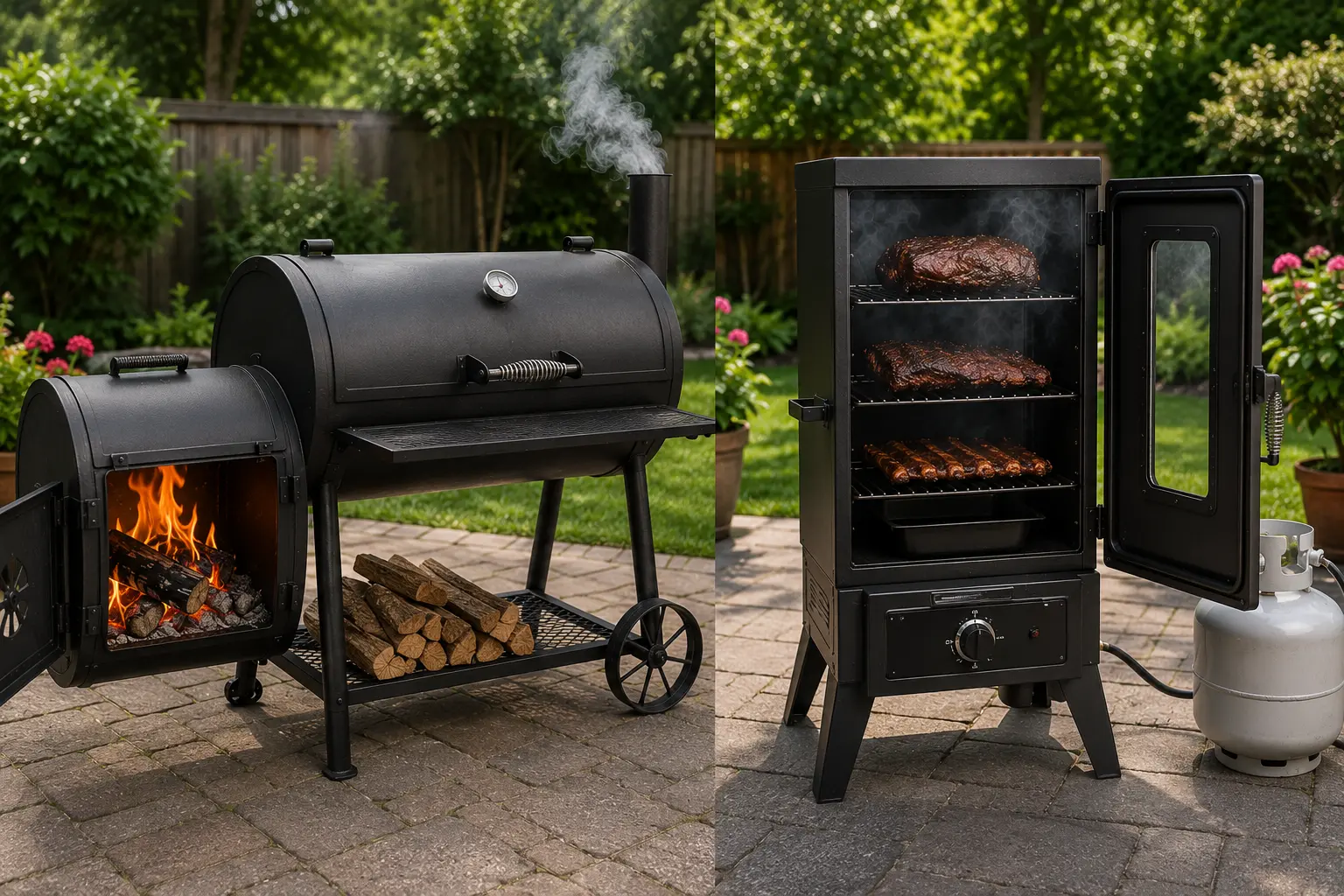
Choosing between an offset smoker vs gas smoker can be difficult because both can produce tender, flavorful barbecue, but they offer very different cooking experiences. An offset smoker uses charcoal and hardwood to create authentic wood-fired flavor, while a gas smoker relies on propane or natural gas for convenient and consistent heat.
Offset smokers appeal to barbecue enthusiasts who enjoy building a fire, controlling airflow, and actively managing the cooking process. Gas smokers are generally better suited to beginners and busy backyard cooks who want reliable temperature control without constantly adding fuel.
This offset smoker vs gas smoker comparison covers flavor, temperature control, ease of use, cooking capacity, fuel costs, maintenance, safety, and overall performance to help you choose the right smoker for your needs.
Offset Smoker vs Gas Smoker: Quick Comparison
| Feature | Offset Smoker | Gas Smoker |
| Primary fuel | Hardwood and charcoal | Propane or natural gas |
| Smoke flavor | Deep and traditional | Mild to moderate |
| Temperature control | Requires manual adjustments | Easier and more consistent |
| Learning curve | Moderate to difficult | Beginner-friendly |
| Cooking capacity | Usually large | Usually moderate |
| Startup time | Approximately 30–45 minutes | Approximately 10–20 minutes |
| Fire management | Frequent attention required | Minimal attention |
| Cleanup | More ash and soot | Less ash and residue |
| Portability | Often heavy | Propane models are relatively portable |
| Best for | BBQ enthusiasts and pitmasters | Beginners and convenience-focused cooks |
What Is an Offset Smoker?
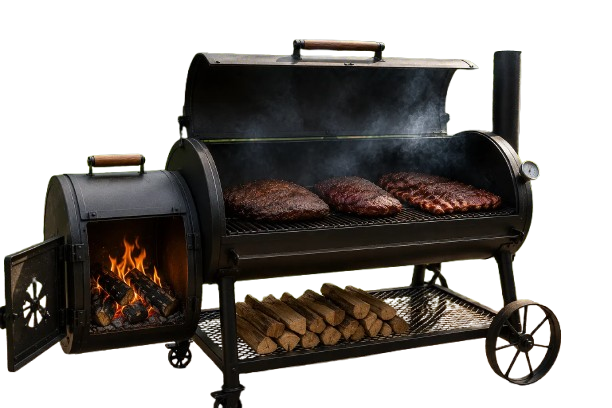
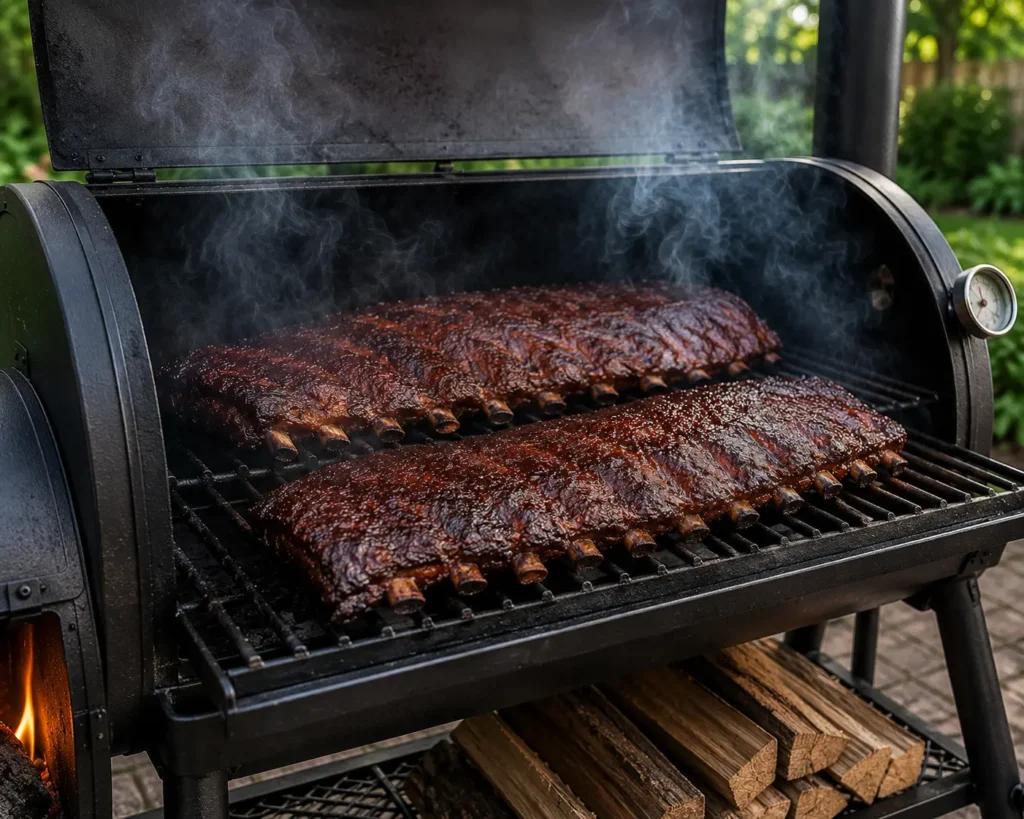
An offset smoker is a traditional barbecue smoker with two connected sections: a firebox and a main cooking chamber. Charcoal or hardwood burns inside the firebox, while heat and smoke travel horizontally through the cooking chamber before exiting through the chimney.
Because the food is not placed directly over the fire, an offset smoker cooks using indirect heat. This design is particularly effective for low-and-slow barbecue, including brisket, pork shoulder, ribs, turkey, and other large cuts.
If you are unfamiliar with this design, our complete guide to offset smokers explains how the firebox, cooking chamber, chimney, and dampers work together.
Advantages of an Offset Smoker
Authentic Wood-Fired Flavor
Flavor is the biggest advantage of an offset smoker. Burning seasoned hardwood creates a deeper smoke profile than wood chips heated by a gas burner.
Different hardwoods also create distinct flavors. Oak provides a balanced smoke profile, hickory produces a stronger traditional barbecue flavor, and fruitwoods such as apple and cherry create a milder, slightly sweeter result.
Greater Control Over Smoke
An offset smoker gives you direct control over the type of wood, fire size, airflow, smoke intensity, and cooking temperature. Experienced pitmasters can adjust these elements according to the meat being cooked.
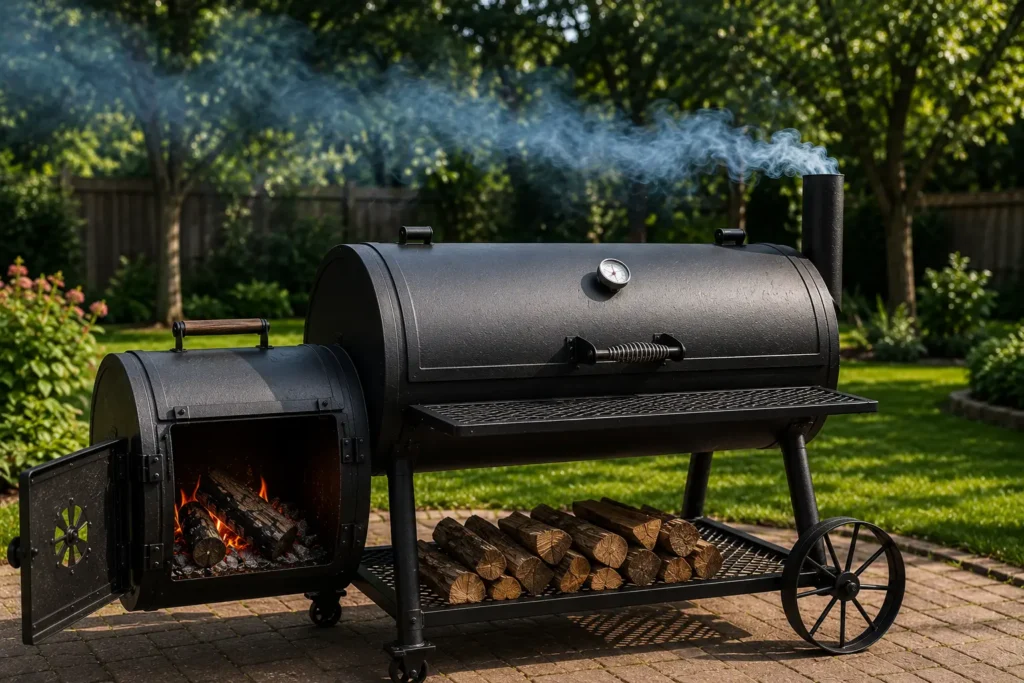
The goal is to maintain a clean-burning fire that produces thin, almost transparent blue smoke. Thick white smoke usually indicates poor combustion and can leave meat tasting bitter. Our offset smoker fire management tips explain how to build a cleaner and more stable fire.
Large Cooking Capacity
Many horizontal offset smokers provide enough cooking space for multiple racks of ribs, several pork shoulders, or a full packer brisket. This capacity makes them an excellent choice for large families, parties, and backyard gatherings.
Larger models may also include warming shelves or additional cooking grates. However, actual capacity varies considerably, so always compare grate dimensions rather than relying only on the smoker’s external size.
Rewarding Cooking Experience
Managing an offset smoker requires patience and practice. You must monitor the fire, add fuel, adjust dampers, and respond to changes in weather and temperature.
This process can be demanding, but many barbecue enthusiasts consider fire management an important part of traditional smoking. It provides greater involvement and can make the final result more rewarding.
Disadvantages of an Offset Smoker
The main disadvantage is the learning curve. Beginners may initially struggle with temperature swings, dirty smoke, uneven heat, and excessive fuel consumption.
Offset smokers also require more attention during long cooks. A brisket may take many hours, and the fire must be checked regularly. Wind, rain, and cold weather can make temperature management even more challenging.
Ash, grease, soot, and wood residue also require more cleanup than a gas smoker. Less expensive offset smokers may have thin steel, air leaks, weak seals, and uneven temperatures across the cooking grate.
Our guide on how to control heat in an offset smoker provides practical solutions for many of these problems.
How to Start Using an Offset Smoker
Choose the Right Fuel
A combination of charcoal and seasoned hardwood is often easiest for beginners. Charcoal creates a stable coal bed, while small hardwood splits provide heat and smoke flavor.
Avoid using green, wet, painted, chemically treated, or moldy wood. Properly seasoned hardwood burns more cleanly and produces a better flavor.
Season a New Smoker
Before cooking food in a new smoker, clean and season it according to the manufacturer’s instructions. Seasoning helps remove manufacturing residue and creates a protective coating on the interior metal.
Follow this step-by-step guide to season an offset smoker before your first cook.
Stabilize the Temperature
Preheat the smoker before adding food. Many barbecue recipes use a cooking range of approximately 225°F to 275°F, although the ideal temperature depends on the meat and cooking method.
Place a digital thermometer probe at grate level because the factory-installed lid thermometer may not accurately represent the temperature around the food. You can consult our offset smoker cooking temperature guide for recommended smoking temperatures.
Produce Clean Smoke
Keep the exhaust chimney mostly or fully open to maintain airflow. Control the fire primarily through its size and the firebox intake damper.
Add small pieces of wood when necessary instead of overloading the firebox. A small, hot fire generally produces cleaner smoke than a large, smoldering pile of wood.
What Is a Gas Smoker?
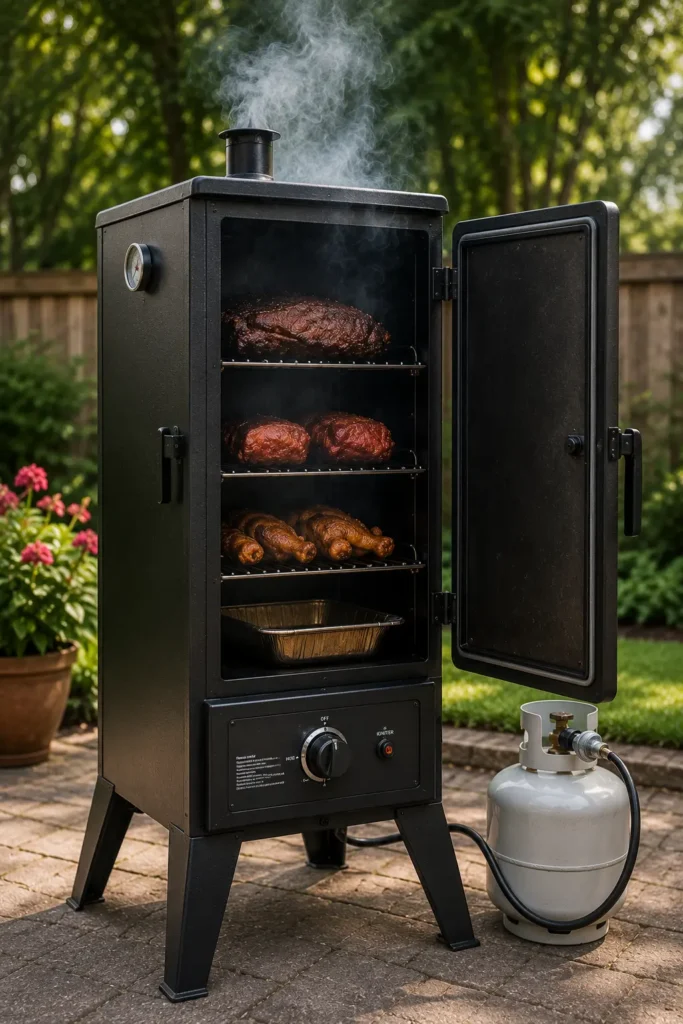
A gas smoker uses propane or natural gas to heat the cooking chamber. Most gas smokers have a burner near the bottom, a wood-chip tray above the burner, a water pan, and several vertical cooking racks.
The gas burner supplies most of the heat, while wood chips or small chunks generate smoke. This arrangement provides the convenience of gas while still allowing the food to develop a noticeable smoke flavor.
Unlike an offset smoker, a gas smoker does not require you to maintain a wood fire throughout the cook. Once the burner is lit and the temperature is adjusted, the smoker generally needs less attention.
Advantages of a Gas Smoker
Easy to Operate
Ease of use is the biggest advantage of a gas smoker. Most models have simple ignition systems and adjustable burner controls.
After preheating, you can set the burner, add wood chips, fill the water pan if required, and monitor the food. This straightforward process makes gas smokers suitable for beginners.
Consistent Temperature Control
A steady gas burner provides more predictable heat than a manually managed wood fire. This consistency is valuable during long cooks because fewer adjustments are normally required.
However, outdoor temperature, wind, smoker insulation, and the amount of food inside the chamber can still affect performance. A separate digital thermometer remains useful even when the smoker includes a built-in gauge.
Faster Startup
A gas smoker usually reaches the desired cooking temperature more quickly than an offset smoker. You do not need to light charcoal, establish a coal bed, or wait for hardwood to burn cleanly.
This faster startup makes a gas smoker convenient for weeknight meals and cooks where preparation time is limited.
Less Cleanup
Because propane and natural gas do not produce ash, cleanup is simpler. You will still need to clean grease, food particles, cooking grates, the water pan, and the wood-chip tray, but you will not have a firebox full of charcoal and wood ash.
Good Versatility
Gas smokers can handle ribs, chicken, turkey, pork shoulder, sausages, fish, and even brisket. Models with several adjustable racks allow different foods to be cooked simultaneously.
Wood chips can be changed to create different flavor profiles, although the smoke intensity is usually lighter than that produced by an offset smoker.
Disadvantages of a Gas Smoker
The most noticeable drawback is the lighter smoke flavor. Because the burner supplies the heat and the wood chips provide only supplemental smoke, a gas smoker generally cannot reproduce the same deep wood-fired character as a traditional offset smoker.
Gas smokers also depend on a continuous fuel supply. A propane cylinder can run empty during a long cook, while a natural-gas model requires a properly installed gas connection.
Some inexpensive gas smokers struggle to maintain low temperatures, especially in warm weather. Others may have thin walls that lose heat quickly in cold or windy conditions.
Cooking capacity can also be more restrictive. Vertical smokers offer several racks, but wide briskets and full rib racks may need to be trimmed, separated, or placed diagonally.
How to Use a Gas Smoker
Inspect the Smoker and Gas Connection
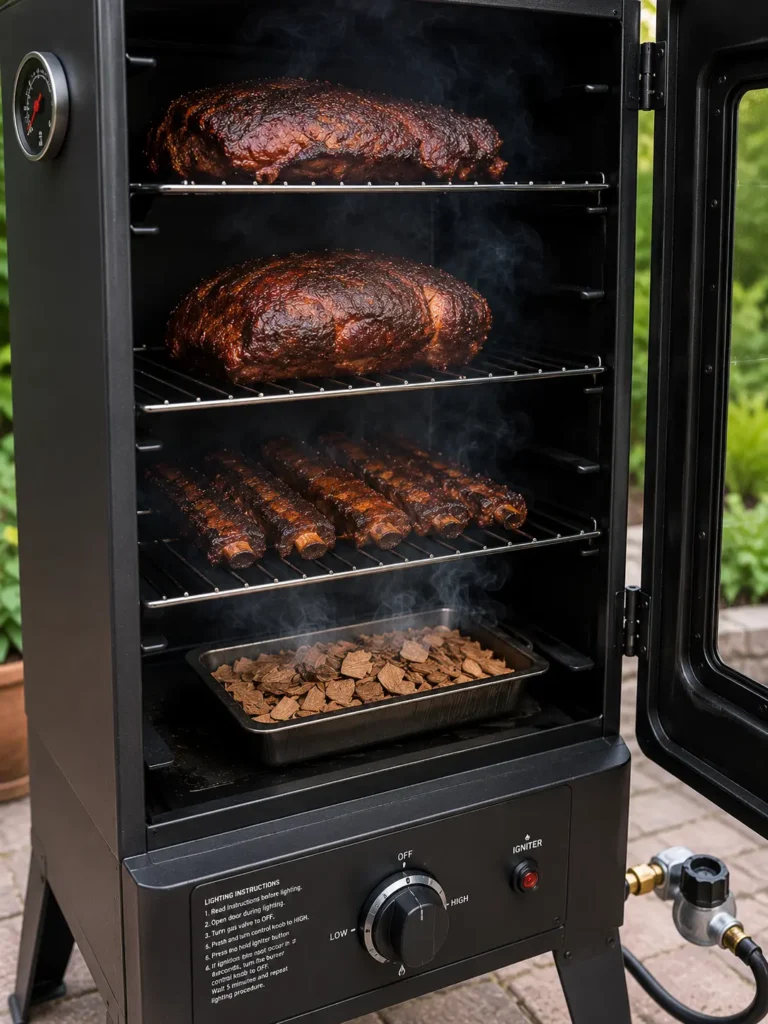
Before lighting the smoker, inspect the hose, regulator, burner, and propane cylinder. Follow the manufacturer’s instructions for leak testing and never operate a gas smoker inside a home, garage, shed, tent, or other enclosed area.
The Propane Education & Research Council’s cylinder safety guide recommends keeping portable cylinders outdoors, upright, and away from ignition sources.
Season the Smoker
Run a new gas smoker empty according to the manufacturer’s instructions before its first cooking session. This initial burn helps remove manufacturing residue from the cooking chamber and racks.
Preheat Before Adding Food
Light the burner and allow the smoker to stabilize at the target temperature. Place an independent thermometer at cooking-grate level to confirm the actual chamber temperature.
Add Wood Chips Correctly
Place food-grade hardwood chips in the smoker box or chip tray. Follow the smoker manufacturer’s directions on whether the chips should be dry or soaked.
Wood chips burn faster than wood chunks, so they may need to be replenished during a long cook. Weber’s guide to wood chips and wood chunks explains the practical differences between the two.
Monitor the Fuel Supply
Check the propane level before starting a long cook. Keeping a properly stored spare cylinder can prevent an unfinished brisket or pork shoulder if the first tank runs empty.
Never replace or disconnect a cylinder near an open flame. Turn off the smoker and follow the manufacturer’s safety procedure.
Offset Smoker vs Gas Smoker for Flavor
When comparing an offset smoker vs gas smoker for flavor, the offset smoker is the clear winner. Burning hardwood produces a stronger smoke aroma, deeper bark, and more traditional barbecue character.
A gas smoker can still produce flavorful food, particularly when quality wood chips, a balanced rub, and correct cooking temperatures are used. However, its smoke flavor is usually cleaner and milder.
Choose an offset smoker if authentic wood-fired flavor is your highest priority. Choose a gas smoker if you prefer a lighter smoke profile and an easier cooking process.
Which Smoker Offers Better Temperature Control?
A gas smoker provides easier and more predictable temperature control. Once the burner is adjusted, it can maintain steady heat with relatively little intervention.
An offset smoker offers greater manual control, but it demands more skill. Temperature depends on fire size, airflow, fuel quality, steel thickness, weather, and damper adjustments.
Therefore, gas wins for simplicity, while offset wins for hands-on control and flexibility.
Which Smoker Is Better for Beginners?
A gas smoker is generally better for beginners because it simplifies ignition, temperature control, and fuel management. It allows a new cook to concentrate on meat preparation, internal temperature, tenderness, and timing instead of constantly managing a fire.
An offset smoker can still be suitable for a determined beginner. Our offset smokers for beginners guide can help you understand the initial setup and common mistakes.
Offset Smoker vs Gas Smoker for Brisket and Ribs
An offset smoker is usually the better option for traditional brisket because long exposure to clean hardwood smoke helps create a pronounced smoke flavor and dark bark. It is also well suited to large briskets because horizontal cooking chambers often provide more width.
A gas smoker can produce tender brisket with less fire management, but the smoke profile will generally be milder. Whichever smoker you choose, tenderness, seasoning, cooking temperature, and resting remain essential. See our complete offset smoker brisket recipe for the full process.
Both smokers work well for ribs. An offset smoker delivers a stronger barbecue flavor, while a gas smoker makes maintaining a stable temperature easier. If you select the offset option, follow our guide on how to smoke ribs in an offset smoker.
Food Safety When Smoking Meat
Smoker type does not determine whether meat is safe to eat. Use separate thermometers to monitor both the cooking chamber and the internal temperature of the food.
The USDA’s smoking meat and poultry guidance recommends monitoring smoker temperature with a thermometer and checking meat with a food thermometer. Always cook each cut to its applicable safe minimum internal temperature.
Offset Smoker vs Gas Smoker: Which Should You Buy?
Choose an offset smoker if you:
- Want the deepest possible wood-smoke flavor.
- Enjoy managing a live fire.
- Regularly cook large briskets, ribs, or pork shoulders.
- Want greater control over hardwood and smoke intensity.
- Are willing to invest time in practice and maintenance.
Choose a gas smoker if you:
- Want a beginner-friendly smoker.
- Prefer consistent heat with fewer adjustments.
- Need faster startup and easier cleanup.
- Want to smoke food without tending a wood fire.
- Prefer convenience over maximum smoke intensity.
Offset Smoker vs Gas Smoker: Making the Right Choice
The offset smoker vs gas smoker decision ultimately depends on whether you value traditional flavor or convenience more highly.
An offset smoker is the better choice for authentic wood-fired barbecue, large cooking capacity, dark bark, and hands-on fire management. It requires more patience, fuel, cleaning, and practice, but it provides a rewarding experience that many barbecue enthusiasts prefer.
A gas smoker is the better choice for beginners, busy cooks, and anyone who wants reliable heat with minimal effort. It starts quickly, produces less mess, and makes long smoking sessions easier to manage, although its smoke flavor is typically lighter.
Neither option is automatically best for everyone. The right smoker is the one that matches your available time, preferred flavor, cooking experience, and willingness to manage a fire.
Frequently Asked Questions
An offset smoker is better for deep wood-fired flavor, large cooking capacity, and traditional barbecue. A gas smoker is better for convenience, faster startup, and easier temperature control.
Yes. Gas smokers use wood chips or chunks to add smoke flavor. However, the result is generally milder than food cooked in an offset smoker with a continuous hardwood fire.
Yes. A gas smoker can cook tender and flavorful brisket if you maintain a stable temperature, use appropriate wood chips, monitor internal temperature, and allow the brisket to rest properly.
Operating cost depends on local propane, natural-gas, charcoal, and hardwood prices. Gas smokers may use fuel more efficiently, while offset smokers can consume a significant amount of wood during long cooking sessions.
No. Gas smokers and propane cylinders must be used outdoors in a well-ventilated area according to the manufacturer’s safety instructions. Never operate one inside a garage, home, shed, tent, or other enclosed space.
It depends on the smoker manufacturer. Some instructions recommend soaking wood chips to slow their burn, while other smoker designs work better with dry chips. Always follow the instructions supplied with your specific model.
A gas smoker is generally easier to clean because it does not produce charcoal or wood ash. Both smokers still require regular cleaning of cooking grates, grease, water pans, and food residue.