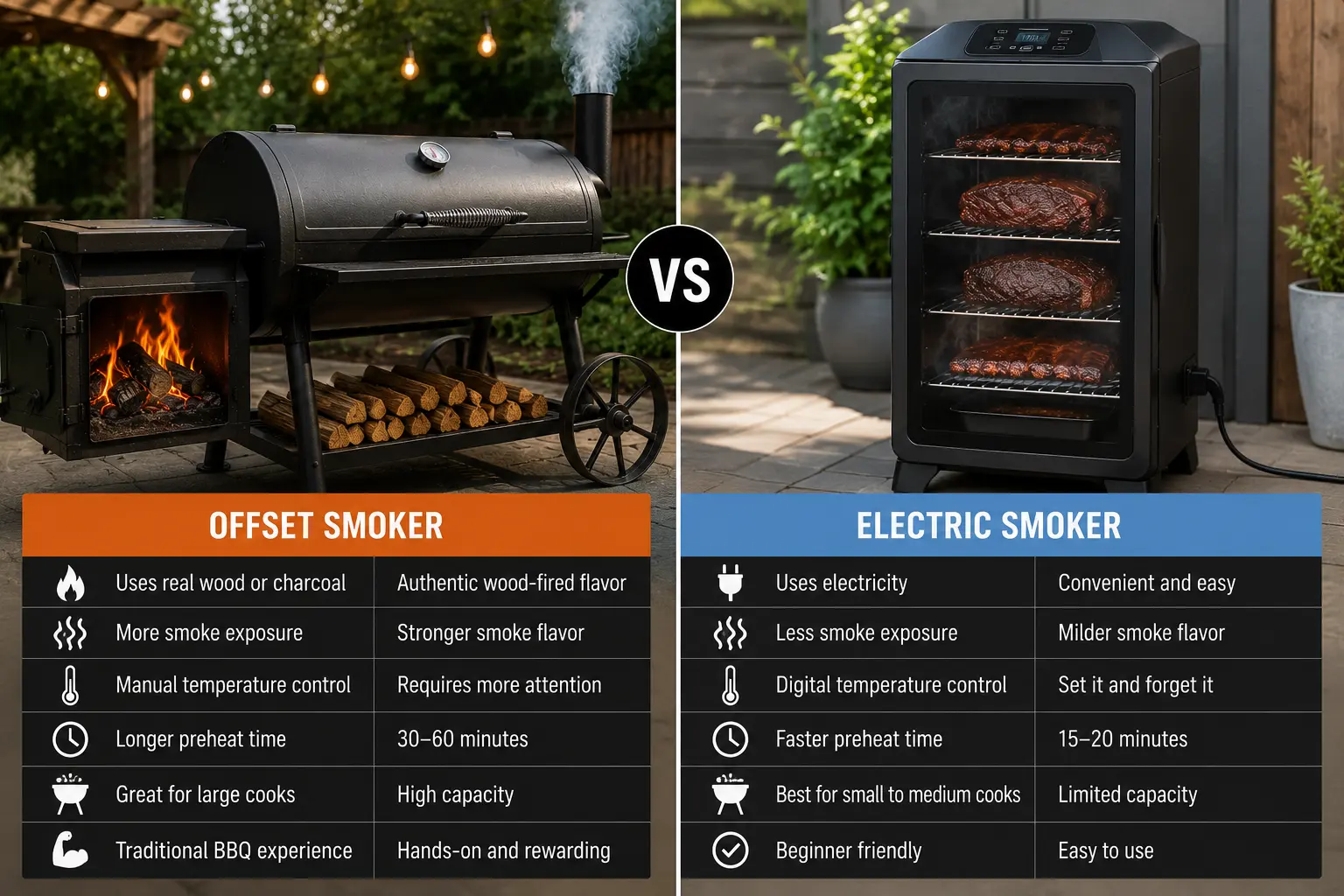
Choosing between an offset smoker vs electric smoker can be difficult, especially if you are buying your first BBQ smoker. Both can produce tender brisket, ribs, chicken, pork shoulder, and other smoked foods, but they provide very different cooking experiences.
An offset smoker burns charcoal or hardwood in a separate firebox, giving the cook direct control over heat, airflow, and smoke. An electric smoker uses a powered heating element and thermostat to maintain the selected temperature with less supervision.
Your ideal choice depends on how much time you want to spend managing the cook, the flavor you prefer, your experience level, available outdoor space, and whether convenience or traditional fire management matters more to you.
An offset smoker is better for deep wood-fired flavor, hands-on fire control, and traditional barbecue cooking. An electric smoker is better for beginners, busy cooks, and anyone who wants stable temperatures with minimal supervision.
Choose an offset smoker if you enjoy tending a live fire and learning traditional barbecue techniques. Choose an electric smoker if you prefer a simple, set-and-monitor cooking experience.
Offset Smoker vs Electric Smoker Comparison
| Feature | Offset Smoker | Electric Smoker |
| Heat source | Charcoal or hardwood | Electric heating element |
| Smoke flavor | Strong and traditional | Cleaner but generally milder |
| Ease of use | Requires practice | Beginner-friendly |
| Temperature control | Manual airflow and fuel control | Digital or analog thermostat |
| Supervision | Regular monitoring required | Minimal monitoring |
| Cooking versatility | Smoking and, on some models, grilling | Primarily low-temperature smoking |
| Weather performance | Affected by wind and cold | More stable but still affected by weather |
| Power requirement | Usually no electricity needed | Requires a suitable power outlet |
| Best for | BBQ enthusiasts and pitmasters | Beginners and convenience-focused users |
What Is an Offset Smoker?
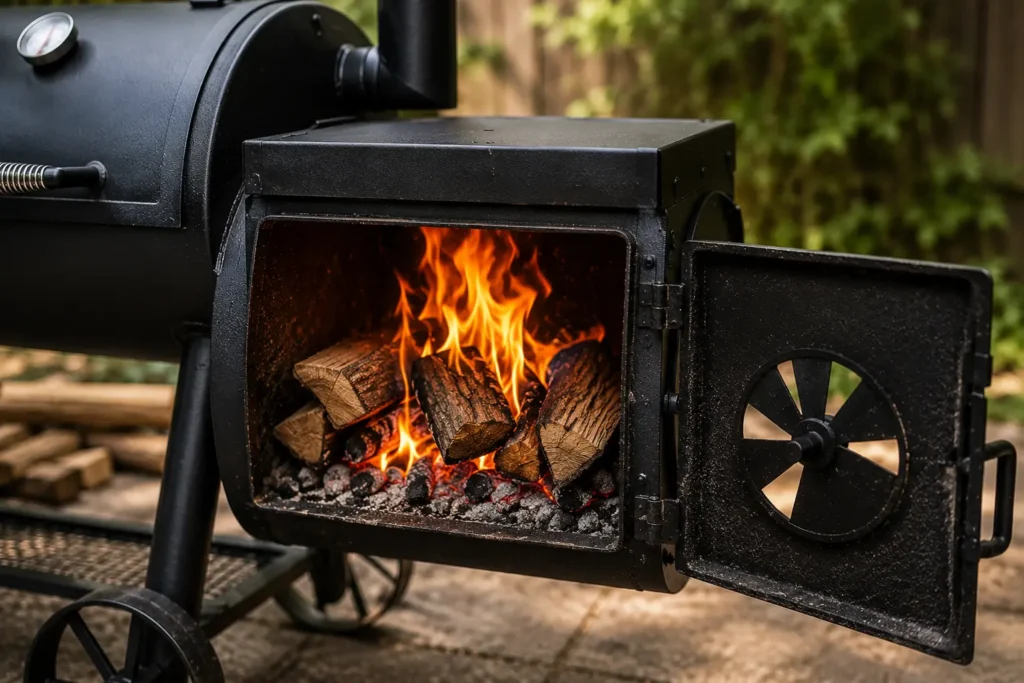
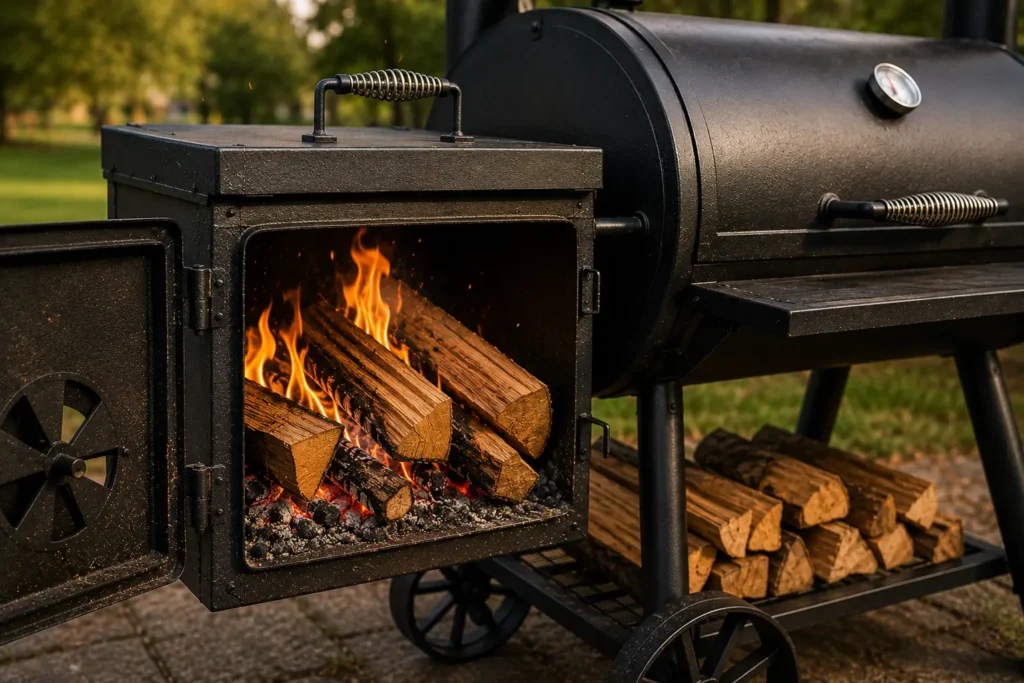
An offset smoker is a traditional barbecue smoker consisting of two main sections: a large horizontal cooking chamber and a smaller firebox mounted on the side.
Charcoal or hardwood burns inside the firebox. Heat and smoke then travel through an opening into the cooking chamber, move around the food, and exit through the chimney. This indirect cooking process allows meat to cook slowly while developing a smoky flavor and dark exterior bark.
You can learn more about the design, main components, and cooking process in our complete offset smoker grill guide.
How Does an Offset Smoker Work?
Successful offset smoking depends on combustion and airflow. The intake damper controls how much oxygen reaches the fire, while the chimney allows heat, smoke, and combustion gases to move through the cooking chamber.
Opening the intake vent usually supplies more oxygen and raises the fire’s intensity. Restricting the intake slows combustion and can reduce the cooking temperature. The chimney should normally remain sufficiently open to maintain clean airflow rather than trapping stale, heavy smoke around the food.
Wood quality, fire size, smoker construction, outdoor temperature, and wind can all affect performance. Oklahoma Joe’s official guide to building and managing an offset smoker fire also emphasizes consistent airflow and controlled fuel management.
For a more detailed process, read our offset smoker fire management tips.
Advantages of an Offset Smoker
An offset smoker offers several important benefits:
- Produces a deep, traditional wood-fired flavor
- Gives complete control over fuel, heat, and smoke
- Creates strong bark on brisket and pork shoulder
- Can accommodate large cuts of meat
- Does not normally require an electrical outlet
- Offers an authentic barbecue cooking experience
- Some models can also be used for direct grilling
The hands-on process is a major part of the appeal. Managing a clean fire, adjusting dampers, adding wood, and monitoring temperature can make each cooking session more rewarding.
Disadvantages of an Offset Smoker
Offset smokers also have a steeper learning curve:
- They require frequent temperature monitoring
- Fire management takes practice
- Wind and cold weather can cause temperature fluctuations
- Thin steel models may lose heat quickly
- Fuel must be added during longer cooking sessions
- Ash and grease require regular cleaning
- Poor airflow can create bitter or dirty smoke
Beginners can overcome these challenges by using a reliable dual-probe thermometer and learning how small airflow adjustments affect the fire. Our guide on how to control heat in an offset smoker explains these techniques in more detail.
What Is an Electric Smoker?
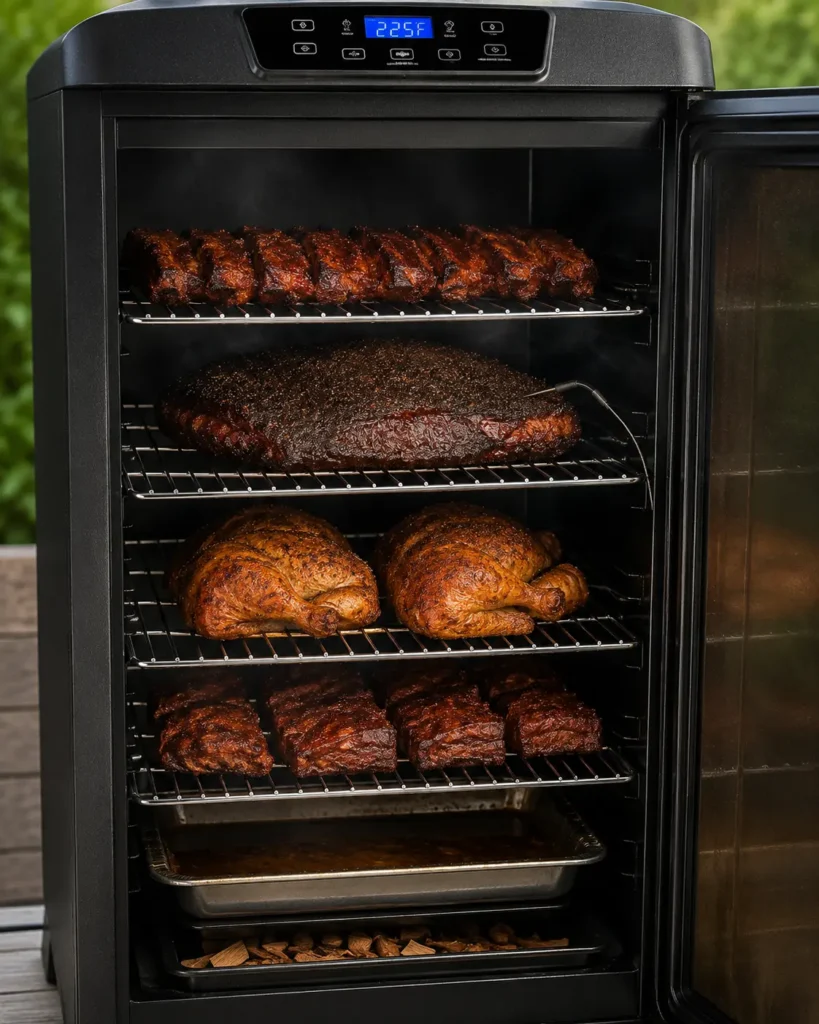
An electric smoker uses a powered heating element instead of a charcoal or hardwood fire. The element heats the cooking chamber and causes wood chips or chunks in a separate tray to smolder and produce smoke.
Most models use a vertical cabinet design with multiple cooking racks. Digital electric smokers may include temperature controls, timers, meat probes, remote monitoring, or Wi-Fi connectivity.
According to Masterbuilt’s official Smoker 101 guide, low-and-slow smoking commonly takes place between 225°F and 275°F, although the available range depends on the specific smoker.
How Does an Electric Smoker Work?
The user places food on the racks, loads the wood chip tray, selects a cooking temperature, and allows the thermostat to regulate the heating element.
When the chamber drops below the selected temperature, the element switches on. Once the target temperature is reached, it cycles off or reduces output. This automated process provides more consistent heat without requiring the cook to maintain a live fire.
Wood chips still create smoke, but the heating element provides most of the cooking heat.
Advantages of an Electric Smoker
The main benefits of an electric smoker include:
- Simple controls and easy operation
- Stable cooking temperatures
- Minimal fire management
- Suitable for beginners
- Less supervision during long cooks
- Compact vertical designs
- Efficient use of cooking space
- Easier cleanup than most offset smokers
- Some models offer remote monitoring
An electric smoker is particularly useful for people who want homemade smoked food without spending the entire cooking session managing charcoal, wood, and dampers.
Disadvantages of an Electric Smoker
Electric smokers also have limitations:
- Smoke flavor may be milder
- They require access to electricity
- They cannot be used normally during a power failure
- Heating elements and electronic controls can eventually fail
- Many models cannot reach ideal grilling or searing temperatures
- Less direct control over combustion and smoke production
- Some models produce softer bark because of their enclosed environment
Electric smokers are convenient, but they may not provide the same live-fire experience as a traditional offset smoker.
Offset Smoker vs Electric Smoker: 9 Important Differences
1. Smoke Flavor
Flavor is one of the biggest differences in the offset smoker vs electric smoker comparison.
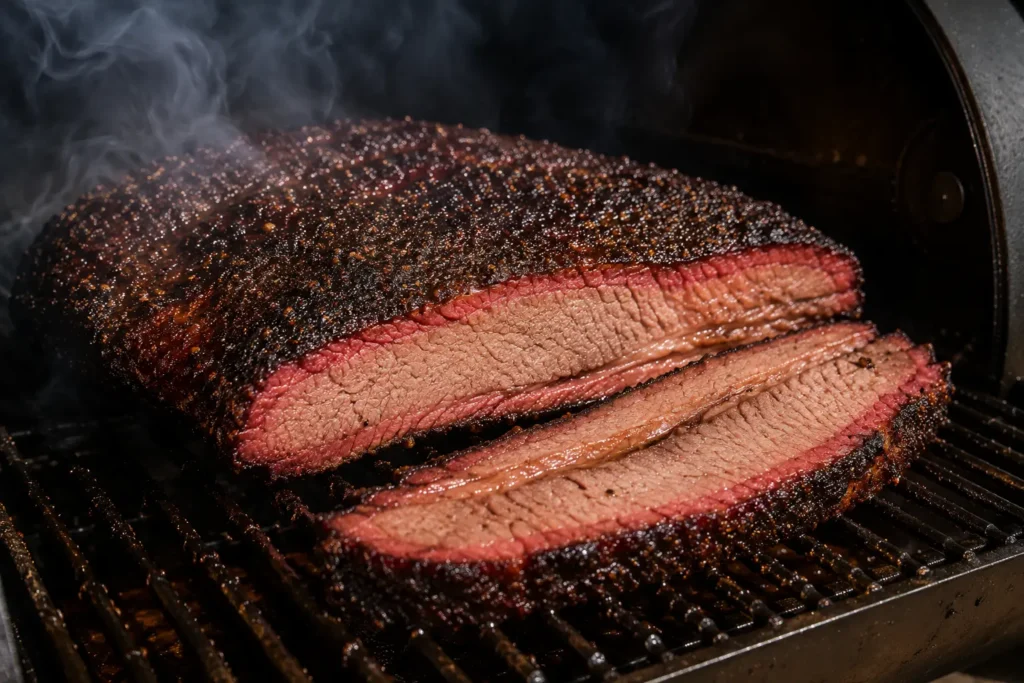
An offset smoker burns real hardwood or a combination of charcoal and wood. This active combustion can create a stronger smoke profile, deeper bark, and a more traditional barbecue aroma when the fire is managed correctly.
An electric smoker uses wood chips mainly for flavor while the heating element supplies the cooking heat. It can still produce delicious smoked food, but the smoke character is often cleaner and less intense.
Winner for traditional flavor: Offset smoker
2. Ease of Use
Electric smokers are easier to operate. After loading the food and wood chips, you can select the temperature and allow the thermostat to handle most adjustments.
An offset smoker requires you to build a fire, preheat the cooking chamber, control airflow, monitor smoke quality, and add fuel when necessary.
Winner for convenience: Electric smoker
3. Temperature Control
Electric smokers generally maintain a more consistent chamber temperature because a thermostat controls the heating element. Some fluctuation is normal, but the user usually makes fewer adjustments.
Offset smoker temperatures depend on fire size, airflow, fuel quality, smoker construction, and weather conditions. They may also have hotter areas near the firebox and cooler areas toward the chimney.
For recommended smoking temperatures for different meats, consult our offset smoker cooking temperature guide.
Winner for automatic temperature stability: Electric smoker
Winner for manual control: Offset smoker
4. Required Supervision
An offset smoker needs regular attention during a long cook. The fire must remain clean, and small pieces of seasoned hardwood may need to be added periodically.
An electric smoker requires less supervision. However, it is not completely maintenance-free. You should still monitor the meat’s internal temperature, check the wood supply, and make sure the appliance continues operating correctly.
Winner for low-maintenance cooking: Electric smoker
5. Learning Curve
Electric smokers allow beginners to focus on food preparation, seasoning, timing, and internal temperature without first mastering a live fire.
Offset smoking takes more practice, but the skills are valuable for anyone interested in traditional barbecue. New users can start with charcoal as a stable heat base before adding small hardwood splits for flavor.
Our guide to smoking with an offset smoker for beginners provides a complete starting process.
Winner for beginners: Electric smoker
Winner for developing fire-management skills: Offset smoker
6. Cooking Versatility
Many offset smokers can handle low-and-slow smoking and direct charcoal grilling, particularly when cooking grates are included inside the firebox. They may also reach higher temperatures than typical electric smokers.
Electric smokers are designed primarily for low-temperature smoking. They perform well with brisket, ribs, poultry, fish, sausages, and vegetables but usually cannot provide a strong direct-heat sear.
Winner for versatility: Offset smoker
7. Fuel and Operating Requirements
Offset smokers require charcoal, hardwood, or both. Fuel consumption depends on the smoker’s size, steel thickness, weather, target temperature, and cooking duration.
Electric smokers require a safe outdoor electrical connection and a smaller amount of wood for smoke. Their operating cost depends on local electricity rates and the smoker’s power consumption.
An electric smoker may be simpler to run, while an offset smoker offers more flexibility when electricity is unavailable.
Winner: Depends on local fuel and electricity availability
8. Weather and Reliability
Cold weather and strong winds can remove heat from any smoker. Thin offset smokers are particularly sensitive because they may leak heat and smoke around lids, doors, and seams.
An insulated electric smoker can maintain heat more automatically, but rain, damaged connections, or a power outage can interrupt the cooking process. Always follow the manufacturer’s instructions regarding outdoor placement and electrical safety.
A heavy-steel offset smoker is generally more mechanically simple, while an electric smoker depends on its heating element, controller, sensors, and power supply.
Winner for mechanical simplicity: Offset smoker
Winner for automatic adjustment: Electric smoker
9. Cleaning and Maintenance
Offset smokers produce ash, soot, grease, and combustion residue. Ash should be removed after the smoker has cooled because trapped moisture can contribute to corrosion. Cooking grates should be brushed, and the steel should be protected from rain.
Electric smokers do not produce charcoal ash, making routine cleanup easier. However, the grease tray, water pan, racks, wood chip tray, and temperature sensor still need regular cleaning.
Avoid soaking electrical components or using cleaning methods that conflict with the manufacturer’s instructions.
Winner for easier cleanup: Electric smoker
Which Smoker Is Better for Beginners?
An electric smoker is generally the easiest option for a complete beginner. The controlled heating system removes much of the uncertainty associated with fire and airflow management.
However, beginners should not avoid offset smokers simply because they require practice. If your goal is to learn traditional wood-fired barbecue, starting with an offset smoker allows you to develop those skills immediately.
Choose based on the experience you want:
- Choose electric for convenience and repeatability.
- Choose offset for traditional fire management and stronger smoke.
- Choose electric if you cannot monitor a fire throughout the day.
- Choose offset if the cooking process is part of the enjoyment.
Which Smoker Is Better for Brisket?
Both smokers can cook tender brisket, but the experience and final flavor may differ.
An offset smoker is often preferred for brisket because it can produce pronounced bark and a traditional wood-fire flavor. However, successful results require consistent temperature control and clean smoke.
An electric smoker makes it easier to maintain a steady cooking environment during a long brisket cook. The flavor may be milder, but the reduced supervision can be a major advantage.
If you choose an offset model, follow our complete offset smoker brisket recipe.
How to Choose the Right Smoker
Before making your final decision, consider the following questions:
- Do you want strong wood-fired flavor or easier operation?
- Are you prepared to manage a fire for several hours?
- Do you have a safe and accessible outdoor electrical outlet?
- Will you also use the smoker for direct grilling?
- How much cooking capacity do you need?
- Do you regularly cook in cold or windy weather?
- How much storage space is available?
- Do you prefer simple mechanical equipment or digital controls?
- What is your budget for the smoker, fuel, and accessories?
If you decide that a traditional model suits your needs, our guide to buying an offset smoker online explains construction, size, cooking capacity, and other buying considerations.
Essential Food-Safety Reminder
Regardless of which smoker you use, judge doneness with an accurate food thermometer instead of relying only on color, cooking time, or smoker temperature.
The USDA’s smoking meat and poultry guidance recommends minimum internal temperatures of 145°F with a three-minute rest for whole cuts of beef, pork, lamb, and veal; 160°F for ground meats; and 165°F for poultry.
Tender barbecue cuts such as brisket and pork shoulder are often cooked beyond their minimum safe temperatures to break down connective tissue and achieve the desired texture.
Final Verdict: Offset Smoker or Electric Smoker?
The winner of the offset smoker vs electric smoker comparison depends on your priorities.
An offset smoker is the better option for barbecue enthusiasts who want authentic wood-fired flavor, strong bark, cooking versatility, and complete control over the fire. It demands more time and patience, but many pitmasters consider that process an essential part of traditional barbecue.
An electric smoker is the better option for beginners, busy cooks, and people who prefer consistent temperatures with less supervision. It provides a convenient way to prepare smoked meat without constantly adding fuel or adjusting dampers.
Neither smoker is automatically superior in every situation. The best smoker is the one that matches your available time, desired flavor, experience level, and preferred cooking style.
Frequently Asked Questions
Not necessarily. “Vertical” describes the smoker’s shape rather than its fuel source. Vertical smokers can use electricity, charcoal, gas, or wood. They often use space efficiently and maintain relatively even heat, while offset smokers offer stronger live-fire control and greater grilling versatility.
Electric smokers can produce flavorful food, but their smoke profile is generally milder. Offset smokers burn hardwood or charcoal and wood, which can create a more pronounced smoke flavor and darker bark.
Its lifespan depends on construction quality, usage, storage, weather exposure, and maintenance. Heating elements, digital controllers, wiring, and temperature sensors are common components that may eventually require repair or replacement.
The main drawbacks include dependence on electricity, limited high-temperature cooking, milder smoke flavor, and the possibility of electrical component failure. They also provide less control over live-fire combustion.
Most traditional offset smokers do not require electricity. However, accessories such as digital thermometers, fans, or automatic temperature controllers may need batteries or electrical power.
Yes. Beginners can learn offset smoking by starting with a small charcoal fire, using seasoned hardwood, monitoring temperatures with a digital thermometer, and making gradual damper adjustments.
Most electric smokers are intended for low-and-slow cooking rather than direct grilling. Some specialized models offer additional grilling functions, so check the product specifications before purchasing.
Electric smokers are generally easier to clean because they do not produce charcoal ash. Offset smokers require ash removal, grate cleaning, grease management, and occasional rust prevention.