If you’re hunting for the best offset smokers for the money, here’s the honest truth we always share with friends: the cheapest pit on the shelf is rarely the best value. A smoker that earns its keep gets the balance right — solid construction, useful cooking space, steady airflow, good heat retention, and durability — at a price that makes sense.
Budget-friendly smokers put real wood-fired barbecue within reach, which we love — just know that thinner steel and smaller fireboxes ask for a bit more attention on long cooks. Step up to the mid-range and you’ll generally find sturdier builds and steadier heat, while premium pits use thicker steel that can serve you well for years, even decades.
To put together this 2026 guide, we compared current specifications, cooking capacity, build quality, firebox design, temperature control, pricing, and overall usability across the most popular options. The four smokers below stood out as the strongest values for different budgets and cooking styles.
Short on time? Here’s our quick take: the Royal Gourmet CC1830F is the best low-cost way for beginners to get started. The Old Country Pecos steps things up with stronger welded construction for around $600, while the Oklahoma Joe’s Longhorn Reverse Flow delivers the best overall mix of cooking space, versatility, and reverse-flow performance.
And if you’re playing the long game, the Old Country All-American Brazos is our durability pick — its heavy 1/4-inch steel costs more up front but pays you back in heat retention and years of service, especially if you cook often.
Best Offset Smokers for the Money: Quick Comparison
| Offset smoker | Best for | Cooking capacity | Current listed price* |
| Royal Gourmet CC1830F | Entry-level buyers | 824 sq. in. | Check current price |
| Old Country Pecos | Best value around $600 | 630 sq. in. main grate | $599.99 |
| Oklahoma Joe’s Longhorn Reverse Flow | Best overall balance | 1,060 sq. in. | $899.99 |
| Old Country All-American Brazos | Best heavy-duty value | Approx. 1,045 sq. in. | $1,549.99 |
*Prices checked in July 2026. Retail prices, promotions, delivery costs, and availability can change.
What Is an Offset Smoker?
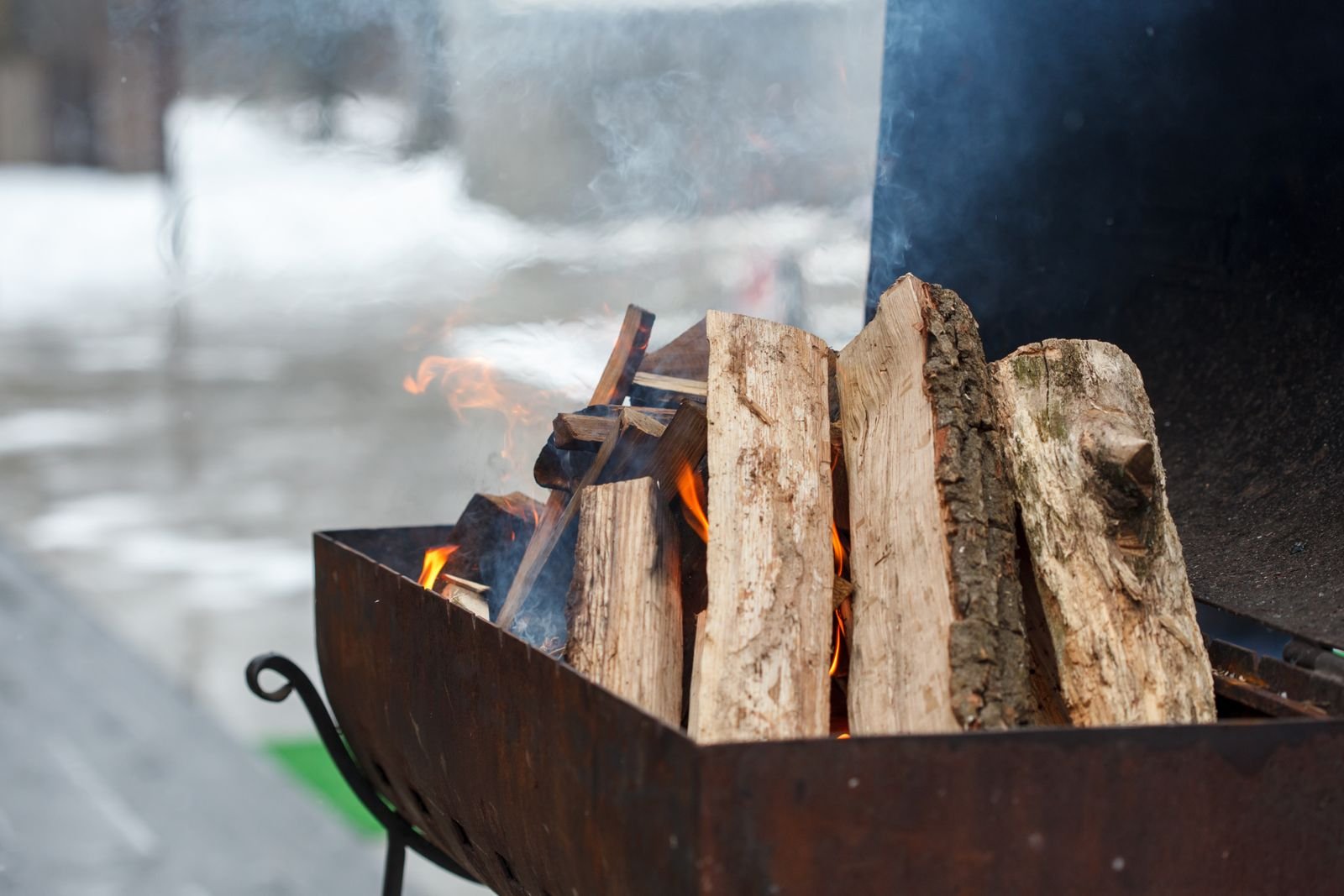
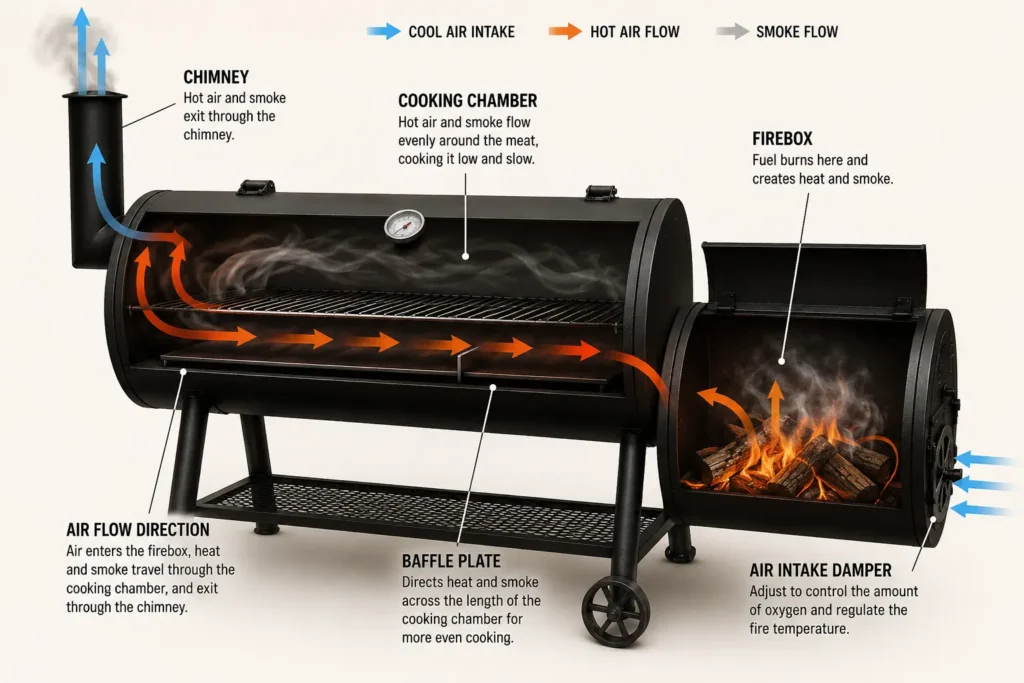
An offset smoker is beautifully simple: a main cooking chamber with a smaller firebox attached to the side. You burn charcoal or hardwood splits in the firebox, and heat and smoke travel through the cooking chamber before exiting out the chimney.
Since your food sits away from the direct flame, everything cooks with gentle indirect heat — exactly what brisket, ribs, pork shoulder, turkey, and chicken want during those long, low-and-slow sessions.
Here’s the trade-off we always mention: unlike pellet, electric, or gas smokers, an offset asks you to manage the fire and airflow yourself. It takes more attention, but you get real control over your wood choice, smoke intensity, bark, and the whole cook.
New to the design? Our complete guide to offset smokers walks through how each part works.
Why Use an Offset Smoker?
Authentic Wood-Smoked Flavor
If flavor is why you barbecue — and for us, it is — this is the big one. A clean-burning hardwood fire lays down a depth of smoke that electric elements and little wood-chip trays just can’t match.
Oak gives you a balanced, all-purpose smoke; hickory brings that bold, classic barbecue punch; and fruitwoods like apple and cherry keep things milder and a touch sweeter.
Large Cooking Capacity
That long horizontal chamber swallows a full packer brisket, pork shoulders, chickens, and multiple racks of ribs with room to spare. Cooking for a crowd? A bigger offset lets you feed family gatherings and parties in a single session instead of cooking in shifts.
Cooking Versatility
Many offsets also let you grill directly over the firebox — handy when burgers, steaks, or vegetables want a blast of high heat.
Manual Control
Adjustable dampers put you in charge of how much oxygen reaches the fire. Fuel load, fire size, chimney draft, damper position, wood choice — every variable is yours to dial in. Pro tip: this hands-on control is exactly what makes offset cooking so rewarding once you get the feel for it.
1. Royal Gourmet CC1830F: Best Budget Offset Smoker
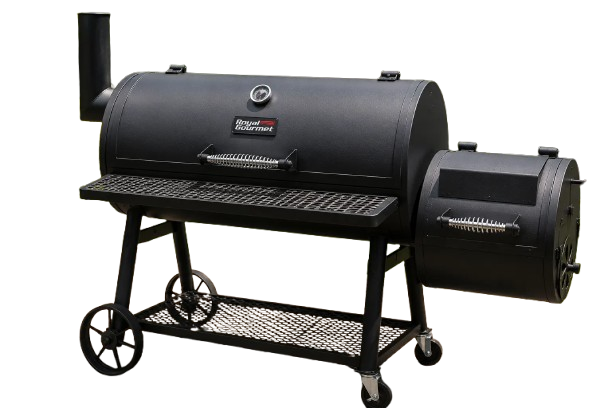
The Royal Gourmet CC1830F is one of the best offset smokers for the money if you’re just getting started and watching your budget. It pairs a barrel-style charcoal grill with a compact side firebox, so you can sear directly over coals or settle in for a slow smoke — one cooker, two personalities.
According to the official Royal Gourmet specifications, you’re getting roughly 824 square inches of total cooking space — generous for the price.
Key Features
- Approximately 824 square inches of total cooking area
- Main charcoal cooking chamber
- Attached offset firebox
- Adjustable charcoal pan
- Side air vent for fire control
- Front and bottom storage shelves
- Built-in lid thermometer
- Relatively lightweight and movable construction
Advantages
For a first-timer, this is one of the most affordable doors into real stick-burning. The combo design means you can play with both direct grilling and indirect smoking without buying two separate cookers.
It’s also light enough to move around easily — a genuine plus if you’re working with a small patio or no permanent cook spot. Pro tip: owners consistently report that a cover and a sheltered corner go a long way with lighter-gauge steel.
Disadvantages
The flip side of that light build: thinner steel doesn’t hold heat like a heavy-duty pit. On cold or windy days, expect more temperature swing, and small air gaps can leak a little heat and smoke.
The compact firebox wants your attention on long cooks, too — cram in too much wood at once and you’ll see temperature spikes or that bitter, dirty smoke.
Who Should Buy It?
Choose the Royal Gourmet CC1830F if:
- You are buying your first offset smoker.
- Your budget is limited.
- You cook mainly for a small family.
- You want both grilling and smoking capability.
- You are willing to learn fire management on an entry-level smoker.
Still on the fence? Read our complete Royal Gourmet offset smoker review to decide whether its lighter build fits the way you cook.
2. Old Country Pecos: Best Offset Smoker Around $600
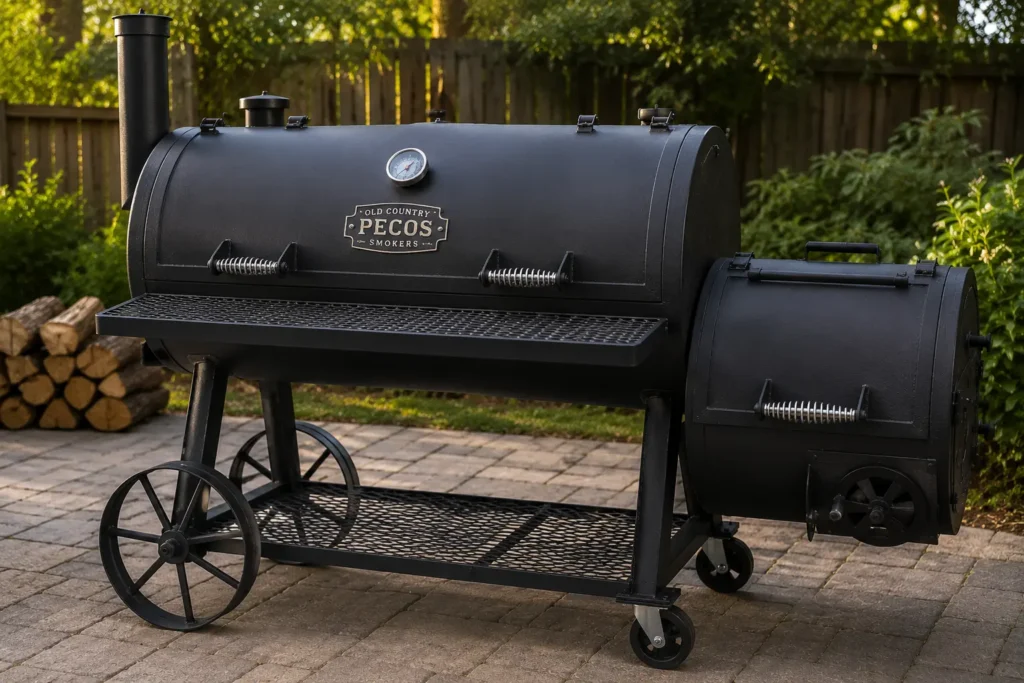
The Old Country Pecos is a serious step up from entry-level territory. Welded construction, a bigger firebox, and a heavier body make it a sweet spot for anyone who wants noticeably better performance without paying premium prices.
Academy Sports currently lists the Old Country Pecos at about $599.99 — right in that value-packed middle ground.
Key Features
- All-welded steel construction
- Approximately 630-square-inch main cooking grate
- Approximately 272-square-inch firebox grate
- Slide-out main cooking grate
- Heavy-duty coal grate
- Drop-in front table
- Steel bottom storage shelf
- Large wagon-style wheels
- Suitable for charcoal, wood chunks, or wood logs
Advantages
Here’s what we like: instead of a box of bolts and an afternoon of assembly, the Pecos shows up with an all-welded body. Its 14-gauge steel and heavier doors hold heat better and stand up longer than the typical budget grill-smoker combos.
The roomier firebox handles small hardwood splits far more comfortably than compact entry-level boxes, and the wide main grate fits brisket, ribs, and several smaller cuts at once.
Disadvantages
Two things to plan for: there’s no built-in thermometer, so budget for a good digital probe at grate level — and at roughly 222 pounds, this isn’t a cooker you’ll be wheeling around casually.
And while it’s tougher than most entry-level pits, it’s still not the thermal fortress a 1/4-inch steel premium smoker is.
Who Should Buy It?
Choose the Old Country Pecos if:
- You have approximately $600 to spend.
- You want an all-welded smoker.
- You regularly cook brisket, ribs, or pork shoulder.
- You want better heat retention than a lightweight smoker.
- You do not need reverse-flow cooking.
Bottom line: if you want genuine wood-fired cooking for under $1,000, the Pecos is one of the best offset smokers for the money in the mid-range. That welded body and practical firebox are a clear upgrade over entry-level combos.
3. Oklahoma Joe’s Longhorn Reverse Flow: Best Overall Value
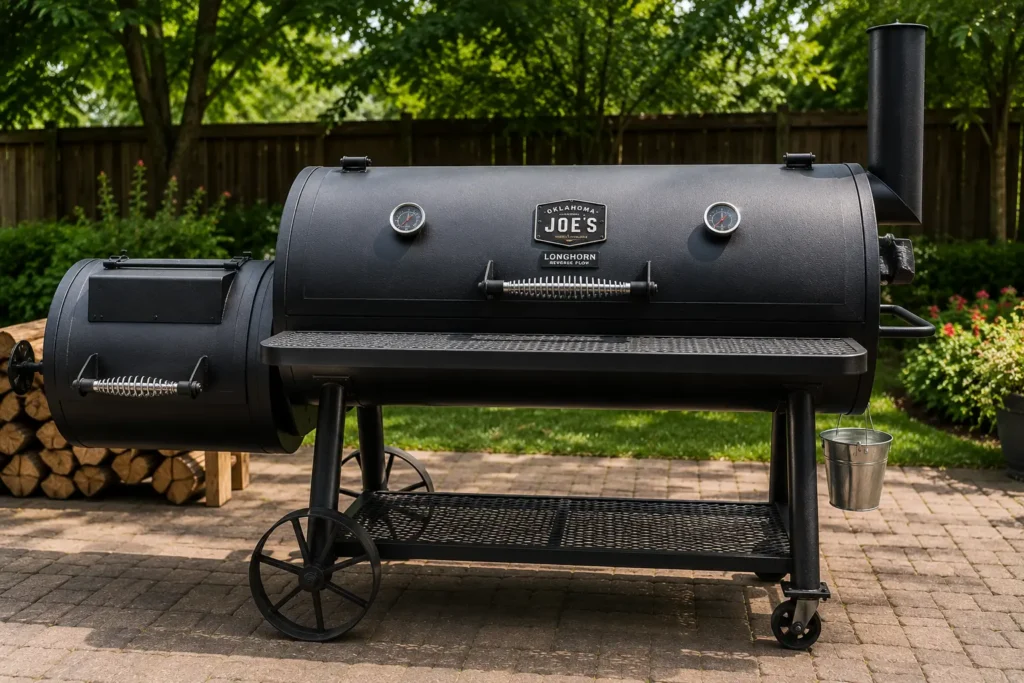
The Oklahoma Joe’s Longhorn Reverse Flow earns our best overall nod among the best offset smokers for the money in 2026. You get around 1,060 square inches of cooking space, heavy-gauge steel, solid brand support, and a reverse-flow system you can reconfigure — a lot of cooker for the money.
Key Features
- Approximately 1,060 square inches of cooking capacity
- 751-square-inch primary cooking area
- 309-square-inch secondary cooking area
- Heavy-gauge steel construction
- Four removable heat baffles
- Reverse-flow or traditional offset configuration
- Multiple temperature gauges
- Large charcoal and ash basket
- Porcelain-coated cooking grates
- Front and lower storage shelves
Advantages
Reverse flow sends heat and smoke under a set of baffle plates before it rolls back across the food — a design pitmasters generally agree tames hot spots and evens out temperatures across the chamber.
Pull the baffles out and it runs as a traditional offset, so you can try both airflow styles without buying a second pit. That’s real versatility.
And with that much real estate, it’s ready for family dinners, parties, and those all-day weekend sessions.
Disadvantages
It’s a big, heavy cooker that wants a dedicated spot outdoors. Some owners also choose to upgrade the door seals with high-temp gasket material to cut down air leaks — a popular, inexpensive tweak.
Plan on cleaning the baffle plates now and then, since grease and residue collect on them over time.
Who Should Buy It?
Choose the Oklahoma Joe’s Longhorn Reverse Flow if:
- You want a large cooking chamber.
- You regularly cook for groups.
- You want to try reverse-flow and traditional offset cooking.
- Your budget is close to $1,000.
- You want better heat distribution than a basic offset smoker.
Curious how it stacks up against its little brother? Compare it with the smaller model in our Oklahoma Joe’s Highland offset smoker review.
4. Old Country All-American Brazos: Best Heavy-Duty Value
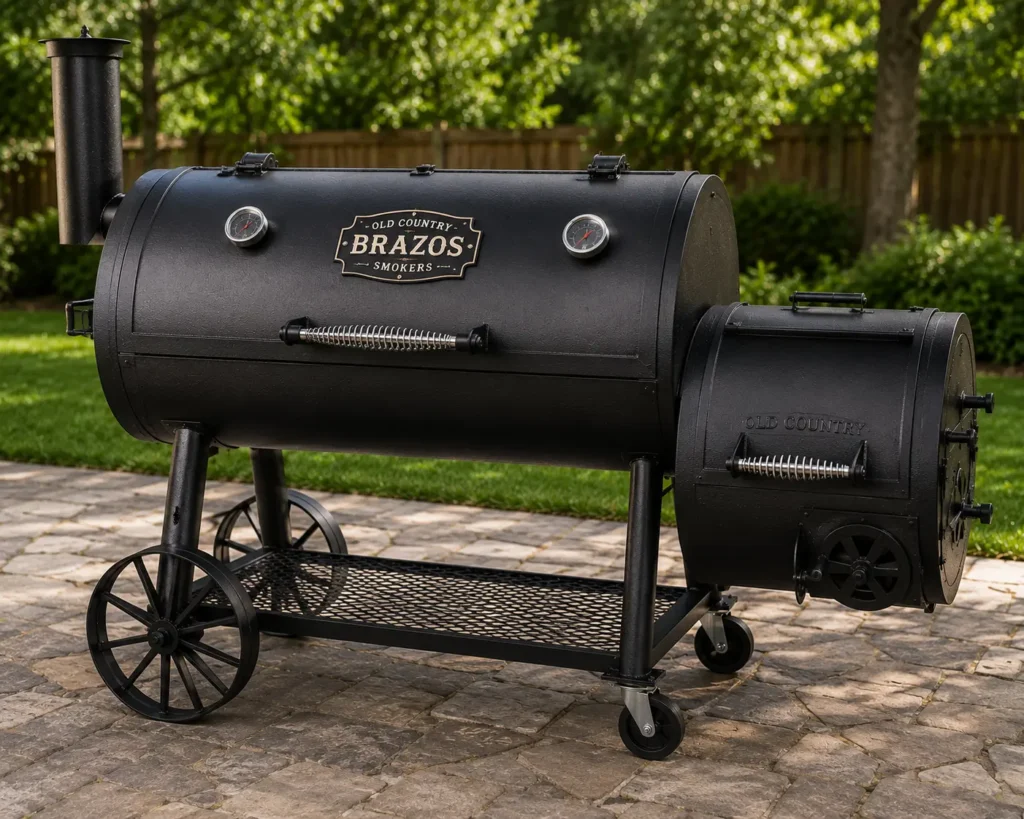
The Old Country All-American Brazos is one of the best offset smokers for the money when steel thickness, heat retention, and long-term durability top your list. Yes, it costs more than the others here — but 1/4-inch steel puts it in a different performance league entirely.
Key Features
- 1/4-inch steel construction
- All-welded heavy-duty body
- Approximately 1,045 square inches of cooking space
- Two cooking racks
- Large side-access firebox
- Pull-out expanded-metal grates
- Folding front table
- Stay-cool stainless-steel handles
- Suitable for charcoal and hardwood
- Approximately 399-pound total weight
Advantages
Thick steel soaks up and holds heat far better than the thin stuff on budget pits. Translation: steadier temps, less drama from wind and cold, and more predictable long cooks.
All-welded construction means fewer seams for heat and smoke to sneak through, and the big firebox burns full-size hardwood splits cleanly — exactly what you want for that thin blue smoke.
Season it, keep it clean, and give it shelter from the weather, and a pit built like this can serve you well for many years. Pro tip: a fitted cover and prompt ash removal are the two cheapest longevity upgrades you can buy.
Disadvantages
At nearly 400 pounds, the Brazos isn’t going anywhere once it’s home — pick its permanent cooking spot before delivery day.
There’s no built-in thermometer, so factor quality digital probes into your budget. Delivery fees and availability can vary by location, too.
Who Should Buy It?
Choose the Old Country Brazos if:
- You smoke food frequently.
- You want 1/4-inch steel construction.
- Long-term durability matters more than portability.
- You cook in cold or windy conditions.
- You are comfortable managing a hardwood fire.
- Your budget is approximately $1,500.
Shopping at the very top of the market? Buyers considering even more durable equipment can compare additional options in our premium offset smokers guide.
How We Selected the Best Offset Smokers for the Money
Here’s a peek at our process: we evaluated each contender on build quality, usable cooking space, firebox size, airflow control, temperature stability, maintenance, current pricing, and how well it suits different kinds of backyard cooks.
Build Quality
Steel thickness, weld quality, lid fit, hinges, handles, grates, frame strength — every one of these shapes how a smoker performs over years, not just weekends.
Heavy steel usually means better heat retention, but it also adds cost and pounds. The right pick balances build quality against your budget and how much you need to move the thing.
Cooking Capacity
Don’t judge capacity by the headline square inches alone — manufacturers sometimes fold firebox grates, warming racks, and narrow upper shelves into that number.
Instead, check that the main grate actually fits what you cook most — especially full packer briskets and untrimmed rib racks.
Firebox Size
A firebox needs enough room to keep a clean-burning fire without being stuffed to the brim. Tiny fireboxes often force you into short splits and constant refueling.
Easy ash removal and good airflow under the fuel matter just as much.
Airflow Control
Look for an adjustable intake vent and an effective chimney — together they feed oxygen to the fire and pull heat and smoke through the chamber.
Starve the fire of air and you’ll get smoldering wood, thick white smoke, bitter meat, and swinging temps. Learn more in our offset smoker fire management guide.
Temperature Stability
Steel thickness, door fit, airflow, firebox design, weather, and fuel quality all team up to decide how steady your temps run.
A pricier pit won’t babysit itself — but solid construction makes fire management easier and smooths out those sudden spikes and dips.
Cleaning and Maintenance
Removable ash pans, slide-out grates, grease drains, and an accessible firebox make cleanup far less of a chore. And don’t leave ash sitting inside — it absorbs moisture and invites rust. Pro tip: a quick ash dump after every cook takes two minutes and adds years to your pit.
What Price Range Provides the Best Value?
Below $300
This is beginner and occasional-cook territory. Expect light steel, smaller fireboxes, more heat loss, and a few air leaks to manage.
You can absolutely make great barbecue here — it just asks for more attention, and small upgrades like high-temp gaskets or a charcoal basket go a long way.
See our budget offset smokers guide for the best affordable options.
Between $500 and $1,000
For a lot of backyard cooks, this is the sweet spot: better construction, more cooking space, bigger fireboxes, and improved airflow without breaking the bank.
The Old Country Pecos and Oklahoma Joe’s Longhorn Reverse Flow both live here — and both made our list above for good reason.
Above $1,000
Up here you get thicker steel, better welds, superior heat retention, and a longer service life — ideal if you cook often, already understand fire management, and want to buy your “forever” pit.
Tips for Getting Better Results From Your Offset Smoker
Season It Before the First Cook
Always clean and season a new smoker before food touches it. Seasoning burns off manufacturing residue and builds a protective layer on the interior steel.
Follow our complete instructions on how to season an offset smoker — it only takes an afternoon.
Use Properly Seasoned Hardwood
Burn clean, dry hardwood — oak, hickory, pecan, apple, or cherry. Never use painted, chemically treated, moldy, or mystery wood.
If you’re new, start with oak: it burns steadily and gives a balanced smoke that’s hard to overdo.
Monitor Temperature at Grate Level
That thermometer in the lid? It can read very differently from the temp at the food. Trust a digital probe clipped near the grate, plus a separate thermometer for internal meat temps. Pro tip: pitmasters generally agree that grate-level readings are the only ones that really count.
Maintain a Small, Clean Fire
Big smoldering fires make bitter barbecue. Build a stable coal bed, then feed it one small hardwood split at a time.
Keep the chimney open so stale smoke can escape, and steer your temps with fire size and the intake damper.
Learn Your Smoker’s Heat Zones
The firebox end almost always runs hotter than the chimney end. Map your grate with a few thermometer probes — or the classic biscuit test — so you know exactly where your hot and cool zones live.
Our guide on how to control heat in an offset smoker shows you how to use those zones to your advantage.
Protect the Smoker From Weather
When the pit is completely cool, keep it covered. Dump ash promptly, wipe out grease buildup, and touch up chipped exterior paint with high-temp paint when needed — future you will be grateful.
Common Buying Mistakes to Avoid
- Buying based only on total cooking capacity
- Ignoring the thickness and quality of the steel
- Choosing a firebox that is too small for wood splits
- Assuming a higher price guarantees easier operation
- Forgetting to include thermometers and accessories in the budget
- Purchasing a smoker too heavy for the intended location
- Ignoring replacement parts and manufacturer support
- Buying more capacity than you will regularly use
Which of These Best-Value Offset Smokers Should You Buy?
So, which one should you actually buy? It comes down to your budget, how often you cook, how much outdoor space you have, and how long you want the pit to last.
The Royal Gourmet CC1830F is the practical starter pick. The Old Country Pecos brings stronger welded construction for around $600 — a compelling choice for classic backyard smoking.
Our best overall pick, the Oklahoma Joe’s Longhorn Reverse Flow, pairs roughly 1,060 square inches of cooking space with both reverse-flow and traditional configurations — versatile enough for family dinners, big gatherings, and serious weekend cooks.
And for frequent cooks who put steel thickness and durability first, the 1/4-inch steel Old Country All-American Brazos is the strongest premium investment here — its higher price buys genuinely better heat retention and heavy-duty welded construction.
Here’s the bottom line we always come back to: the best offset smokers for the money in 2026 aren’t necessarily the biggest or priciest. Match the smoker to how you actually cook — your usual crowd size, your fire-management style, your space, your budget. And remember: clean-burning hardwood, accurate temps, and steady fire control will shape your results just as much as the pit itself.
Frequently Asked Questions
The Oklahoma Joe’s Longhorn Reverse Flow provides the best overall balance of cooking capacity, construction, temperature distribution, versatility, and price. Budget buyers can consider the Royal Gourmet CC1830F, while buyers wanting stronger construction or thicker steel should compare the Old Country Pecos and Old Country All-American Brazos.
The Old Country Pecos and Oklahoma Joe’s Longhorn Reverse Flow are two strong options under $1,000. The Pecos emphasizes simple welded construction, while the Longhorn offers more cooking capacity and reverse-flow capability.
A cheap offset smoker can be worthwhile for beginners and occasional cooks. However, lightweight construction normally requires more fuel management and may struggle in windy or cold conditions.
Thicker steel generally retains heat better, reduces temperature fluctuations, and provides greater durability. However, it also increases the smoker’s price and weight.
A smaller smoker is usually sufficient for a family, while a larger cooking chamber is better for parties, catering, or preparing several large cuts simultaneously. Check the dimensions of the primary grate rather than relying only on the advertised total capacity.
A traditional offset smoker provides a hotter area near the firebox and greater flexibility in arranging different foods. A reverse-flow smoker uses baffles to distribute heat more evenly and reduce hot spots. Both designs can produce excellent barbecue.
A well-built smoker can last many years or even decades when it is cleaned, seasoned, covered, and protected from corrosion. Lightweight models may have a shorter lifespan, particularly if they remain exposed to rain and humidity.