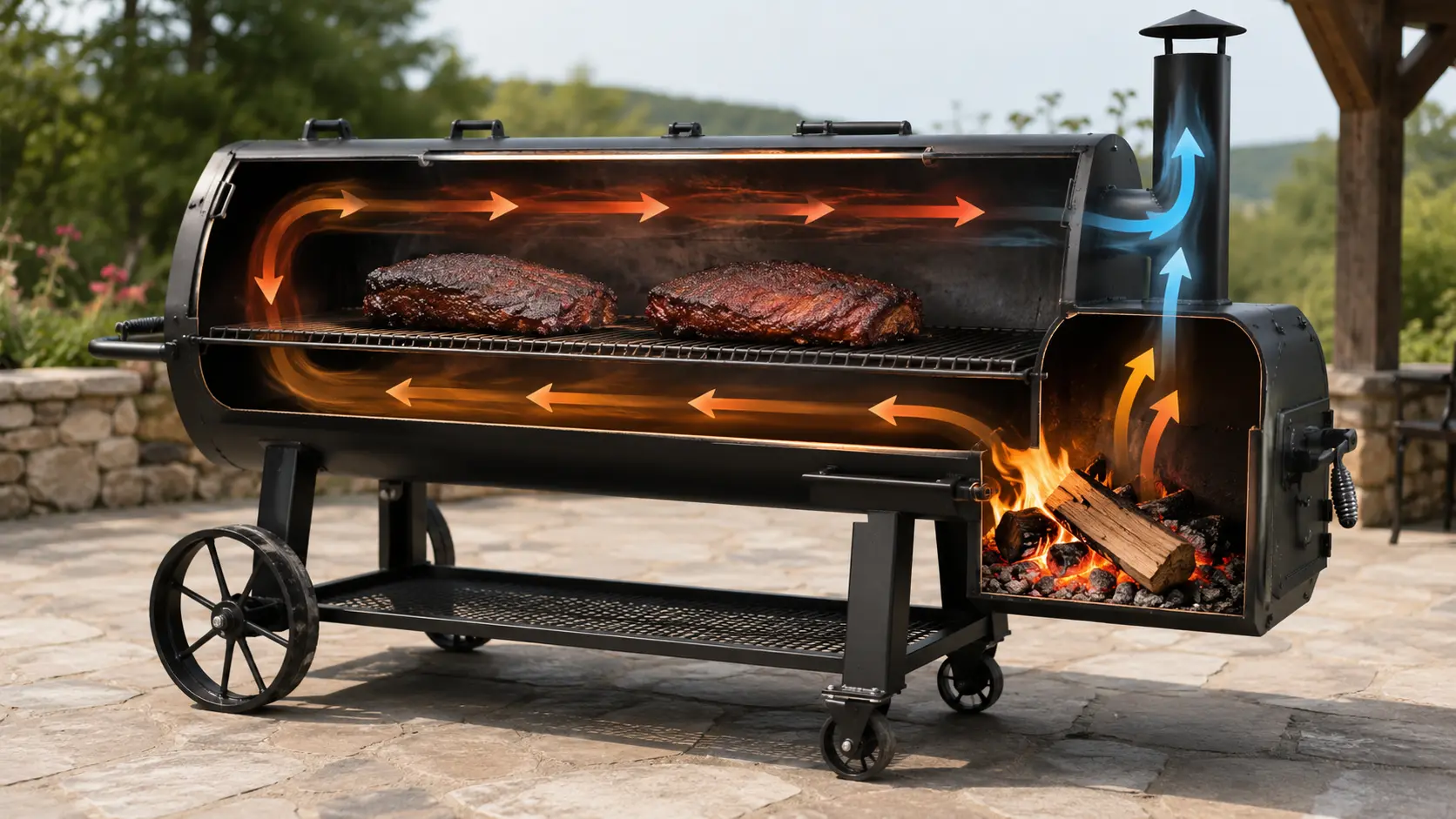
A reverse flow offset smoker uses a solid steel baffle plate to guide heat and smoke beneath the cooking grates, toward the far end of the chamber, and then back across the food before it exits through the chimney. This longer airflow path helps reduce extreme hot spots and creates a steadier cooking environment than many traditional offset designs.
That does not make every reverse-flow pit automatically better. Steel thickness, door seals, firebox size, chimney draft, thermometer placement, and fire management still determine how well a smoker performs. This guide explains how the design works, what to check before buying, and how to operate it for clean smoke and consistent barbecue.
What Is a Reverse Flow Offset Smoker?
A reverse flow offset smoker is a type of offset smoker with a side-mounted firebox, a horizontal cooking chamber, and a chimney positioned near the firebox end. Its defining feature is a long baffle or reverse-flow plate beneath the cooking grates.
In a traditional offset smoker, heat normally enters beside the firebox, moves directly across the food, and exits through a chimney at the opposite end. In a reverse-flow model, heat travels below the baffle first. It rises through an opening at the far end, reverses direction, and moves back over the meat toward the chimney.
This arrangement protects food from intense radiant heat near the firebox and helps equalize grate-level temperatures. For a direct feature-by-feature breakdown, read our offset smoker vs reverse flow smoker comparison.
The reverse flow offset smoker design is therefore defined by its complete airflow route, not merely by the presence of any metal plate beneath the grates.
How Does a Reverse Flow Offset Smoker Work?
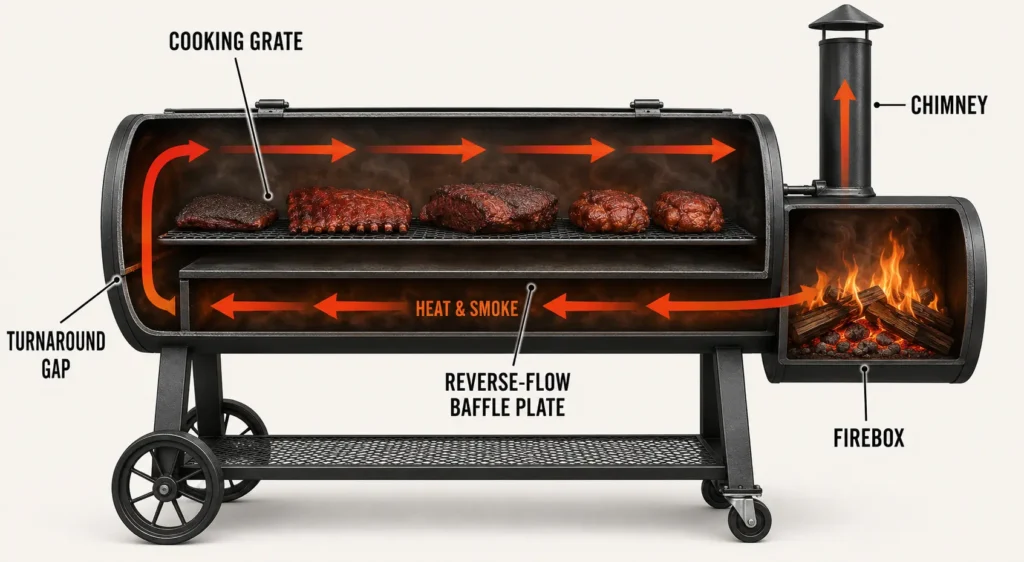
The airflow cycle inside a reverse flow offset smoker follows five basic stages:
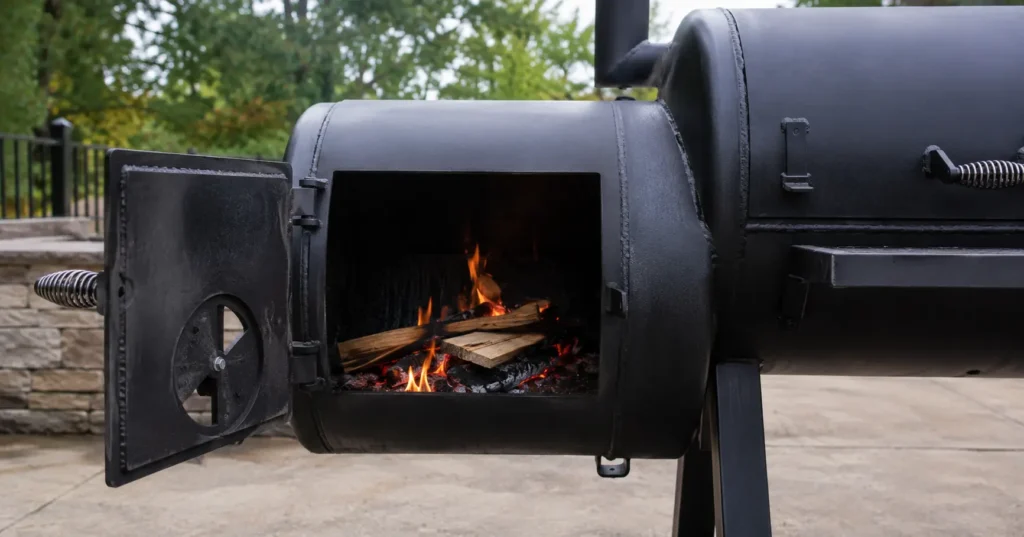
- Fuel burns in the firebox. Charcoal establishes a coal bed, while seasoned hardwood provides heat and smoke.
- Heat enters below the baffle. Instead of rising immediately around the food, hot gases are directed underneath the solid plate.
- The baffle absorbs heat. The steel plate becomes a source of radiant heat and reduces sharp temperature changes once fully preheated.
- Smoke rises at the far end. An opening allows heat and smoke to enter the upper cooking chamber.
- Airflow returns across the food. Smoke travels back toward the firebox side and exits through the nearby chimney.
Lang BBQ Smokers’ reverse-flow explanation illustrates this same path: heat moves beneath the baffled flue, reaches the end, and then reverses over the heated plate.
Main Parts of a Reverse-Flow Smoker
Understanding each component makes setup and troubleshooting easier.
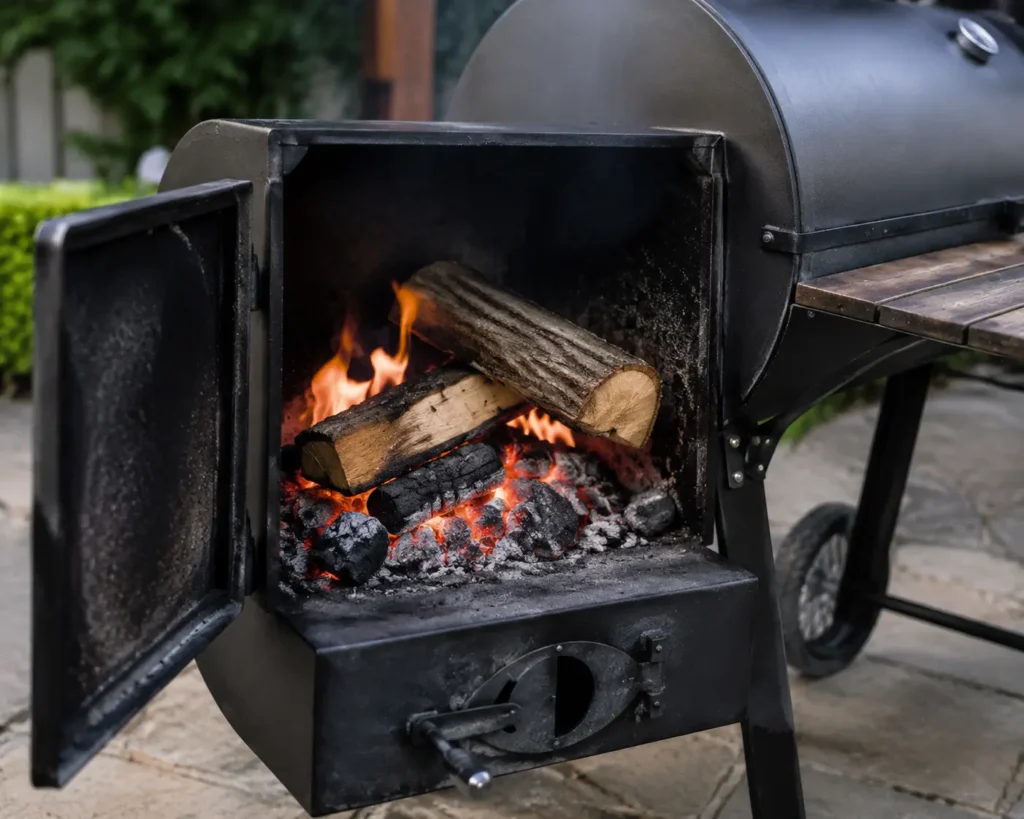
Firebox
The firebox holds the charcoal and wood. Its intake vent controls how much oxygen reaches the fire. A properly sized firebox should allow a small, clean-burning fire without forcing you to overload it with fuel.
Cooking Chamber
The horizontal chamber holds the grates and food. Heavy steel retains heat better in wind or cold weather, although it takes longer to preheat.
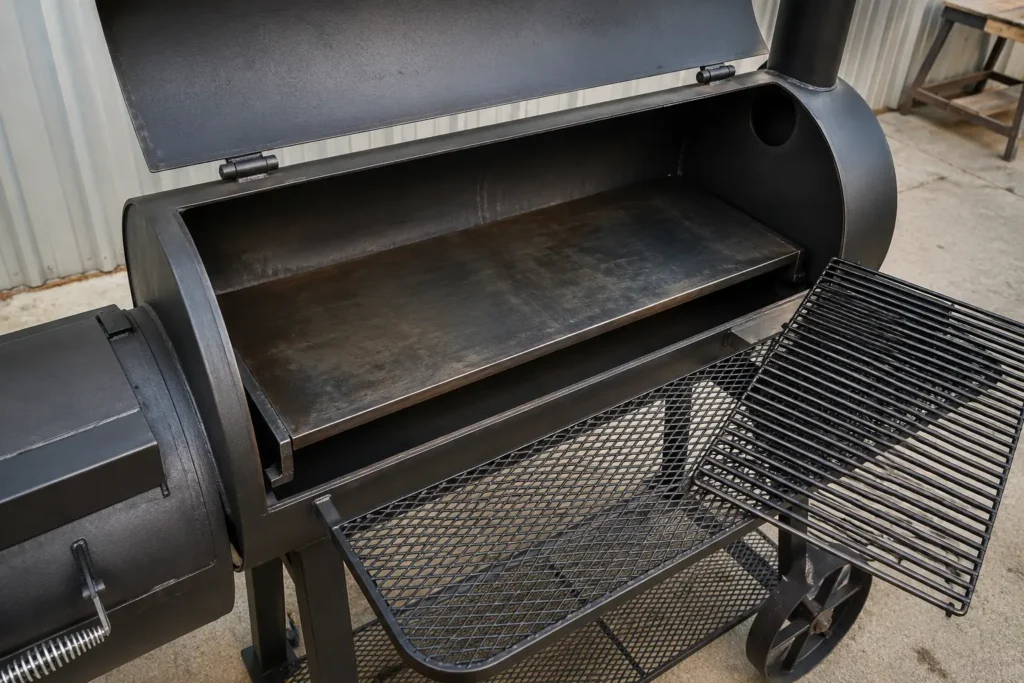
Reverse-Flow Baffle Plate
The solid plate redirects heat, blocks direct radiation from the firebox, and adds thermal mass. It may be welded in place or removable. Learn how this part differs from tuning and convection plates in our offset smoker baffle plate guide.
In a true reverse flow offset smoker, the plate is mostly solid and leaves a return opening at the end opposite the firebox.
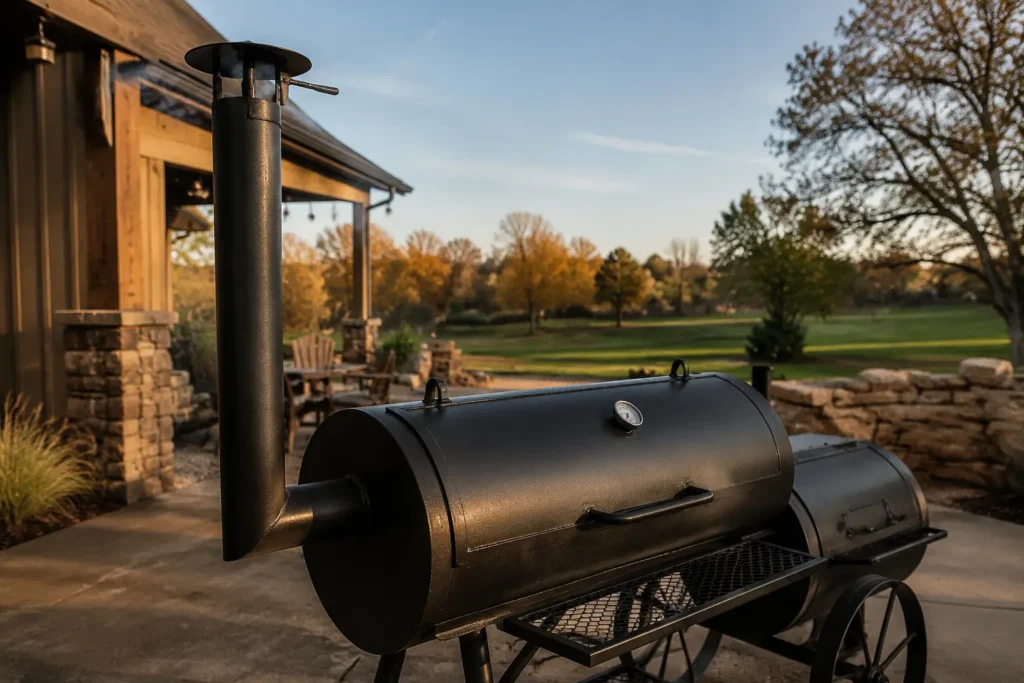
Chimney
The chimney is normally located on the same end as the firebox. Keep the exhaust fully open during cooking so combustion gases can leave freely and the fire can maintain a clean draft.
This chimney position completes the reverse flow offset smoker airflow circuit.
Cooking Grates and Drain
The grates support the food, while the drain removes rendered fat and cleaning liquid. Grease must never be allowed to collect close to the fire or block the airflow path.
Reverse Flow Offset Smoker Benefits
More Even Grate Temperatures
The greatest advantage of a reverse flow offset smoker is reduced temperature variation across the main grate. The baffle spreads heat along the chamber and shields the firebox end from direct heat. Minor hot and cool zones can still exist, so test the grate before a large cook.
Fewer Food Rotations
More balanced heat means briskets, pork shoulders, and rib racks generally require less repositioning. This is especially useful when the cooking chamber is heavily loaded.
Even so, map every new reverse flow offset smoker before assuming that rotation will never be necessary.
Stable Heat After Preheating
Once the thick baffle is hot, its thermal mass can soften sudden changes caused by opening the lid or adding a small wood split. Stable heat makes long cooks easier to manage.
Protection From Direct Radiant Heat
The plate separates the food from the firebox opening. This reduces the risk of scorching the side of a large cut placed nearest the fire.
Consistent Smoke Coverage
Because smoke travels the full length of the chamber before returning across the food, a properly drafted reverse flow offset smoker can provide balanced smoke exposure across multiple cuts.
Possible Drawbacks
Reverse flow is not ideal for every cook. The additional steel inside a reverse flow offset smoker creates both its characteristic stability and several limitations:
- Longer preheating: The baffle must absorb heat before the chamber stabilizes.
- Slower temperature response: The same thermal mass that creates stability can make rapid adjustments more difficult.
- Extra fuel during startup: A cold, heavy pit may need more fuel to reach cooking temperature.
- Harder cleaning: Grease and soot can collect on or beneath a fixed baffle plate.
- Fewer deliberate heat zones: Traditional offsets often provide a stronger hot-to-cool gradient for cooking different foods simultaneously.
- More weight: Thick steel construction and a full-length plate reduce portability.
If you are still deciding which airflow system suits you, the detailed reverse-flow and traditional offset comparison explains the practical differences.
How to Choose the Right Reverse Flow Offset Smoker
Check Steel Thickness and Weld Quality
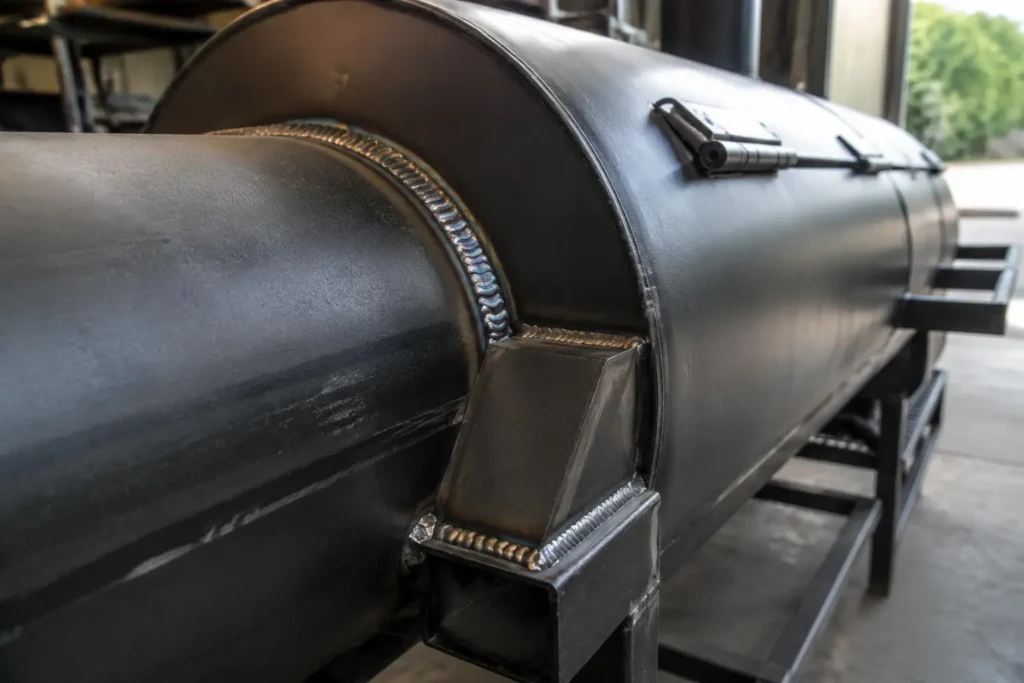
A durable reverse flow offset smoker should have solid welds, sturdy hinges, and doors that close evenly. Thicker steel retains heat well, but construction quality matters more than a single thickness specification.
Inspect the firebox seams and the connection between the firebox and cooking chamber for leaks.
Match Capacity to Your Normal Cooks
Choose enough grate space for the amount of food you cook regularly, not only for rare large events. An oversized smoker takes longer to heat and may burn more fuel during small cooks.
A correctly sized reverse flow offset smoker is generally easier and more economical to run than an unnecessarily large model.
Inspect the Baffle and Grease Drain
A removable baffle is easier to clean, while a welded plate can provide a rigid, sealed airflow path. In either case, the surface should direct grease toward a functional drain rather than allowing it to pool.
Look for Useful Thermometer Ports
Lid-mounted gauges can differ from the actual temperature beside the meat. Probe ports make it easier to place digital thermometers at grate level without pinching cables in the door.
Consider Mobility and Storage
Check the wheel size, handle position, overall weight, and weather protection. A heavy pit needs stable wheels and a firm, level cooking surface.
Measure the stored footprint of the reverse flow offset smoker before purchasing.
For additional buying checks, see our guide on how to buy an offset smoker online.
How to Use a Reverse Flow Offset Smoker
Step 1: Clean and Inspect the Pit
Remove old ash, brush the grates, confirm that the drain is open, and check that no grease is pooled inside the chamber. Ash holds moisture and can accelerate corrosion.
Starting with a clean reverse flow offset smoker also reduces the chance of stale grease affecting the next cook.
Step 2: Season a New Smoker
Wash away manufacturing residue according to the manual, dry the pit, and apply a thin coating of high-smoke-point cooking oil to the interior. Run a hot, clean fire to create a protective layer.
Our step-by-step smoker seasoning guide covers the complete process.
Step 3: Build a Small, Clean Fire
Light charcoal in a chimney starter and transfer the fully lit coals to the firebox. Add one dry hardwood split and leave the exhaust open. The goal is an active flame and almost invisible or thin blue smoke—not thick white smoke.
Clean combustion matters in every reverse flow offset smoker because the long airflow path cannot correct bitter smoke created by a weak fire.
Use dry, seasoned hardwood rather than treated, painted, moldy, or resinous wood. Our best wood for offset smokers guide explains flavor pairings and fuel preparation.
Step 4: Preheat the Baffle and Chamber
Allow the reverse flow offset smoker to warm until the baffle is fully heated and grate-level temperatures stabilize. Depending on pit size, steel thickness, fuel, and weather, this can take 30–60 minutes.
Step 5: Map the Cooking Grate
Place digital probes near both ends of the grate. A biscuit test can also reveal faster-cooking areas. Do not assume that a reverse-flow design removes every hot spot.
Record these readings so you can load the reverse flow offset smoker consistently during future cooks.
Step 6: Add the Food
Leave space between cuts so air and smoke can circulate. Position the thickest part of a large cut toward the slightly warmer area identified during your grate test.
Step 7: Control Heat With Fire Size
Keep the chimney open and manage temperature mainly through fuel quantity and firebox intake. Add one preheated wood split before the coal bed becomes weak.
Small, timely additions create fewer temperature spikes than loading several logs at once. See our offset smoker fire management tips for a complete fire-control method.
Step 8: Cook to Temperature and Tenderness
Maintain approximately 225–275°F (107–135°C) for most low-and-slow barbecue, but follow the recipe and cut rather than treating one pit temperature as universal.
Use a calibrated food thermometer. The USDA safe minimum temperature chart lists food-safety minimums. Barbecue tenderness targets for cuts such as brisket may be higher than the minimum safe temperature.
Step 9: Rest the Meat
Remove the food when it reaches the required safety and tenderness targets. Resting large cuts allows heat to equalize and juices to redistribute before slicing.
Temperature and Airflow Tips
A reverse flow offset smoker becomes easier to control when you make small changes and allow time for the pit to respond.
- Keep the exhaust damper fully open during normal cooking.
- Adjust the intake gradually rather than closing it enough to smother the fire.
- Use dry wood splits sized for your firebox.
- Preheat the next split on a safe exterior warming area if the manufacturer permits it.
- Place thermometer probes at grate level, away from cold meat and metal surfaces.
- Add fuel before the coal bed collapses.
- Open the cooking chamber only when necessary.
- Protect the smoker from strong wind without placing it in an enclosed area.
If temperatures continue to swing, use our guide to control heat in an offset smoker to diagnose fuel, airflow, leaks, and thermometer errors.
Best Wood and Fuel Setup
A charcoal base plus hardwood splits is a beginner-friendly setup for a reverse flow offset smoker. Charcoal provides a dependable coal bed, while wood supplies heat and smoke flavor. Experienced cooks may operate a well-designed stick burner primarily with hardwood.
Whichever fuel method you choose, the reverse flow offset smoker needs an active flame and unrestricted exhaust to maintain clean draft.
Oak offers balanced flavor and a steady coal bed. Hickory is stronger and works well with pork and beef. Pecan is rich but slightly milder, while apple and cherry provide a lighter profile for poultry and pork.
Mesquite burns hot and has an intense flavor, so use it carefully or blend it with milder wood.
Never soak wood. Wet wood delays clean combustion and can produce heavy smoke. Aim for a bright flame, good draft, and clean exhaust.
Dry fuel helps a reverse flow offset smoker run predictably.
Cleaning and Maintenance
Maintaining a reverse flow offset smoker prevents grease fires, protects the steel, and preserves clean flavor.
After Each Cook
- Let the smoker cool completely.
- Empty cold ash into a suitable metal container.
- Brush food residue from the grates.
- Scrape excessive grease from the baffle without removing the protective seasoning layer.
- Confirm that the drain and grease container are clear.
- Wipe spills from painted exterior surfaces.
Periodic Maintenance
Inspect door seals, hinges, thermometers, wheels, welds, and rust-prone areas. Remove loose rust, treat bare steel, and reseason the affected interior surface. Do not use oven cleaner unless the manufacturer specifically approves it.
Cover and store the reverse flow offset smoker only after it is fully cool and dry.
Oklahoma Joe’s smoker maintenance instructions recommend removing ash after use, cleaning spills, and brushing the grates regularly. Always prioritize the manual supplied with your specific model.
Common Mistakes to Avoid
Adding Too Much Wood
Large fuel loads can cause temperature spikes and dirty smoke. A reverse flow offset smoker normally performs better with a compact coal bed and one appropriately sized split at a time.
Restricting the Chimney
Closing the exhaust traps stale smoke and weakens draft. Leave it open and control heat with fire size and intake airflow.
Cooking Before the Baffle Is Hot
Loading food into a cold chamber creates unstable temperatures and extends the early part of the cook. Preheat the steel thoroughly.
Trusting One Lid Thermometer
A single gauge may not represent temperatures across the cooking grate. Use at least two grate-level probes when learning a new pit.
Ignoring Grease Buildup
Rendered fat on a hot plate can smoke, burn, or become a fire hazard. Keep the drain clear and remove excessive deposits after the pit cools.
Chasing Every Small Temperature Change
Constant vent adjustments create larger swings. Wait several minutes after each small change and observe the trend before adjusting again.
The thermal mass of a reverse flow offset smoker means its response may be slower than expected, so patience prevents overcorrection.
Is a Reverse Flow Offset Smoker Worth It?
A reverse flow offset smoker is worth considering if you regularly cook several large cuts and value even grate temperatures, stable heat, and less food rotation. It can also be forgiving for beginners once the heavy baffle is fully preheated.
A traditional offset may suit you better if you want distinct cooking zones, quicker temperature response, easier access beneath the grates, or a lighter pit. Neither style replaces good fire management.
Build quality, clean combustion, accurate thermometers, and consistent technique matter more than the label alone.
For the right cooking style, however, a well-built reverse flow offset smoker offers a predictable platform for repeatable barbecue.
Why a Reverse Flow Offset Smoker Is a Smart Choice
The reverse flow offset smoker combines indirect heat with a baffle-controlled airflow path that moves beneath the chamber and returns across the food. Its greatest strengths are more balanced grate temperatures, protection from direct firebox heat, and stable cooking once the steel is hot.
Choose a well-sealed model with sound welds, a practical grease drain, useful probe access, and enough capacity for your normal cooks. Preheat it completely, run a small clean fire, keep the exhaust open, and monitor the grate instead of relying only on the lid gauge.
With those habits, the design can produce consistent brisket, ribs, pork, and poultry without constant food rotation.
Frequently Asked Questions
It is better for cooks who prioritize even temperatures and reduced food rotation. A traditional offset is often better for cooks who want deliberate hot and cool zones, faster preheating, and quicker responses to fire adjustments.
It may use extra fuel during startup because the baffle plate must be heated. Once preheated, the thermal mass can improve stability.
Total fuel consumption depends on pit size, steel thickness, leaks, weather, cooking temperature, and fire-management technique.
Yes. A reverse flow offset smoker can be beginner-friendly because its baffle reduces severe hot spots. Beginners still need to learn clean combustion, vent control, fuel timing, and thermometer placement.
Yes. Keep the chimney or exhaust fully open during normal cooking. Control temperature primarily with fire size and the intake vent so smoke remains clean and airflow stays active.
Yes, if the manufacturer permits it. Many cooks begin with a charcoal coal bed and add seasoned hardwood splits or chunks for flavor and continued heat.
Usually less often, but sometimes. Test temperatures at multiple grate locations and rotate food if one section consistently cooks faster.
Remove loose debris and excessive grease after the smoker has cooled. A lightly seasoned surface is useful, but thick deposits, blocked drains, and pooled grease should not remain.
Follow the manufacturer’s cleaning instructions for welded or removable baffles.
Most traditional low-and-slow cooks work well between 225°F and 275°F. The best chamber temperature depends on the meat, recipe, desired cooking time, and smoker behavior.
Always verify safe internal food temperatures with a calibrated thermometer.