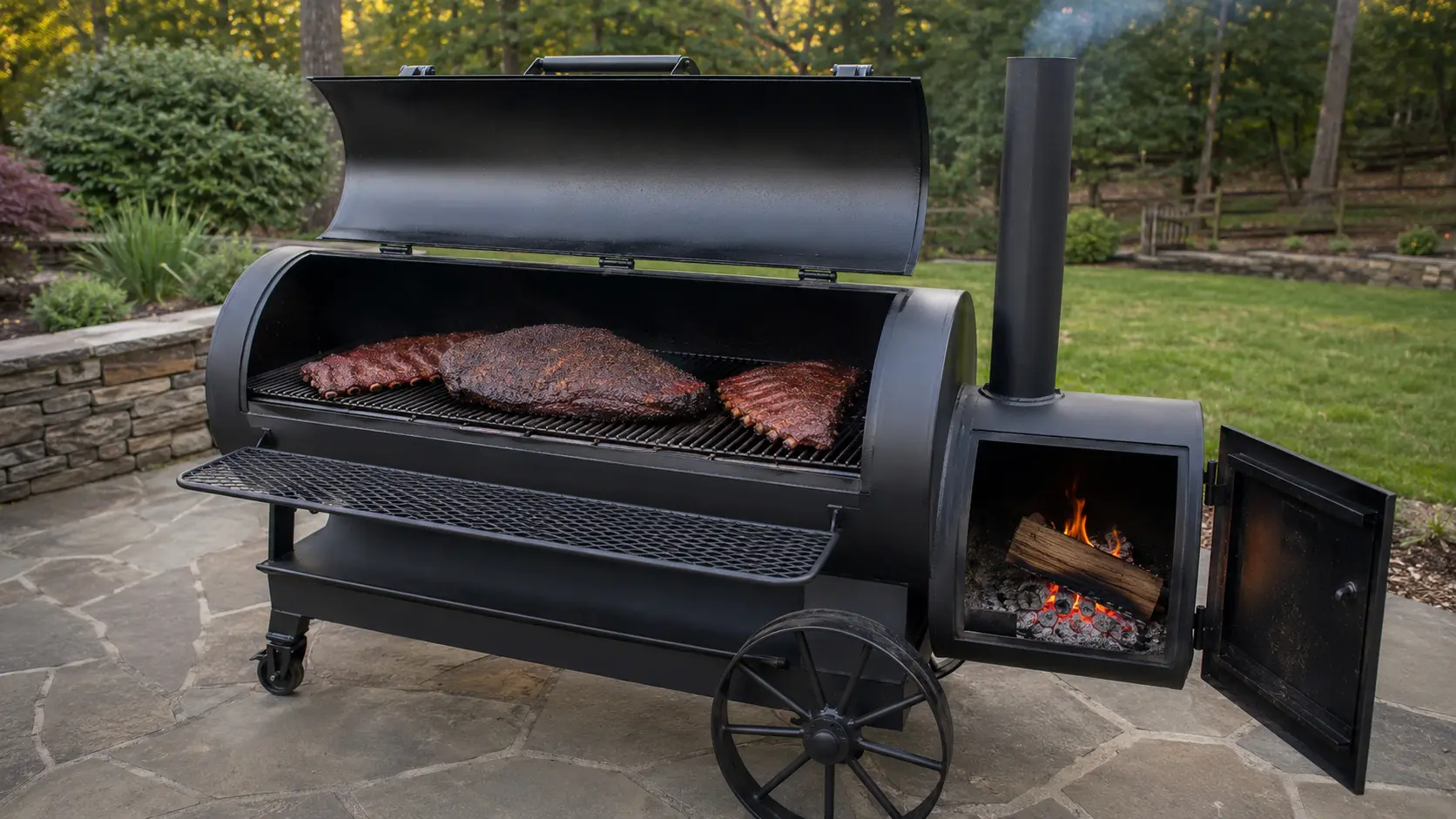
Learning how to cook on a reverse flow offset smoker can help you produce evenly cooked brisket, pork shoulder, ribs, chicken, and other barbecue favorites with authentic wood-smoked flavor. Unlike a traditional offset smoker, a reverse flow model directs heat and smoke beneath a solid baffle plate before bringing them back across the cooking grates toward the chimney.
This controlled circulation reduces extreme hot spots, protects food from direct firebox heat, and creates a more consistent cooking environment. However, excellent results still depend on building a clean fire, managing airflow, selecting seasoned hardwood, monitoring grate temperature, and checking meat for tenderness rather than relying only on cooking time.
This complete guide explains how to cook on a reverse flow offset smoker, from seasoning and preheating the smoker to controlling the fire, positioning meat, wrapping, checking doneness, and resting the finished barbecue.
What Is a Reverse Flow Offset Smoker?
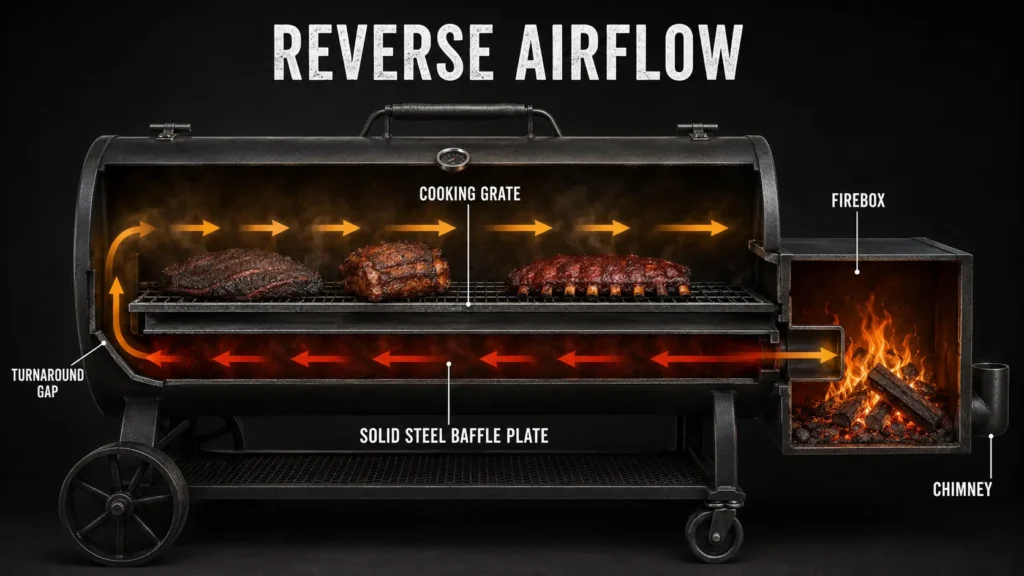
A reverse flow offset smoker is a wood-burning barbecue smoker that uses a steel baffle plate to redirect heat and smoke. The fire burns inside a separate firebox attached to one side of the cooking chamber.
Instead of rising immediately toward the food, heat and smoke travel beneath the reverse flow plate toward the opposite end of the smoker. They then rise, reverse direction, pass back across the cooking grates, and exit through a chimney positioned near the firebox.
This design generally provides:
- More consistent grate temperatures
- Fewer severe hot spots
- Protection from direct radiant heat
- Even smoke distribution
- Reduced need to rotate large cuts
- A more stable cooking environment
If you want to understand the design in greater detail before your first cook, read this complete reverse flow offset smoker setup guide.
Main Parts of a Reverse Flow Offset Smoker
Understanding the smoker’s components makes it easier to control heat and smoke.
Firebox
The firebox holds the charcoal, burning wood, and coal bed. Its intake vent controls how much oxygen reaches the fire.
Reverse Flow Baffle Plate
The solid steel plate directs heat beneath the cooking chamber before allowing it to rise at the opposite end. It also acts as a heat sink and protects food from intense firebox radiation.
Cooking Chamber
The cooking chamber contains the grates where the food is placed. Digital thermometer probes should be positioned at grate level to measure the temperature surrounding the meat.
Air Intake Vent
The intake vent regulates oxygen entering the firebox. A wider opening usually produces a hotter, cleaner fire, while closing it restricts combustion.
Chimney and Exhaust Damper
The chimney creates draft and allows combustion gases to escape. During normal cooking, keep the chimney damper fully or mostly open and control temperature through fire size and the intake vent.
How to Season a New Reverse Flow Offset Smoker
Before learning how to cook on a reverse flow offset smoker, season a new smoker to remove manufacturing residue and protect its interior metal.
Follow these steps:
- Remove the cooking grates and wash them with warm water and mild dish soap.
- Wipe loose dust or residue from the cooking chamber.
- Allow every surface to dry completely.
- Apply a thin coating of high-smoke-point cooking oil to the interior surfaces and grates.
- Avoid coating thermometer faces, seals, or painted exterior surfaces.
- Build a clean fire and bring the smoker to approximately 250–300°F.
- Maintain that temperature for two to three hours.
- Allow the smoker to cool naturally.
A properly seasoned interior develops a dark protective layer. It also helps you learn how the smoker’s vents and temperatures respond before cooking expensive meat.
Step 1: Choose the Right Fuel and Smoking Wood
A combination of charcoal and hardwood is an easy starting point for beginners. Charcoal creates a stable coal bed, while hardwood provides additional heat and smoke flavor.
Only burn dry, clean, untreated hardwood. Never use painted, stained, pressure-treated, glued, moldy, or chemically contaminated wood.
Popular choices include:
- Oak: Balanced flavor and steady heat suitable for most meats
- Hickory: Strong traditional barbecue flavor for pork and beef
- Mesquite: Intense flavor best used carefully or blended with oak
- Apple: Mild, slightly sweet smoke for pork and poultry
- Cherry: Mild smoke that can enhance exterior color
- Pecan: Rich but smoother than hickory
The best wood for an offset smoker depends on the meat and the smoke intensity you prefer. Beginners can start with oak because it burns steadily and is less likely to overpower food than mesquite.
Step 2: Light and Preheat the Smoker
Correct preheating is an essential part of how to cook on a reverse flow offset smoker. The heavy metal body and baffle plate must absorb heat before the cooking chamber becomes stable.
To preheat the smoker:
- Fully open the chimney damper.
- Open the firebox intake vent.
- Light a chimney starter filled with lump charcoal or briquettes.
- Wait until the charcoal is burning strongly.
- Transfer it carefully into the firebox.
- Add one small, dry hardwood split.
- Leave the firebox door slightly open until the wood ignites cleanly.
- Close the firebox door while keeping sufficient intake airflow.
- Preheat the smoker for approximately 30–45 minutes.
Most low-and-slow barbecue cooks work well between 225°F and 275°F. Measure the temperature at cooking-grate level because a factory lid thermometer may not accurately represent the temperature surrounding the meat.
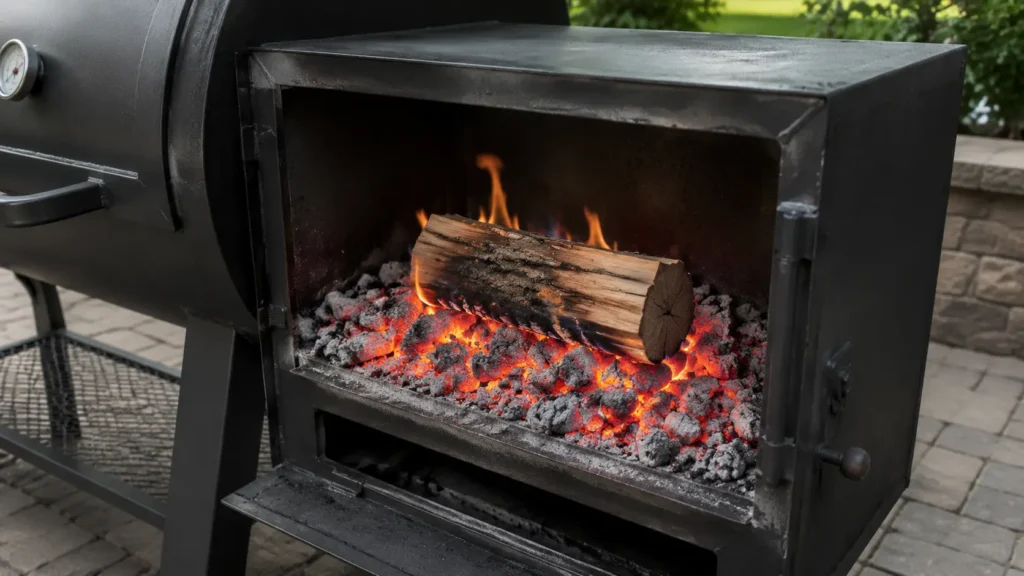
Step 3: Establish a Small, Clean Fire
A large, smoldering fire creates temperature spikes and dirty smoke. A smaller fire with visible flames and adequate oxygen is easier to control.
Aim for almost invisible or thin blue smoke from the chimney. Heavy white or gray smoke commonly indicates incomplete combustion caused by:
- Wet or unseasoned wood
- Insufficient airflow
- Oversized wood splits
- Too much fuel
- A weak coal bed
- Excess ash restricting airflow
- A new split that has not ignited properly
Keep the exhaust open so smoke moves continuously through the cooking chamber. Do not trap smoke by closing the chimney in an attempt to lower the temperature.
For detailed help maintaining clean combustion, follow these offset smoker fire management tips.
Step 4: Prepare the Meat
Prepare the meat while the smoker is preheating. Trim excess fat when required, leaving enough to protect the surface and contribute flavor.
Apply a dry rub evenly across the meat. A basic barbecue rub may contain:
- Kosher salt
- Coarse black pepper
- Paprika
- Garlic powder
- Onion powder
- Mustard powder
- Chili powder
- Brown sugar, when appropriate
Seasoning can be applied shortly before smoking or several hours in advance, depending on the recipe. Keep raw meat refrigerated during longer seasoning periods. There is no need to leave large cuts at room temperature for an extended time before cooking.
Step 5: Position the Meat Correctly
When learning how to cook on a reverse flow offset smoker, food placement still matters even though the baffle plate improves heat distribution.
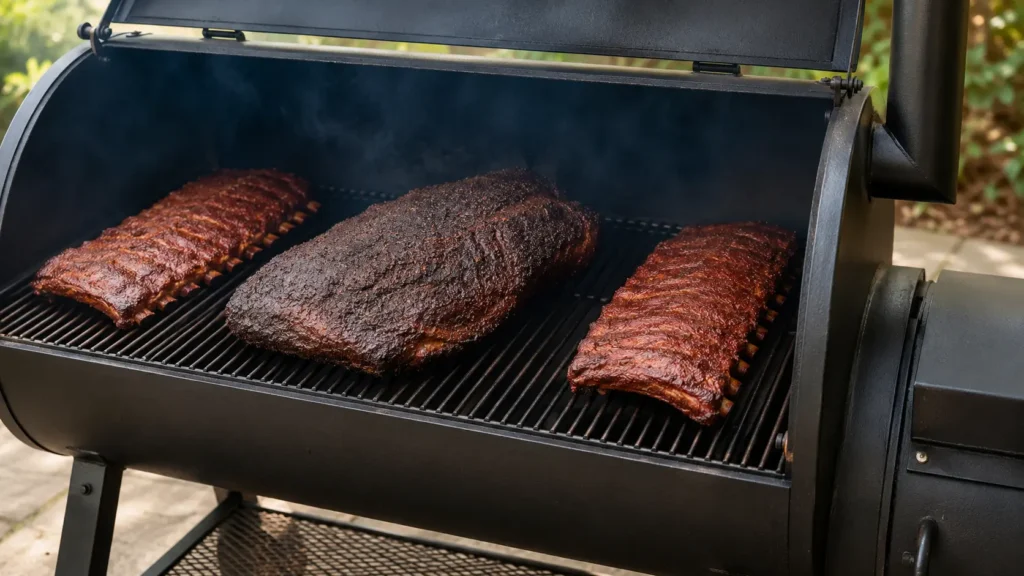
Place large cuts near the center of the cooking grate. Keep meat away from the opening where heat rises from beneath the reverse flow plate because that area may be hotter.
Position a digital ambient-temperature probe beside the food without allowing it to touch the meat or metal grate. Insert a separate meat probe into the thickest part of large cuts, avoiding bones and large pockets of fat.
Before an important cook, you can test different areas of the cooking chamber using several grate-level probes. This reveals any remaining temperature differences in your specific smoker.
Step 6: Maintain Temperature and Airflow
Temperature control is the most important skill when mastering how to cook on a reverse flow offset smoker.
Use the following approach:
- Keep the chimney open to maintain a clean draft.
- Control the fire primarily through its size and the intake vent.
- Make small vent adjustments instead of sudden changes.
- Wait several minutes for the smoker to respond.
- Add one small split before the coal bed becomes too weak.
- Preheat the next wood split on top of the firebox when safe.
- Remove excess ash if it begins restricting airflow.
Do not chase every minor fluctuation. A temporary change of 10–15°F is normal and usually does not harm the food. Focus on maintaining a stable average cooking temperature.
The offset smoker cooking temperature guide provides recommended chamber temperatures for different cuts of meat.
Step 7: Add Fuel Without Creating Temperature Spikes
Watch the coal bed, smoke, and temperature instead of adding wood according to a rigid schedule. Your smoker’s steel thickness, firebox size, wood-split size, wind, and outside temperature will affect refueling frequency.
Add a small, dry wood split when:
- The temperature begins falling steadily
- The existing split is mostly converted to coals
- The visible flame is weakening
- The coal bed remains hot enough to ignite new wood
Allow the new split to ignite with a visible flame. If thick smoke appears, increase airflow temporarily and ensure the wood is not wet or oversized.
Step 8: Use a Water Pan if Needed
A water pan is optional, but it can help stabilize temperature and reduce sudden heat fluctuations. Place it where it will not block the return opening at the far end of the reverse flow plate.
Fill the pan with hot water so the smoker does not lose excessive heat. Check it periodically during longer cooks and refill carefully when necessary.
A water pan does not inject moisture deeply into the meat. Its main benefits are moderating the cooking environment and providing a surface on which smoke particles and grease can collect.
Step 9: Spritz or Wrap Only When Necessary
Spritzing can prevent small areas from becoming excessively dry, but opening the lid repeatedly slows the cook. Wait until the bark begins setting before spritzing with water, diluted apple juice, or another recipe-appropriate liquid.
Large cuts may enter a temperature plateau known as the stall. At this stage, surface evaporation can slow the rise in internal temperature.
Wrapping the meat in butcher paper or foil can:
- Shorten the stall
- Reduce moisture loss
- Protect the bark from becoming too dark
- Speed up the final cooking stage
However, wrapping too early can soften the bark and reduce smoke exposure. Wrap only after the bark has developed the color and texture you want.
Reverse Flow Smoker Cooking Times and Temperatures
Cooking time is only an estimate. Meat thickness, fat content, starting temperature, weather, wrapping method, and smoker performance can all change the total duration.
| Meat | Smoker Temperature | Approximate Time | Doneness Guide |
| Beef brisket | 225–275°F | 10–16 hours | Usually probe-tender around 195–205°F |
| Pork shoulder | 225–275°F | 8–12 hours | Usually pull-apart tender around 195–205°F |
| Pork ribs | 225–275°F | 4–7 hours | Bend test, bone pullback, and probe tenderness |
| Beef chuck roast | 250°F | 6–8 hours | Usually probe-tender around 195–205°F |
| Whole chicken | 275–325°F | 2–4 hours | At least 165°F in the thickest safe measuring point |
| Turkey breast | 250–300°F | 2–4 hours | At least 165°F |
| Sausage | 225–250°F | 2–3 hours | Follow the safe temperature for its meat type |
Brisket, pork shoulder, and chuck roast are finished when a probe slides into the thickest areas with very little resistance. The exact final temperature can vary between individual cuts.
Rib doneness is better judged using tenderness, surface cracking during the bend test, and exposed bone ends instead of relying on internal temperature alone. See the detailed guide on how to smoke ribs in an offset smoker for the complete method.
For food safety, consult the USDA safe minimum internal temperature chart. The higher finishing temperatures used for brisket and pork shoulder are primarily required for tenderness, not merely basic food safety.
Step 10: Check Doneness Correctly
Knowing how to cook on a reverse flow offset smoker also means recognizing when the meat is genuinely finished.
Use a combination of:
- Internal temperature
- Probe tenderness
- Bark development
- Bone pullback on ribs
- The rib bend test
- Overall texture
- Carryover cooking during the rest
Never rely entirely on cooking time. Two cuts with the same weight can finish at different times because their shapes, fat distribution, and connective tissue are different.
Step 11: Rest the Meat
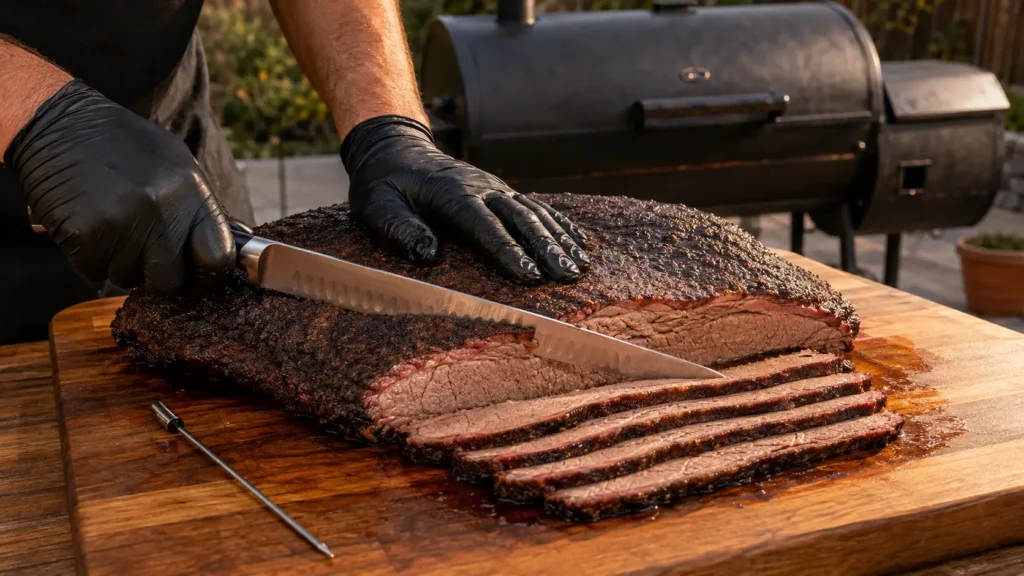
Resting allows heat and juices to redistribute before slicing or pulling.
Recommended resting periods include:
- Brisket: At least 1 hour, often 2–4 hours when safely held
- Pork shoulder: 45–90 minutes
- Chuck roast: 45–60 minutes
- Ribs: 10–20 minutes
- Chicken: 10–15 minutes
Loosely tent smaller cuts with foil. Large cuts can be wrapped and held in an insulated cooler or temperature-controlled warmer, but they must remain at a food-safe holding temperature. Do not leave cooked meat in the 40–140°F temperature range for extended periods.
Slice brisket and other beef cuts against the grain. Pull pork shoulder only after it has rested enough to retain its juices.
Common Reverse Flow Offset Smoker Mistakes
Closing the Chimney Too Far
Restricting the exhaust traps stale smoke and can produce bitter flavors. Keep the chimney open and manage temperature through fire size and intake airflow.
Using Wet or Green Wood
Wet wood smolders, creates unstable temperatures, and produces heavy smoke. Use properly seasoned hardwood with clean, dry surfaces.
Adding Too Much Fuel
Several large splits can rapidly increase temperature and create an oxygen-starved fire. Add small amounts of fuel gradually.
Opening the Cooking Chamber Frequently
Every unnecessary inspection releases heat and extends cooking time. Use digital probes to monitor the smoker without repeatedly lifting the lid.
Depending Only on the Factory Thermometer
A lid-mounted thermometer can read differently from the actual grate temperature. Use a calibrated digital probe beside the meat.
Blocking the Reverse Flow Opening
Do not allow foil, grease pans, water pans, or food to block the opening where heat rises from beneath the baffle plate.
Cooking by Time Alone
Estimated cooking times help with planning, but tenderness determines when most barbecue cuts are finished.
Tips for Better Reverse Flow Barbecue
- Keep a cooking log with meat weight, weather, vent position, fuel use, and cooking time.
- Use similar-sized wood splits for predictable heat output.
- Clean ash from the firebox before it restricts airflow.
- Calibrate thermometer probes regularly.
- Learn the smoker’s remaining heat zones before cooking multiple cuts.
- Maintain a small active flame instead of smoldering wood.
- Use stronger woods sparingly until you understand their flavor.
- Give large cuts enough resting time before slicing.
- Clean grease from the baffle plate to reduce flare-up risk.
- Keep a fire extinguisher nearby and operate the smoker outdoors.
Mastering Your Reverse Flow Offset Smoker
Understanding how to cook on a reverse flow offset smoker comes down to four essential skills: building a clean fire, maintaining adequate airflow, monitoring grate-level temperature, and judging meat by tenderness.
Start with a strong coal bed, add small seasoned hardwood splits, and keep the chimney open. Allow the heavy baffle plate and cooking chamber to preheat fully before adding food. During the cook, make gradual adjustments and avoid reacting to every small temperature change.
With practice, the reverse flow design can deliver evenly cooked meat, developed bark, consistent smoke exposure, and dependable results across the cooking chamber.
Frequently Asked Questions
Build a stable coal bed, use small seasoned hardwood splits, keep the chimney open, and adjust the firebox intake gradually. Add fuel before the coal bed becomes too weak and measure temperature at grate level.
Most low-and-slow barbecue cooks work well between 225°F and 275°F. Poultry can be cooked at 275–325°F to help develop better skin while still absorbing smoke flavor.
Yes. Keep the chimney fully or mostly open during cooking to maintain draft and allow clean smoke to leave the chamber. Control temperature through fire size and the firebox intake.
Oak is an excellent all-purpose option because it burns steadily and produces balanced smoke. Hickory works well with pork and beef, while apple and cherry provide milder flavors for pork and poultry.
There is no universal schedule. Add a small split when the existing wood has mostly burned into coals and the cooking temperature begins falling steadily. Many smokers require another split approximately every 30–60 minutes, but smoker design and wood size affect the interval.
The reverse flow plate reduces temperature differences, so frequent rotation is usually unnecessary. However, every smoker has its own heat pattern. Rotate the meat if grate-level probes reveal a meaningful temperature difference.
A water pan is optional. It can help stabilize temperature, particularly in thin-metal smokers or during dry weather. Make sure it does not block the reverse flow opening.
Common causes include wet wood, insufficient airflow, an overcrowded firebox, oversized splits, or a weak coal bed. Open the intake, confirm that the chimney is open, and allow the wood to burn with a visible flame.