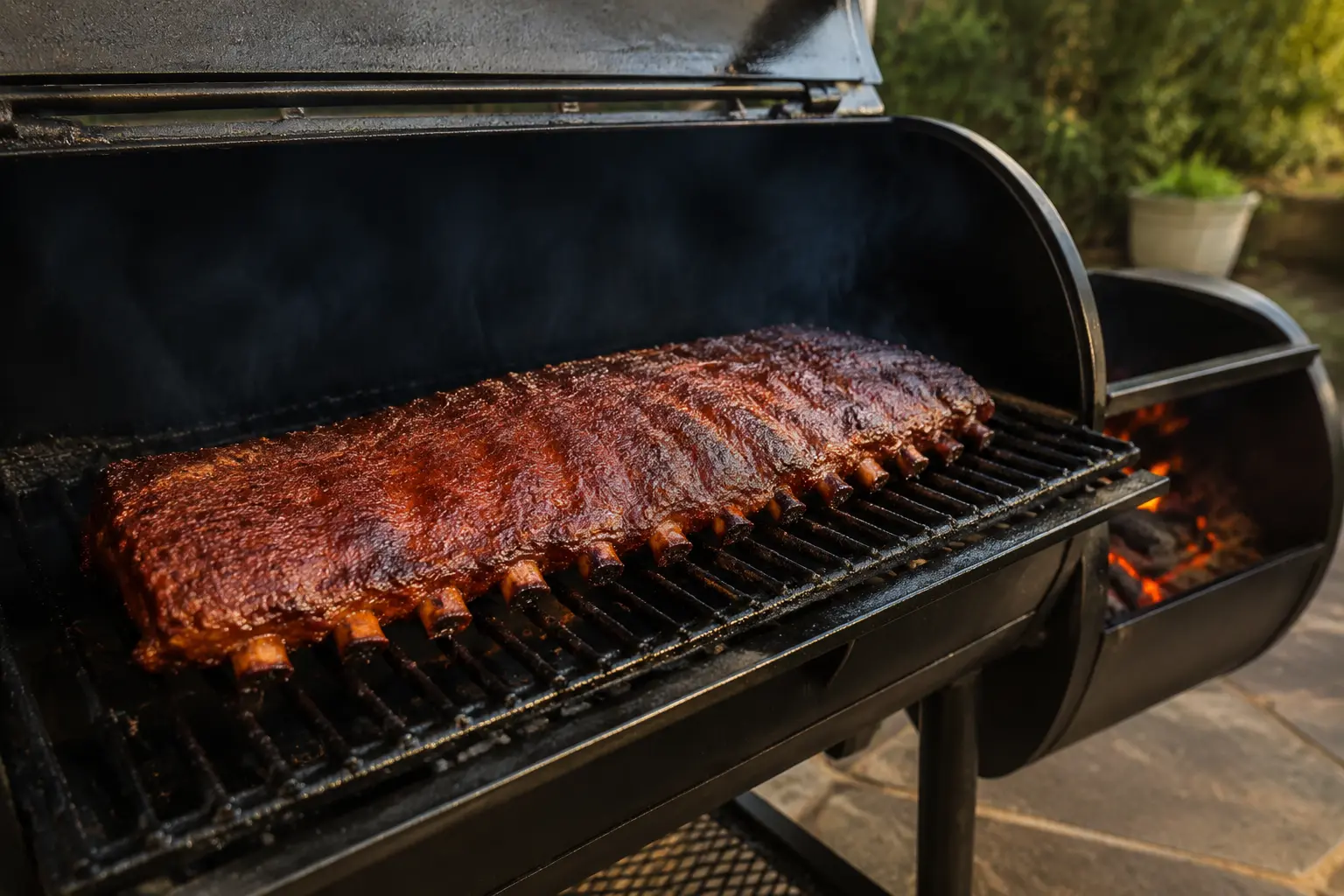
Knowing how long to smoke ribs is the key to serving meat that is tender and juicy without becoming dry or falling apart. Most pork ribs take 4 to 7 hours at 225–250°F, but the exact cooking time depends on the rib type, thickness, smoker temperature, wrapping method, and desired tenderness.
Baby back ribs generally cook faster because they are smaller and leaner. St. Louis-style ribs and full spare ribs usually need more time because they are larger and contain more connective tissue. Instead of relying only on the clock, use the cooking time as a guide and confirm doneness with the bend test, a toothpick test, and visible bone pullback.
This guide explains how long to smoke ribs at different temperatures, compares the most common rib cuts, and shows you how wrapping, weather, and smoker setup can change the total cooking time.
Quick Answer
At 225°F, smoke baby back ribs for approximately 4 to 5 hours and St. Louis-style or spare ribs for about 5 to 7 hours. At 250°F, baby backs commonly take 3½ to 4½ hours, while larger ribs usually need 4½ to 6 hours.
Those ranges answer how long to smoke ribs for planning purposes, but the ribs are finished only when they pass a tenderness test. Properly cooked ribs should bend easily, show slight cracking on the surface, and allow a toothpick to slide between the bones with little resistance.
Rib Smoking Time Chart
| Type of Ribs | At 225°F | At 250°F | Typical Result |
| Baby back ribs | 4–5 hours | 3½–4½ hours | Tender with a clean bite |
| St. Louis-style ribs | 5–7 hours | 4½–6 hours | Rich, juicy and evenly tender |
| Full spare ribs | 5½–7 hours | 5–6½ hours | Meaty with rendered connective tissue |
| Beef back ribs | 4–6 hours | 3½–5 hours | Tender meat with beefy flavor |
| Beef short ribs | 6–8 hours | 5–7 hours | Soft, rich and probe-tender |
These are approximate ranges rather than guaranteed finish times. When deciding how long to smoke ribs, always allow extra time for unusually thick racks, low outdoor temperatures, wind, temperature fluctuations, or an extended wrapped stage.
How Long to Smoke Ribs by Type
Understanding how long to smoke ribs begins with the cut because different ribs vary in size, fat content, bone shape, and thickness. A thin rack of baby backs cannot follow the same schedule as a heavy rack of spare ribs.
Baby Back Ribs
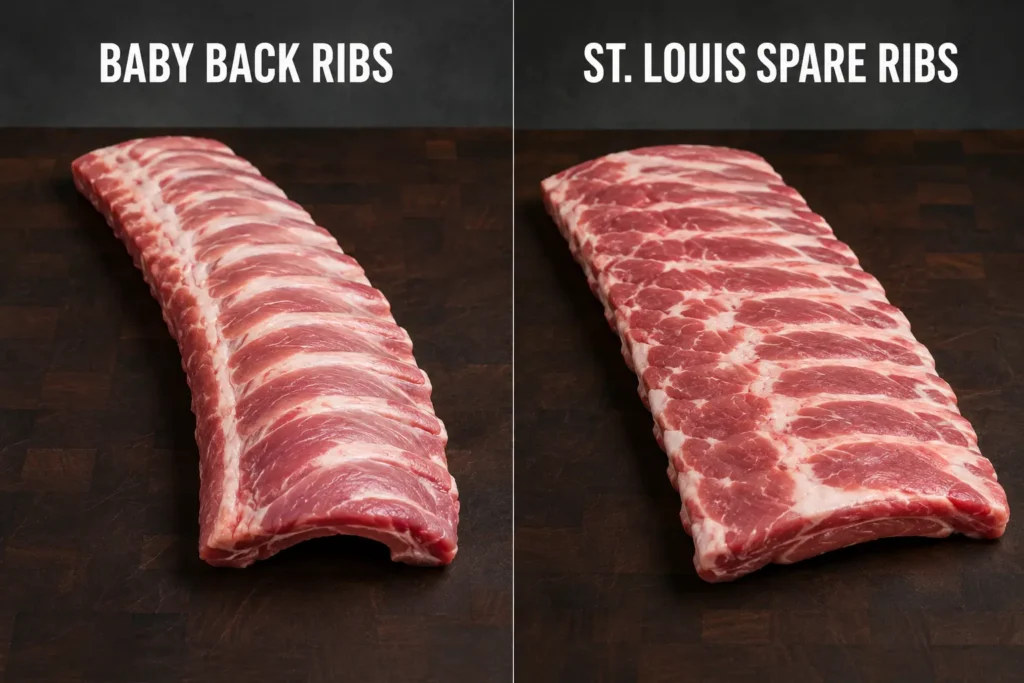
Baby back ribs come from the upper rib cage near the loin. They are shorter, more curved, and usually leaner than spare ribs. Their smaller size explains how long to smoke ribs of this type: generally 4 to 5 hours at 225°F or about 3½ to 4½ hours at 250°F.
When estimating how long to smoke ribs for a light or thin rack of baby backs, begin checking them early. Baby backs can dry out when they are left in the smoker for the same amount of time as larger spare ribs. A modified 2-2-1 schedule can work, but many racks need less than a full hour during the final unwrapped stage.
St. Louis-Style Ribs
St. Louis-style ribs are spare ribs trimmed into a neat rectangular rack. They contain more fat and connective tissue than baby backs, giving them a rich flavor and a forgiving texture.
When estimating how long to smoke ribs in a St. Louis cut, plan for roughly 5 to 7 hours at 225°F or 4½ to 6 hours at 250°F. Their even shape helps them cook consistently, making them an excellent choice for the 3-2-1 method.
Full Spare Ribs
Full spare ribs come from the lower rib cage and include extra cartilage and irregular sections. Their larger size directly affects how long to smoke ribs of this type. They are generally larger, flatter, and meatier than baby backs.
The answer to how long to smoke ribs when using full spare ribs is usually 5½ to 7 hours at 225°F. Very large racks may require additional time. Trimming them into a St. Louis shape can improve airflow, make the rack easier to handle, and shorten the cook slightly.
Beef Back Ribs
Beef back ribs are cut from the area near the rib roast. When deciding how long to smoke ribs from this section, thickness matters more than bone length. They often have less meat on top of the bones but plenty of flavorful meat between them. Most take around 4 to 6 hours at 225°F.
Because beef back ribs vary considerably, use the toothpick test rather than treating the clock as a final decision. The meat should be tender between the bones without becoming dry.
Beef Short Ribs
Beef short ribs are thicker and contain much more meat than beef back ribs. Plate short ribs can resemble small briskets and need enough time for their connective tissue to soften.
For these larger cuts, how long to smoke ribs may mean 6 to 8 hours at 225°F. Begin checking for tenderness once the internal temperature reaches the mid-190s, but continue until a probe slides into the meat easily.
How Long to Smoke Ribs at Different Temperatures
Smoker temperature is central to how long to smoke ribs because it changes the cooking time, bark, moisture loss, and amount of attention required. The best range for most ribs is 225–275°F.
How Long to Smoke Ribs at 225°F
Smoking at 225°F gives the ribs plenty of time to develop smoke flavor and bark. Baby backs usually need 4 to 5 hours, while St. Louis and spare ribs often need 5 to 7 hours.
If you are learning how long to smoke ribs in a traditional offset smoker, 225°F can be forgiving, but it also extends the period during which the fire must remain stable. Avoid running below 225°F for long periods because the cook can become unnecessarily slow.
How Long to Smoke Ribs at 250°F
For many backyard cooks, 250°F offers the best balance of bark, moisture, and total cooking time. Baby backs usually finish in 3½ to 4½ hours, while St. Louis-style and spare ribs often take 4½ to 6 hours.
Maintaining a true grate-level temperature is essential. If your lid thermometer reads 250°F while the grate is actually 225°F, your answer to how long to smoke ribs could be wrong by an hour or more.
How Long to Smoke Ribs at 275°F
Ribs can cook successfully at 275°F when you want a faster result. Baby backs may finish in about 3 to 4 hours, while larger pork ribs may need 4 to 5 hours.
Higher heat can set the bark quickly, but sauces containing sugar can burn if applied too early. Start checking tenderness ahead of schedule and add barbecue sauce only during the final 15 to 30 minutes.
How Long to Smoke Ribs at 300°F
Hot-and-fast ribs can finish in approximately 2½ to 4 hours, depending on the cut. However, the smaller margin for error makes moisture, fire control, and frequent doneness checks more important.
For consistent low-and-slow barbecue, 225–250°F remains the safer range. If this is your first live-fire cook, the guide to smoking with an offset smoker for beginners explains how the firebox, dampers, and cooking chamber work together.
Wrapped vs Unwrapped Cooking Time
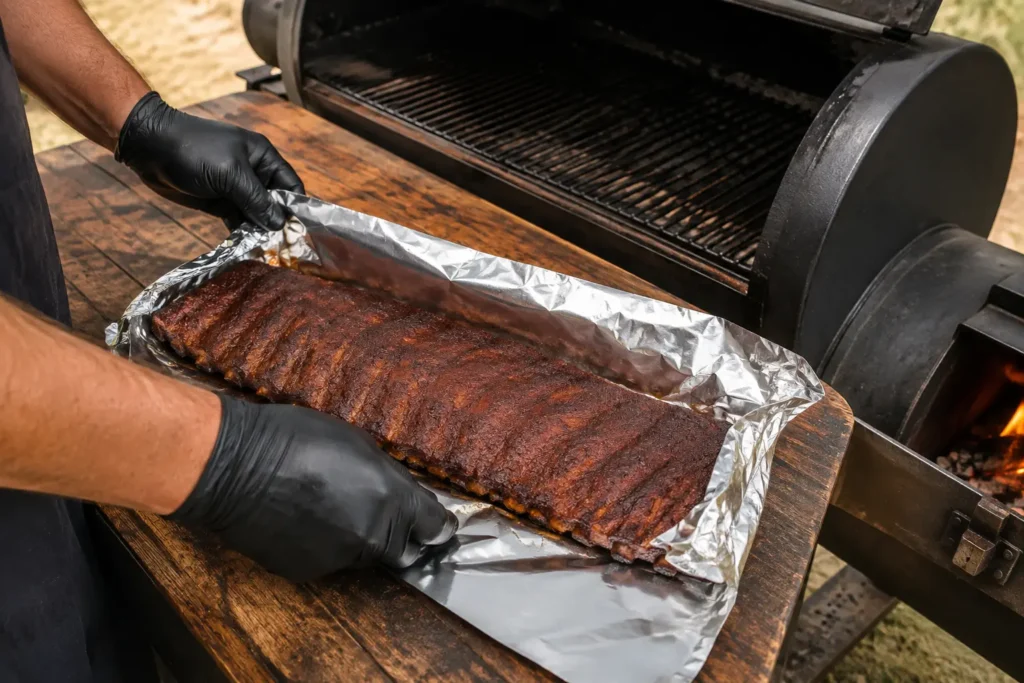
Wrapping changes how long to smoke ribs because foil traps heat, steam, and rendered moisture around the meat. This tenderizes the ribs faster and reduces surface evaporation, but it also softens the bark.
Unwrapped ribs usually develop a firmer bark and a stronger smoke profile. They may take slightly longer and require closer attention to surface dryness. Wrapped ribs cook more predictably, but leaving them in foil too long can create a soft or mushy texture.
Unwrapped Method
When estimating how long to smoke ribs without wrapping, allow roughly 4 to 5 hours for baby backs at 225°F. Larger spare ribs may require 5 to 7 hours. Spritz only when the surface looks dry, and avoid opening the smoker on a fixed schedule.
Foil-Wrapped Method
When planning how long to smoke ribs with foil, smoke them unwrapped until the bark and color are established, usually for 2½ to 3 hours. Wrap them with a small amount of liquid and continue cooking for 1 to 2 hours. Unwrap for the final 20 to 45 minutes to reset the bark and apply sauce.
Butcher Paper Method
Butcher paper allows more evaporation than foil, so it preserves bark better but does not accelerate tenderness as aggressively. It can reduce the total cooking time slightly while keeping the exterior from becoming overly soft.
Does the 3-2-1 Method Always Take Six Hours?
The 3-2-1 method means smoking ribs unwrapped for three hours, wrapped for two hours, and unwrapped for one final hour. It provides an easy starting point for understanding how long to smoke ribs, especially for St. Louis-style ribs and spare ribs cooked around 225°F.
However, the method does not need to total exactly six hours. Thin racks and baby back ribs may become overcooked after two full hours in foil. For baby backs, a 2-2-1 or 2-1½-½ schedule may produce a better bite.
Treat each number as a cooking stage rather than a strict rule:
- The first stage builds smoke flavor, color, and bark.
- The wrapped stage accelerates tenderizing.
- The final stage firms the surface and sets the sauce.
Inspect the ribs at each stage because how long to smoke ribs changes with the rack’s actual progress. If the bark is not set after three hours, delay wrapping. If the rack already feels very soft after the wrapped stage, shorten the final stage.
A Reliable Timeline for Smoking Ribs
The following schedule helps answer how long to smoke ribs while still allowing you to adjust for the actual rack.
Before Smoking: 30–45 Minutes
Before calculating how long to smoke ribs, remove the membrane from the bone side if it is still attached. Trim loose fat and thin edges, then apply a binder and an even layer of dry rub. Let the seasoning sit while the smoker preheats.
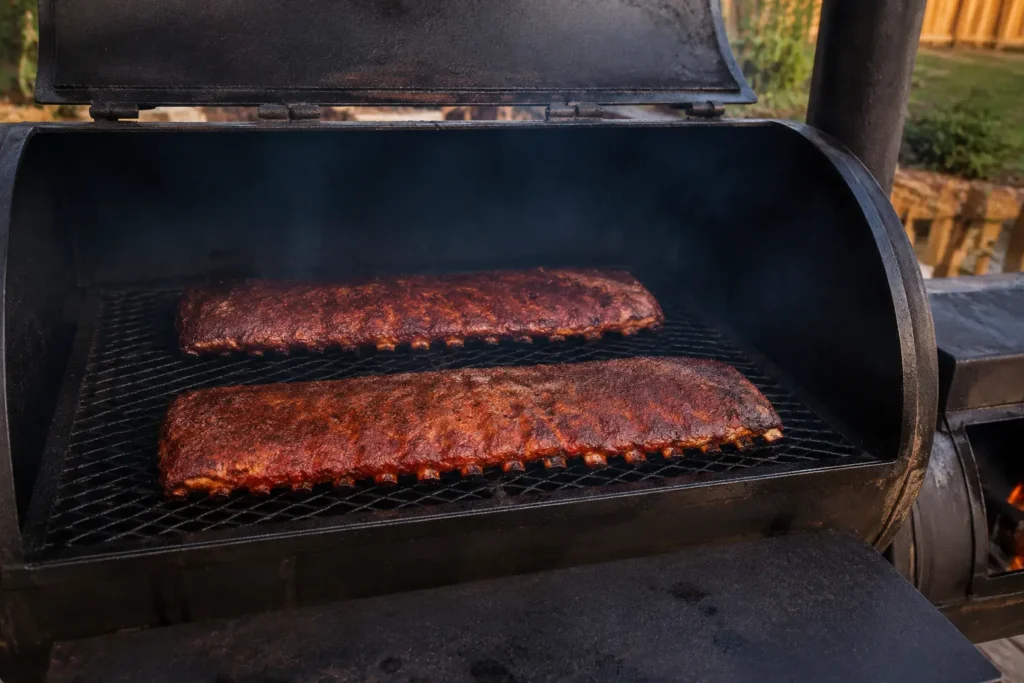
First Two Hours: Build Color and Bark
The first two hours influence how long to smoke ribs, so place them meat-side up and keep the cooking chamber closed. Maintain 225–250°F with clean, light smoke. Avoid spritzing during the first hour because the rub needs time to attach.
For a complete preparation and cooking process, follow the guide on how to smoke ribs in an offset smoker. That article targets the full smoking method, while this guide focuses specifically on time and doneness.
Hours Two to Three: Monitor the Surface
Check the ribs for a deep reddish-brown color. Spritz lightly only if dry patches appear. Rotate the rack if the end closest to the firebox is cooking much faster.
Temperature differences across the cooking chamber can change how long to smoke ribs. If one end consistently runs hot, this guide on how to control heat in an offset smoker explains how to adjust fire size, airflow, and meat position.
Hours Three to Five: Wrap or Continue Unwrapped
During this stage, how long to smoke ribs depends on bark development. Wrap the ribs when the bark is set, not simply because the clock reaches three hours. Add only a small amount of apple juice, butter, honey, or another preferred liquid and flavoring. Too much liquid can wash away the rub and make the meat taste braised.
If you prefer a firmer bark, continue unwrapped and watch for surface dryness. Larger racks may remain in this stage for several hours.
Final 30 Minutes: Set the Sauce
The final saucing stage is part of how long to smoke ribs successfully. Once the ribs are nearly tender, brush on a thin layer of barbecue sauce. Return them to the smoker unwrapped until the sauce becomes tacky. Sugary sauces can burn, so do not apply them early.
Rest for 10–20 Minutes
Resting completes the answer to how long to smoke ribs. Remove the finished ribs and tent them loosely with foil. A short rest lets the surface cool slightly and makes clean slicing easier. Cut between the bones with a sharp knife and serve while warm.
How to Know When Smoked Ribs Are Done
Time tells you when to begin checking, but tenderness determines when the ribs should leave the smoker. That is why how long to smoke ribs cannot be answered by the clock alone. This distinction is essential when learning how long to smoke ribs.
The Bend Test
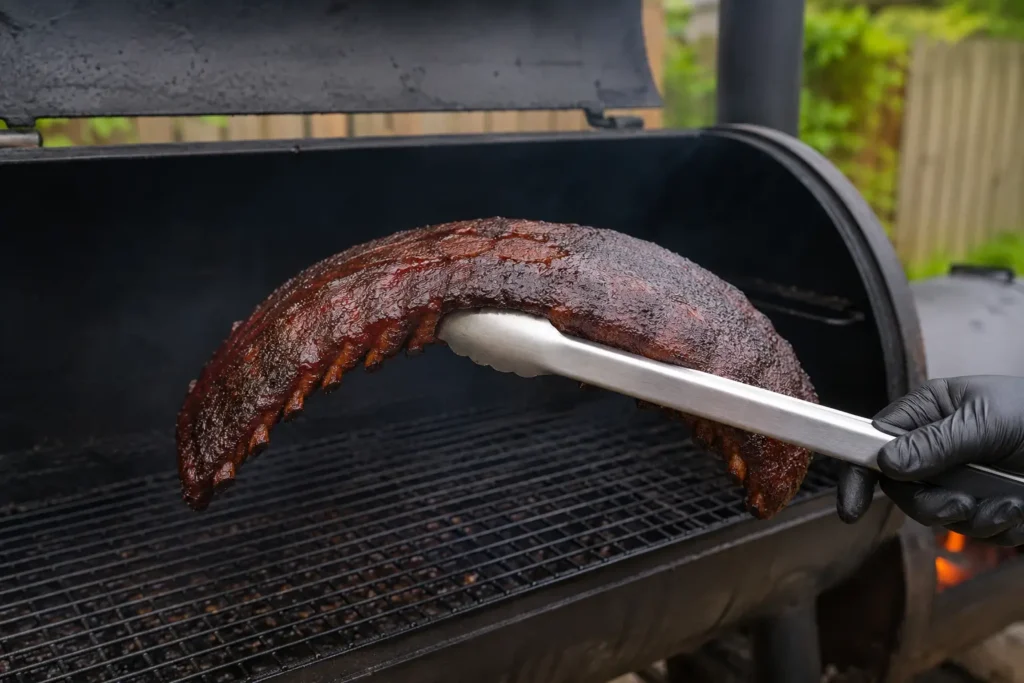
Lift the rack from one end with tongs, allowing the unsupported portion to bend downward. Properly cooked ribs should flex easily, and the surface should begin to crack near the middle.
Weber’s guide to checking ribs with the bend test also recommends looking for a rack that bends easily enough for the meat to begin tearing at the surface.
The Toothpick Test
Insert a toothpick or thin skewer into the meat between two bones. It should enter with very little resistance. Test several parts of the rack because one thin section may become tender before the thickest section.
Bone Pullback
As the ribs cook, the meat may shrink back and expose approximately ¼ to ½ inch of bone. Pullback is a useful visual clue, but it is not reliable enough to use alone because some racks show more exposed bone than others.
Internal Temperature
Measuring ribs is difficult because the bones are close together and can distort the reading. Insert a thin probe into the thickest meat without touching bone.
Pork ribs are safe at 145°F with a three-minute rest, according to the USDA’s guidance for smoking meat and poultry. However, ribs generally need a higher temperature to become tender. Many racks develop the preferred barbecue texture around 190–205°F, although bend and toothpick tests are more dependable than one exact number.
Clean Bite vs Fall-Off-the-Bone
Competition-style ribs hold their shape and leave a clean bite mark. Fall-off-the-bone ribs are softer and require a longer wrapped stage. Neither texture is automatically wrong; your preferred result affects how long to smoke ribs.
Remove ribs sooner for a clean bite. Keep them wrapped slightly longer if you want very soft meat, but check frequently so the texture does not become mushy.
What Affects Rib Smoking Time?
Rib Thickness and Weight
A thick, meaty rack takes longer than a thin rack, even when both are sold under the same name. Thickness has more influence than total weight because heat must travel to the center of the meat.
Actual Grate Temperature
Factory lid gauges may measure a different temperature from the area surrounding the ribs. A small difference maintained for several hours can significantly alter the finish time.
Opening the Lid
Every lid opening releases heat and extends the cook. Check only when there is a clear reason to inspect, spritz, wrap, rotate, or test tenderness.
Weather Conditions
Cold air, wind, and rain increase heat loss. The fire may need more fuel, and recovery after opening the chamber can take longer. Protect the smoker from wind without operating it in an enclosed or unsafe space.
Wrapping
Foil shortens the tenderizing stage by trapping moisture and heat. Butcher paper provides a smaller time reduction. Cooking completely unwrapped creates the firmest bark but may take longer.
Number of Racks
The number of racks can also change how long to smoke ribs. Adding several cold racks absorbs more heat and can reduce airflow if the cooking grate becomes overcrowded. Leave space between racks and allow the smoker to recover after loading.
Hot Spots
Hot spots can change how long to smoke ribs across the same cooking grate. Ribs placed beside the firebox may finish faster or develop burned edges. A properly installed offset smoker heat diffuser can reduce direct radiant heat and improve temperature consistency.
The condition and spacing of your offset smoker grill grates also affect airflow when several racks are cooking at once.
National Pork Board Smoking-Time Recommendations
The National Pork Board’s pork smoking guide lists loin back ribs at approximately 3 to 5 hours and St. Louis-style or spare ribs at about 5 to 7 hours when smoking at 225–250°F.
These ranges are a useful baseline for determining how long to smoke ribs, but individual racks still need tenderness testing. A rack may finish near the beginning or end of the range depending on thickness, trimming, wrapping, and smoker performance.
Common Timing Mistakes
Following the Clock Without Testing
Removing ribs simply because a six-hour schedule is complete can produce tough or overcooked meat. Begin checking near the expected finish, then let the rack’s texture make the final decision.
Using the Same Time for Every Cut
Baby backs, spare ribs, and beef short ribs are different in thickness and composition. Each requires its own estimated range.
Wrapping for Too Long
Two hours in foil may be suitable for a large rack of spare ribs but excessive for thin baby backs. Check the rack during the wrapped stage instead of waiting blindly.
Cooking With Dirty Smoke
A weak, smoldering fire can create bitterness during a long cook. Keep the exhaust open, maintain a healthy coal bed, and add appropriately sized fuel before the fire collapses.
An offset smoker firebox basket can improve airflow around the fuel and help maintain a more stable coal bed during an extended rib cook.
Spritzing Too Often
Opening the lid every 20 minutes releases heat and can add unnecessary cooking time. Spritz only after the bark begins to set and only when the surface looks dry.
Overcrowding the Cooking Chamber
Racks need space for hot air and smoke to circulate. Use rib racks or multiple grate levels carefully, keeping enough clearance between the meat.
Applying Sauce Too Early
Sugar can darken or burn during a long cook. Add sauce near the end and allow only enough time for it to become sticky.
Tips for More Predictable Cooking Times
Preheat the smoker completely before adding the ribs. Use a grate-level probe, maintain a small clean-burning fire, and keep the exhaust open. Choose racks of similar size when cooking several at once.
A properly positioned offset smoker drip pan can collect rendered grease and simplify cleanup without blocking airflow. If filled with water, make sure it cannot spill onto the fire or prevent heat from moving through the chamber.
Keep a cooking log with the rib type, weight, smoker temperature, weather, wrapping time, and final result. After several cooks, your own records will answer how long to smoke ribs in your specific smoker more accurately than a general chart.
Frequently Asked Questions
Baby back ribs generally take 4 to 5 hours. St. Louis-style and spare ribs usually require 5 to 7 hours. Begin testing tenderness near the lower end of the range.
At 250°F, baby backs commonly take 3½ to 4½ hours, while St. Louis-style and spare ribs often need 4½ to 6 hours. Thick racks can take longer.
Unwrapped baby backs often take about 4 to 5 hours at 225°F, while larger spare ribs can take 5 to 7 hours. The exact time depends on thickness and smoker consistency.
The traditional schedule takes six hours: three hours unwrapped, two hours wrapped, and one hour unwrapped. It works best as a flexible framework for larger spare ribs. Baby backs often require a shorter schedule.
Most ribs need 2½ to 3 hours at 225–250°F before wrapping. Wrap only when the bark has developed and the seasoning no longer wipes away easily.
Both temperatures work well. Cooking at 225°F takes longer and provides a gradual low-and-slow process. Cooking at 250°F shortens the cook while still allowing enough time for smoke flavor and tenderness to develop.
Baby back ribs can finish in about four hours at 250–275°F, especially when wrapped. Larger spare ribs may still need additional time. Use tenderness tests before removing them.
The rack may be unusually thick, the true grate temperature may be lower than the gauge shows, or the meat may need more time for its connective tissue to soften. Continue cooking and check again every 20 to 30 minutes.
Well-cooked ribs should be tender, but they do not have to fall off the bone. For a clean bite, remove them once they bend and pass the toothpick test. For softer ribs, extend the wrapped stage slightly.
Get Tender Ribs Every Time
The best answer to how long to smoke ribs is a time range supported by reliable tenderness tests. At 225°F, plan on 4 to 5 hours for baby backs and 5 to 7 hours for St. Louis-style or spare ribs. Cooking at 250°F can reduce those times while still producing juicy meat and a flavorful bark.
Use the clock to organize the cook, but let the rack determine the finish. Maintain steady grate-level heat, wrap only after the bark sets, and test the ribs with the bend and toothpick methods. When those signs come together, you will know exactly how long to smoke ribs for the texture you enjoy.